Euro Nymphing BC Interior Streams
Many anglers, especially those new to the intricacies of river fishing in British Columbia's stunning interior, quickly discover that traditional nymphing methods can be incredibly frustrating. The complex currents, powerful seams, and often clear, fast-flowing waters make it a real challenge to get your flies down to where the fish are holding and, even harder, to detect those incredibly subtle strikes. This guide is here to unravel the mystery of Euro Nymphing, a technique that has revolutionized freshwater trout fishing and is perfectly suited for tackling the demanding conditions of BC's interior streams, helping you connect with more fish than ever before.
Understanding the Fundamentals of Euro Nymphing
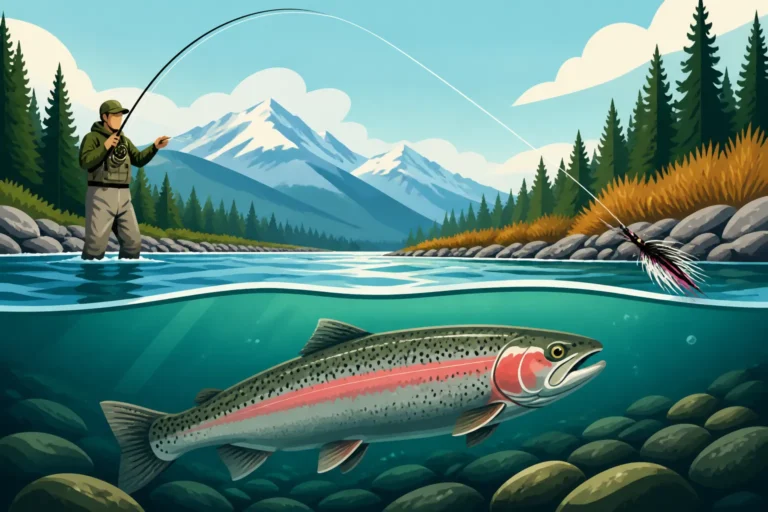
Euro Nymphing, sometimes called contact nymphing or tight-line nymphing, is a specialized fly-fishing technique that puts you in direct, unhindered contact with your flies as they drift through the water column. Unlike traditional indicator nymphing, where a bobber helps you detect strikes, Euro Nymphing relies on a highly sensitive leader system and your direct feel, allowing for unparalleled control and immediate strike detection. It's a method born from competitive fly fishing in Europe, designed to maximize efficiency and catch rates in challenging river conditions.
What Sets Euro Nymphing Apart
The core difference lies in the almost complete absence of slack line. With traditional indicator nymphing, you're often managing excess line on the water, which can create drag and delay strike detection, especially in varied currents. Euro Nymphing eliminates this by keeping a tight line from your rod tip directly to your flies. This means your flies sink faster, drift more naturally, and any subtle bump or pause is immediately telegraphed to your hand, allowing for lightning-fast hooksets. It truly feels like you're shaking hands with the fish before you even see them.
This direct connection is a game-changer for many BC interior streams, which are often characterized by intricate current seams, deep pockets, and fast riffles. Fish in these environments typically hold close to the bottom, conserving energy, and they often take a nymph with a barely perceptible sip. Where an indicator might just wobble or dip slightly, a Euro Nymphing setup allows you to feel that hesitation, that subtle weight change, or even a tiny tic in your line.
Why It Excels on BC Interior Rivers
British Columbia's interior rivers and streams are a perfect playground for Euro Nymphing. Think about the likes of the Thompson River, the Elk River, or countless freestone streams in the Cariboo region. These waters are often cold, highly oxygenated, and rich in insect life, but their geological makeup creates a complex mosaic of fast runs, deep pools, and boulder-strewn pockets. Fish here are often wary, especially the larger, wild rainbow trout or bull trout, and they demand a precise, natural presentation.
Euro Nymphing allows you to systematically dissect a river section, dropping your flies into specific seams and pockets without spooking fish with a splashing indicator or unnatural line drag. The ability to keep your line off the water means your flies are drifting at the same speed as the current directly around them, mimicking natural insect nymphs. This significantly increases your chances of fooling those discerning fish. It's also remarkably effective for getting deep quickly in fast currents, a common necessity when targeting fish like the wild rainbows that call these rivers home, as discussed in our guide on How to Catch Rainbow Trout in BC Lakes.
Essential Gear for Euro Nymphing BC Interior Streams
Getting into Euro Nymphing doesn't require a complete overhaul of your existing fly fishing kit, but there are some specialized pieces of gear that make a huge difference. Think of it as tailoring your tools to the task – and in this case, the task is precision and sensitivity. While you can certainly start with what you have, investing in a few key items will dramatically improve your experience and success.
Rods, Reels, and Lines Designed for Contact
The rod is arguably the most crucial piece of gear for Euro Nymphing. You'll want a longer rod, typically between 10 to 11 feet, and usually in a lighter weight, like a 2-weight, 3-weight, or 4-weight. The extra length gives you unparalleled reach, allowing you to cover more water, keep your line off the surface for longer, and maintain that crucial "tight line" contact with your flies. These rods are often designed with a very sensitive, soft tip that acts like an extension of your sighter, registering even the most delicate takes. Many reputable brands offer excellent Euro Nymphing specific rods, and you can often find a good selection of specialized rods on Amazon or through dedicated fly shops.
Your reel for Euro Nymphing doesn't need to be fancy. Its primary purpose is to balance the longer rod, and to hold your backing and the specialized Euro Nymphing fly line. A lightweight reel with a smooth drag is nice, but it's not the critical component. Balance is key; when you hold the rod by the cork, it should feel well-balanced in your hand, not tip-heavy or butt-heavy.
The fly line is where things get interesting. Traditional fly lines are weighted to cast a fly. Euro Nymphing lines, however, are typically very thin, level (meaning they don't taper), and lightweight. They don't assist in casting in the conventional sense; rather, they are designed to minimize sag and maximize direct contact. Some anglers even use simply a long leader setup without a dedicated fly line, but having a thin level line like those from Scientific Anglers or Rio can provide a bit of mass for longer casts and adds some durability.
Leaders and Sighters: Your Direct Connection
The leader system is the true heart of Euro Nymphing. It's a complex, multi-sectioned setup designed to be low-stretch, sensitive, and highly visible. A typical Euro Nymphing leader starts with a long, thin butt section of monofilament, tapering down to a sighter section. The sighter is a brightly colored, often bi-colored (like fluorescent pink and chartreuse) section of monofilament or braided line that acts as your visual indicator. It's coiled or zigzagged in a way that telegraphs even the slightest movement to your eye, helping you detect strikes that you might not feel.
Below the sighter, you'll have a tippet ring (a tiny metal ring) to which you attach your monofilament or fluorocarbon tippet. The tippet is the final, nearly invisible connection to your flies. The length of your tippet can vary greatly depending on water depth and speed, from a foot or two in shallow riffles to five or even ten feet in deep pools. This entire system is incredibly sensitive, allowing you to maintain direct communication with your flies and feel every bump and take. When preparing for your trip, remember to consult our guide on Reading the BC Freshwater Fishing Regulations Synopsis for any specific leader or tippet restrictions in certain waters.
Specialized Flies and Accessories
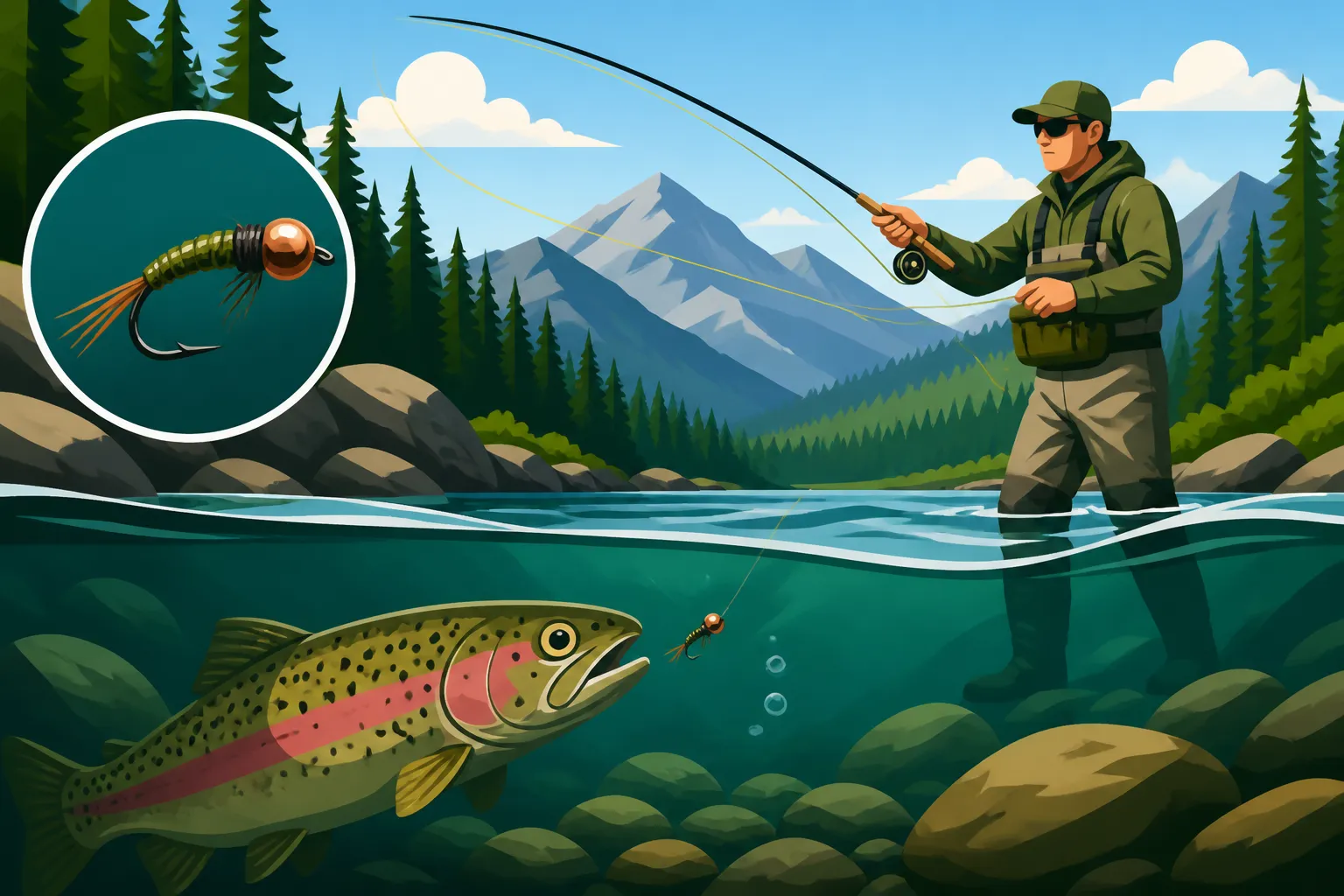
Euro Nymphing flies are a breed apart. They are almost universally tied on jig hooks, which cause them to ride hook point up, significantly reducing snags on the river bottom – a massive advantage in BC's rocky streams. They are also heavily weighted, typically with tungsten beads (rather than lighter brass beads), to help them sink rapidly to the fish's feeding zone. Common patterns include Perdigons, Frenchies, Walt's Worms, and various jig-style Pheasant Tails or Hare's Ears. Many anglers source their tungsten bead nymphs from online retailers like Amazon or tie their own, customizing the weight and color for specific conditions.
Beyond the core gear, a few accessories will make your life easier. A good pair of nippers with a built-in eye cleaner is essential. A forceps or hemostat for hook removal is a must. A net with a deep, fish-friendly rubber mesh is vital for safely landing and releasing fish, especially when dealing with the powerful runs of a strong BC rainbow or bull trout. And don't forget a sturdy pair of waders and wading boots with good grip, as you'll be doing a lot of wading and navigating tricky riverbeds to maintain the best angles for your drifts.
Reading the Water and Perfecting Presentation Techniques
Successfully Euro Nymphing in BC's interior streams is as much about understanding the water as it is about the gear. You can have the most expensive rod and the finest hand-tied flies, but if you're not presenting them in the right places, you'll struggle. The goal is to identify likely fish lies and present your flies naturally, as if they were real insects drifting helplessly downstream.
Identifying Productive Holding Lies
Fish are masters of efficiency. They want to hold in spots where they can expend minimal energy while having easy access to food. In a typical BC interior river, this means you'll find them in areas that offer both current breaks and a steady supply of drifting nymphs. Look for:
- Seams: These are the boundaries where fast water meets slow water. Fish often sit just inside the slower current, facing upstream, letting food drift past them in the faster water. This is prime Euro Nymphing territory.
- Pockets: Areas of calmer water behind large boulders, logs, or other obstructions. These are often deeper and provide refuge from strong currents.
- Riffles and Runs: While seemingly uniform, even these fast-moving sections have subtle current variations and depth changes where fish will hold. Look for depressions or slightly slower lanes within the riffle.
- Tailouts of Pools: As a deeper pool transitions into a shallower riffle, the water often speeds up. Fish will congregate here to intercept food being flushed out of the pool.
- Confluences: Where two currents meet or a smaller tributary enters the main river. These areas often concentrate food and create complex current breaks.
Spending time simply observing the water before you cast can tell you volumes. Watch for subtle changes in current speed, the formation of eddies, and any underwater structure. These are your targets.
The Tight Line Principle: Drifting with Purpose
The cornerstone of Euro Nymphing presentation is maintaining a tight line – not a taut, stretched line, but one without any slack. Your sighter should be slightly bent, forming a gentle "U" or "J" shape, indicating that you're in direct contact with your flies. This ensures two critical things: first, your flies are sinking at their maximum rate, getting into the feeding zone quickly. Second, any take, no matter how subtle, is immediately transmitted up your line to your sensitive rod tip and into your hand.
To achieve this, you need to lead your flies downriver, using the length of your rod to keep your line off the water as much as possible. Your rod tip should generally follow your flies, slightly ahead of them, maintaining a constant angle. This is often referred to as "leading the drift." It's a dance between your rod tip, the current, and your flies. If you see your sighter straighten out or fall slack, you're likely dragging your flies or they're not getting deep enough. If it's pulled too taut, you're hindering their natural drift. It's a delicate balance that comes with practice.
Indicator-less Fishing: Feel and Visual Cues
The beauty of Euro Nymphing is its "indicator-less" nature. Instead of relying on a bobber, you're using a combination of feel and visual cues from your sighter to detect strikes. When a fish takes your fly, you might feel a subtle "tic," a momentary stop, or a sudden weight. Visually, your sighter might suddenly hesitate, twitch, dart sideways, or simply straighten out in a way that doesn't match the current.
It takes practice to differentiate between a fish take and your fly bumping the bottom or snagging on a weed. A good rule of thumb: if it looks or feels suspicious, set the hook! The quick, efficient nature of Euro Nymphing allows for many "false" hook sets without disrupting the water too much. Your goal is to react instinctively to any anomaly. This technique is particularly effective for species like the robust Bull Trout in BC's Interior Rivers, which can have a very subtle take.
Mastering the Euro Nymphing Cast and Drift
Forget the graceful overhead loops of dry fly fishing. Euro Nymphing casts are all about efficiency, stealth, and precise placement. The goal isn't distance, but rather accuracy and getting your flies into the water with minimal disturbance, ensuring they start their drag-free drift immediately. It's a departure from conventional casting, but incredibly effective once mastered.
The Short Game: Specialized Casting Techniques
Because Euro Nymphing relies on keeping your line off the water, long overhead casts are generally avoided. Instead, you'll be using a variety of shorter, more controlled casts.
- The Sling Shot or Roll Cast: This is your bread and butter. It's perfect for quickly repositioning your flies upstream or across a seam. You use the weight of your flies and a quick forward motion of the rod to "sling" or "roll" the flies out. Keep the rod tip low and use a smooth, accelerating motion. This cast minimizes airtime and splash, getting your flies into the target zone quickly and discreetly.
- The Bow-and-Arrow Cast: Ideal for extremely tight quarters where there's no room for a backcast, like under overhanging branches or dense riverside vegetation. You hold the fly in one hand, bend the rod like a bow, and release the fly. It's a short-range, highly accurate cast perfect for dropping flies into small pockets.
- The Water Load Cast: When your flies are already in the water and you need to move them a short distance upstream or across. You use the resistance of the water against your flies and a smooth, upward and forward motion of the rod to load it and propel the flies to their new position. This minimizes aerial line and maintains immediate contact.
The key to all these casts is to use the weight of the tungsten nymphs to load the rod, rather than the fly line itself. This is why a lighter-weight rod with a sensitive tip is so crucial. It allows you to feel that load and make precise, subtle movements.
Maintaining the Perfect Drift and Line Management
Once your flies are in the water, the real work of maintaining a dead drift begins. A dead drift means your flies are moving at the exact same speed as the surrounding current, just like a natural insect. Any deviation, known as "drag," will make your flies look unnatural and often spook fish.
Your primary tool for achieving this is your rod tip and line management. Your rod tip should follow your flies' path downriver, typically held high (often above your head) to keep as much of your sighter and leader off the water as possible. This minimizes the effect of conflicting surface currents pulling on your line and creating drag. As your flies drift, you'll constantly be making small adjustments:
- Leading the Flies: Keep your rod tip slightly ahead of your flies. This allows you to pull the flies through the water at the same speed as the current.
- Upstream Mends (Subtle): If you notice your sighter starting to sag or pull, make a tiny, subtle upstream mend with your rod tip. This involves briefly flicking your rod tip upstream to reposition the line and ensure the flies continue to drift naturally. These aren't big, sweeping mends like with indicator fishing; they're often just small, wrist-flick adjustments.
- Wading Angles: Your position in the river is critical. Try to position yourself upstream and slightly across from your target zone. This allows you to cast slightly upstream and drift your flies down, often enabling a longer, more drag-free drift with less line out. Thinking about your approach and angle is just as important as the cast itself.
This constant attentiveness to your drift is what makes Euro Nymphing so engaging and effective. You're always active, always feeling, always adjusting, truly becoming one with your flies and the river. For further insight on adjusting to various conditions, our article on Best Techniques for High Water Spring Conditions or Best Techniques for Low Clear Water Steelhead can provide valuable context, even if focusing on a different species.
Targeting BC Interior Trout Species with Euro Nymphing
British Columbia's interior streams are home to a vibrant array of trout and char species, and Euro Nymphing is an incredibly effective technique for pursuing many of them. The key is understanding their preferred habitats and feeding behaviors, and then adapting your approach accordingly.
Rainbow Trout: The Interior's Prized Catch
Rainbow trout, particularly the wild, native strains often found in interior rivers, are arguably the most sought-after species for Euro Nymphing. These fish are typically found in oxygen-rich, faster-moving water. They'll hold in current seams, behind boulders, and in the tailouts of pools, constantly looking upstream for drifting insects. The famous "Kamloops trout" of the Okanagan and Cariboo regions, known for their size and acrobatic fights, are prime targets. Our guide on What a Kamloops trout is and where they live dives deeper into these magnificent fish.
When Euro Nymphing for rainbows, focus on getting your flies deep into the feeding lane. Rainbows are often opportunistic, so a multi-fly rig (check local regulations on fly limits!) with different sizes and colors can be very effective. Try a heavier, larger "point" fly (the bottom fly) like a Tungsten Jig Pheasant Tail or a Walt's Worm, followed by a smaller "dropper" fly like a Perdigon or a tiny midge pattern. Experiment with different depths and drifts, as rainbows can sometimes be found slightly higher in the water column in faster riffles.
Bull Trout and Dolly Varden: Apex Predators of the Depths
Bull trout and their close cousins, Dolly Varden, are formidable predators that can grow to impressive sizes in BC's interior. They prefer colder water and are often found in deeper pools, undercut banks, and around large submerged structure. While primarily piscivorous (fish-eating), they will readily take larger, meaty nymphs or stonefly patterns, especially during specific times of the year. If you're wondering how to distinguish them, our article on How to tell a bull trout from a Dolly Varden offers a detailed explanation.
For bull trout and Dolly Varden, your Euro Nymphing strategy should often involve heavier flies and a willingness to explore deeper water. Use larger tungsten-beaded nymphs that imitate stoneflies, caddis larvae, or even small sculpins. Patterns like a heavy Pat's Rubber Leg, a Girdle Bug, or a large Prince Nymph can be very effective. Concentrate your efforts on the deepest parts of pools, where current slows but still provides a food source. Their takes can sometimes feel more like a heavy "thunk" than a subtle tic, so be ready to set the hook firmly.
Cutthroat Trout and Whitefish: Diverse Opportunities
While perhaps more famous on coastal streams, cutthroat trout are also found in many interior systems, especially in the eastern part of the province. They often inhabit smaller streams, pocket water, and the edges of larger rivers. They can be less selective than rainbows and often respond well to a variety of nymph patterns. Our guide on Cutthroat Trout in BC Coastal Streams still offers valuable insights into their habits, many of which apply to interior populations.
Mountain whitefish, though not a trout, are abundant in many interior rivers and provide excellent sport on a Euro Nymphing setup. They often school in slower, deeper runs and pools, feeding on small invertebrates. Their takes are notoriously subtle, making them an excellent species to hone your strike detection skills. Small, unweighted or lightly weighted nymphs, midges, and even small egg patterns can be highly effective for whitefish. They provide constant action and are a fantastic way to keep your rod bent when the trout are being shy.
Table: Common Euro Nymphing Flies for BC Interior Streams
| Fly Pattern | Primary Target Species | Typical Weighting | Preferred Water Type | Notes |
|---|---|---|---|---|
| Tungsten Jig Perdigon | Rainbow Trout, Whitefish | Heavily Weighted (T) | Fast runs, riffles, seams | Sleek, sinks fast, many color variations (e.g., olive, pink, black). |
| Walt's Worm | Rainbow Trout, Bull Trout | Weighted (T) | Pools, seams, slower runs | Simple, buggy, excellent for imitating caddis larvae and sowbugs. |
| Jig Pheasant Tail | Rainbow Trout, Cutthroat | Weighted (T) | Riffles, runs, pocket water | Classic attractor, excellent imitation of various mayfly nymphs. |
| Pat's Rubber Legs | Bull Trout, Larger Rainbows | Heavily Weighted (T) | Deep pools, heavy current | Stonefly imitation, large profile, great for aggressive takes. |
| Frenchie | Rainbow Trout, Whitefish | Weighted (T) | Medium to fast currents | Simple, effective, often tied with a hot spot for added attraction. |
| Tungsten Midge | Rainbow Trout, Whitefish | Lightly Weighted (T) | Slower pools, tailouts | Tiny, subtle, crucial for finicky fish when midges are active. |
Note: (T) indicates tungsten bead weighting for fast sink rates.
Advanced Tips and Troubleshooting for BC Conditions
Euro Nymphing is a technique that rewards adaptability and continuous learning. British Columbia's interior streams, with their dynamic flows and varied conditions, present unique challenges that can often be overcome with a few advanced strategies and troubleshooting tips.
Adjusting to Variable Water Levels and Clarity
BC's interior rivers can change dramatically with snowmelt, rainfall, and dam releases. What works one day might be completely ineffective the next.
- High Water/Off-Color Conditions: When the water is high and murky, fish often move closer to the banks or into slower, more protected eddies. This is when you'll want to use heavier flies to get down quickly and larger, more visible patterns (think bright orange, chartreuse, or even black) that create a stronger silhouette. Don't be afraid to add split shot above your tippet ring if necessary, though keep it minimal to maintain feel. The goal is to maximize your time in the strike zone, which is often very narrow in high water. Our article on Best Techniques for High Water Spring Conditions has more details on this challenging scenario.
- Low, Clear Water Conditions: This is where stealth becomes paramount. Fish are warier, and your presentation needs to be flawless. Opt for longer, thinner tippet (e.g., 5X, 6X, or even 7X fluorocarbon), smaller flies that match the local insect hatches, and lighter weighting. Longer leaders with more sighter material can also help keep you further from the fish. Approach quietly, make accurate casts, and focus on those subtle seams and pockets where fish feel safe. The advice in Best Techniques for Low Clear Water Steelhead can be adapted here, emphasizing minimal disturbance.
- Optimal Water Temperatures: Fish activity is directly linked to water temperature. While Euro Nymphing can be effective year-round, understanding What water temperature steelhead prefer (and by extension, trout) can help you predict where fish will be holding and how active they might be. Colder water often means fish are sluggish and holding tight to the bottom, requiring an even deeper, slower presentation.
Tackling Snags and Tangled Lines
Snags are an inevitable part of Euro Nymphing, especially when you're intentionally putting your flies on the bottom. However, some proactive measures can minimize frustration:
- Jig Hooks: Always use jig hooks. Their upward-riding hook point dramatically reduces snagging compared to traditional straight-shank hooks.
- Feel the Bottom: Learn to distinguish between a fish take and your fly ticking the bottom. That soft "tick-tick" as your fly bounces off rocks is good; it tells you you're deep enough. A sudden, solid stop is usually a snag.
- Rod Angle: When you feel a snag, try to keep your rod tip high and pull directly upstream or in the opposite direction of the snag. This often allows the jig hook to back out. Avoid pulling straight back, which can wedge the hook further.
- Break-Off Strategy: If a snag is truly stuck, don't just pull until your leader snaps at the most random point. Try to apply steady pressure until your tippet breaks near the fly. This saves your valuable sighter and leader sections. Using a tippet ring and knotting your tippet at a lower breaking strength than your leader helps ensure breaks happen only at the tippet.
- Tangle Prevention: The long leader and multiple flies can sometimes lead to tangles. Practice smooth, controlled casts, avoiding jerky motions. When retrieving, gently pull the flies out of the water rather than ripping them. Carry a small container for organizing your flies to prevent tangles in your fly box.
Mastering the Subtle Art of Current Management
BC interior streams are defined by their currents, and learning to read and work with them is a lifelong pursuit.
- Micro-Mends: Beyond the larger upstream mends, Euro Nymphing often requires incredibly small, almost imperceptible "micro-mends." These are tiny adjustments of the rod tip to correct the line's trajectory and maintain a perfect drift for just a few more inches, often the difference between a refusal and a take.
- Pacing the Drift: Sometimes, fish want a slightly faster or slower drift. While a dead drift is usually the goal, you can subtly influence the speed of your flies by adjusting your rod tip position. Holding your rod tip slightly further back can slow the flies down by creating a tiny bit of drag, while leading them more aggressively can speed them up. This is a nuanced technique for picky fish.
- Cross-Current Drifts: When fishing across multiple current seams, keeping your leader out of the faster water is critical. Use your long rod to extend your reach and keep as much of your line as possible over the slower, target current. This is challenging but incredibly rewarding when you hook a fish that would be impossible to reach with traditional methods.
- Understanding Specific River Flows: Each river has its own personality. The Fraser River might have powerful, sweeping currents, while a smaller creek might have numerous small pockets and riffles. Understanding the general flow patterns of specific systems, like those mentioned in our Best Fishing Rivers in British Columbia guide, will help you anticipate where fish will hold and how best to present your flies.
By continually refining your technique, adapting to the conditions, and troubleshooting on the fly, you'll find Euro Nymphing becomes an incredibly powerful and enjoyable way to fish BC's magnificent interior streams.
Disclaimer
The information provided in this guide is for general informational purposes only. Fishing regulations in British Columbia can change frequently. Always consult the most current BC Freshwater Fishing Regulations Synopsis or the relevant DFO (Department of Fisheries and Oceans Canada) regulations for tidal waters before fishing. Adherence to all local, provincial, and federal regulations is the angler's responsibility.