Best Techniques for Low Clear Water Steelhead
There’s nothing quite like the feeling of stepping onto your favourite British Columbia steelhead river, only to find the water level has dropped significantly, and the crystal-clear conditions make every pebble on the bottom visible. It's a common, often frustrating scenario for many anglers, making those usually reliable techniques suddenly feel ineffective. When steelhead can see you coming a mile away and are super sensitive to any disturbance, it’s time to adapt. This guide will walk you through the essential techniques and gear adjustments you need to successfully hook into chrome in low, clear water.
Understanding Low, Clear Water Conditions for Steelhead
Low, clear water on a steelhead river isn't just about less water; it fundamentally changes the entire fishing experience. It's a scenario that demands more from the angler, requiring a shift in mindset, approach, and tackle. Understanding why these conditions make steelhead so challenging is the first step to overcoming them.
Why Low Water Changes Steelhead Behavior
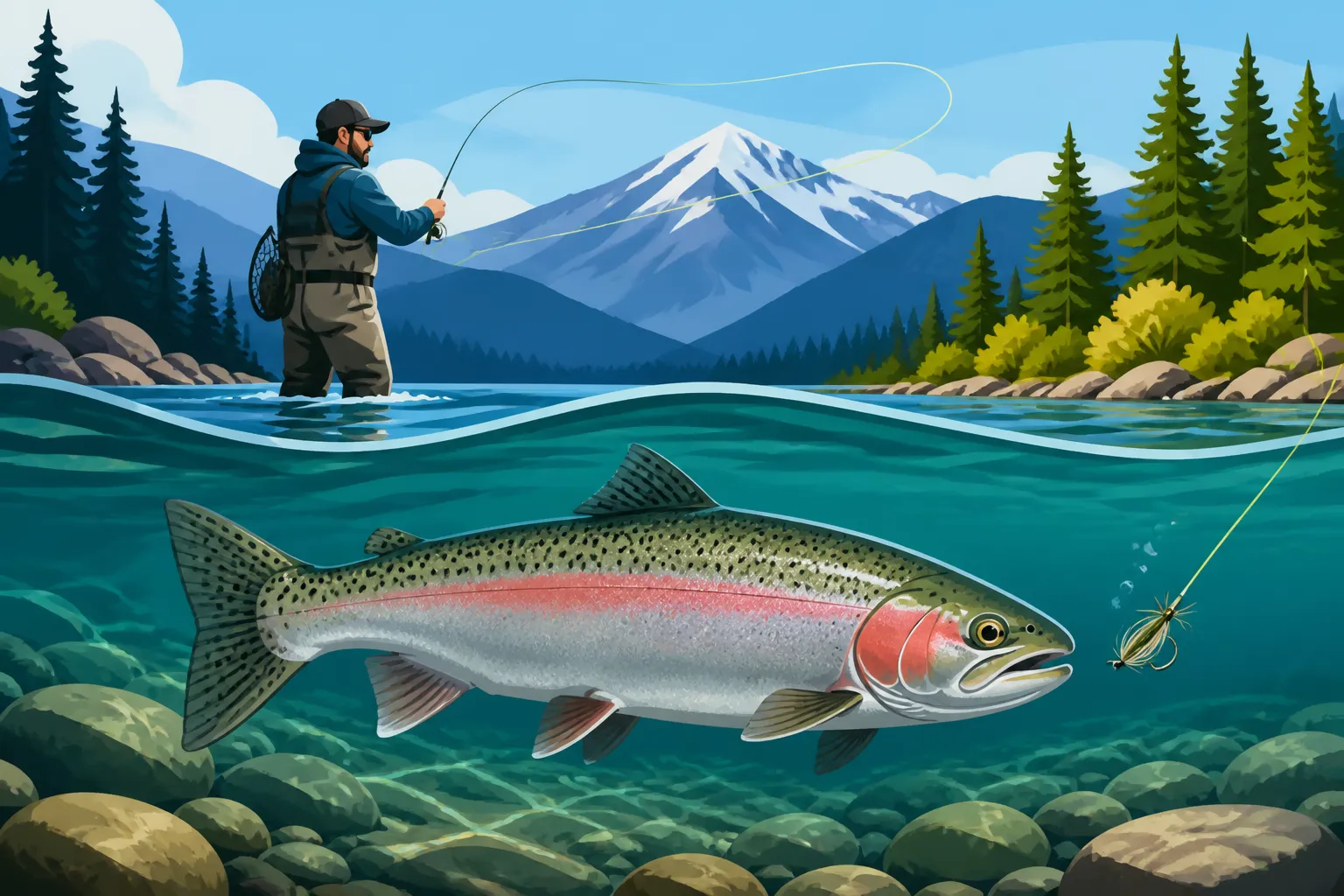
Imagine yourself walking through your living room with all the lights on, knowing everyone outside can see right in. That's essentially how steelhead feel in low, clear conditions. Their natural instinct for self-preservation kicks into high gear. They become incredibly wary, easily spooked by shadows, vibrations, or anything that seems out of place. This heightened sensitivity means they'll often hold in the deepest, darkest pockets available, seeking refuge under cut banks, behind large boulders, or in the very heart of heavy current, where they feel most secure. These aren't necessarily their preferred holding lies in normal conditions, but rather places of last resort for safety.
Furthermore, their aggression levels often drop significantly. Instead of readily chasing a larger, more aggressive presentation, they might become lethargic and less inclined to move far for a meal or out of territorial defense. This means your offerings need to be presented almost directly to them, with a natural, enticing drift that makes it irresistible, or at least, less threatening. They might be less inclined to travel through shallow, exposed areas, making their typical travel lanes more restricted to deeper channels or shaded routes. Understanding these behavioural shifts is crucial because it informs every decision you make, from your casting angle to your fly selection.
Reading the Water in Clear Conditions
In normal water conditions, you might be able to get away with a general approach, but in low, clear water, every piece of structure, every subtle change in current, and every shadow becomes critical. Your ability to read the water needs to be razor-sharp. You're looking for areas that offer steelhead safety and comfort, even if they aren't obvious at first glance. Think about deep troughs that run along the bank, the "armpits" of a large boulder where the current slows, or any significant changes in depth that create a dark contrast on the riverbed.
Identifying these holding lies requires a keen eye. Look for subtle seams where faster water meets slower water, indicating a change in depth or bottom contour. Shaded areas, whether from overhanging trees, high banks, or even clouds, can become prime spots as they offer a sense of concealment. It's also about identifying potential travel lanes – deeper runs or protected routes they might take to move upstream or downstream. Sometimes, if the water is clear enough and the light is right, you might even spot a fish holding still, a rare and exciting opportunity in steelhead fishing. This visual reconnaissance, combined with knowledge of typical steelhead behaviour, allows you to target your casts with precision, reducing disturbance and maximizing your chances of a successful drift.
Finesse Tackle and Line Choices for Low Water Steelhead
When the water is low and clear, brute force and heavy gear are your enemies. This is when finesse fishing truly shines. Every component of your setup, from your rod to your tippet, needs to be considered for its ability to present your offering delicately and subtly.
Lighter Rods and Reels
Forget that heavy-duty salmon rod you usually use for big chinook or sockeye. For low, clear water steelhead, you need a setup that allows for precision and delicacy. This often means opting for lighter, longer rods than you might typically employ. A longer rod, perhaps 10 to 11 feet for conventional gear or a longer Spey rod, gives you better line control, allowing for longer, more precise drifts and the ability to keep more line off the water, reducing drag. The lighter action, typically in the medium-light to medium power range, is crucial for two main reasons. Firstly, it allows for more delicate casting of smaller flies, jigs, or beads, ensuring a soft landing that won't spook a wary fish. Secondly, a more forgiving rod acts as a shock absorber, protecting those light leaders you'll inevitably be using.
Pair this with a reel that boasts an incredibly smooth drag system. When you're fishing 6-pound test or even lighter, a sticky or inconsistent drag will result in an instant break-off the moment a hot steelhead makes a run. The reel doesn't need to be massive; capacity for 150-200 yards of your main line (usually 10-15 lb braided line for float fishing or backing for fly fishing) with a smooth retrieve is generally sufficient. Brands like Shimano, Daiwa, and Sage all offer excellent options across various price points, and you can often find great deals on these through retailers like Amazon, ensuring you get quality gear without breaking the bank.
The Importance of Leader and Tippet
This is arguably the most critical component when fishing low, clear water. Steelhead can see your line, and they will absolutely shy away from anything that looks unnatural. Your goal is to make your presentation as invisible as possible. This means ditching the heavy 12-pound test leader for something much lighter, often in the 6-to-8-pound range, and sometimes even as light as 4-pound test fluorocarbon, especially for smaller flies or incredibly spooky fish. Fluorocarbon is your best friend here. It has a refractive index very close to water, making it virtually invisible underwater, and it sinks, which helps your offering get down quickly without added weight.
While monofilament can work in some situations, fluorocarbon's invisibility and abrasion resistance make it superior for these demanding conditions. The length of your leader is also important; a longer leader (6-10 feet or more, depending on your technique) allows your offering to drift more naturally, further separated from your main line. If you’re fly fishing, building a tapered leader with a fine tippet section is standard practice. For float fishing, you'll often have a main leader and then add a short section of tippet to your jig or bead. Ensure your knots are strong and neat; a bulky knot can compromise your presentation and strength. For more specific guidance on different line types, a resource like Best Rod Setup for Fraser River Sturgeon might offer insights into heavy-duty line setups, but remember, for steelhead in clear water, the focus is on extreme finesse and minimal visibility.
Stealthy Approach and Presentation
In low, clear water, your physical presence near the river is as critical as your gear. Steelhead have excellent eyesight, and they can feel vibrations through the water. A careless approach can spook fish before you even make a cast.
Minimizing Your Footprint
This is where you become a hunter, not just an angler. Every step you take, every movement you make, needs to be considered. Approach the river slowly and deliberately, staying low and out of sight as much as possible. If you can, cast from further back on the bank, or wade slowly and softly, minimizing disturbance. Avoid wading through prime holding water if you can fish around it. Think about the angle of the sun and how your shadow might fall across the water – a long shadow stretching over a run is a sure-fire way to send steelhead scurrying.
Your clothing matters too. Bright colours stand out against the natural backdrop of the river. Opt for muted, natural tones like greens, browns, and greys. This might seem like overkill, but when fish are on high alert, every little detail counts. The goal is to blend in, to become part of the background, making it harder for the fish to detect your presence. This kind of thoughtful, deliberate approach also applies to your general demeanour; avoid loud noises or sudden movements that could send vibrations through the bank and into the water.
Delicate Casting and Drift
Once you’re in position, your cast and presentation must be equally stealthy. A heavy plop of a fly or jig on the water's surface will almost certainly spook any nearby steelhead. Aim for soft, controlled casts that allow your offering to land gently, mimicking a natural insect or piece of debris. For fly anglers, this often means perfecting your roll casts or Spey casts, which create less disturbance on the back cast and present the fly with minimal splash. If you’re float fishing, a gentle lob or a well-timed "touch-and-go" cast can achieve the same effect.
The most crucial aspect is achieving a drag-free drift. Steelhead are masters of sensing unnatural movement. If your line is pulling your fly or bait unnaturally through the current, they'll often ignore it. This means constant line mending – making subtle adjustments to your line upstream of your offering to counteract the different current speeds between your line and your lure. A proper drift allows your offering to tumble and move at the same speed as the surrounding water, presenting it in the most natural way possible. In low, clear water, you'll want to extend your drifts further than usual, allowing your offering to cover more water and give reluctant fish more time to react. Mastering these aspects of Wading Techniques for BC Steelhead Rivers is essential for success in challenging conditions.
Effective Lures and Baits for Clear Water Steelhead
When steelhead are spooky in clear water, their preferences for lures and baits often shift dramatically. What works well in stained water might be completely ignored now. The key is to think small, natural, and subtle.
Downsizing Your Offerings
This is the time to put away your large, flashy presentations and reach for the finesse box. For fly anglers, think sparse, natural nymph patterns like Hare's Ears, Pheasant Tails, or small stoneflies in sizes 10-16. Small, subtle leech patterns or sparsely tied Spey flies in natural colours like olive, black, or grey can also be incredibly effective. Sometimes, a tiny attractor like a size 14-16 egg pattern in a very subtle peach or cream colour can work wonders. The goal is to imitate natural food sources or present something so small and innocuous that it doesn't trigger a flight response.
For gear anglers, tiny jigs (1/16 oz to 1/8 oz) tipped with a small piece of roe, a single bead, or even just fished plain are often the ticket. Beads, especially those in natural, mottled colours like mottled pink, natural roe, or even clear, can be deadly when fished under a float. Brands like Mad River, Lure Parts Online, and Beau Mac offer excellent selections of beads and jig components that perform well. Remember, you can often find these specialized items for your steelhead arsenal on Amazon, allowing you to stock up on different sizes and colors to match conditions. Scent also plays a huge role; in clear water, where visual cues are amplified, a subtle scent trail from cured roe, commercial scents, or even a scented soft plastic jig can be the extra nudge a reluctant steelhead needs. For a deeper dive into specific fly patterns, checking out Best Steelhead Flies for the Skeena River can give you some excellent ideas.
Subtle Presentations for Artificials
It's not just about the size and colour of your offering; it's how you present it. In clear water, aggressive retrieves or overly active jigging can scare fish away. Think subtle. If you're swinging flies, slow down your swing considerably. Let the current do most of the work, allowing your fly to waft and breathe naturally as it moves through a holding lie. For nymphs, ensure a perfectly drag-free drift that allows the fly to tumble freely, just like a natural insect washed off the bottom.
When drift fishing with jigs or beads, the goal is to tick the bottom occasionally without snagging. Use just enough weight to get your offering down, but not so much that it's dragging unnaturally. A slight pause or twitch can sometimes trigger a strike, but generally, less is more. For float fishing, adjust your depth precisely so your jig or bead is hovering just above the bottom, where steelhead are most likely to be holding. You want the presentation to look so natural and effortless that the steelhead barely perceives it as a threat before it's too late. This approach aligns perfectly with techniques discussed in guides like Drift Fishing for Steelhead in BC Rivers, emphasizing the importance of a natural presentation.
Strategic Fishing Techniques in Clear Water
Beyond gear and bait, how you actually fish the water dictates your success. In low, clear conditions, strategy becomes paramount, almost like playing a game of chess with the steelhead.
Targeting Specific Lies
In typical conditions, steelhead might be spread out, occupying various parts of a run. In low, clear water, they consolidate into the most secure and comfortable lies available. This means you need to be surgical in your approach. Focus on the darkest, deepest pockets, the heaviest current seams that offer refuge, and undercut banks that provide an overhead canopy. These are the places where steelhead feel protected from predators and are less exposed to the glaring sun. Don't waste time fan-casting every inch of the river; instead, identify the prime real estate and fish it meticulously.
Often, this means making multiple, precise drifts through a very small, specific area. You might need to adjust your weight, leader length, or casting angle to get your offering to hit that exact sweet spot where a fish is holding. Sometimes, a fish might not strike on the first or second pass but might be enticed on the fifth or sixth, especially if your presentation is flawless. Remember, these fish are wary, so persistence and accuracy in targeting their secure holding lies are key. Don't be afraid to re-fish a productive spot thoroughly, as fish might stack up in these areas.
Adapting to Time of Day and Light Conditions
Light plays a massive role in how active and visible steelhead are. Bright, sunny days with clear skies are the most challenging because the light penetrates the water easily, exposing the fish. In these conditions, concentrate your efforts during the low-light periods of the day: early morning, late evening, or on heavily overcast days. During these times, the fish feel more secure and are more likely to move or strike.
If you find yourself fishing during bright sun, seek out heavily shaded areas along the river. Overhanging trees, tall banks, or even rock formations can cast shadows that create temporary havens for steelhead. These spots, which might be overlooked in normal conditions, become prime targets when the sun is high. Remember that even a passing cloud can provide a momentary advantage, making fish feel more comfortable. Pay attention to the light and use it to your advantage, or at least, mitigate its disadvantages. This kind of environmental awareness is a crucial aspect of successful angling, much like understanding the Best Time of Day to Catch Salmon.
Safety and Conservation in Low Water
While catching a steelhead in low, clear water is a thrilling accomplishment, it's vital to prioritize the fish's well-being and practice responsible angling. These conditions can add extra stress on already vulnerable fish.
Handling Fish with Care
When the water is low and clear, water temperatures can often be higher than normal, and dissolved oxygen levels can be lower. These factors stress steelhead, especially after a fight. If you do hook a fish, minimize the fight time as much as possible by using appropriate gear and applying steady pressure. Once you land a fish, keep it in the water. Never beach a steelhead or lay it on dry ground. Handle it gently with wet hands, supporting its belly, and avoid squeezing its internal organs. Use barbless hooks – this is often a regulatory requirement in BC for many steelhead fisheries anyway – as they make hook removal much easier and reduce damage to the fish's mouth.
If you plan to take a quick photo, do it quickly and keep the fish submerged as much as possible, only lifting it briefly, if at all. After release, hold the fish gently in the current, facing upstream, until it regains its strength and swims away on its own. For detailed guidelines on ethical catch and release practices, you can refer to resources like Sturgeon Catch and Release Survival Tips, which offers principles applicable to all large, sensitive fish species, including steelhead. Your actions ensure these magnificent fish can continue their journey and contribute to future runs.
Respecting Other Anglers and Regulations
Low, clear water often concentrates fish into fewer, more obvious holding lies. This can lead to increased angler pressure on those prime spots. It's more important than ever to practice good river etiquette. Give other anglers plenty of space, avoid "hogs" (crossing in front of another angler's drift), and communicate respectfully. If you arrive at a spot already occupied, ask where they are fishing and wait your turn, or move on to another section of the river.
Always be aware of the specific regulations for the river you're fishing. Low water conditions can sometimes trigger in-season closures or specific gear restrictions to protect fish. Always check the latest BC Fishing Regulations Explained and consult BC Fishery Notices and In-Season Closures, Explained before heading out. Knowing the current rules, such as specific BC Steelhead Season Dates or tackle limitations, ensures you're fishing legally and contributing to the conservation efforts that protect these incredible fisheries for everyone.
Gear Adjustments for Low, Clear Water Conditions
To help summarize, here’s a quick comparison of typical gear for average conditions versus the adjustments you'd make for low, clear water. This isn't a hard and fast rule, as conditions can vary wildly, but it provides a good starting point for refining your setup.
| Gear Category | Typical (Average/Higher Water) | Low, Clear Water (Finesse) |
|---|---|---|
| Rod Length/Action | 9-10 ft, Medium-Heavy to Heavy, Moderate-Fast Action | 10-11.5 ft, Medium-Light to Medium, Moderate to Slow Action |
| Main Line | 15-20 lb Braid (float), 15-25 lb Monofilament (drift), 8-10 wt Fly Line | 10-15 lb Braid (float), 10-15 lb Monofilament (drift), 6-8 wt Fly Line |
| Leader/Tippet | 10-15 lb Monofilament, 8-10 ft length | 6-8 lb Fluorocarbon (down to 4 lb), 8-12 ft length |
| Lure/Fly Size | Larger jigs (1/4 – 1/2 oz), larger plugs, brighter flies | Smaller jigs (1/16 – 1/8 oz), natural beads, sparse nymphs/leeches |
| Lure/Fly Color | Chartreuse, pink, orange, black (for contrast) | Olive, black, grey, tan, natural mottled, clear |
| Weighting (Float) | Heavier shot for faster sink rate | Lighter, spread-out shot for slower, natural sink |
| Weighting (Drift) | Heavier bottom bouncing weights | Lighter, finesse weights (pencil lead, slinkies) |
| Footwear | Standard wading boots | Stealthy wading boots, soft soles, careful movement |
| Clothing | Any fishing apparel | Muted, natural colors to blend in |
Disclaimer
The information provided in this guide is for general informational purposes only and is not intended as legal or professional advice. Fishing regulations and conditions in British Columbia can change frequently. Always consult the official British Columbia Freshwater Fishing Synopsis, Fisheries and Oceans Canada (DFO) regulations, and local fishery notices before any fishing trip. Adhere to all local, provincial, and federal laws and regulations. The author and publisher are not responsible for any misuse of the information, property damage, or injury sustained while attempting these techniques. Fish responsibly and safely.