What herring are and why salmon key on them
It can be incredibly frustrating to be out on the water, knowing the salmon are around, yet struggling to get a bite. Sometimes, it feels like they're just ignoring everything you throw at them, swimming right past your perfectly presented gear. The truth is, understanding what salmon are actually looking for to eat is one of the biggest keys to a successful day, and that often means understanding the humble herring. This comprehensive guide will pull back the curtain on Pacific herring, exploring why they are such a vital food source for British Columbia's salmon, and how this knowledge can fundamentally change your approach to angling.
What Exactly Are Herring? Understanding These Crucial Baitfish
Before we can dive into why salmon key on them, let's get a clearer picture of what Pacific herring actually are. They're not just some generic "baitfish"; they're a foundational species in our coastal marine ecosystem, playing a role far beyond just being salmon food. These small, silvery fish form immense schools, creating a vibrant, living larder for a vast array of predators, from our prized salmon to whales, seabirds, and even other bottom-dwelling fish. Their sheer abundance and predictable movements are what make them so incredibly important to the food chain in BC.
Physical Characteristics and Life Cycle of Pacific Herring
Pacific herring (Clupea pallasii) are undeniably handsome fish, with sleek, torpedo-shaped bodies, iridescent blue-green backs, and bright, shimmering silver sides. They're perfectly designed for speed and schooling in open water, allowing them to move as one to confuse predators. Most adult herring in BC range from about 15 to 25 centimeters (6 to 10 inches) in length, though some older individuals can grow a bit larger. They are relatively short-lived, with most surviving for about 3 to 9 years. Their life cycle is truly fascinating and critical to the entire coastal ecosystem. They typically spawn in shallow, intertidal areas during the spring, attaching their sticky eggs to kelp, eelgrass, and other marine vegetation. These massive spawning events, where millions of fish gather, turn the water milky white with milt and eggs, attracting a huge feeding frenzy of birds, seals, and other fish. The sheer volume of this natural phenomenon is staggering, providing an incredible surge of energy into the ecosystem.
The newly hatched larvae drift with the currents, feeding on tiny plankton. As they grow into juveniles, they begin to form schools, gradually moving into deeper waters and maturing. It's during this schooling phase that they become prime targets for opportunistic predators, including juvenile salmon. Understanding this cycle helps us appreciate the delicate balance of the marine environment and why disruptions to herring populations can have cascading effects on all species that rely on them.
Where Pacific Herring Live and Spawn in BC Waters
Pacific herring are truly ubiquitous along the British Columbia coastline, inhabiting a vast range of environments from sheltered inlets and bays to more exposed offshore waters. They are a pelagic species, meaning they live in the open water column, constantly on the move, seeking out plankton for food and trying to avoid predators. While they are found throughout BC, certain areas are renowned for their significant herring populations and, crucially, their spawning grounds. Iconic locations like the Strait of Georgia, the waters around Vancouver Island, and the remote areas of Haida Gwaii are particularly vital. These regions host some of the largest and most consistent herring spawning events, which are absolutely crucial for the health of salmon populations.
The predictability of these spawning events means that predators, including salmon, will gather in anticipation. When herring congregate to spawn, they become incredibly vulnerable. Their eggs, laid in vast sheets on underwater vegetation, are also a critical food source. These concentrated biomass events are like an annual, all-you-can-eat buffet for everything from migrating waterfowl to hungry salmon. Knowing where and when these spawning events typically occur can give an astute angler a real edge, as salmon will often stage nearby or actively move into these areas to gorge. You'll often see tell-tale signs like masses of seabirds diving or marine mammals actively feeding in these zones.
The Unbreakable Link: Why Salmon Can't Resist Herring
So, why are these small, silvery fish such an irresistible meal for British Columbia's various salmon species? It's not just that they're plentiful, though that certainly helps! The relationship between salmon and herring is a complex dance of nutritional needs, predatory instincts, and environmental factors that has evolved over millennia. From the moment young salmon migrate to saltwater, herring become a primary focus of their diet, shaping their movements, growth, and ultimately, their survival.
Nutritional Value and Energy Boost for Growing Salmon
When a salmon is on the hunt, it's not just looking for any food; it's looking for high-quality fuel. And Pacific herring are essentially nutrient-dense power bars for salmon. They are packed with protein and, perhaps most critically, high levels of fat. This fat content is crucial for salmon, especially species like Chinook and Coho, which undertake massive migrations and grow to impressive sizes. The rich oils in herring provide the necessary energy stores for these incredible journeys and for developing robust bodies. Imagine a marathon runner preparing for a race; they load up on carbohydrates. For salmon, herring are their super fuel.
This nutritional superiority means that salmon will actively seek out areas where herring are abundant. A salmon that consistently feeds on herring will grow faster, be healthier, and have a much better chance of surviving its arduous life cycle, including its eventual return to its natal river to spawn. Anglers often notice a difference in the condition of salmon caught in areas rich with herring versus those from areas with sparser baitfish populations; the herring-fed fish are typically plumper and more vibrant. Understanding this "dietary preference" isn't just academic; it directly informs where and how anglers should target these magnificent fish. If you're looking for a trophy Chinook Salmon Fishing in BC, finding the herring is often the first step.
Predation Dynamics: Salmon's Primary Food Source
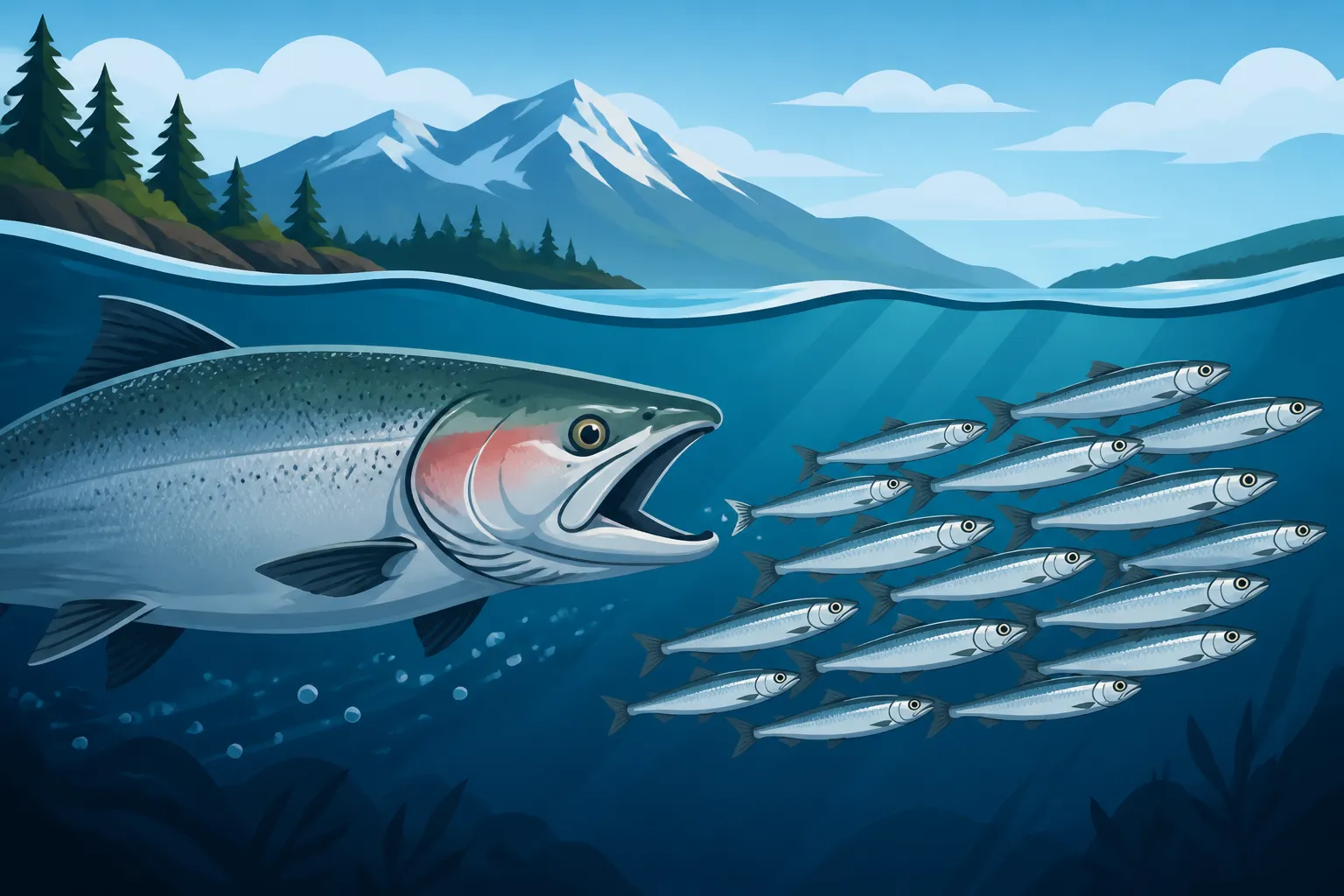
For many species of Pacific salmon, particularly Chinook (King) and Coho (Silver) salmon, herring represent a primary, if not the primary, food source during their ocean residence. Once these salmon migrate from freshwater into the vast Pacific, they become voracious predators. Their entire existence revolves around finding enough food to fuel their rapid growth. Herring, with their schooling behavior, present an incredibly efficient feeding opportunity. Instead of chasing down individual prey, a salmon can slash through a dense school of herring, consuming multiple fish in a short burst of energy.
This makes herring a central driver of salmon behavior. Where the herring go, the salmon often follow. This dynamic creates predictable patterns for anglers. If you can locate schools of herring, often identifiable by birds diving, sea lions working, or even on your boat's sonar, you're usually in good company regarding salmon. Salmon Fishing Techniques for BC Rivers might change, but the core principle of finding their food remains. This isn't just about passive consumption; salmon actively hunt these schools, often driving them to the surface or pinning them against structures. Observing these feeding frenzies from a boat is an exhilarating experience and a clear sign that you're in a prime fishing zone. Even Sockeye Salmon Fishing in BC can be impacted by herring presence, though Sockeye feed more on plankton as adults, the entire ecosystem benefits from a strong herring base.
How Anglers Can Use This Knowledge to Catch More Salmon
Knowing that salmon key on herring is one thing, but translating that understanding into actual fishing success is where the real magic happens. It's about thinking like a salmon, understanding their environment, and presenting offerings that are simply too good to pass up. Whether you're a seasoned pro or just starting your journey into Best Salmon Fishing Spots in BC, incorporating herring-centric strategies can dramatically improve your catch rates.
Identifying Herring Schools and Feeding Zones
The first step to leveraging the salmon-herring connection is learning how to identify where the herring are. It's like finding a grocery store for fish – if you know where the food is, you know where the eaters will be!
One of the most obvious signs of a herring school is the presence of other predators. Keep a keen eye on the sky and the water surface. Diving seabirds, especially gulls, murres, and cormorants, are often reliable indicators. They'll be actively plunging into the water, sometimes in large groups, trying to snatch up herring that have been pushed to the surface by subsurface predators. Similarly, marine mammals like seals, sea lions, and even humpback whales feeding are strong indicators of baitfish presence. A pod of porpoises working an area can also be a tell-tale sign.
Below the surface, your boat's sonar or fishfinder becomes an invaluable tool. Look for dense clouds or "balls" of baitfish in the water column. These are often herring schools. Sometimes these schools will be tight and compact, other times more spread out. Pay attention to the depth at which these schools are holding. Salmon will often be lurking just below, above, or on the edges of these schools, ready to ambush. Also, observe the current and structure. Herring often congregate in areas with current breaks, around reefs, or in the lee of islands, where they can find shelter and concentrate plankton. Understanding What water temperature salmon prefer can also indirectly lead you to herring, as both often prefer similar temperature bands.
Best Lures and Techniques to Imitate Herring
Once you've located the herring, the next step is to present a lure or bait that effectively mimics them. This is where a wide variety of tackle comes into play, all designed to replicate the size, shape, color, and action of a struggling or fleeing herring.
| Lure Type | Description | Best Use Cases | Key Features to Look For |
|---|---|---|---|
| Spoons | Metal lures designed to wobble and flash like an injured baitfish. | Trolling at various depths, casting to feeding frenzies, targeting salmon in rivers. | Silver, blue/silver, green/silver, or white patterns. Holographic finishes. Sizes from 2.5" to 6" depending on salmon size and desired herring imitation. Brands like Gibbs-Delta, Luhr-Jensen. |
| Hootchies/Squid | Soft plastic squid imitations, often clear or iridescent, rigged in tandem behind a flasher. | Trolling at depth for Chinook and Coho. Often used in saltwater with a dodger or flasher to create attraction. | Clear, blue, green, or pearl finishes with UV additives. Tendrils that pulsate in the water. Often 3" to 5" in length. Used behind a large flasher for added visibility. |
| Plugs | Hard-bodied lures that dive and swim with a distinct wobble, mimicking a swimming baitfish. | Trolling in open water or along contours, particularly effective for aggressive Chinook. | Herring-like profiles, internal rattles for sound, realistic eye details. Blue/silver, green/silver, chrome. Varying dive depths. Brands like Tomic, Apex. |
| Jigs | Heavy, often slender lures designed to be vertically jigged, mimicking a wounded or dying baitfish. | Vertical jigging over deep structure or directly into bait balls, often when salmon are holding deep. | Lead or tungsten bodies, holographic tape, often with a single assist hook. Silver, blue, green. Various weights to match depth and current. |
| Flasher/Dodger | Not a lure itself, but an attractant that spins or wobbles to create flash and vibration, drawing fish in. | Always used in combination with a spoon, hootchy, or bait. Essential for trolling in saltwater to draw salmon from a distance. | Chrome, reflective tape (e.g., green/chartreuse, blue/purple, red). Different sizes and shapes to create varying actions. The "kick" or action of the flasher imparts movement to the trailing lure. |
For tackle purchases, a wide selection of these herring-imitating lures can be found on platforms like Amazon, offering convenience and a broad range of options from various brands. When it comes to natural bait, cut plug herring or whole herring are incredibly effective, especially when How to rig herring for chinook trolling. The key is to match the hatch as closely as possible to the size and color of the herring salmon are currently feeding on. Don't be afraid to experiment with different sizes and colors throughout the day, as salmon preferences can change.
Considering Herring Presence in Different Seasons and Locations
The presence and behavior of herring aren't static; they change throughout the year and vary significantly by location along the BC coast. Smart anglers understand these shifts and adjust their strategies accordingly.
In early spring, after the herring spawning events, salmon often remain in areas where the post-spawn herring are recovering or where the juvenile herring are starting to school. These coastal areas, often shallower bays and inlets, become prime feeding grounds. As the season progresses and the waters warm, herring schools can move offshore, leading salmon to follow them into deeper, more open water. During the summer, offshore banks and major migratory routes become hot spots as salmon feed heavily to build up energy for their return journey. This is often a good time to consider Best techniques for BC salmon opener.
In the fall, as salmon prepare to return to their natal rivers, they often feed aggressively on herring near river mouths and in transitional zones between salt and freshwater. Understanding these seasonal movements is crucial. If you're fishing in the Strait of Georgia in March, your approach to finding herring (and thus salmon) will be vastly different from fishing off the west coast of Vancouver Island in July. Best Time of Day to Catch Salmon can also correlate with herring activity, such as when herring move shallower at dawn or dusk, drawing salmon with them. Always check local fishery notices, as they sometimes provide insights into baitfish abundance in certain areas. Staying informed about the local conditions, and what species of salmon you're targeting – be it Coho Salmon Fishing in BC or a big Chinook – will guide your herring-focused approach.
Disclaimer
This article is for general informational purposes only and does not constitute professional advice. Laws, prices and regulations vary by location and change over time. Consult a qualified professional for guidance on your specific situation.