Salmon Fishing Techniques for BC Rivers
There’s nothing quite like the thrill of feeling that powerful tug on your line, the unmistakable sign of a salmon running hard in one of British Columbia’s incredible rivers. Yet, for many anglers, especially those new to our province’s waters, deciphering the myriad of techniques and regulations can feel utterly overwhelming. You’ve probably heard whispers of "drift fishing," "float fishing," or "bar fishing," and wondered which one applies to your target species, or even how to properly execute them. This comprehensive guide is here to cut through the confusion, offering a deep dive into the most effective salmon fishing techniques for BC rivers, ensuring you’re well-equipped for success on your next angling adventure.
Understanding BC's Pacific Salmon Species and Their Habits
Before we dive into the nitty-gritty of techniques, it’s absolutely crucial to understand the distinct habits and preferences of the five species of Pacific salmon found in BC rivers. Each one has its own personality, its own preferred holding water, and often, its own favoured method of presentation. Trying to catch a Pink salmon with a setup designed for a trophy Chinook might leave you scratching your head, so let’s get acquainted with our finned friends.
Chinook King Salmon: The Ultimate Prize
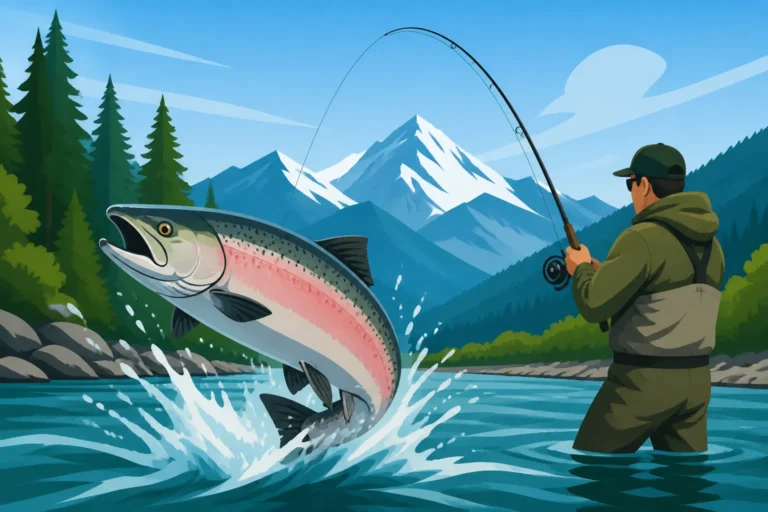
Ah, the mighty Chinook, often called the "King" salmon, and for good reason. These are the biggest, strongest, and arguably the most coveted of BC’s salmon species. When a Chinook hits your line, be prepared for a fight that will test your gear and your resolve. They tend to enter rivers with purpose, often holding in deeper, slower pools or behind significant structure, waiting for the right conditions to push upstream. Their sheer size means they can hold their own against heavy currents, making them a challenge to entice and even more challenging to land. They're often found in major river systems like the Fraser River, Skeena River, and many of Vancouver Island's larger rivers.
Chinook are not always aggressive biters once they’re in freshwater, especially as they get closer to their spawning grounds. They become territorial and are often triggered by an offering passing directly in front of them, rather than actively feeding. This means presentation is key, and you’ll often need to put your bait or lure right in their face, almost annoying them into striking. They typically prefer larger baits and lures that mimic their size and provide a substantial profile in the water. For more dedicated advice, check out our guide on Chinook Salmon Fishing in BC.
Coho Silver Salmon: Agile and Aggressive Fighters
Coho salmon, affectionately known as "Silvers" due to their brilliant chrome scales when fresh from the ocean, are a favourite among many river anglers. They’re known for their acrobatic jumps, lightning-fast runs, and aggressive strikes, making them incredibly fun to catch on lighter tackle. Unlike the often moody Chinook, Coho are typically more willing biters in the river, especially in the early stages of their migration. They tend to hold in faster, shallower runs, behind boulders, and in the "tail-outs" of pools where the current begins to pick up again.
Coho are often found closer to the banks, using current breaks to rest before their next push upstream. They respond well to a variety of presentations, from drift fishing with roe to casting spinners and spoons. Their aggressive nature means they'll often chase a lure, making them a great target for active fishing methods. You'll find fantastic Coho fishing opportunities in systems like the Vedder River, Chehalis River, and many coastal streams on Vancouver Island. For a deeper dive into targeting these beauties, our article on Coho Salmon Fishing in BC has you covered.
Sockeye Red Salmon: The Prized Table Fare
Sockeye salmon are renowned for their vibrant red flesh and delicious taste, making them a highly sought-after species for the dinner table. When they enter freshwater, their silver bodies quickly transform into a striking crimson red, making them easy to identify on the spawning grounds. While they are powerful swimmers, their unique feeding habits in the ocean (primarily zooplankton) mean they don't actively feed once they enter rivers. This makes them a challenging and somewhat controversial target for anglers, as they are not caught through conventional feeding behaviour.
Instead, Sockeye are often "snagged" unintentionally or enticed to bite out of aggression or curiosity with small, brightly coloured lures or flies. Ethical angling practices are paramount when targeting Sockeye, focusing on legal "flossing" or drift fishing techniques that aim to hook the fish in the mouth. They typically travel in huge, dense schools, making them relatively easy to locate once a run is in full swing. The Fraser River is legendary for its Sockeye runs, with large populations also found in other systems like the Adams River. Understandably, Sockeye Salmon Fishing in BC has its own unique considerations.
Pink Humpy Salmon: Abundant and Fun
Pink salmon, or "Humpies," are the smallest and most abundant of the Pacific salmon species in BC. They have a distinct two-year life cycle, meaning they return to spawn in odd-numbered years (e.g., 2025, 2027) in massive numbers. While they may not offer the same trophy size as a Chinook, their sheer numbers and willingness to bite make them an excellent target for beginners, kids, or anyone looking for consistent action. Males develop a pronounced hump on their back when they enter freshwater, giving them their "Humpy" nickname.
Pinks typically hold in shallower, faster water, often in riffles and gravel bars. They are aggressive biters and will readily strike small, flashy lures, flies, and even bare hooks. Their abundance provides fantastic opportunities for high-volume fishing, and they are excellent on the barbeque when fresh from the river. You’ll find them in almost every coastal river system during their migration years, including the Fraser River tributaries and many small streams on the Sunshine Coast. Our guide on Pink Salmon Runs in BC offers more details on these prolific fish.
Chum Dog Salmon: Powerful and Underappreciated
Chum salmon, also known as "Dogs" due to their impressive canine-like teeth developed during spawning, are arguably the most underrated salmon species in BC rivers. They are incredibly strong fighters, known for their bulldogging runs and immense power, often matching a Chinook in strength pound-for-pound. Like Sockeye, they don't actively feed in freshwater but are very aggressive and territorial, making them susceptible to bright, flashy presentations. Their flesh is not as prized as Chinook or Sockeye, but when smoked or canned, it can be quite delicious.
Chum salmon tend to hold in slower, deeper pools, often congregating in large numbers before moving onto the spawning grounds. They are highly responsive to large, bright pink or chartreuse lures, jigs, or flies that trigger their aggressive instincts. Don’t let their "Dog" moniker fool you; hooking a fresh Chum in a river will give you one of the most memorable fights of your life. Rivers like the Goldstream River, Squamish River, and many streams in the Lower Mainland see excellent Chum runs. For tips on landing these powerful fish, check out our guide on Chum Salmon Runs in BC.
Essential Gear for River Salmon Fishing in BC
Having the right gear is non-negotiable when targeting powerful salmon in BC rivers. The wrong setup can lead to broken lines, lost fish, and a lot of frustration. Investing in quality equipment that can handle the specific demands of river fishing and the strength of a salmon is crucial for a successful and enjoyable experience.
Rods, Reels, and Line for River Conditions
Choosing the right rod and reel combination is paramount. For river salmon, you’ll generally want a medium-heavy to heavy power rod, typically between 9 and 11 feet in length. The extra length is invaluable for mending line, controlling drifts, and providing leverage when fighting fish in strong currents. Brands like Fenwick, Shimano, and G.Loomis offer excellent options designed for salmon and steelhead. Match your rod with a durable spinning or baitcasting reel that has a smooth, strong drag system. A quality drag is your best friend when a powerful Chinook decides to make a run! Reels in the 4000-6000 size range for spinning, or comparable baitcasting reels, are generally suitable.
When it comes to line, a good quality braided mainline of 30-50 lb test is common for its strength, sensitivity, and lack of stretch, which helps with hook sets. Many anglers then use a fluorocarbon or monofilament leader of 15-30 lb test, depending on the species and water clarity. The leader is often tied to the main line with a strong knot like a double uni or FG knot. Using a leader allows for stealthier presentations and acts as a sacrificial line should you snag. Remember, strength is key here, as you're often battling fish in tight quarters with plenty of snags and strong currents.
Terminal Tackle: Hooks, Weights, Swivels, and Leaders
Terminal tackle is where the rubber meets the road, or rather, where your bait meets the fish. For hooks, you'll need sharp, strong single hooks, typically sizes 1/0 to 5/0, depending on the species and bait size. Circle hooks are gaining popularity for their effectiveness and ability to hook fish in the corner of the mouth, aiding in successful catch and release. Brands like Gamakatsu and Owner are trusted by experienced anglers for their superior sharpness and strength. Ensure your hooks are always razor-sharp; a dull hook will lead to missed opportunities.
Weights are used to get your bait or lure down to the fish in the current. Sinker styles vary, but common choices include lead or non-toxic alternative slinky weights, pencil weights, and cannonball sinkers, ranging from 1/2 oz to 2 oz or more, depending on water depth and current speed. Swivels, particularly barrel or bead chain swivels, are crucial for preventing line twist, especially when using spinning lures or drift fishing with bait. Attach your leader to your mainline using a swivel for smooth operation. You can find a vast selection of these essential items on platforms like Amazon, making it easy to stock up before your next trip. Always carry a variety of sizes and styles, as river conditions can change quickly.
Waders, Boots, and Safety Gear
Staying dry, comfortable, and safe on the river is just as important as your fishing gear. Quality chest waders are essential for accessing prime fishing spots and staying warm in chilly BC waters. Look for breathable waders, often made from Gore-Tex or similar materials, that allow moisture to escape while keeping water out. Paired with your waders, sturdy wading boots with felt or rubber soles (and sometimes studs for extra grip) are critical for navigating slippery rocks and uneven riverbeds. Brands like Simms, Redington, and Frogg Toggs offer reliable options.
Beyond comfort, safety is paramount. Always wear a wading belt with your waders to prevent them from filling with water in case of a fall. A wading staff is highly recommended for stability, especially when crossing swift currents or navigating unfamiliar terrain. Sunglasses protect your eyes from UV rays and stray hooks, while a hat provides sun protection and warmth. Always carry a small first-aid kit, a whistle, and let someone know your fishing plan, especially if you’re venturing into remote areas. A personal flotation device (PFD) is a must, particularly if you're fishing from a boat or in deeper, faster moving water. Remember that BC Boating Laws for Anglers often require PFDs for all occupants.
Popular River Salmon Fishing Techniques
Now that we’ve covered the gear and the fish, let’s delve into the techniques that will put you in direct contact with BC’s magnificent salmon. Each method has its own nuances, best suited for different river conditions, species, and angler preferences. Mastering a few will significantly increase your success rate.
Drift Fishing for Bottom Dwellers
Drift fishing is one of the most effective and widely used techniques for river salmon, especially for species like Chinook and Chum that often hold close to the bottom. The core principle is to present your bait or lure naturally along the riverbed, allowing the current to carry it into the fish's strike zone. This technique is particularly effective in runs, riffles, and seams where fish are resting or moving upstream. You cast upstream and slightly across the current, letting your weight bounce or "tick" along the bottom as your line drifts downstream. The goal is to keep just enough tension to feel the bottom without dragging too much, mimicking a natural piece of food or spawning material.
This method requires a delicate touch and constant adjustment to maintain the perfect drift. A long, sensitive rod helps detect subtle bites. Many anglers will use a "slinky" weight setup, which consists of lead shot inside a piece of parachute cord, less prone to snagging than traditional lead sinkers. For bait, cured salmon roe is king, often tied in mesh bags (roe bags), but worms or prawns can also be effective. Lures like Corkies or Cheaters are often added above the bait to provide colour and buoyancy. If you're targeting Steelhead, the principles are very similar, so you might find our guide on Drift Fishing for Steelhead in BC Rivers helpful, too.
Float Fishing: Mastering the Current
Float fishing, also known as "Dinking" or "indicator fishing," is another highly productive technique, particularly effective for Coho, Pink, and sometimes even Chinook or Chum, especially in shallower to medium-depth water. This method involves suspending your bait or lure beneath a float (often called a "drift float" or "bobber") that rides on the surface, allowing you to control the depth and speed of your presentation. The float acts as a visual indicator of bites, dipping or moving erratically when a fish takes your offering. It's especially useful in choppy water or when fishing over submerged structure where bottom-bouncing weights would snag frequently.
The key to successful float fishing is matching the speed of your float to the speed of the current where the fish are holding. You want a "dead drift," where your float moves as naturally as possible, free from drag caused by your line. This often means casting upstream and mending your line repeatedly to prevent the current from pulling your float unnaturally fast. Common setups involve a weighted float, a leader, and a small jig, a piece of roe, or a worm beneath. Jigs in pink, chartreuse, or orange are highly effective for Coho and Chum. For insights into this versatile method, our article on Float Fishing the Bulkley River offers valuable tips that can be applied to salmon as well.
Bar Fishing: The Patient Angler's Choice
Bar fishing is a distinct and often highly successful technique used primarily on larger rivers like the Fraser River, especially during strong salmon runs. It's a stationary method, typically practiced from gravel bars that extend into the river. Anglers cast heavy weights (often 8-16 oz pyramid or cannonball sinkers) out into the main current, letting them anchor their bait on the river bottom. The bait, usually a large presentation of cured salmon roe or roe bags, is then drifted downstream from the anchor weight on a long leader (often 4-6 feet or more), allowing it to swing naturally in the current directly into the path of migrating salmon.
This technique is a waiting game, often involving multiple rods set up in rod holders, allowing the angler to cover a broader section of the river. When a salmon picks up the bait, the rod tip will typically dip hard and steadily. It's a favourite method for targeting powerful Chinook and Chum salmon, particularly when they are holding in deep travel lanes. Patience is a virtue here, but when a rod doubles over, the reward is immense. Due to the heavy weights and strong currents, stout gear is absolutely essential. This is a very social form of fishing, often done with friends or family, making for a great day out on the river.
Casting and Retrieving Lures
For active salmon, especially Coho and Pink, casting and retrieving lures can be incredibly effective and exhilarating. This method involves casting spoons, spinners, or plugs across or downstream and then retrieving them with varying speeds and actions to entice a strike. The flash, vibration, and erratic movement of a well-presented lure can trigger an aggressive response from salmon, particularly those fresh from the ocean. This technique allows anglers to actively cover a lot of water, searching for fish rather than waiting for them to come to a stationary bait.
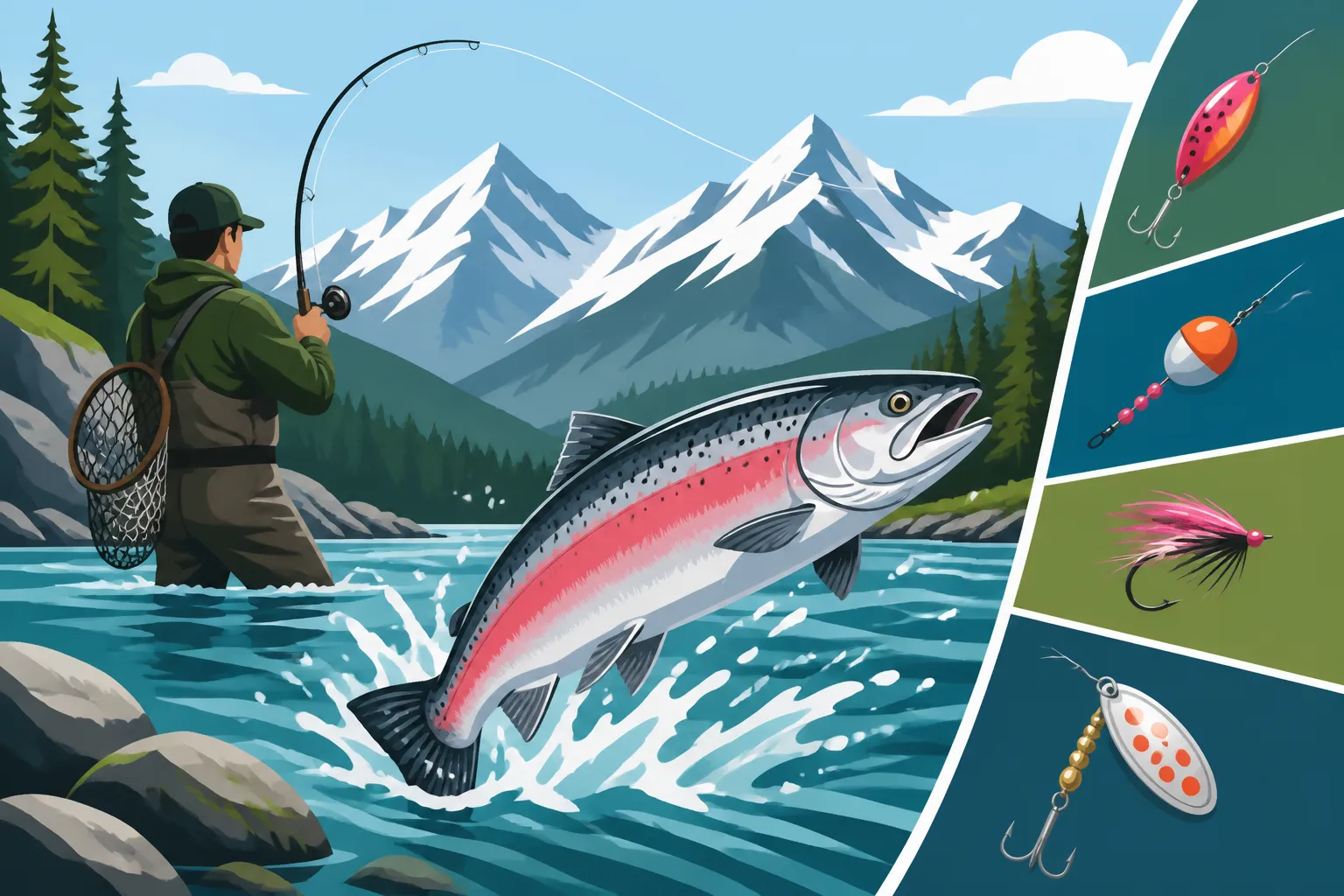
Spoons like the Gibbs Delta Croc or the Dick Nite spoon, in colours like chrome, brass, or painted with red or green stripes, are classic salmon getters. Spinners from companies like Blue Fox or Mepps, particularly in sizes #3 to #5, can be deadly for Coho and Pinks. Plugs, such as the Kwikfish or FlatFish, are also effective, especially when back-trolled from a boat or swung in the current. Vary your retrieve speed, add twitches, and experiment with different lures until you find what the fish are keying on. This is a very hands-on and engaging way to fish, offering instant feedback and often spectacular strikes.
Bait and Lure Strategies for Different Salmon Species
The choice between natural bait and artificial lures can often make or break your day on the river. Each has its advantages and disadvantages, and knowing when and how to deploy them effectively for specific salmon species is a critical skill for any BC angler.
Natural Baits: Roe, Worms, and Prawns
Natural baits are often irresistible to salmon, as they mimic food sources or, in the case of roe, represent a natural part of the salmon's spawning cycle. Cured salmon roe, particularly Chinook or Coho roe, is by far the most popular and effective bait for river salmon. The scent, texture, and natural appearance are incredibly enticing. Roe is typically tied into small mesh bags, ranging from dime-sized for smaller species like Pink, to golf ball-sized for large Chinook. The curing process is crucial, enhancing the bait's scent and toughening it to stay on the hook longer. Many anglers have their secret curing recipes, often involving borax, non-iodized salt, and various dyes or scents.
Worms, particularly large dew worms or nightcrawlers, can be surprisingly effective for Coho and Pink salmon, especially in coloured water after a rain. They offer a natural profile and a lot of movement. Prawns, either fresh or cured, are another potent bait, often used for Chinook and Chum. They have a strong scent that can draw fish in from a distance. The key with all natural baits is freshness and proper presentation. Keep your baits in good condition, and ensure they drift naturally without spinning or looking unnatural.
Artificial Lures: Spoons, Spinners, and Plugs
Artificial lures offer versatility, durability, and the ability to cover a lot of water quickly. Spoons, with their wobbling action and flash, imitate wounded baitfish and are deadly for aggressive salmon. Chrome and brass are standard colours, often with reflective tape or painted patterns. Spinners, with their rotating blades, create flash and vibration, triggering a predatory response, especially in Coho and Pink salmon. Bright colours like chartreuse, pink, and orange are excellent choices. Plugs, designed to dive and wobble, can be back-trolled or cast and retrieved, making them effective for Chinook and Chum. Sizes and colours should be chosen to match local conditions and target species. For more on what salmon eat, consider delving into What baitfish BC salmon key on.
Jigs are another artificial lure category that is incredibly effective, especially for Coho and Chum. Marabou jigs in pink, chartreuse, or purple, ranging from 1/4 to 1 oz, can be fished under a float or drifted along the bottom. The pulsating action of the marabou is very lifelike. The advantage of artificial lures is their reusability and the wide array of colours and sizes available. It's always a good idea to carry a variety of lures from reputable brands like Gibbs Delta, Blue Fox, and Luhr Jensen, to experiment with until you find what the fish are hitting. Platforms like Amazon offer a vast selection, making it convenient to explore different options.
Fly Fishing for River Salmon
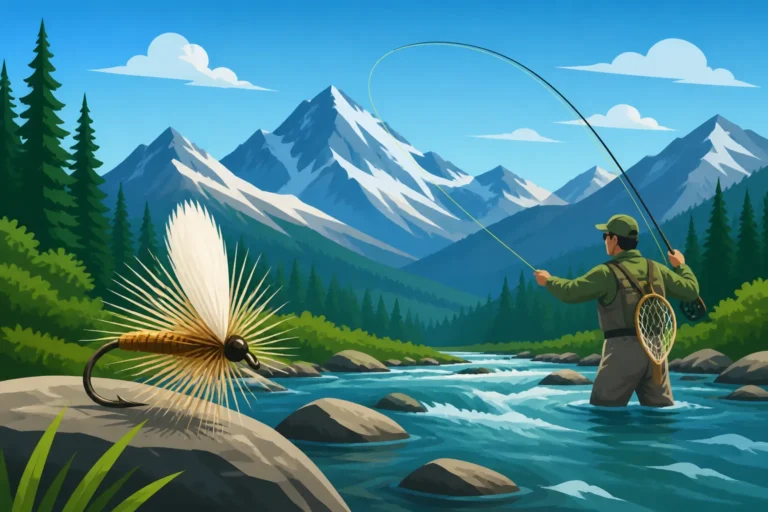
Fly fishing for salmon in BC rivers offers a unique and incredibly rewarding experience, appealing to those who appreciate the finesse and artistry of the sport. While often associated with trout or steelhead, fly fishing can be exceptionally effective for all five species of Pacific salmon, especially Coho, Pink, and Chum, and even Chinook under the right conditions. The key is to present a fly that either mimics a natural food source (though salmon rarely feed in freshwater) or, more often, provokes an aggressive or territorial strike.
For Coho, popular flies include various Spey flies, streamers like the Clouser Minnow or Woolly Bugger, and flashy patterns in pink, chartreuse, or blue. Pinks will readily hit small, pink or chartreuse patterns. Chum often respond to large, gaudy flies in bright pink, purple, or chartreuse. Chinook can be targeted with large, weighted intruders or articulated streamers, especially during low light conditions or when they are actively migrating. Gear typically includes 8 to 10-weight fly rods, matched with a reliable reel and a sinking or sink-tip line to get the fly down to the fish. Two-handed Spey rods are also popular for covering large rivers and making long casts with minimal effort.
Reading the River: Locating Salmon Holds and Travel Lanes
Finding the fish is often the most challenging part of salmon fishing in BC rivers. Salmon don't just randomly distribute themselves; they use specific areas for resting, staging, and travelling upstream. Learning to "read the river" – understanding how water flows and where fish are likely to be – is a skill that takes time and practice but is absolutely essential for consistent success.
Identifying Prime Lies and Structure
Salmon, especially larger species like Chinook and Chum, are masters of energy conservation. They will always seek out spots that offer a break from the main current while still providing easy access to the upstream flow. These areas are known as "lies." Prime lies include deep pools, particularly at the head (where fast water enters) and tail (where water exits) of the pool. Eddy lines, where currents meet and create swirling water, are fantastic holding areas. Seams – the visible lines where fast water meets slow water – are also critical, as salmon can rest in the slower water and dart into the fast current when ready.
Submerged structure like large boulders, fallen trees (log jams), and undercut banks provide excellent cover and current breaks. Salmon will stack up behind these features, using them as ambush points or resting spots. Gravel bars, especially the edges and drop-offs, are travel lanes and staging areas. Look for changes in depth, current speed, and bottom composition. The "inside bend" of a river will often be shallower and slower, while the "outside bend" will be deeper and faster, with prime holding water. Being able to identify these features on a river like the Vedder River or the Skeena River will put you in the right spot.
Understanding Water Conditions and Their Impact
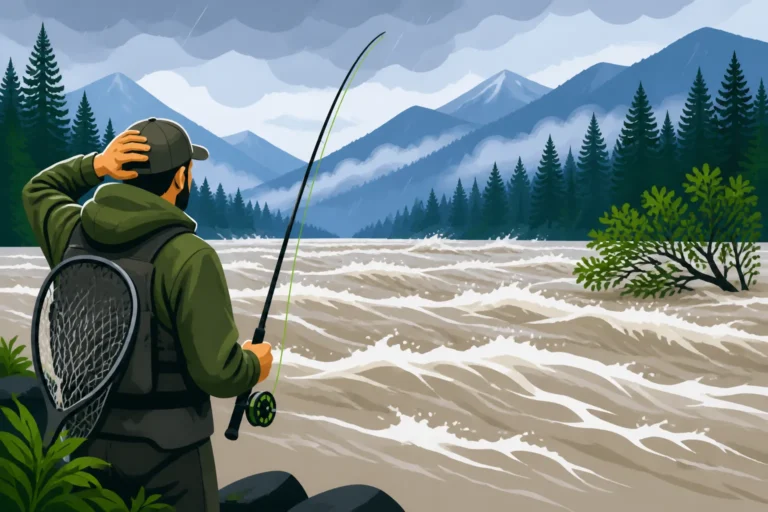
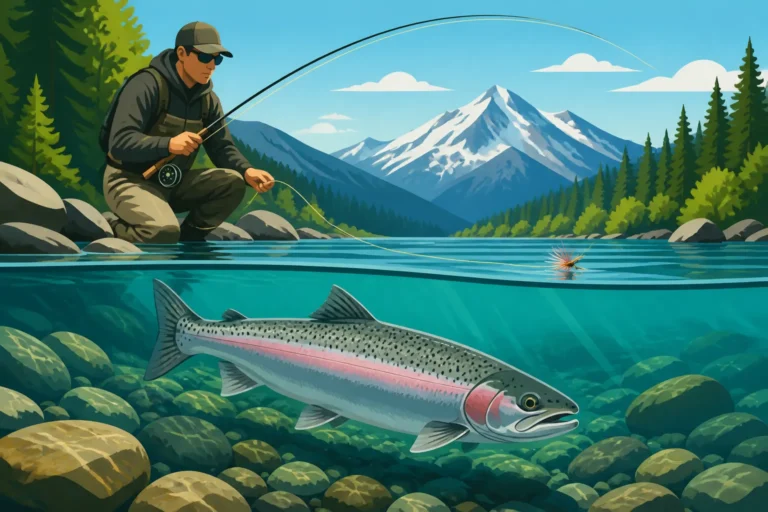
Water conditions are a huge factor in river salmon fishing. Water level, clarity, and temperature all dictate where salmon will hold and how they will behave. High, murky water after a heavy rain can scatter fish and make presentations difficult. In these conditions, salmon often hug the banks, seeking slower, slightly clearer water. Bright, flashy lures or heavily scented baits are usually more effective as visibility is reduced. Conversely, low, clear water can make salmon spooky and necessitate longer leaders, smaller baits, and more subtle presentations. Stealth becomes paramount.
Water temperature also plays a significant role. Salmon are cold-blooded and their activity levels are directly tied to water temperature. Each species has a preferred temperature range for migration and spawning. Generally, cooler water (but not freezing) often makes fish more aggressive and active. Rapid changes in water temperature, especially sudden drops, can make fish lethargic. Monitoring river flows and temperatures, often available through local fishing reports or government websites, is a smart habit for any serious BC salmon angler. Remember to check BC Fishery Notices and In-Season Closures, Explained before heading out, as conditions can change rapidly and impact fishing regulations.
Timing Your Trip: Seasons, Tides, and Weather for Success
Timing is everything in salmon fishing. Being on the river when the fish are running, the tides are right, and the weather is cooperative can turn a mediocre day into an unforgettable one. Understanding these elements will help you plan your trips effectively and maximize your chances of success.
Peak Salmon Runs in BC Rivers
British Columbia is blessed with distinct salmon runs throughout the year, though specific timing varies by river system and species. Generally:
- Chinook: Spring (April-June) for early migratory fish, and Fall (August-October) for the main spawning runs.
- Sockeye: Late Summer (July-September), with large Fraser River runs peaking in August.
- Coho: Late Summer to Fall (August-November), with September and October often being prime.
- Chum: Fall (September-November), peaking in October.
- Pink: Late Summer (August-September) in odd-numbered years.
However, these are broad generalizations. Each river system has its unique run timing, influenced by factors like snowmelt, rainfall, and ocean conditions. For instance, the Harrison River might see a strong late-fall Chum run, while the Campbell River on Vancouver Island might have an earlier Chinook push. It's crucial to consult local fishing reports, guides, and the Freshwater Fishing Regulations Synopsis for precise, up-to-date run timing for your chosen location. Our comprehensive guide on BC Fishing Season Dates and Closures offers more detailed information on annual run forecasts.
The Influence of Tides on Coastal Rivers
For rivers that connect directly to the ocean, such as the Fraser, Squamish, and Goldstream rivers, tides play an absolutely critical role in salmon migration and fishing success. An incoming or "flood" tide often encourages fresh salmon to enter the river from saltwater, bringing new fish into the system. As the tide pushes in, it can also create excellent fishing opportunities in the lower reaches of these rivers, concentrating fish as they move upstream. The period around high tide can be particularly productive as fish move through sections that were too shallow during low tide.
Conversely, an outgoing or "ebb" tide can cause fish to hold in deeper pools or move out of certain areas, waiting for the next push of saltwater. While less active, fish can still be caught on the ebb, especially in deep channels or eddies. Understanding the daily tide charts for your specific fishing location is vital. Many experienced anglers plan their trips around the "slack tide" periods (the brief calm between incoming and outgoing tides) or during the peak of the incoming tide, as fish movements are often most predictable then. The effect of tides can greatly influence Best Time of Day to Catch Salmon.
Weather and Water Level Considerations
Just like water conditions, weather plays a huge part in salmon fishing success. Persistent rain can cause rivers to rise and become coloured, often triggering fresh salmon to push hard upstream. While challenging for anglers due to reduced visibility, these high water events can sometimes lead to incredible fishing as new schools of fish move in. Conversely, long periods of dry, sunny weather can lead to low, clear water, making fish wary and reluctant to bite. Bright sun can also push salmon into deeper, shadier holding areas.
Overcast days are often considered ideal, as they provide consistent light conditions without spooking fish, encouraging them to spread out from deep cover. Wind can be a blessing or a curse; a light breeze can ripple the water's surface, breaking up an angler's silhouette and making fish less wary, but strong winds can make casting difficult and uncomfortable. Always monitor the local weather forecast and river levels before planning your trip. Apps and websites like Water Survey of Canada provide real-time river flow data, which is invaluable for predicting fish behaviour and safety.
Ethical Angling and Conservation Practices
As anglers, we are stewards of the resource. British Columbia's salmon runs are precious and facing numerous challenges. Practicing ethical angling and adhering to conservation principles is not just a matter of following rules; it’s about ensuring these incredible fish thrive for future generations.
Catch and Release Best Practices
Many salmon, especially larger Chinook and Steelhead, are often released, whether voluntarily or by regulation. Mastering proper catch and release techniques is vital for the fish’s survival. First, minimize fight time by using appropriate tackle that can land the fish efficiently without exhausting it. Once hooked, avoid dragging the fish onto dry land or gravel, as this removes their protective slime layer, making them vulnerable to disease. Instead, keep the fish in the water as much as possible.
When handling the fish, wet your hands before touching it to protect its slime coat. Avoid squeezing its belly or gills. If a photo is necessary, lift the fish gently, support its weight horizontally, and return it to the water quickly. Use needle-nose pliers or a de-hooking tool to remove the hook carefully. If the hook is deeply embedded and cannot be removed without causing further damage, cut the leader as close to the hook as possible; barbless hooks make this process much easier and are often mandatory in BC rivers. Hold the fish gently in the current, facing upstream, until it revives and swims away under its own power. Never release a fish that isn't ready to swim strongly.
Understanding Bag Limits and Regulations
British Columbia’s fishing regulations are complex and can change frequently, especially for salmon, due to conservation concerns. It is every angler’s responsibility to know and understand the current rules for the specific waters they are fishing. Regulations cover:
- Bag and Possession Limits: How many fish of a certain species you can keep in a day and how many you can have in your possession. Our guide on BC Bag and Possession Limits by Species details these crucial numbers.
- Size Restrictions: Minimum or maximum lengths for retention of certain species.
- Gear Restrictions: Allowed hook types (e.g., barbless, single point), bait restrictions, and line requirements.
- Season Dates and Closures: Specific periods when certain waters are open or closed to fishing for particular species.
Regulations can vary not just by region but even by specific river sections, and often change mid-season based on run strength. Always consult the most recent BC Freshwater Fishing Regulations Synopsis and check relevant DFO Fishery Notices before each trip. Fishing without a proper understanding of these rules can result in significant fines and penalties. Remember, your British Columbia Fishing License Guide for 2026 is your first step in legal angling.
Respecting Other Anglers and the Environment
Part of being an ethical angler is showing respect for fellow fishers and the natural environment. When sharing a river, maintain adequate spacing between yourself and other anglers. If you walk into a section where someone is already fishing, respect their space and ask if you can fish nearby. Avoid "crowding" other anglers, especially when fish are concentrated. When moving upstream or downstream, try to do so quietly and politely.
Leave no trace behind. Pack out all your garbage, including fishing line, bait containers, and any other litter. Avoid disturbing riparian vegetation or fragile streambeds. Be mindful of wildlife and give them space. Respect private property and only access rivers through designated public access points. By demonstrating courtesy and environmental responsibility, we contribute to a positive angling community and help preserve BC's stunning natural landscapes for everyone to enjoy.
Disclaimer
Please be aware that fishing regulations, including those pertaining to salmon fishing techniques, seasons, and limits in British Columbia, are subject to change without notice by the Department of Fisheries and Oceans (DFO) and the BC Provincial Government. It is the angler's responsibility to consult the most current regulations synopsis and DFO Fishery Notices before heading out to fish. This guide is for informational purposes only and should not be considered a substitute for official regulatory documents.