Chinook Salmon Migration Patterns in BC
Oh, the elusive Chinook salmon! If you've spent any time on the water in British Columbia, you know that understanding where these magnificent fish are and, more importantly, where they're going, feels like trying to decipher a secret code written by the ocean itself. It's incredibly frustrating to head out with high hopes only to find that the fish have moved on, leaving you wondering if you missed a critical window. But don't despair! This comprehensive guide is dedicated to pulling back the curtain on the incredible, complex world of Chinook salmon migration patterns in BC, helping you understand their journeys from the open ocean to their natal rivers so you can better predict their movements and improve your angling success.
The Incredible Journey: Understanding Chinook Salmon Migration
When we talk about Chinook salmon, often called "Kings" for good reason, we're talking about a species that undertakes some of the most epic journeys in the animal kingdom. Their lives are a constant testament to instinct and survival, driven by an innate desire to return to the very streams where they were born. These migrations aren't just a simple swim; they are long, arduous expeditions influenced by countless environmental factors and genetic predispositions. For anglers, grasping these patterns is like gaining a superpower – it allows you to anticipate when and where these powerful fish might be concentrated, whether they're gorging themselves in the Pacific or battling their way upstream.
Why Migration Matters for Chinook Survival
The entire life cycle of a Chinook salmon revolves around successful migration. From the moment they hatch in a cold, clear stream, their journey begins. First, as tiny alevin, then fry, they venture from the gravel beds into the river current. As smolts, they embark on their perilous downstream migration to the ocean, often covering vast distances to reach the rich feeding grounds of the Pacific. This ocean phase is crucial for growth, where they can pack on incredible size and strength, preparing for the final, most demanding leg of their journey: the return migration to spawn. Without these migrations, the species simply wouldn't exist as we know it. It's how they find food, avoid excessive predation in one specific area, and ultimately, propagate their species in the specific genetic lineages that have adapted to particular rivers. This deep-seated need to return to their birth waters ensures genetic diversity and adaptation to local conditions, making each river system's Chinook unique.
The Two Main Types of Chinook Runs: Stream vs. Ocean Type
When you're out on the water, you might hear experienced anglers talk about "stream-type" or "ocean-type" Chinook. These aren't just casual terms; they refer to fundamental differences in how these fish spend their early lives and, consequently, how they migrate. Understanding this distinction is key to predicting their behavior.
-
Stream-Type Chinook: These are the homebodies, relatively speaking. After hatching, stream-type Chinook tend to rear in freshwater for an extended period, often a full year or even more, before migrating out to sea as larger smolts. Because they spend so much time in their natal river, they often don't venture as far into the open ocean during their adult feeding phase. When it's time to return, they typically enter rivers earlier in the season, sometimes months before spawning, and undertake longer freshwater migrations far upstream. Think of rivers like the Upper Fraser or Thompson; these fish need more time to cover vast distances and mature their eggs and milt within the river system itself. You'll often find these earlier-run fish still showing good colour and condition as they transition from saltwater to freshwater.
-
Ocean-Type Chinook: These are the adventurers. Ocean-type Chinook typically migrate to the sea much earlier in their lives, often as sub-yearlings (within their first year). They spend less time in freshwater as juveniles and embark on more extensive ocean migrations, traveling farther afield to offshore feeding grounds. They gain most of their size and maturity in the saltwater environment. When they return, they often enter their natal rivers later in the season, closer to their spawning time, and their freshwater migration might be shorter, often spawning closer to the river mouth or in tributary systems. Many of the major coastal rivers see these ocean-type returns. Their lives are truly a testament to the bounty of the Pacific, where they transform from small fry to massive fish in a relatively short period.
This distinction profoundly impacts when and where you might encounter them. Earlier in the season, if you're targeting fish heading far upstream, you're likely chasing stream-type Chinook. Later in the season, especially closer to the coast, you're more likely to intercept ocean-type fish.
Coastal Migration Routes: Following Chinook Along BC's Shorelines
Before Chinook salmon make their final, dramatic push into freshwater, they undertake extensive coastal migrations. This phase is a high-stakes game of survival and feeding, where they build up the energy reserves needed for their challenging upstream journey. For saltwater anglers, this is often the sweet spot for intercepting these powerful fish. Knowing these routes is paramount for success, whether you're trolling the Strait of Georgia or mooching off the west coast of Vancouver Island.
The Grand Tour: Open Ocean Feeding Grounds
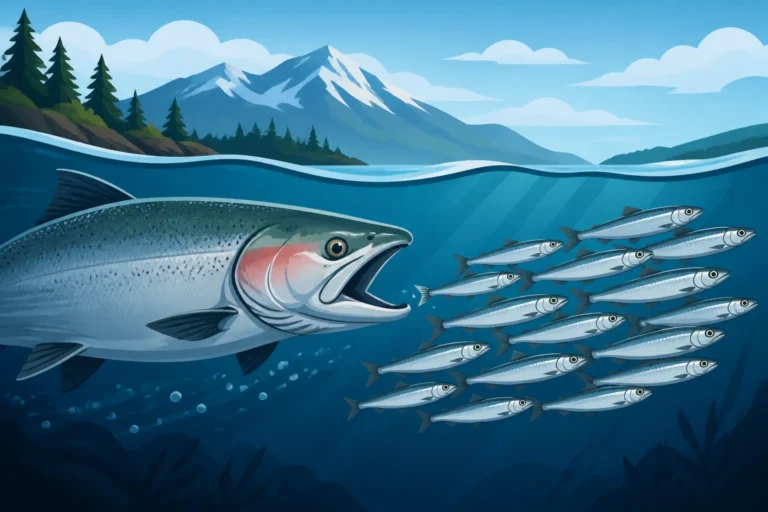
The majority of a Chinook's life is spent in the vastness of the Pacific Ocean. After migrating from their freshwater nurseries as smolts, these young fish spread out to various feeding grounds. For many BC Chinook, these grounds can extend far offshore, even into Alaskan waters. They follow nutrient-rich currents, gorging on smaller fish like herring and needlefish, as well as squid and crustaceans. This is where they achieve their incredible size, with some growing into true monsters weighing upwards of 50 pounds. The exact feeding grounds can vary depending on the specific run (e.g., Fraser River Chinook might have different offshore patterns than Skeena River Chinook), but generally, they are areas of high productivity. This phase is less about a directed migration and more about opportunistic feeding, ranging widely to exploit available prey. This period of growth is absolutely essential for them to develop the size and fat reserves needed for their non-feeding spawning migration.
Nearshore Staging and Estuary Entry
As their spawning time approaches, often after 2 to 5 years at sea, the Chinook salmon begin their directed return migration. They first move from the broad ocean expanses into nearshore coastal waters. This is often referred to as "staging." Here, they might mill around in bays, inlets, and along headlands, waiting for the right conditions to enter their natal rivers. Factors like freshwater runoff from rain, tide cycles, and water temperature all play a role in signaling the opportune moment.
For instance, Where to Find Chinook Salmon in BC will often highlight key staging areas. You'll find Chinook congregating near river mouths, particularly in larger estuaries like the Fraser River delta or the mouths of major Vancouver Island rivers. They are still actively feeding in these areas, though perhaps less intensely than in the open ocean, trying to pack on those last few ounces before they switch into "fasting mode" for their upstream journey. Anglers often target these staging fish, as they are typically in peak condition and still aggressively hitting baits and lures. This nearshore zone is a crucial transition point where their physiological changes begin, preparing them for the metabolic shift from saltwater to freshwater and the arduous task of spawning.
Major Coastal Migration Corridors
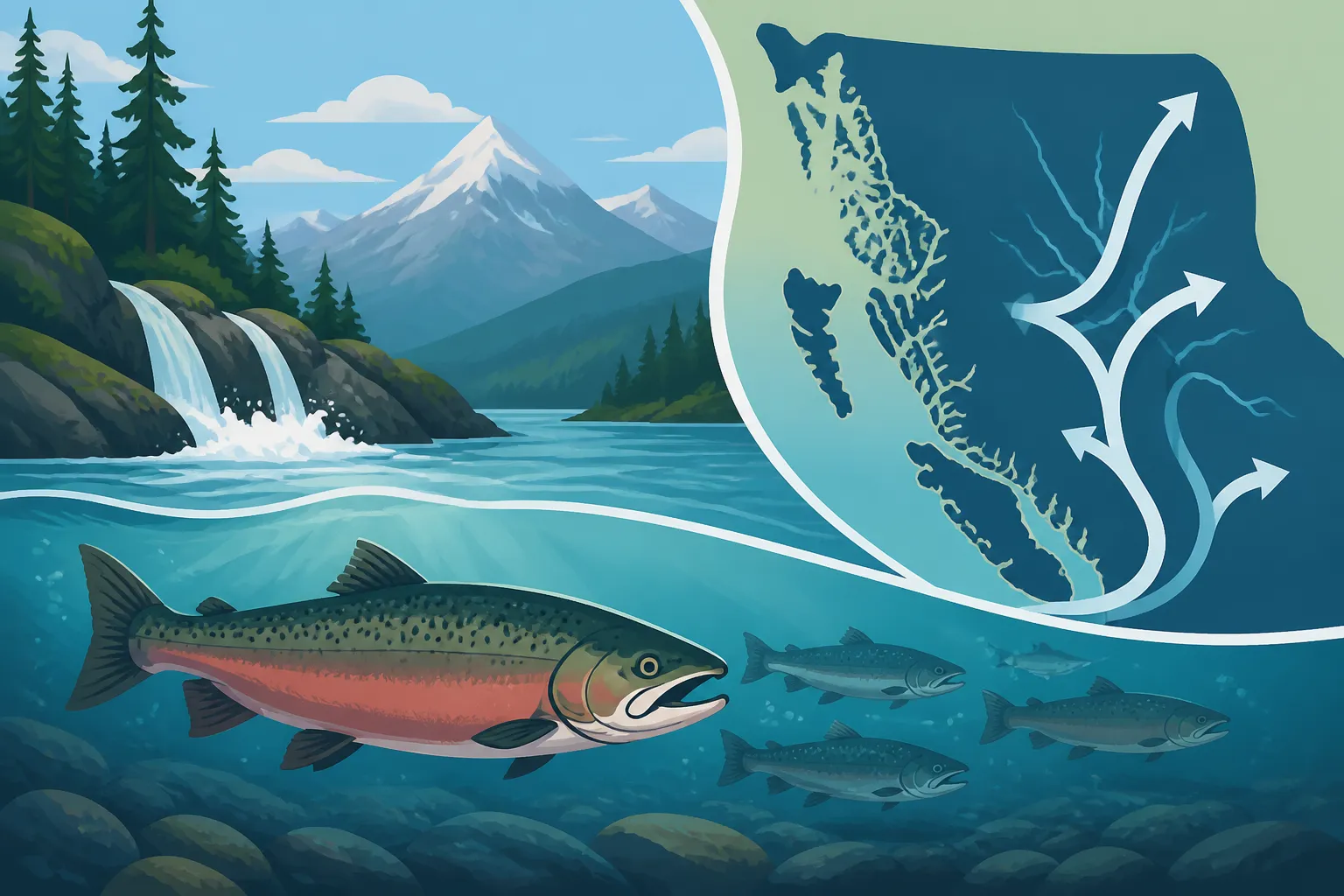
British Columbia's coastline is a labyrinth of islands, straits, and inlets, and Chinook salmon utilize specific "highways" to navigate their way home. Understanding these major corridors is a game-changer for saltwater anglers.
-
West Coast of Vancouver Island: Fish bound for rivers along the west coast of Vancouver Island, as well as many Fraser River and US-bound Chinook, will often approach from offshore, migrating along the continental shelf. Areas like offshore of Tofino, Ucluelet, and the waters around the Brooks Peninsula are renowned for intercepting these powerful fish. They follow contours, underwater pinnacles, and bait concentrations.
-
Juan de Fuca Strait and Strait of Georgia: Many salmon destined for the Fraser River, a massive artery for Chinook in BC, will pass through the Strait of Juan de Fuca and then into the Strait of Georgia. These are well-defined migration routes, especially during the peak summer and fall runs. Best Salmon Fishing Spots in BC often points to locations like the "Hump" off Victoria or the waters near the Bell Buoy at the mouth of the Fraser as prime spots to intersect these migrating schools. They hug the coastline, often in predictable lanes, making them a primary target for the charter fleets and recreational anglers alike.
-
North Coast and Inside Passages: For Chinook heading to northern rivers like the Skeena, Nass, and others, their migration paths often take them through the intricate inside passages between Vancouver Island and the mainland, or up the outer coast. Places like Prince Rupert and Rivers Inlet are gateways to these incredible fisheries. The sheer volume of water and the complex topography make these routes challenging but incredibly rewarding for those who learn their patterns.
Knowing these corridors allows anglers to position themselves effectively. If you're on a charter out of Campbell River, for instance, your guide knows the exact routes Chinook take through the Discovery Passage on their way to the Fraser or local rivers. Understanding these pathways is like having a roadmap to where the fish are headed.
| Migration Stage | Primary Location | Typical Behavior | Angling Implication |
|---|---|---|---|
| Smolt Out-Migration | Natal Rivers to Open Ocean | Adapting to saltwater, growing | Not typically targeted by recreational anglers |
| Ocean Feeding | Open Pacific, continental shelf | Aggressive feeding, rapid growth | Targeted offshore, large, strong fish |
| Nearshore Staging | Coastal bays, inlets, estuaries | Congregating, some feeding, preparing | Excellent saltwater fishing, fish in prime condition |
| Freshwater Migration | Rivers, tributaries, upstream | Cease feeding, focused on spawning | Freshwater fishing, strong current fighters |
| Spawning | Natal gravel beds | Reproducing, eventual mortality | Not targeted, vulnerable |
Freshwater Migration: The Upstream Battle
Once Chinook salmon transition from the salty embrace of the Pacific into the freshwater currents of their natal rivers, their journey takes on an entirely new dimension. This is the ultimate test of endurance, a true upstream battle against gravity, rapids, and obstacles, all driven by the unstoppable instinct to spawn. For freshwater anglers, understanding this phase means knowing where to intercept these powerful fish as they push towards their ancestral spawning grounds.
Navigating Rivers and Obstacles
Imagine swimming thousands of kilometers, then hitting a powerful, fast-flowing river and having to push against it, often for hundreds of kilometers more, without eating. That's the reality for a migrating Chinook. They follow scent cues from their home waters, navigating complex river systems. They'll hug current breaks, seek out slower seams, and rest in deep pools to conserve energy.
Major obstacles like waterfalls, rapids, or even man-made structures such as dams can be significant challenges. Fish will often "hold" below these barriers, sometimes for days or weeks, waiting for water levels to drop, for their bodies to adapt, or for an opportune moment to make a challenging jump. This is why certain sections of rivers become famous fishing spots; they are natural holding areas. The Fraser River, for example, has countless such spots where Chinook gather before continuing their epic push. Fraser River Fishing Guide can give you an idea of the scale of this journey and the specific challenges these fish face. Being able to read the river, identify these holding lies, and understand the timing of these movements is what separates consistent anglers from those who merely hope for a bite.
The Importance of Spawning Grounds
The entire life cycle culminates in reaching the spawning grounds. These are typically specific areas of gravel beds in the upper reaches of rivers or tributaries, characterized by clean, cold, well-oxygenated water. Females will dig depressions called "redds" with their tails, deposit their eggs, and males will fertilize them. The specific characteristics of these gravel beds – the size of the gravel, the depth of the water, and the consistent flow – are crucial for the successful incubation of the eggs.
If a Chinook cannot reach its preferred spawning ground, the future of that particular stock is jeopardized. This is why habitat protection and ensuring unimpeded access to these areas are vital. While anglers do not target spawning fish (it's generally illegal and unethical), understanding where these grounds are helps to appreciate the immense journey the fish undertake and to support conservation efforts. Knowing the location of these grounds also helps identify critical migration pathways upstream, providing clues to where fish might be intercepted further downstream as they pass through.
Fraser River Chinook: A Case Study
The Fraser River system provides one of the most compelling examples of Chinook salmon freshwater migration in British Columbia. It's an immense watershed, stretching hundreds of kilometers into the interior of the province, and hosts some of the largest and most diverse Chinook populations. Fish bound for tributaries far upstream, like the Stuart, Nechako, or even the mighty Chilcotin, embark on journeys that can take weeks or even months.
These Fraser River Chinook are predominantly stream-type fish, meaning they spend a considerable amount of time in freshwater as juveniles before migrating to the ocean. When they return, they often enter the Fraser in late spring and early summer, undertaking a prolonged freshwater migration. They travel through various ecological zones, from the tidal influence near Vancouver, through the canyons and rapids of the Fraser Valley, and then into the calmer, warmer waters of the Interior. Each segment of this journey presents different challenges and requires immense energy reserves.
Anglers targeting Fraser River Chinook need to be acutely aware of timing, as different runs (spring, summer, fall) arrive at different times and target different upstream destinations. When chinook salmon run on the Fraser is a key piece of information for planning a trip. Observing water levels, clarity, and temperature on the Fraser is also critical. High, turbid water can slow migrations and make fishing challenging, while dropping, clearing water can signal a fresh push of fish. The sheer scale of the Fraser migration is a marvel, highlighting the incredible resilience and navigational prowess of these fish.
Factors Influencing Chinook Migration
It's easy to think of Chinook migration as a simple, unwavering path, but in reality, it's a dynamic process influenced by a complex interplay of environmental factors, natural pressures, and human activities. Understanding these influences is vital for both conservation and for anglers hoping to connect with these fish. It's not just about the calendar; it's about the conditions.
Environmental Variables: Temperature, Flow, and Salinity
These three environmental factors are perhaps the most critical in dictating the timing and success of Chinook migrations.
-
Water Temperature: Chinook are cold-water fish, and elevated water temperatures can be a major stressor. In the ocean, they seek optimal temperature bands for feeding. In freshwater, warmer river temperatures can slow down their migration, increase their susceptibility to disease, and even lead to pre-spawn mortality. During hot summers, if river temperatures in the Fraser or other systems climb too high, fish may hold in cooler areas or delay their entry, sometimes with tragic consequences for the run. They need that cool, oxygen-rich water to thrive.
-
River Flow (Water Levels): The amount of water in a river profoundly affects migration. High flows (e.g., during spring freshet or heavy rains) can provide an easier path over shallow areas and dilute pollutants, but too much turbulence can also exhaust fish. Low flows, on the other hand, can make migration difficult or impossible through shallow riffles, create thermal barriers, and concentrate fish in vulnerable areas. Anglers often pay close attention to river gauges, as a sudden drop in water level might signal a delay in fish movement, while a bump in flow might trigger a fresh push. The optimal flow provides enough water to move efficiently without expending excessive energy.
-
Salinity: This is critical during the transition from saltwater to freshwater. Chinook salmon are anadromous, meaning they live in both environments. As they approach river mouths, they spend time in estuaries, gradually acclimatizing their bodies to the change in salinity. This physiological adjustment is essential. If there are sudden changes, or if environmental conditions push them into freshwater too quickly or too slowly, it can impact their health and migratory success. Estuaries are therefore not just staging areas but vital transition zones for their physiology. For an angler, understanding this means realizing that Chinook might linger in an estuary, feeding, for a bit before making the final push into the river itself.
Predation and Human Impact
While Chinook are powerful predators themselves, they are also prey throughout their lives, and these pressures significantly influence their migration.
-
Natural Predation: In the ocean, they are hunted by marine mammals like seals, sea lions, and killer whales, as well as larger predatory fish. As they enter freshwater, bears, eagles, and even smaller predators can take a toll, especially on weakened fish. These pressures can cause fish to alter their routes or speed up their migration in certain areas. Observing signs of predation can sometimes indicate where fish are holding or moving.
-
Human Impact: This is a broad category, encompassing everything from habitat alteration to fishing pressure. Dams and culverts can block migration routes. Logging and development can degrade spawning habitats or alter river flows. Pollution from urban and industrial sources can directly harm fish or make waters uninhabitable. Then there's fishing itself. While regulated, sport fishing and commercial fishing exert pressure on migrating stocks. BC Salmon Conservation Stamp Rules and BC Fishing Regulations Explained are put in place precisely to manage this human impact, ensuring sustainable fisheries. Overfishing in key migration corridors can deplete runs before they even reach their spawning grounds.
Genetic Programming and Homing Instinct
Perhaps the most astonishing factor influencing Chinook migration is their incredible genetic programming and homing instinct. Every Chinook salmon is born with an internal compass and a chemical memory that guides it back to its natal stream, often to within a few meters of where it hatched.
-
Olfactory Imprinting: The leading theory is that smolts "imprint" on the unique chemical signature of their home stream as they migrate downstream to the ocean. This chemical memory, a specific blend of minerals, flora, and other organic compounds, then acts as a roadmap, guiding them back from thousands of miles away. As they approach the coast, they follow broader cues, then hone in on specific river plumes, eventually navigating back to the precise tributary and gravel bed.
-
Genetic Resilience: Different Chinook populations have evolved unique genetic traits adapted to their specific river systems – whether it's a long upstream migration in a powerful river like the Fraser, or a shorter coastal run. This genetic diversity is a crucial part of their resilience as a species. It means that while the fundamental migratory pattern is shared, the specifics are finely tuned to their individual "home." Losing specific runs means losing unique genetic adaptations that could be vital for the species' long-term survival in a changing environment. This incredible homing instinct is what ensures that each generation continues the cycle, perpetuating the specific characteristics of their localized population.
How Anglers Can Apply Migration Knowledge
Understanding Chinook migration isn't just academic; it's intensely practical for anglers. Knowing why and how these fish move empowers you to make smarter decisions, from planning your trip to selecting the right tackle. It transforms fishing from a game of chance into a more strategic pursuit.
Timing Your Fishing Trips
One of the biggest frustrations for anglers is showing up at a prime fishing spot only to discover the fish aren't there. This is almost always due to a misunderstanding of migration timing. Armed with migration knowledge, you can dramatically improve your chances.
-
Early Season (Spring/Early Summer): If you're looking for those chrome-bright "springer" Chinook heading for the upper reaches of systems like the Fraser, you need to be out early. These are often stream-type fish, making long journeys. They're still actively feeding in the ocean or just entering estuaries. Targeting them requires knowing Spring Salmon Fishing Techniques for BC. Think coastal trolling or river mouth fishing.
-
Mid-Season (Summer): This is often when ocean-type Chinook runs are peaking along the coast. They're still in excellent condition, often staging in nearshore waters before making their final push. This is prime time for many saltwater charter operations out of places like Tofino or Campbell River. Consult BC Fishing Season Dates and Closures for specific timings.
-
Late Season (Fall): As fall approaches, many runs are in full swing, with fish pushing hard into their rivers. These fish are generally less interested in feeding and more focused on spawning. Freshwater techniques become more prominent. You'll want to target holding pools and migration lanes within rivers.
The key is to align your efforts with the peak of the specific run you're targeting and the stage of their migration. Don't go looking for river fish in the ocean, or vice versa, at the wrong time of year. Fishery notices from the Department of Fisheries and Oceans (DFO) are your best friend here, as they provide real-time updates on run timing and closures.
Locating Productive Fishing Spots
Migration patterns directly dictate where Chinook will be found. They aren't randomly distributed; they follow predictable pathways and hold in specific types of water.
-
Coastal Saltwater: Along the coast, look for areas where baitfish (like herring) congregate, such as offshore banks, current lines, and kelp beds. Headlands, points, and river mouths are also critical, as these are natural funnels and staging areas. When they're migrating along a coast, they often follow underwater structure, so if you've got a good depth sounder, you're looking for those shelves and drop-offs where bait might be hiding. Many anglers use specific flashers and hoochies from brands like P-Line or Gibbs Delta, or even natural baits like herring, which are readily available on platforms like Amazon, to imitate their natural prey.
-
River Systems: Once in freshwater, Chinook will seek out current breaks, deep pools, log jams, and any areas that offer shelter and a chance to rest during their strenuous journey. They also use shallow riffles to cross from one holding pool to another. How to Fish a River for Chinook Salmon dives into this in detail. Look for areas where the river flow is slowed by obstructions or deep depressions in the riverbed. The "seams" between fast and slow water are always prime locations. Knowing the river's topography – its bends, its depths, its structure – is paramount.
By combining your knowledge of migration timing with these preferred holding and travel areas, you can pinpoint the most productive spots. If you know a major run is just starting to enter a river, you'll target the lower stretches and estuaries. If it's been a few weeks, you'll start moving further upstream.
Selecting the Right Gear for Migratory Chinook
The gear you choose should also reflect the stage of migration and the environment you're fishing in. Trying to use lightweight trout gear for a 40-pound Fraser River Chinook is a recipe for disaster!
-
Saltwater Gear: For ocean and nearshore fishing, you're usually trolling with downriggers, using heavy-duty rods and reels capable of handling powerful runs. Braided line is common for its sensitivity, and leaders are typically strong fluorocarbon. Lures often include large spoons, hootchies, or plugs, often paired with flashers to attract attention. Large cutplugs or whole herring are also incredibly effective. You'll find a massive selection of these trolling essentials on Amazon, allowing you to stock up for various conditions.
-
Freshwater Gear: When Chinook enter rivers, they may respond to different presentations. Bar fishing with heavy weights and roe or cured salmon eggs is popular in big rivers like the Fraser, especially when fish are holding in deep channels. Drift fishing with spin-n-glos, beads, or roe bags can be highly effective in rivers with moderate current. Fly fishing with large intruders or weighted streamers can be incredibly rewarding, especially in clearer water systems or for active fish. Salmon Fishing Techniques for BC Rivers will give you a deeper dive into specific tactics. Rods will be heavier than typical trout rods, often with a powerful backbone to control these strong fish in current. A good quality landing net, large enough for a big Chinook, is also an absolute must.
Matching your gear to the environment and the fish's behavior during migration is crucial. A fish that's aggressively feeding in the ocean will react differently to a lure than a fish that's pushing hard upstream and conserving energy.
Conservation and the Future of Chinook Migration
The incredible journeys of Chinook salmon are not without their challenges, and the future of these iconic fish depends heavily on our collective efforts in conservation. As anglers and stewards of the environment, understanding these challenges and contributing to solutions is just as important as understanding migration for fishing success.
Protecting Critical Migration Corridors
One of the most significant aspects of Chinook conservation is protecting the pathways they use to travel. These corridors include both the marine and freshwater environments.
-
Marine Corridors: Ensuring healthy marine ecosystems free from excessive pollution, and managing commercial and recreational fisheries responsibly, are paramount. Protecting key feeding grounds and staging areas from habitat destruction or overfishing helps ensure fish are healthy and strong for their return journey. Marine protected areas and careful monitoring of baitfish populations are vital components.
-
Freshwater Corridors: In rivers, this means maintaining unobstructed passage. Removing old culverts that block fish, ensuring fish ladders are functional at dams, and managing water withdrawals so that rivers maintain adequate flow during migration times are critical. Organizations like the Pacific Salmon Foundation work tirelessly on these issues, often with volunteer support, to clear streams and enhance habitat. Every barrier removed, every stream bank stabilized, makes a difference for the arduous journey these fish undertake.
Addressing Climate Change and Habitat Loss
These are perhaps the two most pervasive threats to Chinook salmon migration today.
-
Climate Change: Rising ocean temperatures can alter ocean currents and the distribution of baitfish, impacting Chinook feeding success. Warmer rivers lead to increased stress, disease, and mortality during freshwater migration. Changes in precipitation patterns can lead to more extreme floods and droughts, both of which negatively impact spawning and rearing habitats. Addressing climate change requires global efforts, but locally, we can support initiatives that reduce carbon footprints and protect riparian zones that help keep river temperatures cooler.
-
Habitat Loss: Urban development, agriculture, forestry, and resource extraction all contribute to habitat degradation. Spawning gravels can be choked with sediment, riparian vegetation that provides shade and food sources can be removed, and wetlands that filter water and provide critical rearing habitat can be drained. Protecting and restoring these habitats is essential. This means responsible land use planning, adhering to environmental regulations, and supporting organizations that engage in hands-on habitat restoration projects. We can all contribute by supporting sustainable practices in our communities and advocating for policies that prioritize environmental health.
The Role of Anglers in Conservation
Anglers are often the most passionate advocates for healthy fisheries, and our role in Chinook conservation is irreplaceable.
-
Responsible Angling Practices: This includes adhering strictly to all regulations, understanding catch limits and closures (always check BC Fishery Notices and In-Season Closures, Explained before you go!), and practicing ethical catch-and-release, especially for sensitive species or during vulnerable times. Minimizing stress on released fish, using appropriate tackle, and handling fish gently are critical. Knowing when to target BC Catch and Release Only Waters is also important.
-
Advocacy and Education: Speak up for salmon. Support organizations dedicated to salmon conservation. Educate yourself and others about the challenges facing Chinook and what can be done. Your voice, combined with many others, can influence policy and inspire action.
-
Data Collection: Participate in citizen science programs where possible, reporting your catches (or lack thereof) to contribute to scientific understanding. The more data scientists have, the better they can manage and protect these precious resources.
Ultimately, by understanding the intricate migration patterns of Chinook salmon, we gain a deeper appreciation for their resilience and the delicate balance of their ecosystems. This knowledge isn't just for catching more fish; it's for ensuring that future generations can continue to marvel at the kings of the Pacific and their extraordinary journeys.
Disclaimer
This article is for general informational purposes only and does not constitute professional advice. Laws, prices and regulations vary by location and change over time. Consult a qualified professional for guidance on your specific situation.