Spring Salmon Fishing Techniques for BC
Ah, spring! There's nothing quite like that feeling, is there? The days are getting longer, the rain might still be falling in classic BC style, but there's a definite shift in the air, a whisper of new beginnings. For anglers across British Columbia, that whisper is often accompanied by the thrilling thought of spring salmon – those magnificent Chinook making their way back. It can be a confusing time, though, with changing water conditions and fish behavior, leaving many wondering how to even start. This guide is going to walk you through everything you need to know to successfully target these incredible fish, from understanding their habits to the most effective techniques, ensuring your spring fishing adventures are as rewarding as they are exhilarating.
Understanding Spring Salmon in BC
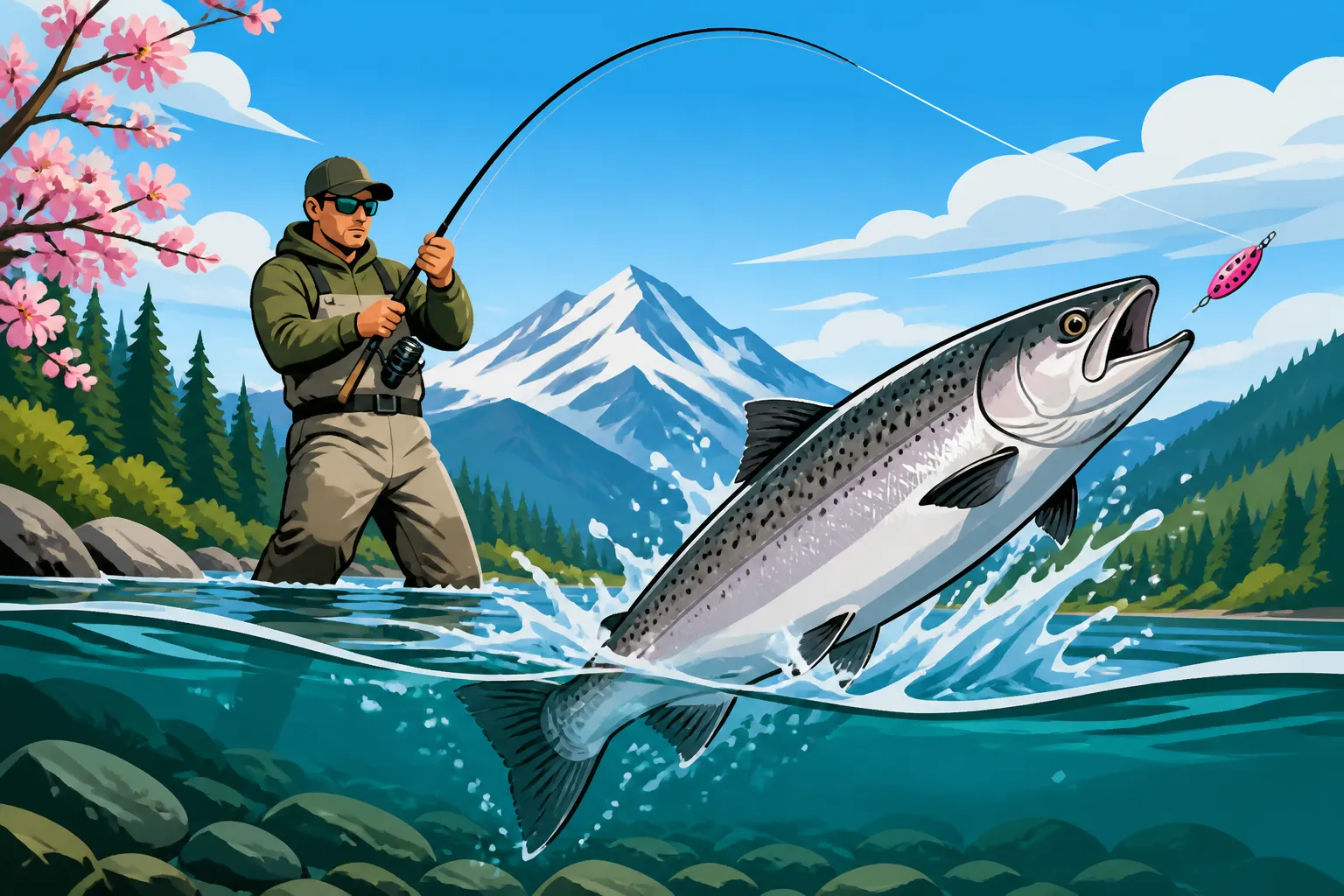
When we talk about "spring salmon" in British Columbia, we're almost exclusively referring to Chinook salmon, often affectionately called "springers" or "kings." These are the largest and most prized of the Pacific salmon species, renowned for their powerful fights and delicious flesh. What makes spring fishing for them so unique isn't just the season itself, but the specific behaviors and conditions that prevail during these months, typically from March through May, sometimes extending into early June depending on the region and specific run.
What Makes Spring Chinook Unique?
Unlike the later summer and fall runs where Chinook are often closer to their spawning grounds, spring Chinook are typically still in their feeding phase or just beginning their migration. This means they're often more aggressive biters, actively chasing baitfish as they fuel up for the long journey ahead. The fish you encounter in spring can be a mix of "resident" fish that spend their entire lives in coastal waters and "transient" fish that are heading towards major river systems like the Fraser River. They're often in prime condition, fat and healthy from their ocean feeding. The challenge, however, lies in locating these fish, as they can be widely dispersed, and the cooler water temperatures mean they're not always as active as they would be in warmer months. You’re looking for those moments when they decide it’s time to eat, and boy, do they eat aggressively!
One common frustration for new anglers is understanding that "spring salmon" isn't just about calendar dates but also about the readiness of the fish to move. Early spring can mean very cold, clear water, requiring a different approach than late spring when temperatures might be warming up. It's not a set-it-and-forget-it kind of fishing; you need to adapt to the conditions. These fish are powerful, and hooking into a fresh springer is an experience that stays with you. Their sheer strength and ability to strip line make them an exciting target, a true test of an angler's skill and gear.
Key Identification Marks
Identifying a Chinook salmon is crucial, especially when fishing in areas where multiple salmon species might be present, or when specific regulations apply to certain species or sizes. Luckily, Chinook have some fairly distinct characteristics. Their backs are typically darker, ranging from blue-green to black, fading into silver flanks and a white belly. The tell-tale signs, though, are usually in their mouths and tails.
Chinook salmon have black gums and a black mouth lining, which is a key differentiator from Coho salmon, which have white gums and usually black tongues. When you open up that fish’s mouth, you’ll see it instantly. Another reliable indicator is their tail: Chinook have small, irregular black spots on both lobes of their caudal fin (tail), and often along their back and dorsal fin. The tail itself is broad and somewhat squared off, rather than deeply forked like a Sockeye or Pink. When you're out on the water, especially in low light or when fish are zipping by, these visual cues become incredibly important for compliance with regulations and simply knowing what you've hooked into. Knowing what you're targeting allows you to refine your techniques and bait choices, increasing your chances of success.
Prime Locations for Spring Salmon Fishing
British Columbia is a vast province with an incredible diversity of fishing opportunities, and spring salmon are no exception. Depending on whether you prefer the vastness of the ocean or the intimate challenge of a river, there's a prime spot waiting for you. The key is to understand that Chinook runs are migratory, so timing and location are intrinsically linked. What's hot one week might cool off the next as fish move through.
Coastal Hotspots for Early Runs
For many anglers, the first taste of spring salmon action comes from the coastal waters. These areas see some of the earliest runs of Chinook, often well before the main river migrations begin. The protected waters around Vancouver Island and the Gulf Islands are particularly famous for their spring Chinook fisheries. Think about places like Campbell River, often hailed as the "Salmon Capital of the World," or the productive waters of Sooke and Victoria on the south island. The waters off Tofino and Ucluelet on the west coast also hold incredible opportunities, though conditions can be more challenging with the open Pacific swell.
In these coastal environments, spring salmon are typically found congregating near baitfish schools, often herring or pilchards. They'll hold in transitional areas, along current lines, or near prominent underwater structures like reefs and drop-offs. Anglers often target depths ranging from 60 to 150 feet, but this can vary greatly depending on bait presence and light conditions. Early spring often sees fish holding deeper, while later in the spring, as baitfish move higher in the water column, so too will the salmon. The anticipation of that first deep, powerful pull on the line as you troll through a productive area like Discovery Passage near Campbell River is truly something to experience. Many charter operators offer services in these regions, making it an excellent option for beginners or those looking to maximize their chances.
Freshwater River Opportunities
While coastal fishing is fantastic, some spring salmon also make their way into river systems quite early, offering unique freshwater opportunities. The Fraser River, being the largest salmon-producing river in the world, sees some very early Chinook entering its system. Tributaries of the Fraser, such as the Harrison and Vedder (Chilliwack) Rivers, can also have early spring Chinook presence, though often in more limited numbers compared to the later summer and fall runs. It's vital to check the latest BC Fishery Notices and regulations, as specific river openings and closures can change rapidly, particularly for sensitive early runs.
When fishing rivers for spring salmon, you're often looking for deep pools, slower current breaks, and confluence areas where fish might rest before continuing their upstream journey. Unlike the coastal areas where fish are actively feeding on large schools, river salmon in spring might be more focused on conserving energy, though they will still strike out of aggression or opportunism. Locations like the Harrison River near the sandbars can be productive for bar fishing, while spots on the Fraser River with public access like those near Mission, BC, offer shore-based or boat-based fishing. The experience of fishing a river for these powerful fish is different – more intimate, more about reading the specific currents and holding lies. It truly is a unique challenge that rewards patience and precise presentation.
Essential Gear for Spring Salmon Success
Having the right tackle is paramount when targeting spring salmon. These fish are strong, powerful, and demanding on your gear. Skimping on quality can lead to heartbreaking losses, especially when that trophy springer decides to make its final, furious run. Your setup needs to be robust enough to handle the fight, yet sensitive enough to detect subtle bites in varying conditions.
Rods, Reels, and Line Choices
For saltwater spring salmon fishing, especially trolling or mooching, you'll want a medium-heavy to heavy action rod, typically 9 to 10.5 feet long. Fiberglass or composite rods are popular for their forgiving bend and durability, which helps absorb the shock of a powerful run. Popular brands like Shimano and Fenwick offer excellent options suitable for this fishery. Match this with a robust baitcasting or level-wind reel, like a Penn Squall or an Ambassadeur, capable of holding at least 300 yards of 20-30 lb test line. A good drag system is non-negotiable – it needs to be smooth and powerful enough to slow down a hard-charging Chinook. For river fishing, a slightly shorter, more responsive rod might be preferred, around 8.5 to 10 feet, offering more control in tight spaces and when casting.
When it comes to line, many anglers opt for a main line of braided superline (e.g., PowerPro) in the 50-65 lb range due to its sensitivity and low stretch, then attach a monofilament or fluorocarbon leader. The leader material is critical; fluorocarbon, in particular, is less visible underwater and more abrasion resistant, making it an excellent choice for finicky springers. A good starting point for leader strength is 25-40 lb test, depending on the water clarity and how aggressive the fish are. Having a selection of leader strengths is always a good idea. Remember, the goal is to have a balanced setup where each component works together to handle the immense power of a fighting Chinook. A proper setup can make the difference between landing that fish of a lifetime and telling a sad story about the one that got away.
Lures, Baits, and Terminal Tackle
Spring salmon are often focused on baitfish, so your lures and baits should mimic their natural prey. Herring is king, without a doubt. Whole or cut plug herring, fished behind a flasher or dodger, is an incredibly effective setup. Many tackle shops, and even Amazon, offer pre-rigged herring leaders, making it easier to get started. Other effective baits include anchovies or even strips of sardine. When it comes to artificials, spoons are hugely popular. Think about classic patterns like the "Silver Horde" or "Kingfisher" spoons in sizes ranging from 3.0 to 5.0 inches, in finishes like green/silver, blue/silver, or glow. Plugs, such as the Tomic or Gibbs-Delta, in various sizes and colors, can also be deadly, especially when fished at specific depths.
Terminal tackle includes swivels (good quality, strong ball-bearing swivels are essential to prevent line twist), snap swivels, and a variety of weights (cannonball, banana, or crescent weights from 8 oz to 20 oz for deeper trolling). Flashers and dodgers are key for attracting fish and imparting action to your bait or lure. Flashers like the Gibbs-Delta Highliner or Pro-Troll series, in colours like chartreuse, green, or clear with glow tape, create a visual spectacle that salmon can't resist. Experiment with different sizes and colours to see what the fish are keying in on that day. Always keep your hooks sharp and regularly check your leaders for nicks and abrasions; a dull hook or frayed leader is a recipe for disappointment.
Mastering Spring Salmon Techniques
Catching spring salmon requires a blend of traditional methods and adaptability. The specific technique you choose will often depend on whether you're fishing in saltwater or a river, as well as the prevailing conditions and the fish's behavior. Mastering a few key methods will greatly increase your chances of success.
Trolling for Springers in Saltwater
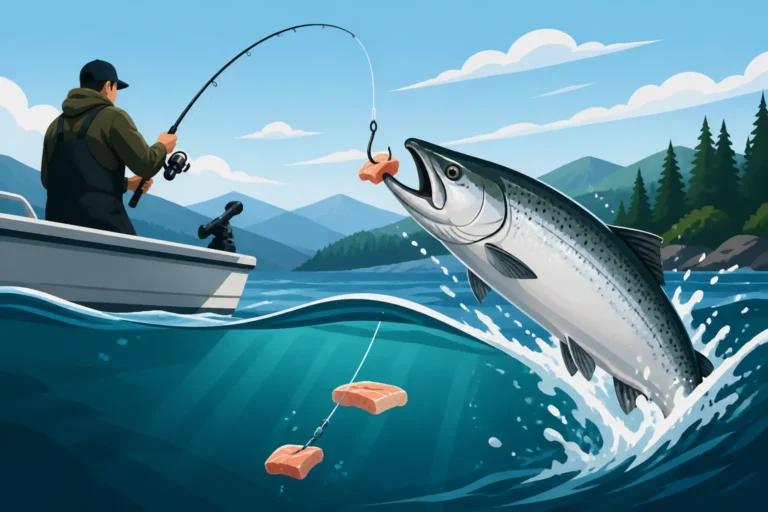
Trolling is arguably the most popular and effective method for targeting spring salmon in coastal BC waters. It involves dragging lures or bait behind a boat, typically at speeds between 2.0 and 3.5 miles per hour, though sometimes slower or faster depending on currents and fish preference. The goal is to cover a lot of water, searching for active fish and baitfish schools. Downriggers are almost essential for getting your offerings down to the precise depths where springers are feeding, especially when they're holding deep. Anglers often run multiple lines at different depths, staggering them to avoid tangles and to cover more of the water column. For those looking to upgrade their downriggers, a quick search on Amazon can reveal a range of options from manual to electric models.
A typical trolling setup involves a flasher or dodger tied to your main line, followed by a leader (usually 5 to 7 feet for a flasher, shorter for a dodger) to your bait or lure. The action of the flasher attracts attention and imparts an enticing wobble to your bait. Experimentation is key: change depths, vary your speed, make S-turns to make your lure speed up and slow down, and try different lure colours until you find what triggers a bite. Pay close attention to your sonar – if you're marking baitfish, chances are the salmon won't be far behind. Remember, spring salmon are often feeding aggressively, so presenting a natural-looking, actively swimming bait or lure is crucial.
River Fishing Strategies: Bar Fishing and Drifting
For those who prefer the tranquility of freshwater, river fishing for spring salmon offers a different kind of challenge and reward. Two primary methods stand out: bar fishing and drifting. Bar fishing is a more static approach, typically done from shore or anchored boats on large gravel bars in wide river sections, particularly effective on rivers like the Fraser. Anglers cast out heavy sinkers (up to 12 ounces or more, depending on current) with a bait rig, often a roe bag or a large chunk of cured roe, and wait for passing salmon. The key here is presenting the bait right on the bottom, where migrating salmon tend to travel. A proper rod holder and a bell on your rod tip can help you detect subtle bites. This method often requires patience, but the payoff can be immense when a large springer takes the bait.
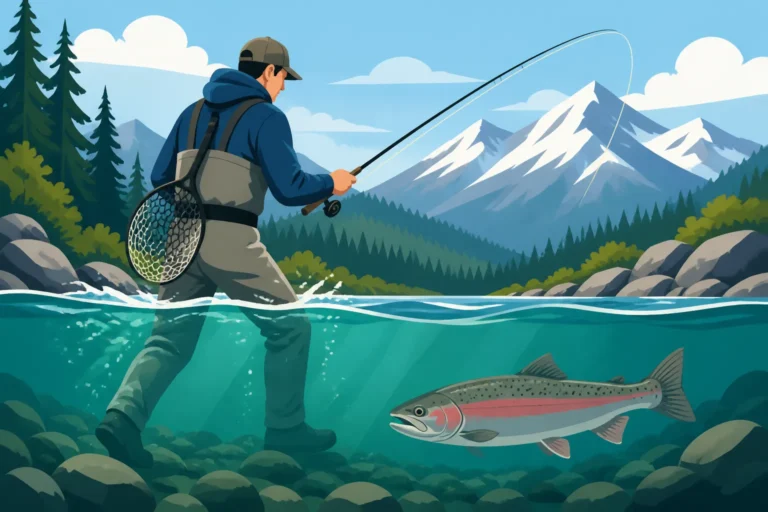
Drift fishing, on the other hand, is a more active technique, often done from a boat or by wading. Anglers use lighter tackle to present a bait (roe, worms) or a small lure (spinners, drift bobbers) naturally with the current, allowing it to tumble along the bottom where salmon might be holding. The goal is to get a perfect, drag-free drift that mimics a natural food item. This technique is particularly effective in runs, riffles, and deeper pockets of water. It demands a keen understanding of current and bottom structure, and a quick hand to set the hook at the slightest indication of a bite. When fishing highly pressured areas, the stealth and natural presentation of a good drift can make all the difference. Many anglers find the quiet solitude of river fishing, contrasted with the explosive strike of a big Chinook, to be incredibly addictive.
Mooching and Jigging Tactics
Beyond trolling, mooching and jigging offer exciting, hands-on ways to target spring salmon, particularly in areas where fish are schooling or holding close to structure. Mooching is a classic West Coast technique, especially effective for Chinook, that involves slowly drifting with the current or using minimal motor power, allowing a cut-plug herring or anchovy to sink and rise in the water column in a natural, wounded baitfish presentation. Anglers use long, sensitive mooching rods and often attach a banana weight directly to the line above a leader and herring rig. The "mooch" is the slow lift and drop of the rod tip, which causes the bait to dart and flutter enticingly. This technique requires constant attention and finesse, and can be incredibly rewarding when you feel that solid, unmistakable thud of a salmon strike.
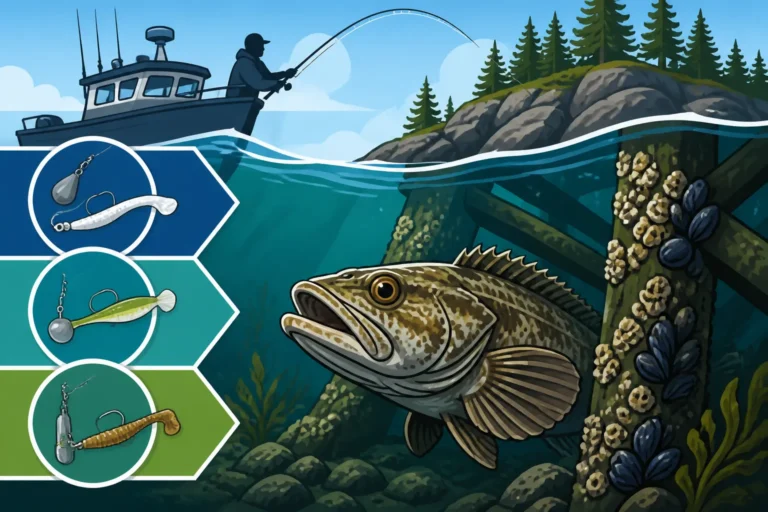
Jigging, while perhaps more commonly associated with bottom fish like lingcod, can also be highly effective for active spring salmon, especially when they're congregated over bait balls or structure. Heavy metal jigs, typically 4 to 8 ounces, are dropped to the desired depth and then aggressively jigged up and down to imitate a fleeing baitfish. The Gibbs-Delta Wee G or a similar point-source jig can be very effective. Salmon will often strike on the drop or immediately after a vigorous retrieve. This is a very active fishing style that can produce fast and furious action when you find the right school of fish. Both mooching and jigging are excellent for discerning where the fish are holding precisely, allowing you to fine-tune your depth and presentation in real-time.
Reading the Water and Environmental Factors
Catching spring salmon isn't just about having the right gear and techniques; it's also about understanding the environment you're fishing in. Salmon are highly sensitive to changes in their surroundings, and learning to "read the water" can give you a significant edge, helping you predict where fish might be and how they'll react.
Understanding Tides and Currents
In saltwater, tides and currents are perhaps the most critical environmental factor for spring salmon fishing. Salmon use currents for travel, and baitfish congregate in specific ways depending on tidal flow. Often, the incoming or outgoing tide, or the "slack tide" period right before or after the change, will trigger increased feeding activity. Fish might move into shallower feeding grounds on a strong incoming tide, or position themselves along current breaks to ambush prey. Knowing the tidal charts for your fishing area is absolutely essential. Many anglers find that the tide change, particularly during a strong tide, can be the most productive time, as the movement of water stirs up bait and gets salmon moving.
Specific current lines, eddies, and rips created by underwater structure or shorelines are also prime holding areas. Salmon will often sit on the edge of a strong current, waiting for an opportune moment to dash into the faster water to grab a meal. Observing the water's surface for subtle changes in current flow, or noting where baitfish are being concentrated, can lead you directly to where the salmon are feeding. Don’t ignore what seems like subtle details; these fish are creatures of habit and efficiency, and they will use currents to their advantage, meaning you should too. Fishing against the current or with it too strongly can hinder your presentation, so aligning your drift or troll with the fish's natural movement is key.
Water Temperature and Clarity
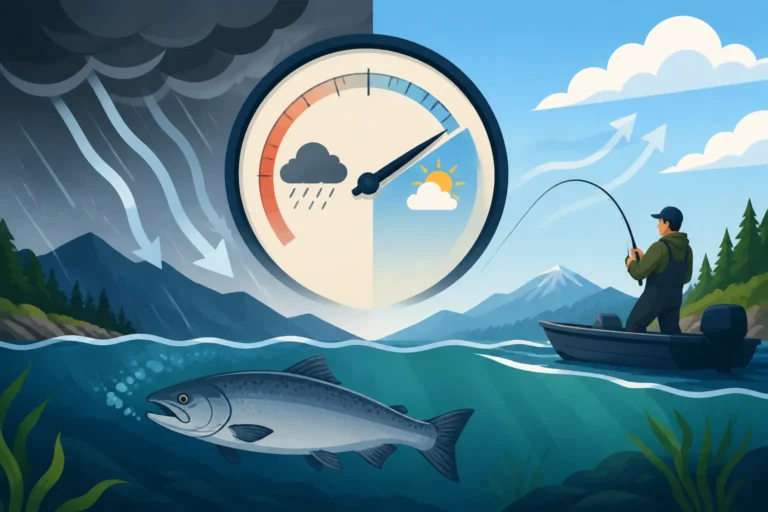
Water temperature plays a huge role in salmon behavior, particularly in the spring. As colder winter waters gradually warm, salmon become more active. The ideal temperature range for actively feeding Chinook salmon is generally between 8°C and 14°C (46-57°F). In early spring, when waters are still very cold, fish might be lethargic and hold deeper or in slower, more thermally stable areas. As the water warms, they tend to become more aggressive and might move higher in the water column. Using a portable fish finder with a temperature gauge or a simple surface thermometer can give you invaluable information.
Water clarity is another significant factor. In clear water, fish are often more wary, and you might need to use longer, lighter leaders and more natural presentations. Conversely, in murky or stained water (often due to spring runoff in rivers), fish might rely more on their lateral line to detect vibrations and scent. This is where flashers and scent-infused baits become incredibly effective, and brighter, more contrasting lure colours might stand out better. River clarity, in particular, can change dramatically with rainfall and snowmelt, so always check local conditions before heading out. Sometimes, a river that was too muddy one day can drop and clear enough to fish beautifully a few days later. Being prepared for varying conditions, perhaps with a selection of scented baits from a tackle shop or online like those available on Amazon, can make all the difference.
Navigating Regulations and Conservation
Fishing for spring salmon in British Columbia is a privilege, and with that comes the responsibility to understand and adhere to all regulations. These rules are in place to ensure the sustainability of these precious fisheries for future generations. Ignoring them can lead to significant penalties, but more importantly, it can harm the very resource we cherish.
Specific Spring Salmon Rules
British Columbia's fishing regulations are complex and can change frequently, often with little notice, especially for specific salmon runs. For spring salmon (Chinook), there are often specific size limits, daily possession limits, and sometimes even retention rules that vary by region, time of year, and even by specific river or marine area. For instance, in some areas, small "grilse" (Chinook under a certain size) might be legal to retain, while larger, mature Chinook might have different limits or even be catch-and-release only during certain windows. You might also find gear restrictions, such as single barbless hooks only, which are common in many salmon fisheries across BC.
It is absolutely crucial to consult the latest British Columbia Fishing License Guide for 2026, the BC Fishing Regulations Explained, and up-to-date BC Fishery Notices and In-Season Closures, Explained, before every single fishing trip. These resources, typically available online through the Department of Fisheries and Oceans (DFO) and the BC government, will provide the most current information. Don’t rely on old knowledge or hearsay; regulations change, and staying informed is your responsibility. For example, specific areas might have "non-retention" periods for certain Chinook stocks to protect vulnerable populations. Always carry your valid BC Freshwater vs Tidal Waters License, Explained, and any required stamps, such as the BC Salmon Conservation Stamp Rules.
Responsible Angling Practices
Beyond legal requirements, responsible angling practices are vital for conservation, especially with a species like Chinook salmon, which can be vulnerable during certain parts of their life cycle. If you're practicing catch and release, handle fish minimally and with wet hands to protect their slime coat. Use single, barbless hooks to facilitate easier release and minimize damage. Avoid fighting a fish to exhaustion, especially if you intend to release it; bring it in quickly, take a quick photo if desired (ideally while the fish is still in the water), and release it gently, allowing it to recover before swimming away.
Respect other anglers, whether you’re on the water or crowded riverbanks. Give plenty of space, avoid cutting off other boats or casting into someone else’s drift. Proper waste disposal is also critical; pack out everything you pack in, and never leave garbage or discarded fishing line behind. By following these guidelines, you contribute to a positive fishing culture and help ensure that British Columbia's spring salmon fisheries remain healthy and vibrant for future generations to enjoy. Conservation isn't just a buzzword; it's a shared commitment we all have as stewards of these incredible natural resources.
Tips for Maximizing Your Spring Salmon Trip
Planning and preparedness are your best friends when heading out for spring salmon. The more thought you put into your trip beforehand, the more enjoyable and successful it's likely to be. From what to bring to how to stay safe, a little foresight goes a long way.
Planning Your Expedition
A successful spring salmon trip starts long before you even leave home. First, decide on your target location and check the local forecasts for weather and water conditions. As mentioned, river levels and clarity can change rapidly, and coastal weather can be unpredictable. Have a backup plan if your primary spot isn't fishable. Research recent fishing reports from local tackle shops or online forums; these can offer invaluable insights into what's biting, on what, and where. Consider booking a guide if you're new to an area or want to learn specific techniques. Many excellent guides offer services for Best Salmon Fishing Spots in BC or even specific river systems like the Fraser River Fishing Guide.
Ensure all your gear is in good working order. Are your reel's drag system smooth? Are your lines fresh and free of nicks? Are your hooks razor sharp? Having extra leaders, weights, and a variety of lures is always a good idea. Pack appropriate clothing, including layers, waterproof outerwear, and suitable footwear, as spring weather can range from sunny and warm to cold and rainy in a single day. Don't forget essentials like a first-aid kit, food, water, and sun protection. For those longer trips, especially if you’re fishing from a boat, having a well-stocked tackle box and a reliable cooler for your catch is essential. A bit of planning can turn a frustrating day into a memorable success.
Safety on the Water
Safety should always be your top priority, whether you're fishing from a boat or wading a river. For boaters, ensure your vessel is properly maintained and equipped with all required safety gear, including life jackets for everyone on board. Familiarize yourself with BC Boating Laws for Anglers and Life Jacket Requirements for BC Boaters. File a float plan with someone on shore, letting them know where you're going and when you expect to return. Be aware of changing weather conditions and don't hesitate to turn back if the forecast worsens. Cold water immersion is a real risk in BC's spring waters, so dress in layers and consider wearing a PFD at all times, especially if fishing alone.
For river anglers, wading can be exhilarating but also dangerous. Always wear a wading belt, which can greatly reduce the risk of hypothermia if you take an unexpected swim. Use a wading staff for stability and to test unknown depths. Be aware of strong currents and never wade in water that's too deep or too fast for your comfort level. Always let someone know where you're going and when you expect to be back, especially if you're exploring remote areas. Having a charged cell phone and possibly a satellite messenger for areas without service can be life-saving. Ultimately, spring salmon fishing should be enjoyable and safe. Being prepared for any eventuality will allow you to focus on the thrill of the chase, rather than worrying about unforeseen risks.
| Fishing Technique | Primary Location | Typical Gear | Key Advantages | Best Conditions |
|---|---|---|---|---|
| Trolling | Saltwater (Coastal, Gulf Islands) | Downriggers, Flashers/Dodgers, Spoons, Herring | Covers large areas, effective for searching | Active feeding fish, moderate currents |
| Bar Fishing | Freshwater (Large Rivers like Fraser) | Heavy sinkers, Roe bags, Long rods, Rod holders | Relaxed, can be highly effective in specific spots | Strong currents, stable river levels |
| Drift Fishing | Freshwater (Rivers, runs, riffles) | Lighter weights, Roe, Spinners, Drift bobbers | Natural presentation, targets holding lies | Moderate currents, clear to slightly stained water |
| Mooching | Saltwater (Coastal, sheltered bays) | Cut-plug herring, Banana weights, Long sensitive rods | Subtle, natural presentation, very effective for wary fish | Slack to moderate currents, good bait schools |
| Jigging | Saltwater (Coastal over structure/bait) | Heavy metal jigs, Jigging rods | Active, can produce fast action on schooling fish | Fish concentrated over structure or bait |
Disclaimer
Please remember that fishing regulations, conditions, and fish stocks can change rapidly. Always consult the most current British Columbia fishing regulations and DFO fishery notices before heading out. The information provided in this guide is for general informational purposes only and should not be considered a substitute for official regulations. Stay safe, fish responsibly, and enjoy the incredible experience of spring salmon fishing in BC!