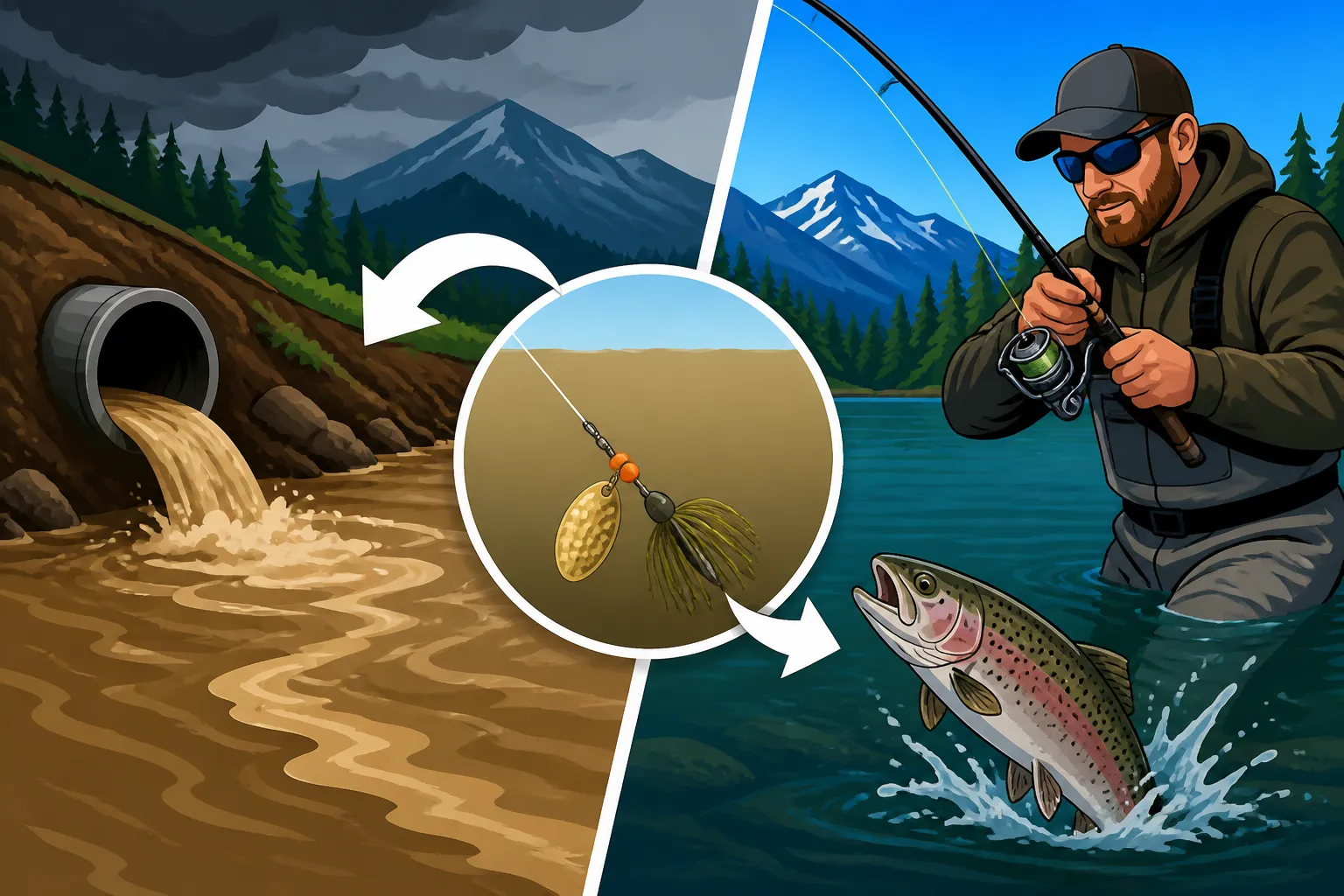
Best technique for fishing muddy runoff conditions
There's nothing quite as deflating as planning an epic fishing trip to one of British Columbia's pristine rivers, only to arrive and find the water a churning, chocolate brown mess from recent heavy rains or snowmelt. Muddy runoff conditions can feel like a complete showstopper, making it seem impossible to catch anything. But don't despair! This guide is here to equip you with the knowledge and techniques to not just survive, but even thrive, when fishing BC's beautiful waters become turbid and challenging.
Understanding Muddy Runoff and Its Impact on Fish
When a river or lake turns cloudy and brown, it's typically due to heavy precipitation or a rapid snowmelt event. This influx of water picks up sediment, soil, and organic matter from the surrounding landscape, carrying it into the waterways. This creates what anglers affectionately (or not so affectionately) call "muddy runoff" or "dirty water." Understanding why this impacts fish and how they react is the first step to adapting your approach.
Why Runoff Makes Fishing Tough
The primary challenge with muddy runoff is drastically reduced visibility. Fish, especially many of BC's popular sportfish like salmon and trout, are highly visual predators. When the water turns opaque, their ability to spot your bait or lure diminishes significantly. Think about trying to find a needle in a milkshake – that's what your lure looks like to them.
Beyond just sight, the increased current that often accompanies runoff can also affect how fish perceive scent and vibration. Stronger currents can disperse the scent trail of your bait more rapidly, making it harder for fish to home in on it. Additionally, the sheer volume of debris and swirling water can create a lot of "background noise," making subtle vibrations from lures less distinct. This combination often makes fish less active and harder to entice, leading to frustrating days on the water if you're not prepared.
How Fish React to Turbid Water
Fish don't just disappear when the water gets muddy; they adapt. One of the most common reactions is that they'll relocate. Instead of holding in their usual feeding lanes or faster currents, they'll seek out areas where the current is slower and the water might be slightly clearer. This often means moving closer to the banks, into eddies, behind large rocks, or into deeper, calmer pools where the sediment has a chance to settle a bit. They're looking for refuge from the current and a place where they can conserve energy and still potentially find food.
Their feeding patterns also shift. With visual cues diminished, fish rely more heavily on their other senses: their lateral line, which detects vibrations in the water, and their sense of smell. They become less inclined to chase fast-moving prey that they can't see and more likely to investigate anything that creates a strong scent trail or a pronounced thumping vibration. This is where anglers need to pivot from traditional clear-water tactics to methods that capitalize on these heightened non-visual senses. For instance, you might notice that Fishing after a heavy rain on BC rivers can sometimes be productive if you know where to look and what to use.
Essential Gear and Tackle for Muddy Water
Adapting your gear is crucial when facing muddy runoff. What works in crystal-clear alpine streams will likely be ineffective in a chocolate river. You need tackle that can handle stronger currents, create maximum presence, and appeal to a fish's non-visual senses.
Rods, Reels, and Line for High, Turbid Water
When the rivers swell and turn muddy, the currents become formidable, and there's often more debris floating downstream. This calls for a slightly heavier setup than you might typically use. For river fishing, a medium-heavy to heavy power rod with a fast action will give you the backbone needed to cast heavier weights and lures, as well as control fish in strong currents. The fast action helps detect subtle bites that might be masked by the turbulent water.
For line, while fluorocarbon is often favoured for its near-invisibility in clear water, its advantage is diminished in muddy conditions. You can opt for a high-visibility monofilament mainline, which makes it easier to track your line against the murky backdrop – a huge benefit when you can't see your lure. However, for a leader, many anglers still prefer fluorocarbon or even a braided line for its strength and sensitivity, especially when you might be feeling for subtle bumps rather than seeing a strike. A general guideline is to step up your line strength a bit; if you normally fish 10 lb test, consider 12-15 lb. You'll thank yourself when you're battling a strong salmon in heavy current and avoiding snags from unseen debris.
Lure and Bait Selection: Sight, Sound, and Scent
This is where your strategy truly needs to shift. Forget subtle, natural presentations; in muddy water, you want to be loud and proud!
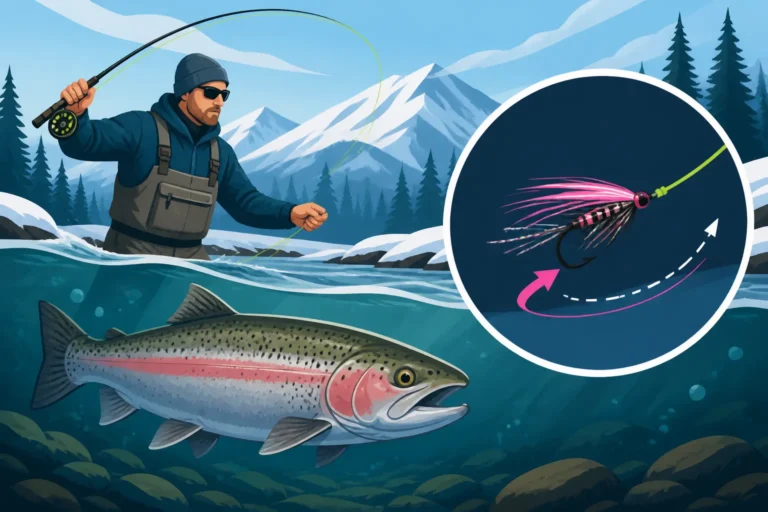
- Color Contrast: Bright, fluorescent colours are your best friends. Think chartreuse, hot pink, fire tiger, and fluorescent orange. These colours create a strong silhouette against the dark, murky water, making them stand out. Surprisingly, sometimes solid black or dark purple can also be effective as they create a sharp, contrasting silhouette. When considering Best lure color for murky water steelhead fishing, these vibrant options consistently rise to the top.
- Vibration and Sound: Lures that displace a lot of water or create distinct vibrations are invaluable. Large-bladed spinners (like Colorado blades), diving plugs with wide wobbles, and even crankbaits designed for bass fishing can be highly effective. Soft plastics with paddle tails or large grub tails that kick strongly are also excellent.
- Scent: This is paramount. Since fish are relying on smell, supercharge your offerings. Use natural baits that emit strong scents, like cured salmon roe (roe bags are fantastic), shrimp, or worms. For artificial lures, liberally apply scent attractants. There are many excellent gels and sprays available; you can often find a good selection of specialized scents and even pre-cured roe on
Amazonto stock up before your trip. For targeting salmon, you might look for scent profiles that mimic baitfish or natural salmon oils. Remember, the stronger the scent, the better chance a fish has of finding your offering in the cloudy water.
You can often find combination baits that tick all three boxes – a large, bright, vibrating spinner tipped with a juicy worm and drenched in scent. That's a triple threat in muddy conditions!
Terminal Tackle Considerations
When fishing murky, fast-moving water, your terminal tackle needs to be robust and designed for getting down deep and staying there.
- Heavier Weights: You'll almost always need to go heavier on your weights or sinkers. The increased current requires more weight to get your bait or lure into the strike zone and keep it there. Don't be afraid to use weights that feel surprisingly heavy; if your lure isn't getting down, you're not in the fish. Lead, tungsten, or even slinky weights are all viable options depending on your preferred rigging.
- Stronger Hooks: Since visibility is low, you might be fishing around unseen snags or encountering debris. Strong, sharp hooks are essential to ensure good hooksets and to prevent them from bending out if you snag. Quality swivels and snaps are also important to prevent line twist, especially when using spinners in heavy current.
- Leader Material: A slightly heavier leader than usual can also be beneficial, providing abrasion resistance against sediment and potential unseen snags. While some anglers prefer fluorocarbon for its strength, in truly turbid water, a stout monofilament leader can work just as well and might be more cost-effective if you're losing gear to snags.
Proven Techniques for Fishing Muddy BC Waters
Now that you've got the right gear, let's talk about putting it to use. Muddy water calls for specific fishing techniques that maximize your chances of success. It's about thinking like a fish trying to survive in a low-visibility environment.
Locating Fish in Off-Color Conditions
The first and most critical step is finding the fish. They won't be in the main torrent. Instead, focus on current breaks and areas of reduced flow.
- Eddies and Slackwater: These are prime holding spots. Fish will tuck into eddies behind large rocks, logs, or points of land, finding respite from the main current. The water here is often slightly clearer, and food can still accumulate. Cast your lure or bait upstream of an eddy and let it drift naturally into the calmer water.
- Shoreline Edges: Fish often hug the banks in muddy conditions, especially where there's overhanging vegetation or structure providing cover. The current can be slower here, and visibility might be slightly better closer to the bank. Wade cautiously or fish from shore, targeting these transition zones. If you're looking for an accessible spot, consider areas mentioned in Best shore fishing near Vancouver.
- Deep Pools and Holes: Deeper sections of a river often have slower currents near the bottom, allowing fish to hold comfortably. Sediment can also settle a bit in these deeper areas, offering marginally better visibility. Use heavy weights to get your presentation down into these zones.
- Confluence Zones: Where a clear tributary meets a muddy main river, the seam can be a hotspot. Fish will often stage in the clearer water, waiting for food to wash down from the murky main stem.
Remember, fish in these conditions are often lethargic. You need to put your offering right in front of their faces, literally. Repeated casts to the same promising spots are often more effective than trying to cover vast amounts of water.
Presentation Strategies for Reduced Visibility
Once you've found a likely holding spot, how you present your bait or lure makes all the difference.
- Slow and Low: Fish are not going to chase. Your presentation needs to be slow enough for them to detect it with their lateral line and scent, and low enough to be in their direct line of sight (or smell!). This means slower retrieves for lures and thorough, controlled drifts for bait. For certain species like steelhead, Drift Fishing for Steelhead in BC Rivers can be incredibly effective when executed slowly and meticulously.
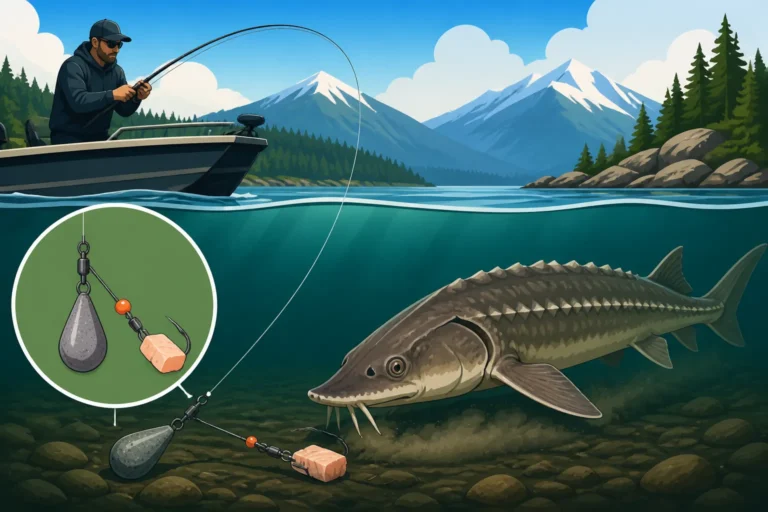
- Bottom Bouncing/Dragging: For many species, especially bottom feeders like sturgeon or lethargic salmon, dragging your bait or lure along the bottom can be very productive. This keeps your offering in the lowest, potentially clearest water and in front of fish that are hugging the riverbed. Make sure you're using enough weight to maintain bottom contact.
- Float Fishing: For rivers with moderate current, float fishing (using a bobber or float) allows for a natural, controlled drift. The float keeps your bait suspended at a consistent depth, often just off the bottom, presenting it directly to holding fish. This technique is particularly popular for species like steelhead and salmon. You might find Float Fishing the Bulkley River provides excellent insights into this method.
- Repetitive Presentations: Don't just cast once and move on. Work a promising area thoroughly. Make multiple casts, fanning your presentations across the seam or pool. A fish might not react to the first pass, but a repeated presentation with a strong scent trail can eventually draw a strike.
Safety First: Navigating Swollen and Murky Rivers
Muddy runoff conditions often mean higher water levels and stronger currents, which can be incredibly dangerous. Your safety, and that of anyone fishing with you, should always be your top priority.
- Wading Safety: If you plan to wade, exercise extreme caution. Water levels can rise rapidly, and the current can be much stronger than it appears. The murky water hides hazards like deep holes, slippery rocks, and submerged logs. Always use a wading staff for stability and to probe the bottom. Never wade alone, and always let someone know where you are going and when you expect to return. This is especially critical when wading for species like steelhead, so understanding How to wade a BC steelhead river safely is essential.
- Boating Safety: For boat anglers, muddy runoff brings a host of new risks. Debris (logs, branches, even entire trees) can be washed downstream, posing serious collision hazards. Submerged obstacles are invisible in the turbid water. Operate at reduced speeds, wear your life jacket at all times, and be constantly vigilant. Before heading out, always check BC Fishery Notices and In-Season Closures, Explained for any warnings or river closures due to high water. Familiarize yourself with BC Boating Laws for Anglers to ensure you're operating safely and legally.
- Current Awareness: Understand how currents behave. Identify safe entry and exit points. Avoid areas with strong hydraulics or whirlpools. If in doubt, stay out. No fish is worth risking your life.
Species-Specific Approaches to Muddy Water Fishing
While the general principles of scent, vibration, and slow presentation apply broadly, certain species respond better to particular nuances in muddy water.
Salmon and Steelhead in Muddy Rivers
Salmon and steelhead in BC rivers are often the primary targets during runoff events, as their migratory instincts can still drive them upstream.
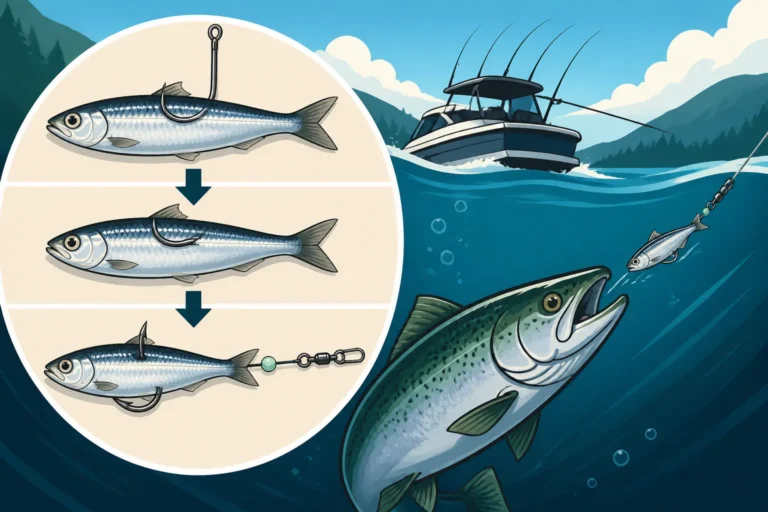
- Salmon: Chinook, Coho, and even Chum salmon can be caught in dirty water. Their keen sense of smell is a huge asset here. Focus on presenting strong-scented baits like cured roe, herring, or even commercially prepared scent-infused soft plastics. Large, brightly coloured plugs that dive and wobble aggressively can also draw strikes. For coho, Best techniques for Fall Coho Fishing often emphasize scent and bright colours, which translate well to turbid water. When targeting larger species like Chinook, you might find How to fish a river for Chinook Salmon has techniques that can be adapted. Think about how fish naturally find their way; a strong scent plume in muddy water acts as their beacon.
- Steelhead: BC's famous steelhead are notoriously finicky, but they too can be caught in runoff. They will seek out softer currents, often in the same types of holding water as salmon. Float fishing with heavily scented roe bags or large, bright worms is a classic dirty water technique. Large, highly visible jigs (pink, chartreuse, orange) tipped with bait or scent can also be deadly. For specific tactics, consider exploring
BC Steelhead Fishing, which often covers various water conditions. Remember, When BC rivers get too high to fish for steelhead, fish often move into the very slowest seams, making accurate, patient presentations key.
Trout and Char in Turbid Lakes and Streams
While river anglers often face the brunt of runoff, lake and stream fishermen aren't immune to turbid conditions, especially after significant rainfall.
- Lakes: In lakes, runoff often creates plumes of muddy water near inlets. Instead of avoiding these, fish the edges of the plume. Trout will often sit just outside the dirty water, waiting for disoriented baitfish or insects to drift out. Trolling with large, brightly coloured spoons or plugs can be effective, especially if they have a strong wobble. Powerbait or scented worms fished on the bottom in slightly clearer water near the mudline can also work. For general tips on how to target various trout species, How to Catch Rainbow Trout in BC Lakes can offer a good foundation.
- Streams: Smaller streams can blow out completely, becoming unfishable. However, if they only have a mild tint, targeting slower pools and undercuts with scented worms, salmon eggs, or brightly coloured small spinners can still yield results. The key is to keep your presentation as natural as possible while still providing enough visual or scent attraction. In some areas, BC Rainbow Trout Conservation Surcharge Stamp might apply, so always check local regulations even in challenging conditions.
| Lure/Bait Type | Key Attraction in Muddy Water | Best Use Case | Tips for Success |
|---|---|---|---|
| Cured Roe/Bait | Strong Scent, Natural Texture | Slow drifts, float fishing, bottom bouncing | Use large, bright roe bags. Add extra scent. Fish slowly. |
| Diving Plugs | Strong Vibration, Wobble | Casting/retrieving in eddies, current breaks | Choose bright, contrasting colours (fire tiger, chartreuse). Ensure deep dive. |
| Spinners | Flash, Vibration, Sound | Casting/retrieving, drift fishing (bottom bouncing) | Large, bright blades (Colorado). Add a scent strip or worm to the hook. |
| Jigs (Soft Plastics) | Vibration, Scent Retention | Drifting, jigging in pools, tipped with bait | Large paddle tails, curly tails. Bright colours. Soak in strong scent. Use heavy jig heads to get down. |
| Scent Attractants | Amplified Scent | Applied to any lure/bait | Use liberally. Choose strong, fish-attracting scents (anise, garlic, baitfish, roe). Amazon has many options. |
No matter your chosen technique, remember that patience and persistence are your greatest assets when fishing muddy runoff conditions in British Columbia. Don't be afraid to experiment, and always consult the Reading the BC Freshwater Fishing Regulations Synopsis before heading out.
Disclaimer
This article is for general informational purposes only and does not constitute professional advice. Laws, prices and regulations vary by location and change over time. Consult a qualified professional for guidance on your specific situation.