Best technique for finding fall baitfish schools
As the crisp air of autumn settles over British Columbia, many anglers find themselves scratching their heads, wondering where all the fish have gone. The truth is, often the fish haven't vanished; they're simply following their food. Finding those elusive fall baitfish schools is key to unlocking some of the season's best fishing, transforming frustrating searches into successful trips. This guide will equip you with the knowledge and tactics to do just that.
Understanding the Autumn Baitfish Migration: Why They Move and What They're Chasing
Fall in British Columbia is a period of dramatic change, not just for the landscape with its vibrant colours, but also beneath the surface of our lakes and coastal waters. Baitfish – those smaller, forage fish like herring, anchovies, pilchards, and even juvenile salmon in saltwater, or minnows, shiners, and kokanee in freshwater – are incredibly sensitive to these environmental shifts. Their movements are largely dictated by water temperature, available light, and the presence of predators, making them a moving target for anglers.
The Role of Cooling Waters and Shorter Days
As summer fades and autumn takes hold, water temperatures begin to drop. This cooling trend often signals to baitfish that it's time to gather in larger schools, sometimes moving from deeper, thermocline-influenced areas to shallower bays or coves where food might still be abundant, or to specific depths where the temperature is most comfortable. The shorter days and reduced light penetration also play a role, making baitfish feel more exposed and thus prompting them to tighten their schools for protection. These dense aggregations are a beacon for larger predatory fish like salmon, trout, and char, creating prime feeding opportunities. Understanding these basic motivations is the first step in predicting where the baitfish might be congregating. You might find a good overview of these seasonal shifts in BC Fishing Season Dates and Closures.
Baitfish as a Food Source for Fall Predators
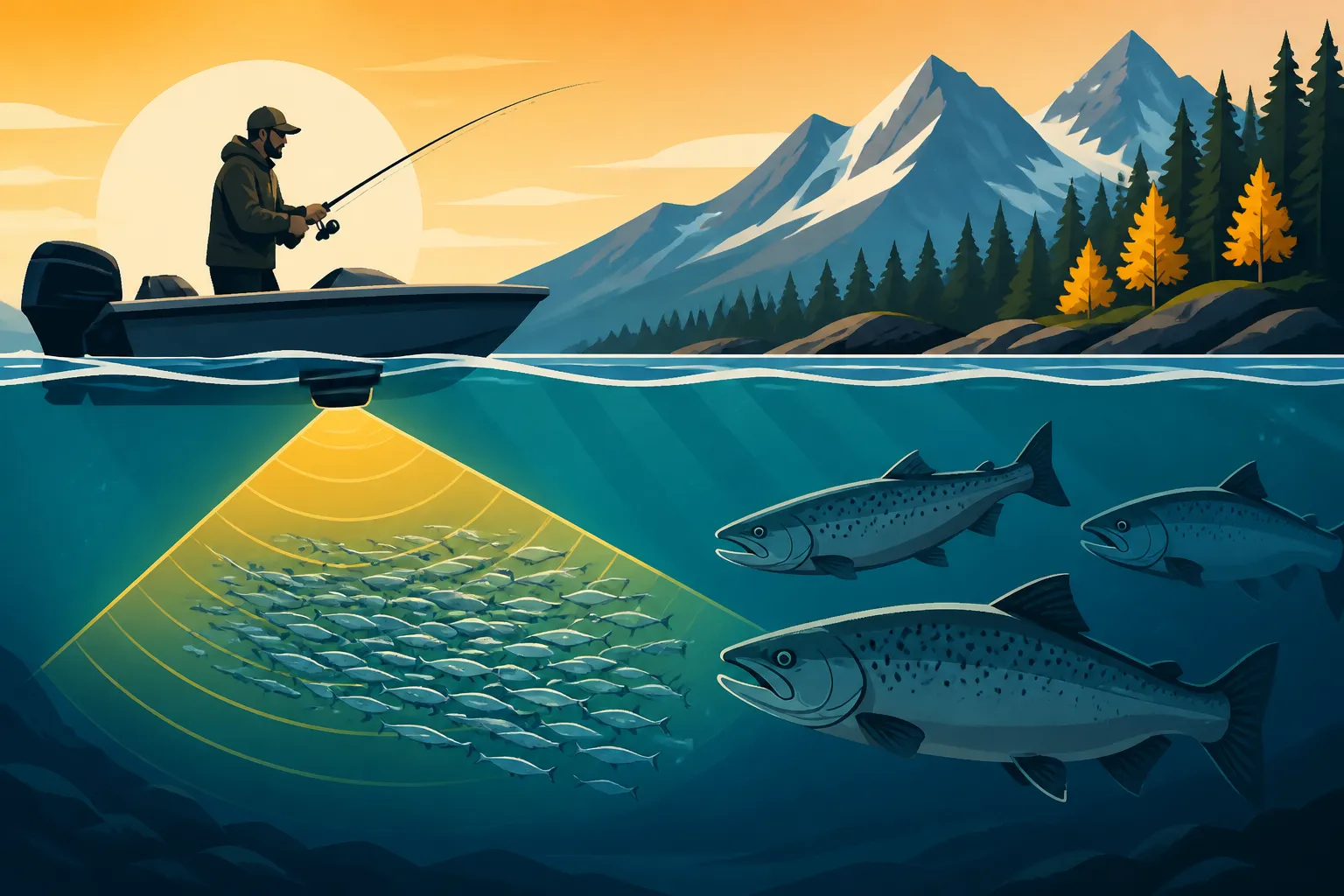
For the angler, the real magic of finding fall baitfish schools lies in the fact that they are magnets for the species we love to catch. Chinook and coho salmon in coastal waters, for instance, are often voracious feeders in the fall, bulking up before their spawning migrations. They will actively patrol areas where baitfish are concentrated. In freshwater lakes, bull trout and large rainbow trout will key in on schools of kokanee or other minnows that are preparing for their own fall spawning rituals. These predatory fish aren't just casually passing by; they are actively hunting, creating a dynamic feeding frenzy that can make for unforgettable fishing. Identifying the primary baitfish in your target area – whether it's the Fraser River, a coastal inlet, or an interior lake – will help you choose the right lures and presentation to mimic their movements.
Reading the Water: Visual Clues to Spotting Baitfish from Afar
Before you even think about casting, learning to observe the water around you is paramount. British Columbia's diverse fishing environments, from the vast Pacific coastline to serene interior lakes, all offer visual cues if you know what to look for. These signs can be subtle, but with practice, your eyes will become invaluable tools in locating baitfish schools.
Surface Activity and Water Colour Changes
One of the most obvious indicators of baitfish presence is activity on the water's surface. Look for subtle dimples, nervous ripples, or even small splashes as baitfish dart around, often trying to evade a predator. Sometimes, you might see them "nervous swimming" in unison, creating a shimmering effect just below the surface, or even jumping clear out of the water in a panicked escape. Larger schools can even cause a slight change in the water's colour or texture, appearing as a darker, denser patch compared to the surrounding water. If you're out on a lake or coastal area, a good pair of polarized sunglasses, easily found on Amazon, can make a world of difference in cutting glare and helping you spot these subtle visual clues.
Watching for Other Wildlife: Birds and Mammals
The wildlife around you are often your best spotters. Gulls, terns, and other diving birds are nature's most efficient baitfish locators. Watch for birds circling, hovering, or repeatedly diving into a specific area. A single diving bird might just be opportunistic, but a flock of birds actively working a patch of water is a near-certain sign of a substantial baitfish school below. Similarly, seals, sea lions, and even porpoises or whales in saltwater can be excellent indicators. Their feeding patterns directly correspond to baitfish concentrations. If you see a seal repeatedly breaching in one spot or a whale "bubble-net feeding," you can be sure there's a buffet below. Pay attention to how they behave – are they just travelling, or are they actively feeding? This distinction is crucial.
Leveraging Technology: How Sonar and Other Tools Pinpoint Schools
While keen observation skills are invaluable, modern fishing technology provides an undeniable edge in finding fall baitfish schools, especially when they are deeper or in less visible areas. Pairing your natural instincts with electronic aids can dramatically increase your success rate.
Understanding Your Sonar and Fish Finder
A fish finder or sonar unit is perhaps the most powerful tool for locating baitfish. Don't just look for the big arches representing predatory fish; learn to identify the characteristic "clouds" or "balls" that represent schools of baitfish. These often appear as dense, dark masses on your screen, sometimes with larger arches (the predators) lurking around or within them. Many modern units have different frequencies and sensitivities. Experiment with these settings to get a clearer picture. A high-frequency beam can give you more detail on smaller baitfish schools closer to the surface, while a lower frequency might penetrate deeper. Taking the time to really learn your specific unit, perhaps by watching tutorials or reading the manual, will pay dividends. Portable fish finders or even more advanced sonar units can be researched and purchased from retailers, including Amazon, making your search much more efficient.
Using GPS and Chartplotters to Mark and Return
Once you've found a promising baitfish school, either visually or with your sonar, don't just drift away and hope to stumble upon it again. Use your GPS or chartplotter to mark the exact location. Baitfish, while mobile, often return to specific areas day after day, especially if there's good structure, current breaks, or consistent food sources there. Marking these waypoints allows you to return to productive spots later in the day, or even on subsequent trips. Over time, you'll build a valuable map of "hot spots" that reliably hold baitfish during the fall. This is especially useful in larger bodies of water, helping you save time and fuel on future outings. When considering the Best Time of Year to Fish in BC, understanding these consistent patterns is crucial.
The Predator's Tale: Using Other Fish and Wildlife as Your Guides
Nature is full of clues, and often, the fish you don't want to catch can lead you directly to the ones you do. Fall fishing often means targeting species that are actively feeding, and their presence is directly linked to the availability of baitfish. Think of it as a natural food chain detective story.
Following the Line of Predation: Salmon, Trout, and Char
Larger predatory fish are excellent indicators of baitfish concentrations. If you're casting for salmon in a coastal inlet and keep hitting smaller, non-target species that feed on the same baitfish, you're likely in the right zone. In freshwater, catching smaller trout or char often means there's a good food source in the area, which in turn attracts the larger trophy fish. These smaller fish might be picking off stragglers from a larger baitfish school. Understanding the diet and behaviour of these secondary predators can give you strong hints about what kind of baitfish are present and where they're holding. For instance, if you're consistently catching juvenile coho, you know there's likely a school of herring or other small fish nearby. This knowledge is crucial for Salmon Fishing Techniques for BC Rivers or even How to Catch Rainbow Trout in BC Lakes.
Observing Baitfish Behavior When Under Attack
When a school of baitfish is under attack, their behaviour changes dramatically. Instead of a loose, meandering group, they'll often tighten into a "bait ball," a dense, swirling mass designed to confuse predators. You might see this on your sonar as an exceptionally tight, intense cloud. Above water, this could manifest as sudden, violent splashes, or the entire school erupting from the water. The presence of aggressive strikes by larger fish, often indicated by boils or splashes on the surface, directly correlates with a baitfish school being actively hunted. These are the moments to cast your line, as the predatory fish are in full feeding mode and less cautious. Having a reliable tackle box, perhaps one you scouted on Amazon, with a variety of lures mimicking local baitfish is also crucial during these times.
Essential Gear and Practical Tips for Fall Baitfish Hunting
Being prepared with the right gear and adopting a strategic approach will significantly improve your chances of finding and fishing around fall baitfish schools. It’s not just about having the tools, but knowing how to use them effectively.
Gear Up for Success: Binoculars, Sunglasses, and Rain Gear
For visual scouting, a good pair of binoculars can extend your observation range significantly, helping you spot distant bird activity or surface disturbances. Coupled with polarized sunglasses, which cut through water glare, you'll have a much clearer view into the water. Fall weather in BC can be notoriously unpredictable, so investing in quality rain gear is a must. Being comfortable and dry means you can stay out longer and focus on the fishing, not the elements. Consider picking up some durable rain gear from Amazon before heading out, because fall weather can be unpredictable. When you're ready to interpret those observations, remember guides like How to check BC fishery notices before a trip for regulations.
Strategic Approaches: Drifting, Trolling, and Static Observation
Different bodies of water and fishing scenarios call for different tactics.
- Drifting: If you suspect baitfish are in an area but aren't showing on the surface, a slow drift with your sonar on can help you cover ground and scan for schools. Let the wind or current do the work, allowing you to focus on your electronics.
- Trolling: For larger lakes or coastal waters, slow trolling with a baitfish-imitating lure or even a small flasher/hoochie setup can help you locate concentrations of baitfish and the predators feeding on them. Pay close attention to your sonar as you troll; any sudden changes in baitfish density should prompt a closer look. This technique is often discussed in Best Techniques for Deep Water Halibut or Trolling Techniques for BC Lake Trout.
- Static Observation: Sometimes, the best approach is patience. Find a high vantage point – a cliff overlooking the ocean, or a promontory on a lake – and simply watch. Over time, patterns will emerge. Baitfish might school up at certain times of day, or in response to tides or currents. This can be particularly effective for Best Shore Fishing Spots in BC.
It is always a good idea to cross-reference your observations with other information. What baitfish schools affect BC salmon fishing provides great context for what you're seeing, and understanding How barometric pressure affects BC salmon fishing can also influence baitfish and predator behavior.
| Visual Cue | Indication of Baitfish Presence | What it Means for Anglers |
|---|---|---|
| Birds Diving | Active feeding by gulls, terns, etc. | Baitfish are near the surface, being driven up. |
| Surface Ripples/Dimples | Baitfish are swimming just below the surface. | Subtle presence, potentially small schools. |
| Jumping Baitfish | Baitfish are under direct attack from predators. | Active feeding frenzy, cast immediately! |
| Dark Patches on Water | Large, dense school of baitfish below the surface. | Significant concentration, likely attracting large fish. |
| Predator Activity | Salmon, seals, whales actively feeding. | Baitfish are present in abundance. |
| Colour Change in Water | Very large, tightly packed school of baitfish. | Strong indication of a major food source. |
Fall fishing in British Columbia, with its unique challenges and rewards, truly comes alive when you crack the code of baitfish movements. By combining astute observation with modern technology and a strategic approach, you'll be well on your way to intercepting those prized salmon, steelhead, and trout as they gorge on the autumn bounty.
Disclaimer
This article is for general informational purposes only and does not constitute professional advice. Laws, prices and regulations vary by location and change over time. Consult a qualified professional for guidance on your specific situation.