Best lure retrieve for coho in coastal streams
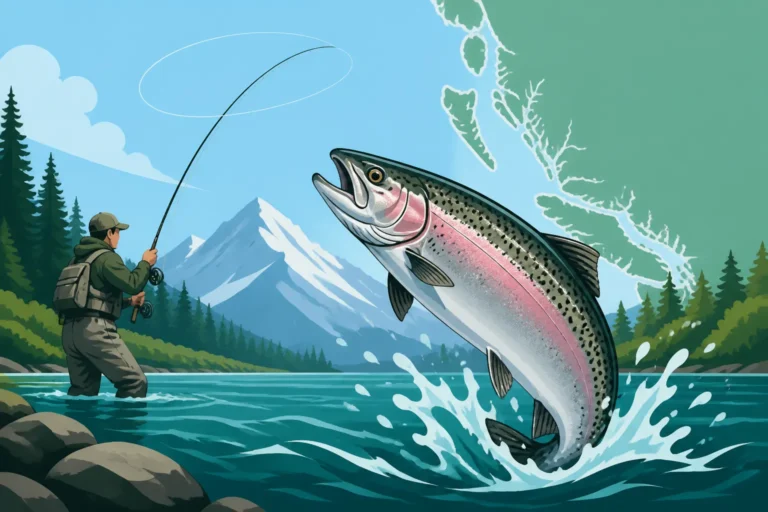
There’s nothing quite as exhilarating, or sometimes as frustrating, as chasing chrome-bright Coho salmon in British Columbia’s coastal streams. You cast that perfect lure, watch it drift, and then… nothing. It’s a common scenario, leaving many anglers wondering if it’s their choice of gear or, more often, how they’re working that lure through the water. This comprehensive guide will unravel the mysteries behind the most effective lure retrieve techniques for Coho in these dynamic, often challenging, coastal environments, helping you turn those frustrating misses into heart-pounding strikes.
Understanding Coho Behavior in Coastal Streams
Before we even talk about retrieves, we need to get into the head of a Coho salmon. These fish aren't just swimming upstream; they're actively navigating currents, seeking out holding lies, and feeding on opportune morsels. Their behavior dictates how we should present our lures, making a keen understanding of their movements and feeding habits absolutely crucial.
Coho's Aggressive Yet Finicky Nature
Coho salmon, often called "silver salmon" due to their striking silver flanks, are known for their aggressive strikes, acrobatic fights, and generally cooperative nature compared to, say, the elusive steelhead. However, within the confines of a coastal stream, especially when they've been in freshwater for a while, they can become surprisingly finicky. They’re still reacting to instinct, but they're also pressured by other anglers and natural predators, making them wary.
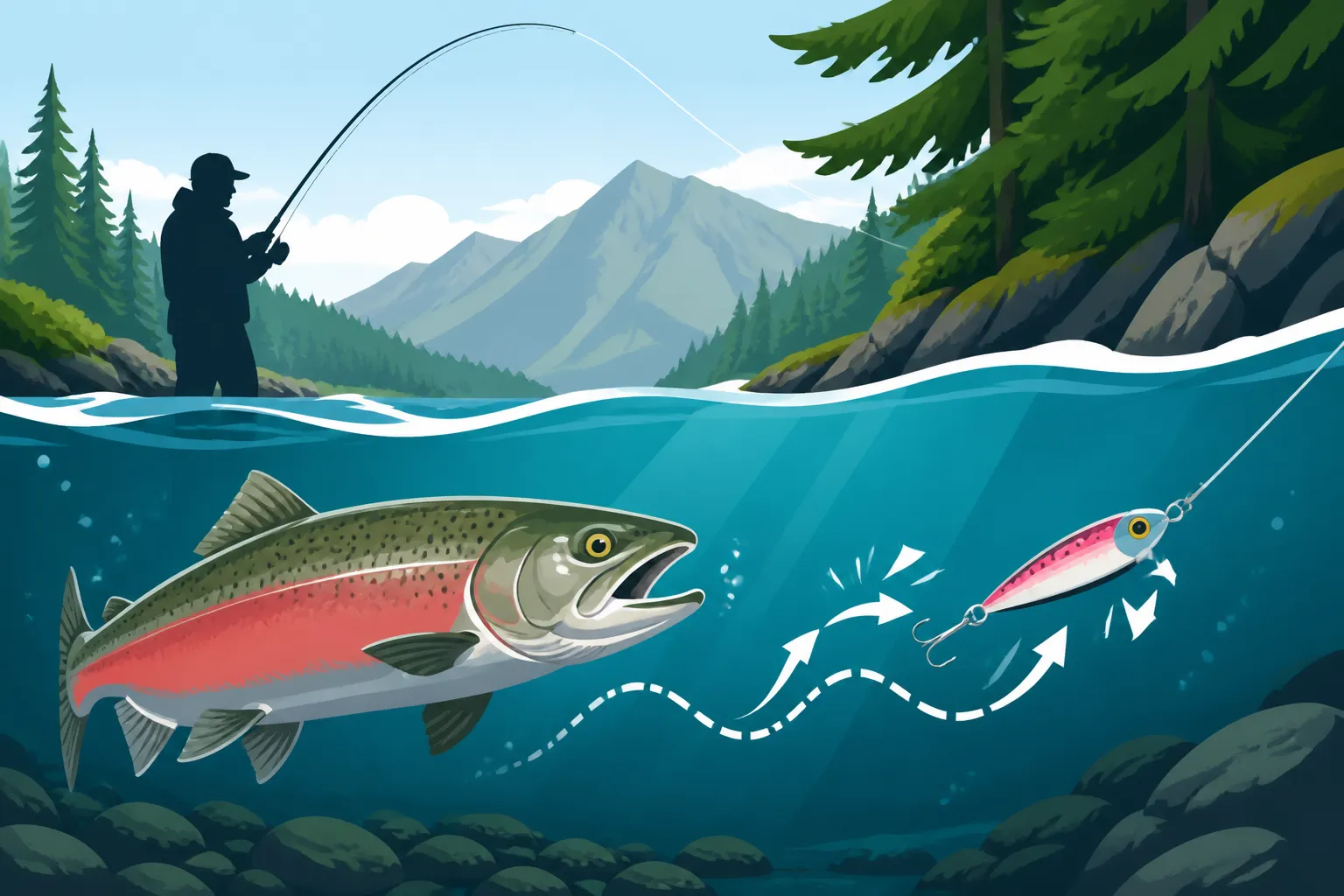
They often respond to an aggressive, erratic presentation that mimics an injured baitfish or a fleeing insect. Yet, sometimes, a subtle, almost hesitant retrieve is what triggers a strike. This paradox is what makes Coho fishing so engaging, and it means you need to be prepared to switch up your tactics. Factors like water clarity, temperature, and the presence of other salmon species can influence their mood. To truly understand these magnificent fish, you might find our guide on Coho Salmon Habits in Coastal Streams incredibly helpful.
Key Holding Lies and Travel Lanes
Coho salmon, particularly when fresh from the ocean, will use certain areas of a coastal stream as resting spots or travel lanes. These "holding lies" are typically areas that offer a break from the main current, provide cover, or act as a funnel where food might collect. Think about slower seams behind rocks, deep pools, log jams, undercut banks, or even the subtle depression where two currents meet.
As they move upstream, they often stick to the edges of the main current or shallower riffles where they feel less exposed. Your lure needs to pass through these zones naturally, often in an arc that brings it right into their strike window. Knowing these spots means you're not just casting randomly; you're targeting specific areas where Coho are likely to be, which directly impacts your retrieve strategy. For a broader look at where these fish can be found, check out Best Fishing Rivers in British Columbia.
Essential Lure Retrieve Techniques for Coho
Now, let's get down to the brass tacks: the actual mechanics of bringing your lure back. There isn't a single "best" retrieve, but rather a repertoire of techniques that, when mastered, will significantly increase your success rate. Experimentation is key, but these are the foundational methods for Coho in coastal streams.
The Steady Retrieve with Twitch
This is arguably the most common and often effective retrieve for Coho salmon, particularly when using spinners or spoons. It's a fundamental technique that mimics a fleeing baitfish or a struggling insect, making it irresistible to an aggressive Coho.
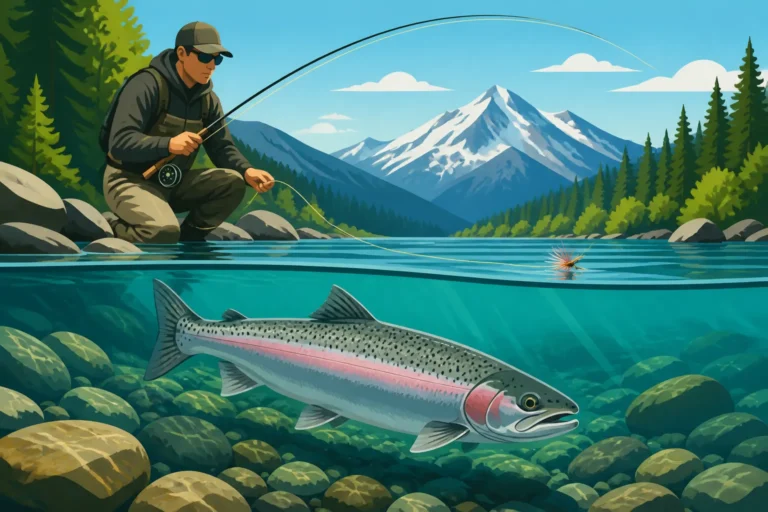
Start with a cast slightly upstream and across the current, allowing your lure to sink a bit and swing into the target zone. As the lure travels, maintain a steady retrieve, just fast enough to keep your spinner blade rotating or your spoon wobbling seductively. This steady pace ensures your lure is always "working" and visible. The "twitch" element comes in intermittently: every few seconds, give your rod tip a sharp, short twitch, perhaps a foot or two, without reeling. This causes the lure to dart erratically, mimicking a panicked baitfish. That sudden, unpredictable movement often triggers an instinctual strike from a following Coho that might have been hesitant to commit. This technique is especially potent in clear water when Coho can visually track your lure. For more general approaches, consider reading up on Salmon Fishing Techniques for BC Rivers.
Stop-and-Go (Intermittent) Retrieve
When Coho are a bit more lethargic, or perhaps facing higher fishing pressure, a stop-and-go retrieve can be incredibly effective. This technique introduces moments of perceived vulnerability, which can be the final trigger for a cautious salmon.
Cast your lure and let it begin its swing. Instead of a steady retrieve, reel in a few cranks, then pause for a second or two, letting the lure flutter or sink slightly. Then, reel a few more cranks, pause, and repeat. The duration of your pause is crucial; too long, and the Coho might lose interest or the lure might snag. Too short, and you lose the "injured" effect. This technique can be fantastic when you’re working areas with structure like log jams or deep pockets where Coho are holding, as it keeps the lure in the strike zone longer. This retrieve can also be particularly effective when fish are reacting to changes in the current.
Downstream Swing and Retrieve
Coastal streams often have distinct runs and pools, and fishing a lure on the swing is an art form that can be highly productive for Coho. This technique leverages the current to present your lure in a natural, enticing way.
Cast your lure quartering downstream and across the current. Immediately after the cast, close your bail and begin a slow, controlled retrieve, just enough to maintain tension and feel your lure. The current will do most of the work, sweeping your lure in a broad arc across the river. As the lure swings, it will present its profile to any Coho holding in the current. Often, the strike will come as the lure reaches the end of its swing, "hanging" in the current directly downstream from you, or as it begins to move slightly upstream against the current. This is a crucial moment for a Coho to ambush. Sometimes, adding a gentle twitch at the very end of the swing can seal the deal. This method is incredibly versatile and works well for various salmon species, including the ones discussed in How to Fish a River for Chinook Salmon.
Jigging and Bouncing
While often associated with bottom fish or ice fishing, jigging and bouncing techniques can be surprisingly deadly for Coho in certain stream conditions, especially when they are holding in deeper pools or behind heavy structure.
This approach usually involves using jigs or heavier spoons designed to sink quickly. Cast upstream into a deep hole or current seam. Let the lure sink to the desired depth, often near the bottom where Coho might be resting. Then, use short, sharp lifts of your rod tip, letting the jig fall back on a semi-slack line. The idea is to make the lure jump and dart, then briefly settle, mimicking a wounded baitfish struggling to stay afloat. The "bouncing" variation involves allowing the lure to lightly tap the bottom as it drifts or swings, stirring up sediment and drawing attention. This works particularly well in murky conditions where visual cues are limited. Remember, Coho will often strike on the fall, so pay close attention to any sudden slack or twitch in your line.
Matching the Retrieve to Conditions
The perfect retrieve isn't static; it adapts to the ever-changing conditions of a coastal stream. A retrieve that slays them on a sunny, low-water day might be completely ignored during a rainy, high-water event. Being a successful Coho angler means being a keen observer and a flexible technician.
Water Clarity and Depth
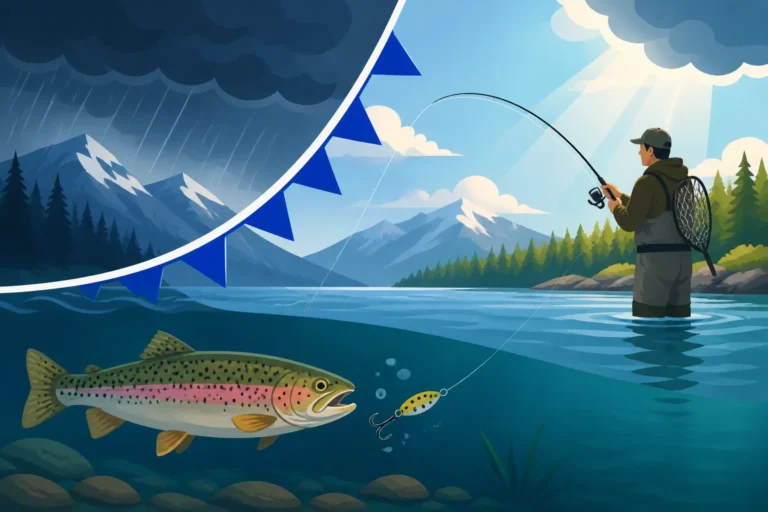
Water clarity is perhaps one of the most significant factors influencing your retrieve. In clear, low-light conditions (think dawn or dusk, or on overcast days), Coho are more likely to track a lure visually. A faster, more erratic retrieve with plenty of twitches can provoke aggressive strikes. If the water is crystal clear and bright, sometimes a slower, more subtle retrieve with longer pauses is better, as fish can scrutinize your offering.
Conversely, in turbid or high water, Coho rely more on vibration and flash. This calls for a faster retrieve with lures that displace a lot of water, like larger spinners or spoons, to create a strong presence. The fish can't see the lure as well, so you need to "feel" it to them. For specific information on when fish are most active, check out Best Time of Day to Catch Salmon.
Deep pools or runs require you to let your lure sink adequately before starting your retrieve. A heavier lure or a retrieve that incorporates pauses will help you get down to where the Coho are holding. In shallower riffles, a faster, shallower retrieve is needed to prevent snagging and keep the lure in the strike zone.
Current Speed and Structure
The speed of the current directly impacts how your lure moves. In fast currents, you might need to slow your retrieve to ensure the lure isn't zipping by too quickly for a Coho to react. Often, the current itself will impart plenty of action to your lure, so a steady, controlled retrieve might be all that's necessary. Conversely, in slow-moving water, you’ll need to put more action into your retrieve with more aggressive twitches or varying speeds to make the lure enticing.
Structure like log jams, large boulders, or undercut banks are prime Coho holding areas. When fishing near structure, your retrieve needs to be precise. You want to get your lure as close as possible without snagging. This often means casting slightly upstream of the structure, letting the current carry your lure into the zone, and then initiating a retrieve that quickly guides it past or over the hazard. A stop-and-go retrieve can be excellent here, allowing you to work the lure through tight spots more effectively.
Here's a quick reference for matching retrieve to conditions:
| Condition | Retrieve Recommendation | Lure Type (Examples) | Notes |
|---|---|---|---|
| Clear, Low Water | Steady with Sharp Twitches; Subtle Stop-and-Go | Small Spinners (e.g., Mepps, Blue Fox), Spoons (e.g., Gibbs Delta), Twitch Baits | Visual presentation is key; mimic injured baitfish or frantic insect. |
| Turbid, High Water | Fast & Steady; Aggressive Jigging | Larger Spinners, Wobbling Spoons, Heavy Jigs | Focus on vibration and flash; ensure lure moves enough water to be detected. |
| Fast Current | Slow & Controlled Retrieve; Downstream Swing | Heavier Spinners/Spoons, Deep Diving Plugs | Let current do some work; maintain contact to feel strikes; prevent lure from washing out. |
| Slow Current/Pools | Aggressive Stop-and-Go; Erratic Twitches; Jigging | Lighter Spinners/Spoons, Jigs, Soft Plastics | You need to impart more action; keep lure in strike zone longer; experiment with pauses. |
| Near Structure | Precise Cast & Ret. with Quick Recovery; Stop-and-Go | Spinners, Spoons, Weedless Jigs | Minimize snags; short, controlled casts; be ready to reel quickly if approaching snags. |
Essential Gear for Effective Retrieves
Having the right retrieve technique is one thing, but having the proper tools to execute it flawlessly is another. Your rod, reel, line, and of course, your choice of lure, all play a significant role in how well you can present your offering to a Coho. Investing in quality gear isn't just about durability; it's about sensitivity and control. When looking for reliable gear, many anglers find a wide selection of suitable options on Amazon.
Rod, Reel, and Line Selection
For Coho in coastal streams, you generally want a rod with a fast action and medium-light to medium power. This combination allows for precise casting, excellent sensitivity to feel subtle bites, and enough backbone to fight an acrobatic Coho. A rod between 8'6" and 9'6" is often ideal for casting distance and line control in river environments. A sensitive graphite rod, for instance, will transmit every little bump and twitch of your lure right to your hand, allowing you to react instantly.
Pair this with a smooth-performing spinning reel in the 2500-4000 series. The most crucial feature of your reel is a smooth drag system, as Coho are notorious for powerful, sudden runs.
When it comes to line, a good quality braided line (15-20 lb test) is often preferred for its incredible sensitivity, low stretch, and thin diameter, which helps with casting distance and cutting through the current. However, braid is highly visible, so always use a fluorocarbon leader (8-12 lb test, 3-5 feet long) tied with a strong knot like a FG or Albright. Fluorocarbon is nearly invisible underwater and more abrasion-resistant, offering that crucial stealth and protection.
Lure Choices that Maximize Retrieve Effectiveness
The retrieve and the lure are intrinsically linked. Some lures are designed to work best with certain retrieves.
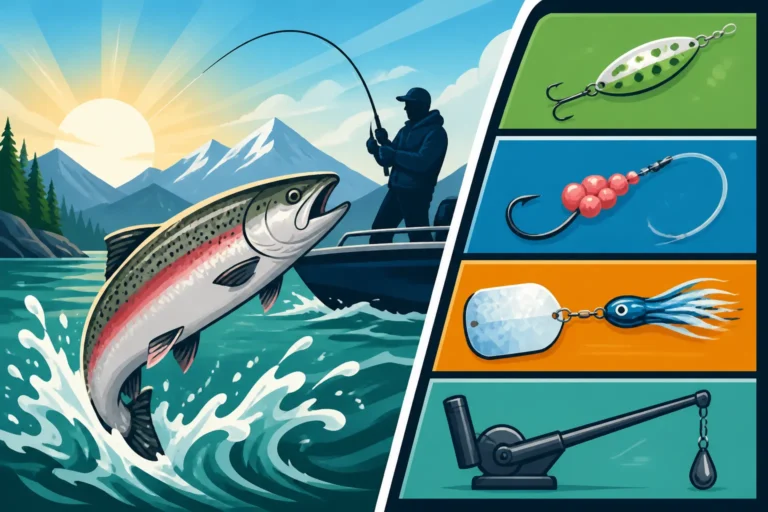
- Spinners: These are Coho magnets. Brands like Blue Fox Vibrax, Mepps Aglia, and Rooster Tail are classic choices. The blade creates flash and vibration, and they are highly effective with a steady retrieve, often with intermittent twitches. The size depends on water conditions; use larger, brighter ones in murky water and smaller, more natural colors in clear water. When considering How to fish a spoon for BC coastal salmon, remember that similar principles apply to spinners regarding flash and vibration.
- Spoons: Wobbling spoons, like the Gibbs Delta Croc or the Koho spoon, are fantastic for Coho. Their erratic wobble on the retrieve, and especially on the fall, mimics an injured baitfish. They excel with a steady retrieve that incorporates pauses and twitches, allowing them to flutter. Different sizes and weights allow you to fish various depths and current speeds.
- Twitch Baits/Hard Baits: Lures like the Rapala X-Rap or other suspending jerkbaits are excellent for Coho. Their design means they often suspend at a certain depth when paused, making them ideal for a stop-and-go retrieve. A series of sharp twitches followed by a pause can be incredibly effective, mimicking a dying baitfish.
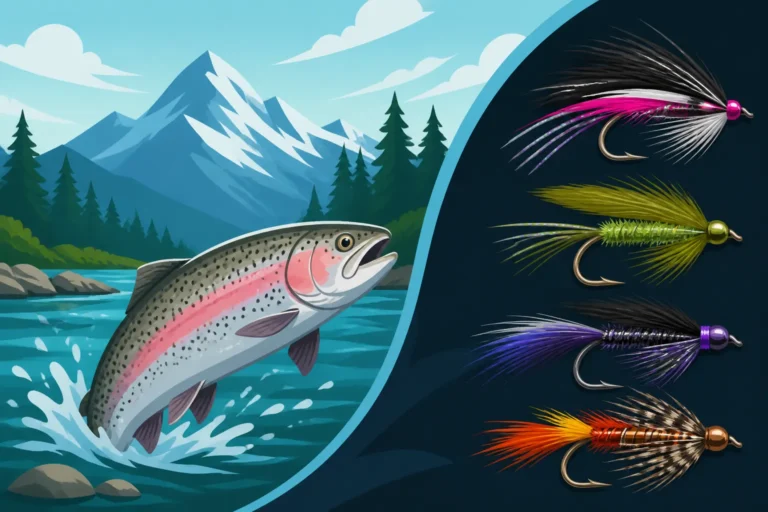
- Jigs: Lead-head jigs dressed with marabou, bucktail, or soft plastic grubs can be deadly, especially in deeper holes or slower water. They are best fished with a jigging or bouncing retrieve, allowing them to dart and then fall. Color choice can be critical, with brighter colors like chartreuse, pink, and orange often performing well for Coho.
The great thing about Coho fishing is that there are many "best techniques" and that variety is often your friend! To explore more about the seasons, refer to BC Fishing Season Dates and Closures. And if you're looking for broader insights into Coho, our guide on Coho Salmon Fishing in BC offers a wealth of information. Don't forget that Best Techniques for Fall Coho Fishing focuses on a prime Coho season!
Adapting and Experimenting on the Water
Even with all the knowledge in the world, Coho salmon can be unpredictable. That’s why the truly successful angler isn’t just knowledgeable; they’re adaptable. You might start with what you think is the perfect retrieve, only to find the fish are in a different mood entirely.
Reading the Fish and Their Mood
Coho give clues if you pay attention. Are they rising? Are there other anglers catching fish, and if so, what are they doing? Sometimes, you’ll see fish flashing or rolling, indicating their presence. If you’re not getting bites after several casts in a prime spot, don't keep doing the same thing. Change your retrieve speed, add more twitches, lengthen your pauses, or switch to a different lure color or type.
Often, Coho will follow a lure for a while before deciding to strike. If you notice a follow but no hit, that’s a clear signal to adjust. Maybe speed up to trigger a chase, or slow down and pause, forcing them to commit. The goal is to find that specific trigger for that specific moment. Every cast is an experiment, and every missed bite is a learning opportunity. Remember that Wading Techniques for BC Steelhead Rivers can also help with safely navigating the streams to reach these fish.
The Importance of Variety and Patience
Don't be a one-trick pony. While you might have a favorite lure or retrieve, sticking to it exclusively can limit your success. Start with a tried-and-true method, but be ready to cycle through your repertoire. Try a fast retrieve for a few casts, then slow it down. Experiment with long pauses, short twitches, or a pure dead drift if the current allows.
Patience is also key. Fishing isn't always about constant action. Sometimes, it’s about making a dozen perfect casts into a prime lie, knowing that one of them will eventually connect. It's about being present, observing, and systematically working the water until you crack the code. This mental fortitude is just as important as any physical technique. When you’re out there, really experiencing the rhythm of the river, you might even consider Kayak Fishing Techniques for BC Coastal Waters to reach new areas.
Disclaimer
Fishing conditions and regulations in British Columbia can change frequently. Always consult the most current BC Freshwater Fishing Regulations Synopsis and relevant fishery notices before heading out. Safety should always be your top priority.