Best technique for winter steelhead
Winter steelhead fishing in British Columbia is often seen as a daunting challenge, a test of patience and endurance against the elements. Many anglers get frustrated trying to crack the code of these elusive, cold-water giants, wondering which technique will finally entice a bite in freezing conditions. This comprehensive guide is designed to cut through that frustration, offering proven strategies and detailed techniques to increase your success rate and make your winter steelhead adventures more rewarding.
Understanding Winter Steelhead Behavior
Cracking the code of winter steelhead means first understanding how these magnificent fish behave when the water turns cold. It's a completely different ballgame from summer or fall fishing, and approaching it with the wrong mindset or tactics is a surefire way to come home empty-handed and frozen.
The Cold Reality of Winter Runs
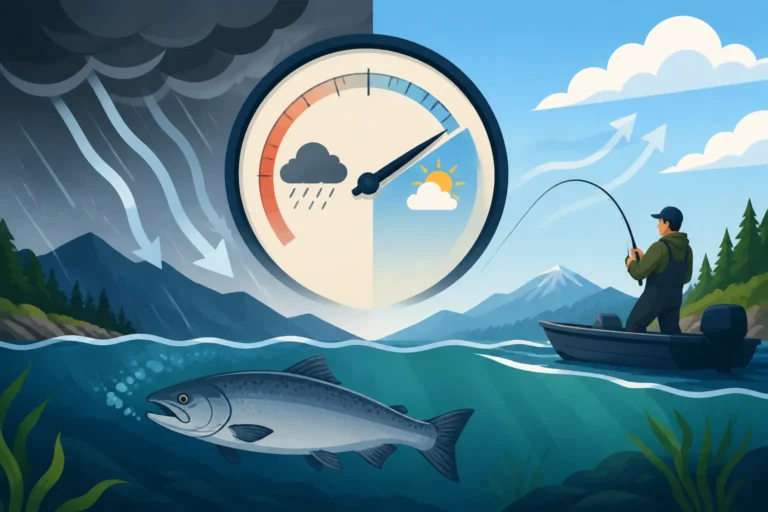
Winter steelhead are often thought of as the most prized freshwater game fish in British Columbia, and for good reason. These are sea-run rainbow trout that return to their natal rivers during the harshest months, usually from late fall through early spring. Unlike their summer counterparts, winter-run steelhead typically move slower and are less aggressive due to the frigid water temperatures. Their metabolism slows down significantly, meaning they aren't actively feeding as they would in warmer months. Instead, they're focused on conserving energy and finding optimal holding water before spawning.
Imagine yourself on a cold, blustery February morning on the Vedder River, the air crisp and the water a deep, emerald green. The fish aren't chasing flashy lures or zipping after dry flies. They're hunkered down, conserving every calorie. This fundamental understanding is crucial: your presentation needs to be slow, deliberate, and right in their face. They're not going to move far for a meal or an aggressive strike. This is why techniques that allow you to cover water meticulously and present your offering precisely are so important. The window of opportunity for an active take can be fleeting, often just a subtle nudge rather than a powerful rip.
Prime Holding Lies and Travel Lanes
Knowing where winter steelhead hold is just as vital as knowing how to fish for them. These fish aren't randomly scattered throughout the river. They seek out specific types of water that offer comfort, safety, and a break from strong currents. Think of it like a human seeking shelter from a blizzard – they want protection and ease.
Typical holding lies for winter steelhead include slow, deep pools, the soft seams behind large boulders or log jams, and the protected insides of river bends where the current isn't as relentless. They'll also use slower, deeper sections of runs, often near the tail-outs where the current begins to soften before spilling into a pool. These areas provide relief from the main current, allowing them to rest and conserve energy without expending too much effort to stay in place. When you're wading a river like the Thompson, especially during a late winter run, you're not looking for frothing whitewater. Instead, focus on the calmer, deeper sections where fish can comfortably sit without being constantly buffeted. Consider areas with overhead cover, like submerged logs or undercut banks, as these offer both protection from predators and a sense of security. Identifying these prime locations before you even cast your line is a skill that comes with experience and careful observation, often saving you hours of unproductive casting in fast, empty water.
Essential Gear for Winter Steelhead
When you’re chasing winter steelhead, your gear isn't just about catching fish; it's about enduring the elements and executing precise presentations. Skimping on quality here can mean a cold, frustrating day or, worse, losing that fish of a lifetime. The right tools make all the difference, transforming a challenging outing into a successful one.
Rod, Reel, and Line Setups
For winter steelhead, balance and sensitivity are key. You're often dealing with subtle takes in cold water, requiring a setup that can transmit even the slightest bump.
- Rods: Longer rods are generally preferred for winter steelhead. A 10'6" to 13' float rod (also known as a centrepin rod) is excellent for controlling your drift with a float, allowing for longer, more precise presentations without spooking fish. For drift fishing or swinging flies, a 9' to 10' medium-heavy spinning or casting rod is a solid choice. Many fly anglers opt for two-handed spey or switch rods, ranging from 11' to 14' or even longer, which excel at casting heavy sinking lines and large flies across broad rivers like the Skeena. The extra length helps with line control and mending in tricky currents, which can be absolutely vital. You can find a fantastic range of these specialized rods for different budgets if you browse fishing gear on Amazon.
- Reels: For float fishing, a centrepin reel is traditional and highly effective, offering unparalleled line control and a direct connection to the fish. Spinning reels in the 2500-4000 size range are versatile for both float and drift fishing, especially when paired with appropriate rods. Fly anglers will need a strong, large-arbor fly reel with a smooth drag system capable of holding plenty of backing, as winter steelhead can make powerful runs.
- Lines: Line choice is critical. For float fishing, a high-visibility monofilament mainline (10-15 lb test) is common, often paired with a fluorocarbon leader (8-12 lb test) for stealth and abrasion resistance. Braided line (20-30 lb test) can be a great choice for spinning setups due to its sensitivity and strength, though a monofilament leader is always recommended. Fly lines for winter steelhead typically involve heavy sink tips or full sinking lines to get flies down quickly in deep, fast currents. Understanding these different setups is crucial for Drift Fishing for Steelhead in BC Rivers or even Float Fishing the Bulkley River.
Terminal Tackle and Presentation
Your terminal tackle is the business end of your setup, the part that directly interacts with the fish. Precision here matters more than ever.
- Weights and Floats: For float fishing, pencil lead or shot weights are used to balance your float, allowing your bait or lure to drift naturally at the desired depth. Your float itself should be highly visible and appropriately sized for the current and weight. For drift fishing, slinky weights, hollow lead, or split shot are used to bounce your offering along the riverbed without snagging excessively. The goal is a delicate balance: enough weight to get down, but not so much that it causes unnatural dragging.
- Hooks: Sharp, strong hooks are non-negotiable. Wide-gap bait hooks (sizes 2 to 2/0) are popular for bait presentations, while octopus or worm hooks can also be effective. For artificial lures or flies, ensure your hooks are stout enough to handle a powerful fish and sharp enough for a quick, solid hookset.
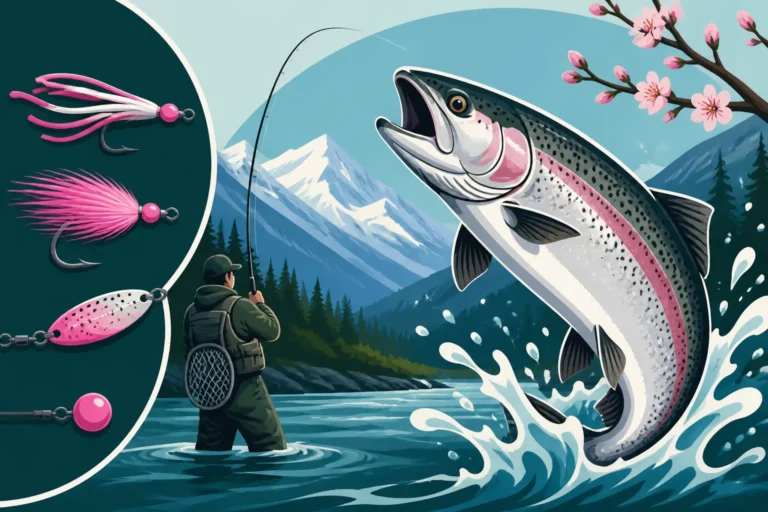
- Baits and Lures: The specific offerings will depend on your technique and local regulations. Common natural baits include cured roe, worm patterns, and sometimes even shrimp or prawns where allowed. Artificials often include jigs (1/8 to 1/2 oz, in colors like pink, chartreuse, or black), small spoons, spinners, and soft plastic worm imitations. For fly anglers, large, dark intruder patterns, weighted streamers, and various egg patterns are staples for winter steelhead. You can often find a good selection of Best Baits for Steelhead on the Skeena through local tackle shops or online retailers like Amazon, ensuring you're stocked up before hitting the river. The key is to present these offerings slowly and repeatedly through potential holding lies.
Top Winter Steelhead Techniques
Successfully landing a winter steelhead requires more than just luck; it demands mastering specific techniques tailored to their cold-water behavior. Each method has its time and place, and understanding when and how to deploy them is crucial.
Float Fishing for Depth Control
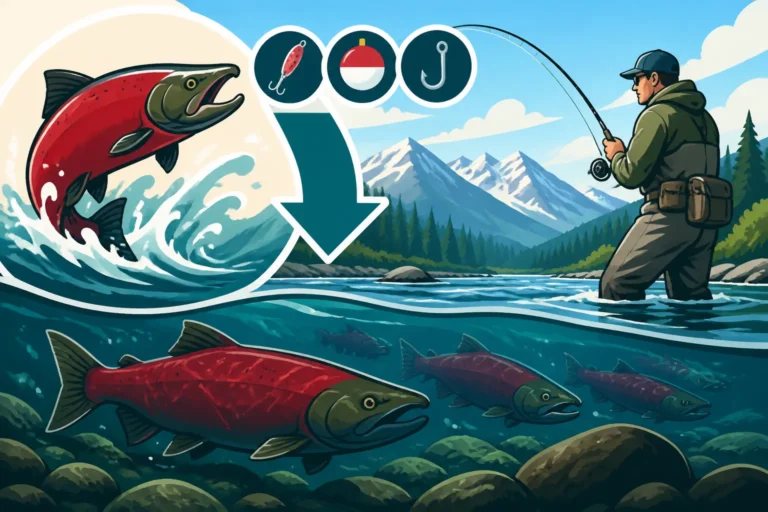
Float fishing, often done with a centrepin reel, is arguably one of the most effective methods for winter steelhead in British Columbia. It provides unparalleled control over your presentation depth and allows for incredibly natural, drag-free drifts through prime holding water.
Imagine you're standing on the banks of the Chilliwack River, the current moving steadily, and you know there's a deep seam alongside a log jam where steelhead are likely resting. With a long float rod, you cast your float and weighted presentation upstream, allowing it to drift naturally downstream. The float acts as your indicator, suspending your bait or lure at a precise depth, usually just off the bottom where steelhead are hugging. As the current carries your float, you "walk" or "feed" line from your reel, ensuring there's no drag on the float that would make your offering move unnaturally fast or slow compared to the current around your bait.
The beauty of float fishing lies in its precision. You can repeatedly target a specific slot or a pocket behind a boulder, ensuring your offering passes through the strike zone again and again. Winter steelhead are often lethargic, so a perfectly presented bait drifting slowly right into their face is often what it takes to provoke a bite. Bites can be subtle – a slight dip, hesitation, or even just a wiggle of the float – so constant vigilance is required. Setting the hook immediately and firmly is key, as they often mouth the bait before fully committing. This technique is especially productive in medium to slow currents and deeper pools, making it a go-to for many anglers targeting BC Steelhead Season Dates. When you're trying to achieve a perfect drift, having a high-quality monofilament or fluorocarbon leader, easily found on Amazon, can make all the difference in line lay and knot strength.
Drift Fishing with a Purpose
Drift fishing is another foundational technique for winter steelhead, particularly effective in faster runs or when you need to cover a broader range of water. Unlike float fishing which suspends your bait, drift fishing aims to bounce your weighted offering along the riverbed.
Picture yourself on the Cowichan River, casting across a long, gravelly run. With a spinning or baitcasting setup, you cast your weighted bait (often cured roe or a jig) upstream and slightly across the current. As your line enters the water, you quickly mend your line to minimize drag, allowing the weight to tick and bounce along the bottom. The goal is to mimic a natural piece of food being washed downstream. The key is to maintain just enough line tension to feel the bottom and detect bites, but not so much that you're pulling your weight unnaturally.
Bites while drift fishing can feel like a slight "tick" or a sudden stoppage of your line. It takes practice to distinguish between a rock and a fish, but when in doubt, set the hook! The advantage of drift fishing is its ability to effectively work different depths and currents in a single drift, covering water more efficiently than a static cast. This is an excellent technique for searching for fish in broader river sections and is a staple for many targeting Steelhead Runs on BC's North Coast Rivers. For specific insights, check out guides on Drift Fishing for Steelhead in BC Rivers. Make sure your weight selection is appropriate for the current; too light, and you won't get to the bottom; too heavy, and you'll snag constantly.
Swinging Flies in Winter Conditions
For the dedicated fly angler, swinging flies for winter steelhead is an art form, a dance with the river and its inhabitants. It's often less about immediate gratification and more about the beauty of the presentation and the explosive take when it happens.
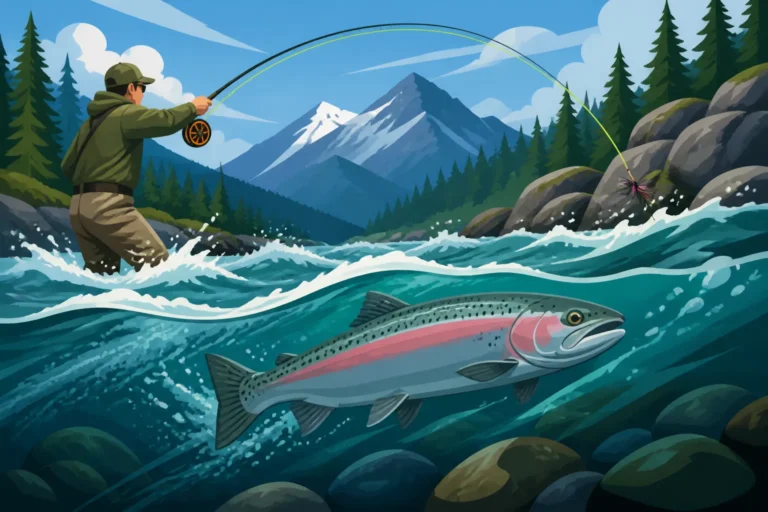
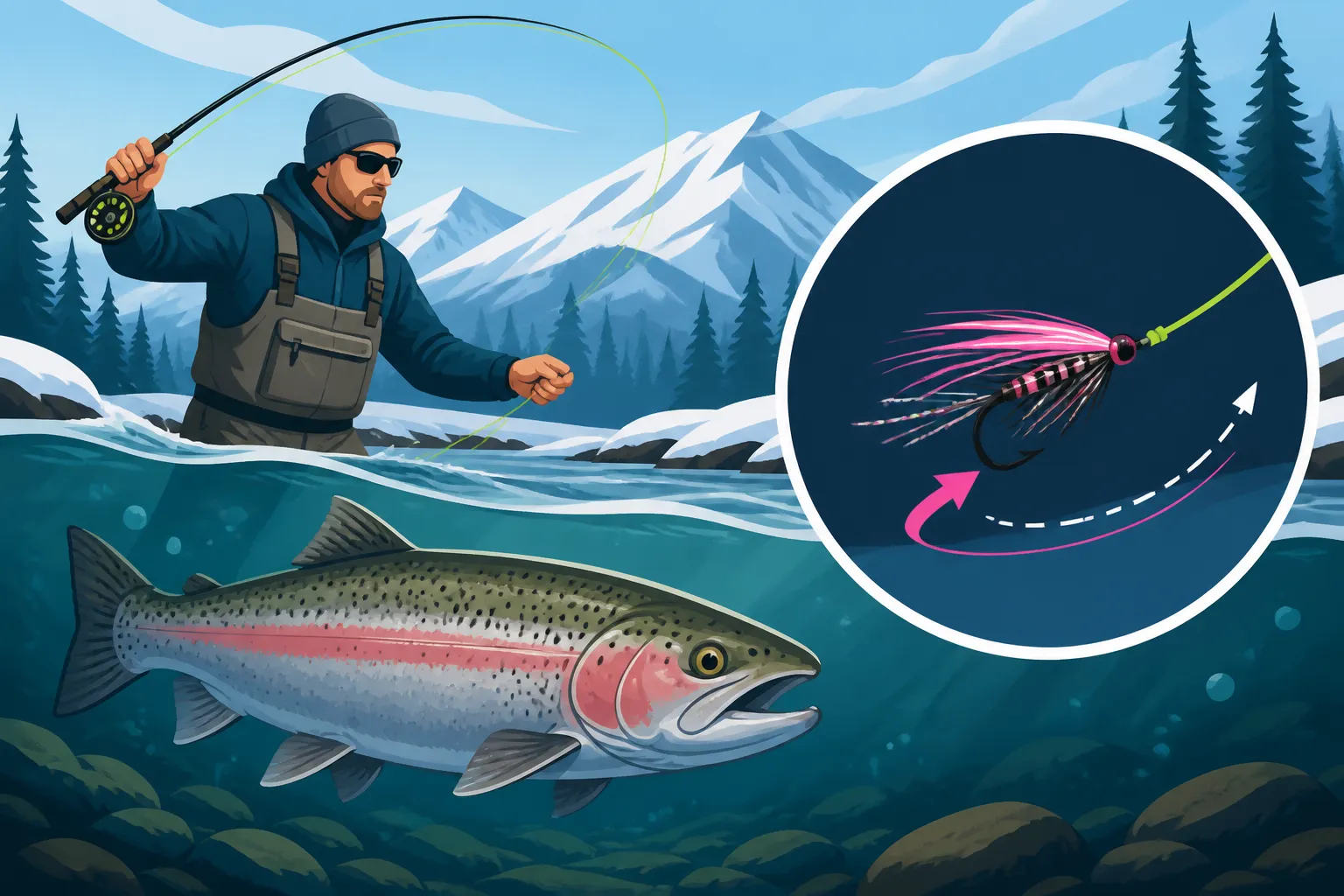
Envision yourself on a remote stretch of the Bulkley River, wading carefully through the frigid water. With a spey or switch rod, you cast a heavy sinking line and a large, often dark-colored fly (like an Intruder or a Skagit-style fly) downstream and across the current. As the line lands, you allow the current to "swing" the fly across the river, presenting it broadside to any waiting steelhead. The fly typically sinks and sweeps through potential holding lies, mimicking a dying baitfish or an insect struggling in the current.
The take on a swung fly is often electric – a solid thud or a sudden, heavy pull that can stop your heart. This technique relies on the steelhead's predatory or territorial instinct to strike at something invading its space. It's particularly effective in medium to fast currents, where the swinging motion can trigger an aggressive response. While patience is paramount, the reward of hooking a winter steelhead on a swung fly is truly unforgettable. Learning about Fly Patterns for BC Steelhead Rivers can greatly improve your success with this method. This is a highly immersive way to fish, often taking you to some of the Best Steelhead Rivers in BC.
Reading the Water and Adapting
Being a successful winter steelhead angler in British Columbia isn't just about knowing techniques; it's about being a keen observer and a flexible adapter. The river is a living, breathing entity that changes daily, sometimes hourly, and your approach needs to change with it.
Current Speed and Water Clarity Adjustments
The river’s pulse – its current speed and clarity – dictates much of what a winter steelhead angler should do. Failing to read these signs is like trying to navigate a dense fog without a compass.
- Current Speed: In faster currents, steelhead will often hold in softer seams and eddies, conserving energy. Your presentation needs to be slowed down to match their lethargy. This might mean using heavier floats or more weight for drift fishing to ensure your offering gets down to their depth without being swept past too quickly. Conversely, in very slow pools, you might need to impart more action to your lure or fly, as the current isn't doing as much work for you. On a day where the river is running high and fast, such as after heavy rain, fish will be pushed to the softest water available. This is when understanding Best Techniques for High Water Spring Conditions can actually apply to winter as well, as fish seek refuge. Your tackle should be robust, and your focus should be on those calmer edges, behind large structure, or the very tail-outs of pools.
- Water Clarity: Winter often brings lower, clearer water, but it can also present muddy conditions after a significant rain or snowmelt. In low, clear water, stealth is paramount. This means lighter leaders, smaller baits or flies, and a more cautious approach to wading to avoid spooking fish. You might consider using fluorocarbon leaders, which are nearly invisible underwater, especially for sensitive areas. For these conditions, guides on Best Techniques for Low Clear Water Steelhead become invaluable. When the water is murky, visibility is low for both you and the fish. This is the time to use larger, bolder baits or flies that create more vibration or offer a stronger silhouette. Scent can also play a much bigger role in turbid water, so incorporating scented baits or adding attractants to your lures can be highly effective. Bright colors like chartreuse, orange, or hot pink can sometimes stand out better in off-color water. Always remember to check BC Fishery Notices and In-Season Closures, Explained before heading out, as water conditions can lead to sudden closures.
Safety First: Navigating Winter Rivers
Winter steelhead fishing can be incredibly rewarding, but it comes with inherent risks. The cold water, slippery banks, and unpredictable weather demand a strong emphasis on safety. No fish is worth putting yourself in danger.
- Wading Safely: Cold water can be unforgiving. Always wear appropriate wading gear, including a good pair of waders and wading boots with felt soles or studs for traction. A wading belt is non-negotiable, preventing your waders from filling completely with water should you fall. Always use a wading staff, especially when exploring new water or in swift currents. Its three points of contact can literally save your life by helping you maintain balance on slippery rocks. Before wading into a new run, take a moment to assess the bottom and current. Never wade alone if possible, or at least let someone know your float plan and expected return time. Check out Wading Techniques for BC Steelhead Rivers for more detailed advice.
- Layering for Warmth: Hypothermia is a real threat in winter. Dress in layers, starting with moisture-wicking base layers, followed by insulating mid-layers (fleece or down), and a waterproof, breathable outer shell. Don't forget a warm hat, gloves, and thick socks. Chemical hand warmers and foot warmers, available in bulk on Amazon, can be a godsend on truly frigid days. Always pack extra warm clothes in a dry bag, just in case.
- Awareness of Conditions: Keep an eye on the weather forecast and river levels. Sudden drops in temperature, heavy snowfall, or rising water levels can quickly turn a pleasant day into a dangerous one. Be mindful of ice accumulation on rocks and gear. If conditions feel unsafe, err on the side of caution and head home. There will always be another day to chase winter steelhead. The fish often become lethargic and harder to catch in extreme conditions anyway.
| Technique | Best for Water Conditions | Pros | Cons | Common Baits/Lures |
|---|---|---|---|---|
| Float Fishing | Medium current, deeper pools | Precise depth control, natural drift | Requires longer rod, tricky in very fast currents | Cured roe, jigs, worm imitations |
| Drift Fishing | Faster runs, varied depths | Covers water efficiently, good for searching | Can snag often, difficult in very slow water | Cured roe, jigs, soft plastics, small spoons |
| Swinging Flies | Medium to fast currents | Engaging, aggressive takes, covers wide water | Requires specific fly gear, more technical | Intruder patterns, weighted streamers, egg patterns |
Disclaimer
This article is for general informational purposes only and does not constitute professional advice. Laws, prices and regulations vary by location and change over time. Consult a qualified professional for guidance on your specific situation.