How to catch steelhead in fast current
You step into a run on the Vedder or the Bulkley, make a cast into the heavy water, and your float rips downstream so fast it never gets near bottom. Your fly swings across the river in two seconds flat. Fast current is where many steelhead hold, yet it is where most anglers struggle. This guide shows you where fish sit in fast water and how to present gear, bait or flies so they actually see it.
Why Steelhead Hold in Fast Current
It seems backwards at first. Steelhead are big, powerful fish, but they are also on a long journey with limited energy. So why would they sit in heavy flow? The answer is that they do not sit in the fast water itself. They sit in the pockets of slower water inside and beneath it.
Finding the Soft Spots in Hard Water
Any fast run is full of hidden refuges. Behind and in front of boulders, the water slows and swirls. Along the bottom, friction against rocks and gravel slows the current dramatically, sometimes to a fraction of the surface speed. At the seams where fast water meets slower water, fish can hold in comfort while food and oxygen stream past.
When you look at a fast run, try to see it in three dimensions. The surface may be a sheet of white water, but a few feet down there may be a slot behind a ledge where a steelhead can rest with barely a flick of its tail. Look for boils on the surface, which often mark a big rock below, and for slight changes in colour that show depth changes.
Oxygen, Cover and Security
Fast water carries more oxygen, which matters when water warms in late spring or during a summer-run season. It also provides cover. Broken surface water makes it hard for predators, including anglers, to see fish. A steelhead in a choppy riffle feels much safer than one in a clear, glassy pool.
That is why fish often move into faster water when they are travelling, when light is bright, or when they feel pressured. On heavily fished rivers like the Chilliwack and Vedder system, fish frequently hold in pocket water and fast slots that many anglers walk past on their way to the obvious pools.
Temperature and Activity
Water temperature changes how steelhead use fast water. In colder water, roughly below 4 or 5 degrees Celsius, steelhead tend to slow down and favour softer, deeper water, though they will still hold in pockets within faster runs. In the 6 to 12 degree range they are more active and more willing to sit in or move into faster water to intercept food or a lure.
If you fish winter rivers, you will often find fish tucked into the slower edges and deeper pockets of fast runs rather than in the main current. For the temperatures where steelhead are most active, see What water temperature steelhead prefer.
| Water Feature | What It Looks Like on the Surface | Why Steelhead Use It |
|---|---|---|
| Boulder pocket | Boil or bulge with a slick behind it | Slow water to rest out of the current |
| Inside seam | Line where fast and slow water meet | Easy holding next to a food lane |
| Ledge or drop-off | Darker water, sudden depth change | Shelter from flow and overhead cover |
| Tailout lip | Water speeds up and shallows | Resting point before or after moving up |
| Riffle head | Choppy surface, broken water | Oxygen and cover, often travelling fish |
Gear and Rigging That Works in Heavy Flow
Fast water punishes light, poorly balanced gear. Your goal is to get your presentation down quickly and keep it in the zone long enough for a fish to react.
Float Fishing in Fast Water
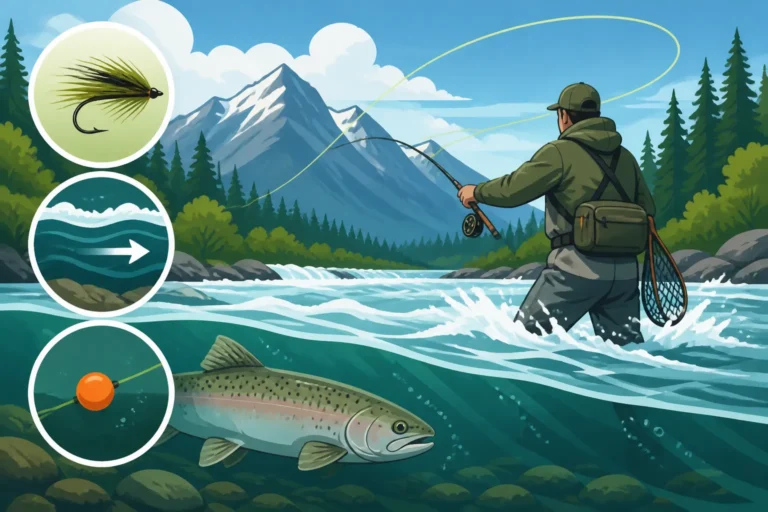
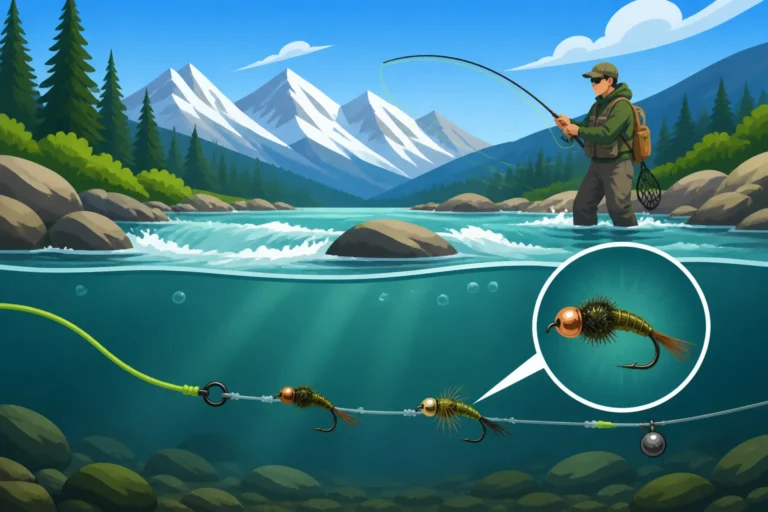
Float fishing is one of the most effective methods for BC steelhead, and it can work well in fast water with a few adjustments. Use a heavier float that can carry more weight, often in the 1/2 to 1 ounce range, so you can get your bait or jig down quickly. Pencil lead or split shot on the mainline puts weight where you need it.
Set your depth so your bait or jig runs just above bottom. In fast water, the line between your float and weight will sweep back at an angle, so you often need to set the float a bit deeper than the actual water depth. Mend your line to keep the float drifting naturally rather than being pulled downstream by belly in the line.
Many anglers in fast water use a more streamlined, cigar-shaped float rather than a round one, because it rides the current more predictably. For a complete setup guide, see Best drift rig for BC steelhead.
Jigs Under a Float
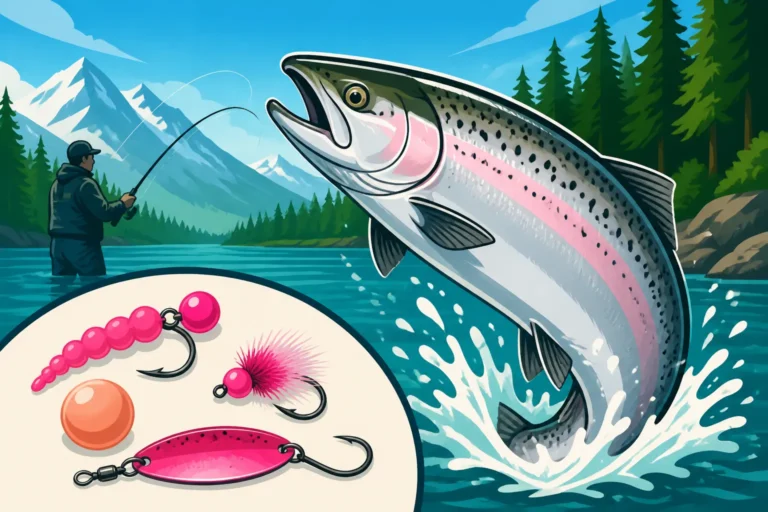
A weighted jig under a float is one of the simplest fast water presentations, and it has saved many slow days on Lower Mainland and Vancouver Island rivers. The jig head carries its own weight, so you need less shot on the line, and the marabou or rabbit strip breathes even when the drift is quick. Pink, purple, black and cerise are reliable colours, with brighter shades in coloured water and darker ones in clear water.
In heavy current, choose a jig on the heavier side, such as an eighth to a quarter ounce, and set the float so the jig rides a foot or two off bottom. Jigs snag less than bait, which matters in boulder-strewn pocket water where you lose gear on every third drift with a bait rig.
Bottom Bouncing and Drift Fishing
In very fast or deep runs, bottom bouncing or drift fishing with a heavier weight can work better than a float. A slinky or a pencil lead weight on a dropper bounces along the bottom, while a short leader carries a drift bobber, yarn, or bait in the strike zone.
The trick is to use just enough weight to tick bottom every few seconds. Too much, and you snag constantly. Too little, and your rig never gets down. Cast slightly upstream, let the weight sink, and follow the drift with your rod tip. This classic technique is covered in more detail in Drift Fishing for Steelhead in BC Rivers.
Spoons and Spinners
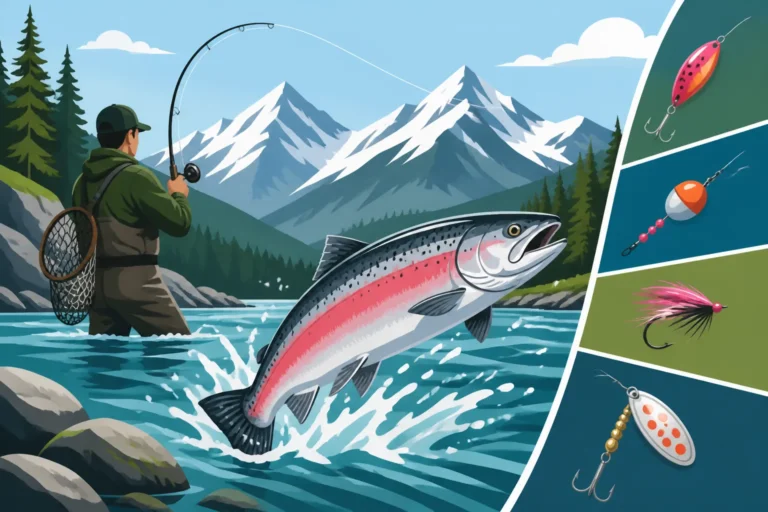
Spoons and spinners can be deadly in fast water because they create flash and vibration that steelhead can detect at a distance. Heavier spoons cast farther and sink faster. A common approach is to cast across and slightly upstream, let the lure sink, and then let the current swing it across the run while you slowly reel.
In fast current, keep your retrieve slow and let the current do most of the work. You want the lure to flutter and swing near bottom, not race across the surface. A small adjustment in your casting angle can make a big difference in how deep the lure runs.
Fly Fishing With Sink Tips
For fly anglers, fast water means sink tips. Swinging a fly through heavy flow on a floating line is nearly impossible; the fly rides too high and moves too fast. Use a sink tip that matches the depth and speed of the run, along with a weighted or heavier fly.
Cast at a steeper downstream angle in fast water to slow the swing. Mend upstream immediately after the cast to let the fly sink before the current pulls it across. Many anglers also step down the run more slowly in fast water, covering it in a tighter grid. For more on the classic swing in fast tailouts, see How to fish a fly for steelhead in a tailout.
Buying Gear for Fast Water
You do not need a closet full of gear, but some items make fast water fishing easier: heavier floats, a range of pencil lead, spare sink tips and a few heavier spoons. Many anglers source these from local tackle shops near their home rivers, while others order spare floats, swivels and leader material through Amazon. Check that gear is designed for steelhead and river conditions, and compare current prices yourself, as they change.
Step-by-Step Approach to a Fast Run
Fast water can be overwhelming. Breaking it down into steps helps you fish it methodically rather than flailing.
Read the Run Before You Cast
Spend a few minutes watching the run. Identify the seams, boils, ledges and tailout. Pick out the slots where you think a fish might rest. Notice where the current pushes hardest and where it softens. Plan your approach, including where you will stand and how you will move down the run.
A good routine looks like this:
- Start at the top of the run and fish the head and inside seam first.
- Work the softer edges before casting into the heaviest water.
- Cover each likely slot with several drifts at slightly different depths.
- Move down in small steps, overlapping your coverage.
- Finish with the tailout, where travelling fish often pause.
Adjust Your Angle and Line Control
In fast water, your casting angle controls how deep your presentation gets and how long it stays in the zone. Casting more upstream gives your weight or fly more time to sink before the current takes it. Casting more downstream slows a swung presentation.
Line control is critical. Mend early and often to keep slack out of the line and prevent the current from dragging your presentation too fast. Hold your rod high to keep line off the water when float fishing, which reduces drag and helps your float drift naturally. Practice will teach you what a good drift feels like.
Detecting Strikes in Heavy Flow
Strikes in fast water can be subtle or violent. On a float rig, the float may dip, hesitate, or simply move against the current. On a bottom bouncing rig, you may feel the ticking stop, or a dull weight. On a swing, you may feel a pluck, a slow tightening, or a hard grab.
Set the hook firmly but without jerking wildly; in fast water, the current and the fish’s own weight will help drive the hook home. If in doubt, set. A snag costs you a few seconds; a missed fish could be your only chance of the day.
Common Fast Water Mistakes
Most anglers who struggle in heavy current make the same few mistakes. The first is fishing too light. A float that cannot carry enough weight, or a fly line that cannot sink, simply rides over the fish. If you are not ticking bottom or feeling your fly dig in occasionally, you are almost certainly too high.
The second mistake is casting too far. Long casts into fast water create big bellies of line that drag your presentation unnaturally. Short, controlled drifts close to you are far more effective than long casts that you cannot manage. Fish the near water thoroughly before you reach for the far seam.
The third mistake is rushing. Fast water looks busy, and it is tempting to move through it quickly. But fish in heavy current often need several drifts before they commit. Slow down, cover the best slots more than once, and change depth or angle before you change spots.
Fighting Fish in Fast Water
A steelhead in fast current will use the flow against you. Expect long runs downstream. Keep your rod tip up and your drag set firm but smooth. If the fish heads downstream into a bigger rapid, try to follow along the bank rather than holding it hard and risking a break-off.
Once the fish tires, guide it into slower water near the bank. Avoid dragging it over rocks. If you plan to release it, keep it in the water and revive it facing upstream in moderate current until it swims away strongly.
Safety, Ethics and Conditions
Fast water is dangerous. Every year, anglers in BC take falls in heavy current, and some do not come home. Steelhead are also precious, and many runs are under pressure.
Wading Safely in Heavy Water
Never wade deeper than your knees in fast water unless you know the run well. Use a wading staff, studded boots and a wading belt, and consider an inflatable PFD. Face upstream when you move, and shuffle your feet rather than lifting them. If you feel the current lifting you, back out immediately.
Avoid crossing rivers in fast water, especially in winter when cold water can sap your strength quickly. The essentials are laid out in How to wade a BC steelhead river safely.
Knowing When the River Is Too High
Fast current is one thing; a flooded river is another. When a river rises quickly and turns brown, steelhead often move to the edges and become hard to reach, and wading becomes dangerous. Learn the river levels where your favourite runs fish well and where they become unsafe.
Most BC rivers have online level gauges you can check before you go. Many anglers keep a log of levels and results. For guidance on when to stay home, read When BC rivers get too high to fish for steelhead.
Regulations and Catch and Release
Steelhead in BC are managed carefully. Many rivers are catch and release only for wild steelhead, and some are closed entirely. Single barbless hooks and bait bans are common on many waters. Always read the regulations for your river and section before you go, and check for in-season closures.
You need a freshwater licence and a steelhead conservation surcharge stamp to fish for steelhead in BC. Details are in BC Steelhead Conservation Surcharge Stamp. When you release a fish, keep it wet, minimize handling, and let it recover fully before letting go.
Building Experience Over Time
Fast water is a skill that takes time to learn. Spend days on rivers you know, experiment with different rigs and angles, and keep notes. Talk to local anglers and tackle shop staff. Consider hiring a guide for a day on a new river to learn the runs and techniques.
Over time, you will start to see fast water differently. Instead of a wall of current, you will see a mosaic of seams, pockets and slots, each with its own potential. For broader context on seasonal tactics, see Best technique for fishing a riffle for steelhead and Best Techniques for Winter Steelhead. A good wading staff, studded boots and a quality wading belt are worth every bit of the investment, and they are easy to find through tackle shops or online through Amazon; just make sure any gear you buy fits properly and is rated for the conditions you fish.
Disclaimer
This article is for general informational purposes only and does not constitute professional advice. Laws, prices and regulations vary by location and change over time. Consult a qualified professional for guidance on your specific situation.