Coho Salmon Habits in Coastal Streams
There’s nothing quite like the thrill of a coho salmon run, but sometimes, figuring out where these elusive fish hang out in our diverse British Columbia coastal streams can feel like a guessing game. Many anglers get frustrated trying to pinpoint their movements, especially when water levels change or conditions shift. This guide is here to unravel the fascinating habits of coho salmon in their freshwater homes, helping you understand their preferences and increasing your chances of a successful day on the water.
The Coho Salmon Life Cycle: A Journey of Transformation
Coho salmon, often affectionately called "silvers" for their brilliant chrome flanks, undertake one of nature's most incredible journeys. Their life cycle is deeply intertwined with the health and vitality of the coastal streams they call home, a journey that spans both freshwater and vast ocean expanses before bringing them back to their origins. Understanding this cycle is fundamental to appreciating their habits.
From Egg to Fry: The Stream's Nursery
The story of a coho begins in the cold, clear gravel beds of a coastal stream, often high up in the system where the water is cleanest and most oxygenated. In the fall, after a harrowing migration, the female coho constructs a "redd"—a saucer-shaped nest dug into the gravel by fanning her tail. She'll deposit her eggs into this redd, often hundreds or even thousands, which are then fertilized by a waiting male. These precious eggs are then covered with gravel, offering protection from predators and the harsh winter currents.
Over the long winter months, typically from late fall through early spring, the eggs slowly incubate. Water temperature is critical during this period; consistently cold water is essential for proper development. Once hatched, the tiny, vulnerable fish are called alevins. They remain buried in the gravel, surviving on the yolk sac still attached to their bellies. This hidden stage is crucial for their early development, providing nourishment and safety until they are strong enough to emerge. When their yolk sacs are almost absorbed, usually by spring, the alevins wiggle their way up through the gravel and emerge as free-swimming fry. This emergence marks their first true interaction with the stream environment.
Parr Stage and Smoltification: Preparing for the Ocean
Upon emerging, coho fry immediately begin feeding on aquatic insects and larvae, establishing small territories within the stream. At this stage, they are easily recognizable by their distinctive vertical bars, or "parr marks," along their sides, which provide camouflage against the dappled light and shadows of the streambed. These young coho, now referred to as parr, will spend a critical year, sometimes even two, growing and developing in their natal stream. They seek out areas with ample cover—think fallen logs, undercut banks, deep pools, and thick riparian vegetation—which offer protection from predators like birds, larger fish, and even raccoons.
As they grow, usually in their second spring, the coho parr undergo a remarkable physiological change called smoltification. This internal transformation prepares their bodies for life in saltwater. Their parr marks fade, replaced by the iconic chrome-silver scales that give them their "silver" nickname. Their gills and kidneys adapt to process salt, and their instincts begin to pull them downstream towards the estuary and eventually the open ocean. This migration typically occurs under the cover of darkness, allowing the vulnerable smolts to avoid predators as they transition from freshwater to the vast, new world of the Pacific. You can find specialized smolt nets and traps on Amazon for scientific research or monitoring, which helps conservationists understand these critical transition periods.
Ocean Odyssey: Growth and Maturation
Once they reach the Pacific Ocean, coho salmon embark on an incredible feeding frenzy, growing rapidly in the nutrient-rich waters. Their diet shifts dramatically from freshwater insects to small baitfish like herring, sandlance, and capelin, as well as crustaceans such as krill and euphausiids. They typically spend one to two years in the ocean, undertaking extensive migrations that can take them hundreds or even thousands of kilometers from their home streams. This period of oceanic growth is vital for them to reach maturity and build the energy reserves needed for their arduous return journey to spawn.
The ocean phase is also where they face a myriad of challenges, including predation from larger fish, marine mammals, and seabirds, as well as encountering commercial and recreational fisheries. The sheer scale of the ocean means they are part of a vast and complex food web. As their internal biological clock ticks, and the urge to reproduce becomes overwhelming, mature coho will begin their journey back to the specific coastal stream where they were born, driven by an instinct that is still not fully understood. This homeward migration is a testament to their remarkable navigational abilities.
Key Environmental Factors Influencing Coho Habits
Coho salmon are incredibly sensitive to their environment, and their habits are constantly shaped by the conditions around them. From the structure of the stream itself to the subtle changes in water temperature and flow, every element plays a role in their survival and success.
Stream Habitat Preferences: What Coho Look For
Coho salmon have very specific preferences when it comes to their freshwater habitat, especially during their critical juvenile stage. They thrive in streams that offer a mosaic of different features, providing both safety and ample food. They particularly favour areas with cool, well-oxygenated water, which is often found in shaded sections of a stream or where groundwater seeps in. Optimal water temperatures are usually below 18°C (64°F).
Cover is paramount for juvenile coho. They'll seek refuge in complex habitats created by large woody debris, such as log jams and fallen trees, which break up the current and provide hiding spots. Undercut banks, where the stream has eroded beneath the shoreline vegetation, are also prime real estate, offering deep, protected pockets. Gravel beds are, of course, essential for spawning, but also for the incubation of eggs and the early life of alevins. Beyond that, a healthy mix of deep pools for resting and riffles for feeding on drifting insects forms an ideal environment. Understanding these preferences can give you a real edge when you're looking for Best Fishing Rivers in British Columbia and focusing on coho.
Water Flow and Clarity: The River's Pulse
The dynamic nature of coastal streams, driven by rainfall, snowmelt, and seasonal droughts, directly impacts coho salmon behavior. Water flow is a critical factor, influencing everything from migration success to feeding efficiency. During periods of heavy rain, stream levels rise, and the water often becomes turbid. While this can make fishing challenging due to reduced visibility, rising water can actually be a boon for migrating adult coho, providing enough depth to overcome obstacles and a scent trail to follow. However, excessively high and fast flows can make it difficult for spawning females to construct redds or for fry to hold their position.
Conversely, during dry spells, stream levels can drop dramatically. Low water can create barriers for migrating adults, isolating spawning grounds, and can also lead to increased water temperatures, stressing juvenile coho. Clear, low water also makes juvenile coho more vulnerable to predation. Anglers often pay close attention to the river's pulse, understanding that a slight rise after a good rain can trigger a coho run, while prolonged low, clear conditions might mean tougher fishing. Knowing how Fishing after a heavy rain on BC rivers affects these fish is crucial.
Food Sources and Predation: Survival of the Fittest
From the moment they emerge from the gravel, coho salmon are driven by the need to feed and avoid becoming food themselves. In their freshwater stage, coho fry and parr are opportunistic feeders, primarily consuming a variety of aquatic insects such as caddisfly larvae, mayfly nymphs, and stonefly nymphs. They will also eagerly snap up terrestrial insects that fall into the water, and as they grow, they'll prey on smaller fish and salmon fry of other species. This diet helps them pack on weight and grow strong enough for their impending ocean migration.
Once in the ocean, their diet expands significantly to include a richer array of marine organisms. Herring, anchovies, sandlance, and other small forage fish become their primary sustenance, fueling their incredible growth. They also consume various crustaceans like euphausiids (krill). This abundant food supply is what allows them to return to their natal streams as powerful, robust adults. However, they are also a key part of the marine food chain, preyed upon by seals, sea lions, whales, and larger fish. In freshwater, they face predators like mergansers, kingfishers, bears, and other fish species. This constant dance of predator and prey shapes their behaviors, forcing them to be wary and seek safe havens.
Coho Migration and Spawning Behaviors
The homeward journey of the coho salmon is perhaps the most iconic part of their life cycle, a remarkable feat of endurance and navigation that culminates in the act of spawning. This final, most critical phase determines the success of future generations.
The Return Journey: Navigating Home
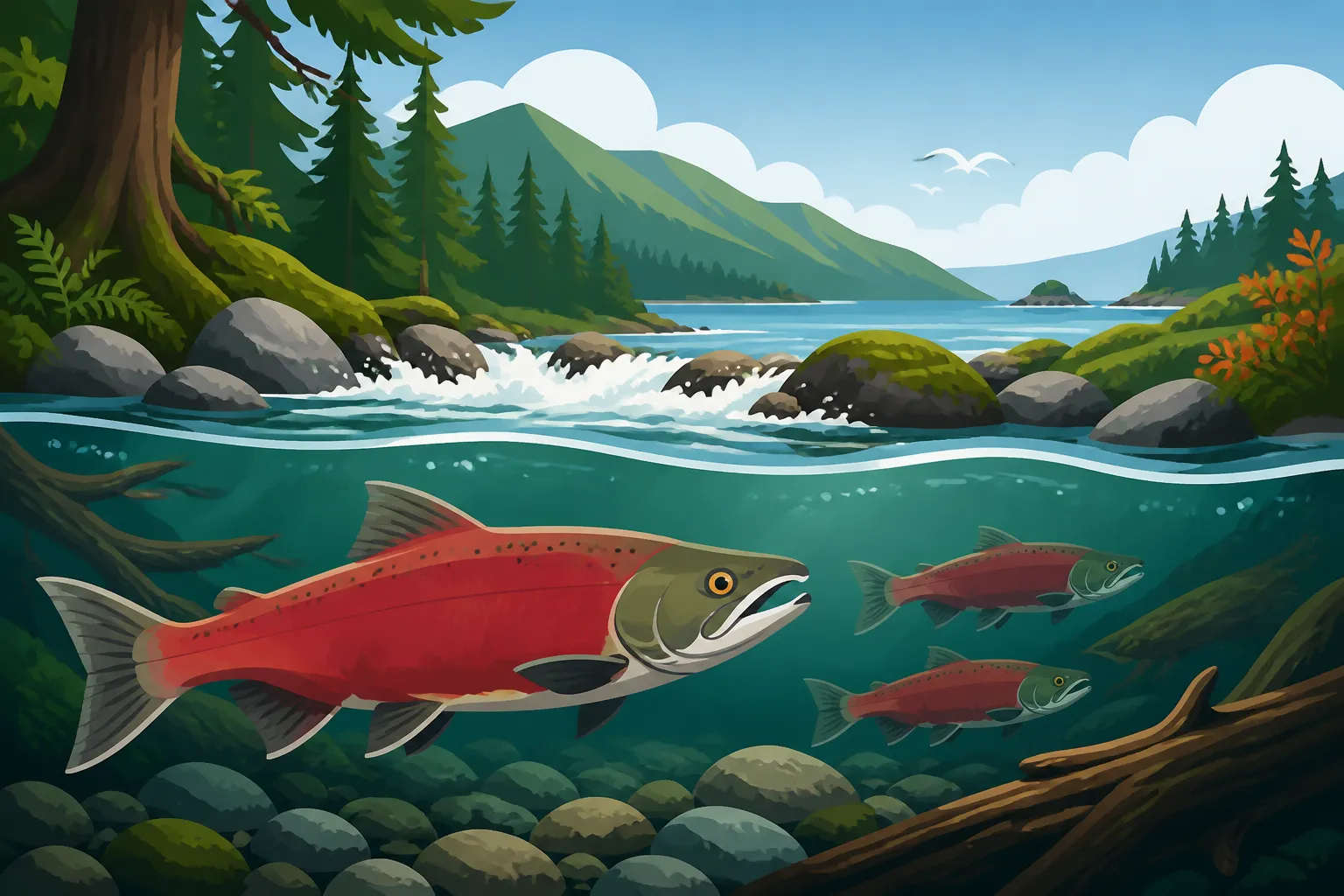
After one to two years spent growing large and strong in the Pacific Ocean, mature coho salmon begin their incredible return to their natal streams. This migration typically begins in late summer and continues through the fall, often peaking in October and November for many BC coastal systems. Driven by an innate biological imperative, they navigate back to the very river mouth they left as smolts, using an acute sense of smell to detect the unique chemical signature of their home stream.
The journey upstream is fraught with challenges. Coho must battle strong currents, leap over waterfalls, and evade numerous predators, both natural and human. They cease feeding once they enter freshwater, relying solely on the fat reserves built up during their time at sea. Their bodies undergo a dramatic transformation, with males developing a hooked jaw (kype) and a prominent humped back, while both sexes take on darker, more vibrant spawning colours, often with shades of red, green, and brown. Successfully navigating these challenges is crucial for the continuation of their species. Remember to consult BC Fishing Season Dates and Closures to ensure you're fishing legally and sustainably during these critical times.
Spawning Rituals: Creating the Next Generation
Once they arrive at their preferred spawning grounds, usually in the upper reaches of coastal streams or smaller tributaries, the coho salmon engage in their ancient spawning rituals. The female, now vibrant in her breeding colours, selects a suitable spot with clean, oxygenated gravel. She uses her tail to excavate a depression, known as a redd, in the streambed. This can be an arduous process, as she repeatedly turns on her side and thrashes her tail to dislodge gravel.
As she deposits her eggs into the redd, a male coho, often one who has been vying for her attention, moves alongside her to fertilize them. After fertilization, the female continues to fan gravel over the eggs, burying them to protect them from predators and ensure they receive a constant flow of oxygenated water. This process can be repeated several times over a few days, with the female creating multiple "potatoes" within her redd. Once spawning is complete, both the male and female coho, utterly exhausted and spent, gradually succumb to their efforts. They become kelts, their bodies deteriorating, and eventually, they die, their nutrients returning to the stream ecosystem to support future generations.
Factors Affecting Spawning Success
The success of a coho salmon spawning run is influenced by a complex interplay of environmental factors, many of which are increasingly impacted by human activity. Clean, cool, and well-oxygenated water is paramount. Pollution from urban runoff, agricultural chemicals, and industrial discharges can severely compromise water quality, making it difficult for eggs to survive or for adult coho to even reach their spawning grounds.
Habitat degradation, such as logging practices that remove riparian vegetation, can lead to increased stream temperatures, sedimentation, and a loss of critical in-stream cover. Barriers to migration, whether natural waterfalls or human-made culverts and dams, can prevent coho from accessing vital spawning habitat. Furthermore, extreme weather events, such as prolonged droughts leading to critically low water levels or severe floods that scour redds, can have devastating impacts on egg and alevin survival. Protecting these coastal streams is not just about the fish; it's about safeguarding an entire ecosystem. When you're considering what fishing gear to pack, remember that a good pair of polarized sunglasses available on Amazon can help you spot potential redds, allowing you to avoid disturbing these sensitive areas.
Coho Behavior Through the Seasons in Coastal Streams
The life of a coho salmon in a coastal stream is a continuous cycle, each season bringing new challenges and opportunities for growth and survival. Understanding these seasonal shifts helps paint a complete picture of their habits.
Spring: Emergence and Early Growth
As the grip of winter loosens and spring begins to warm the waters of BC's coastal streams, a flurry of activity begins beneath the gravel. This is the season when coho alevins, having absorbed most of their yolk sacs, finally wriggle free from their protective beds and emerge as active, free-swimming fry. This emergence typically coincides with increasing insect hatches, providing a vital food source for the hungry young fish.
During spring, coho fry are relatively small and vulnerable, but they are also incredibly energetic. They quickly begin to establish small territories, often in slow-moving eddies or along the margins of the stream where food is abundant and current is manageable. Their primary focus is to feed continuously and grow. They'll dart out from cover to intercept drifting insects, rapidly developing their foraging skills. This early growth spurt is crucial for their survival, setting the stage for their development into parr and eventually smolts.
Summer: Juvenile Residence and Growth
Summer in coastal streams is the time when coho parr really settle into their freshwater residence. Having grown considerably since spring, they are now more robust and more adept at navigating the stream environment. During warmer summer months, parr often seek out cooler refuges within the stream, such as deep pools, shaded areas under overhanging vegetation, or sections where cold groundwater seeps into the main channel. What water temperature salmon prefer is vital information here, as excessively warm water can stress these fish, making them lethargic and more susceptible to disease.
Their diet continues to consist of a wide array of aquatic and terrestrial insects. They become masters of camouflage, using their parr marks to blend in with the streambed while patiently waiting for food to drift by. Summer is a critical period of sustained growth, as they pack on the size and strength needed for the rigorous smoltification process that will begin the following spring. They also remain highly vigilant against predators, constantly seeking cover and using their keen senses to detect danger. This is where Kayak Fishing Techniques for BC Coastal Waters can be excellent for quietly exploring those deeper pools and shaded runs where coho hide.
Fall: Adult Return and Spawning
Fall is perhaps the most exciting and dramatic season for coho salmon in coastal streams, as it marks the return of the mature adults to spawn. Beginning in late summer and intensifying through September, October, and November, the coastal waters of BC witness the spectacle of coho salmon pushing their way upstream. As mentioned earlier, their physical appearance undergoes a striking transformation, morphing from the sleek, silver fish of the ocean into darkly coloured, often red-flanked, hooked-jawed warriors.
Upon entering freshwater, adult coho cease feeding, dedicating all their remaining energy to the journey and the act of reproduction. They become highly aggressive, particularly the males, who will fiercely defend their chosen females and spawning territories against rivals. This aggression can sometimes translate into a strong strike when a lure or fly passes by, making fall a popular time for anglers targeting these powerful fish. The air fills with the distinct scent of salmon, and the sound of splashing fish fills the riparian corridors as they tirelessly work to create the next generation. For those interested in pursuing them, knowing Best Techniques for Fall Coho Fishing will certainly come in handy.
Winter: Incubation and Dormancy
While the adult coho have completed their life cycle by late fall, the next generation is just beginning its journey beneath the gravel. Throughout the winter months, the salmon eggs lie dormant within the redds, slowly developing. The key to their survival during this period is a steady flow of cold, oxygenated water, which keeps them healthy and prevents fungal growth. The gravel acts as a natural insulator, protecting the eggs from extreme temperature fluctuations and ice formation.
Any significant disturbance during winter, such as heavy floods that scour the streambed or sedimentation that smothers the eggs, can be catastrophic for egg survival. As winter progresses towards spring, the eggs will hatch into alevins, still remaining safely buried in the gravel, nourishing themselves from their yolk sacs. This quiet, unseen stage of the coho life cycle is just as vital as the dramatic spawning runs, ensuring the continuity of the species for years to come.
Here's a quick overview of the Coho salmon life stages:
| Life Stage | Location | Key Habits & Characteristics | Duration (Approx.) |
|---|---|---|---|
| Egg | Stream Gravel (Redd) | Buried in clean, oxygenated gravel; slow development. | 4-12 weeks (winter) |
| Alevin | Stream Gravel (Underground) | Hatched from egg, yolk sac attached for nourishment; remains hidden in gravel. | 3-6 weeks (early spring) |
| Fry | Coastal Stream | Emerges from gravel, begins active feeding on insects; small, vulnerable, establishes territories. | Few months (spring-early summer) |
| Parr | Coastal Stream | Distinct parr marks for camouflage; actively feeds and grows, seeks cover (logs, undercut banks). | 1-2 years (summer-spring) |
| Smolt | Estuary / Stream to Ocean | Undergoes smoltification (physiological change for saltwater); parr marks fade, becomes silver; migrates downstream. | Few weeks (spring) |
| Ocean Adult | Pacific Ocean | Feeds aggressively on baitfish, crustaceans; grows rapidly, migrates widely; develops large fat reserves. | 1-2 years (late spring-fall) |
| Spawning Adult | Coastal Stream (Returning) | Ceases feeding, develops spawning colours & kype; navigates upstream, builds redd, lays/fertilizes eggs, then dies. | Few weeks (fall) |
Angler's Insight: How Coho Habits Influence Fishing
For us anglers, understanding the intricate habits of coho salmon isn't just fascinating—it's incredibly practical. Knowing where they are, what they're doing, and why they're doing it can dramatically improve our success on the water.
Best Times and Locations to Target Coho
Given their life cycle, the prime time to target coho salmon in BC's coastal streams is during their return migration in the fall. This typically begins in late August or early September and can extend well into November, depending on the specific stream and seasonal conditions. The peak of the run often coincides with the first significant rains that raise stream levels, providing the necessary depth for fish to move upstream. During this time, coho are concentrated in the river system, actively moving towards their spawning grounds.
As for locations, look for them in areas where they pause or hold during their migration. These "holding water" spots include:
- Deep pools: Especially those with good cover like fallen trees or undercut banks, where they feel safe.
- Tail-outs of pools: The shallower, faster water at the downstream end of a pool, often a staging area before moving into the next section.
- Confluence points: Where two streams meet, creating a natural holding area and scent trail.
- Behind large obstacles: Like boulders or log jams, which break the current and offer a resting spot.
- Any significant changes in current speed: Coho will often hold just out of the main current, expending less energy.
While adults are the main target in fall, juvenile coho (parr) can be targeted during spring and summer in areas with ample cover and food, though they are much smaller and usually caught on lighter tackle. Always be aware of BC Bag and Possession Limits by Species and local regulations.
Effective Techniques and Gear for Coastal Coho
Coho salmon can be incredibly aggressive, especially as they enter freshwater, which makes them a fantastic sport fish. There are several effective techniques, and the gear you choose often depends on the water conditions, stream size, and your personal preference.
Gear Fishing:
- Spinners and Spoons: These are highly effective for coho. Their flash and vibration mimic injured baitfish, which can trigger an aggressive strike. Popular choices include small to medium-sized spinners with bright blades (chartreuse, orange, silver) and casting spoons. When looking for quality lures, Amazon offers a wide variety that can be delivered right to your door before your next trip.
- Drift Fishing: Using roe, pink worms, or even brightly colored yarn under a float can be deadly. The key is to get your presentation down to the fish without snagging the bottom. This is particularly effective in runs and seams where coho are holding. Many anglers swear by the effectiveness of real or artificial salmon roe clusters. This is a technique you might see applied for other species in Drift Fishing for Steelhead in BC Rivers as well.
Fly Fishing:
- Streamers: Coho love to chase streamers, particularly those tied in bright colours like chartreuse, pink, orange, or black, often with a good amount of flash. Clouser Minnows, Woolly Buggers, and various Coho Bugger patterns are excellent.
- Intruder-style flies: These larger, articulated flies are very popular for swinging in bigger water and can entice aggressive coho.
Regardless of your chosen method, a medium-action rod, a reliable reel with good drag, and 10-15lb test line (monofilament or fluorocarbon leader with braid main line) are good starting points. Always be prepared to adapt your Salmon Fishing Techniques for BC Rivers to the conditions you face, as coho can be finicky. Sometimes, changing your retrieve speed or lure color, as discussed in Best lure retrieve for coho in coastal streams, can make all the difference.
Conservation and Ethical Angling Practices
As passionate anglers, we have a profound responsibility to protect coho salmon and their delicate habitats. Coastal streams are under increasing pressure, and our actions can make a real difference.
Respecting Spawning Grounds: During the fall spawning season, it is absolutely critical to avoid walking on redds (the gravel nests). Disturbing these areas can destroy eggs and alevins, jeopardizing future generations. If you see redds, give them a wide berth and fish upstream or downstream of them.
Catch and Release Best Practices:
- Minimize Handling: If releasing a fish, try to keep it in the water as much as possible.
- Use Barbless Hooks: This makes hook removal much easier and less damaging to the fish. Barbless hooks are now mandatory in many BC waters for salmon.
- Proper Gear: Use a net with rubber mesh to protect the fish's slime coat and fins.
- Revive Carefully: If the fish seems tired, hold it gently in the current until it swims away under its own power.
- Consider Keeping a Few: If regulations allow, and you plan to eat your catch, consider keeping a couple of healthy fish for the table and releasing the rest.
Adhere to Regulations: Always, always check the current BC Freshwater Fishing Regulations Synopsis for the specific region and stream you are fishing. Regulations can change frequently, often mid-season, due to conservation concerns, especially for salmon. Pay close attention to bag limits, size restrictions, gear restrictions (e.g., single barbless hooks only), and seasonal closures. The provincial government's BC Fishing Regulations Explained guide is your best friend here. By practicing ethical angling, we ensure that the incredible coho salmon runs continue to thrive for future generations of anglers to enjoy.
Disclaimer
This article is for general informational purposes only and does not constitute professional advice. Laws, prices and regulations vary by location and change over time. Consult a qualified professional for guidance on your specific situation.