Whitefish in BC’s Interior Lakes
Many anglers hitting British Columbia's vast interior lakes often dream of trout or salmon, perhaps even bass in the warmer southern regions, but they might be overlooking a truly abundant and engaging sport fish: the whitefish. These often-underestimated residents of our deep, cold lakes can provide fantastic action, especially when other species are finicky, and they are absolutely delicious on the dinner table. If you've ever found yourself wondering what those mysterious flashes beneath your boat are or if there's more to BC fishing than just trout, you're in the right place. This guide will dive deep into everything you need to know about whitefish, from identifying them to the best ways to catch them in our stunning interior waters.
Unmasking British Columbia's Whitefish Species
British Columbia is home to several species of whitefish, each with its own characteristics and preferred habitats. While they might not boast the vibrant colours of a rainbow trout or the aggressive strikes of a chinook salmon, whitefish are incredibly resilient, intelligent, and can put up a surprisingly strong fight on light tackle. Understanding which species you're targeting can greatly influence your approach and success.
Lake Whitefish: The Interior's Prolific Resident
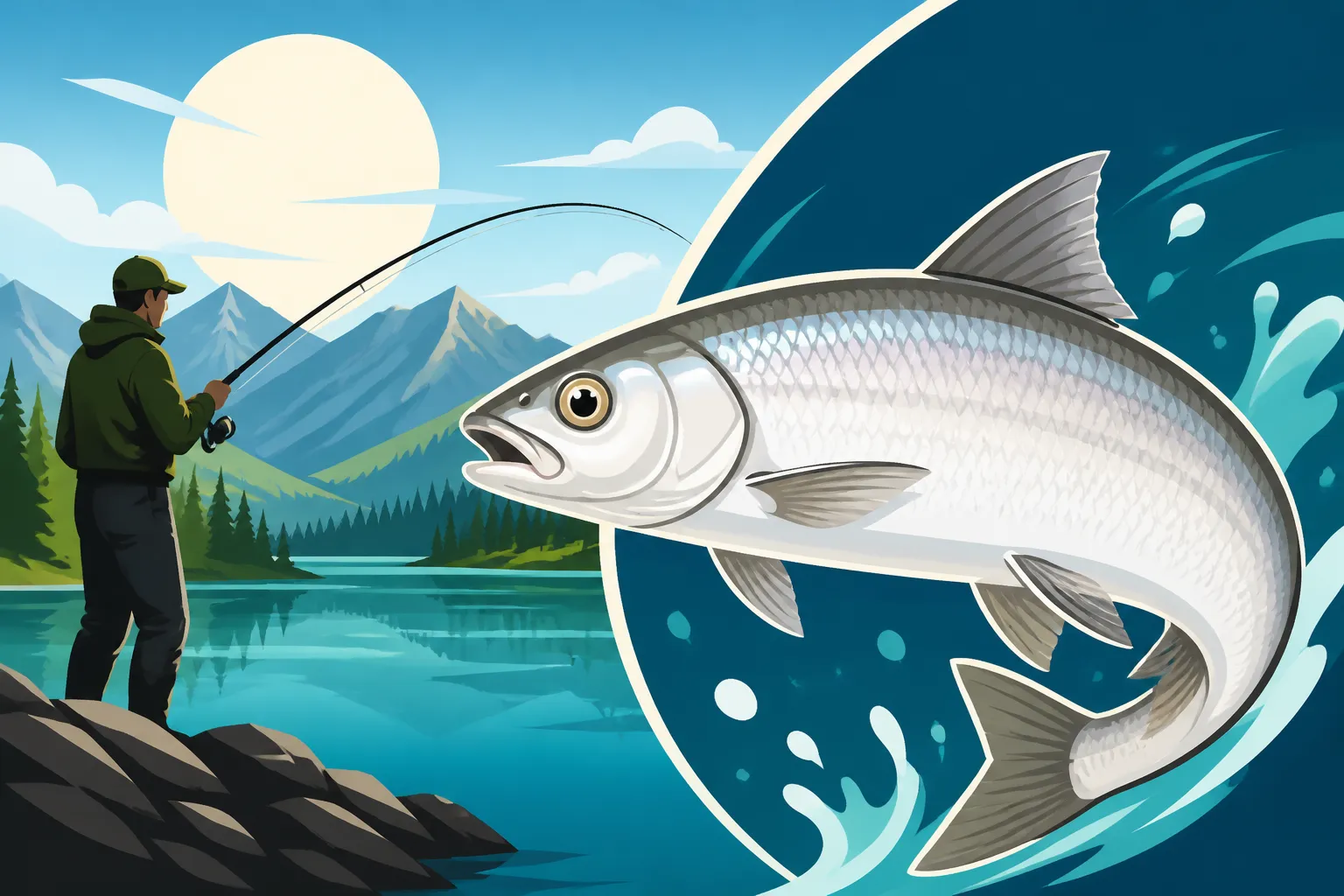
The Lake Whitefish (Coregonus clupeaformis) is arguably the most common and widespread whitefish species throughout BC's interior lakes. These fish are masters of adapting to deep, cold water environments, and you'll find them thriving in many of our larger, deeper lakes from the Kootenays up to the Cariboo and beyond. They are distinguished by their relatively small, triangular head, a prominent adipose fin (like trout and salmon), and a body that's compressed laterally, giving them a somewhat "herring-like" appearance. Their colouring is typically silver with olive-green or brownish tones on their backs, fading to white on their bellies.
Lake Whitefish are primarily bottom feeders, cruising the lakebed in search of insects, small crustaceans, and even tiny mollusks. They have a small, somewhat downward-pointing mouth, perfectly adapted for sifting through substrate. This feeding habit means that while they can be caught near the surface during certain insect hatches, you'll often find them suspended over deeper contours or hugging the bottom in cooler water. Their abundance makes them a staple food source for larger predatory fish like lake trout and burbot, placing them firmly in the ecological web of our interior lakes. They can grow to impressive sizes, with some individuals exceeding five pounds, offering a substantial tug on the line.
Mountain Whitefish: A Riverine Contender in Lakes
While their name suggests a preference for rivers, the Mountain Whitefish (Prosopium williamsoni) is also a significant resident in many of BC's interior lakes, particularly those with strong riverine influences or where rivers flow in and out. They are often found in the shallower, more current-swept areas of lakes, especially near river mouths, inlets, and outlets. Distinguishing them from Lake Whitefish requires a keen eye. Mountain Whitefish generally have a more cylindrical, trout-like body shape compared to the deeper, more compressed body of the Lake Whitefish. Their scales are also larger, and their mouth is terminal (at the very front of the snout) rather than slightly sub-terminal like the Lake Whitefish, reflecting their more opportunistic feeding habits that include actively pursuing drifting insects.
Mountain Whitefish tend to be slightly smaller than their Lake Whitefish cousins, typically averaging around one to two pounds, though larger specimens are certainly caught. They are highly sought after by fly anglers, particularly in the fall, when they gather in river systems to spawn, but they offer exciting fishing in lakes too, especially around submerged structures and gravel bars where insect larvae are abundant. Their tendency to feed higher in the water column or closer to structure makes them accessible to a wider range of fishing techniques than the deep-dwelling Lake Whitefish. Reading the BC Freshwater Fishing Regulations Synopsis can help you understand specific nuances for different water bodies.
The Elusive Pygmy Whitefish
The Pygmy Whitefish (Prosopium coulterii) is a fascinating, though much less commonly encountered, species in BC's interior lakes. As its name suggests, it's a small fish, rarely exceeding six inches in length. They are typically found in the deepest, coldest waters of large, oligotrophic (nutrient-poor) lakes, often at depths where most recreational anglers don't venture. Their small size and specific habitat preferences mean they are not generally targeted by sport anglers, but they play an important role in the ecosystem, serving as a food source for other deepwater predators.
Identified by their small mouth, numerous fine scales, and a similar cylindrical body shape to the Mountain Whitefish, Pygmy Whitefish are often indicators of pristine, cold-water environments. While you might not specifically set out to catch one, knowing they exist adds another layer of appreciation for the biodiversity within BC's vast aquatic systems. Their presence often signals a healthy, undisturbed deep-water habitat.
Where to Find Whitefish in BC's Interior Lakes
Finding whitefish isn't always about casting a line into the deepest part of the lake and hoping for the best. Like any species, they have preferred habitats that shift with the seasons, water temperatures, and available food sources. Understanding these patterns is key to consistently locating them.
Preferred Habitats: Depths, Drop-offs, and Structure
Whitefish, particularly Lake Whitefish, are cold-water creatures. During the warmer months, they retreat to the cooler, deeper sections of lakes, often congregating around areas where the lakebed offers structure or contour changes. Think deep flats, the edges of submerged shoals, and especially drop-offs that lead into the main lake basin. These drop-offs act like highways for food and provide quick access to varying depths and temperatures, allowing the fish to move up or down to feed or seek comfort. Best Fishing Lakes in British Columbia often have these features in abundance.
During the spring and fall, when surface waters are cooler, whitefish may venture into shallower bays, along weed lines, or over gravel flats, especially during insect hatches. They are also drawn to areas with submerged timber or rock piles, which offer cover and act as collection points for invertebrates. Look for "humps" or "islands" of structure on your sonar that rise from the bottom in deeper water – these are prime whitefish magnets. For Mountain Whitefish, focus your efforts near the mouths of tributary rivers, where current delivers food, and on gravelly stretches where they might be staging.
Key Interior Lakes Known for Whitefish
British Columbia's interior is dotted with countless lakes, and many of the larger, deeper ones host robust whitefish populations. Some of the most renowned include:
- Kootenay Lake: Famous for its Gerrard Rainbow Trout, Kootenay Lake also holds a significant population of Lake Whitefish, especially in its deeper basins. These fish provide an important forage base and can be caught jigging or bottom-bouncing.
- Okanagan Lake: While known for its Kokanee and Rainbow Trout, Okanagan Lake is also home to Lake Whitefish, particularly in the central and northern arms where deeper, colder water prevails. Anglers targeting depths often encounter them.
- Shuswap Lake: This large, complex lake system is another excellent whitefish destination. Its diverse depths and structures provide ample habitat for both Lake and Mountain Whitefish, with the latter often found near the many river inlets.
- Stuart Lake: Located in the northern interior, Stuart Lake is a fantastic whitefish fishery, offering abundant opportunities for both species. Its vast expanses and deep sections are ideal.
- Williston Lake: As one of the largest man-made reservoirs in North America, Williston Lake boasts impressive whitefish numbers, thriving in its cold, deep waters.
These lakes, among many others, offer ample opportunities. Don't be afraid to experiment with other large, deep lakes in regions like the Cariboo or Thompson-Nicola, as whitefish are likely present in many of them, providing a reliable and often overlooked fishery.
Seasonal Movements and Concentrations
Whitefish are highly seasonal in their movements, largely driven by water temperature and spawning cycles.
- Spring (Ice-out to early summer): As the ice recedes, whitefish will often move into shallower areas to feed actively, as the water begins to warm and insect activity increases. This is a great time to target them closer to shorelines, weed beds, and river mouths. They are looking to regain energy after the long winter.
- Summer: With rising surface temperatures, whitefish will retreat to deeper, cooler sections of the lake. They'll be found primarily in the thermocline (the layer where warm surface water meets cold deep water) or hugging the bottom in basins and along deep structure. Early mornings and late evenings can sometimes see them move shallower to feed briefly.
- Fall: This is arguably one of the best times to target whitefish. As lake temperatures cool, they become more active throughout the water column and will migrate towards spawning areas. Lake Whitefish typically spawn over gravelly shoals in deeper water, while Mountain Whitefish will often move into tributary rivers or shallow, current-swept lake sections. This pre-spawn and spawning period can see large concentrations of fish.
- Winter (Ice Fishing): Under the ice, whitefish remain active and can be excellent targets for ice anglers. They are often found suspended over deep basins or relating to submerged structure, feeding on bottom-dwelling organisms. Best Ice Fishing Access on Shuswap Lake is a good resource for winter tactics.
Understanding these seasonal shifts allows you to adjust your fishing strategy, whether it's changing your depth, location, or even the type of bait you use, to maximize your chances of success.
Understanding Whitefish Behavior and Diet
To consistently catch whitefish, it’s not enough just to know where they live; you also need to understand their daily habits and what makes them tick. Their diet and environmental preferences dictate when and how they feed, which in turn informs our fishing strategies.
Foraging Habits and Primary Food Sources
Whitefish are primarily opportunistic bottom feeders, though their diet can vary significantly between species and individual populations based on what's available. Their small, often sub-terminal mouths are perfectly designed for hoovering up small organisms from the lakebed. Their main diet consists of:
- Invertebrates: This is the cornerstone of a whitefish's diet. They consume a vast array of aquatic insects in their larval and pupal stages, such as chironomids (midges), caddisflies, mayflies, and stoneflies. They also feast on small crustaceans like amphipods (scuds), copepods, and cladocerans (daphnia). These tiny creatures form dense populations on the lakebed and in the water column, providing a continuous food source.
- Mollusks: In some lakes, small snails and clams can be a significant part of their diet, particularly for larger Lake Whitefish, whose strong pharyngeal teeth are adapted for crushing shells.
- Fish Eggs and Fry: During spawning periods of other species, whitefish can become quite predatory, gorging on eggs and newly hatched fry. This is particularly true in areas where kokanee or rainbow trout are spawning.
- Zooplankton: In open water, especially for smaller whitefish or when other food sources are scarce, zooplankton can be an important dietary component. This is often when you'll find them suspended higher in the water column.
Mountain Whitefish, with their more terminal mouth, are also adept at picking off drifting insects from the surface or just below, especially during hatches, which makes them a favourite target for fly anglers. This diverse diet means that a range of natural baits and imitative lures can be effective.
Impact of Water Temperature and Oxygen Levels
Like all fish, whitefish are poikilothermic, meaning their body temperature is regulated by the surrounding water. They have an optimal temperature range for feeding and activity, typically in the cooler bands of water. For most whitefish species, this ideal range is often between 8°C and 15°C (46°F to 59°F).
During the hot summer months, the surface water of many interior lakes can become too warm and low in oxygen for whitefish. This forces them to descend to deeper, cooler layers where oxygen levels remain adequate and temperatures are within their comfort zone. This is why you'll often find them concentrated in the thermocline or near the bottom in deep basins. Conversely, in winter, the entire water column is cold, and whitefish can be found at various depths, but they remain active. Monitoring water temperature, if you have a fish finder with that capability, can give you a significant edge in locating active fish. Best Time of Year to Fish in BC highlights how temperature influences various species.
Spawning Habits and Their Influence on Fishing
Whitefish typically spawn in the fall or early winter, often after the first hard frosts have cooled the lake significantly. This spawning migration is a key event that can create significant concentrations of fish and excellent fishing opportunities.
- Lake Whitefish: These fish usually spawn over rocky or gravelly shoals in deeper water, often between 10 to 30 feet, though sometimes shallower. They don't build nests; instead, the eggs are broadcast over the substrate and settle into crevices. This pre-spawn staging and the act of spawning itself can make them very aggressive and eager to feed, providing a short window of fantastic fishing.
- Mountain Whitefish: Known for their distinct fall spawning runs, Mountain Whitefish often migrate from lakes into tributary rivers and streams, or gather in lake sections with good current and gravel bottoms. They too broadcast their eggs over the substrate. Anglers specifically target these spawning runs in rivers, but their congregation near river mouths in lakes during the fall is also a prime time to catch them. This makes early fall a critical period to target them, especially with methods that mimic their primary food sources or even egg patterns.
Understanding these spawning behaviors helps anglers anticipate where whitefish will be concentrated and when they will be most active. It’s a natural cycle that offers some of the best whitefish angling of the year.
Optimizing Your Whitefish Fishing Efforts
Fishing for whitefish can be incredibly rewarding, but like any species, there are optimal times and conditions that can dramatically increase your success. Combining knowledge of their habits with the right gear and timing is the recipe for a productive day on the water.
Best Times of Day and Year
While whitefish can be caught year-round in BC's interior lakes, certain periods offer significantly better chances:
- Fall (Late September to November): Without a doubt, the fall is prime time for whitefish. As mentioned, both Lake and Mountain Whitefish are actively moving towards spawning grounds, feeding aggressively to build up energy. Water temperatures are ideal, and fish are often concentrated, making them easier to locate. This period often offers the best opportunities for both numbers and larger fish.
- Winter (Ice Fishing – December to March): For those who embrace the chill, ice fishing for whitefish is incredibly popular and productive. Whitefish remain active under the ice, often suspended or near the bottom, and respond well to jigging techniques. The lack of boat traffic and the focused nature of ice fishing can make them very accessible.
- Spring (Ice-out to June): As the ice melts and water temperatures begin to rise, whitefish move shallower to feed. This is an excellent time for shore anglers or those in small boats to target them, especially during insect hatches. However, as summer approaches and temperatures climb, they quickly retreat to deeper water.
- Summer (July to August): This can be the most challenging time. Whitefish are deep, spread out, and often less active during the hottest parts of the day. Your best bet is to target them during the cooler parts of the day—early morning, late evening, or even night—and focus on deep-water structures.
When it comes to the best time of day, like many fish, whitefish often feed most actively during periods of low light. Early morning and late evening are frequently the most productive hours, regardless of the season, as this is when light penetration is lower and many invertebrates are more active. Overcast days can also extend these feeding windows throughout the day.
The Role of Weather and Water Conditions
Weather and water conditions play a crucial role in whitefish activity.
- Overcast Skies: Cloudy days are often better than bright, sunny ones. Whitefish, especially in shallower water, are less wary under diffused light conditions.
- Stable Weather: Consistent weather patterns, without dramatic swings in temperature or barometric pressure, generally lead to more predictable fishing. Frontal systems can shut down fishing for a day or two.
- Calm Water: Whitefish are not usually found in choppy or turbulent water within lakes. They prefer calmer conditions where they can easily feed on suspended or bottom-dwelling organisms. This makes them good targets on calm days when a light breeze might still be too much for other species.
- Water Clarity: Clear water is generally preferred by whitefish, as they are sight feeders. However, a slight stained tint from a recent rain can sometimes concentrate them near river mouths or along edges where food is being washed in. Avoid heavily turbid or muddy water.
Always check local BC fishery notices for any in-season closures or special regulations, as these can be updated frequently and impact your fishing plans.
Essential Gear for Interior Whitefish Angling
You don't need highly specialized gear for whitefish, which is part of their appeal. Much of what you'd use for trout will work perfectly.
- Rods and Reels: A light to medium-light spinning rod, 6 to 7 feet in length, paired with a small spinning reel (size 1000-2500) spooled with 4-8 lb monofilament or fluorocarbon line is ideal. For those who prefer a challenge, a 3 to 5-weight fly rod can be incredibly fun for Mountain Whitefish, especially when they're rising to insects.
- Line: Monofilament or fluorocarbon is generally preferred for its stretch and invisibility. If you opt for braid, use a fluorocarbon leader (4-6 lb test) to enhance stealth, as whitefish can be line-shy in clear water.
- Terminal Tackle:
- Hooks: Small, sharp hooks are essential. Size 8 to 14 bait holder or octopus hooks are common.
- Sinkers: A variety of small split shot, pencil weights, or bottom-bouncing rigs will allow you to present bait effectively at depth.
- Swivels: Small barrel swivels can help prevent line twist.
- Bait:
- Worms: Earthworms, nightcrawlers, or red wigglers are universally effective.
- Maggots/Mealworms: These are often irresistible, especially for ice fishing or when fish are finicky.
- Shrimp: Small cooked shrimp (available at grocery stores) can be surprisingly effective, particularly for larger Lake Whitefish.
- Corn: A few kernels of canned corn on a small hook can also work, especially in stocked lakes where fish are accustomed to pellets.
- Lures/Flies:
- Small Jigs: Tiny soft plastic jigs (1/32 to 1/8 oz) in white, black, or natural colours are excellent. Tipping them with a maggot or piece of worm enhances their appeal.
- Spoons: Small casting or trolling spoons (e.g., Amazon sells a good variety of these) in silver, gold, or brass can attract attention.
- Flies: For fly anglers, small nymphs (Prince Nymphs, Hare's Ears, Pheasant Tails), scud patterns, chironomid imitations, and even small dry flies during hatches are highly effective for Mountain Whitefish.
- Accessories: A good pair of polarized sunglasses to spot fish in shallower water, a small landing net, and a cooler for your catch are always good to have. A fish finder is invaluable for locating structure and fish in deeper lakes. Many reliable fish finders can be found on Amazon.
Proven Techniques for Catching Whitefish
While whitefish may not be as aggressive as a spawning salmon, they are certainly willing biters if you present your offering correctly. Patience and finesse often trump power when targeting these subtle feeders.
Jigging and Ice Fishing Strategies
Jigging is one of the most effective methods for whitefish, especially when they are concentrated in deeper water or when ice fishing. The beauty of jigging is its versatility and the direct connection it provides to your lure.
When jigging from a boat, locate deep-water structure, drop-offs, or suspended schools of fish using your fish finder. Once you're over them, drop a small lead-head jig (1/16 to 1/8 ounce) tipped with a piece of worm, maggot, or a small soft plastic bait. The key is a subtle presentation. Let the jig sink to the bottom, then lift it slowly a few inches or a foot, letting it flutter back down. Sometimes a short, sharp twitch is all it takes to entice a strike. Whitefish bites can be very light – a slight tap, a feeling of extra weight, or your line simply going slack. Pay close attention to your line, as many bites occur on the fall.
For ice fishing, the principles are similar but often more refined. Drill holes over known whitefish grounds or near submerged structures. Use tiny jigs, often called "whitefish jigs" or "Swedish pimples," in metallic or glow colours, tipped with maggots or mealworms. The retrieve is usually a very slow lift-and-drop, often just an inch or two at a time. Many ice anglers use a "dead stick" method with a second rod, leaving a baited hook suspended a foot or two off the bottom while actively jigging with another. This gives fish a stationary target. You can find specialized ice fishing jigs and tackle on Amazon.
Trolling and Still-Fishing Methods
These methods are particularly effective when whitefish are spread out or suspended in the water column, rather than tightly schooled on the bottom.
Trolling: This technique involves slowly moving your boat while dragging a lure or bait. For whitefish, trolling is usually done at very slow speeds, often with electric motors. Small spoons or spinners can be effective, especially those with silver or gold finishes that imitate small baitfish or flashing insects. Use a light leader and a small split shot or bottom bouncer to keep your lure in the strike zone. You might need to experiment with depths; sometimes whitefish are suspended just off the bottom, other times in the middle of the water column. Downriggers can be useful for precise depth control, especially in deeper lakes like Okanagan Lake Kokanee Fishing often requires. Pay attention to your fish finder to see where the fish are holding.
Still-Fishing (Bottom-Fishing): This is a classic, low-tech method that remains highly effective, especially for Lake Whitefish. Anchor your boat over a promising area (a deep flat, a drop-off edge, or a submerged hump). Use a simple bottom rig: a small sinker (pencil weight or bell sinker) at the end of your line, with one or two snelled hooks (size 8-12) tied on leaders above it, typically 6-12 inches apart. Bait your hooks with worms, maggots, or small pieces of shrimp. Cast out and let your bait settle on the bottom. This method is great for multiple rods and can be very relaxing. The key is patience, as whitefish can take their time finding the bait. Watch for subtle taps or a slight bend in your rod tip. This method is also excellent for bank fishing in lakes where whitefish move into shallower areas, such as near river deltas or gravel bars.
Fly Fishing for Whitefish: A Unique Challenge
Fly fishing for whitefish, particularly Mountain Whitefish, offers a refined and engaging experience. While less common for Lake Whitefish, it's certainly possible during specific insect hatches when they move shallower.
- Mountain Whitefish: These are the primary targets for fly anglers. During fall spawning runs, they stack up in rivers and near river mouths in lakes, becoming very accessible. Small nymph patterns (like a size 12-16 Prince Nymph, Pheasant Tail, or Copper John) drifted dead-drift along the bottom or through current seams are highly effective. Scud patterns and San Juan Worms can also be excellent. During insect hatches, Mountain Whitefish will readily rise to small dry flies (e.g., a size 14-18 Elk Hair Caddis or Parachute Adams) or emerger patterns. A light 3-5 weight fly rod is perfect for these fish, offering a good fight.
- Lake Whitefish: Fly fishing for Lake Whitefish is more challenging but can be done. During heavy chironomid hatches, especially in spring, they will often suspend and feed on emerging insects. Chironomid pupa patterns (often fished under an indicator) can be deadly. Occasionally, during a substantial mayfly or caddisfly hatch, they might be found near the surface, taking dry flies. This requires a sharp eye and a very subtle presentation.
Fly fishing for whitefish demands observation and a willingness to match the hatch. It’s an incredibly rewarding way to connect with these fish and appreciate their subtle beauty.
| Technique | Target Species | Best Season | Typical Depth | Recommended Baits/Lures | Key Tip |
|---|---|---|---|---|---|
| Jigging | Lake/Mountain Whitefish | Fall, Winter | Deep (15-60+ ft) | Small jigs (1/16-1/8 oz), maggots, worms | Subtle lifts, watch for light bites on fall |
| Still-Fishing | Lake/Mountain Whitefish | All | Bottom (5-50 ft) | Worms, maggots, shrimp, corn | Patience, use small hooks, multiple rods |
| Trolling | Lake Whitefish | Summer, Fall | Mid-deep (10-40 ft) | Small spoons, spinners | Slow speeds, precise depth control |
| Fly Fishing (Nymph) | Mountain Whitefish | Spring, Fall | Shallow-Mid (3-15 ft) | Nymphs (Prince, PT), scuds | Dead-drift presentation, match the hatch |
| Fly Fishing (Dry) | Mountain Whitefish | Spring, Summer | Surface (0-3 ft) | Small dry flies (Caddis, Adams) | Look for rising fish, delicate casts |
Conservation and Responsible Angling Practices
As with any fishery in British Columbia, ethical angling and conservation are paramount. Whitefish populations are generally robust, but responsible practices ensure they remain a vibrant part of our aquatic ecosystems for generations to come. BC Fishing Regulations Explained is your ultimate guide to these rules.
Understanding Regulations and Limits
Before you even wet a line, make sure you're familiar with the current BC freshwater fishing regulations. These regulations are published annually and can change, sometimes even in-season, so always consult the most up-to-date synopsis. Key things to look for regarding whitefish include:
- Bag and Possession Limits: There will be specific daily quotas for how many whitefish you can keep and how many you can have in your possession (including those at home). These limits can vary by region and even by specific lake.
- Gear Restrictions: Some waters may have restrictions on gear, such as bait bans or single-barbless hook requirements, which are often in place to protect other species but apply to all fish in that water body.
- Season Dates: While whitefish are generally open year-round in many lakes, always double-check, especially if fishing near river mouths that might have salmon or steelhead closures.
- Licensing: You must possess a valid British Columbia Fishing License Guide for 2026 for freshwater fishing. Children under 16 generally don't require a license, but it's essential to confirm the specifics for youth anglers. BC Youth Fishing License Exemption Under 16 is a good resource.
It's your responsibility as an angler to know and follow these rules. Ignorance of the law is not an excuse, and penalties for violations can be significant.
Best Practices for Catch and Release
If you're practicing catch and release, or if you simply catch more whitefish than you intend to keep, proper handling is crucial for the fish's survival. Whitefish, especially those brought up from deeper water, can be susceptible to barotrauma (the effects of rapid pressure change).
- Minimize Handling: Reduce the time the fish is out of the water. Handle the fish gently with wet hands or a wet net.
- Barbless Hooks: Using barbless hooks (or crimping the barb on your hooks) makes hook removal much easier and less damaging to the fish's mouth.
- Quick Release: If the hook is easily removed, release the fish quickly, ensuring it's upright and able to swim away strongly.
- Deep Water Fish: For whitefish caught from depths greater than 20-30 feet, they may show signs of barotrauma (distended stomach, bulging eyes). While some believe in "fizzing" (venting the swim bladder), it's a controversial technique that should only be attempted by experienced anglers with proper tools. For most recreational anglers, the best practice is to avoid targeting whitefish from extreme depths if you intend to release them, or be prepared to keep any that show severe signs of barotrauma.
- Consider Keeping Deep Water Fish: If you plan on catching and releasing from very deep water, it might be more ethical to either fish shallower or keep the fish you catch from depth, ensuring they don't go to waste. Whitefish are excellent table fare!
By adhering to these practices, we contribute to the health and sustainability of our whitefish populations.
Whitefish as a Table Fare
One of the greatest appeals of whitefish, beyond their sporting qualities, is their incredible taste. Whitefish are highly regarded by chefs and anglers alike for their delicate, flaky, and sweet white meat. They are low in fat and absorb flavours beautifully, making them extremely versatile in the kitchen.
- Cleaning and Preparation: Whitefish are relatively easy to clean. Scale them thoroughly, gut them, and remove the head if desired. The skin is quite tasty when cooked properly.
- Cooking Methods:
- Filleting and Pan-Frying/Sautéing: This is a popular method. Lightly flour or bread the fillets and fry them in butter or oil until golden brown.
- Baking or Roasting: Whole whitefish or fillets can be baked with herbs, lemon, and butter for a simple, healthy meal.
- Smoking: Whitefish are absolutely fantastic smoked. The mild flavour takes on a wonderful smokiness without being overpowering.
- Grilling: Whole whitefish or thick fillets can be grilled, either directly on the grate (if firm) or in a grilling basket.
If you enjoy eating fish, don't let a whitefish go to waste. They are a true culinary gem of BC's interior lakes and a delicious reward for your angling efforts. So next time you're out, don't overlook these fantastic, plentiful fish. They might just become your new favourite target.
Disclaimer
This article is for general informational purposes only and does not constitute professional advice. Laws, prices and regulations vary by location and change over time. Consult a qualified professional for guidance on your specific situation.