Night Fishing for Salmon in BC
There’s a unique magic to fishing under the cloak of darkness, but let's be honest, it can also feel incredibly daunting. The familiar landmarks disappear, sounds take on new meaning, and every cast feels like a leap of faith into the unknown. If you've ever felt the pressure of crowded daytime fishing spots or battled the relentless summer sun, you know the frustration. This guide is here to shed some light – literally and figuratively – on the challenging yet incredibly rewarding world of night fishing for salmon in British Columbia, helping you navigate the darkness for an unforgettable angling experience.
Why Consider Night Fishing for Salmon in BC
Night fishing for salmon isn't just an alternative to daytime angling; it's an entirely different experience with its own set of challenges and immense rewards. While it requires careful preparation and an understanding of the unique environment, the benefits often outweigh the initial apprehension. Many anglers find themselves drawn to the solitude and the distinct bite opportunities that only the nighttime hours can offer.
Escaping Daytime Pressure and Heat
Let's face it, some of the best fishing spots in BC can get absolutely hammered during the day. Popular river mouths, bustling coastal inlets, and even prime lake areas can be a hive of activity with boats, kayaks, and shore anglers all vying for the same piece of water. This constant pressure can make salmon skittish and less willing to bite, often forcing them into deeper, less accessible areas. The sheer number of lines in the water can also lead to tangles and reduced personal space, diminishing the overall enjoyment of your outing.
Beyond the crowds, the summer sun in BC can be intense. Long days spent baking under direct sunlight can be physically exhausting, leading to sunburn, dehydration, and general discomfort. For many, escaping the midday heat and the associated glare reflecting off the water makes night fishing a far more pleasant and productive experience. When the sun dips below the horizon, the water often cools, and a sense of calm descends upon the fishing grounds, providing a welcome respite from the hustle and bustle.
Tapping into Salmon's Nocturnal Habits
Salmon, like many fish species, can exhibit different behaviors once the sun goes down. While they don't necessarily feed actively throughout the night in the same way they might during crepuscular (dawn and dusk) periods, the cover of darkness often makes them feel safer and more inclined to move into shallower water or cruise different depth profiles. This can present opportunities that are simply unavailable during daylight hours. They might become less wary of boat traffic and human presence, allowing for a more direct approach.
Certain baitfish, which are a primary food source for salmon in tidal waters, also become more active or move to different depths at night. This shift in prey behavior can trigger a corresponding change in the salmon's hunting patterns. For instance, eulachon or herring schools might rise in the water column or congregate in specific areas under the moon, drawing salmon up with them. Understanding these subtle shifts is key to successful night fishing and can often lead to strikes from bigger, less pressured fish.
The Thrill of the Unknown
There's an undeniable allure to fishing in the dark. Every splash, every tug, every unseen movement takes on a heightened sense of drama. Without the visual cues of daylight, your other senses sharpen. You listen more intently to the subtle whine of your reel, feel every bump and vibration through your rod, and rely on instinct and experience in a way that daytime fishing rarely demands. This can transform a simple fishing trip into a profound, almost primal adventure.
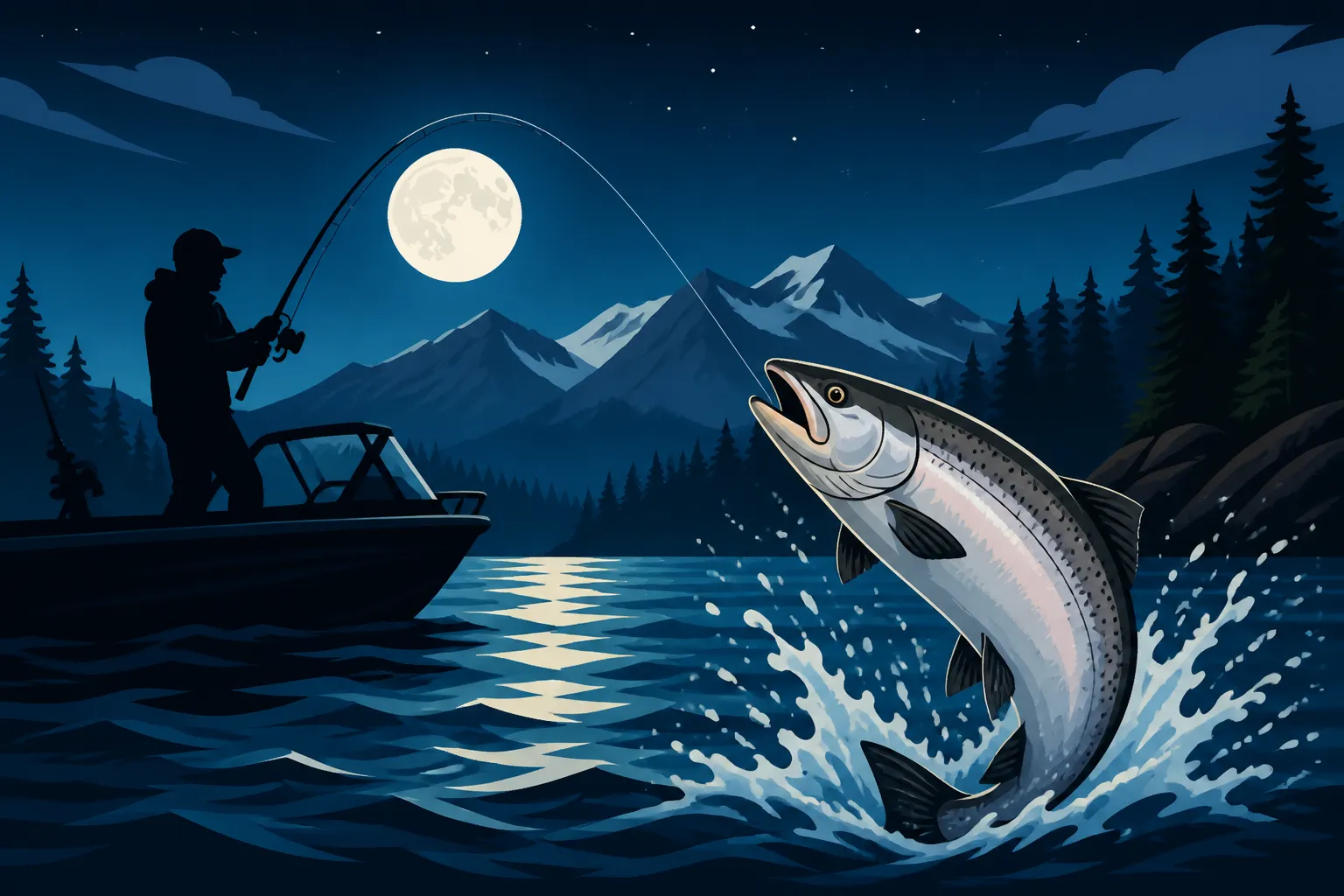
The anticipation of a strike in the pitch black is an experience like no other. When your line suddenly tightens and your rod doubles over, the explosion of energy from a powerful salmon becomes even more exhilarating. Successfully landing a fish in these conditions, using only the beam of your headlamp to guide you, instills a deep sense of accomplishment. It's a testament to your skill, preparation, and willingness to embrace the wild side of BC angling.
Essential Gear and Safety for Night Fishing
Stepping out onto the water after dark isn't something to take lightly. Safety is paramount, and having the right gear isn't just about catching fish, it's about ensuring you get home safely. Many of the items you'll need are beyond your typical daytime fishing kit, so a thorough check and preparation are crucial.
Lighting the Way: Headlamps and Boat Lights
Your primary piece of equipment for night fishing, apart from your fishing tackle, will be your lighting. A reliable headlamp is absolutely non-negotiable. Look for models with multiple brightness settings, a red light option (which preserves your night vision and is less disruptive to fish and other anglers), and a long battery life. Brands like Black Diamond or Petzl offer excellent rechargeable options that you can easily find on Amazon. It's a good idea to always carry spare batteries or a portable power bank, as unexpected battery drainage can quickly turn a fun night into a hazardous situation.
If you're fishing from a boat, proper navigation lights are legally required and absolutely essential for visibility and avoiding collisions. Ensure your boat's bow (red and green) and stern (white) lights are in perfect working order. Beyond the legal requirements, a powerful deck light or spotlight can be invaluable for landing fish, untangling lines, or dealing with unexpected issues. However, use these sparingly, as excessive light can spook fish and disturb other anglers. For navigating tricky waters, some anglers also use high-powered, handheld spotlights to scan for hazards or aid in docking. Remember, safety always comes first when operating a vessel after dark, and knowing your local BC Boating Laws for Anglers is critical.
Navigational Aids and Communication Devices
Navigating in the dark, especially in unfamiliar waters, is significantly more challenging than during the day. Even in well-known areas, subtle changes in current, weather, or other boat traffic can become disorienting without visual cues. A reliable GPS unit, whether standalone or integrated into your fish finder, is incredibly important. Pre-marking your launch points, desired fishing spots, and any known hazards (like submerged rocks or shallow bars) before you head out is a smart practice. Many modern units also allow for charting depth contours and waypoints, which become invaluable when you can't see the shoreline.
Beyond navigation, a means of communication is critical. Always carry a fully charged cell phone in a waterproof case, but understand that cell service can be spotty in many remote BC fishing areas. A VHF marine radio is a far more reliable form of communication for distress calls or communicating with other boats in an emergency, especially when fishing coastal inlets or larger lakes. Before you leave, inform someone of your float plan – where you're going, when you expect to return, and who is with you. This simple step can be a lifesaver if something unexpected happens. Also, consider carrying signaling devices like flares, a whistle, or a mirror, and ensure everyone on board knows how to use them.
Rods, Reels, and Line for Low Light
The gear you use for night fishing doesn't necessarily need to be radically different from your daytime setup, but certain considerations can make a big difference. For salmon, you'll still want a sturdy rod and reel combo capable of handling powerful runs. A medium-heavy to heavy action rod, usually 8-10 feet for mooching or drift fishing, and 9-10.5 feet for trolling, paired with a robust baitcasting or levelwind reel is ideal. Choose a reel with a smooth, reliable drag system, as fighting a large salmon in the dark will test your equipment to its limits.
When it comes to line, many anglers opt for braided main lines due to their sensitivity and lack of stretch, which helps detect subtle bites even in low visibility. Pair this with a fluorocarbon leader for abrasion resistance and invisibility, especially in clear water. Consider using line that has a high-visibility colour, like yellow or neon green, for your main line. While you won't see it well in the dark, the colour can be helpful under the beam of a headlamp for checking line position or identifying tangles. Some anglers even use glow-in-the-dark fishing line, though its effectiveness varies. Regardless of your choice, regularly check your knots and line for nicks and abrasions, as they are harder to spot in low light.
Prime Locations and Best Times for BC Night Salmon Fishing
Finding the right spot and timing your outing are just as important at night as they are during the day, perhaps even more so. While salmon can be found throughout BC's diverse waters, certain areas offer more consistent opportunities for night fishing. Understanding how tides, moon phases, and even specific river systems influence salmon behavior will significantly increase your chances of success.
Coastal Inlets and Estuaries
British Columbia's extensive coastline is a haven for all five species of Pacific salmon, and many of its numerous inlets and estuaries become prime night fishing grounds. These areas often feature shallower, protected waters where baitfish might congregate closer to the surface under the cover of darkness. Places like the waters around the Gulf Islands, parts of Howe Sound, and the countless smaller bays and coves along Vancouver Island can be incredibly productive. Tidal flows play a critical role here, as salmon often use current lines to ambush bait or travel upstream.
When targeting these areas at night, focus on points, drop-offs, and current seams where salmon are likely to hold or transit. Estuaries, where freshwater meets saltwater, are particularly hot spots. The mixing of waters creates nutrient-rich environments that attract bait, and salmon often stage here before moving further into rivers. For instance, the tidal reaches of rivers feeding into larger bodies of water, like the Fraser River mouth, can be excellent for sockeye and chinook salmon. Always remember to check specific BC Fishing Regulations Explained for any area you plan to fish, as rules can vary greatly.
River Mouths and Tidal Influence
River mouths are often considered some of the best fishing spots in BC for salmon, and this holds true for night fishing as well. As salmon return from the ocean to spawn, they congregate heavily at river mouths, waiting for optimal conditions to begin their upstream migration. The transition zone between salt and fresh water is a natural funnel, and salmon can be found here in large numbers. At night, these areas can be less crowded with boats, offering a more peaceful angling experience. Species like Chinook, Coho, and Pink salmon are commonly targeted in these zones.
The key to success at river mouths is understanding the tidal influence. Salmon will often move into the river or push further into the estuary on an incoming tide, bringing them closer to shore or into more accessible fishing lanes. The slack tide, both high and low, can also be productive as fish take a break from fighting the current. Knowing the Best Time of Day to Catch Salmon often boils down to timing your efforts with these tidal changes. Pay close attention to current seams and eddy lines, which provide refuge for salmon and concentrate baitfish.
Understanding Tides and Moon Phases
Tides are arguably the single most important factor for successful night fishing for salmon in tidal waters. A strong incoming or outgoing tide can create feeding frenzies, moving bait and pushing salmon into predictable locations. Conversely, slack tides might see fish holding in deeper holes or becoming less active. Always consult a local tide chart before heading out, and plan your fishing around peak tidal movements – often an hour or two before and after the full force of the tide.
The moon phase can also play a significant role, though its influence is sometimes debated among anglers. A full moon, or even a bright partial moon, can provide enough ambient light to make navigation and fishing a little easier. Some believe the extra light can make salmon more active or, conversely, make them more wary. New moon phases, offering complete darkness, often amplify the effectiveness of glow-in-the-dark lures and baits. The best approach is to experiment with different moon phases and observe how salmon react in your preferred fishing spots. Remember that What water temperature salmon prefer can also influence their activity, with cooler night temperatures often being a boon for them.
| Moon Phase | Light Level | Potential Impact on Fishing | Gear Considerations |
|---|---|---|---|
| New Moon | Minimal | Salmon less wary, strong glow lure appeal | Focus on brightest glow lures, extra headlamp power |
| Crescent/Quarter | Low to Moderate | Good balance, some ambient light for navigation | Use glow and natural-coloured lures, keep red light on headlamp |
| Full Moon | High | Salmon might be more active, or more wary (mixed opinions) | Experiment with natural & glow lures, less need for intense light |
| Waning/Gibbous | Moderate to High | Similar to Quarter/Full, watch for decreasing light | Standard night fishing gear, adjust lure colours based on activity |
Effective Night Fishing Techniques and Baits
Night fishing requires a slight shift in your tactical approach. With reduced visibility, salmon rely more on their other senses – lateral line, smell, and hearing – to detect prey. Therefore, your techniques and bait choices should cater to these heightened senses, making your presentation as irresistible as possible in the dark.
Trolling with Glow Plugs and Flashers
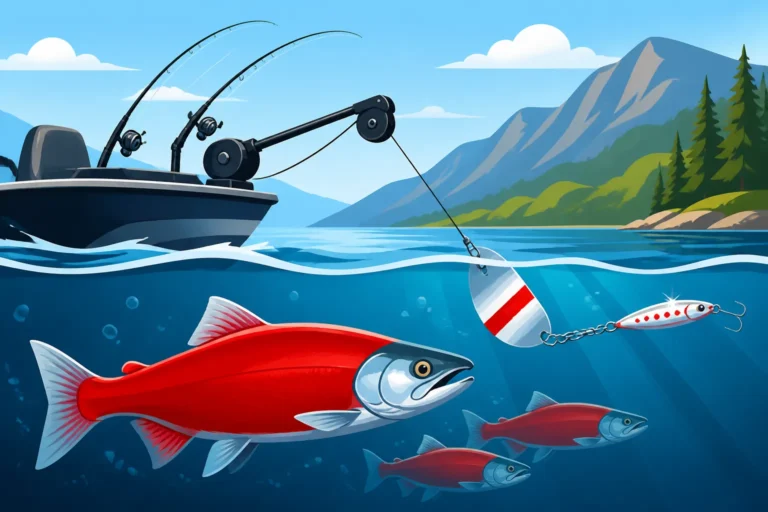
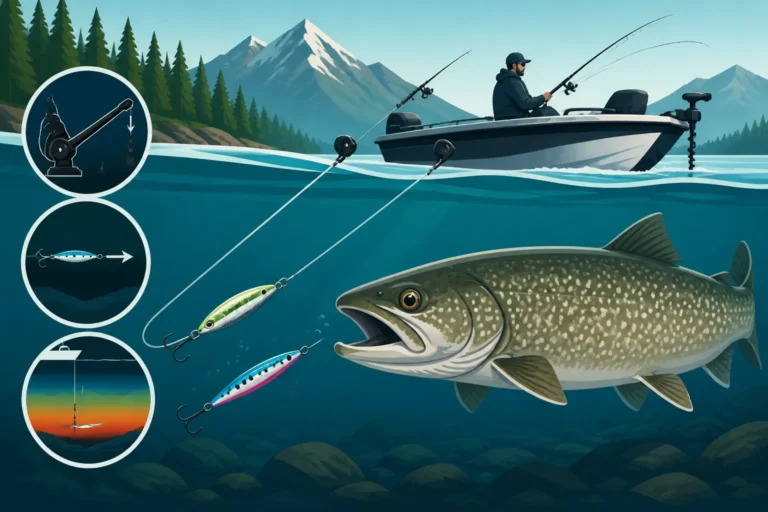
Trolling is a highly effective method for covering water and locating salmon at night, especially in larger coastal inlets and open waters. The key is to use lures and attractants that are highly visible and create vibrations in low light. Glow plugs are absolute workhorses for night fishing. These hard-bodied lures absorb light (charge them with a camera flash or a strong light source before deploying) and emit a consistent glow, making them incredibly attractive to salmon. They often come in various sizes and colours, with chartreuse, green, and blue being popular choices.
Pairing your glow plug with a flasher is essential. Flashers are designed to create erratic movements and vibrations in the water, mimicking a wounded baitfish, and their reflective surfaces can catch any available ambient light or the glow from your lure. Some flashers even incorporate glow tape or internal lights. When setting up your trolling spread, consider using downriggers to target specific depths, as salmon might hold at different levels throughout the night. Experiment with trolling speeds, from a slow crawl to a brisk pace, to see what triggers a strike. Remember that how to catch Chinook salmon in BC often involves precise depth control and scent.
Anchor Fishing with Scented Baits
For shore anglers or boaters who prefer to stay put, anchor fishing with scented baits can be incredibly productive, particularly in river mouths, tidal channels, or at the edge of drop-offs. Salmon's sense of smell is highly developed, and in the dark, a strong scent trail can be the ultimate attractant. Fresh bait is paramount here – whole or cut herring, anchovies, or even roe bags are excellent choices. Using bait that has been brined or treated with additional scent sprays (available on Amazon from brands like Pro-Cure or Mike's Bait) will create an even stronger draw.
When setting up, use a sliding sinker rig or a three-way swivel rig to present your bait naturally near the bottom. The idea is for your bait to waft in the current, dispersing its scent downstream and attracting any passing salmon. For boaters, strategically anchor upstream of a known salmon holding area or a current seam. For shore anglers, target deep pools, eddies, or areas where the current slows near structure. Having multiple rods out at different depths and distances can help you pinpoint where the fish are holding. Remember to securely attach a small glow stick to your rod tip or line to help detect bites, as visual cues are minimal.
Float Fishing Under the Stars
Float fishing (or 'drift fishing with a float') is another excellent technique, particularly in river systems with consistent currents, or for presenting bait in specific areas from shore or an anchored boat. This method allows your bait to drift naturally through the water column, covering a lot of ground while maintaining a realistic presentation. At night, the key is using a lighted float. These floats typically have a small LED light or glow stick integrated into their design, making them visible against the dark water.
You can rig your lighted float with a variety of baits. For salmon, a cured roe bag, a small piece of prawn, or a cluster of worms can be deadly. For coastal cutthroat trout or even smaller coho that might be present, crickets or other insect imitations can work. The challenge at night is reading the current and tracking your float. Use your headlamp's red light sparingly to check its position, and try to keep your line as tight as possible without impeding the natural drift. The moment that lighted float dips or disappears, it's time to set the hook! Ensure you're familiar with BC freshwater vs tidal waters license, explained and have the correct endorsements, such as the BC Tidal Waters Salmon Conservation Stamp Cost, depending on where you're fishing.
Navigating BC Regulations and Environmental Considerations
Night fishing, like any angling pursuit in British Columbia, requires a deep understanding and strict adherence to regulations. The darkness doesn't negate your responsibilities as an angler; in fact, it often amplifies the need for careful attention to rules and ethical practices. Ignoring these can lead to penalties, impact fish stocks, and damage the pristine environment we all cherish.
Checking Fishery Notices and Specific Closures
It's absolutely vital to check the latest BC Fishery Notices and regulations before every fishing trip, especially when planning to fish at night. Fisheries and Oceans Canada (DFO) frequently updates rules for tidal waters, and the BC Freshwater Fishing Regulations Synopsis covers interior waters. These notices can include sudden closures, bait restrictions, gear limitations, or changes to bag and possession limits – sometimes specific to certain species or even specific times of day. A particular area might be open for salmon retention during the day but become "catch and release only" after sunset, or vice versa.
Imagine heading out for a night of salmon fishing, only to discover too late that the specific river mouth you're targeting is under a temporary closure for a conservation concern. Not only would this be a wasted trip, but accidentally fishing in a closed area could result in significant fines and consequences. Always consult the official DFO website for tidal waters and the BC government website for freshwater regulations. It's also a good idea to know How to check BC fishery notices before a trip as they can change even mid-season. Printing a copy or having a digital version readily accessible on your phone or tablet, as per the Printing or Carrying a Digital Fishing License in BC guidelines, is highly recommended.
Minimizing Impact and Practicing Responsible Angling
Night fishing inherently brings unique environmental considerations. With reduced visibility, it's easier to inadvertently cause damage to sensitive habitats, leave behind litter, or disturb wildlife. Always pack out everything you pack in, including any discarded fishing line, bait containers, or food wrappers. Marine debris and litter are harmful to aquatic ecosystems and wildlife, and we have a responsibility to keep BC's waters pristine.
When handling fish in the dark, especially if you're practicing catch and release, extra care is paramount. It’s much harder to see what you’re doing, increasing the risk of injury to the fish. Have your dehooking tools, measuring tape, and camera (if you plan to photograph your catch) ready beforehand. Minimize the time the fish is out of the water, and use a landing net to reduce stress. If you're targeting specific species like salmon, be acutely aware of BC Bag and Possession Limits by Species and any special handling rules for protected or sensitive stocks. For example, some areas might have specific rules about BC Fraser River Sturgeon Catch and Release Requirement, even for non-target species.
Understanding BC Fishing Season Dates and Closures
Salmon runs are highly migratory and seasonal, meaning their presence and legal retention windows in specific areas are dictated by the calendar. Different salmon species run at different times of the year, and these runs are often further broken down by specific sections of rivers or coastal zones. Night fishing success is intrinsically linked to these natural cycles and the associated regulatory openings and closures.
For instance, prime Chinook salmon fishing might occur in coastal waters from spring through fall, but specific river systems could have very narrow windows for retention, or even be closed entirely for conservation, especially for wild populations. Sockeye salmon runs on the Fraser River typically occur in late summer but are subject to highly variable returns and often have very short, specific opening periods, if any. Steelhead, while often a target for winter and spring, are also highly regulated. Always check the comprehensive BC Fishing Season Dates and Closures for the specific species and location you intend to fish, and confirm that night fishing is permitted and adheres to all rules for that time frame. The regulations are designed to protect the resource, and by understanding and following them, we ensure healthy fish stocks for future generations.
Disclaimer
Fishing in British Columbia involves inherent risks, especially during night hours. This guide is for informational purposes only and does not replace official government regulations or professional advice. Always consult current Fisheries and Oceans Canada (DFO) notices for tidal waters and the BC Freshwater Fishing Regulations Synopsis for interior waters before each trip. Ensure all safety equipment is on board and in working order, and always prioritize your personal safety and the well-being of the fish.