BC Freshwater vs Tidal Waters License, Explained
Planning a fishing trip in British Columbia can be exhilarating, but figuring out which fishing license you need often feels like navigating a dense fog. Many anglers, especially those new to our province or visiting from afar, get genuinely confused about the distinction between a freshwater fishing license and a tidal waters (saltwater) fishing license. This guide is here to clear up that confusion, explaining exactly what each license covers, who needs one, and why understanding the difference is absolutely crucial for a successful and legal angling adventure in our beautiful province.
Understanding the Foundations of BC Fishing Licenses
Before you even think about casting a line into our pristine waters, it's absolutely vital to understand the basic framework of fishing licenses in British Columbia. It’s not just a piece of paper; it’s your legal permission slip to partake in one of BC's most cherished pastimes, and it's also a direct contribution to conservation efforts that keep our fish populations healthy. The rules can seem a bit intricate at first glance, but once you break them down, they make a lot of sense.
Why Two Distinct Types of Licenses Exist
You might wonder why we even need two different licenses – a freshwater one and a tidal waters one – when you’re just, well, fishing. The core reason for this separation lies in jurisdiction, conservation, and the distinct ecosystems involved. Freshwater fishing, covering our countless lakes, rivers, and streams, falls primarily under provincial jurisdiction and the Ministry of Forests, Lands, Natural Resource Operations and Rural Development. They manage species like trout, char, and whitefish, along with the freshwater phases of anadromous salmon and steelhead.
On the other hand, tidal waters fishing, which means anything in the Pacific Ocean and its inlets, falls under federal jurisdiction, specifically Fisheries and Oceans Canada (DFO). They oversee all marine species, including the incredibly important Pacific salmon during their ocean migration, halibut, lingcod, and various rockfish. These two levels of government have different mandates, conservation strategies, and management goals, necessitating separate licensing systems to effectively manage their respective fisheries. It's not designed to complicate your life, but rather to ensure proper management for incredibly diverse and often sensitive aquatic environments.
The Governing Authorities Behind the Licenses
Knowing who sets the rules helps understand why the rules are the way they are. For freshwater fishing within British Columbia, the provincial government, specifically the Ministry of Forests, Lands, Natural Resource Operations and Rural Development (FLNRORD), is your primary authority. They issue the licenses and establish the regulations found in the annual Reading the BC Freshwater Fishing Regulations Synopsis. This synopsis details everything from bag limits for rainbow trout in interior lakes like Okanagan Lake to specific gear restrictions on rivers.
Conversely, for all tidal waters fishing off BC's stunning coast, the federal Department of Fisheries and Oceans (DFO) takes the helm. DFO's regulations cover everything from fishing for halibut and rockfish in the Strait of Georgia to targeting chinook salmon off the west coast of Vancouver Island. They issue the tidal water licenses and frequently update their fishery notices, especially for highly managed species like salmon and halibut. This dual-authority system means that sometimes, especially when fishing for anadromous species like salmon and steelhead that migrate between fresh and saltwater, you might encounter regulations that touch on both jurisdictions. It’s a complex dance, but it’s all in the name of sustainable fishing.
Diving Deep into the Freshwater Fishing License
If your angling dreams involve tranquil lakes, rushing rivers, or serene streams winding through BC's interior, then the freshwater fishing license is your key. This license is your ticket to pursuing a vast array of species in diverse habitats, from the smallest mountain creek to the largest glacial-fed river. It's a fundamental part of responsible angling here, ensuring that future generations can enjoy the same incredible opportunities we do today.
What a Freshwater License Covers
A basic BC freshwater fishing license permits you to fish in any non-tidal waters across the province. This includes every lake, river, and stream, provided those waters aren't part of a private reserve, First Nations treaty land with specific agreements, or otherwise closed to fishing. With this license, you can target species like rainbow trout, cutthroat trout, Dolly Varden, bull trout, kokanee, whitefish, and even some invasive species like bass and carp in certain areas. It covers the vast majority of what most people consider "inland fishing."
However, it's crucial to remember that while the license grants general access, specific regulations for each waterbody can vary wildly. For instance, the daily bag limit for rainbow trout might be four in one lake but catch-and-release only in another nearby stream to protect wild populations. Always check the current BC Fishing Regulations Explained for the specific area you plan to fish before you head out. Failing to do so can lead to an unexpected, and unwelcome, conversation with a conservation officer.
Important Freshwater Endorsements and Stamps
Just possessing a basic freshwater license isn't always enough, especially if you're targeting certain iconic species. British Columbia implements a system of additional endorsements and stamps that act as extra permits for specific, often sensitive, fisheries. These are not mere bureaucratic hurdles; they are vital conservation tools that help fund specific management and enhancement programs for these species.
For example, if you plan to retain any species of Pacific salmon (including sockeye, chinook, coho, pink, and chum) from freshwater, you absolutely must purchase a BC Salmon Conservation Stamp Rules in addition to your basic freshwater license. This stamp directly supports salmon conservation and habitat restoration. Similarly, if you're chasing the legendary steelhead, a special BC Steelhead Conservation Surcharge Stamp is required. Even rainbow trout in certain regions might require a BC Rainbow Trout Conservation Surcharge Stamp to contribute to their local enhancement. These stamps aren't optional; they're mandatory for retention and often even for targeting these species, depending on the regulations. Always ensure you have the correct stamps for the species you intend to pursue.
Where to Buy Your Freshwater License
Getting your BC freshwater fishing license is straightforward, thankfully, but it's important to use authorized channels. The easiest and most common way is to purchase it online through the BC government's official recreational fishing license website. This digital portal is incredibly convenient, allowing you to buy your license from the comfort of your home, print it out, or save a digital copy to your phone. This digital option makes it easy to comply with the rule of Printing or Carrying a Digital Fishing License in BC.
Alternatively, you can purchase a freshwater license in person at various independent vendors across the province, such as tackle shops, sporting goods stores, and some general stores. These vendors are typically well-versed in the regulations and can often provide valuable local fishing advice. Just make sure they are an authorized vendor. The Where and How to Buy a BC Fishing License guide offers more specific details on locations and the purchasing process, including options for annual or short-term licenses. Remember, never buy a license from an unofficial source; ensure you're using the government portal or an authorized agent to avoid scams and ensure your contribution goes directly to fishery management.
Exploring the Tidal Waters Fishing License
If the call of the ocean is strong, and you dream of battling mighty salmon, wrestling with powerful halibut, or jigging for lingcod against the backdrop of BC's stunning coastline, then the tidal waters fishing license is what you need. This license opens up the vastness of the Pacific, offering completely different challenges and rewards than freshwater angling.
What a Tidal Waters License Covers
A BC tidal waters fishing license, often referred to as a saltwater license, is mandatory for anyone fishing in marine waters, which extends from the high tide mark seaward, including all coastal inlets, fjords, and the open ocean. This means if you're fishing from a boat in the ocean, off a pier in a coastal town like Sidney or Steveston, or even digging for clams on a beach, you need this license. It grants you the legal right to target a wide array of marine species including all five species of Pacific salmon (Chinook, Coho, Sockeye, Pink, and Chum), halibut, lingcod, rockfish, prawns, crab, and various other finfish and shellfish.
Just like with freshwater, the tidal waters license is your general permission, but the specifics of what you can catch, how much, and when are all dictated by federal regulations from Fisheries and Oceans Canada (DFO). These regulations are notoriously dynamic, especially for salmon and halibut, changing sometimes even mid-season based on stock assessments and conservation needs. Always check the most recent DFO Fishery Notices before heading out; this is absolutely critical for staying compliant.
Essential Tidal Waters Endorsements and Stamps
Similar to freshwater, tidal waters fishing has its own specific requirements beyond the basic license, especially for the most sought-after species. For instance, if you intend to retain any species of Pacific salmon, a Tidal Waters Salmon Conservation Stamp is mandatory. This stamp is an additional charge on top of your base license and, just like its freshwater counterpart, directly funds salmon enhancement and conservation programs crucial for the future of our runs. This is distinct from the freshwater salmon stamp, reflecting the different management jurisdictions.
Beyond salmon, other species might have specific size limits, daily bag limits, and annual possession limits that are strictly enforced. For example, BC Halibut Bag Limit Rules are very specific, often limiting anglers to one per day with an annual limit, and sometimes specific slot sizes. While there aren't typically "stamps" for species like lingcod or rockfish, their regulations are embedded within the DFO notices and are just as important to follow. It’s not uncommon for specific areas to have rockfish conservation areas (RCAs) where certain species cannot be targeted or retained, emphasizing the need for constant vigilance on current regulations.
Where to Get Your Tidal Waters License
Acquiring a BC tidal waters fishing license is as simple as getting its freshwater sibling – largely thanks to online accessibility. The most convenient method is to purchase it through the National Recreational Licensing System, which is DFO’s official online portal. You can easily select your license type (annual, 1-day, 3-day, 5-day, etc.), add your salmon stamp, and then print a hard copy or save it digitally to your smartphone. This digital option is entirely valid and widely accepted by enforcement officers.
Physical vendors, such as many marinas, tackle shops, and some general stores in coastal communities, also sell tidal waters licenses. These locations often display signs indicating they are authorized DFO license vendors. They can be particularly helpful for visitors or those who prefer a paper transaction and might offer insights into local fishing conditions. For more detailed information, especially regarding specific license types and costs like the Non-Resident Annual Tidal License Cost in BC, consult the official DFO recreational fishing website or a local authorized vendor. Always ensure you purchase from an official source to guarantee validity and support legitimate conservation efforts.
Key Differences and When You Need Each License
The fundamental difference between freshwater and tidal waters licenses boils down to jurisdiction and the type of water you're fishing. However, understanding this can get tricky in specific situations, especially where fresh and saltwater meet, or when dealing with migratory species. Getting it right is about more than just avoiding a fine; it’s about participating responsibly in BC’s diverse fisheries.
Geographic Boundaries Explained
The most straightforward way to differentiate between the two licenses is by defining their geographic boundaries. A freshwater license is required for fishing in any non-tidal waters. This includes lakes, ponds, rivers, and streams that are above the tidal influence. Think of places like Shuswap Lake, the upper reaches of the Fraser River beyond the tidal zone, or countless small mountain lakes across the province. If the water doesn't visibly rise and fall with the ocean tides, and isn't salty, it's freshwater.
A tidal waters license, on the other hand, is required for any fishing within marine waters. This includes the open Pacific Ocean, all coastal inlets, estuaries, and river mouths up to the point where tidal influence ceases. This boundary can be particularly confusing in major river systems. For example, on the Fraser River, the tidal boundary is officially marked by a line drawn between two specific points (Steveston Jetty on the south arm and the north end of Lulu Island on the north arm), but tidal influence can extend much further upstream. Generally, if the water is salty or brackish and experiences tidal rise and fall, it's considered tidal for licensing purposes. It’s crucial to know these specific boundaries for the area you’re fishing, as it directly dictates which license you need.
Species-Specific Regulations and Crossover
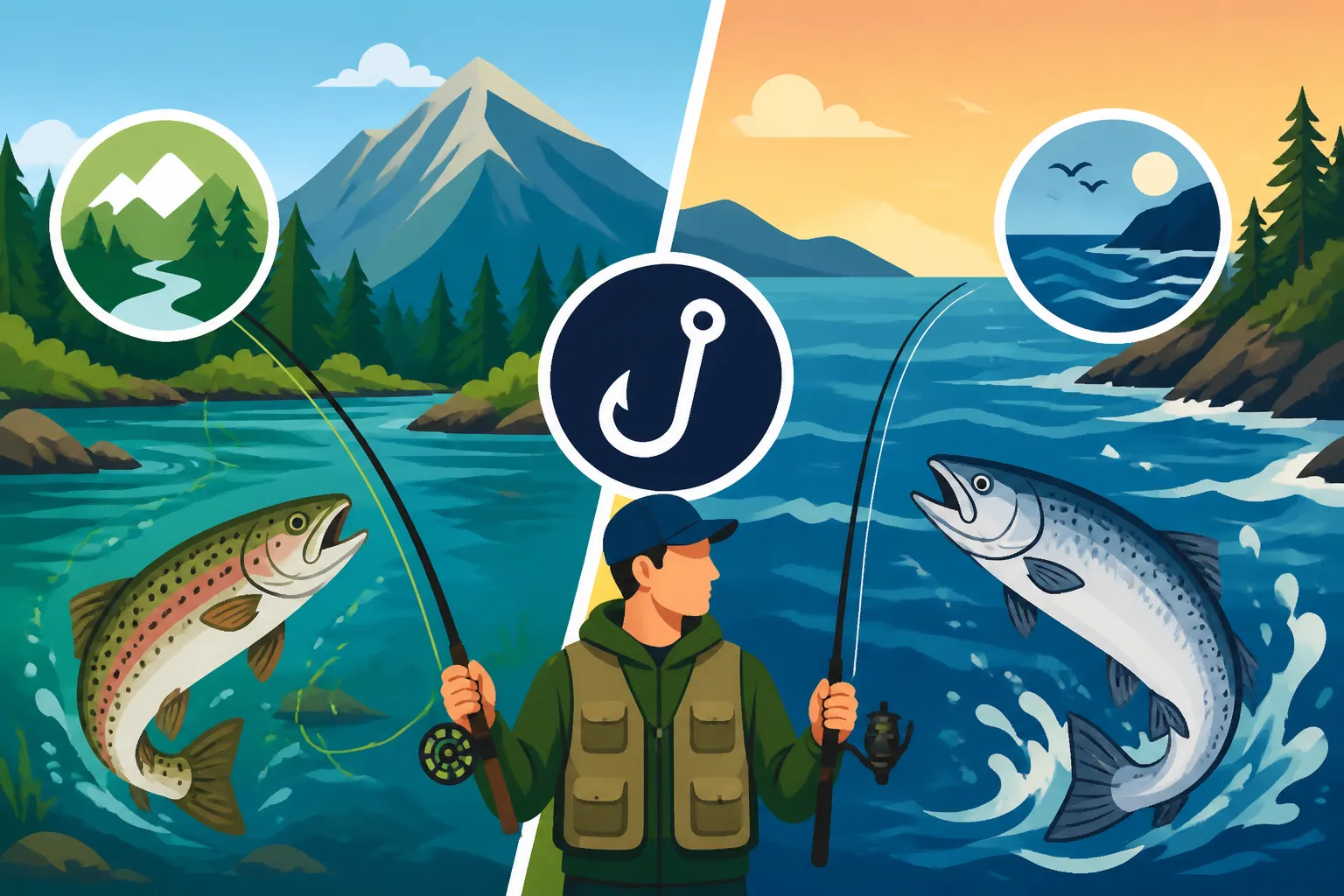
While many species are clearly freshwater (like rainbow trout in a lake) or clearly saltwater (like halibut in the ocean), the real confusion often arises with anadromous species – those fish, primarily salmon and steelhead, that spend part of their life in freshwater and part in saltwater.
- Pacific Salmon: If you're targeting Pacific salmon in saltwater (e.g., trolling off the coast of Vancouver Island), you need a tidal waters license with a salmon stamp. If you're targeting the same salmon once they've entered a river to spawn (e.g., fishing for Chinook on the Fraser River above the tidal boundary), you need a freshwater license with a salmon stamp. The fish itself is the same species, but its location determines the required license and governing regulations.
- Steelhead: Similarly, steelhead are sea-run rainbow trout. While they are in the ocean, a tidal waters license would cover them. However, when they return to freshwater rivers to spawn, you need a freshwater license, along with the specific BC Steelhead Conservation Surcharge Stamp. This crossover is where anglers can easily make a mistake, leading to potential fines.
- Other Species: For species like Cutthroat Trout, some populations are purely resident in freshwater, while others are sea-run and might be encountered in tidal estuaries or even open coastal waters. Understanding the specific habits of the fish you're targeting in the specific location is key.
Cost and Duration Comparison
The cost of both freshwater and tidal waters licenses varies based on several factors: your residency status (BC resident, non-resident Canadian, or non-resident non-Canadian) and the duration of the license (annual, 1-day, 3-day, 5-day, or 8-day for some non-resident options).
Here’s a simplified breakdown:
| License Type | BC Resident Annual (Approx. CAD) | Non-Resident Canadian Annual (Approx. CAD) | Non-Resident Non-Canadian Annual (Approx. CAD) | Day Rates Available? | Special Stamps/Endorsements |
|---|---|---|---|---|---|
| Freshwater | $36 | $55 | $80 | Yes | Salmon, Steelhead, Sturgeon |
| Tidal Waters | $36 | $55 | $100 | Yes | Salmon |
Note: These are approximate costs for 2026, based on current pricing structures, and do not include the additional costs for conservation stamps or surcharges.
You can find more precise figures in guides such as How Much Does a BC Fishing License Cost or specific breakdowns like BC resident freshwater fishing license cost 2026 and BC non-resident non-Canadian freshwater fishing license cost 2026. Generally, non-residents pay significantly more than BC residents, reflecting the investment residents make through taxes. Youth anglers also have special considerations, with BC Youth Fishing License Exemption Under 16 being a common question. Always refer to the official government websites for the most current pricing.
Common Scenarios and How to Choose Your License
The nuances of BC's geography and its incredible anadromous fish populations mean that simply saying "freshwater for lakes, tidal for ocean" isn't always enough. There are specific situations that frequently trip up even experienced anglers. Let's walk through some of these common dilemmas to ensure you're always properly licensed.
Fishing Rivers That Flow to the Ocean
This is perhaps the biggest source of confusion. Many of BC's most famous fishing rivers, like the Fraser River, Skeena River, Vedder/Chilliwack River, or the Campbell River, flow directly into the Pacific Ocean. The lower sections of these rivers are subject to tidal influence, meaning the water level rises and falls with the ocean tides, and the water itself can be brackish (a mix of fresh and salt).
If you are fishing in the tidal portion of one of these rivers or its estuary, you need a tidal waters fishing license. This is often the case for anglers targeting migrating salmon as they first enter the river system. Once you move upstream beyond the tidal boundary, into purely freshwater, you then require a freshwater fishing license. It's not uncommon for anglers who spend a full day transitioning from estuary to upstream sections to carry both licenses, ensuring they're covered no matter where they drop a line. Always check the specific tidal boundary for the river you're fishing. These boundaries are usually clearly defined in the regulations synopsis or DFO fishery notices.
Angling for Anadromous Fish: Salmon and Steelhead
As we touched on earlier, anadromous fish like all five species of Pacific salmon and steelhead spend parts of their lives in both fresh and saltwater. This means that depending on where you encounter them, your licensing requirements will shift.
- Ocean Fishing for Salmon: If you're on a charter boat off Tofino, Ucluelet, or Campbell River, trolling for Chinook or Coho, you absolutely need a tidal waters fishing license and the associated Tidal Waters Salmon Conservation Stamp.
- River Fishing for Salmon: If you're casting a line into the Fraser, Harrison, or Skeena Rivers, specifically targeting salmon that have entered freshwater to spawn, you need a freshwater fishing license and the Freshwater Salmon Conservation Stamp.
- Steelhead: For the elusive steelhead, which are also anadromous, the same principle applies. In the ocean, a tidal license; in their natal rivers, a freshwater license plus the BC Steelhead Conservation Surcharge Stamp.
It's a nuanced distinction, but an incredibly important one. Always be aware of the water body's designation and the migratory stage of the fish you're targeting.
Visiting Anglers' Dilemmas
For visitors to British Columbia, whether from other Canadian provinces or international destinations, the licensing system can be particularly daunting. The first major distinction is between resident and non-resident pricing, as outlined in Resident vs Non-Resident Fishing License Costs in BC. Non-residents, especially non-Canadians, will face higher license fees.
Beyond cost, the biggest dilemma for visiting anglers is often simply knowing which license to buy and for what duration. Many visitors come for specific trophy fish – a massive Fraser River sturgeon (requiring a freshwater license and sturgeon stamp) or a monster Chinook salmon off Haida Gwaii (requiring a tidal waters license and salmon stamp). If your trip itinerary includes both lake fishing and a day out on the ocean, you will undeniably need both a freshwater and a tidal waters license to be compliant. Don't try to get by with just one; it's a surefire way to run into trouble. Consider a multi-day or annual license if your trip is extended or involves diverse fishing opportunities across the province.
Consequences of Fishing with the Wrong License
It might seem like a small detail to some, but fishing without the correct license or required stamps in British Columbia is a serious offense. Conservation officers, both provincial and federal, are dedicated professionals who patrol our waters diligently, ensuring compliance and protecting our precious fisheries. The regulations are in place for a reason, and ignoring them comes with real and unpleasant consequences.
Fines and Penalties for Non-Compliance
Getting caught fishing without the appropriate license or necessary endorsements is not a minor slap on the wrist. The penalties can range from significant monetary fines to the confiscation of your gear, your catch, and even your boat. The amount of the fine can vary depending on the specific infraction, whether it's a first offense, and the discretion of the conservation officer, but it's rarely cheap. Imagine spending hundreds of dollars on a fishing trip, only to incur a fine that costs even more simply because you didn't check the regulations or buy the correct stamp.
Furthermore, repeated offenses can lead to more severe penalties, including potential court appearances, heavier fines, and even a ban from fishing in BC waters for a period. This is not just about revenue generation; it's about deterrence and upholding the conservation principles that are foundational to sustainable fishing in British Columbia. For a comprehensive overview of the potential repercussions, you can refer to resources like Fishing Without a License in BC: Penalties. It's a risk simply not worth taking.
Protecting BC's Fisheries for Future Generations
Beyond the immediate financial or legal repercussions, fishing with the wrong license, or without one entirely, undermines the very systems designed to protect and enhance British Columbia's incredible fish populations. Every dollar spent on a fishing license and its associated stamps goes directly into funding vital conservation efforts, habitat restoration projects, scientific research, and enforcement. These funds are crucial for maintaining healthy stocks of salmon, steelhead, trout, halibut, and countless other species that define BC's angling identity.
When individuals circumvent the licensing system, they are not only breaking the law but also actively diminishing the resources available for these critical programs. It's an act that impacts everyone who cherishes BC's fishing heritage, from the commercial fisher to the sport angler, and especially the Indigenous communities whose cultures are deeply tied to these waters. Responsible angling means understanding and respecting the regulations, ensuring that the legacy of healthy, vibrant fisheries continues for all to enjoy. Always check BC Fishery Notices and In-Season Closures, Explained before heading out, as conservation needs often dictate real-time adjustments.
Disclaimer
The information provided in this guide is intended for general informational purposes only and does not constitute legal advice. While we strive to keep the information accurate and up-to-date, fishing regulations in British Columbia can change frequently. Always consult the official British Columbia Freshwater Fishing Regulations Synopsis and the Fisheries and Oceans Canada (DFO) website for the most current and specific regulations before engaging in any fishing activity. It is the angler's responsibility to know and follow all applicable rules and laws.