Printing or Carrying a Digital Fishing License in BC
There's nothing quite like the feeling of gearing up for a fishing trip in beautiful British Columbia, only to be hit with that sudden, stomach-dropping thought: "Did I remember my fishing license? Is it printed? Is my phone going to be enough?" It's a common modern-day dilemma, especially as we move further into the digital age. This guide is here to clear up all the confusion around whether you need a physical printout or if carrying your BC fishing license digitally on your phone is truly acceptable.
The Evolution of Fishing Licenses in BC: From Paper to Pixels
For decades, the ritual of acquiring a fishing license was pretty straightforward: you'd head to a local vendor, fill out a paper form, get your stamp, and tuck that little paper slip carefully into your wallet. It was a tangible piece of proof that you were legally allowed to cast a line. But just like everything else, technology has transformed this process, bringing both immense convenience and, let's be honest, a fair bit of new uncertainty for many of us.
Remembering the Old Days of Paper Licenses
Think back to the "good old days" – you'd grab your license from the tackle shop, maybe even get it laminated right there. It had a certain old-school charm, didn't it? That physical piece of paper was your undeniable proof of purchase and compliance. You’d fold it just right, slip it into a special compartment in your wallet or tackle box, and sometimes, if you were really diligent, you'd even make a photocopy to keep at home, just in case.
However, those paper licenses came with their own set of frustrations. They were prone to getting wet, tearing, or simply vanishing into the abyss of a cluttered fishing vest. Many of us have experienced the frantic search for that little piece of paper, only to realize it was left on the kitchen counter or, worse, disintegrated in a rainy boat ride. It was a simple system, yes, but not without its inherent vulnerabilities to the elements and human forgetfulness.
The Digital Shift and What It Means for Anglers
Fast forward to today, and British Columbia has embraced a mostly digital system for purchasing and managing fishing licenses. This shift has been a game-changer for convenience, allowing anglers to purchase their British Columbia Fishing License Guide for 2026 from the comfort of their home, often even while on the way to their favorite fishing spot. No more scrambling to find a vendor during odd hours or realizing you forgot it just as you're about to launch the boat.
This digital transformation brings a host of benefits, not least of which is the potential for environmental impact reduction by using less paper. It also centralizes records, making it easier for fisheries management to track licenses and enforce regulations. For the angler, it means that your license is always accessible through an online portal, making it much simpler to retrieve if you ever need a new copy. The system aims to simplify compliance, allowing you more time to focus on the fishing itself rather than the paperwork.
Navigating the Digital License: Is Your Phone Enough?
So, you've bought your BC fishing license online. You've got the PDF downloaded to your phone. The big question remains: can you just show it on your screen if a conservation officer asks? The answer, thankfully, is a resounding yes, but with some crucial caveats that every angler needs to understand. It's not just about having it on your phone; it's about ensuring it's accessible and readable under all circumstances.
Official Policy on Digital Display
British Columbia's fishing regulations are quite clear on this point: you are permitted to carry your fishing license in digital format on a portable electronic device, such as a smartphone or tablet. However, the onus is entirely on you to ensure that the license is readily accessible and clearly legible to a conservation officer upon request. This isn't just a casual suggestion; it's a firm requirement.
Imagine standing on the bank of the Fraser River, a misty morning, and a conservation officer approaches. Your phone needs to be charged, functional, and capable of displaying your full license document without delay. The officer needs to be able to verify all the details – your name, license number, validity dates, and any required stamps like the BC Freshwater Salmon Retention Rules or the BC Steelhead Conservation Surcharge Stamp. If your phone is dead, screen cracked, or the file corrupted, it's essentially the same as not having your license at all, and that's a situation you definitely want to avoid.
Practical Considerations for Carrying a Digital License
While the flexibility of a digital license is fantastic, it's not without its practical challenges, especially in the rugged environments we often find ourselves in while fishing. Battery life is probably the biggest concern. Many remote fishing spots in BC, from the tranquil interior lakes to the wild coastal inlets, have patchy or non-existent cell service. If your phone battery dies, you're out of luck.
To mitigate these risks, consider taking a clear screenshot of your entire license document, or even better, saving the PDF directly to your phone's local storage rather than relying on an internet connection to access an email or cloud drive. Keep it in an easily accessible folder, perhaps labeled "Fishing License." For those long days out on the water, a portable power bank can be a lifesaver, ensuring your phone stays charged. You can find robust, waterproof power banks on platforms like Amazon that are designed to withstand the rigors of outdoor adventures. Also, investing in a good quality, waterproof phone case is highly recommended. It protects against unexpected dips in the water and general dampness, which is an undeniable part of fishing.
The Reliability of a Physical Printout: Tried and True
Despite the convenience of digital licenses, many seasoned anglers still prefer the tangible security of a good old-fashioned paper printout. It’s a backup that never runs out of battery, doesn’t suffer from software glitches, and is universally understood by everyone, everywhere. There’s a certain peace of mind that comes with knowing you have a physical document in hand, regardless of the tech issues that might arise.
Why a Printed Copy Remains a Solid Backup
Think of a printed license as your reliable old friend. It's a non-negotiable for many because it simply works. You're deep in the Kootenays, far from any cell signal, the rain is coming down, and your phone just decided to power off from the cold. In that moment, a neatly folded, printed license tucked into a waterproof sleeve becomes invaluable. There's no fumbling with wet screens, no frantic searching for a charger, and no trying to explain to an officer why your digital proof is suddenly unavailable.
A printed copy is also much easier to handle when your hands are cold, wet, or covered in fish slime. You can pull it out, present it, and put it away quickly without worrying about dropping your expensive smartphone into the drink. It’s the ultimate failsafe for those "what if" scenarios that inevitably pop up when you're pursuing fish in the wild expanses of British Columbia. For some, it's not just a backup; it's the primary way they prefer to carry their license, with the digital version simply being a convenient way to purchase it.
Best Practices for Printing Your License
If you've decided a physical printout is the way to go – or at least, a smart addition to your digital strategy – there are a few tips to ensure it lasts your entire fishing season. First, print it on sturdy paper. Standard printer paper can easily tear or get soggy. Some anglers even prefer a slightly thicker cardstock. Once printed, consider protecting it. Laminating your license is a popular choice, as it makes it completely waterproof and tear-resistant. You can buy affordable laminators and pouches on Amazon, or many office supply stores offer lamination services.
Another great option is to keep your printed license in a clear, zip-lock bag or a dedicated waterproof document holder designed for fishing. These simple solutions will protect it from rain, spray, and accidental dips. Make sure it's stored in a consistent, easy-to-remember spot in your tackle box, boat console, or fishing vest. When you're out on the water, you want quick access, not a scavenger hunt for your important documents. Remember, you might also need to present other documents, like your BC Boating Laws for Anglers or even your BC Pleasure Craft Operator Card Requirement if you're operating a boat.
Essential Information on Your BC Fishing License
Whether you're holding a crisp printed copy or displaying it on your phone, your British Columbia fishing license is more than just a piece of paper or a digital file. It's a legal document packed with important details that confirm your eligibility and compliance. Taking a moment to understand what's on it can save you a lot of headaches out on the water.
Key Details to Verify Before Heading Out
Before you even think about casting a line, take a good look at your license. You need to ensure all the critical information is accurate and up-to-date. This includes your full legal name, your residential address (which helps confirm BC fishing license residency requirements), and most importantly, the exact validity dates of your license. A common mistake is assuming your license is good for a full year from the purchase date; often, they expire at the end of the fishing season (e.g., March 31st of the following year for freshwater licenses).
Also, double-check the type of license you've purchased – is it a BC Freshwater Fishing License or a BC Tidal Waters Fishing License? You might even need both, depending on where you plan to fish. Understanding the difference between BC Freshwater vs Tidal Waters License, Explained is crucial. Every license also has a unique identifying number, which conservation officers will use to confirm its authenticity. Always verify these details right after purchase, well before your trip, to avoid any last-minute surprises or complications.
Understanding Your Conservation Surcharges and Stamps
Beyond the basic license, BC has specific requirements for certain species, reflected in conservation surcharges or stamps that must be associated with your license. For example, if you plan to retain salmon in freshwater, you’ll need a BC Freshwater Salmon Retention Rules stamp. If you're targeting steelhead, a BC Steelhead Conservation Surcharge Stamp is often required. These aren't just extra fees; they are vital contributions to the conservation efforts for these magnificent fish and must be validly recorded on your license.
These stamps and surcharges will typically appear directly on your printed license or within the digital document. It’s not a separate physical stamp you adhere; rather, it’s an endorsement linked to your license number in the provincial system. It's your responsibility to ensure you have the correct endorsements for the species you intend to fish for and retain. Ignoring these can lead to serious penalties, including significant fines for Fishing Without a License in BC: Penalties or the appropriate endorsements. Always review the current BC Fishing Regulations Explained for the most up-to-date information on what stamps you might need for your target species.
What to Do If You Lose Your License (Digital or Physical)
Losing your fishing license, whether it's a physical copy or your digital access is compromised, can feel like a major setback. The good news is that BC's online licensing system makes replacing or recovering your license a relatively straightforward process, designed to get you back on the water with minimal fuss.
Replacing a Lost Physical License
Let's face it, things happen. A gust of wind, a forgotten pocket, or simply misplacing it amidst your other gear. If your physical fishing license goes missing, don't panic. The beauty of the modern digital system is that your license information is stored online. You don't need to go through the whole purchase process again. Simply log back into the provincial online recreational fishing license system where you originally purchased it.
Once logged in, you should be able to navigate to your purchase history or active licenses and find an option to "reprint" or "download" your license again. This means if you have access to a printer, you can generate a fresh copy almost immediately. It’s a huge improvement over the old days where a lost paper license meant a trip back to a vendor and potential delays. Always consider keeping a digital copy on your phone or in your email as a backup, just in case you lose the physical copy and don't have immediate internet access for reprinting. For more details on the process, check out our guide on Replacing a lost BC fishing license.
Recovering a "Lost" Digital License
The term "lost digital license" usually implies a scenario where you can't access it on your device, perhaps due to a dead phone battery, a forgotten password, or a corrupted file. If your digital license becomes inaccessible, the recovery process is similar to replacing a lost physical one, but often even simpler if your device is still functional.
If your phone died, charge it up! If you accidentally deleted the PDF, simply log back into the BC fishing license portal from any internet-enabled device (another phone, a tablet, or a computer) and download the PDF again. You can then transfer it back to your primary device or print it out. This ease of recovery highlights a significant advantage of the digital system: as long as your account is active and accessible, your license is never truly "lost." To avoid these minor hiccups, ensure you understand How to Buy a BC Fishing License Online and how to effectively manage your account. You might also save the PDF to a cloud storage service or an external drive, similar to how you’d back up important documents purchased through platforms like Amazon.
Beyond the License: Other Important Documents for BC Anglers
While your fishing license is undoubtedly the most critical document, being a responsible and well-prepared angler in British Columbia involves more than just having your license in order. Several other pieces of identification and regulatory information are equally important to carry with you, ensuring you're fully compliant and can enjoy your trip without any unexpected interruptions.
Identifying Yourself: Photo ID Requirements
It's not enough to simply have a fishing license; you also need to be able to prove that the license belongs to you. This is where your government-issued photo identification comes in. A valid driver's license, passport, or BC Services Card are all acceptable forms of ID. Conservation officers routinely ask for both your fishing license and photo ID to verify your identity and ensure the license details match.
This step is crucial for enforcing regulations, especially concerning residency requirements and age-specific licenses. For instance, while youth under 16 may not require a license for freshwater fishing, specific rules apply, and their age may still need to be verified. Understanding BC Fishing License Age Requirements is important. Always carry a physical piece of photo ID, even if your phone also holds a digital copy. Relying solely on your phone for ID could lead to complications if your device fails or if a strict interpretation of ID requirements is applied by an officer.
Regulatory Synopsis and Fishery Notices
Beyond your personal identification and license, staying informed about the ever-changing fishing regulations is paramount. The official Reading the BC Freshwater Fishing Regulations Synopsis is your bible for understanding daily bag limits, possession limits, specific gear restrictions, and special regulations for particular waters. While you don't need to carry a printed copy of the entire synopsis (it's quite lengthy!), having access to the digital version on your phone or a printed summary of relevant sections for your specific fishing area is a smart move.
Even more critical are the in-season Fishery Notices. These notices announce immediate closures, openings, or changes to regulations due to conservation concerns, biological reasons, or unexpected events. These changes can happen at any time, sometimes with very short notice. Failing to check these notices can inadvertently lead to violations, even if you had the best intentions. Always make it a habit to check BC Fishery Notices and In-Season Closures, Explained right before you head out, and even during multi-day trips if possible, as changes can occur daily. This diligence ensures you're fishing legally and contributing to the responsible management of BC's precious fisheries.
Digital vs. Printed: A Quick Comparison
To help you decide the best approach for carrying your BC fishing license, here's a quick comparison of the pros and cons of digital versus printed versions.
| Feature | Digital License (on Phone) | Printed License |
|---|---|---|
| Convenience | High (always with you if phone is) | Medium (needs to be remembered) |
| Accessibility | Instant access, search functionality | Requires physical retrieval |
| Reliability | Dependent on battery, signal, device integrity | Independent of tech; always "on" |
| Water Damage | High risk without waterproof case | Low risk with lamination/waterproof holder |
| Loss Risk | Less likely to be "lost" if backed up digitally | Can be lost, torn, or misplaced |
| Legibility | Excellent (on a functional screen) | Excellent (if printed clearly) |
| Backup Options | Easy to re-download, screenshot, email | Requires reprinting or prior digital backup |
| Officer View | May require phone handling by officer (or you) | Simple to present |
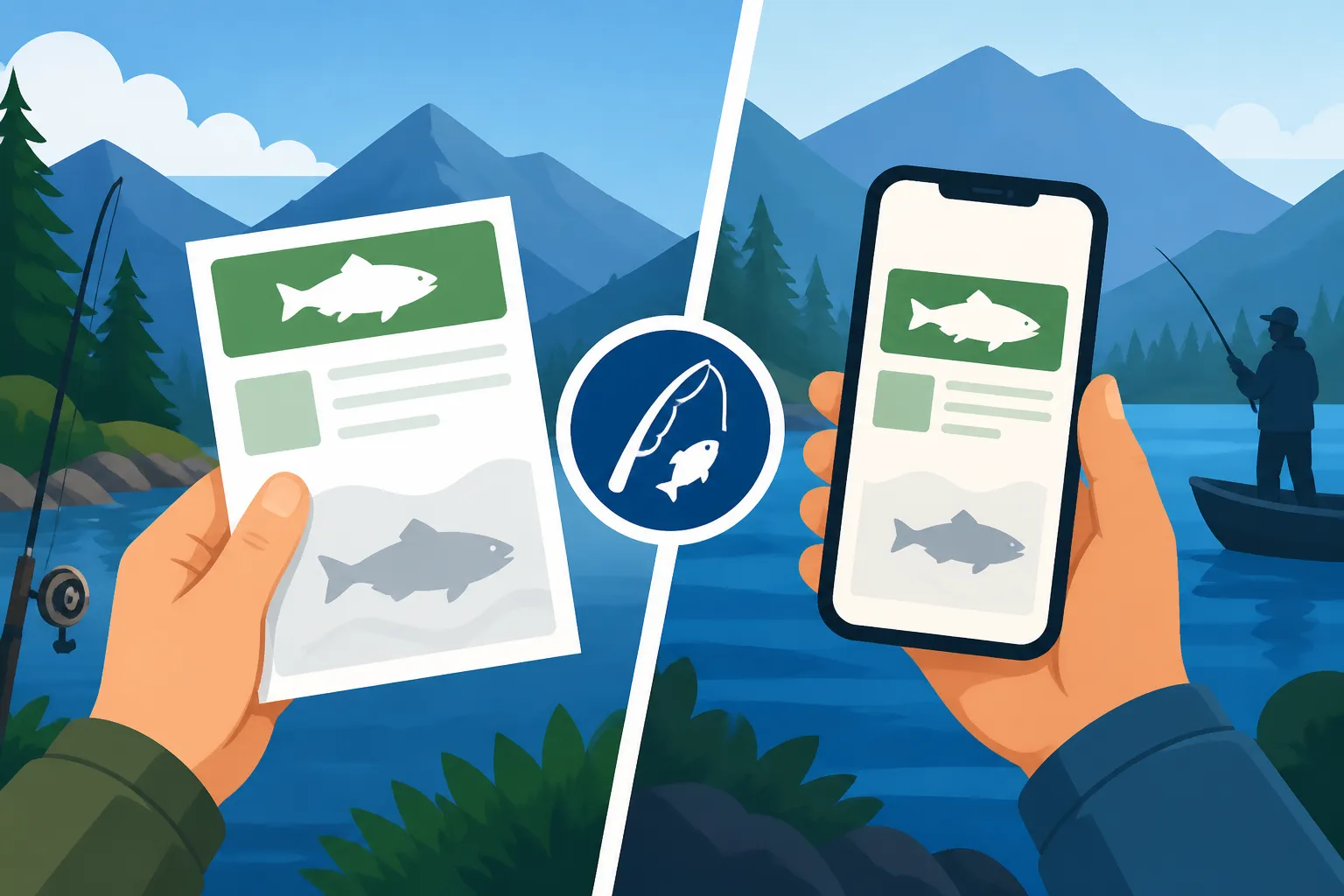
Ultimately, the choice is personal, but a combination of both is often the safest bet. Have the digital copy easily accessible on your phone, and keep a sturdy, protected printout as a reliable backup.
Disclaimer
Please remember that fishing regulations and licensing requirements in British Columbia can change. This guide provides general information based on current practices. It is always the angler's responsibility to consult the most up-to-date official BC Fishing Regulations Synopsis and relevant Fishery Notices before heading out on any fishing trip. The information provided here does not constitute legal advice.