How to catch salmon during a cold front in BC
There's nothing quite like planning a fantastic salmon fishing trip in British Columbia, only to have a sudden cold front roll in and seemingly shut down the bite. It's a frustrating experience many of us have faced, leaving us scratching our heads and wondering if we should just pack up and go home. But don't despair! While cold fronts certainly change the game, they don't necessarily mean the end of your fishing day. With a few adjustments to your approach, you can still find success and reel in some incredible BC salmon. This guide will walk you through understanding how cold fronts impact salmon and equip you with the strategies to keep those lines tight.
Understanding the Impact of Cold Fronts on BC Salmon
When a cold front moves through, it's not just a drop in air temperature we're talking about; it's a whole atmospheric shift that can send ripples through the aquatic environment, directly influencing salmon behavior. As anglers, we often feel this change first – the crisp air, perhaps a clear blue sky after a stormy period, and usually a rise in barometric pressure. But what does this mean for the salmon lurking beneath the surface of the Fraser River or off the coast of Vancouver Island?
The Barometric Pressure Shift and Fish Metabolism
The most significant, and often overlooked, factor during a cold front is the change in barometric pressure. Before a cold front, pressure typically drops, often accompanied by stormy weather. Fish, including salmon, tend to feed aggressively during this pre-front period as they sense the approaching change. Then, as the cold front arrives, the barometric pressure rises sharply and stabilizes at a higher level. This rapid increase in pressure can cause discomfort for fish by impacting their swim bladder, which helps them regulate buoyancy. Imagine suddenly being squeezed from all sides – it's disorienting.
This discomfort, coupled with the general environmental shift, often leads to a decrease in fish metabolism. Salmon, being cold-blooded creatures, are highly sensitive to water temperature. Even a slight drop can slow down their digestive processes and energy levels. They become less active, less inclined to chase prey, and generally more lethargic. This isn't just a theory; countless days on the water have shown me that a high-pressure system post-cold front almost always results in a tougher bite. They're still there, but they're just not as keen to eat.
Water Temperature Fluctuations and Baitfish Movement
While air temperature might be the most noticeable change for us, it's the subtle shifts in water temperature that truly matter to salmon. In rivers, a cold front might bring colder rain or snowmelt, quickly dropping the water temperature by a few degrees. In larger lakes or coastal waters, the effect might be more gradual, but still significant. Salmon thrive within certain temperature ranges, and deviations from these optimal conditions can make them uncomfortable.
Furthermore, these temperature drops often affect the salmon's primary food source: baitfish. Smaller baitfish, plankton, and insects also react to temperature changes, either moving to warmer, deeper waters or becoming less active themselves. When the baitfish scatter or become sluggish, the salmon have less incentive to feed actively. This can create a chain reaction: colder water means slower baitfish, which means slower salmon. It’s a delicate ecosystem, and a cold front can throw it out of whack, forcing salmon to hunker down in deeper, more stable thermal layers where they feel safer and more comfortable.
Reading the Signs: Before, During, and After a Cold Front
Learning to anticipate and react to a cold front is crucial for successful salmon fishing in BC. It’s not just about looking out your window; it’s about understanding the subtle cues that the weather and environment provide. Pay attention to forecasts, sure, but also hone your observational skills on the water.
Pre-Front Aggression: The Golden Window
Before a cold front fully hits, you'll often experience a "golden window" of opportunity. As the barometric pressure begins to fall, fish often become incredibly active. This is their biological response to an impending weather change – they feed heavily, almost as if stocking up before the lean times. You might notice the wind picking up, clouds gathering, and perhaps a drop in air pressure making you feel a bit sluggish, but for the salmon, it’s prime feeding time.
During this pre-front period, salmon can be surprisingly aggressive. They're more willing to chase faster retrieves, hit a wider range of lures, and generally be less finicky. This is the time to really put in the effort, try various techniques, and capitalize on their heightened activity. If you're on a multi-day trip, always check the long-range forecast. If you see a cold front coming, prioritize hitting the water hard in the 12-24 hours before it arrives. This is when your "Best Time of Day to Catch Salmon" strategy might need to be shifted to capitalize on this weather window.
During the Front: The Lockjaw Period
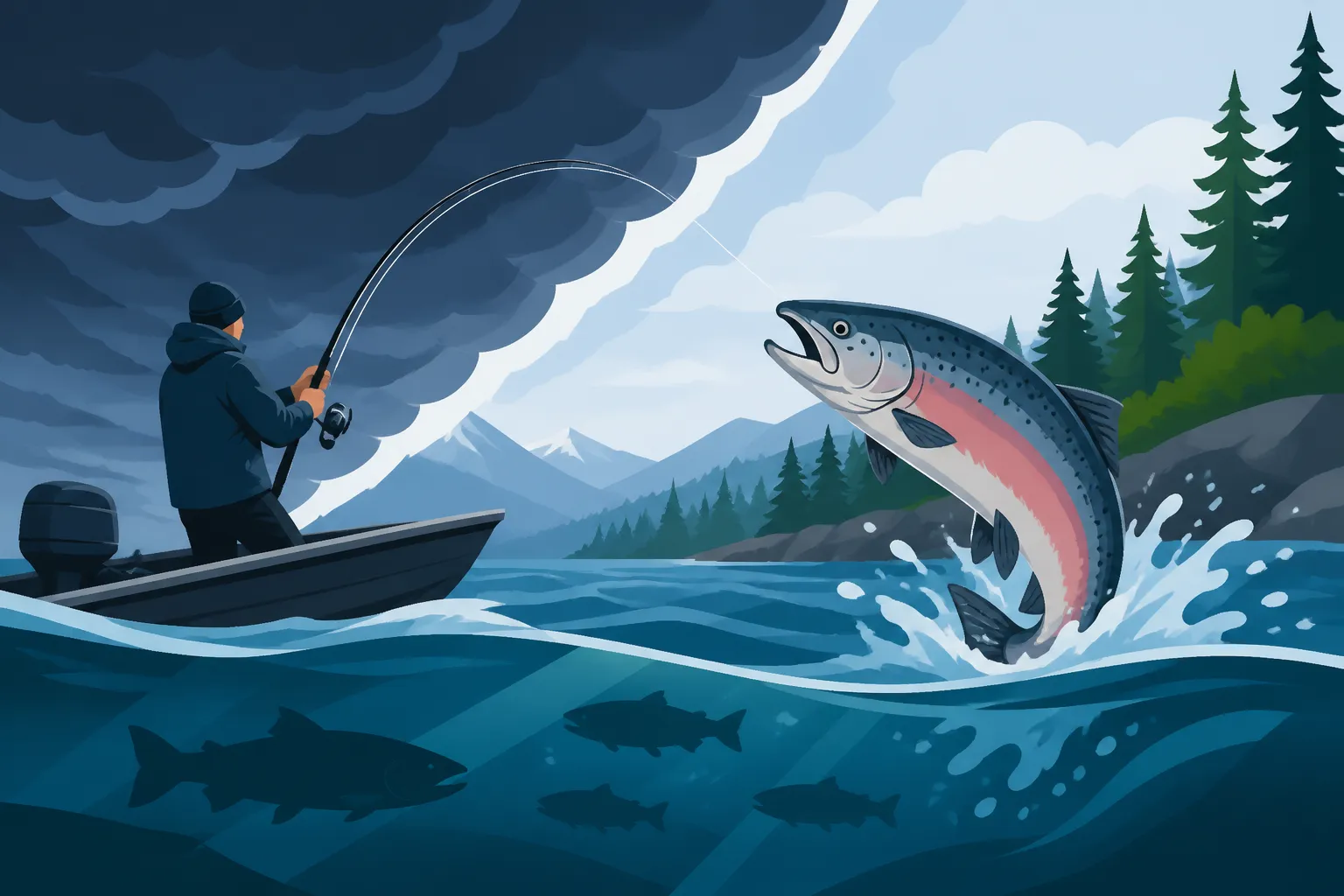
Once the cold front has officially settled in, often marked by clear skies, brisk winds, and a noticeable chill in the air, the fishing can become significantly tougher. This is the "lockjaw period." The abrupt rise in barometric pressure and the drop in water temperature have done their work, sending salmon into a more lethargic state. They're not necessarily leaving the area, but they're less inclined to strike anything that doesn't practically land on their nose.
During this time, you might notice that traditional methods that worked yesterday are now failing completely. Your fast-trolled spoons, aggressive jigging, or quickly retrieved spinners might go untouched. This is when you need to switch gears entirely. Think slow, subtle, and direct presentations. This isn't the time to cover vast amounts of water quickly; it's the time to meticulously work known holding areas where salmon might be stacked up, seeking refuge from the environmental shifts. Consider areas with deeper pools, slower currents, or underwater structure that offers protection.
Post-Front Recovery: The Gradual Return
The good news is that cold fronts don't last forever, and neither does the lockjaw. As the high-pressure system begins to ease and weather conditions stabilize, the salmon will gradually start to return to their normal feeding patterns. This recovery period can vary, lasting anywhere from a day to several days, depending on the severity of the front and the specific body of water.
During the post-front recovery, you’ll want to ease back into more active presentations, but still start slow. The fish won't instantly flip a switch back to aggressive feeding. Look for signs of baitfish returning to more active areas, and pay attention to subtle changes in water temperature. As the water warms slightly, or as the pressure stabilizes, salmon will become more willing to chase. This is a great time to experiment with "Salmon Fishing Techniques for BC Rivers" that allow for a mix of slow and moderate retrieves. Patience is a virtue during this phase, as is consistent effort, gradually increasing your presentation speed as the fish respond.
Adjusting Your Approach: Techniques for Cold Front Salmon
When faced with a cold front, the worst thing you can do is keep fishing the same way you did yesterday. Salmon during these conditions demand a more nuanced and patient approach. It’s all about slowing down, going deeper, and making your presentation irresistible.
Slower Presentations and Subtle Movements
Forget fast retrieves and aggressive jerks. During a cold front, salmon are generally sluggish, and a fast-moving lure will likely be ignored. Instead, focus on slowing everything down. If you're trolling, reduce your speed significantly. For 'Trolling Techniques for BC Lake Trout', the same principle applies to salmon; slower is better. If you’re casting and retrieving, think of it as a crawl rather than a sprint. Let your lure or bait spend more time in the strike zone, giving the lethargic salmon ample opportunity to react.
When using jigs or bait, subtle movements are key. Instead of aggressive rips, try gentle lifts and drops, or simply let the current work your presentation. The goal is to imitate a weakened or injured baitfish that presents an easy meal, not a healthy one darting away. For bottom fishing, allow your bait to sit longer, letting the scent disperse and attract any nearby, dormant salmon.
Deeper Depths and Holding Areas
As water temperatures drop on the surface, salmon will often seek out deeper, more stable thermal layers. In rivers, this means focusing on the deepest pools, troughs, and slow-moving runs. These areas provide refuge from colder surface currents and often offer consistent water temperatures. If you were previously catching fish in shallower riffles, it’s time to move to the main channels and deeper holes.
On the coast or in large lakes, salmon might move down to 60, 80, or even 100 feet or more, depending on the species and conditions. This is where a good fish finder becomes invaluable. Look for schools of baitfish or arches marking salmon concentrated on structure or in deep basins. Downriggers are essential for precise depth control in these scenarios. Experiment with different depths until you find where the fish are holding. Remember, even a difference of 10 feet can be the key to getting a strike.
Lure and Bait Selection Tweaks
The lures and baits that worked wonders yesterday might be completely ineffective during a cold front. This is where you need to be versatile and willing to experiment.
- Natural Baits: Live or cured baits, like herring, roe, or worms, can be incredibly effective during cold fronts because they offer a natural scent and appearance that even sluggish salmon find hard to resist. Present them slowly, allowing the scent to drift. You can find high-quality bait curing supplies and rigs on Amazon to prepare your own baits for maximum effectiveness.
- Scent Attractants: Adding scent to your lures or baits can make a huge difference. Products like Pro-Cure or Atlas Mike's can provide that extra olfactory appeal that entices a reluctant salmon.
- Lure Colors: While there's no hard and fast rule for "Best lure color for murky water steelhead fishing" that applies perfectly to salmon in cold front conditions, often subtle or natural colors work best in clear, post-front conditions, like clear water. Think duller greens, blues, or even black. However, if the water is murky from recent rain or snowmelt, brighter colors like chartreuse, orange, or even glow-in-the-dark might be necessary to provide visibility.
- Lure Action: Opt for lures with a slower, wider wobble or minimal action. Flatfish, Kwikfish, or slow-trolled spoons like Silver Horde or Tomic plugs can be excellent choices. These lures create subtle vibrations and look like an easy meal without demanding a high-energy chase from the fish.
Gear and Setup Modifications for Cold Fronts
Beyond just changing your technique, adjusting your gear and setup can also give you a crucial edge when fishing for salmon during a cold front. Small modifications can significantly improve your chances of detecting those light bites and keeping a lethargic fish hooked.
Lighter Lines and Sensitive Rods
During a cold front, salmon often bite very lightly. They might not aggressively smash a lure; instead, it could feel like a subtle tap, a slight weight, or even just a change in line tension. Using lighter main lines and leaders can help with this sensitivity. A thinner diameter line experiences less water resistance, allowing your lure to get deeper with less weight and transmit subtle bites more effectively. For leader material, consider fluorocarbon, which is virtually invisible underwater and has excellent abrasion resistance.
Pairing lighter lines with a sensitive rod is equally important. Graphite rods with a fast action tip are ideal for detecting those faint strikes. The sensitive tip will telegraph even the slightest nudge, while the backbone of the rod provides the power to set the hook. This is especially critical when "How to fish a river for Chinook salmon" or other species that might just "mouthing" the bait rather than inhaling it. Many reputable brands offer rods specifically designed for sensitivity, and you can often find a good selection of these on Amazon.
Using Electronics to Your Advantage
Modern fish finders and sonar units are invaluable tools, especially during challenging cold front conditions. They allow you to quickly locate salmon that might be concentrated in deeper holding areas or tight to structure.
- Side-Scan/Down-Imaging: These technologies can show you detailed images of the bottom and any fish or structure nearby. You can identify deep holes, submerged logs, or rock piles where salmon might be stacked up.
- Water Temperature Gauge: Many fish finders include a water temperature gauge. Monitoring this closely can help you identify subtle thermal breaks or warmer pockets where salmon might be more active. If you notice a particular depth consistently holds a slightly warmer temperature, that's often where the fish will be.
- Charting and GPS: Mark successful spots on your GPS. During a cold front, salmon often return to the same reliable holding areas. Building a library of these waypoints can save you valuable time on future trips. Learning "How to read structure for sturgeon on the Fraser" can also be applied to salmon; fish often relate to similar structures.
Dressing for Success and Comfort
It might seem obvious, but staying warm and comfortable is paramount when fishing during a cold front. When you're cold and miserable, your focus and patience quickly diminish. British Columbia weather can be notoriously unpredictable, so always be prepared for colder temperatures than the forecast might suggest.
- Layering: The key to staying warm is layering. Start with a moisture-wicking base layer, add an insulating mid-layer (fleece or down), and top it off with a waterproof and windproof outer shell. Brands like Helly Hansen or Simms offer excellent options, and you can find many quality layering pieces on Amazon to suit various budgets.
- Extremities: Don't forget your head, hands, and feet. A warm hat, waterproof gloves, and insulated, waterproof boots are essential. Cold extremities can quickly make an otherwise tolerable day unbearable.
- Hot Beverages: A thermos filled with hot coffee, tea, or soup can be a real morale booster and help keep your core temperature up, allowing you to focus on the fishing, not the shivers.
By making these strategic adjustments to your gear and prioritizing your comfort, you’ll not only endure the cold front but significantly increase your chances of hooking into those elusive BC salmon.
Essential Cold Front Salmon Fishing Checklist
To help you remember all these critical adjustments, here's a handy table summarizing the key differences in approach when a cold front hits:
| Fishing Aspect | Normal Conditions (Pre-Front/Stable) | Cold Front Conditions (During/Post-Front) |
|---|---|---|
| Barometric Pressure | Stable or falling | Rising or high |
| Water Temperature | Optimal range, stable | Dropping, unstable, seeking stable depths |
| Fish Activity | Aggressive, willing to chase | Lethargic, reluctant to move, subtle bites |
| Retrieve Speed | Moderate to fast, varied | Slow, very slow, controlled |
| Lure Action | Active, flashy, erratic | Subtle, wide wobble, minimal vibration |
| Lure Colors | Varied, often brighter (e.g., chartreuse, chrome) | Natural, duller (clear water); brighter (murky water) |
| Bait Usage | Effective, but lures often preferred for coverage | Highly effective, natural scent is key |
| Depth | Varied, often shallower | Deeper holding areas, thermal layers |
| Line & Rod | Standard mono/braid, medium action | Lighter fluorocarbon leaders, sensitive fast-action rods |
| Electronics Use | Locating schools/structure | Pinpointing inactive fish in deep pockets |
| Angler Patience | Good | Essential, unwavering, persistent |
Remember, this isn't a definitive rulebook, but a guide to increase your odds. Every river, lake, and coastal area in British Columbia, and every cold front, will present unique challenges. Always check "BC Fishing Season Dates and Closures" and local "BC Fishery Notices and In-Season Closures, Explained" before heading out, as regulations can change, particularly for "BC Freshwater Salmon Retention Rules" or "BC Salmon Conservation Stamp Rules".
Final Thoughts: Persistence Pays Off
Successfully catching salmon during a cold front in BC is a testament to an angler's adaptability and persistence. It's a challenging scenario, no doubt, and it's easy to get discouraged when the fish aren't biting like they should. But it’s precisely in these conditions that experience, strategic adjustments, and a refusal to give up truly shine.
The fish are still there. They simply aren't as aggressive or as willing to expend energy. By understanding the science behind their behavior, reading the subtle signs from the environment, and making specific adjustments to your techniques and gear, you dramatically increase your chances of success. Whether you're targeting a trophy "Chinook Salmon Fishing in BC" on the Fraser, searching for "Coho Salmon Fishing in BC" in a coastal inlet, or hoping for a glimmer of "Sockeye Salmon Fishing in BC", remember to slow down, go deep, and keep that bait or lure right in their face. And hey, even if the fishing is slow, a tough day on the water in beautiful British Columbia is still better than a good day at the office, right? So bundle up, stay patient, and enjoy the challenge!
Disclaimer
The information provided in this guide is for general informational purposes only. Fishing regulations, seasons, and conditions in British Columbia can change frequently. Always consult the official BC Freshwater Fishing Regulations Synopsis, the Fisheries and Oceans Canada (DFO) website for tidal waters, and local fishery notices before any fishing trip. Adherence to all local, provincial, and federal laws is the responsibility of the angler.