Difference between a freshwater guide and an offshore charter
It's completely normal to feel a bit lost when you first start looking into guided fishing trips in British Columbia. The sheer variety can be overwhelming, and terms like "freshwater guide" and "offshore charter" get thrown around interchangeably sometimes, causing confusion about what kind of experience you're actually signing up for. This guide is here to untangle those terms, clearly laying out the differences so you can confidently pick the perfect guided adventure for your next BC fishing trip.
The World of Freshwater Fishing Guides in BC
When we talk about a freshwater fishing guide in British Columbia, we're generally referring to an expert who specializes in angling on the province's incredible rivers, lakes, and streams. This isn't just someone who knows how to fish; it's someone intimately familiar with specific waterways, their currents, structure, and the habits of the fish species that call them home. These guides are your passport to navigating the sometimes complex and ever-changing freshwater environments that define so much of BC's fishing culture.
What a Freshwater Guide Offers
A freshwater guide's offering is deeply rooted in local, hyper-specific knowledge. They know the river like the back of their hand – where the deep pools are, the subtle currents that hold fish, and what flies or baits are producing results on any given day. If you're chasing the legendary white sturgeon on the Fraser River, for instance, a freshwater guide isn't just taking you to a spot; they're guiding you to a specific seam or eddy they've learned holds these prehistoric giants. They typically provide all the necessary gear, from specialized rods and reels designed for heavy-hitting sturgeon or delicate fly rods for trout, to all the terminal tackle.
Imagine you've always dreamed of catching a massive sturgeon. You wouldn't just show up at the Fraser River with your bass rod and hope for the best! A freshwater guide, like those found through platforms such as FishingBooker, will have specialized heavy-duty gear, knowledge of the best baits, and the experience to safely handle and release these incredible fish. They often operate smaller, more nimble boats suitable for river conditions, or even guide wade fishing trips where you're immersed directly in the stream. Their focus is often on teaching techniques, reading the water, and providing a more hands-on, educational experience tailored to the nuances of freshwater angling.
Typical Freshwater Fishing Experiences
Freshwater fishing experiences in BC are incredibly diverse, often dictated by the specific body of water and target species. On larger rivers like the Fraser, you might find yourself in a jet boat, covering significant distances to hit prime sturgeon or salmon holding grounds. These trips often involve anchoring and waiting for bites or slow-trolling. For salmon and steelhead on rivers like the Skeena or Thompson, drift boat trips are common, where you float downstream, casting to promising runs and pools. Best Fishing Rivers in British Columbia outlines many of these fantastic destinations.
If you're after trout or steelhead on smaller, more intimate streams, wade fishing with a guide is a phenomenal experience. Your guide will teach you how to approach the water stealthily, cast accurately, and present flies or lures effectively. Rivers renowned for their steelhead, such as those covered in Best Steelhead Rivers in BC, often require this kind of nuanced approach. In the interior, lake fishing guides might employ different techniques like trolling for large rainbow trout or kokanee, using specialized downriggers and electronics to locate fish in deeper water. Each trip is typically an immersive learning experience, allowing anglers to develop skills specific to freshwater environments.
Why Choose a Freshwater Guide?
Choosing a freshwater guide is paramount when you're navigating the intricate and often dynamic world of BC's inland waters. These waterways, from swift-flowing rivers to expansive lakes, demand a specialized understanding that only years of experience can truly build. Here's why they are invaluable:
- Intimate Local Knowledge: A good freshwater guide possesses an almost encyclopedic knowledge of their home waters. They know the subtle nuances of currents, the locations of submerged structure, and where fish are likely to hold during different water levels, temperatures, and times of year. This isn't just about finding fish; it's about understanding the entire ecosystem, from insect hatches for trout to salmon migration patterns. Without this local expertise, anglers can spend entire days guessing, often in vain.
- Navigational Expertise and Safety: Many of BC's best freshwater fishing spots are on rivers with strong currents, hidden obstacles, or challenging access points. A guide's expertise in navigating these waters, whether by drift boat, jet boat, or on foot during a wade trip, is crucial for both safety and success. They understand the risks and how to mitigate them, ensuring your trip is not only productive but also secure. Imagine trying to navigate the powerful currents of the Fraser River on your own; a guide makes it safe and manageable, especially if you're targeting something big like a sturgeon. How to Catch Sturgeon on the Fraser River highlights the specific challenges and rewards.
- Targeted Species Expertise: If you have a specific species in mind, like the elusive steelhead or a trophy rainbow trout, a freshwater guide is your best bet. They understand the seasonal movements, feeding habits, and effective techniques for these particular fish. They'll have the right gear, from specialized fly patterns for discerning trout to heavy-duty setups for river salmon. This focused approach dramatically increases your chances of success.
- Educational Value: For many anglers, a guided freshwater trip is as much about learning as it is about catching fish. Guides are often excellent teachers, patiently explaining techniques like drift fishing for steelhead, reading water, or tying specific knots. This instruction can elevate your angling skills, making you a more competent and confident fisherman for future solo adventures. Guides specializing in How to Catch Steelhead in BC are perfect examples of this educational approach.
- Access to Remote Waters: Some of the most pristine and productive freshwater fishing spots in BC are difficult to access without specialized equipment or local knowledge. Guides often have permits, private access, or the means (like robust jet boats) to reach these less-pressured areas, offering you an experience far from the crowds.
Diving into Offshore Saltwater Fishing Charters in BC
Now, let's cast our lines into the vast, wild waters of British Columbia's coast. An offshore saltwater fishing charter is an entirely different beast, focusing on the incredible marine bounty of the Pacific Ocean. These operations are typically based out of coastal towns and marinas, offering adventures that range from half-day trips in sheltered bays to multi-day excursions to remote fishing grounds far from shore.
What an Offshore Charter Provides
An offshore charter provides a full-service gateway to ocean fishing. Unlike a freshwater guide who might focus on one specific river section, a charter captain is adept at navigating large stretches of ocean, reading weather patterns, tides, and marine charts. They use sophisticated electronics like sonar and GPS to locate baitfish schools and underwater structure where salmon, halibut, lingcod, and rockfish congregate. The boats themselves are generally larger, more stable vessels, often equipped with enclosed cabins, marine heads (bathrooms), and ample deck space, making them comfortable for longer trips and various weather conditions.
The equipment supplied by an offshore charter is heavy-duty and purpose-built for the ocean's challenges. Think powerful rods and reels designed to handle strong fighting salmon or deep-dwelling halibut, along with specialized gear like downriggers for precise lure depth control, and heavy jigs for bottom fishing. The captain and deckhand manage the boat, assist with setting lines, baiting hooks, and handling your catch, ensuring a seamless and often exhilarating experience. For a fantastic overview of what to expect, check out What to Expect on a BC Fishing Charter. A typical scenario might be a group of friends heading out of Tofino, hoping to catch their limit of powerful chinook salmon or a trophy halibut. With a reputable charter, they'll have the right boat, the right gear, and an experienced crew to guide them to the best spots, often miles offshore.
Common Offshore Charter Adventures
Offshore charter adventures in BC are as diverse as the coastline itself. The most sought-after trips often involve targeting Pacific salmon species, particularly chinook (King) and coho (Silver) salmon. Charters will typically employ trolling techniques, using downriggers to present lures or baitfish like herring at precise depths where salmon are feeding. Popular departure points for salmon charters include Campbell River, the "Salmon Capital of the World," and many ports along Vancouver Island. Best Salmon Fishing Spots in BC lists some of these prime locations.
Another hugely popular pursuit is halibut fishing. These impressive flatfish lurk on the ocean floor, often in deep water. Halibut charters utilize heavy tackle, dropping large jigs or baited rigs to the bottom. These trips can be physically demanding but incredibly rewarding, especially when you hook into a barn-door halibut. Ucluelet and Tofino on the west coast of Vancouver Island are famous for their halibut fishing. You can learn more about these techniques in How to Catch Halibut off Vancouver Island. Beyond salmon and halibut, charters also target lingcod and various rockfish species, often using jigging or bait fishing techniques around rocky reefs and submerged structures. Lingcod Habits Around Structure provides insight into these bottom-dwelling predators. These trips are thrilling and often provide a chance to catch a wide variety of fish in a single outing.
Why Opt for an Offshore Charter?
The allure of the open ocean and the thrill of battling powerful saltwater species are major draws for choosing an offshore charter in BC. These charters offer a distinctly different experience from their freshwater counterparts, with several compelling advantages:
- Access to Vast Ocean Fishing Grounds: The Pacific Ocean off BC's coast is immense, holding abundant and diverse fish populations. An offshore charter provides the means to access these vast fishing grounds, often many miles from shore, which would be impossible or unsafe for most recreational anglers in their own smaller boats. This opens up opportunities for truly epic fishing, including chasing migrating salmon runs or deep-dwelling halibut on offshore banks.
- Specialized Gear for Large Saltwater Fish: Saltwater fishing for species like chinook salmon, halibut, and lingcod requires robust, specialized gear that can withstand the immense power of these fish and the harsh marine environment. Charters come equipped with commercial-grade rods, reels, downriggers, GPS, sonar, and safety equipment, ensuring you have the best tools for the job. You don't need to worry about investing in expensive tackle or knowing how to rig complex setups.
- Safety in Open Water: The ocean can be unpredictable, with rapidly changing weather and sea conditions. Charter captains are highly experienced mariners, holding commercial certifications and trained in marine safety. Their vessels are equipped with all necessary safety gear, from life rafts to emergency communication systems. This expertise is crucial for navigating rough seas, monitoring weather, and ensuring a safe return, especially when venturing far from port. It provides peace of mind that allows you to focus solely on the fishing.
- Targeting Diverse Saltwater Species: Offshore charters often allow for a greater diversity of catch in a single trip. While a freshwater guide might focus on one or two species, an offshore charter can often target salmon in the upper water column and then switch to jigging for halibut or lingcod on the bottom. This variety adds an exciting dimension to the fishing experience.
- Comfort and Amenities for Longer Trips: Charter boats are generally larger and more comfortable than freshwater vessels, often featuring enclosed heated cabins, comfortable seating, and marine washrooms. This makes them ideal for longer excursions, allowing you to stay on the water longer and more comfortably, especially during cooler months or on multi-day trips. This is particularly appealing for families or groups who appreciate amenities.
Key Differences: A Side-by-Side Look
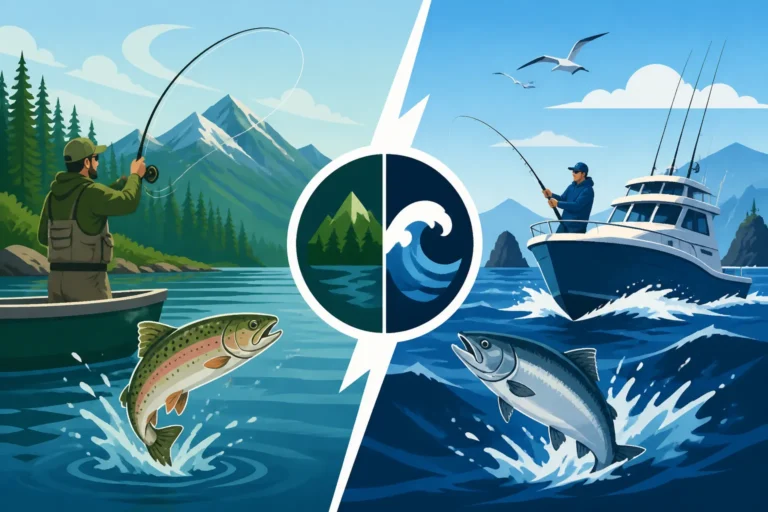
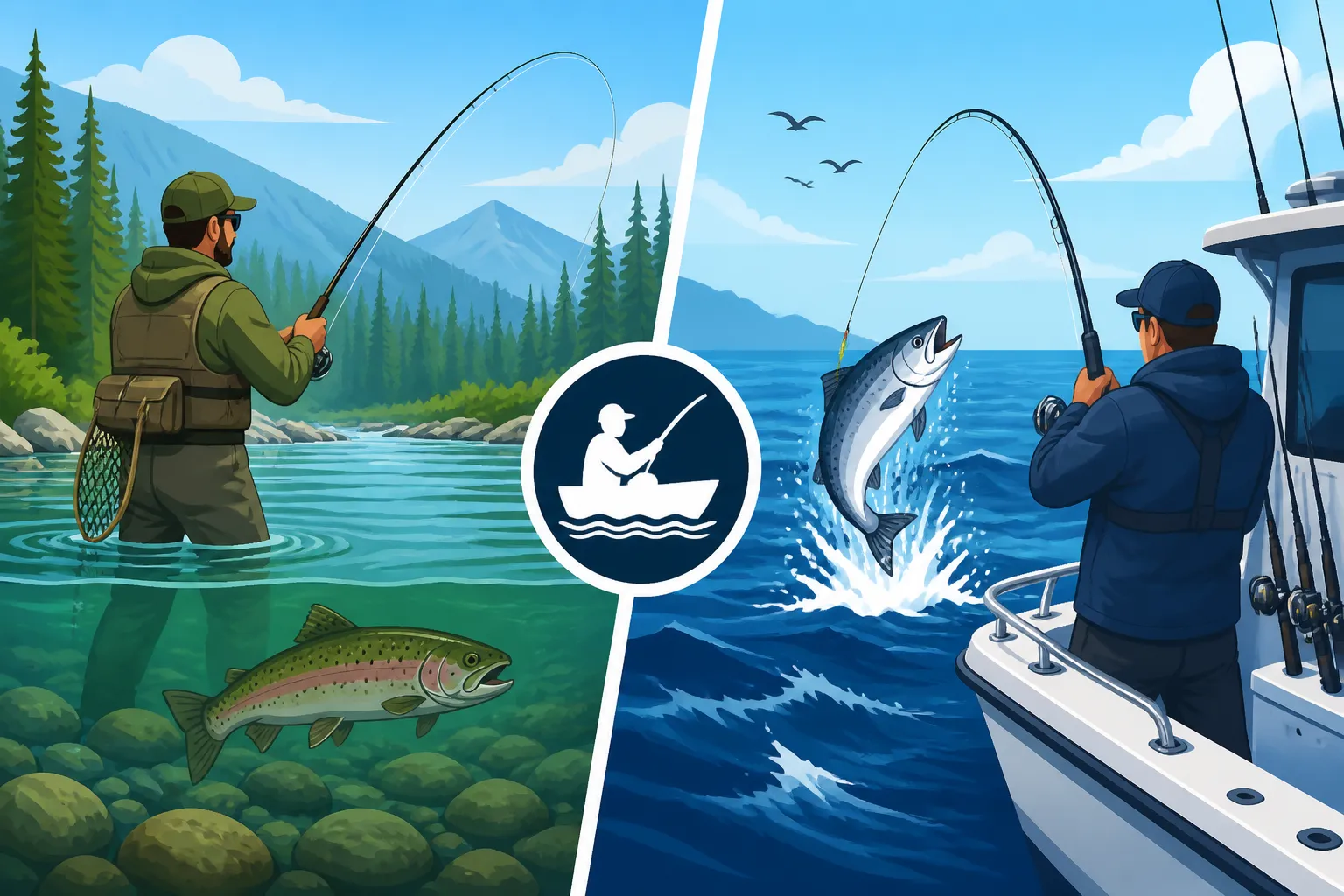
The core distinction between a freshwater guide and an offshore charter boils down to the environment they operate in and, consequently, the entire fishing experience they offer. It's not just about fresh water versus salt water; it's about the unique challenges, opportunities, and specialized skills required for each.
Environment and Target Species
This is perhaps the most obvious difference. A freshwater guide operates on rivers, lakes, and streams. Their domain is intimate, often characterized by flowing water, riparian vegetation, and specific geological features like gravel bars, rock ledges, or deep pools. They target species that complete their life cycles or spend significant portions of it in these inland waters. Think about the iconic white sturgeon, which lives entirely in freshwater, or various trout species like rainbow, cutthroat, and bull trout that inhabit BC's numerous lakes and streams. Even salmon, when targeted by freshwater guides, are typically those that have entered the rivers for their spawning migration.
In stark contrast, an offshore charter plies the vast, open waters of the Pacific Ocean. Their environment is defined by tides, marine currents, offshore banks, kelp forests, and deep-water structures. The species they target are primarily marine, often migratory, and adapted to saltwater life. This includes all five species of Pacific salmon (Chinook, Coho, Sockeye, Pink, Chum) during their ocean feeding phases, as well as bottom dwellers like Pacific halibut, lingcod, and various rockfish species. The hunt for these fish often takes you far from the sight of land, offering a profound sense of wilderness.
Here's a quick comparison to highlight these key differences:
| Feature | Freshwater Guide | Offshore Charter |
|---|---|---|
| Environment | Rivers, lakes, streams, estuaries | Open ocean, coastal waters, deep sea |
| Target Species | Sturgeon, Steelhead, Trout, River Salmon, Kokanee | Ocean Salmon, Halibut, Lingcod, Rockfish |
| Vessel Type | Drift boats, jet boats, rafts, small lake boats | Cabin cruisers, sport fishing yachts, larger vessels |
| Typical Experience | Intimate, often focused on specific runs/pools | Expansive, covering large ocean areas, varied fishing |
| Primary Techniques | Drift fishing, fly fishing, bait casting, bottom fishing | Trolling, jigging, bottom fishing, mooching |
| Local Knowledge Focus | River currents, structure, insect hatches, fish lies | Tides, ocean currents, offshore banks, bait schools |
Equipment and Vessel Types
The specialized equipment reflects the environment. Freshwater guides often utilize smaller, more maneuverable boats like drift boats or jet boats. A drift boat is designed to float silently downriver, allowing anglers to cast into prime spots with minimal disturbance. Jet boats, on the other hand, can navigate shallow, rocky river sections where prop boats would be impossible. For smaller streams or targeting specific species like steelhead, wade fishing is a popular guided option, where the angler is literally standing in the river. Rods and reels vary from light fly rods for trout to heavy-duty conventional gear for sturgeon.
Offshore charters, by necessity, require more substantial vessels. These are typically cabin cruisers or dedicated sport fishing yachts, built to handle open ocean conditions. They are larger, heavier, and designed for stability and comfort over long distances and potentially rough seas. Such boats are equipped with powerful engines, advanced navigation systems, and sophisticated fish finders. The fishing gear is also scaled up: heavy-action rods, large capacity reels, downriggers for precise depth control when trolling for salmon, and heavy jigs for deep-water halibut or lingcod. The sheer power required to battle a large halibut or Chinook salmon demands robust tackle that can withstand immense pressure.
Skills and Local Knowledge Required
The skills a guide brings to the table are also fundamentally different. A freshwater guide must be a master of river dynamics. They need to understand how water flow affects fish behavior, how to "read" the subtle changes in current that indicate a holding lie, and how to safely navigate rapids or shallow gravel bars. Their expertise extends to understanding invertebrate hatches for fly fishing, or the best bait presentations for various river conditions. It's a very tactile and intuitive skill set, honed by countless hours on specific waterways. They might even be an expert in Fly Patterns for BC Steelhead Rivers.
An offshore charter captain, conversely, is a master of the open ocean. Their skill set includes advanced marine navigation, understanding complex tide charts and ocean currents, interpreting sophisticated sonar and radar systems to locate fish and structure, and anticipating rapidly changing weather patterns. They know where the bait balls are congregating, which offshore banks are holding halibut, and how to effectively troll a spread of lines for salmon. Their expertise is more about covering vast areas and understanding the broader marine ecosystem. They need to be knowledgeable about Halibut Habits off the BC Coast across extensive areas. The decisions they make are often on a much larger scale, affecting where the boat travels for many miles, rather than positioning within a specific run or pool. This distinction is further explored in Comparing Charter Boats vs River Guides in BC.
The Overall Fishing Experience
The entire ambiance and feeling of the trip differ significantly. A freshwater guided trip, especially on a river, often feels more intimate and serene. You're immersed in a natural, often forested landscape, with the sounds of the river and local wildlife. The focus can be very specific – perhaps a quiet day fly fishing for trout or the intense concentration of waiting for a sturgeon bite. The pace can be slower, allowing for detailed instruction and appreciation of the surroundings.
An offshore charter, however, is generally more about the grand scale of the ocean. It can be exhilarating, with the vastness of the sea, the potential for big fish battles, and the dynamic environment. There's a sense of adventure in heading out into the open water, perhaps seeing marine wildlife like whales or dolphins. The fishing can be fast-paced, especially during salmon runs, requiring quick action and coordination. It's often a more social experience, with larger boats accommodating more anglers and a crew to assist with the fishing. Ultimately, both offer unique and unforgettable experiences, but cater to different desires and preferences regarding setting, scale, and intensity.
Making the Right Choice for Your BC Fishing Adventure
Deciding between a freshwater guide and an offshore charter isn't about one being inherently "better" than the other. It's purely about aligning the type of experience you desire with what each offers. British Columbia is a fishing paradise, and both options unlock incredible angling opportunities. By considering your personal goals, group dynamics, and practicalities, you can confidently book the adventure that’s perfect for you.
Consider Your Fishing Goals
Before you even start looking at specific operators, take a moment to reflect on what you truly want out of your fishing trip. Are you dreaming of battling a massive white sturgeon that could be older than your grandparents, deep in the heart of the Fraser River? Or is your fantasy reeling in a chrome-bright Chinook salmon while watching eagles soar over the vast Pacific?
- Specific Species: If a particular fish species is your ultimate target, this will be your clearest guide. If it’s steelhead, rainbow trout, or Fraser River sturgeon, a freshwater guide is almost certainly your answer. If it's halibut, ocean-run salmon, or lingcod, an offshore charter is the way to go.
- Environment Preference: Do you prefer the tranquil, often intimate setting of a river or lake, surrounded by forests and mountains? Or does the expansive, wild beauty of the open ocean call to you, with the potential for distant horizons and marine wildlife?
- Learning vs. Catching: Are you primarily interested in learning new techniques, like fly casting on a river, or understanding river hydrology? Or are you focused on maximizing your chances of catching a lot of fish for the cooler, with less emphasis on the "how-to" during the trip itself? Many guides, both freshwater and offshore, are great teachers, but some trips are more instructional than others.
For example, if you've always wanted to learn the art of fly fishing for trout in a pristine mountain stream, a dedicated freshwater fly fishing guide will provide the specialized instruction and local stream knowledge you need. If your goal is to simply put fresh halibut on the dinner table, an offshore charter focused on bottom fishing will be highly efficient.
Group Size and Comfort Preferences
Your group dynamics and comfort expectations play a big role in narrowing down your options.
- Group Size: Freshwater guided trips, especially drift boat or wade fishing excursions, are often ideal for smaller groups – typically 1 to 3 anglers. This allows for more personalized instruction and a more intimate experience. Jet boat sturgeon trips on larger rivers can sometimes accommodate a few more, usually up to 4 or 5. Offshore charters, with their larger vessels, can comfortably accommodate larger groups, often 4 to 10 or more anglers, depending on the boat's size and design. This makes them a great option for family reunions, corporate outings, or a trip with a bigger group of friends.
- Amenities and Creature Comforts: If a heated cabin, an onboard washroom, and a stable platform are high on your priority list, particularly for longer trips or if you're sensitive to motion, an offshore charter will generally offer more amenities. Freshwater boats, while perfectly functional for their purpose, are often more minimalist, focusing on maneuverability and access. For those prone to seasickness, the calmer waters of a river or lake might be a more comfortable option, though many offshore charters can advise on strategies to minimize discomfort on the ocean.
Budget and Time Investment
Naturally, cost and duration are important considerations for any trip planning.
- Cost: While prices vary widely based on location, duration, and the type of fish targeted, both freshwater and offshore guided trips represent an investment. Generally, offshore charters with their larger boats, more complex equipment, and often longer durations can sometimes have a higher price point per trip. However, if you're splitting the cost among a larger group, the per-person expense can become quite reasonable. Freshwater trips might appear less expensive on the surface, but a specialized multi-day steelhead adventure could rival the cost of an offshore trip. It’s always best to get clear quotes and understand what is included. For a more detailed breakdown, consult BC Fishing Charter Cost Guide.
- Time Investment: Both types of trips can range from half-day excursions to multi-day packages. Think about how much time you have available. A half-day freshwater trip might be perfect if you're combining it with other activities, while a full-day or multi-day offshore trip allows for deeper exploration of fishing grounds and a wider variety of species. Booking platforms like FishingBooker can help you compare available options and durations.
By carefully considering these factors, you can effectively choose between a freshwater guide and an offshore charter, ensuring your British Columbia fishing adventure is everything you dreamed of and more.
Disclaimer
This article is for general informational purposes only and does not constitute professional advice. Laws, prices and regulations vary by location and change over time. Consult a qualified professional for guidance on your specific situation.