Lingcod Habits Around Structure
Lingcod, those prehistoric-looking, toothy bottom dwellers, are a truly sought-after prize for many anglers on the British Columbia coast. But if you’ve spent hours jigging or drifting seemingly barren waters, wondering why you’re not getting any bites, you’re not alone. The secret to consistently finding and hooking these formidable fish lies in understanding their deep-rooted connection to underwater structure. This guide is all about unlocking those secrets, helping you pinpoint where lingcod live, how they behave, and the best ways to target them effectively around their preferred hideouts.
The Lingcod's Natural Habitat: A Structure Seeker's Dream
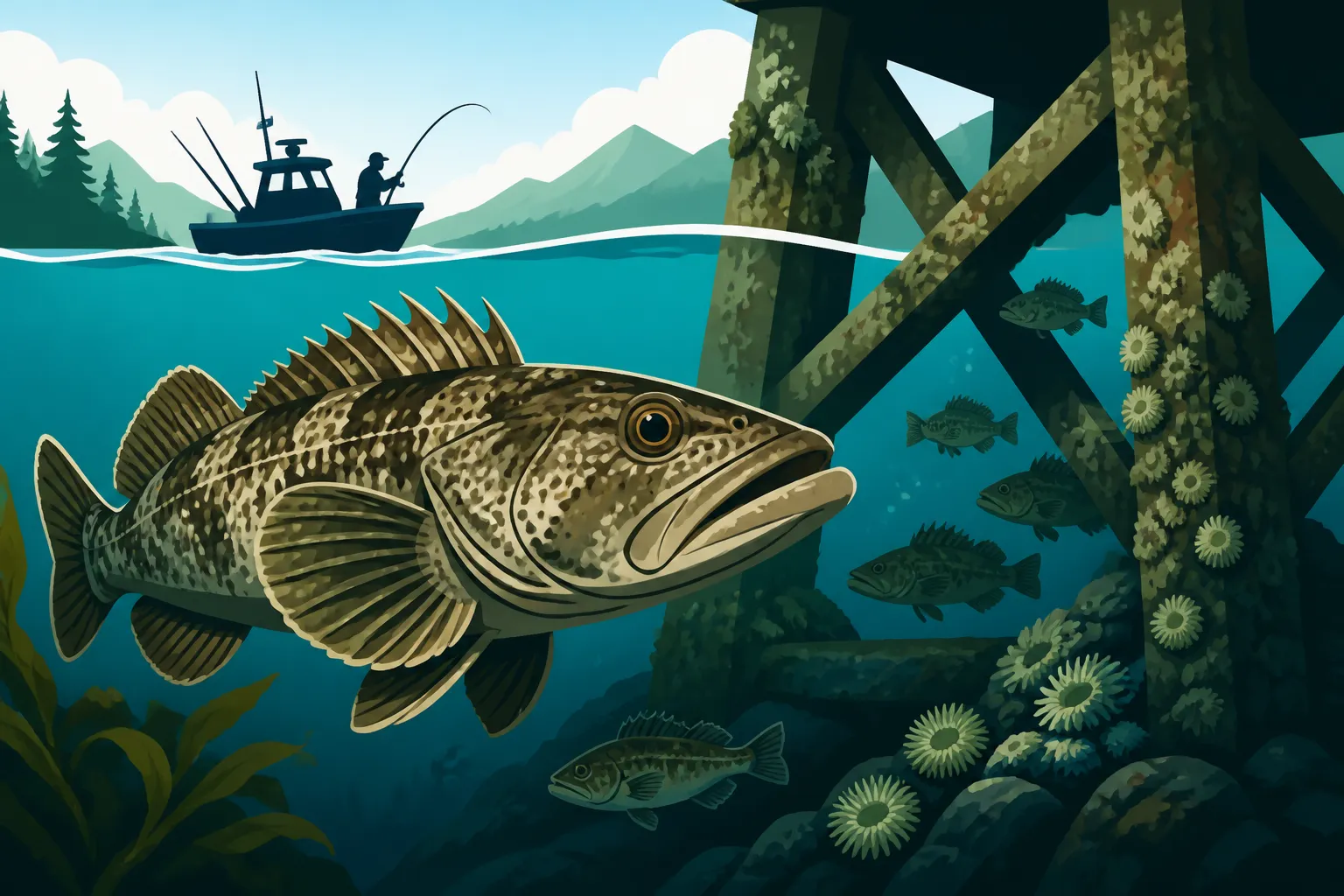
When you picture a lingcod, you might imagine them cruising open waters, but that's far from their reality. These fish are masters of camouflage and ambush, and their entire existence revolves around the comfort, safety, and feeding opportunities that submerged structures provide. Think of structure as their home, their grocery store, and their fortress all rolled into one. Without it, you're unlikely to find them in any significant numbers.
Why Structure is Everything for Lingcod
Lingcod are incredibly territorial and possess a predatory instinct that makes them perfectly suited for life amongst the rocks and reefs. This isn't just a preference; it's a fundamental aspect of their survival. They aren't built for long, fast chases in open water like a salmon might be. Instead, they patiently lie in wait, blending seamlessly with their surroundings, ready to explode on unsuspecting prey that dares to swim too close. The crags, crevices, and ledges of underwater structure provide the perfect ambush points, allowing them to remain hidden until the opportune moment.
Beyond hunting, structure offers crucial protection. Strong tidal currents, which are common in many of BC's productive lingcod grounds, can be exhausting for fish to fight constantly. Nestling into a sheltered spot behind a large rock or in a deep cut allows them to conserve energy. Furthermore, these rocky havens provide refuge from larger predators, although adult lingcod have few natural enemies themselves. Most importantly, structure attracts baitfish and other marine life – the very foundation of the lingcod's diet. Where there is structure, there is typically a thriving ecosystem, and the lingcod are at the top of that local food chain.
Types of Submerged Structures Lingcod Love
When we talk about "structure," it's not just one thing. British Columbia's diverse coastline offers a myriad of underwater features that appeal to lingcod, from purely natural formations to man-made additions that have become integrated into the marine environment. Understanding these different types of structures is the first step in narrowing down your search.
Natural reefs, rock piles, and ledges are classic lingcod hotspots. These irregular bottom contours provide countless nooks and crannies for them to hide in. Think of submarine pinnacles rising from the seafloor, or sharp drop-offs where the bottom plummets into deeper water. These areas create turbulence and upwellings that bring nutrients, attracting a rich variety of smaller fish and invertebrates, which in turn attract the lingcod. Kelp forests and eelgrass beds also fall into this category, acting as underwater jungles that not only provide shelter but also host a vibrant community of small baitfish and crabs that lingcod eagerly prey upon. The dense cover also offers protection for juvenile lingcod.
Beyond nature's creations, artificial structures can be surprisingly productive. Old shipwrecks, for example, become artificial reefs over time, accumulating marine growth and attracting fish. Disused pilings from old docks, bridge abutments, and even submerged debris can become magnets for lingcod looking for a new home. While you might not specifically target these, knowing their potential can give you an edge. Many anglers use detailed hydrographic maps and advanced sonar systems to identify these promising features before they even drop a line.
Understanding Lingcod Behavior within Structure
To truly excel at catching lingcod, it's not enough to just find structure; you need to understand how these fish interact with it. Their behavior is intrinsically linked to their environment, dictating where they position themselves, what they eat, and how they react to your presentation. This understanding will help you anticipate their movements and refine your fishing approach.
Ambush Predators: Patience and Positioning
Lingcod are the quintessential ambush predators. Unlike species that might actively chase schools of baitfish across open water, lingcod prefer to stake out a strategic position and wait. They are masters of camouflage, often blending so perfectly with the rocky bottom that they are nearly invisible to the untrained eye – and to their unsuspecting prey. Their mottled brown, green, or grey coloration allows them to disappear among the rocks and kelp. When a baitfish, crab, or even a smaller rockfish swims by, the lingcod launches a sudden, powerful strike, engulfing its prey with its formidable jaws.
This behavior means that successful lingcod fishing often requires patience. You're not necessarily looking for actively feeding fish that are zipping around; you're trying to present a tempting meal directly into their strike zone. Lingcod are also highly territorial, particularly the larger females. Once they claim a prime piece of structure, they're often reluctant to leave it. This means if you catch a lingcod from a specific rock pile or ledge, there's a good chance another one, or even the same one if released, will eventually take up residence there again. Your ability to get your lure or bait into the precise position they're waiting in is paramount.
Seasonal Movements and Depth Preferences
Lingcod aren't completely static within their structural homes; they do exhibit seasonal movements and adjust their depth preferences based on their life cycle and environmental factors. Understanding these shifts can significantly improve your chances of finding them. During the colder winter months, particularly from December through March, lingcod move into deeper water to spawn. They seek out crevices and rocky ledges, often quite deep, where the females lay their large egg masses, which the males then guard fiercely. Targeting these deep-water structures during this period can be productive, but it's important to be mindful of conservation, especially regarding nesting males.
As spring arrives and the water begins to warm, lingcod transition into more active feeding modes and often move shallower. From late spring through summer and into early fall, they can be found in a wider range of depths, from relatively shallow reefs of 20-50 feet to deeper structures in 100-200 feet. This is generally the prime time for targeting them, as they are actively hunting and recuperating after spawning. Water temperature plays a significant role in their activity levels, as do strong tidal currents which can push baitfish closer to their ambush points. A good general rule is that while they appreciate strong currents for delivering food, they'll usually position themselves on the leeward side of structure to avoid expending too much energy.
Their Diet: What They're Hunting Around Structure
Lingcod are opportunistic and voracious eaters, and their diet is a direct reflection of the marine life that thrives around the structures they inhabit. They're not particularly picky, which is great news for anglers, but understanding their preferred menu items can help you choose the most effective baits and lures. Crabs, shrimp, and octopus are high on their list, making anything that imitates these creatures a potential winner. A jig or soft plastic presented close to the bottom, mimicking a scurrying crab or darting shrimp, is often irresistible.
However, fish are arguably their primary food source. Herring and sand lance are staple baitfish along the BC coast, and lingcod will readily consume them. They also have a particular fondness for rockfish, especially smaller individuals. This is important to remember because many of the same rocky structures that hold lingcod also hold various species of rockfish. In fact, it's not uncommon to catch a lingcod with a rockfish in its mouth or stomach. Surprisingly, larger lingcod are also known to be cannibalistic, preying on smaller lingcod. This just reinforces their aggressive nature and their position as top predators within their chosen habitat. When choosing your presentation, consider what prey would naturally be found hiding or swimming near the specific structure you're fishing.
Locating Productive Lingcod Structure
Finding the right structure is often half the battle when it comes to lingcod. It's not about randomly dropping a line; it's about strategic reconnaissance and understanding the underwater topography. Modern electronics have made this significantly easier, but nothing beats knowing how to interpret what you're seeing and understanding the dynamics of the water.
Reading Charts and Sonar for Prime Spots
Before you even leave the dock, paper charts or, more commonly today, electronic chartplotters are your first line of defense in the hunt for lingcod structure. Look for areas marked with irregular bottom contours, depth changes, and symbols indicating rocks, reefs, or wrecks. Humps, pinnacles, and sharp drop-offs are key indicators of prime lingcod habitat. These features create eddies and current breaks, concentrating baitfish and offering perfect ambush points.
Once you're on the water, your sonar, or fishfinder, becomes your best friend. Start by scanning the areas you identified on your charts. You're not necessarily looking for huge schools of lingcod arches – remember, they are often solitary and glued to the bottom. Instead, you're looking for significant bottom structure itself: jagged lines indicating rocks, abrupt changes in depth, and perhaps smaller fish arches very close to that bottom structure, which could be baitfish or even lingcod themselves. Side-imaging sonar is a phenomenal tool for lingcod fishing, allowing you to "see" a wider swath of the seafloor on either side of your boat, uncovering hidden rock piles and ledges that might be missed directly under the transducer. Many anglers also mark promising structure on their GPS, creating a personal "milk run" of proven lingcod spots over time.
Tidal Currents and Their Influence on Structure Fishing
Tidal currents are a double-edged sword when fishing for lingcod around structure. On one hand, moving water is crucial; it brings in fresh bait, oxygenates the water, and often increases the feeding activity of lingcod. On the other hand, too much current can make it incredibly difficult to present your lure or bait effectively and maintain bottom contact. The ideal scenario often involves a moderate to strong current flow, but not so strong that you're constantly fighting it.
Lingcod will typically position themselves on the leeward side of structure – the side protected from the main force of the current. This allows them to conserve energy while waiting for prey to be swept past them. Therefore, when you're drifting or anchoring, you want to position your boat so that your lure or bait drifts into or along the current-facing side or the top of the structure, allowing it to naturally settle into those leeward ambush points. Fishing during a moderate tidal exchange, either on an incoming or outgoing tide, is generally more productive than during slack tide, when feeding activity tends to slow. Understanding Best Time of Day to Catch Salmon on an Incoming Tide might also offer transferable insights into how tidal movements affect predator feeding.
Signs of Life: What to Look For
Beyond electronics, observant anglers look for other signs that indicate productive lingcod waters. While lingcod themselves might be camouflaged, their food sources are not always so discreet. Keeping an eye on your sounder for schools of baitfish, such as herring or sand lance, actively schooling near structure is a huge clue. If the bait is there, the predators won't be far behind. These baitfish might appear as dense clouds or schools of smaller arches on your screen.
Bird activity can also be a tell-tale sign. Diving seabirds, particularly gulls, murres, or cormorants, often indicate that baitfish are being driven to the surface by predatory fish from below. While this might more directly point to salmon, lingcod are often part of the deeper food chain commotion. Even observing marine mammals like seals or sea lions in an area can suggest a healthy fish population, as they too are targeting the same baitfish that lingcod consume. Lastly, always be aware of your surroundings and adhere to regulations. Knowing the BC Rockfish Conservation Area Rules is critical, as you'll often encounter rockfish in the same habitats, and many species are protected or have strict limits.
Effective Fishing Techniques for Structure-Dwelling Lingcod
Now that we understand where lingcod hang out and why, let's talk about how to get your lure or bait right in front of them. Successful lingcod fishing around structure often requires specific techniques that account for their ambush nature and their close proximity to the bottom.
Jigging the Depths: Vertical Presentations
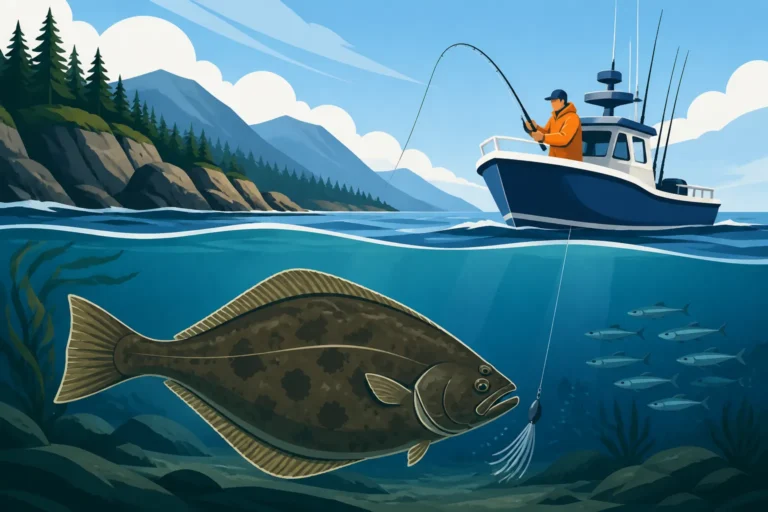
Jigging is arguably one of the most effective ways to target lingcod around structure, especially in deeper water. The key is a vertical presentation that mimics injured prey or simply makes enough commotion to attract attention. Heavy metal jigs, often ranging from 4 to 16 ounces depending on depth and current, are excellent. Pair these with robust soft plastics, such as large swimbaits, grubs, or curly-tail worms rigged on heavy lead heads. You can find a fantastic array of these types of lures on Amazon, making it easy to experiment with different colors and sizes.
The technique involves dropping your jig straight down to the bottom and then working it with a series of lifts and drops. Many anglers employ a "snap jigging" motion, lifting the rod tip sharply a few feet and then letting the jig flutter back down on a semi-slack line. The bite often occurs on the drop, so be ready. Maintaining contact with the bottom is crucial; lingcod are rarely suspended high above structure. You'll want to feel your jig tap the bottom frequently, then lift it just enough to keep it from getting snagged, usually a foot or two, before letting it drop again. If you're not hitting bottom, you're probably not in the strike zone.
Drifting with Baits: Natural Presentations
While jigs are fantastic, sometimes a natural bait presentation is exactly what it takes to entice a wary lingcod. Drifting with whole or cut bait allows you to cover more ground along a piece of structure and offers a tempting, natural scent trail. Herring, mackerel, and octopus are all excellent choices. You can rig these on a large leadhead jig, a stout single hook with a heavy sinker a foot or two above it, or even a basic dropper rig. For insights on what type of bait is effective, you might want to look into Best Bait for Lingcod Near Structure.
The trick with drifting is to control your boat's speed and direction to ensure your bait stays in the strike zone, close to the bottom, for as long as possible. Use your motor to slow your drift if the current is too fast, or deploy a drift sock. Allow your bait to bounce gently along the bottom, mimicking a struggling or foraging creature. The natural scent and action of real bait can be irresistible, especially on days when the fish are less aggressive. This method is particularly effective when you're covering a large, irregularly shaped reef system.
Trolling Structure Edges: Covering Ground
While less common for directly targeting lingcod on structure, trolling can be very effective for hitting the edges of reefs, rock walls, or kelp beds, particularly for fish that might be patrolling these transitional zones. This technique is often used when targeting salmon, but lingcod are frequently caught as a bonus. The key is to use downriggers to present your lure or bait precisely at the depth of the structure's edge or just above it.
Large spoons, hootchies (squid skirts), or oversized swimbaits are good choices when trolling. The action of these lures can effectively imitate larger baitfish that lingcod might be hunting. Maintain a slow, steady speed, and be sure to vary your depth slightly to cover the water column near the structure's contours. While you might not be directly bumping the bottom, you're targeting those areas where lingcod might move out from their ambush points to intercept passing prey. This method can also be a great way to locate new productive areas when you're exploring unfamiliar waters.
Essential Gear and Safety Considerations
Success in lingcod fishing, especially around challenging structure, hinges on having the right equipment and prioritizing safety. These are powerful fish, and the environment they inhabit can be unforgiving on tackle.
Rods, Reels, and Line for Structure Fishing
Given the lingcod's size and strength, and the rugged, snag-prone environments they call home, heavy-duty gear is a must. You'll want a stout rod, typically a medium-heavy to heavy action rod with a strong backbone, capable of handling heavy weights and powerful fish. A 7 to 9-foot rod is common, offering both casting distance and leverage. The reel should be a high-capacity baitcasting or conventional reel, capable of holding a significant amount of line and delivering reliable drag pressure. When selecting your reel, consider models that are corrosion-resistant, as saltwater environments are harsh.
Braided line is almost universally preferred for lingcod fishing around structure. Its lack of stretch provides incredible sensitivity, allowing you to feel every tap on the bottom and every subtle bite. It also offers superior strength for its diameter, which is crucial when trying to pull a stubborn lingcod out of a rock crevice. Use a heavy fluorocarbon leader, typically 50-80 lb test, for its abrasion resistance against sharp rocks and the lingcod's formidable teeth. The clarity of fluorocarbon also makes it less visible underwater. For a deeper dive into robust gear, you might find some useful concepts in Best Rod Setup for Fraser River Sturgeon, even though it's for a different species, the need for heavy-duty setups remains similar.
Lures and Baits: The Lingcod's Menu
As we discussed, lingcod aren't terribly picky, but having a variety of lures and baits on hand is a smart strategy. For artificial presentations, focus on large metal jigs, heavy soft plastic swimbaits, grubs, and curly-tail worms rigged on sturdy lead heads. Colors can vary, but natural hues like greens, browns, and whites often work well, as do brighter chartreuses or oranges in murkier water or low light. Consider what baitfish are prevalent in the area you're fishing and try to match the hatch. You can easily stock up on a diverse range of jigs and soft plastics on Amazon before your trip, ensuring you have options for different conditions.
When it comes to natural baits, fresh is always best. Whole or cut herring, mackerel, or octopus pieces are highly effective. You can also try squid or even smaller live rockfish (if legal and abundant, check local regulations carefully). Regardless of whether you're using artificial or natural bait, ensure your hooks are sharp and strong enough to withstand a lingcod's powerful jaws and tenacious fight. Carrying extra terminal tackle like leadheads, sinkers, and leader material is also crucial, as snags are an inevitable part of structure fishing.
Safety and Responsible Angling Around Structure
Fishing around structure, especially in coastal BC waters with strong currents and unpredictable weather, always demands a focus on safety. Be constantly aware of your surroundings, including other boats, potential hazards, and changing weather conditions. Snags are a given when fishing lingcod habitat, so learn proper de-snagging techniques to minimize lost gear and frustration. Sometimes, simply backing off the snag and jigging your line vigorously can free your lure.
Practicing responsible angling is paramount for the health of lingcod populations. Always use barbless hooks to facilitate easy and quick release of undersized or unwanted fish, minimizing harm. It's also vital to be intimately familiar with the specific regulations for lingcod, including BC Lingcod Minimum Size Limit and daily bag limits. Remember that many of the structures lingcod inhabit are also home to various rockfish species, many of which are protected or have very strict regulations due to their slow growth and longevity. Always know the BC Rockfish Conservation Area Rules and be prepared to identify and release rockfish quickly and safely, especially if caught from deeper water. Finally, never go out on the water without essential safety equipment, which is comprehensively covered in resources like BC Required Boat Safety Equipment Checklist. A well-prepared angler is a safe and successful angler.
Here's a quick comparison of common lingcod fishing methods around structure:
| Technique | Description | Pros | Cons | Best For |
|---|---|---|---|---|
| Vertical Jigging | Dropping heavy metal or soft plastic jigs to the bottom and working them up. | Excellent bottom contact, highly effective for active fish. | Prone to snags, requires constant attention. | Deep water, targeting precise structure, when fish are aggressively feeding. |
| Drifting with Bait | Allowing natural bait (herring, octopus) to drift along the bottom. | Natural presentation, scent trail, covers more ground on structure. | Slower to react to bites, current management can be tricky. | Large reef systems, when fish are finicky or less active. |
| Trolling Edges | Using downriggers to present lures/baits along structure boundaries. | Covers ground efficiently, often catches other species (salmon). | Less direct bottom contact, not ideal for fish deep in structure. | Locating new spots, targeting patrolling lingcod on structure perimeters. |
Disclaimer
This article is for general informational purposes only and does not constitute professional advice. Laws, prices and regulations vary by location and change over time. Consult a qualified professional for guidance on your specific situation.