How to pattern trout on an unfamiliar BC lake
There’s a unique mix of excitement and trepidation that washes over you when you pull up to a completely unfamiliar lake in British Columbia, rod in hand. The water stretches out, shimmering, full of promise, but also a daunting expanse of the unknown. Where do you even begin? This guide is all about demystifying that initial overwhelming feeling, helping you understand how to "read" a new lake and develop a pattern to consistently find trout, even when you've never cast a line there before.
Understanding the Basics of BC Trout Behavior
Before you even think about casting, it's crucial to understand what makes trout tick. They're creatures of habit, driven by fundamental needs: food, comfort, and safety. If you can tap into these instincts, you're halfway to patterning them.
Water Temperature and Oxygen Levels
Trout, especially the beautiful native and stocked rainbow trout we have in BC, are cold-water fish. They thrive in specific temperature ranges, typically between 10-18°C (50-65°F). Water that's too warm becomes uncomfortable and, more critically, holds less dissolved oxygen, which trout absolutely need to survive.
Think about a hot summer day. Where would you go to cool off? Trout do the same. They'll seek out deeper, cooler sections of the lake, often near underwater springs, inlets, or thermoclines (layers where water temperature changes rapidly). Conversely, in cooler seasons or early mornings, they might venture into shallower, sun-warmed areas to feed. Understanding this relationship between temperature and oxygen is your first clue to locating them.
Forage and Food Sources
Trout are opportunistic feeders. Their diet changes throughout the year and even throughout the day, depending on what's available in the lake. This could be anything from aquatic insects (nymphs, larva, emergers, adults), terrestrial insects that fall into the water (grasshoppers, ants), leeches, minnows, or even smaller fish.
When you're trying to pattern trout, you're essentially trying to figure out what they're eating and where that food source is concentrated. If there's a prolific mayfly hatch, trout will be focused on those insects. If the lake has a healthy population of baitfish, bigger trout will be lurking in areas where those baitfish congregate. Observing what's flying around, what's in the shallow water, or even checking the stomach contents of a legally kept fish can give you invaluable clues. This is why knowing How to Catch Rainbow Trout in BC Lakes often comes down to understanding what they are feeding on.
Seasonal Movements
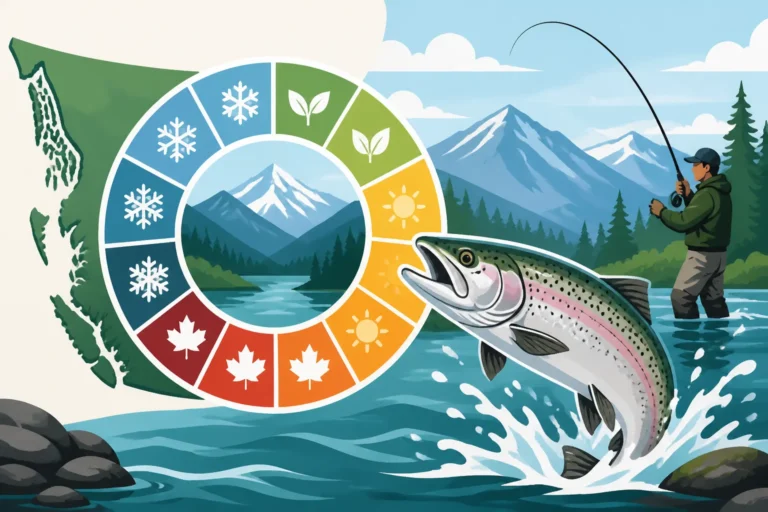
Trout don't stay in one place all year. Their movements are largely dictated by the water temperature and food availability we just discussed. In spring, as ice melts and water warms, trout will move into shallower areas to feed on emerging insects and, for some species, to spawn. This is a fantastic time for shore anglers.
As summer progresses and surface waters heat up, trout retreat to deeper, cooler havens. They might only come into shallower zones during low-light hours like dawn and dusk. Fall sees them moving back towards shallower waters as the lake cools down again, often aggressively feeding to bulk up for winter. During winter, especially under ice, they'll typically be found in deeper, stable water, becoming less active but still catchable. Knowing Best Time of Year to Fish in BC can save you a lot of guesswork.
Reading the Lake: Identifying Key Holding and Feeding Areas
Now that we know why trout move, let's look at where they move. A lake isn't just a big bowl of water; it has contours, features, and hidden structure that act as fish magnets.
Shoreline Features and Structure
When you first arrive, take a good look at the shoreline. What do you see? Drop-offs, rocky points, submerged logs, weed beds, reedy areas, and even overhanging trees can all be prime trout habitat.
- Drop-offs: These are crucial. Trout love the safety of deep water but will push up to the edge of a drop-off to ambush prey in shallower zones. Look for areas where the bank falls away quickly into deeper water.
- Rocky Points: These often extend into the lake, creating current breaks and attracting baitfish. Trout will hold on the down-current side, waiting.
- Weed Beds: These are nurseries for insects and minnows, providing both food and cover for trout. Casting to the edges of weed lines is often very productive.
- Overhanging Trees/Structures: Provide shade and drop terrestrial insects onto the surface, creating natural feeding stations.
Even something as simple as a small cove or a sheltered bay can be a holding area, especially if it offers protection from wind or strong sun. Don't be afraid to walk the shoreline if access allows, looking for these features. If you're looking for Best public fishing access near Kamloops or Best public fishing access near Nelson, these shoreline features will be key to spotting promising water.
Submerged Structure and Depth
Much of a lake's best fishing structure is hidden below the surface. This includes underwater humps, submerged islands, sunken timber, rock piles, and even old roadbeds or foundations from flooded areas. These features provide cover, ambush points, and often host their own ecosystems of aquatic life.
Sonar or a fish finder is an invaluable tool here, but you can also infer submerged structure. For example, a rocky point on shore often continues as a rock bar underwater. A steep bank on shore likely indicates a steep drop-off below the surface. Understanding depth is critical for trout patterning, especially in warmer months when fish retreat to cooler, deeper water. A thermocline, that invisible layer where water temperature changes dramatically, is often where trout suspend, finding that perfect comfort zone.
Inlets, Outlets, and Current
Any lake with moving water, whether it's an inlet stream, an outlet river, or even significant wind-driven current, will concentrate trout. Moving water brings in fresh oxygen, washes in food, and provides a natural highway for migrating fish.
- Inlets: Streams flowing into a lake are absolute magnets, especially during hatches or when baitfish are moving in. They bring cooler, oxygenated water, and often carry nutrients that attract insects and smaller fish. Trout will stack up near these areas, particularly at the mouth where the stream meets the lake.
- Outlets: Similar to inlets, outlets create a current, drawing fish that might be thinking about leaving the lake or simply holding in the moving water. The bottleneck effect can concentrate prey.
- Wind-driven Current: Don't underestimate the wind. A sustained wind pushing across a lake creates current and often concentrates baitfish and plankton on the leeward shore. This can be a prime feeding zone, as the trout follow the food. If you're trying Trolling Techniques for BC Lake Trout, paying attention to these areas is crucial.
Practical Strategies for Patterning Trout on a New Lake
Okay, you've surveyed the scene, you know what trout generally like. Now, how do you put that into action on the water?
Start Broad, Then Narrow Down
When tackling a new lake, resist the urge to immediately motor to what looks like a good spot and camp there all day. Start with a reconnaissance mission. Divide the lake into sections and systematically explore them.
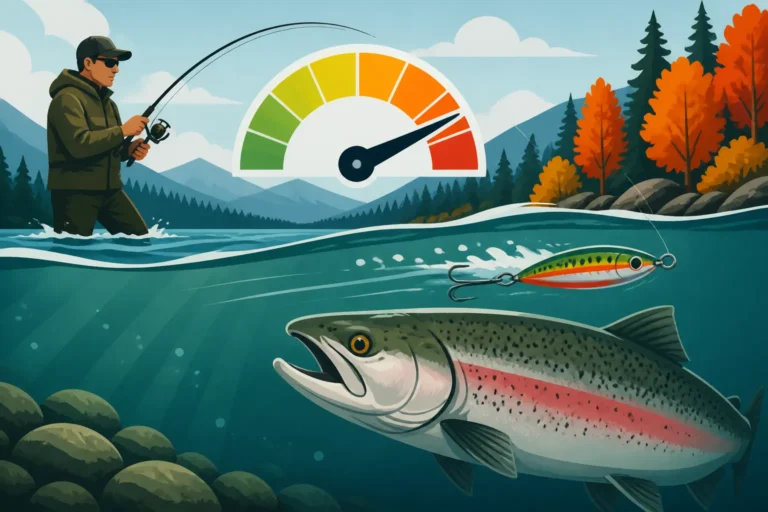
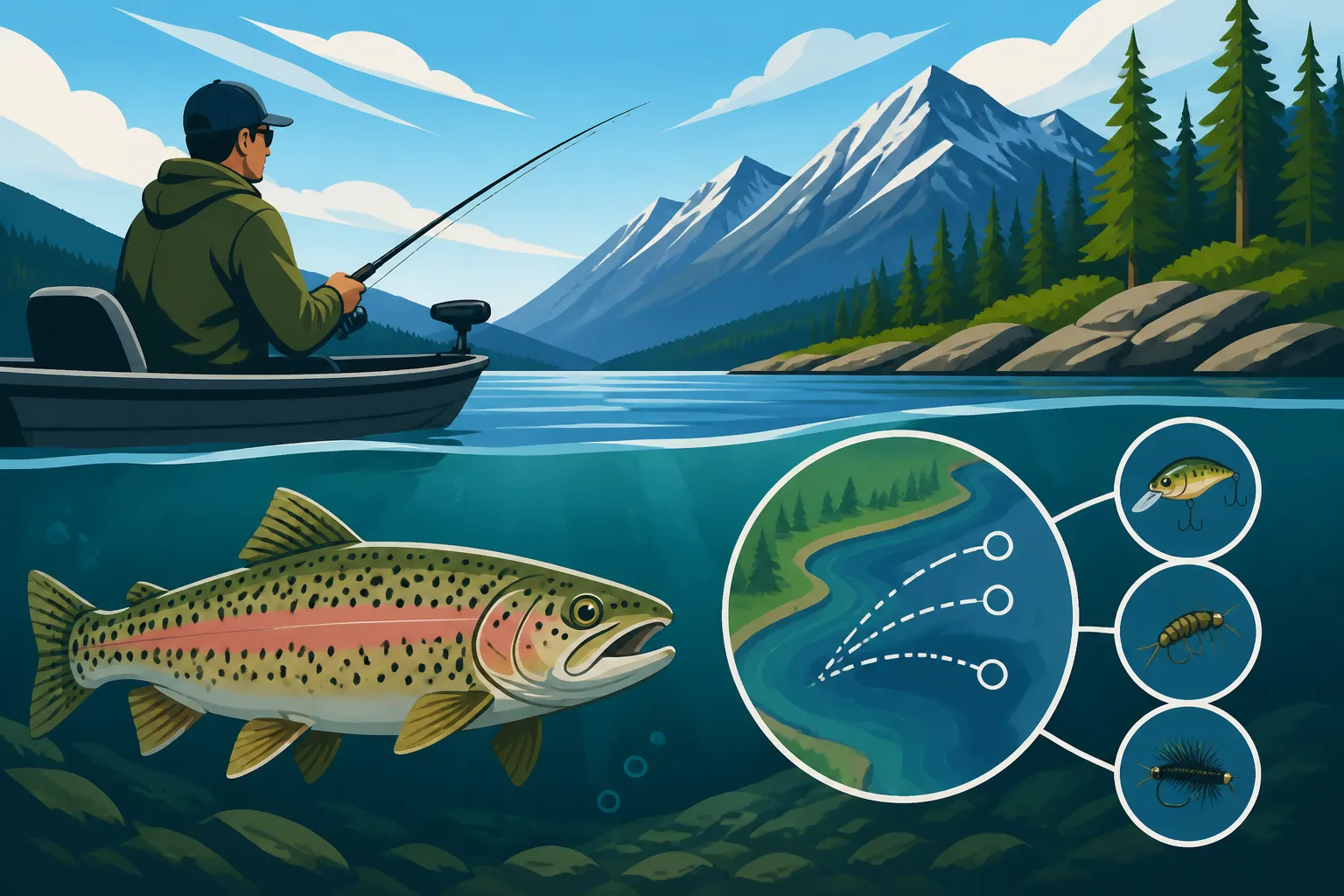
Begin by fishing several different types of structure: a shallow bay, a deep drop-off, a weed line, a rocky point. Use a presentation that allows you to cover water quickly, like trolling a spoon or casting and retrieving a spinner or streamer. Don't spend more than 15-20 minutes in any single spot if you're not getting any bites. The goal at this stage isn't necessarily to catch fish, but to find fish. Pay attention to every little detail: where you saw a splash, where your sonar marked fish, where you got a bump, even if you didn't hook up. Once you get a strike or two, that's your first piece of the pattern puzzle. Now you can focus your efforts and narrow down your search to similar areas.
Employ Different Techniques and Baits
Trout can be finicky. What they want one day, or even one hour, they might ignore the next. On an unfamiliar lake, you have no baseline, so versatility is your friend. Don't stick to just one lure or one technique.
Carry a diverse tackle box that includes:
- Spinners and Spoons: Great for covering water and mimicking baitfish. Different colors and sizes can make a huge difference. You can find a wide variety of these on Amazon.
- Powerbait/Worms: Effective for still fishing, especially for stocked trout.
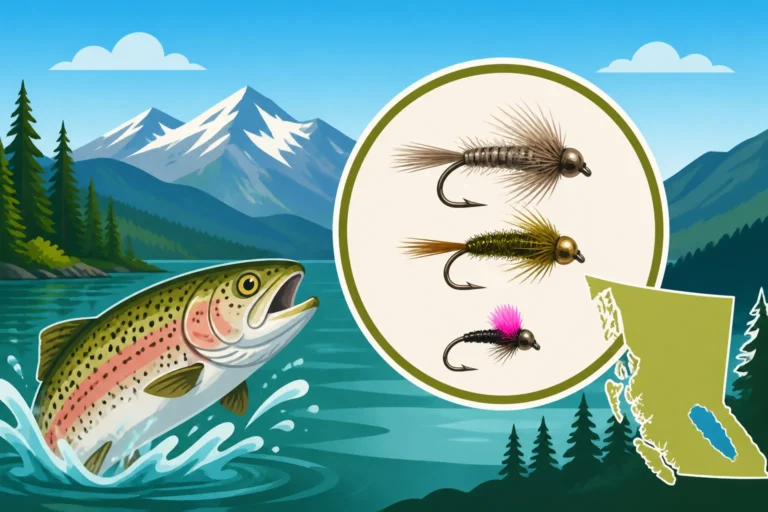
- Fly Fishing Gear: If you're a fly angler, bring a range of flies – nymphs, dry flies, and streamers – to imitate various insect stages and minnows. This is particularly useful in lakes where Native trout species found in BC thrive.
- Jigs: Can be deadly when trout are holding deep, especially if tipped with a worm or scent.
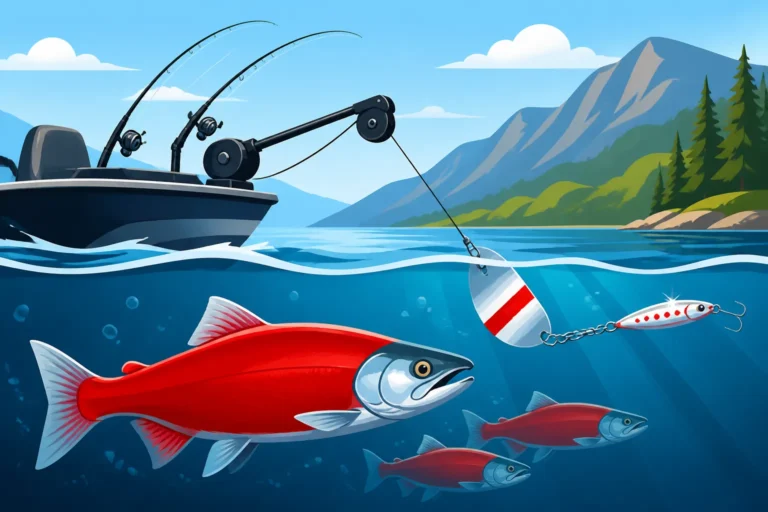
Try different depths, different retrieval speeds, and different presentations. If you're trolling, vary your speed and depth. If you're casting, try retrieving fast, then slow, then with pauses. Sometimes, the slightest change is all it takes to trigger a strike. For instance, if you're targeting kokanee, specific Best Kokanee Trolling Techniques for Okanagan Lake might be exactly what you need.
Observe and Adapt
This is perhaps the most crucial aspect of patterning. The lake is constantly telling you a story; you just need to listen. What are the birds doing? Are there fish jumping? What insects are hatching?
- Watch for surface activity: Rising fish indicate a surface hatch. Fish splashing frantically might be chasing baitfish. This tells you what depth and type of prey they're targeting.
- Pay attention to environmental cues: A sudden drop in temperature, a change in wind direction, or an approaching storm can all alter fish behavior. Be prepared to adapt your strategy.
- Keep a mental (or actual) log: Note where you caught fish, what time of day it was, what the weather was like, what bait you used, and what type of structure you were fishing. Over time, these observations will form a clear pattern for that specific lake. You'll start to understand its nuances. This data will be gold on your next trip!
Leveraging Tools and Technology for Unfamiliar Waters
While observation and experience are paramount, modern tools and technology can significantly shorten the learning curve on a new lake.
Maps and Sonar
Before you even launch your boat (or hit the shore), consult detailed contour maps of the lake. Many fishing apps and even basic GPS units come with built-in lake maps. These maps reveal drop-offs, humps, old creek channels, and other submerged features that are invisible from the surface. A depth contour map is like a cheat sheet for finding structure. You can often find waterproof fishing maps for specific BC regions, or download digital versions from various outdoor retailers or even Amazon.
Once on the water, a good fish finder (sonar) becomes your eyes beneath the surface. It will show you depth, water temperature, submerged structure, and, crucially, marks that indicate fish. Don't just look for "arches"; learn to interpret what you're seeing. Are the fish suspended in open water (likely kokanee or rainbow chasing bait)? Are they tight to the bottom (perhaps burbot or bull trout)? Are they holding near a submerged log? Combine your map with your sonar to pinpoint those sweet spots.
Tackle Box Essentials
Your tackle box should be a versatile arsenal when exploring new water. You can't predict what the trout will be keying on, so having options is vital.
Here's a quick checklist of versatile essentials:
| Item Type | Purpose | Examples |
|---|---|---|
| Lures | Mimic baitfish, provoke strikes | Spinners (Mepps, Panther Martin), Spoons (Krocodile, Len Thompson), Small crankbaits |
| Soft Plastics/Bait | Scent and natural presentation, still fishing | Powerbait, Worms (live or Gulp!), Marabou jigs |
| Weights | Get lures/bait to desired depth, control drift | Split shot, Bullet weights, Bottom bouncers |
| Hooks | Various sizes for different baits/lures | Assorted single hooks, Treble hooks (where legal) |
| Leaders/Line | Stealth, strength, abrasion resistance | Fluorocarbon leader (4-8 lb), Monofilament main line |
| Terminal Tackle | Swivels, snaps, bobbers | Barrel swivels, Snap swivels, Slip bobbers |
| Tools | Essential for handling fish and tackle | Pliers, Line cutters, Net, Fish gripper |
Having a variety of colors, sizes, and actions for your lures is key. Sometimes a subtle shift from a silver spoon to a gold one can make all the difference. Always check local regulations for any restrictions on hook types or bait use in specific lakes.
Safety First
Exploring unfamiliar waters means being extra cautious. Always prioritize safety, especially when alone.
- Tell someone your plan: Let a friend or family member know where you're going and when you expect to return.
- Weather awareness: BC weather can change quickly. Check the forecast before you go and be prepared for rain, wind, or sudden temperature drops.
- Appropriate gear: Dress in layers. Bring enough food and water. If boating, ensure you have all required safety equipment, including a Life Jacket Requirements for BC Boaters.
- First-aid kit: Always carry a basic first-aid kit, even for a short trip.
- Navigation: A fully charged phone with offline maps, or a dedicated GPS unit, is invaluable in case you get disoriented.
By combining an understanding of trout behavior with keen observation, strategic exploration, and the right tools, you'll soon be unlocking the secrets of any unfamiliar BC lake. It takes patience and persistence, but the reward of consistently finding fish in new waters is an experience every angler cherishes.
Disclaimer
This article is for general informational purposes only and does not constitute professional advice. Laws, prices and regulations vary by location and change over time. Consult a qualified professional for guidance on your specific situation.