How to catch bass around submerged timber
For any angler chasing bass in British Columbia, there’s a common frustration: you know those clever fish love hiding in the gnarly, sunken cover, but actually getting a lure in there and, more importantly, out with a fish attached, feels like a monumental challenge. It often results in snagged lines, lost lures, and a whole lot of head-shaking. This guide is all about cutting through that frustration, offering practical strategies and gear advice to help you confidently target and successfully land bass from their submerged timber strongholds in BC's lakes and ponds.
Understanding Submerged Timber and Bass Behavior
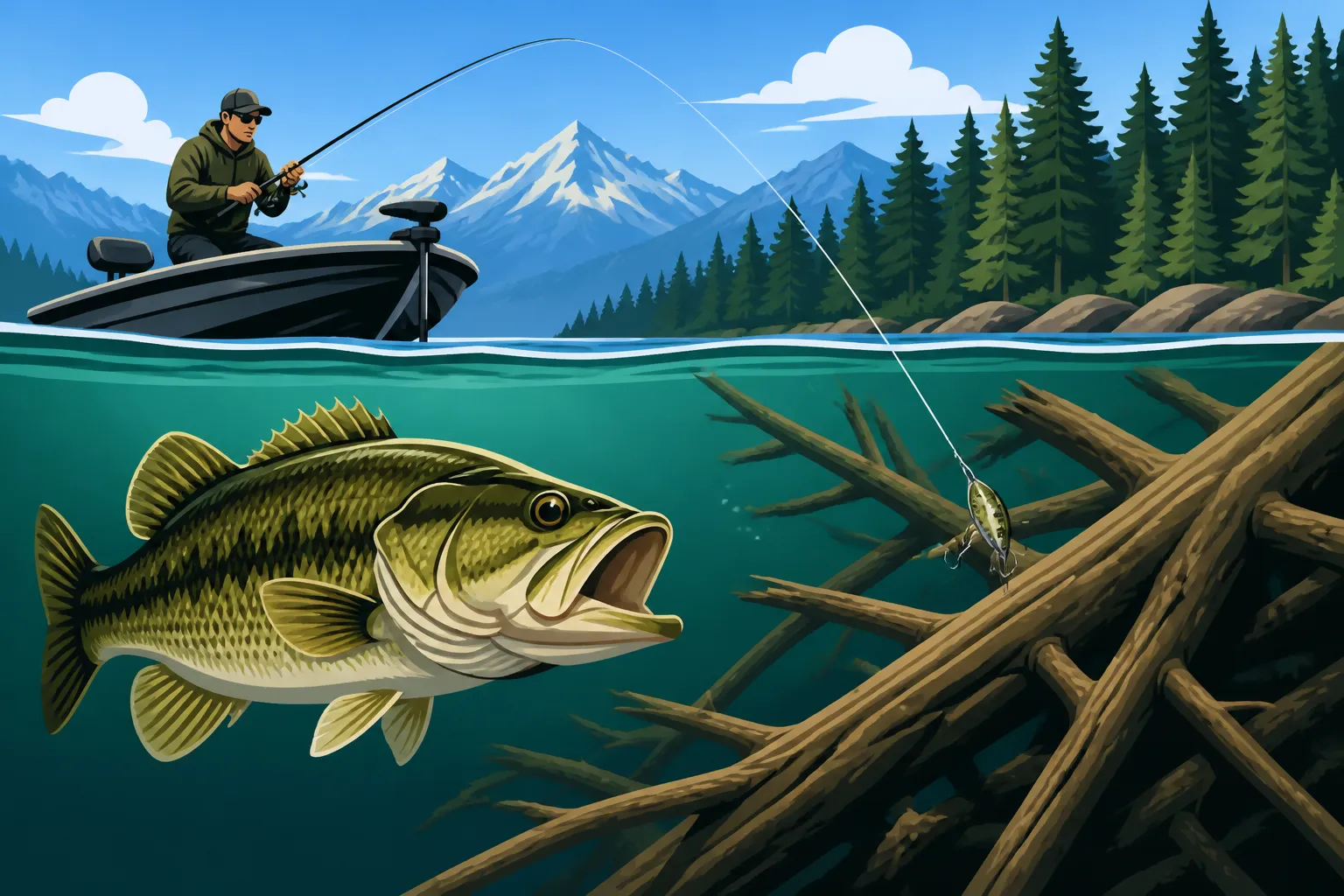
When we talk about "submerged timber," we're not just talking about a single log. It's a whole underwater ecosystem of fallen trees, stumps, brush piles, and root wads. These complex structures are absolute magnets for bass, and understanding why they love them so much is the first step to figuring out how to catch them.
Why Bass Love the Wood
Think about it from a bass's perspective. A tangled mess of branches, roots, and trunks offers everything a predator needs: cover, ambush points, and a ready food source.
- Protection from Predators: Larger fish and predatory birds can't easily navigate the tight spaces, giving bass a safe haven, especially during vulnerable times like spawning or when they're recovering from a hook-up.
- Shade and Temperature Regulation: On sunny days, the dense canopy of submerged timber casts shadows, providing cooler water. Bass are cold-blooded, and finding comfortable water temperatures is crucial for their metabolism and activity levels. In BC's warmer lakes, like those in the Okanagan, this shade can be a prime hideout during the heat of the day.
- Ambush Points: Bass are opportunistic predators. They love to lie in wait, perfectly camouflaged within the branches, ready to dart out and ambush unsuspecting prey like baitfish, crayfish, or even smaller amphibians that wander too close.
- Forage Concentration: Submerged timber attracts insects, crustaceans, and small baitfish that feed on algae and detritus growing on the wood. This creates a natural buffet line, drawing in the bass.
Reading the Water: Identifying Productive Timber
Not all submerged timber is created equal. Some spots will hold more fish than others. Learning to "read the water" and identify these key areas is a skill that comes with practice, but there are definite clues to look for.
- Proximity to Deeper Water: Bass often stage near the edges of timber that drop off into deeper channels or flats. They'll use the timber for cover and then move out to feed in open water or deeper structure. The combination of cover and access to different depths is a potent formula.
- Isolated Piles: While vast fields of timber can be overwhelming, isolated logs, stumps, or brush piles often act as key holding spots. These singular pieces of cover are easier for bass to defend and don't require them to expend as much energy.
- Current Breaks: In rivers or areas with subtle current, timber that creates a current break, forming an eddy or slack water pocket, is a prime location. Bass will sit in these calmer areas, conserving energy while waiting for food to drift by.
- "High Percentage" Zones: Look for timber that combines with other features: a point extending into the lake with a downed tree, a creek channel winding through a submerged forest, or a rock pile nestled within some branches. These combinations increase the chances of finding active fish. Best technique for docks and laydowns can give you more ideas on combining structure types.
Essential Gear for Fishing Timber
Fishing around submerged timber demands a specific setup. You can't just go in with your light trout rod and expect to pull out a feisty largemouth or smallmouth. You need gear that's built for battle, capable of muscling fish out of heavy cover and withstanding the constant abuse of snags.
Rods, Reels, and Line: The Heavy-Duty Trio
This is where your investment should be focused for timber fishing. Skimp here, and you'll be replacing tackle constantly.
- Rods: Look for a medium-heavy to heavy power casting rod, typically 7 to 7.5 feet in length. The "power" refers to the rod's backbone or lifting strength, which is crucial for prying bass out of thick cover. A fast or extra-fast action tip will give you the sensitivity to feel subtle bites and the quick hook-setting power needed. Popular choices often have robust graphite or composite blanks for durability. Many anglers find great options on platforms like Amazon, reading reviews to ensure they're getting a true heavy-power rod.
- Reels: A baitcasting reel with a good gear ratio (around 7.1:1 to 8.1:1) is ideal. High gear ratios allow you to quickly take up slack line, which is vital for setting hooks and pulling fish away from snags before they can wrap you up. Ensure the reel has a strong drag system and a comfortable, ergonomic design for repeated casting and retrieval.
- Line: This is arguably the most critical component for timber fishing. You need abrasion resistance and strength.
- Braided Line: This is a top choice for timber. It has virtually no stretch, which gives you incredible sensitivity and powerful hook sets, even from a distance. Its thin diameter for its breaking strength (e.g., 30-50 lb test) helps cut through weeds and less dense cover. More importantly, it's highly abrasion resistant, making it less likely to fray and break on sharp branches.
- Fluorocarbon Line: Some anglers prefer fluorocarbon as a leader or even as a main line (15-25 lb test). It's nearly invisible underwater and has excellent abrasion resistance, though not quite as much as braid. It also has less stretch than mono, offering good sensitivity. If using it as a main line, opt for brands known for their toughness.
- Monofilament Line: Generally, monofilament is not recommended as a main line for direct timber contact due to its stretch and lower abrasion resistance compared to braid or fluoro. It's often reserved for topwater lures where some stretch can be beneficial, or for fishing lighter cover.
Lures and Baits: Arming Your Tackle Box
Selecting the right lures for timber fishing is about choosing baits that can either navigate the cover with minimal snagging or are designed to be "weedless."
- Jigs: Flipping jigs and swim jigs are timber fishing staples. Their heavy lead heads help them penetrate dense cover, and the weed guard protects the hook from snags. Pair them with a soft plastic trailer (like a craw or creature bait) to add bulk and action. Darker colors (black, blue, green pumpkin) are often effective, imitating crawfish or baitfish.
- Soft Plastics (Texas Rigged or Carolina Rigged): Worms, creature baits, and craws are incredibly versatile. The key is to rig them Texas-style, with the hook point embedded in the plastic, making them virtually snag-proof. Add a bullet weight in front to help them sink through the timber. Best lure retrieve for coho in coastal streams might talk about different retrieves, but for bass, a slow, methodical retrieve or jigging motion is often best.
- Spinnerbaits and Chatterbaits: These can be surprisingly effective in moderately dense timber. The single upturned hook of a spinnerbait makes it relatively weedless, and the spinning blades create flash and vibration that can draw fish out. Chatterbaits (bladed jigs) have a unique vibration that bass find irresistible, and they also navigate cover reasonably well.
- Crankbaits (Squarebills): While most crankbaits are a snag-magnet in timber, squarebill crankbaits with their blunt, squared-off bills are designed to deflect off wood rather than digging in. They are fantastic for banging off logs and eliciting reaction strikes. Cast them parallel to timber lines or into submerged fields, letting them deflect off obstructions.
- Topwater Lures (Frogs, Toads): For bass holding just below the surface in floating timber or thick mats of vegetation mixed with wood, weedless frogs and toads are dynamite. They glide over the cover, and the explosive topwater strike is truly exhilarating. Best topwater lure for dawn bass fishing is a great resource here.
- Terminal Tackle: Always carry a good selection of extra-wide gap (EWG) hooks, bullet weights (various sizes, unpegged or pegged for Texas rigs), and heavy-duty snaps or swivels if you use them. Having a spare spool of line or extra line on hand is always a good idea, as timber fishing can be tough on your equipment. Don't forget a quality pair of braid scissors or clippers.
| Lure Type | Best Conditions | Snag Resistance | Retrieval Style | Key Advantages |
|---|---|---|---|---|
| Flipping Jigs | Dense cover, deep timber, vertical presentations | High | Pitching, flipping, dragging, slow hopping | Excellent weed guard, penetrates cover, good "thump" on bottom, mimics craws |
| Texas Rigs | All timber types, especially dense, vertical or horizontal | Very High | Pitching, dragging, swimming, shaking | Highly weedless, versatile with various soft plastics, subtle presentation |
| Squarebill Cranks | Shallow to mid-depth timber, cover lines | Medium | Fast retrieve, deflecting off wood | Triggers reaction strikes, covers water quickly, mimics fleeing baitfish |
| Spinnerbaits | Moderate cover, stained water, windy conditions | Medium-High | Steady retrieve, slow rolling, stop-and-go | Flash and vibration attract fish from a distance, good for searching, single hook |
| Topwater Frogs | Floating timber, matted vegetation over wood | Very High | Walking the dog, popping, twitching | Exciting topwater strikes, no-snag presentation over heavy surface cover, effective in low light |
Top Techniques for Targeting Bass in Timber
Once you have your gear sorted, it's time to talk about how to present your lures effectively to entice those timber-dwelling bass. Remember, patience and precision are key when you're fishing in such challenging environments.
Pitching and Flipping: The Art of Precision Placement
These are indispensable techniques for fishing tight to cover. They allow for quiet, accurate presentations into small pockets within the timber where bass are likely hiding.
- Flipping: This technique involves a short, underhand pendulum motion. You'll typically have 10-20 feet of line out, holding the line with your free hand while swinging the lure towards your target. It's designed for extremely close-quarters fishing, often from a boat or kayak right up against the timber. It's quiet, precise, and allows for immediate hook-sets.
- Pitching: Similar to flipping but for slightly longer distances (20-40 feet). You'll swing the rod forward, releasing the line with your thumb to send the lure out in a low, controlled trajectory. Both techniques emphasize a soft entry of the lure into the water, minimizing splash that could spook wary bass. Practice these casts in your yard, aiming for small targets, because accuracy directly translates to success in timber. When bass fishing in interior BC lakes, like Okanagan Lake or Osoyoos, you'll often find yourself pitching and flipping to docks, laydowns, and isolated submerged trees.
Slow and Steady: The Importance of Presentation and Feel
Bass in timber often aren't chasing; they're ambushing. Your retrieve should reflect this.
- Feel the Wood: When your lure contacts a branch or log, don't just reel it in. Let it pause, perhaps twitch it slightly, or even allow it to fall a short distance on slack line. Bass often strike when a lure hesitates or changes direction after deflecting off cover. This "feeling the wood" approach means you're almost always in contact with the structure, letting the bass know your lure is there.
- Slow Down: Aggressive, fast retrieves usually result in snags. A slow, methodical retrieve allows your lure to stay in the strike zone longer and gives bass time to react. If you're using a Texas-rigged worm or jig, drag it along the bottom, occasionally hopping or shaking it to imitate a crawfish.
- Look for the 'Tick': Bites can be incredibly subtle in timber. Sometimes it's just a light "tick" on the line, or your line might just feel "heavy," or even start moving sideways. Set the hook immediately with a powerful, upward sweep of the rod. Don't wait to "feel" the fish; by then, it might have swallowed the bait deep into the timber.
Fighting Fish in the Jungle: Extracting Your Catch
Hooking a bass in timber is only half the battle. Getting it out is the real challenge.
- Reel Down, Set Hard: As soon as you feel a bite, drop your rod tip slightly to take up any slack, and then execute a powerful hook set, typically sweeping the rod to the side or straight up, depending on the lure. The goal is to drive the hook home quickly.
- Keep Pressure On: Once hooked, do not give the fish slack line. Reel continuously and maintain steady, heavy pressure. Your goal is to keep the fish's head up and turn it away from the snags as quickly as possible. This is where that heavy rod and strong braided line really pay off.
- Muscle Them Out: Don't be afraid to put the heat on the fish. While you don't want to break your rod, a brief, intense pull can often turn a bass's head and pull it out of the immediate danger zone. Guide it over or through less dense branches. It might not be the most "sporting" fight in the open water sense, but in timber, it's about control and extraction.
- Follow Up: Have your net ready. Once the fish is clear of the heaviest cover, try to land it quickly. Sometimes, a smaller bass will surprise you with its strength and ability to dive back into the wood.
Safety and Conservation When Fishing Timber
Fishing around submerged timber is exciting, but it also comes with responsibilities. We need to prioritize safety for ourselves and ensure we're doing our part to protect British Columbia's bass populations and their habitats.
Navigating the Obstacles: Boating and Kayaking Safely
If you're accessing timber by boat, whether it's a powerboat or a kayak, safety must be paramount.
- Go Slow: This isn't the place for speed. Submerged timber can hide just below the surface, posing a serious hazard to propellers, lower units, and even the hull of your boat. Navigate slowly and deliberately, especially in areas you're unfamiliar with. A good depth finder can be invaluable here, helping you identify larger submerged structures before you get too close. BC boating laws for anglers contains essential information on safe operation.
- Wear a PFD: Always, always wear a personal flotation device, especially if you're in a kayak or a smaller boat. Accidents can happen quickly in snag-ridden areas, and getting entangled or capsizing in timber can be extremely dangerous. Check Life Jacket Requirements for BC Boaters for specific regulations.
- Anchor Safely: If you plan to anchor, ensure your anchor line is clear of your fishing area and that your anchor is set securely. Drifting into dense timber unexpectly can lead to snags for your boat, not just your line.
- Buddy System: Whenever possible, fish timber with a partner. If someone gets into trouble, having another person there to help can make all the difference.
Protecting the Resource: Responsible Angling Practices
Bass, both largemouth and smallmouth, are an incredible sport fish in BC, and we want to ensure future generations can enjoy targeting them. This means practicing responsible angling.
- Minimize Snags and Lost Lures: While some snags are inevitable, try to minimize them. Fish with the right gear, present your lures carefully, and learn techniques to retrieve snagged lures (like a plug knocker or using a stiff rod to flex the lure free). Lost lures can contribute to pollution and can be a hazard to wildlife. Look for good quality, durable lures on Amazon, as they tend to hold up better to the abuse of timber fishing.
- Practice Catch and Release: Many bass anglers choose to catch and release, especially for larger, trophy-sized fish, as these are vital for maintaining healthy breeding populations. If you do keep fish, always adhere to BC Bag and Possession Limits by Species and local regulations.
- Handle Fish with Care: When practicing catch and release, handle bass gently. Avoid excessive handling, keep them in the water as much as possible, and support their body weight horizontally. Use needle-nose pliers or hemostats to quickly remove hooks, especially if they're deeply embedded.
- Respect the Habitat: Submerged timber is a vital part of the aquatic ecosystem. Avoid disturbing it unnecessarily. Don't cut branches or remove logs unless it's for safety and explicitly permitted. Leave no trace – pack out everything you pack in, including any broken line or packaging.
- Know the Regulations: Before you head out, always check the current BC Freshwater Fishing Regulations Synopsis for the specific lake or river you're fishing. Rules can change, and knowing them prevents unintentional violations. Remember, you'll need a BC freshwater fishing license before you even cast a line.
By combining the right knowledge, gear, techniques, and a strong conservation ethic, you can unlock the incredible potential of bass fishing around submerged timber in British Columbia. It's challenging, yes, but the rewards of outsmarting a big bass in its natural fortress are truly unforgettable.
Disclaimer
This article is for general informational purposes only and does not constitute professional advice. Laws, prices and regulations vary by location and change over time. Consult a qualified professional for guidance on your specific situation.