Best kayak fishing technique for coastal salmon
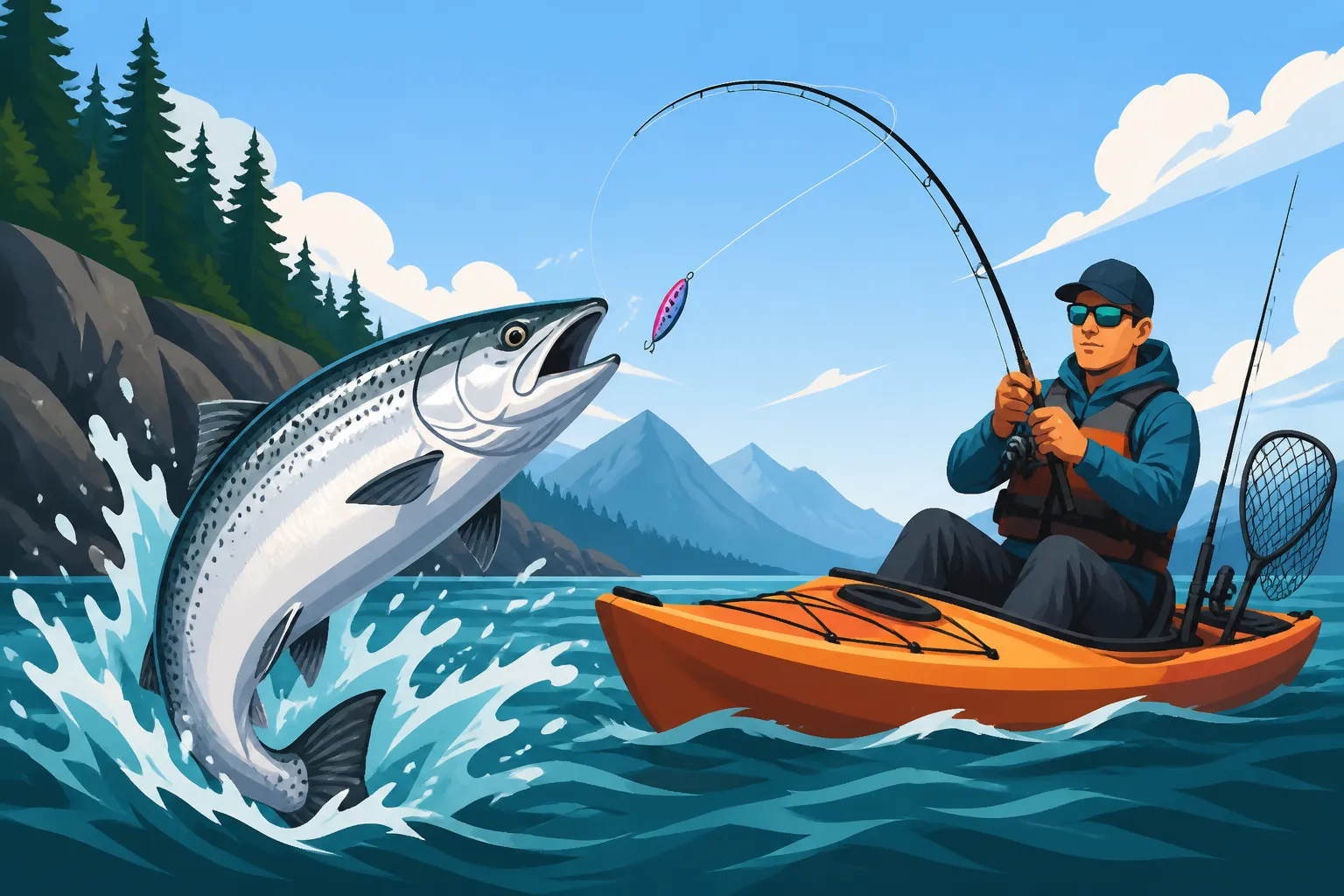
There's nothing quite like the solitude and thrill of paddling your kayak through the mist-kissed coastal waters of British Columbia, scanning for signs of salmon. But let's be honest, transitioning from shore or larger boat fishing to a kayak presents a whole new set of challenges and questions: "What gear do I really need?" "How do I even begin to troll from this tiny vessel?" "Am I going to tip over when a big Chinook hits?" It's a daunting thought, but it doesn't have to be. This guide will walk you through the most effective kayak fishing techniques for coastal salmon, helping you safely and confidently hook into some of BC's most sought-after fish.
Understanding Your Target: Coastal Salmon Species in BC
Before you even think about dropping a line, it's incredibly helpful to understand the different species of Pacific salmon you're likely to encounter in BC's coastal waters. Each has its own quirks, preferred habitats, and fighting style, and knowing them can significantly increase your success rate. Kayak fishing offers a unique advantage here – you're often closer to the action, allowing for more intimate observations.
Chinook Salmon: The King of the Coast
Ah, the mighty Chinook, often called "King Salmon" for good reason. These are the largest and most powerful of the Pacific salmon, known for their incredible runs and stubborn fights. Hooking a big Chinook from a kayak is an experience you won't soon forget, often involving powerful, sustained runs that can test both your gear and your endurance. You'll find these beasts often feeding in deeper waters, congregating around structure, bait balls, or along prominent tide lines and current seams, especially when they're staging to head upriver to spawn. They're often found patrolling depths ranging from 50 to 150 feet, though they can certainly be shallower, particularly in low light conditions or if baitfish are pushed closer to the surface. For more in-depth knowledge, check out our guide on Chinook Salmon Fishing in BC.
Coho Salmon: Acrobats of the Deep
If Chinook are the powerhouses, Coho salmon are the acrobats. Also known as "Silver Salmon," Coho are renowned for their aggressive strikes and spectacular aerial displays once hooked. They're typically smaller than Chinook but what they lack in sheer size, they more than make up for in tenacity and flash. Coho often feed higher in the water column than Chinook, frequently chasing baitfish like herring and anchovies closer to the surface, especially in early mornings or late evenings. They love areas with current, rips, and weed lines, and can be found closer to shore than their larger cousins. Their aggressive nature makes them a fantastic target for a variety of kayak techniques, from trolling to casting. Our article on Coho Salmon Fishing in BC provides further details on these energetic fish.
Pink and Sockeye Salmon: Seasonal Opportunities
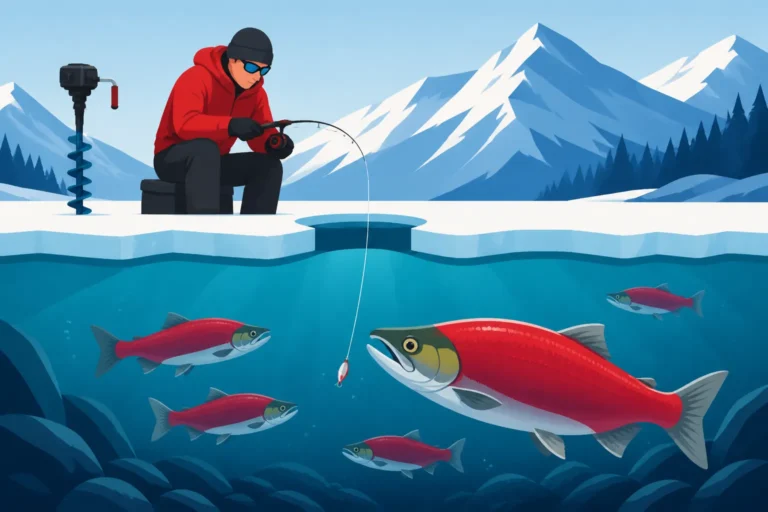
While Chinook and Coho are often the primary targets for coastal kayak anglers, don't overlook Pink and Sockeye salmon, especially during their peak seasons. Pink salmon, identifiable by the pronounced hump on the males during spawning, are the smallest and most numerous of the Pacific salmon. They have a short two-year life cycle, leading to massive runs in odd-numbered years on many BC rivers. They readily strike smaller lures and flies and can provide non-stop action, making them perfect for beginners or those just looking for constant reeling. Sockeye, famous for their vibrant red flesh, are strong fighters and excellent eating, though they are primarily filtered feeders and notoriously difficult to catch on traditional lures. However, during strong migration periods, specialized techniques can yield results, particularly when they become more aggressive near river mouths. Remember to always check local regulations, as Sockeye runs can be subject to specific closures or gear restrictions. For more on Sockeye, our guide on Sockeye Salmon Fishing in BC is a great resource.
Essential Gear for Kayak Salmon Fishing in BC
Kayaking for salmon isn't just about the paddle and the rod; it's about having the right setup to maximize your comfort, safety, and success. The coastal environment can be unpredictable, so robust and reliable gear is paramount.
The Right Kayak and Propulsion
Choosing the right kayak is the foundation of your coastal salmon fishing adventure. You need something stable, efficient, and capable of handling varying water conditions. Generally, a sit-on-top kayak between 12 to 14 feet is ideal. Shorter kayaks are more maneuverable but slower and less stable; longer kayaks track better, are faster, and handle chop more effectively, which is crucial in coastal waters.
When it comes to propulsion, you have a few main options:
- Paddle Kayaks: These are typically lighter and more affordable. They require more physical effort, which can be a workout on long days or against strong currents. The advantage is direct control and a quieter approach, but paddling constantly can hinder your ability to manage your rod when a fish strikes.
- Pedal Kayaks: These are game-changers for fishing. Systems like Hobie's MirageDrive or Native Watercraft's Propel Drive allow you to propel yourself using your legs, leaving your hands free for fishing, steering, and fighting fish. This is invaluable for trolling, as you can maintain a consistent speed and direction while actively fishing. They tend to be heavier and more expensive but offer unparalleled efficiency and hands-free operation. Many serious kayak anglers consider pedal kayaks almost essential for covering coastal distances and efficiently trolling for salmon.
Regardless of your propulsion choice, ensure your kayak has ample storage, comfortable seating for long days, and good stability. Look for features like flush-mounted rod holders, tracks for accessory mounting (like a fish finder or GPS), and a large rear tankwell for gear storage. A well-designed scupper system for draining water is also important for safety in choppy conditions.
Rods, Reels, and Line Selection
Your rod and reel setup needs to be up to the task of handling powerful salmon and the corrosive saltwater environment.
- Rods: For trolling or mooching, a medium-heavy action rod between 8 to 10 feet is excellent. This length helps spread your lines, provides good leverage for fighting fish, and offers a softer tip for detecting subtle bites. For casting or jigging closer to shore, a medium-action rod around 7 to 8 feet will give you better control and accuracy. Look for rods with durable guides and corrosion-resistant components.
- Reels: A good quality baitcasting reel (levelwind or conventional) is preferred for trolling and mooching for its line capacity, smooth drag, and ability to handle heavier lines. For casting, a reliable spinning reel in the 4000-6000 size range is a solid choice. Ensure all reels are rated for saltwater use and have a robust, smooth drag system – you'll need it when a Chinook decides to peel line! You can often find fantastic deals on robust saltwater spinning reels on platforms like Amazon, just be sure to read reviews for durability.
- Line: Braided line (30-50 lb test) is popular for its strength-to-diameter ratio and lack of stretch, which provides excellent sensitivity. However, its low stretch can be unforgiving if your drag isn't set perfectly. Many anglers will add a monofilament or fluorocarbon leader (20-30 lb test) of 20-50 feet to the braid. The leader provides some shock absorption and is less visible to fish. For direct monofilament, 15-25 lb test is a common choice, offering good abrasion resistance and stretch. Always use a high-quality fluorocarbon leader (20-40 lb test) for terminal tackle, as it's nearly invisible underwater and highly abrasion resistant.
Key Electronics and Safety Equipment
Safety in BC's coastal waters should always be your top priority. Conditions can change rapidly, and being prepared is not just smart, it's mandatory.
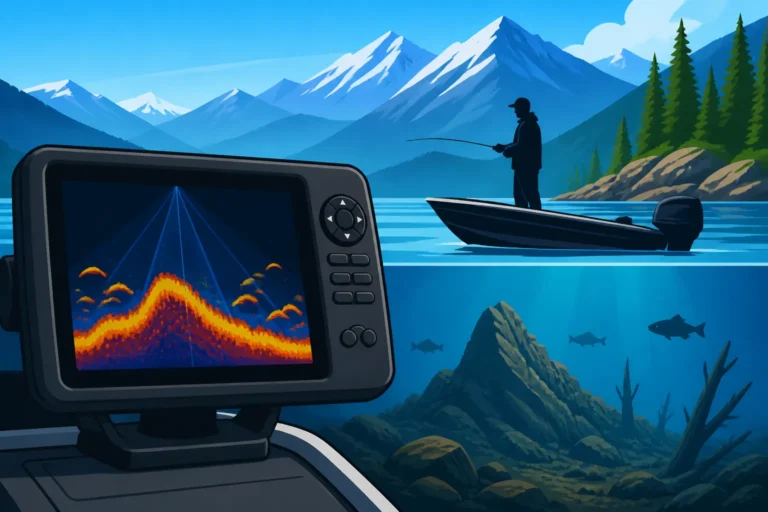
- Fish Finder/GPS: A combination fish finder and GPS unit is invaluable. The fish finder helps you locate bait balls, identify structure, and mark individual fish. The GPS allows you to mark successful spots, navigate safely, and get back to your launch point, especially in fog or low light. Modern units designed for kayaks are compact, draw minimal power, and can be easily mounted.
- VHF Radio: A handheld, waterproof VHF radio is a critical safety item. Cell service is unreliable in many coastal areas, and a VHF allows you to communicate with other boats and, crucially, to call for help if needed. Always carry one and know how to use it.
- Personal Flotation Device (PFD): This is non-negotiable. Wear your PFD at all times. Look for a fishing-specific PFD with pockets and attachment points for essential tools. A comfortable PFD that you will wear is far better than a bulky one that stays in your kayak. Platforms like Amazon offer a wide range of comfortable, high-quality PFDs suitable for kayak fishing. You might be interested in knowing more about Life Jacket Requirements for BC Boaters.
- Other Safety Gear:
- Paddle/Spare Paddle: Even with a pedal drive, a paddle is essential for maneuvering in tight spots or as a backup.
- Whistle/Air Horn: For signaling.
- Light: If fishing in low light or at night, navigation lights are mandatory. A headlamp is also crucial.
- First Aid Kit: A small, waterproof kit for minor injuries.
- Knife/Line Cutter: For emergencies or quickly dispatching fish.
- Leash: Leash your paddle, rod, and other essential items to your kayak. Losing a rod to a big fish or the ocean is a heartbreaking moment.
- Anchor with Rope: A small grapnel or folding anchor (1.5-3 lbs) with sufficient rope (at least 50-100 feet, depending on your target depth) is vital for holding position, especially when mooching.
- Bailer/Pump: To remove any water that gets into your kayak.
- Visibility Flag/Light: A tall flag with a light on top can significantly increase your visibility to other boaters, especially in busy channels or low light.
- For comprehensive boating regulations, including safety equipment, refer to our article on BC Boating Laws for Anglers.
Mastering Kayak Salmon Fishing Techniques
Now for the fun part: the actual fishing! Kayaks lend themselves well to several highly effective techniques for coastal salmon. The key is often stealth, patience, and adapting to the conditions.
Trolling with Downriggers and Flashers
Trolling is arguably the most popular and effective method for kayak salmon fishing in BC. It allows you to cover vast amounts of water and present your lure at precise depths where salmon are feeding.
- The Kayak Advantage: A pedal drive kayak excels here, allowing you to maintain a consistent speed (typically 1.5-3 mph) while keeping your hands free. Even with a paddle kayak, a good rhythm and perhaps a small drift sock can help maintain speed.
- Downriggers: For serious salmon trolling from a kayak, a compact manual downrigger is a must-have. These allow you to send your lure down to exact depths, which is crucial when fish are holding deep or in a specific thermocline. A small, single-arm manual downrigger mounted to a track on your kayak is sufficient. Learn how to set your release clip properly, so it pops free when a fish strikes.
- Flashers and Lures: Flashers (like a Gibbs Delta Flasher or a Protroll Flasher) are integral to attracting salmon. They create an erratic swimming motion and flash that mimic distressed baitfish, drawing salmon to your offering. Attach your leader (typically 4-6 feet) from the flasher to your lure. Popular kayak salmon lures include:
- Hootchies: Soft plastic squid imitations, often trolled behind a flasher.
- Spoons: Metal spoons like the Silver Horde Coho Killer or Gibbs Croc spoon, which wobble and flash, can be trolled with or without a flasher.
- Plugs: Mimic baitfish and have a distinct swimming action, often used without a flasher.
- Cut-Plug Herring: A classic, highly effective bait, trolled to impart a natural, wounded baitfish spin.
- Reading the Water and Sonar: Pay close attention to your fish finder. Look for bait balls, schools of salmon, and significant structure or depth changes. If you mark fish at 80 feet, set your downrigger ball to that depth. Vary your speed and direction occasionally; turns can often trigger strikes as your lure changes depth and speed. While specific to lakes, our guide on Trolling Techniques for BC Lake Trout can offer foundational insights into general trolling principles and reading your electronics.
Mooching and Anchor Fishing
Mooching is a traditional West Coast technique particularly effective for Chinook and Coho salmon, especially when they are concentrated in certain areas or actively feeding near the surface. Anchor fishing, on the other hand, is great for targeting deeper holding fish or when you've found a honey hole.
- Mooching: This involves presenting a natural bait, typically a herring or anchovy, suspended at a certain depth and allowing it to drift or "mooch" with the current, imparting a natural action.
- Rigging: Use a mooching rig with two tandem hooks, ensuring your bait (often a cut-plug herring or whole anchovy) has a natural roll.
- Weight: Use a sliding sinker or a banana weight appropriate for the current and depth you're fishing. You want enough weight to get down but not so much it kills the bait's action.
- Technique: Let your bait drop to the desired depth, then retrieve it slowly with an occasional twitch or pause, mimicking a wounded baitfish. Bites are often subtle at first.
- Current and Tide: Mooching is highly effective in areas with strong currents and tide lines, where baitfish are often concentrated. Pay attention to Best Time of Day to Catch Salmon in relation to tides.
- Anchor Fishing: When you've found a productive spot – perhaps a deep pool, a prominent rock pile, or a consistent current seam – anchoring your kayak can be deadly.
- Anchor System: Use a small grapnel or folding anchor with at least 50-100 feet of anchor line. A trolley system can be invaluable, allowing you to deploy and retrieve your anchor from either the bow or stern and then position your kayak horizontally across the current to fish more effectively. You can easily find robust anchor kits and trolley systems on Amazon.
- Bait: Fresh bait is key. Herring, anchovies, or even prawn meat can be used. Present it on a simple bottom rig with a weight, or a float rig if fish are higher in the water column.
- Patience: This is a waiting game. Set out your baits, perhaps one on the bottom and one suspended, and wait for the bite. It's an excellent method for targeting larger, less active fish.
Casting and Jigging for Active Fish
Sometimes, salmon are actively feeding near the surface or are schooled up tightly, making casting and jigging incredibly effective. This is particularly true for Coho and Pink salmon, and sometimes aggressive Chinook.
- Casting Spoons and Spinners: When you see surface boils, jumping fish, or birds diving, it's time for casting.
- Lures: Cast-and-retrieve spoons (like a Croc or Koho spoon), spinners, or small twitching jigs can be incredibly effective. Match the size and color to the baitfish present.
- Technique: Cast beyond the activity, let your lure sink to the desired depth, and retrieve with a varied retrieve – some steady cranks, some pauses, some twitches. Experiment until you find what triggers a strike.
- Our guide on Best Lure Retrieve Speed for Coho in Fall can provide excellent tips applicable to active salmon.
- Jigging: When you mark schools of salmon or baitfish holding deeper, vertical jigging can be devastating.
- Lures: Metal jigs (candlefish jigs, P-Line jigs) in various weights (from 1 to 4 ounces, depending on depth and current).
- Technique: Drop the jig to the desired depth, then sharply snap your rod tip up (jigging), allowing the lure to flutter back down on a semi-slack line. Most strikes occur on the fall. Watch your fish finder closely to see how fish react to your jig. This is a very active fishing style and can quickly put fish in the boat when they are concentrated.
Reading the Water and Fishery Notices
Success in coastal salmon fishing from a kayak isn't just about technique; it's about understanding the environment and staying informed.
- Tides and Currents: Coastal salmon fishing is heavily influenced by tides and currents. Incoming and outgoing tides can concentrate baitfish and salmon in specific areas. Look for rips, eddies, and current seams where fish might ambush prey. Strong tides can also be challenging to paddle or pedal against, so plan your trips accordingly.
- Baitfish: Find the bait, find the salmon. Keep an eye out for signs of baitfish – birds diving, ripples on the surface, or bait balls showing on your sonar. Herring and anchovies are primary food sources for salmon in BC.
- Structure: Underwater structure like reefs, rock piles, drop-offs, and kelp beds provide ambush points and cover for salmon. Use your fish finder and GPS to locate these features and target them.
- Fishery Notices: This is perhaps the most critical "reading" you can do. British Columbia's salmon fisheries are heavily managed and subject to frequent in-season closures, gear restrictions, and changes in bag limits due to conservation concerns. Always, always check the Department of Fisheries and Oceans (DFO) fishery notices before every trip. You can find detailed information on How to Check BC Fishery Notices before a trip and ensure you are compliant with all local regulations, including those related to your BC Tidal Waters Salmon Conservation Stamp Cost. Failure to do so can result in significant fines and loss of gear.
Safety and Regulations for Coastal Kayak Anglers
Your safety and adherence to regulations are paramount when fishing BC's beautiful, but sometimes unforgiving, coastal waters.
Navigating BC's Coastal Waters Safely
Kayak fishing on the ocean comes with inherent risks. Being prepared and cautious is key to a successful and safe trip.
- Weather Monitoring: Coastal weather can change in an instant. Always check the marine forecast before heading out and be prepared to cut your trip short if conditions deteriorate. Strong winds, fog, and large swells can quickly turn a pleasant day into a dangerous situation.
- Understanding Tides and Currents: As mentioned, tides and currents are powerful forces. Plan your route to work with the tides rather than against them, especially if you're paddling. Be aware of tidal rips and narrows that can create dangerous conditions.
- Visibility: Always assume larger boats cannot see you. Use a brightly colored kayak, wear visible clothing, and deploy a tall visibility flag, especially in busy shipping lanes or areas with commercial fishing traffic. If you're out in low light, mandatory navigation lights are crucial.
- Trip Planning and Communication: Always tell someone onshore your float plan: where you're launching, your intended fishing area, and your estimated return time. If conditions worsen, or you don't return, someone will know to call for help. A handheld VHF radio is your best friend for communication when cell service fails.
Essential Licensing and Conservation
Fishing in British Columbia, whether from a kayak or a large vessel, requires adherence to specific licensing and conservation regulations. These rules are in place to protect the valuable fish stocks for future generations.
- Fishing License: Every angler, regardless of age (though youth under 16 have specific exemptions detailed in BC Youth Fishing License Exemption Under 16), must possess a valid British Columbia Tidal Waters Sport Fishing Licence. This is your fundamental pass to fish. Make sure you understand the nuances, which are well-covered in our comprehensive British Columbia Fishing License Guide for 2026.
- Salmon Conservation Stamp: If you intend to retain any species of Pacific salmon (including Chinook, Coho, Sockeye, Pink, and Chum), you must also purchase and affix a Salmon Conservation Stamp to your tidal waters license. This stamp is vital for funding salmon recovery efforts and is a non-negotiable requirement.
- Bag and Possession Limits: Be intimately familiar with the daily bag limits and possession limits for all species you intend to target. These limits can vary significantly by species, area, and time of year. For instance, Chinook salmon often have different size limits and retention rules depending on the management area. Keep your fish separated by species if you're catching multiple types, and ensure you can easily prove compliance if checked by a DFO officer.
- Size Limits: Many species, especially Chinook and Halibut, have minimum or maximum size limits. Carry a measuring device and know how to use it accurately. Releasing undersized fish unharmed is crucial for conservation.
- Responsible Release: For any fish you intend to release, practice ethical catch-and-release techniques. Minimize handling time, keep the fish in the water as much as possible, and use de-barbed hooks when regulations permit or encourage it. If you're targeting White Sturgeon on the Fraser River, for example, catch and release is mandatory, as discussed in BC Fraser River Sturgeon Catch and Release Requirement. While this article focuses on coastal salmon, the principle of responsible release applies across all fisheries.
Kayak Salmon Fishing Techniques Comparison Table
| Technique | Best Conditions | Target Species | Pros | Cons | Typical Gear & Bait |
|---|---|---|---|---|---|
| Trolling | Open water, moderate current, covering ground | Chinook, Coho, Pink | Covers large areas, consistent depth presentation | Requires consistent speed, more gear (downrigger) | Downrigger, flashers, hootchies, spoons, plugs, cut-plug herring |
| Mooching | Areas with good current, active bait schools | Chinook, Coho | Natural bait presentation, very effective for aggressive fish | Requires good current management, less coverage | Sliding sinker, mooching rig, cut-plug herring, anchovies |
| Anchor Fishing | Known hot spots, structure, deeper holding fish | Chinook, Lingcod (bonus) | Precise targeting, hands-free once anchored | Limited coverage, requires reliable anchor system, patience | Anchor system, bottom/float rigs, whole baitfish, prawn meat |
| Casting/Jigging | Active surface feeding, visible schools, structure | Coho, Pink, Chinook | Highly interactive, light tackle fun, less gear intensive | Limited depth range, requires active fish | Spoons, spinners, metal jigs, twitching jigs |
Embarking on a kayak fishing adventure for coastal salmon in British Columbia is an incredibly rewarding experience. It connects you intimately with nature, offers thrilling battles with powerful fish, and provides a sense of accomplishment few other activities can match. By understanding the species, equipping yourself properly, mastering these proven techniques, and prioritizing safety and regulations, you'll be well on your way to creating unforgettable memories on the stunning BC coast. Tight lines and stay safe out there!
Disclaimer
This article is for general informational purposes only and does not constitute professional advice. Laws, prices and regulations vary by location and change over time. Consult a qualified professional for guidance on your specific situation.