Best technique for anchoring and bar fishing for salmon
There’s nothing quite like the anticipation of a big salmon hitting your line, especially when you’re out on a beautiful British Columbia river, patiently waiting for that tell-tale tug. But let’s be honest, getting set up for successful salmon fishing, particularly when you're anchoring and bar fishing, can feel like a riddle sometimes. This guide is going to walk you through the most effective techniques for anchoring and bar fishing for salmon, helping you understand the "whys" and "hows" so you can spend less time fumbling and more time fighting fish.
Understanding Anchoring and Bar Fishing for Salmon
Anchoring and bar fishing is a beloved technique in BC, especially on our mighty rivers like the Fraser. It allows you to present your bait or lure consistently in a specific, productive zone without constantly motoring around. This method shines brightest when salmon are moving upstream through defined channels or along gravel bars, giving you a static advantage to intercept their journey.
Why Anchor for Salmon?
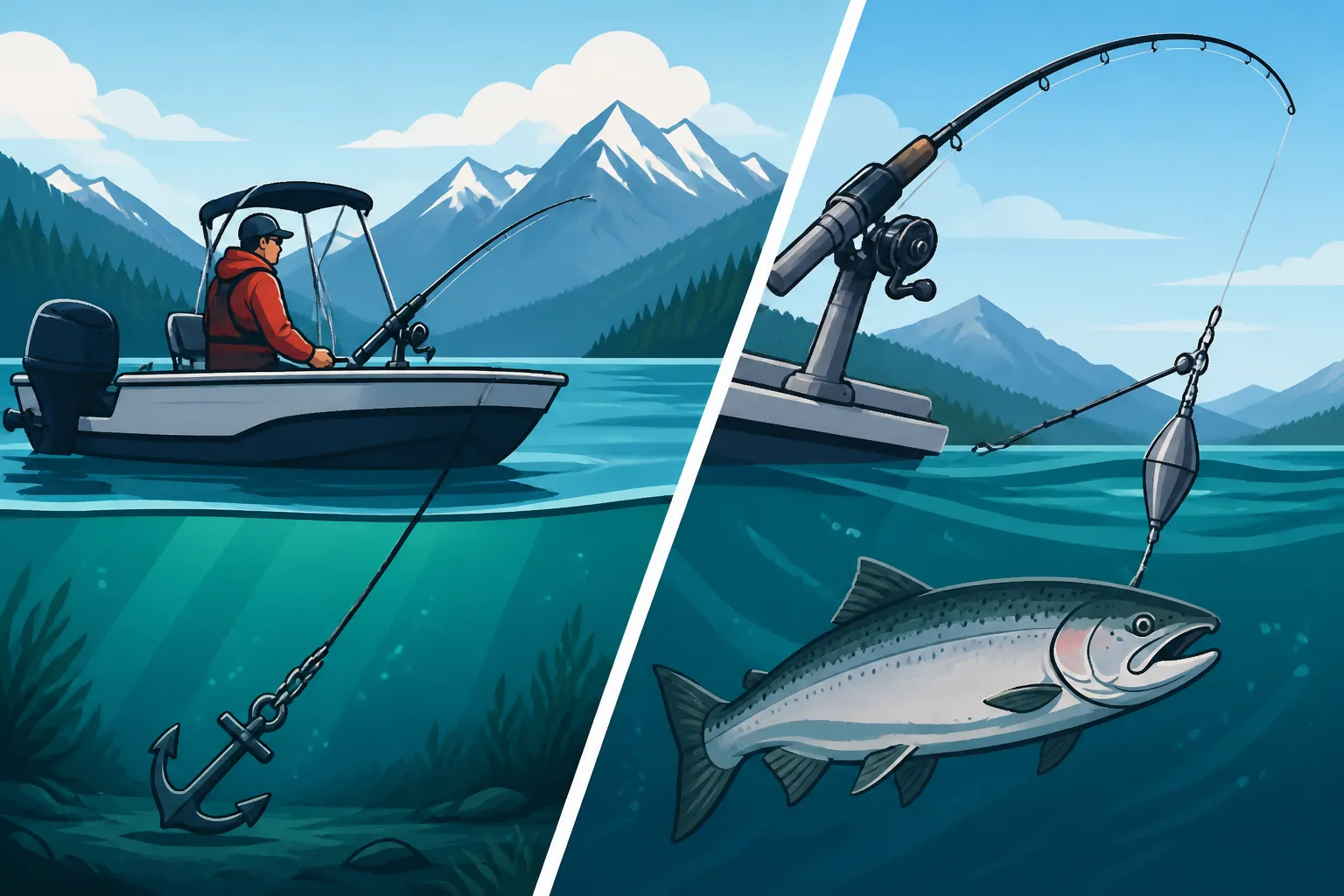
Many anglers find themselves constantly on the move, chasing fish, but sometimes, the best approach is to let the fish come to you. When you anchor, you create a stable platform from which to fish, which is particularly effective in strong currents or when targeting schools of salmon that are known to hold in specific areas. It minimizes disturbance to the water and allows your scent trail (if using bait) to spread naturally, drawing fish in. Think of it like setting up a diner for hungry salmon; if your offering is good and in the right place, they’ll eventually find it. It's a method that often rewards patience and precise presentation over constant searching.
There’s also a social aspect to it. When you're anchored with friends or family, you can relax, chat, and enjoy the scenery while waiting for that rod tip to bounce. It's a quintessential BC experience, especially on big rivers during a strong BC salmon conservation stamp rules run.
Identifying Prime Locations for Bar Fishing
Not just any spot will do when you’re anchoring. Successful bar fishing hinges on finding those key locations where salmon are naturally funneled or choose to rest. Look for areas with a distinct change in bottom contour, like the edge of a gravel bar dropping into deeper water, or where a current seam creates a natural highway for migrating fish.
Key Indicators:
- Current Seams: These are lines where two different currents meet. Salmon often travel along these seams as they provide a path of least resistance or concentrate bait. Look for visible differences in water speed or surface texture.
- Depth Changes: Salmon will often hold in deeper troughs adjacent to shallower bars, especially when resting or trying to avoid strong currents. Your fish finder will be your best friend here, helping you map out the underwater landscape.
- Structure: Submerged logs, rock formations, or even slight depressions in the riverbed can offer cover and holding spots for salmon. These aren't always visible from the surface, so rely on your electronics or local knowledge.
- Congestion Points: Narrow sections of a river, bends, or areas below rapids often concentrate migrating fish. These are classic intercept points, but also spots where you might find more competition from other anglers.
On the Fraser River Fishing Guide, for example, anglers often target the edges of prominent gravel bars that stretch out into the main current, knowing that salmon will hug these contours as they move upstream. Observing where other successful anglers are set up, especially those who seem to be consistently catching, can also be a huge clue, but always make sure to maintain a respectful distance.
Essential Gear for Anchoring and Bar Fishing
Having the right gear isn't just about catching fish; it's about comfort, safety, and efficiency. When you're anchored for hours, the last thing you want is a piece of equipment failing or proving inadequate for the conditions. Investing in good quality gear will save you headaches and potentially lost fish.
The Right Anchor and Rope for Stability
This is perhaps the most critical component for anchoring. You need an anchor that can hold your boat securely in strong river currents, and enough rope (or chain and rope combo) to ensure a proper scope. "Scope" refers to the ratio of rope length to water depth. A good rule of thumb is a 7:1 ratio (7 feet of rope for every 1 foot of depth) for strong currents, though you might get away with 5:1 in calmer waters.
Anchor Types for River Fishing:
| Anchor Type | Description | Pros | Cons |
|---|---|---|---|
| River Anchor | Heavy, often pyramid or mushroom shaped, designed to dig into soft riverbeds. Can be fluked or pyramid style. | Excellent holding power in muddy/sandy bottoms. Resists dragging. Easy to retrieve with a retrieval buoy. | Can be very heavy to haul. May snag on rocky bottoms. |
| Grapnel Anchor | Four or more prongs that fold in or out, ideal for rocky bottoms where the prongs can catch. | Good for rocky areas. Folds for storage. | Less effective in soft mud/sand. Prongs can bend or break. Prone to getting stuck. |
| Bruce/Claw Anchor | Unique claw-like shape, holds well in various bottom types. A popular all-around choice. | Good all-purpose anchor. Strong holding power. | Can be bulky for storage. Not always the best in extremely soft mud. |
| Box Anchor | Square-shaped with open sides, designed to hold in soft bottoms by creating suction. | Excellent holding power. Releases easily. | Can be quite expensive. Bulky. |
Always consider the size of your boat and the typical current strength of the river you're fishing. A heavier anchor with a good length of chain (at least 6-10 feet) between the anchor and your rope will help the anchor set deeper and more effectively. Many anglers also use an anchor retrieval buoy system (often available on Amazon) that allows you to release the anchor line and let a float bring it to the surface, making retrieval much easier, especially when solo.
Rods, Reels, and Line: Power and Sensitivity
For bar fishing, you need gear that can handle powerful salmon, often in strong currents, while still providing enough sensitivity to detect subtle bites.
- Rods: A medium-heavy to heavy power rod, typically 9 to 11 feet in length, is ideal. The longer length helps cast further from your anchored position and absorbs the shock of a hard-fighting salmon in current. Look for a rod with a sensitive tip but plenty of backbone. Brands like Fenwick, Shimano, or even some of the more specialized salmon rods from Lamiglas are popular choices among BC anglers.
- Reels: A sturdy baitcasting reel or a robust spinning reel in the 4000-6000 size range is a good bet. It needs a smooth, reliable drag system and ample line capacity. Look for reels known for their durability and power, as you’ll be putting them to the test.
- Line: Braided line (50-80 lb test) is a top choice for its strength, minimal stretch, and sensitivity. You’ll feel every bump and bite. Always use a monofilament or fluorocarbon leader (20-40 lb test, 3-6 feet long) for abrasion resistance and reduced visibility in the water. This also acts as a shock absorber during violent headshakes.
Terminal Tackle Essentials
Your terminal tackle is what truly connects you to the fish. Having the right array of weights, swivels, and hooks is crucial for presenting your bait effectively.
- Weights: For river fishing, a variety of weights will be necessary to hold your bait on the bottom in different current speeds. Pyramid sinkers or cannonball sinkers ranging from 3 oz to 10 oz (or even more in heavy Fraser River currents) are common. The goal is to use just enough weight to hold bottom without constantly snagging.
- Swivels: High-quality barrel swivels or three-way swivels are essential to prevent line twist, especially when using spinning baits or when fighting a fish that rolls. Use robust, appropriately sized swivels for your main line and leader.
- Hooks: Depending on the bait you're using, a strong, sharp hook is paramount. Octopus hooks (sizes 3/0 to 6/0) are popular for bait, while treble hooks are sometimes used on lures, though regulations vary by area and species. Always check BC Fishing Regulations Explained before heading out, especially regarding hook types and barbless requirements.
- Spreaders/Sliders: A sliding sinker setup allows the line to move freely through the weight, so a salmon can pick up the bait without immediately feeling the resistance of the heavy sinker. This often results in a more confident bite. Using a spreader bar can also help keep your bait away from your main line and reduce tangles.
Don't forget extras like line clippers, needle-nose pliers, a landing net (or a sturdy fish gripper for larger salmon), and a good knife. A well-stocked tackle box purchased from a reliable vendor like Amazon can make all the difference when you're on the water.
Effective Techniques for Bar Fishing Success
Once you’re anchored and your gear is ready, it's all about how you present your offering and interact with the river. Bar fishing isn't just about casting and waiting; it's a dynamic engagement with the environment.
Reading the Water and Current
This is where experience truly pays off. Reading the water means understanding how the current moves, where salmon might be holding, and how your gear will behave.
- Current Speed: Observe the speed of the water. Is it a slow, lazy drift or a raging torrent? This will dictate the weight you need and how your bait will tumble. Slower currents might allow for lighter weights and more subtle presentations.
- Depth Contours: As mentioned earlier, use your fish finder to locate drop-offs, depressions, and channels. Salmon love to travel or rest along these underwater highways and hideouts.
- Eddies and Back-Currents: While the main current is often where migrating fish travel, eddies and slack water behind obstacles can be excellent holding spots, especially for fish taking a break from the upstream battle. Casting into the edge of an eddy where it meets the main current can be very productive.
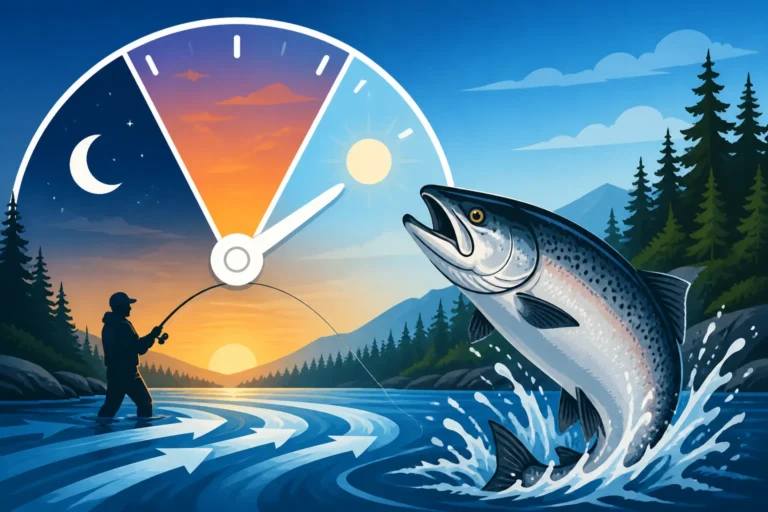
- Color and Clarity: The color and clarity of the water can influence your bait and lure choices. In murkier water, brighter colors or baits with strong scent might be more effective. In clear water, natural colors and less intrusive presentations are often key. Best Time of Day to Catch Salmon can also play a role, as light conditions change how fish perceive your offering.
A veteran angler can look at a stretch of river and almost instantly pick out the likely salmon lies. Spend time just observing the water before you even cast; you'll learn an incredible amount.
Bait and Lure Selection for Anchored Anglers
What you put on your hook is just as important as where you put it. Salmon have specific preferences, and these can change based on the species, the time of year, and even the river conditions.
- Natural Baits:
- Roe (Salmon Eggs): Fresh, cured salmon roe is an absolute killer for most salmon species, especially Chinook and Coho. It has a natural scent and appearance that salmon can’t resist. You'll often present roe in a mesh "roe bag" to keep it on the hook.
- Diced Herring or Sardine: Pieces of oily fish, especially when fresh, create an irresistible scent trail in the current. These are often fished on a single hook or a two-hook rig (tandem rig).
- Worms: While not as common for large migratory salmon, a juicy dew worm can sometimes entice a bite, especially from smaller trout or char that might also be present.
- Artificial Lures:
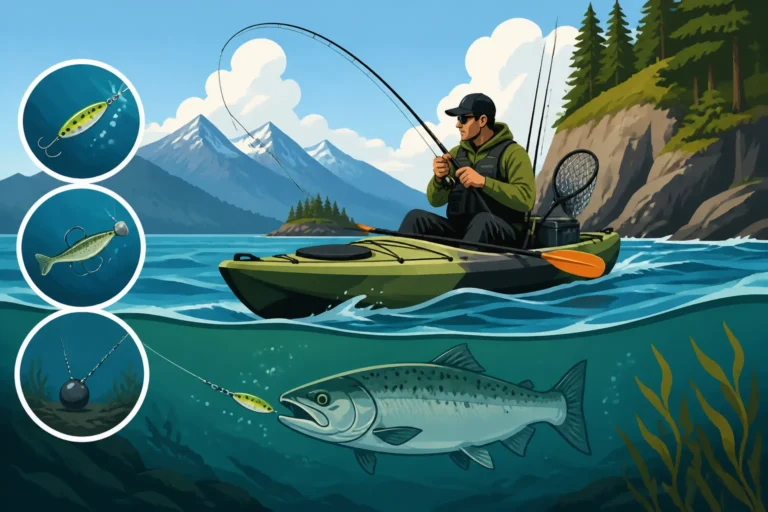
- Spinners: Big, bright spinners like the Gibbs Delta Croc or a large Mepps Aglia are classic choices. The blade's flash and vibration are highly attractive.
- Spoons: Wobbly spoons like the Luhr Jensen Kwikfish or Coyote spoons imitate wounded baitfish. They can be very effective when "back-trolled" from an anchored position, letting the current work the lure.
- Plugs/Wobblers: These dive and wiggle, creating a distinct action. Brands like Hot Shot or Flatfish are popular for their aggressive swimming action.
- Jigs: Heavy jigs tipped with a grub or a piece of bait can be very effective when bounced along the bottom.
When choosing between bait and lures, consider the specific salmon species you're targeting. For instance, Chinook Salmon Fishing in BC often involves roe or large spoons, while Coho Salmon Fishing in BC can be excellent with smaller spinners or jigs.
Presentation and Retrieve Techniques
Once your bait or lure is selected, how you get it to the fish and how you work it is critical.
- Bottom Bouncing: This is the bread and butter of bar fishing. Cast your bait upstream, letting it sink and tumble naturally along the bottom. The goal is for your weight to occasionally tap the bottom without snagging constantly. Keep just enough tension on your line to feel those taps. When a salmon bites, it often feels like a subtle tap or a sudden weight.
- Sliding Sinker Rig: As mentioned, this rig allows the line to pass through the weight, giving the salmon less resistance when they bite. This can be key for finicky fish. Your rod tip should be held high enough to keep your line out of snags but low enough to maintain contact with the bottom.
- Back-Trolling/Anchored Trolling: If allowed by regulations and feasible with your setup, you can deploy a lure and let the current work it downstream from your anchored position. This "back-trolling" effect gives the lure an enticing action without you having to reel. Just make sure your lines are clear and you're not interfering with other anglers.
- Regular Checks: Even with a great setup, your bait might get washed out, stolen by small fish, or just lose its scent. Reel in and check your bait every 15-20 minutes, or more frequently if you suspect something is off. Fresh bait is always best.
Remember that patience is a huge part of this technique. You are setting a trap in the path of migrating fish. Sometimes it takes time for them to find your offering. Being comfortable and vigilant is key.
Safety Considerations and Best Practices
River fishing, especially from an anchored boat, comes with its own set of safety concerns. British Columbia's rivers are beautiful but can also be powerful and unpredictable.
Anchoring Safety First
Before you even think about fishing, think about safe anchoring.
- Anchor Line: Always have plenty of anchor line. Running out of line in a fast current is a recipe for disaster. Keep your anchor line well-maintained and free of fraying.
- Anchor Retrieval: As mentioned, a retrieval buoy or a quick-release system for your anchor can be a lifesaver if you snag your anchor or need to move quickly in an emergency. Never tie your anchor line directly to a fixed part of the boat that can't be easily cut or released.
- Second Anchor/Emergency Plan: In very strong currents or large rivers, some experienced anglers carry a second, lighter anchor as a "drogue" or for emergency use if the main anchor drags. Always have a plan for what to do if your anchor fails or you get swept downstream.
- Clear Decks: Keep your boat deck clear of clutter to prevent tripping hazards, especially when a fish is on and the action gets intense.
Navigating Weather and River Conditions
Weather in BC can change in an instant, and river conditions can follow suit. Always check forecasts before heading out.
- Water Levels and Flow: Rivers can rise rapidly after heavy rain or snowmelt, increasing currents and bringing down debris. High, turbid water can make fishing difficult and dangerous. Consult local hydrographic data or river reports.
- Visibility: Fog, heavy rain, or even just low light can reduce visibility. Always have appropriate navigation lights if fishing at dawn, dusk, or night.
- Wind: Strong winds can make anchoring difficult, cause your boat to swing, and make casting a nightmare. They can also create dangerous choppy conditions on larger rivers.
- Debris: High water often means more logs and debris in the river, which can snag your lines, damage your boat, or even become a navigational hazard. Stay vigilant.
It’s always a good idea to tell someone where you're going and when you expect to return. Consider using a marine radio or satellite communicator in remote areas.
BC Boating Laws and Regulations for Anglers
Being on the water means adhering to specific regulations, not just for fishing but for safe boating.
- Pleasure Craft Operator Card (PCOC): If you're operating a motorized boat in BC, you'll generally need a PCOC. This card proves you have the basic knowledge to operate a boat safely. For more details, check out BC Pleasure Craft Operator Card Requirement.
- Life Jackets: Having enough Life Jacket Requirements for BC Boaters on board for everyone, and ensuring children are wearing them, is non-negotiable. It's not just a rule; it's smart safety.
- Required Safety Equipment: Beyond life jackets, there's a list of other safety equipment you must carry, including a whistle, bailer, throw bag, and fire extinguisher, depending on the size and type of your vessel. Make sure your boat meets all Transport Canada requirements.
- Fishing License: This goes without saying, but you absolutely need a valid BC freshwater fishing license and any necessary conservation stamps (like the Salmon Conservation Stamp) for the waters and species you're targeting. Always have it with you. You can learn more in our guide on Where and How to Buy a BC Fishing License.
- Fishery Notices: Always check BC Fishery Notices before heading out. These notices provide crucial, often real-time updates on closures, openings, and regulation changes that can drastically affect your fishing plans. You might find information on BC Fishery Notices and In-Season Closures, Explained helpful.
Being prepared and following regulations ensures that your day on the water is not only successful but also safe and legal. Remember, we share these beautiful waters, and responsible angling is key to preserving them for future generations.
Maximize Your Chances on the Water
Bar fishing for salmon in BC is a tradition for many, and for good reason. It’s effective, relaxing, and offers a unique way to connect with the incredible salmon runs of our province. While the specific tactics might vary slightly from the Thompson River Steelhead Fishing to the Fraser River Sockeye Closure Windows for salmon, the core principles of understanding your spot, using appropriate gear, presenting your offering well, and prioritizing safety remain the same.
Don't be afraid to experiment with different baits or lures if one isn't working. Sometimes a slight change in color or size can make all the difference. Talk to other anglers (respectfully, of course!) and don't be shy about asking for advice – most seasoned BC fishers are happy to share their wisdom. And remember, every trip out is a learning experience, whether you land that trophy salmon or just enjoy the peace of the river. Tight lines!
Disclaimer
This article is for general informational purposes only and does not constitute professional advice. Laws, prices and regulations vary by location and change over time. Consult a qualified professional for guidance on your specific situation.