Best months to catch steelhead in BC
Figuring out the absolute best time to chase steelhead in British Columbia can feel like trying to hit a moving target with a blindfold on. One year, the river is perfect in March; the next, it's blown out until April. It’s a common frustration for anglers, balancing work, family, and travel with the unpredictable nature of these incredible fish. This guide is going to peel back the layers on BC's steelhead seasons, giving you a comprehensive breakdown by month and region so you can plan your next chrome adventure with a lot more confidence.
Understanding British Columbia's Steelhead Seasons
Steelhead, those magnificent sea-run rainbow trout, are creatures of immense power and beauty, but they are notoriously elusive. Unlike salmon, which often return in predictable waves, steelhead timing can be much more nuanced, influenced heavily by a myriad of environmental factors.
The Elusive Nature of Steelhead Runs
When we talk about steelhead runs, it's not a single, province-wide event. British Columbia is a vast and ecologically diverse place, and what's happening on a coastal river near Vancouver in January is vastly different from a remote Skeena tributary in August. Steelhead runs are generally categorized into "winter" and "summer" strains, though there's often overlap and subtle distinctions like "spring" or "fall" fish depending on when they enter freshwater. Winter steelhead typically enter rivers from late fall through spring, spending many months in freshwater before spawning. Summer steelhead, on the other hand, enter rivers in the spring and summer, often holding in deep pools for months before spawning the following spring. This biological difference means that while one river might be prime for winter fish, another could be renowned for its summer-run counterpart. It's truly a puzzle that requires a bit of detective work and a lot of local knowledge to solve.
Key Factors Influencing Steelhead Timing
Successful steelhead fishing isn't just about showing up; it's about showing up when the conditions are right. Several critical factors dictate when and where these fish decide to make their grand entrance into freshwater.
First and foremost is water temperature. Steelhead prefer a specific temperature range, typically between 40-55°F (4-13°C). Too cold, and they might delay their entry or become lethargic. Too warm, especially for summer-run fish, and they might hold in cooler tributaries or deeper, oxygenated pools, making them harder to target and more susceptible to stress if caught. You can find excellent waterproof thermometers on Amazon that are handy for checking river temps.
Secondly, river levels and clarity are paramount. A sudden downpour can blow out a river, turning it into a murky, unfishable torrent for days. Conversely, prolonged dry spells can lead to extremely low and clear water, making fish spooky and difficult to approach. Snowmelt also plays a huge role, particularly in interior systems, causing rivers to rise and cool as spring progresses. A good "fishable" level usually means a river that’s dropping or stable after a rise, with a bit of color but not completely muddy. Keeping an eye on river gauges and local forecasts is absolutely essential.
While less impactful than for tidal salmon, moon phases and tidal influences can sometimes play a subtle role for steelhead, particularly on rivers with strong tidal pushes near their mouths. A big tide might encourage more fish to push into the lower river. However, for most steelhead rivers further upstream, water temperature and level remain the dominant factors.
A Month-by-Month Breakdown for BC Steelhead
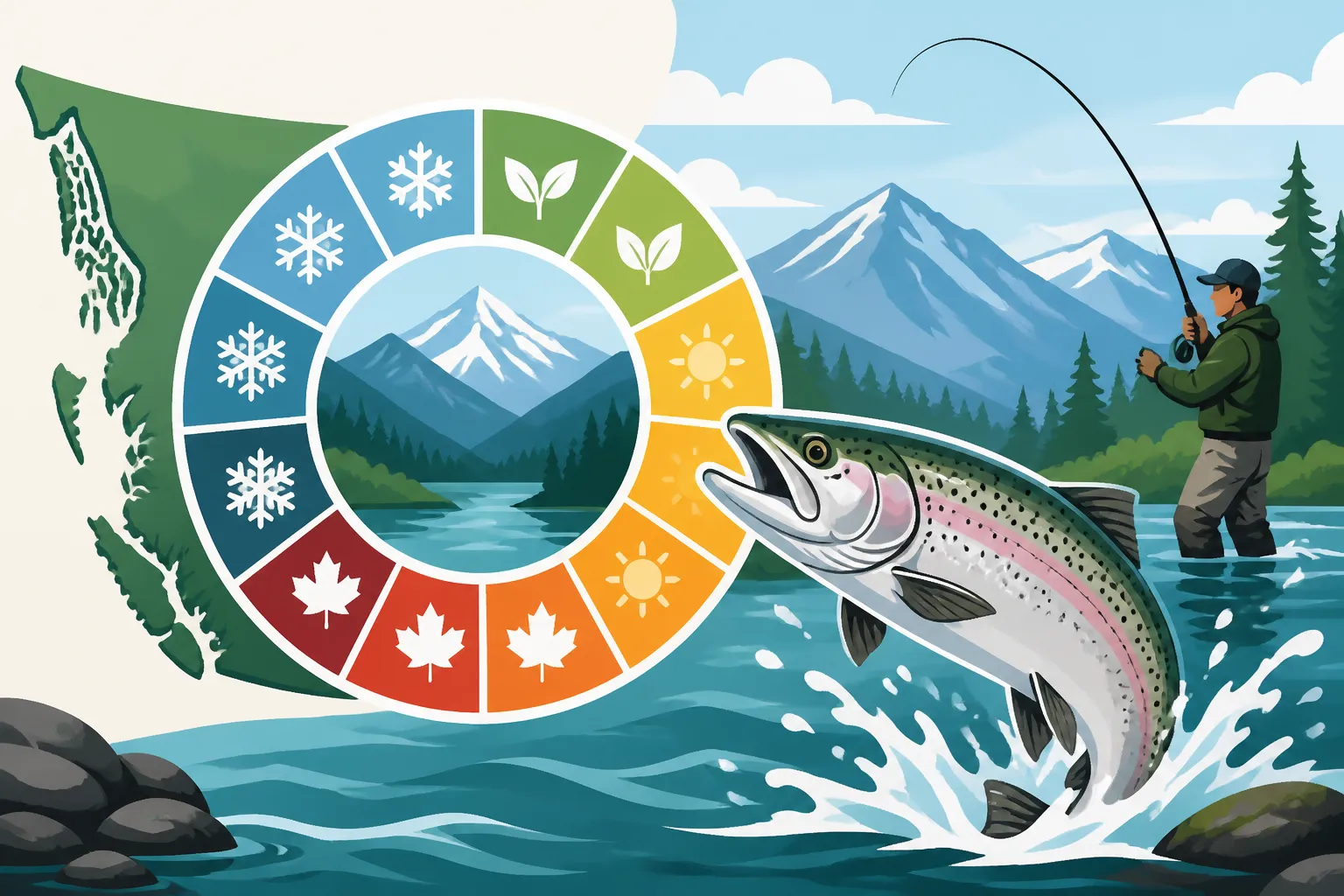
Let's dive into what you can generally expect throughout the year when targeting steelhead across British Columbia's diverse waterways. Remember, these are broad generalizations, and local conditions always trump general advice.
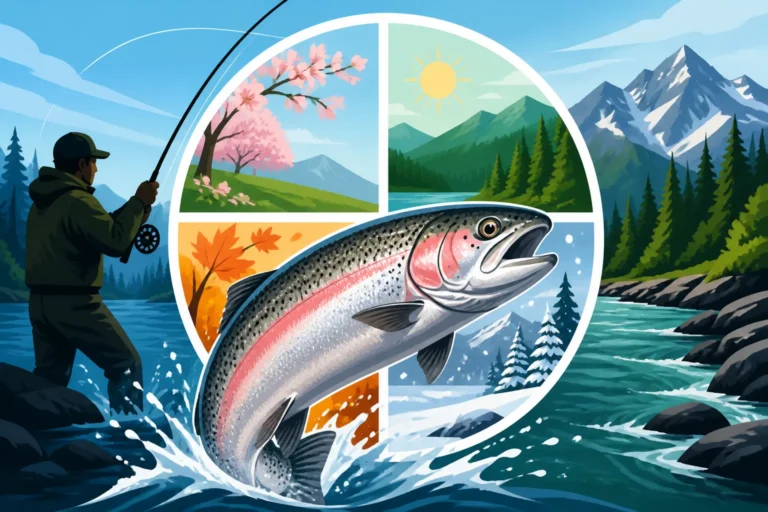
Winter Steelhead: December to February
As the days shorten and the chill sets in, many anglers pack away their gear, but for the dedicated steelhead enthusiast, winter is prime time on certain coastal rivers. From December through February, you're primarily looking at the South Coast systems, like the Chehalis, Stave, and particularly the Squamish River and the famed Vedder/Chilliwack River. These rivers are fed more by rain than snow, meaning they can fluctuate wildly with winter storms.
Fishing during these months often means braving cold, wet weather, and potentially high, murky water. But the reward? Big, powerful winter-run steelhead, often arriving fresh from the ocean, bright chrome, and full of fight. Techniques like drift fishing with roe, jigs, or various hardware are incredibly effective. Float fishing for Steelhead in BC Rivers with a durable float and a well-presented bait or jig is also a go-to method. You'll need reliable waders, warm layers, and perhaps a hot thermos of coffee to stay comfortable. Despite the challenging conditions, the solitude and the chance at a true trophy make winter steelhead fishing a deeply rewarding pursuit for those willing to endure the elements. You might find some excellent waterproof gear, perfect for these conditions, with a quick search on Amazon.
Spring Steelhead: March to May
For many, this is the quintessential steelhead season in British Columbia, especially as you move into the interior and northern regions. As winter loosens its grip, river temperatures begin to rise, and the melting snowpack starts to bring fresh water (and fresh fish!) into many systems. This period sees a surge in activity for both winter-run fish that have been holding in rivers and the earliest pushes of summer-run steelhead.
March and April are often peak months on several renowned rivers. The Bulkley River and its surrounding tributaries, part of the legendary Skeena system, can offer incredible opportunities as winter fish finish their migrations and summer fish begin to arrive. On the South Coast, rivers like the Vedder continue to produce into April, often seeing some of the last pushes of large winter steelhead. The Stikine, Kispiox, and even the mighty Thompson River historically would see strong spring runs, though conservation measures now often restrict fishing on some of these iconic systems.
Techniques vary from float fishing to traditional fly fishing, especially Spey casting with larger flies designed to entice aggressive fish. The water might still be high from snowmelt, but often has that perfect "steelhead green" clarity. The energy on the river during this time is palpable; it’s when many anglers feel the most optimistic about hooking into that chrome bullet. To improve your chances, understanding the Best Techniques for Early Spring Steelhead can make all the difference.
Summer Steelhead: June to August (and sometimes early September)
While most anglers associate steelhead with colder months, British Columbia boasts some of the world's most incredible summer-run steelhead fisheries. These fish, often referred to as "summer-runs," enter rivers in the spring and summer, sometimes as early as April, but hold in the system for many months, often until the following spring, before spawning. The most famous of these is undoubtedly the Dean River Steelhead Fishing, a true global icon.
From June through August, rivers like the Dean, some upper Skeena tributaries, and a handful of other remote systems come alive with these incredible athletes. Conditions are typically lower and clearer than winter or spring, which often means more emphasis on stealth, delicate presentations, and fly fishing. Dry fly fishing for steelhead, though challenging, can be incredibly exciting when conditions align. Nymphing and swinging smaller, unweighted flies are also popular.
Summer steelhead fishing, however, comes with its own set of responsibilities. Warmer water temperatures can stress fish more easily, so extreme care with catch-and-release is essential. Carrying a thermometer and avoiding fishing when water temperatures are too high (generally above 68°F or 20°C) is crucial for the health of the stock. It's a time for lighter gear, keen observation, and a deep appreciation for the pristine wilderness these fish inhabit. If you plan to wade, make sure you have appropriate footwear, as rocky riverbeds can be treacherous; a good pair of wading boots can be found on Amazon.
Fall Steelhead: September to November
As autumn leaves begin to fall and salmon crowd the rivers, a unique window for steelhead also opens, particularly for those systems with later-timed summer runs or the earliest pushes of winter fish. This is a transition period, and it can be highly productive if you know where to look.
In September and October, some of the northern and interior rivers, especially those tied to the Skeena watershed, can still offer fantastic summer-run steelhead opportunities as the water cools and fish become more active before the onset of winter. This period often overlaps with major salmon runs, which can mean more food in the system for steelhead (egg patterns can be very effective) but also more angling pressure and potentially more challenging conditions if the river gets crowded or turbid with spawning salmon activity.
By November, you're seeing the full transition back to winter steelhead season on coastal rivers. The very earliest winter-run fish start to arrive, and the conditions often mirror those of early December. It’s a great time to hit the Vedder or Squamish if you’re eager for that first shot at a chrome beauty of the season. Overall, the Best Time of Year to Fish in BC is heavily dependent on the specific species you’re targeting, and for steelhead, fall presents exciting, albeit variable, opportunities.
Regional Considerations and River-Specific Peaks
Understanding the general monthly breakdown is one thing, but British Columbia's geography means there are significant differences between regions. A coastal river's behavior can be vastly different from an interior system.
Coastal Rivers vs. Interior Systems
Coastal Rivers (like the Squamish, Chehalis, Vedder/Chilliwack, and many streams on Vancouver Island) are typically characterized by shorter, steeper gradients and are highly reactive to rainfall. They get consistent winter precipitation, so their steelhead runs are primarily focused on winter-run fish entering from late November through April. These rivers can go from clear to blown out and back again in a matter of days. Their flows are often more stable in summer but don't typically host large summer steelhead populations like their interior counterparts, with a few notable exceptions.
Interior Systems (such as the Fraser River tributaries like the Thompson, or the Skeena watershed rivers like the Bulkley, Kispiox, and Babine) are often much larger, longer systems. Their water levels are heavily influenced by snowmelt in the spring, leading to later clear-water fishing windows. They host significant summer-run steelhead populations, with fish migrating hundreds of kilometers upstream. Their winter conditions are much colder, often leading to ice, which shuts down fishing for many months. The Skeena River Steelhead Fishing, for example, is world-renowned for its summer and fall runs, a stark contrast to the winter-dominant coastal fisheries.
Key Rivers and Their Prime Windows
- Skeena River and Tributaries (Bulkley, Kispiox, Babine): This region is legendary for its summer and fall steelhead. While some early fish can show in late spring, the prime windows are generally August to October. The Bulkley River Guide Services and Kispiox River Guide Services are incredibly popular during these months. Keep an eye on the Steelhead Runs on BC's North Coast Rivers for the latest information.
- Thompson River: Historically, this river was famous for its late-fall/early-winter steelhead, often peaking in November and December. However, due to severe conservation concerns, the Thompson and its tributaries have faced extended closures in recent years. Always check the latest BC Fishery Notices and In-Season Closures, Explained before planning a trip here.
- Squamish/Cheakamus Rivers: These are classic Lower Mainland winter steelhead rivers. Prime fishing is typically from December through March, with some fish lingering into April. These rivers are easily accessible and popular for anglers based near Vancouver.
- Vedder/Chilliwack River: Another iconic South Coast winter steelhead fishery. The season generally runs from December to April, with peak activity often in February and March. It’s one of the most heavily fished rivers, but for good reason – it produces some magnificent fish.
- Dean River: The pinnacle of BC summer-run steelhead. The fishing here is exceptional from mid-June through August. Access is often via fly-in lodges, and conservation efforts, including strict catch-and-release and limited access, are paramount.
Essential Tips for Timing Your Steelhead Trip
Landing a steelhead is often about meticulous planning and adaptability. Simply knowing the best months isn't enough; you need to understand the dynamics that make those months successful.
Monitoring River Conditions
This cannot be stressed enough: always monitor river conditions. Local river gauges, often available online from government or regional district websites, provide real-time data on water levels and sometimes temperature. Couple this with detailed weather forecasts. A week of heavy rain can make a river unfishable for days, while a stable forecast after a slight bump in water can mean fantastic fishing.
Beyond official channels, engage with the local angling community. Call a local tackle shop in Terrace, Smithers, or Chilliwack a few days before your planned trip. They are on the ground daily, talking to guides and anglers, and often have the most up-to-date, hyper-local intel. Websites like FlyBC.ca or FishBC.com also often have forums or reports that can be invaluable. It's often better to be flexible with your dates if possible, allowing you to hit the river when it's just "dropping and clearing" after a rise.
Gear Up for Success
Steelhead fishing, particularly in BC's varied conditions, demands reliable gear. You'll be spending long hours in unpredictable weather, often covering difficult terrain.
- Waders and Boots: A good pair of breathable, durable chest waders is non-negotiable. Look for models with reinforced knees and seat. Pair them with sturdy wading boots that offer excellent ankle support and grip on slippery rocks. Investing in quality here pays dividends in comfort and safety. You can find highly-rated waders and boots from brands like Simms, Redington, or Patagonia, often available on Amazon.
- Layered Clothing: BC weather is notoriously fickle. Always dress in layers, using moisture-wicking synthetics or wool closest to your skin, followed by insulating layers, and a waterproof/windproof outer shell. Even in summer, evenings can be cool.
- Rods, Reels, and Line: This will vary depending on your chosen technique (fly, spin, or conventional). For fly anglers, Spey rods (12-15 ft, 7-10 wt) are popular for swinging flies, while single-hand rods (9-10 ft, 7-9 wt) are used for nymphing or dry fly work. For spin and gear anglers, a sensitive rod (9-11 ft, medium-heavy action) with a strong, smooth reel spooled with braided line and a fluorocarbon leader is common. Make sure your leader is strong enough to handle powerful fish and abrasive conditions. When shopping for these essentials, many anglers start their search online; Amazon offers a vast selection of fishing tackle from various reputable brands.
- Safety Gear: Don't forget essentials like a wading staff for stability, a first-aid kit, bear spray (especially in remote areas), and a way to communicate (satellite phone if out of cell service).
Consider a Local Guide
Especially if you're new to a particular river or region, or if conditions are particularly challenging, hiring a local, reputable fishing guide is an investment that often pays off handsomely. A good guide isn't just someone who puts you on fish; they understand the nuances of the river, the specific techniques required for the day's conditions, and can teach you invaluable skills. They'll also know the BC Fishing Regulations Explained inside and out, ensuring you stay within the law.
They know the access points, the holding lies, and can adjust tactics on the fly. For many of the world-class steelhead destinations in BC, like the Skeena system or the Dean, a guide is virtually essential, not just for success but for navigating the logistics of fishing these incredible, often remote, places. They often provide all the necessary gear, too, simplifying your trip planning. You can explore options for the Best Steelhead Guides in BC to find an experienced professional for your next trip.
Prime Steelhead Months by Major BC River
Here's a quick overview of general prime fishing windows for some of British Columbia's most notable steelhead rivers. Always remember to check current regulations and conditions before heading out!
| River System | Primary Steelhead Run | Prime Fishing Months (General) | Notes |
|---|---|---|---|
| Skeena River & Tribs | Summer/Fall Run | August – October | World-class for big summer-run fish. Requires dedication. |
| Bulkley River | Summer/Fall Run | August – October | Famous tributary of the Skeena, excellent fly fishing. |
| Kispiox River | Summer/Fall Run | August – October | Another Skeena trib known for large fish, often more challenging. |
| Dean River | Summer Run | Mid-June – August | Iconic for aggressive dry fly takes. Remote, fly-in access common. |
| Squamish River | Winter Run | December – March | Accessible coastal river, popular for gear and fly anglers. |
| Vedder/Chilliwack River | Winter Run | December – April | High-pressure, but very productive. Float and drift fishing common. |
| Thompson River | Late Fall/Winter Run | November – December | Historically famous, but currently faces significant conservation closures. |
| Vancouver Island Rivers | Winter Run | November – April | Many smaller systems offer excellent winter opportunities. |
Disclaimer
Fishing regulations, seasons, and access can change rapidly in British Columbia due to conservation efforts, environmental conditions, and management decisions. Always consult the latest official BC Freshwater Fishing Regulations Synopsis, BC Fishery Notices, and tidal water regulations (if applicable) before planning any fishing trip. It is your responsibility to know and follow all current rules and regulations.