Life Jacket Requirements for BC Boaters
The waters of British Columbia are undeniably breathtaking, from the serene calm of an Okanagan lake at dawn to the majestic, unpredictable currents of the Fraser River or the vast, powerful Pacific coastline. But as any seasoned boater or angler knows, these incredible environments also demand respect and preparation. One of the most critical, yet often misunderstood, aspects of boating safety is the requirement for life jackets. It can feel overwhelming trying to keep track of all the rules, especially when you just want to get out on the water, but this guide is here to cut through the confusion and explain exactly what you need to know about life jacket requirements for BC boaters, ensuring both your safety and compliance.
Why Life Jackets Aren't Just a "Rule" – They're Lifesavers
It's easy to view life jacket regulations as just another bureaucratic hurdle, another box to tick before you can cast off. But in BC, these aren't just arbitrary rules dreamt up by someone in an office. They are vital safeguards, born from harsh lessons and a deep understanding of our unique aquatic environments. When you're out on the water, whether you're navigating the busy waters of English Bay or exploring a remote inlet off Vancouver Island, a life jacket can be the single most important piece of gear you have.
The Harsh Realities of BC Waters
Let's be realistic: BC's waters are stunning, but they can be unforgiving. Even on a warm, sunny day, the water temperature in many of our lakes and rivers, and especially the ocean, can be dangerously cold. We're talking about temperatures that can induce cold water shock in just minutes – an involuntary gasp reflex that can lead to hyperventilation, disorientation, and even cardiac arrest. If you fall overboard without a life jacket in these conditions, even if you’re a strong swimmer, you might not have the presence of mind or physical ability to keep your head above water.
Beyond the temperature, consider the sheer power of our waterways. The Fraser River, for instance, has incredibly strong currents that can quickly sweep someone away, even in shallower sections. Coastal areas can experience sudden weather changes, with squalls rolling in unexpectedly, turning calm seas into choppy, dangerous conditions in a blink. Waves from passing vessels or natural phenomena can knock you off balance, and unforeseen obstacles under the surface can lead to sudden capsizing. It’s in these moments of unexpected crisis that a properly worn and fitted life jacket isn't just helpful – it's often the difference between a scary story and a tragic one.
The Legal Mandate and Personal Responsibility
Beyond the undeniable safety aspect, there's the clear legal obligation. Transport Canada, the federal body responsible for marine safety, sets the standards for all of Canada, and British Columbia adheres to these same regulations. This means that having the correct number and type of approved personal flotation devices (PFDs) or life jackets on board, and making sure they are accessible and in good condition, isn't just a suggestion; it's the law. Ignoring these regulations can lead to significant fines, but honestly, the financial penalty pales in comparison to the emotional and physical cost if someone were to drown because a life jacket wasn't available or wasn't worn.
It's about personal responsibility, not just for your own safety, but for everyone else on your vessel. As the operator, you are legally responsible for ensuring that all safety equipment, including PFDs, is on board and in proper working order. Imagine the guilt and grief if you were with loved ones and an accident occurred, and a simple piece of safety gear could have prevented a catastrophe. For more on the broader legal framework, check out our guide on BC Boating Laws for Anglers. The rules are there to protect us all, allowing us to enjoy the stunning beauty of BC's waters with peace of mind.
Understanding the Types of Personal Flotation Devices (PFDs) and Life Jackets
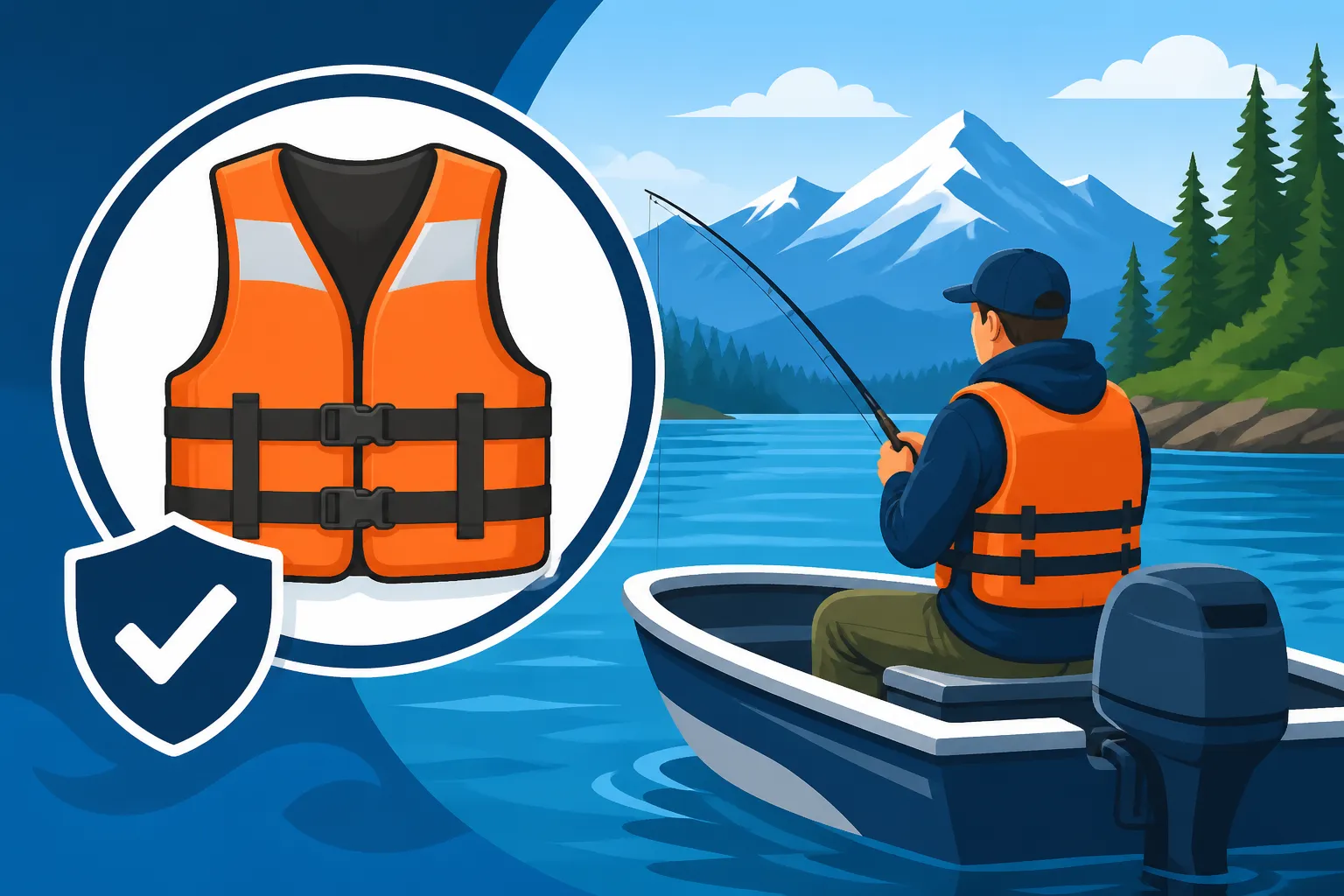
When you hear "life jacket," you might picture the bulky orange vests of yesteryear, but the world of personal flotation devices has evolved significantly. There’s a crucial distinction between a "life jacket" and a "PFD," and understanding this difference is key to ensuring you meet the requirements and, more importantly, stay safe on the water.
Approved PFDs and Life Jackets in Canada
In Canada, any PFD or life jacket you use must be approved by Transport Canada (often indicated by a ULC – Underwriters Laboratories of Canada – label). These approvals ensure that the device meets rigorous standards for buoyancy, construction, and performance.
So, what's the difference?
- Life Jackets: These are designed with one primary goal: to turn an unconscious person face-up in the water, even if they're injured or disoriented. They typically have more buoyancy in the front and a large collar to support the head. They're often bright orange, red, or yellow to maximize visibility. While excellent for emergency situations, they can sometimes be bulkier and less comfortable for active wear.
- Personal Flotation Devices (PFDs): PFDs are designed for comfort and mobility, making them ideal for continuous wear during activities like fishing, kayaking, or sailing. They offer similar buoyancy to life jackets but are not specifically designed to turn an unconscious person face-up. They come in a much wider array of styles, colours, and designs. They are generally more comfortable and less restrictive than traditional life jackets, which means you're more likely to actually wear one.
Both are acceptable for meeting the legal carriage requirements, but your choice might depend on your activity. For instance, if you're venturing far offshore or have less experienced swimmers on board, a traditional life jacket might be a better choice for maximum safety. For most recreational boating and fishing on interior lakes or calmer coastal waters, a well-fitting PFD is perfectly adequate and often preferred for comfort. When you're browsing online, perhaps looking at options on Amazon, always check for the Canadian approval label.
Choosing the Right Fit and Size
This might sound obvious, but a PFD or life jacket is only effective if it fits properly. Too loose, and it can ride up around your ears, hindering your movement and providing inadequate flotation. Too tight, and it's uncomfortable, leading you to take it off – which defeats the entire purpose! The fit should be snug but not restrictive, allowing for full range of motion.
Here’s how to check the fit:
- Try it on: Put the PFD or life jacket on and fasten all zippers, buckles, and straps.
- Lift test: Have someone gently pull up on the shoulders of the PFD. If it slides up past your ears, it’s too big.
- Wiggle test: Move around, sit down, and mimic your boating activities. It should feel secure without chafing.
Sizing isn't just about general categories like "adult" or "child." It's specific to weight ranges, and sometimes chest circumference. Always refer to the manufacturer's label for accurate sizing. For children and infants, proper sizing is even more critical. An infant PFD is very different from a child's PFD, designed specifically to support a baby's head and keep them face-up. Never put a child in an adult PFD, and always ensure a child's PFD is specifically rated for their weight. Remember, children are often legally required to wear a PFD at all times on board certain vessels, not just have one accessible. This is a subtle but important distinction; we cover more about this in our article Do Kids Need a Fishing License in BC? which also touches on age-related boating rules.
Specialized PFDs are also available for different activities. Kayakers and paddleboarders might prefer a vest with larger armholes for unrestricted paddling, or even inflatable belt packs. Anglers often appreciate fishing vests that double as PFDs, complete with pockets for gear. When you’re shopping for one, whether in a local tackle shop or online, take the time to compare styles and features. You want a PFD you'll actually want to wear.
Mandatory Carriage Requirements for Different Vessel Types
This is where things can get a little tricky, as the specific requirements for life jackets and PFDs depend heavily on the type and size of your vessel. It’s not a one-size-fits-all situation, and understanding these nuances is crucial for legal compliance and, most importantly, everyone's safety.
Small Boats, Canoes, Kayaks, and Stand-Up Paddleboards
For those of us who love the simplicity and close-to-the-water experience of human-powered vessels like canoes, kayaks, and stand-up paddleboards, the rules are very clear. Every person on board these vessels must have an approved PFD or life jacket of appropriate size. And here’s the kicker: it needs to be "readily accessible."
What does "readily accessible" mean? It doesn't mean stuffed in a dry bag at the bottom of your kayak's hold, or under a seat in your canoe, buried beneath a cooler. It means it must be immediately available for use. Ideally, you should be wearing it. This is especially true for paddleboards and kayaks, where a sudden capsize is more common and recovery can be challenging, especially in cold water or strong currents. If you fall off a paddleboard, retrieving a PFD strapped to the board might be impossible in windy or choppy conditions.
For these smaller vessels, it’s also important to remember that they are often subject to the same safety equipment regulations as larger boats, even if they don't have a motor. This means other items like a buoyant heaving line, bailer, or whistle might also be required. It’s always best to be over-prepared, especially when you’re relying solely on your own power. If you're wondering about great places to paddle, check out our insights on Best Kayak Fishing Spots in BC.
Motorized Boats (Personal Watercraft to Larger Vessels)
When it comes to motorized vessels, the requirements typically get a bit more robust, reflecting the higher speeds and potential for more severe accidents.
- Personal Watercraft (PWC): If you're operating a Jet Ski or similar personal watercraft, the rule is unambiguous: every person on board must wear an approved PFD or life jacket. There's no "readily accessible" wiggle room here. Given the high speeds and dynamic nature of PWC operation, falling off is a definite possibility, and wearing your PFD is a non-negotiable safety measure.
- Other Motorized Boats (including fishing boats): For all other motorized boats, you must have one approved PFD or life jacket of appropriate size for each person on board. Again, these must be "readily accessible." This means they should be stored in an open compartment, hanging on hooks, or on seats – somewhere you can grab them within a few seconds in an emergency. They shouldn't be under lock and key, buried under a tarp, or stowed in a hard-to-reach locker.
For larger vessels (over 6 meters or 19 feet 8 inches), the safety equipment list expands even further. You'll not only need PFDs but also things like a buoyant heaving line (at least 15 meters long), a reboarding device if the freeboard is over 0.5 meters, firefighting equipment, navigation lights, and sound-signalling devices. It’s a good idea to consult the full Transport Canada safe boating guide or our article BC Required Boat Safety Equipment Checklist to ensure you have everything covered. And remember, if you're taking guests out, especially kids, you need to have PFDs that fit them properly.
Age-Specific Requirements and Exemptions
This is an area where a lot of confusion arises, particularly for families heading out on the water. While there are no hard-and-fast age-based legal requirements for wearing a PFD for adults in most scenarios (except PWC), the rules are much stricter for children.
- Children: While Transport Canada regulations don't mandate that children wear their PFDs at all times on all types of vessels, many municipalities, marinas, and even individual boat operators choose to implement this rule for obvious safety reasons. On smaller, open vessels (less than 6 meters), it is highly recommended and often enforced that children under a certain age (e.g., under 12) wear their PFDs constantly. Always check local bylaws or the policies of your chosen marina or charter service. When you’re dealing with kids, it’s simply best practice to have them wear a properly fitting PFD from the moment they step on the dock until they are safely back on shore.
- Infants: PFDs for infants are a special category. They are designed for very small children, typically under 20 lbs (9 kg), and have extra head support to keep the baby's mouth and nose clear of the water. Just like with older children, ensuring a snug, safe fit is paramount.
Are there any exemptions? Generally, no. Every person on board a vessel in Canada must have access to an approved PFD or life jacket. There are no exemptions for strong swimmers, professional athletes, or even those just cruising in calm, shallow waters. The only potential "exemption" is if a vessel is engaged in a specific activity where wearing a PFD would be impractical (e.g., competitive swimming, certain professional diving operations), but these are extremely rare for recreational boaters. For most of us, if you're on a boat, you need a PFD.
Maintaining Your PFDs and Life Jackets for Optimal Safety
Having the right PFDs on board is one thing, but ensuring they remain in peak condition is another. A damaged or improperly maintained life jacket can fail when you need it most, turning a vital piece of safety equipment into a dangerous false sense of security. Just like you wouldn't trust a frayed fishing line with a trophy salmon, you shouldn't trust a compromised PFD with a life.
Regular Inspection and Care
Think of your PFDs like any other piece of gear you rely on: they need regular checks. Before every boating season, and ideally before each trip, give all your PFDs a thorough once-over.
Here's what to look for:
- Fabric and Seams: Check for tears, punctures, excessive fading, or mildew. Any significant damage can compromise the integrity of the buoyancy material.
- Straps and Buckles: Ensure all straps are securely attached and not frayed. Check buckles for cracks or damage that could cause them to fail under pressure. Zippers should operate smoothly and fully.
- Foam Inserts: If your PFD uses foam, squeeze it to check for rigidity. Over time, foam can become compressed or waterlogged, losing its buoyancy. If it feels hard or brittle, or if it has a noticeable change in texture, it might be compromised.
- Inflatables (if applicable): For inflatable PFDs, inspect the CO2 cylinder to ensure it's not corroded and that the indicator shows it's armed. Check the oral inflation tube for damage. Inflatables require more specific maintenance, often including periodic re-arming and professional inspection.
Proper care after use is just as important. Always rinse your PFDs with fresh water after use, especially if they've been in saltwater, to remove salt, sand, and grime. Hang them to air dry completely out of direct sunlight. Never store a wet PFD, as this encourages mildew growth and can damage the fabric and foam. Avoid harsh cleaning chemicals, which can degrade the materials. Store them in a well-ventilated area, away from extreme temperatures and direct sunlight, which can cause UV degradation. This kind of attention to detail not only ensures safety but also prolongs the life of your gear.
When to Replace a PFD or Life Jacket
Even with the best care, PFDs and life jackets don't last forever. They are subject to wear and tear from sun, salt, and general use. There’s no strict expiry date stamped on them like a carton of milk, but there are clear indicators it’s time for a replacement.
You should consider replacing a PFD or life jacket if:
- Visible Damage: Any significant tears, rips, or punctures that expose the inner foam, or any broken straps, zippers, or buckles, mean it’s time for a new one. Don't try to repair it; the structural integrity is likely compromised.
- Loss of Buoyancy: This is harder to detect visually. One good way to check is to perform a buoyancy test: put on the PFD in shallow water and see how well it supports you. It should easily keep your head and chin above the water without you having to exert much effort. If you find yourself sinking or struggling, it's a clear sign its buoyancy has diminished.
- Age and Fading: While not always indicative of failure, excessive fading and degradation from UV exposure can weaken the fabric over time. If your PFD looks significantly faded or worn, it's likely its materials have been compromised.
- Growth: For children's PFDs, they simply outgrow them. A PFD that fit perfectly last year might be too small this year. Always re-check the fit at the start of each season.
When it's time to replace, consider investing in a new, Transport Canada-approved model. You can find a wide range of options through various retailers, including online platforms like Amazon, where you can often read reviews and compare features to find the best fit for your needs. Remember, a new PFD is a small investment for invaluable peace of mind.
Consequences of Non-Compliance and Enforcement
No one wants to get a fine, especially when you're just trying to enjoy a relaxing day on the water. But when it comes to life jackets, the consequences of non-compliance extend far beyond a monetary penalty. Ignorance of the law is rarely an excuse, and enforcement officers take these regulations very seriously, and for good reason.
Fines and Penalties
Transport Canada sets the overarching regulations, and various agencies are empowered to enforce them across British Columbia. This includes Transport Canada Marine Safety Inspectors, RCMP, municipal police forces, and even BC Conservation Officers. They have the authority to board your vessel, inspect your safety equipment, and issue fines on the spot.
The fines for not having the correct number of approved PFDs/life jackets, or for having them improperly stowed (i.e., not readily accessible), can be substantial. While the exact amounts can change, you could be looking at fines upwards of $200 per infraction, and sometimes more, especially if multiple deficiencies are found. This could mean a separate fine for each missing or non-compliant PFD. Imagine a family of four heading out on a boat with only two PFDs, or with all four stuffed under a locked compartment – that could quickly add up to hundreds of dollars in fines, not to mention the potential for your trip to be cut short.
Beyond the immediate fine, there's the broader legal implication. In the event of an accident, if it's found that you were not compliant with safety regulations, it could affect your insurance coverage, expose you to greater personal liability, and even lead to more serious charges if injuries or fatalities occur. It’s simply not worth the risk. Just as fishing without a license carries penalties, as detailed in our Fishing Without a License in BC: Penalties article, operating a boat without proper safety gear is a serious offense.
Real-World Scenarios and Lessons Learned
It's easy to think, "It won't happen to me." But accidents on the water can happen to anyone, regardless of experience. A sudden rogue wave, an unexpected mechanical failure, or a collision with another vessel can turn a calm day into a critical situation in an instant. There have been countless heartbreaking stories in BC where lives could have been saved if PFDs had been readily available or worn.
Consider this hypothetical: a beautiful summer day on Okanagan Lake. A family of four, parents and two young children, are enjoying a runabout. Suddenly, a fast-moving wake from a larger cruiser catches them off guard. The boat rocks violently, and one of the children, who wasn't wearing their PFD, is thrown overboard. In the chaos, with the boat still rocking and the parents trying to regain control, valuable seconds are lost trying to locate and don a PFD. In cold water, those seconds can be the difference between life and death. If that child had been wearing their properly fitted PFD, the outcome would likely have been entirely different.
The frustrations of remembering all the regulations are valid. It often feels like there’s a new rule every season. But when it comes to life jackets, the message is simple: they save lives. The minor inconvenience of wearing one or ensuring they are easily accessible pales in comparison to the peace of mind and the ultimate protection they offer. So, let's all commit to making our BC boating experiences not only memorable but also as safe as possible.
PFD and Life Jacket Requirements at a Glance (Motorized Vessels)
To help you quickly reference the general requirements for motorized vessels, here's a handy table. Remember, always consult the official Transport Canada Safe Boating Guide for the most comprehensive and up-to-date information for your specific vessel.
| Vessel Length | PFD/Life Jacket Requirement | Accessibility | Additional Notes |
|---|---|---|---|
| Personal Watercraft (PWC) | One approved PFD/Life Jacket per person | Must be WORN | Operator and all passengers must wear them at all times. |
| Less than 6 meters (under 19' 8") | One approved PFD/Life Jacket per person | Readily accessible | Includes most small fishing boats, tenders, runabouts. |
| 6 to 9 meters (19' 8" to 29' 6") | One approved PFD/Life Jacket per person | Readily accessible | Also requires a buoyant heaving line, reboarding device if freeboard >0.5m, etc. |
| 9 to 12 meters (29' 6" to 39' 4") | One approved PFD/Life Jacket per person | Readily accessible | More extensive safety equipment list applies (e.g., sound-signalling device, extra flares). |
| Over 12 meters (over 39' 4") | One approved PFD/Life Jacket per person | Readily accessible | Comprehensive safety equipment list, often includes additional life rafts. |
Note: For human-powered vessels (canoes, kayaks, SUPs), one approved PFD/Life Jacket per person is also required and should ideally be worn or immediately accessible.
Disclaimer
Please remember that this guide provides general information based on current regulations. Boating laws and regulations, particularly those regarding safety equipment, can change. Always consult the most current Transport Canada Small Vessel Regulations and local bylaws to ensure full compliance before heading out on the water. Your safety is your responsibility.