Best water temperature for steelhead fishing
Many anglers spend countless hours on British Columbia's famed rivers, chasing the elusive steelhead, only to come up empty-handed. It’s easy to get frustrated when you've done everything right—picked the perfect fly, presented it flawlessly—yet the fish just aren't biting. Often, the missing piece of the puzzle isn't your technique, but something far more fundamental: the water temperature. This guide will dive deep into understanding the optimal water temperatures for steelhead fishing in BC, helping you unlock more successful days on the water.
Understanding the Ideal Water Temperature Range for Steelhead
When you're out on a British Columbia river, whether it's the renowned Skeena system or a lesser-known coastal stream, one of the most crucial environmental factors influencing your success is water temperature. Steelhead, like all fish, are cold-blooded creatures. This means their body temperature, and consequently their metabolism, activity levels, and willingness to strike, are directly dictated by the temperature of the water around them. Ignoring this critical detail is like trying to bake a cake without knowing the oven temperature – you might get something, but it won't be consistently good!
Why Temperature Dictates Steelhead Behavior
Think of water temperature as the master control switch for a steelhead's entire existence. In icy cold water, their metabolism slows to a crawl. They move less, feed less, and generally act like they're in a deep winter slumber. This isn't because they're being finicky; it's a survival mechanism to conserve energy in harsh conditions. They're just not burning many calories and therefore don't have a strong urge to chase down a meal. On the flip side, if the water gets too warm, they become stressed. Warmer water holds less dissolved oxygen, and their increased metabolic rate demands more of it. This can make them lethargic, prone to disease, and certainly not in the mood to aggressively strike your offering.
This delicate balance means steelhead are constantly seeking out their "comfort zone" – a specific thermal band where oxygen levels are adequate, their metabolism is efficient, and they have enough energy to migrate, avoid predators, and occasionally feed. Understanding this comfort zone is the first step in knowing How to Catch Steelhead in BC effectively. Often, within a single river, you'll find subtle temperature variations that dictate exactly where the fish are holding, whether it's a slightly deeper pool, a shaded bank, or a faster current that provides more oxygen.
The Optimal Temperature for Active Steelhead
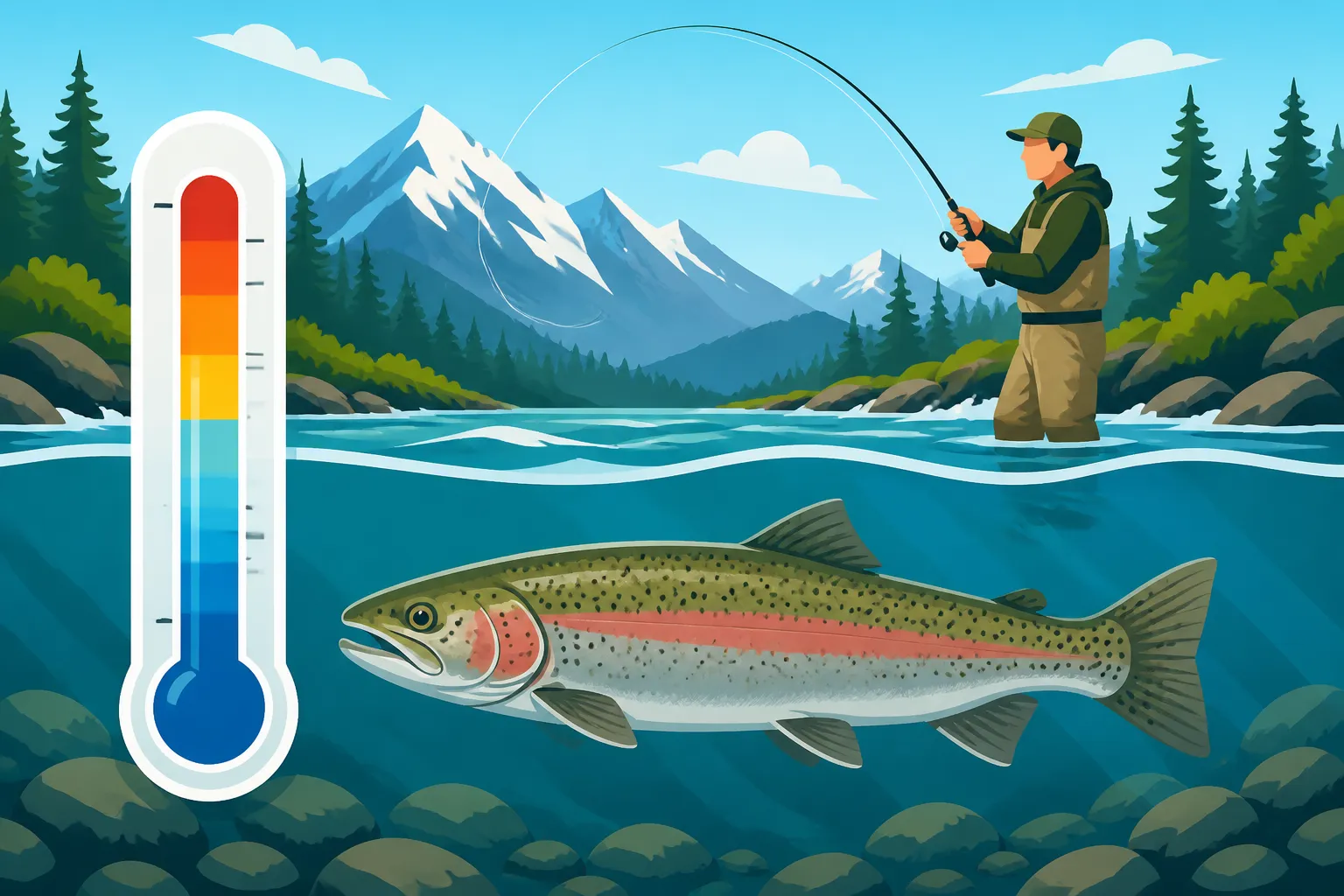
So, what's the magic number? Generally, the sweet spot, often referred to as the "Goldilocks Zone" for active steelhead, falls between 42°F and 55°F (6°C to 13°C). Within this range, steelhead are typically most active, responsive, and aggressive. This is when they're making strong migratory pushes upriver, staging for spawning, or beginning to drop back to the ocean. Their predatory instincts are high, and they're more willing to expend energy to investigate a fly or lure.
When water temperatures are in this optimal band, steelhead have a healthy metabolism that supports both their demanding migrations and their need for sustenance. They are often found in a variety of water types – from long, sweeping runs to deeper pools and even riffles – as they feel comfortable enough to move and forage. This window represents prime conditions for anglers, as the fish are likely to be distributed more broadly throughout a system and more receptive to a wider array of fishing techniques. If you're wondering When steelhead run in BC rivers or the Best months to catch steelhead in BC, these optimal temperatures often align with those peak periods.
Navigating Different Temperature Scenarios on BC Rivers
While the optimal range is a great target, BC rivers are incredibly dynamic. Temperatures can fluctuate significantly throughout the day, across different seasons, and even depending on recent weather events like rainfall or snowmelt. A truly successful steelhead angler understands how to adapt when conditions are not "ideal," or even when they swing to the extremes.
Fishing in Cold Water Below 40°F (4°C)
When water temperatures dip below 40°F (4°C), steelhead enter a state of increased lethargy. Their movements become minimal, and they're typically found holding tight to the bottom in deeper, slower pools where they can conserve energy. It's not that they won't bite; it's just that they have very little incentive to. They are less likely to chase a fly or move any significant distance for a presentation. This is the realm of winter steelhead fishing, which can be incredibly challenging but also incredibly rewarding for those who dial in their tactics.
In these frigid conditions, your approach needs to be extremely deliberate. Think slow, deep, and direct. You'll need heavier flies or more weight to ensure your offering gets right into their face. Steelhead won't typically move up or across the current for a fly, so your presentation needs to practically bump them on the nose. This is where methods like carefully weighted nymphing or drift fishing with plenty of lead truly shine. Sometimes, larger, more intrusive patterns can provoke an "irritation strike" from a lethargic fish that doesn't want something in its personal space. Patience is key, as is the ability to thoroughly work a run, knowing that each strike might be your only shot. This is a critical consideration for Best Techniques for Winter Steelhead.
The Prime Zone: 42°F to 55°F (6°C to 13°C)
As we've discussed, this is the sweet spot where steelhead are typically at their most active and aggressive. The metabolism is buzzing, oxygen levels are good, and they are feeling frisky. You'll find them spread out in various parts of the river, from the heads of pools to current seams, tailouts, and even faster riffles. They're actively migrating, holding, or perhaps even beginning to stage for spawning, and they're much more willing to move for a well-presented fly or lure.
In this prime temperature range, a wide array of techniques can be highly effective. This is when swinging flies with a two-handed rod can be incredibly productive, as steelhead will often move to intercept a perfectly presented intruder or spey fly. Traditional drift fishing with bait, beads, or jigs can also be deadly, allowing you to cover water and present your offering naturally. Techniques like Float Fishing the Bulkley River or Drift Fishing for Steelhead in BC Rivers truly shine. Focus your efforts on current seams, submerged structure, and transition zones where faster water meets slower water – these are classic ambush points for active steelhead. Experiment with different depths and retrieves until you find what triggers a response.
Warmer Water Above 55°F (13°C)
Once water temperatures climb above 55°F (13°C), steelhead begin to experience stress. The higher temperature means less dissolved oxygen in the water, and their increased metabolic rate means they require more of it. This combination can be detrimental, leading to exhaustion, disease, and even mortality if they are fought too long or handled improperly. In such conditions, steelhead will seek out cooler, more oxygenated water, which might be in deeper pools, shaded areas, or spots with stronger current.
Angling for steelhead in warm water requires extreme caution and a strong commitment to conservation. If temperatures push towards 60°F (15.5°C) or higher, it's often best to put the rod down and give the fish a break. Many conservation organizations and even some specific BC Fishery Notices and In-Season Closures, Explained will advise against fishing for sensitive species like steelhead during prolonged periods of warm water. If you do choose to fish, minimize fight times, keep the fish in the water, and handle them as little as possible. Releasing a fish quickly and safely, much like the advice in Sturgeon catch and release survival tips (though for a different species, the principle of minimizing stress is universal), becomes paramount. It’s about prioritizing the health of the fishery over personal gratification.
Practical Application: Measuring and Adjusting Your Approach
Knowing the optimal temperature range is one thing; actually applying that knowledge on the river is another. It requires a bit of gear and a willingness to adjust your tactics based on real-time data. Don't just guess – a thermometer is your most powerful tool in the steelhead angler's arsenal.
Essential Gear: The Water Thermometer
Honestly, a reliable water thermometer is just as important as your favorite fly reel. You wouldn't drive a car without a speedometer, so don't fish without knowing the water temperature! These handy little devices are relatively inexpensive and can be picked up at most outdoor stores or easily found on online retailers like Amazon. You can opt for a simple, rugged analog model that clips to your vest or a more modern digital version for a quicker, more precise readout. The key is to have one with you and use it regularly.
When you're measuring, try to get a reading from the main current where the fish are likely to be holding, not just a shallow eddy or sunny bank that might give you a misleading warm reading. Take readings in different parts of a run – you might be surprised how much temperature can vary even over a short distance, especially where tributaries enter or deep pools are present. Knowing the temperature is the first step toward making informed decisions about where and how to fish.
How to Adapt Your Tactics Based on Temperature
Once you have that temperature reading, it's time to put it to work. Here’s a breakdown of how to adapt your strategy:
-
Cold Water (Below 40°F / 4°C):
- Presentation: Slow, slow, slow. Think dead drifts that allow your fly or bait to linger in the strike zone for as long as possible. Steelhead won't move quickly, so you need to bring the offering directly to them. Longer pauses between strips if you're retrieving, or extended drifts with indicators are key.
- Depth: Get down! Steelhead will be hugging the bottom, often in the deepest parts of pools or runs. Use extra weight, heavier sink tips, or dense sinking lines to ensure your offering is practically bouncing on the gravel.
- Flies/Lures: Go for larger patterns that offer a bigger profile or use bright, contrasting colors to grab their attention. Sometimes, natural offerings like egg patterns or worms can be effective, appealing to their dormant feeding instincts.
- Timing: Mid-day, when the sun has had a chance to potentially warm the water a degree or two, can often be the most productive time during very cold conditions.
-
Optimal Water (42°F to 55°F / 6°C to 13°C):
- Presentation: This is your playground! Experiment with a variety of retrieves and drifts. Swung flies, drift fishing with indicators, nymphing, or even twitching spoons or spinners can all be highly effective. Steelhead are more willing to chase, so covering water with dynamic presentations works well.
- Depth: Fish the entire water column. Steelhead might be holding in various depths, from deeper runs to shallower riffles. Focus on current seams, submerged structure, and transition zones.
- Flies/Lures: Almost anything goes. Intruders, weighted nymphs, streamers, spoons, spinners – choose patterns that mimic baitfish or provide a strong visual presence. Your favorite local patterns will likely shine here.
- Timing: Early morning, late afternoon, or any time of day can be productive. Keep an eye on the weather and river conditions, but in this range, the fish are generally active.
-
Warm Water (Above 55°F / 13°C):
- Presentation: If you absolutely must fish, focus on extremely subtle presentations and minimize any fight time. The goal is to hook and release the fish as quickly as possible with minimal stress.
- Depth: Seek out the coolest, most oxygenated water you can find – usually the deepest, most shaded pools with strong current.
- Flies/Lures: Smaller, more subtle patterns that don't require much energy from the fish to chase.
- Timing: Avoid mid-day. Early morning or late evening might offer slightly cooler temperatures, but seriously consider if it's worth the risk to the fish. Conservation is paramount.
Water Temperature Range (Fahrenheit / Celsius) Steelhead Behavior Recommended Fishing Tactics
:## Disclaimer
Please note that the information provided in this article is for general informational purposes only and does not constitute legal advice or an endorsement of any particular fishing method or location. Fishing regulations in British Columbia are complex and subject to change. Always consult the most current British Columbia Freshwater Fishing Regulations Synopsis, applicable DFO (Department of Fisheries and Oceans) Pacific Fishery Notices, and relevant provincial boating regulations before heading out. It is the angler's responsibility to know and follow all applicable rules and regulations.