BC fishing license reciprocity on shared US border waters
It can be incredibly confusing and frustrating trying to figure out fishing license requirements, especially when you’re planning a trip to those beautiful border waters between British Columbia and the United States. Many anglers wonder if their US state license is valid on the Canadian side, or vice-versa, to avoid the hassle and expense of buying multiple permits. This guide is here to untangle those complexities, explain the realities of license reciprocity, and ensure you’re fully compliant when casting your line in shared BC-US waters.
Understanding BC's Fishing License Requirements for Border Waters
Navigating the rules for fishing on shared border waters can feel like trying to read a map in the dark. You’re excited to hit the water, maybe chasing after a trophy sturgeon or some feisty salmon, but the last thing you want is a hefty fine because you misunderstood a regulation. Let’s clear the air and ensure you’re always on the right side of the law when fishing British Columbia’s side of the border.
The Fundamental Rule: Always Have a BC License
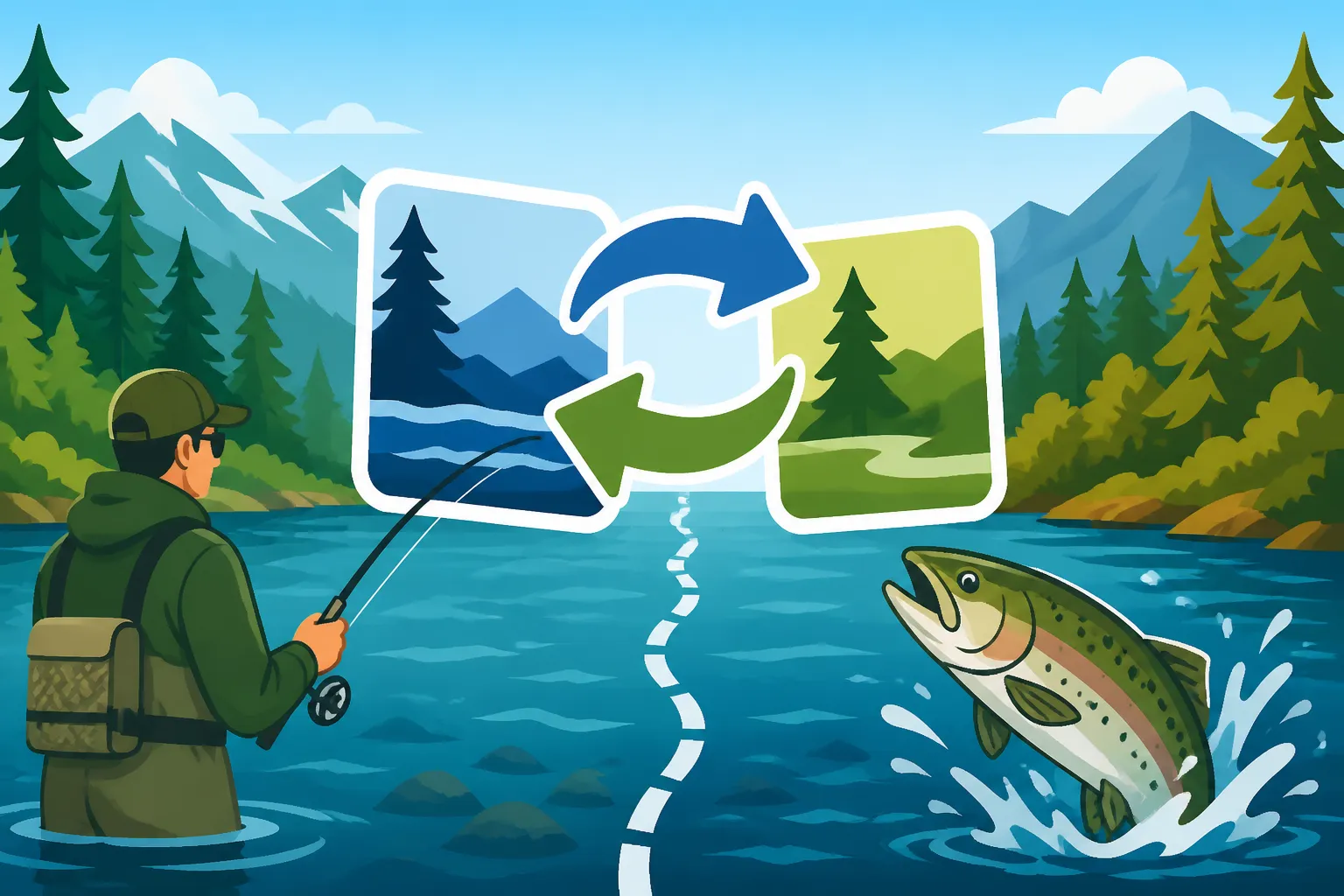
Here’s the absolute, non-negotiable truth that many cross-border anglers often misunderstand: if your hook is in Canadian waters, you need a valid British Columbia fishing license. It doesn't matter if you launched your boat from a marina in Washington State, if you're only "just over the line," or if you have a perfectly valid and expensive fishing license for Idaho, Montana, or Washington. Your US license, no matter how comprehensive it is for your home state, simply does not cover you in Canadian provincial or federal waters.
Think of it this way: when you drive your car across the border, you need to obey the traffic laws of the country you're in, even if they differ from your own. Fishing licenses operate under a very similar principle. The jurisdiction where you are actively fishing dictates the license you need. This is a crucial point for anyone planning to fish waters that straddle the international boundary, such as parts of the Columbia River, Boundary Bay, or various smaller streams and lakes. Ignoring this can lead to significant penalties, including fines and confiscation of your gear, which can quickly ruin a fantastic fishing trip. You can learn more about the consequences in our guide on Fishing Without a License in BC: Penalties.
Specific Waters and Jurisdiction
British Columbia shares land and marine borders with several US states, and each area might present unique considerations, though the core licensing principle remains. For instance, the mighty Columbia River winds its way through both BC and Washington State. While the river might seem continuous, the moment you cross the invisible 49th parallel line, you’re in a different jurisdiction with different rules and, yes, different licensing requirements.
Similarly, marine waters like Boundary Bay, which lies between the Lower Mainland of BC and Washington State, are clearly delineated. One side is Canadian tidal water, the other is US tidal water. There are no grey areas when it comes to the line itself; it's a hard boundary. Even if you're trolling from a US-registered vessel, if your gear is deployed in Canadian waters, you must possess a valid BC Tidal Waters Fishing License, which typically also requires a Salmon Conservation Stamp if you intend to fish for or retain salmon. Understanding the specific nuances of BC's freshwater versus tidal licenses is also key, which is thoroughly explained in BC Freshwater vs Tidal Waters License, Explained.
The "Where You Fish" Principle
Let’s reiterate and expand on the "where you fish" principle because it's the bedrock of understanding cross-border fishing licenses. It means that the physical location of your fishing line, specifically where your hook is submerged, determines which government’s rules and licenses apply. This isn't about where your boat is registered, where you launched, or even where you intend to land your fish. It's strictly about the water column you're actively engaging with for fishing.
Consider a scenario: you launch your boat from Blaine, Washington, and motor into Boundary Bay. If you drop your lines on the US side of the 49th parallel, your Washington State license is sufficient. However, if you drift even a few hundred feet north and drop your lines into Canadian waters, you immediately need a valid BC Tidal Waters Fishing License. The same applies in reverse. If you launch from White Rock, BC, and drift south, once your line crosses into US waters, you'd need a Washington State license. This often means cross-border anglers carry licenses for both jurisdictions if they plan to traverse the international boundary during their fishing day. It’s always best to be overly cautious and clearly know where the border lies on your GPS or chart plotter, especially in marine environments where currents can quickly shift your position.
Reciprocity Agreements: Fact vs. Fiction
The idea of "reciprocity" is a tempting one for anglers who fish near international borders. It would be wonderfully convenient if a license from Washington State automatically covered you in British Columbia. Unfortunately, when it comes to fishing, reality often falls short of convenience, especially across international lines.
The Reality of Formal Reciprocity
Let's address the elephant in the room: formal, blanket fishing license reciprocity between British Columbia and any US state simply does not exist. This is a common misconception, fueled by wishful thinking or perhaps by limited, local agreements that are often misunderstood or misapplied. The fisheries management systems in Canada (federal and provincial) and the United States (federal and state) are distinct, with different conservation goals, revenue streams, and regulatory frameworks. Harmonizing these across the entire border would be an immense undertaking, and for now, it hasn't happened.
What this means for you, the angler, is that you cannot rely on your US state fishing license to legally fish in any BC waters. Conversely, a BC license will not grant you permission to fish in US waters. This applies to all species, from salmon and halibut in the ocean to trout and sturgeon in freshwater rivers and lakes. Each jurisdiction requires its own, separately purchased license. If you're planning a trip, budget for both if you expect to fish on both sides of the invisible line. Information on acquiring a BC license can be found in our guide on Where and How to Buy a BC Fishing License.
Navigating Exceptions and Special Cases
While broad reciprocity is a myth, there can occasionally be very specific, limited agreements or unique situations that might appear to be reciprocity but are often more about collaborative management of shared resources or simplified transit. For example, some trans-boundary rivers might have joint research efforts or coordinated opening and closing dates for specific species, but this rarely extends to license validation.
One area where some form of operational "reciprocity" might sometimes be perceived is in certain tribal or First Nations fishing rights, which can span across borders due to historical treaties and traditional territories. However, these are complex, specific rights held by Indigenous peoples and do not apply to general sport anglers. For the vast majority of recreational fishers, there are no exceptions to the rule: a BC license for BC waters, a US license for US waters. Always verify regulations with the specific provincial and state authorities for the exact body of water you intend to fish. Checking BC Fishing Regulations Explained is a critical first step for any angler planning to visit.
Impact of Cross-Border Launches
The location from which you launch your boat often adds another layer of confusion. Many anglers launching from US towns like Point Roberts or Blaine, Washington, might assume their US license is sufficient because they're leaving a US port. Or, launching from a BC marina, they might mistakenly believe their BC license covers them everywhere. This is incorrect.
Your launch point merely dictates the starting location of your journey. It does not confer fishing rights in another country's waters. If you launch from a US port and intend to fish in Canadian waters, you must still possess a valid BC fishing license (freshwater or tidal, depending on the location) and adhere to all Canadian regulations, including catch limits, gear restrictions, and season dates. The same applies if you launch from BC and venture into US waters; your BC license becomes invalid, and you'd need the appropriate US state license. This is particularly relevant for those venturing into the marine boundary waters of the Strait of Georgia or Boundary Bay, where crossing the 49th parallel can happen easily and quickly. Always have your documentation ready, as marine patrols from both nations frequently monitor these areas.
Key Shared Border Waters and Their Licensing Nuances
British Columbia's border with the US isn't just a line on a map; it's a dynamic zone encompassing vast marine areas, iconic rivers, and tranquil lakes. Understanding the specific licensing requirements for these individual shared waters is paramount for a legal and enjoyable fishing experience.
Columbia River Basin (BC-Washington Border)
The Columbia River is a legendary waterway, renowned for its salmon and sturgeon runs. As it flows from BC into Washington State, it presents a prime example of shared waters with distinct regulations. For anglers pursuing species like Rainbow Trout or Walleye within British Columbia’s portion of the Columbia River, a valid BC Freshwater Fishing License is absolutely essential. This applies to sections around Castlegar, Trail, and downstream towards the US border.
Once you cross into Washington State waters, your BC license is no longer valid, and you would require a Washington State fishing license. This distinction holds true even for species that migrate freely across the border. For instance, if you’re fishing for popular species like Walleye or Rainbow Trout near the border, you need to be acutely aware of your exact location. There are no special reciprocity agreements for the Columbia River basin regarding general sport fishing licenses. This means if you start your day in Washington and follow a hot bite upstream into Canadian territory, you must have that BC license in your pocket, alongside any necessary stamps like the BC Rainbow Trout Conservation Surcharge Stamp, if applicable for specific retention rules.
Marine Waters: Strait of Georgia and Boundary Bay (BC-Washington)
The vast marine expanse of the Strait of Georgia and the more enclosed Boundary Bay are crucial fishing grounds, particularly for Pacific salmon and halibut. The 49th parallel forms the international boundary here, a line that can often feel arbitrary in the open ocean but is legally absolute. If your boat is in Canadian waters and your lines are in the water, you need a BC Tidal Waters Fishing License. This license is essential for targeting species like Chinook, Coho, Pink, and Sockeye salmon, as well as bottom fish like Halibut and Lingcod.
Many anglers depart from ports like Point Roberts, Washington, or Semiahmoo, Washington, and head north into the rich fishing grounds of the Canadian side of Boundary Bay or the Southern Strait of Georgia. While convenient for launching, this means you are immediately subject to Canadian regulations and licensing requirements. Conversely, if you launch from White Rock or Delta in BC and drift south, your BC license will not cover you in US waters, and you'd need a Washington State marine fishing license. Always check current BC Fishery Notices and In-Season Closures, Explained as marine boundaries often have very specific time-sensitive regulations, especially concerning salmon. For safety equipment requirements, which are often different between the two nations, remember to consult Life Jacket Requirements for BC Boaters and general Canadian boating regulations.
Smaller Inland Lakes and Rivers
Beyond the major rivers and marine areas, British Columbia shares several smaller lakes and streams with US states. While less common for large-scale sport fishing, these smaller trans-boundary waters still adhere to the "where you fish" principle. For example, some tributaries of larger US river systems might originate in BC, or small lakes might have portions in both countries.
In these instances, the same rules apply: if you are fishing in the BC portion of the water body, a BC Freshwater Fishing License is required. There are no blanket reciprocity agreements for these smaller shared waters. It's vital to consult detailed maps and, if unsure, contact the provincial fisheries authorities or a local BC fishing license vendor to clarify the precise jurisdiction. It's far better to ask in advance than to face a fine or have your gear confiscated. Always carry your physical or digital license as per Printing or Carrying a Digital Fishing License in BC rules, along with valid identification.
Practical Steps for Cross-Border Anglers
Alright, so the message is clear: no blanket reciprocity. But that doesn't mean cross-border fishing is impossible or overly complex. It just means you need to be prepared. Here’s a practical guide to ensure your fishing adventure near the BC-US border is smooth, legal, and enjoyable.
Obtaining the Correct BC License
The very first step for any US angler planning to fish in BC waters is to secure the correct British Columbia fishing license. You’ll need to decide if you’re fishing in freshwater or tidal (saltwater) environments, as these require different licenses.
- Determine License Type:
- Freshwater Fishing: If you’re targeting species in rivers, lakes, or streams (like the BC portion of the Columbia River, or smaller boundary lakes), you’ll need a Freshwater Fishing License. This covers trout, char, kokanee, sturgeon (with a specific tag), and other freshwater species. Our comprehensive guide, British Columbia Fishing License Guide for 2026, covers all the ins and outs.
- Tidal Waters Fishing: For ocean fishing, including salmon, halibut, lingcod, and other marine species in areas like Boundary Bay or the Strait of Georgia, you’ll need a Tidal Waters Fishing License.
- Purchase Your License: The easiest and most convenient way to purchase your BC fishing license is online through the BC government's fishing licensing system. This allows you to print it at home or save a digital copy on your phone. Many tackle shops and sporting goods stores across BC also act as vendors. Remember, for certain species like salmon, steelhead, or sturgeon, additional stamps or tags may be required, even with a base license. For instance, a BC Tidal Waters Salmon Conservation Stamp Cost is required if you plan to retain salmon. Details on purchasing can be found in How to Buy a BC Fishing License Online.
- Understand Residency: As a US resident, you will be purchasing a non-resident license, which typically costs more than a resident license. Ensure you select the correct residency status during purchase. The costs are outlined in BC non-resident non-Canadian freshwater fishing license cost 2026 and BC non-resident tidal waters fishing license cost 2026.
Verifying Regulations and Fishery Notices
Having the right license is only half the battle. Fishing regulations in BC, especially for popular species like salmon and steelhead, can change frequently due to conservation concerns or in-season stock assessments. These changes are often announced via "Fishery Notices."
- Check Before You Go: Always, always, always check the current BC fishing regulations and any active Fishery Notices immediately before your trip, and even daily if fishing an extended period. These notices can implement closures, change bag limits, alter gear restrictions (e.g., single barbless hooks only), or even specify retention rules for certain areas or species. This is particularly crucial for migratory species like salmon that cross international boundaries. Our guide on BC Fishery Notices and In-Season Closures, Explained offers excellent advice on staying current.
- Cross-Reference: If fishing very close to the border, it's also a good practice to quickly check the regulations for the adjacent US state (e.g., Washington Department of Fish and Wildlife) to understand what's happening on their side, as this can sometimes impact fish movements or management decisions that affect cross-border anglers.
- Species-Specific Rules: Beyond general regulations, familiarize yourself with species-specific rules. For instance, BC Fraser River Sturgeon Catch and Release Requirement is strict, and specific rules apply to halibut, lingcod, and various trout species.
Essential Gear and Documentation for Border Crossings
Fishing across an international border means you’re not just an angler; you’re also an international traveler. This comes with additional responsibilities beyond your fishing gear.
- Identification and Travel Documents: Always carry valid passport or enhanced driver's license for crossing the Canada-US border. Even if you're just on the water, you could be boarded by border patrol or coast guard and asked for identification.
- Boating Documentation: If operating a boat, ensure you have all necessary vessel registration or licensing documents. For motorized vessels, you'll also need a Pleasure Craft Operator Card (PCOC), which is mandatory for all operators of motorized recreational boats in Canada. Information on this card is available in BC Pleasure Craft Operator Card Requirement. You can find study guides and practice tests online, sometimes even bundled with other outdoor equipment on platforms like Amazon.
- Safety Equipment: Canadian boating safety regulations are very specific and often differ from US regulations. Ensure your boat is equipped with all required safety gear, including life jackets for every person on board, flares, a sound-signaling device, a bailer, and more. A full checklist can be found in BC Boating Laws for Anglers.
- Fishing Gear: While not strictly "documentation," ensure your fishing gear complies with BC regulations. This includes hook types (e.g., single barbless in many salmon fisheries), bait restrictions, and line requirements. It's smart to have a compact, laminated copy of key regulations for the area you're fishing, easily accessible, perhaps even downloaded from an online resource.
Remember, crossing the border, even on the water, means you're subject to customs and immigration laws. Be prepared for potential inspections and have all your documents readily available.
Summary of Cross-Border Fishing License Requirements
To help simplify the information for quick reference, here's a table outlining the general requirements for common shared border waters between BC and the USA.
| Shared Water Body (BC side) | US Bordering State | Required License for BC Waters | Reciprocity with US License? | Notes |
|---|---|---|---|---|
| Columbia River (Lower BC sections) | Washington | BC Freshwater Fishing License | No | For any fishing within BC's geographical boundaries of the river. |
| Boundary Bay (Canadian portion) | Washington | BC Tidal Waters Fishing License | No | For any fishing in Canadian marine waters north of the 49th parallel. |
| Strait of Georgia (Southern BC sections) | Washington | BC Tidal Waters Fishing License | No | For any fishing in Canadian marine waters. |
| Smaller Shared Inland Lakes/Rivers | Washington / Idaho | BC Freshwater Fishing License (if applicable) | No | Specific rules may vary; always confirm for the exact body of water. Generally, BC license for BC side. |
| Any BC-US Border Water (Canadian side) | Any US State | BC Freshwater or Tidal License | No | The fundamental rule: If your line is in BC waters, you need a BC license, regardless of where you launched or your US license status. Additional stamps (e.g., Salmon, Steelhead) may also be required. |
Final Thoughts on Your Cross-Border Fishing Adventure
Fishing the shared waters along the BC-US border offers some truly incredible opportunities, from targeting monster sturgeon on the Fraser River (though that's inland, not directly on the border, but illustrative of BC's fantastic fishing) to chasing chrome bright salmon in the vast Pacific. While the thought of managing multiple licenses and regulations might seem daunting at first, with a little preparation and understanding, it’s entirely manageable.
The key takeaway is clear: don't assume your US license covers you in Canada. Always purchase the appropriate BC fishing license for the waters you intend to fish, whether that's freshwater or tidal. Take the time to review the current regulations and Fishery Notices, as these can change rapidly, especially for sensitive migratory species. Many experienced anglers, even those who routinely cross the border, often consult online resources or pick up a local copy of the regulations synopsis (sometimes available on Amazon for ease of access to information) to ensure they haven't missed any last-minute updates.
Armed with the right licenses, a clear understanding of the rules, and proper identification, you can focus on what truly matters: enjoying the stunning scenery, the thrill of the bite, and the unforgettable experience of fishing in British Columbia's magnificent border waters. Just remember, a smooth day on the water starts with solid preparation on shore!
Disclaimer
The information provided in this guide is for general informational purposes only and does not constitute legal advice. Fishing regulations in British Columbia and adjacent US states are subject to change without notice. Anglers are solely responsible for verifying and complying with all current federal, provincial, and state fishing regulations, licensing requirements, and boating laws before engaging in any fishing activities.