BC fishing license reciprocity with Yukon boundary waters
It can be incredibly confusing trying to figure out which fishing license you need when your angling adventures take you close to or across provincial and territorial borders. Many seasoned anglers and newcomers alike often wonder if their British Columbia fishing license is valid in adjacent regions, especially when venturing north towards the wild beauty of the Yukon. This guide is here to untangle the complexities of fishing license reciprocity between British Columbia and the Yukon, making sure you stay legal and informed on your next boundary waters fishing trip.
Understanding Boundary Waters in BC and Yukon
British Columbia and the Yukon Territory share a long, often rugged, and sparsely populated border. This vast expanse is home to countless rivers and lakes, many of which either originate in one jurisdiction and flow into the other, or literally straddle the invisible line that separates them. This unique geographical situation frequently leads to questions about fishing regulations and, most importantly, fishing license reciprocity.
The Fraser River-Yukon Border Connection
While the mighty Fraser River, for instance, is largely a BC phenomenon, many other significant river systems and their headwaters begin high in the northern reaches of BC before snaking their way into the Yukon, or vice-versa. Think of rivers like the Liard, Tatshenshini, or Alsek. You might be fishing a stretch of the Tatshenshini in BC, and then just a few kilometers upstream or downstream, you're suddenly in Yukon territory. The fish don't know the border, but the regulations certainly do! It's easy to assume that because it's "the same river," one license covers you, but that's a common and potentially costly mistake. Each jurisdiction has its own set of rules, its own conservation efforts, and its own revenue system for managing its fisheries.
Why Reciprocity is a Big Deal
The idea of reciprocity, where a license from one jurisdiction is recognized in another, sounds wonderfully convenient, doesn't it? It would simplify trip planning immensely, especially for those venturing into remote areas where license vendors might be few and far between. Imagine planning a multi-day float trip down a river that crosses the BC-Yukon border; if reciprocity existed, you'd only need one piece of paper. Without it, you need to purchase a separate license for each territory, adding to the cost and complexity. More importantly, understanding the lack of reciprocity is crucial to avoiding fines and confiscation of your gear, which can quickly turn an incredible wilderness experience into a legal headache. Getting caught without the proper license, even by accident, falls under the category of Fishing Without a License in BC: Penalties.
The Current State of BC-Yukon Fishing License Reciprocity
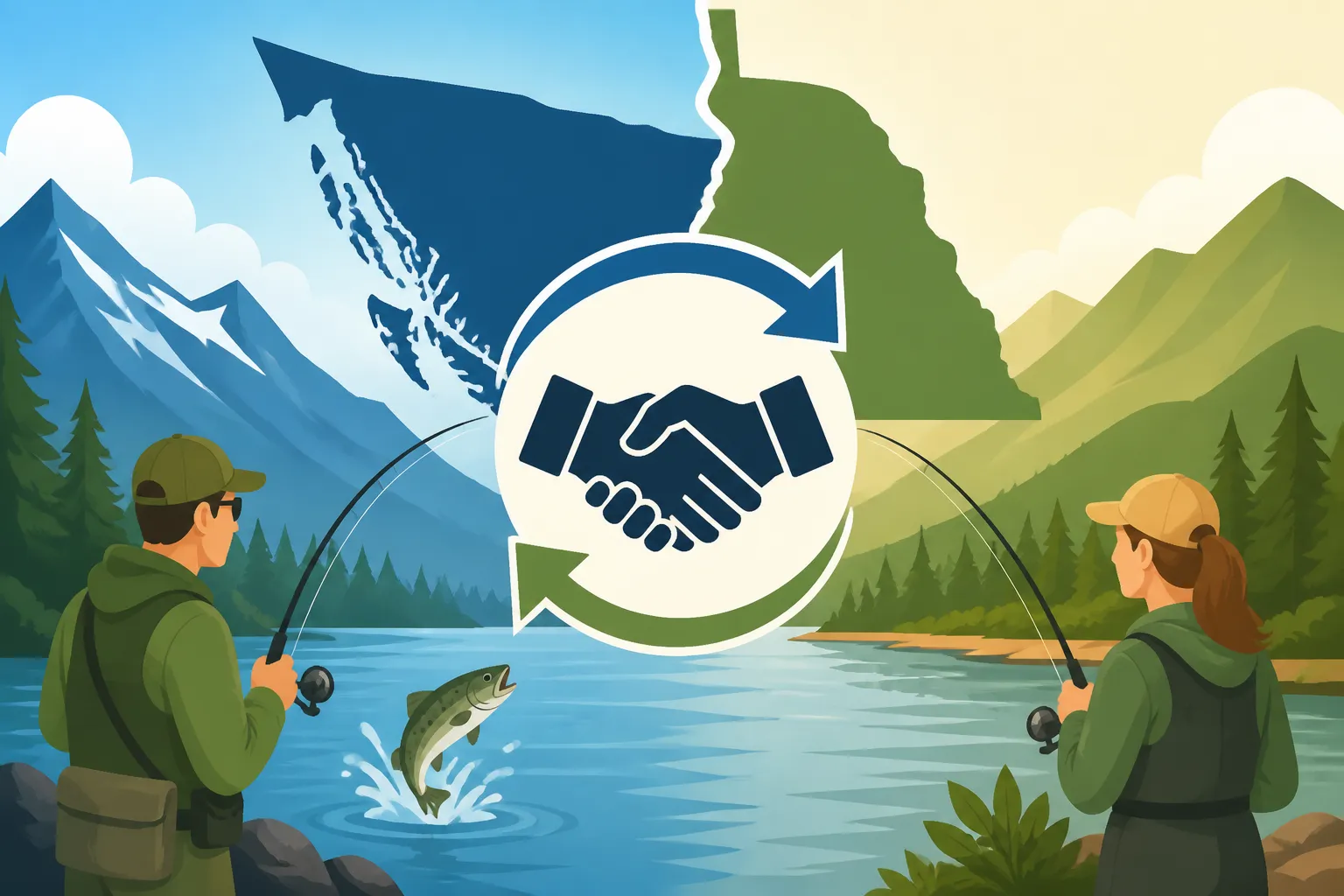
Let's get straight to the point, and it's something many anglers find surprising or even a little frustrating: there is generally no formal fishing license reciprocity agreement for standard freshwater fishing between British Columbia and the Yukon Territory. This means your BC freshwater fishing license is valid only in British Columbia waters, and your Yukon fishing license is valid only in Yukon waters.
Lack of Formal Reciprocity Agreements
While some regions, particularly international borders (like the Columbia River with Washington State), might have specific, negotiated agreements, this is not the standard practice between Canadian provinces and territories for general freshwater fishing licenses. Each jurisdiction maintains its sovereign control over its natural resources, including its fish populations and the management thereof. The revenue generated from license sales directly supports the conservation programs, enforcement, and habitat restoration efforts within that specific province or territory. Therefore, allowing a BC license to be used in Yukon (or vice-versa) without a compensatory financial or administrative agreement isn't typically part of their framework. You can read more about what generally makes up these rules in BC Fishing Regulations Explained.
What This Means for Anglers
For you, the angler, this straightforward lack of reciprocity has clear implications:
- Two Licenses Required: If your fishing trip takes you to waters that span the BC-Yukon border, or if you plan to fish in both jurisdictions during your trip, you will need to purchase a valid fishing license for British Columbia AND a valid fishing license for the Yukon. There's no way around it.
- Jurisdictional Lines Matter: Even if you're on the same lake or river, the moment you cross the invisible boundary line, you must be covered by the appropriate license for that side. This can be particularly challenging in remote areas without clear markers. Using GPS with detailed mapping showing provincial/territorial boundaries becomes incredibly important.
- Different Regulations Apply: Beyond just the license, all other regulations—such as bag and possession limits, fishing methods, gear restrictions, and season dates—will change the moment you cross into the other jurisdiction. It's not just about having the right paper; it's about knowing the different rules for each area. Familiarize yourself with the BC Fishing Season Dates and Closures and also seek out the Yukon's specific regulations.
Consider a hypothetical trip: you're fishing for Arctic grayling in a pristine stream in Northern BC. If that stream eventually flows into the Yukon, and you decide to follow it across the border, you'll need a Yukon license for that portion. The rules regarding species, size, and bait could easily be different, too.
Navigating Fishing Regulations on Boundary Waters
Fishing near the BC-Yukon border requires a bit more homework than simply heading to your local lake. The key is preparation and understanding that you're dealing with two distinct legal frameworks.
Getting Licensed for Both Jurisdictions
To ensure you're fully legal, here’s a breakdown of how to get the necessary licenses:
For British Columbia
- Online: The easiest way to purchase your BC freshwater fishing license is online through the provincial government's E-Licensing system. This allows you to purchase and print your license from anywhere. Learn more about Where and How to Buy a BC Fishing License.
- Vendors: You can also purchase a license in person at various independent vendors, sporting goods stores (like a local fishing shop in Terrace or Fort Nelson), and some Service BC centres.
- Cost: The cost varies depending on whether you're a resident, non-resident Canadian, or non-resident alien, and if you choose an annual or short-term license. You can get an idea of How Much Does a BC Fishing License Cost and specifically check Resident vs Non-Resident Fishing License Costs in BC. Remember, you might also need additional stamps for certain species like salmon or steelhead.
For the Yukon Territory
- Online: The Yukon government also offers an online licensing system through their Environment Yukon portal, allowing you to purchase and print licenses digitally.
- Vendors: Licenses can be purchased in person at various vendor locations throughout the Yukon, including general stores, sporting goods shops, and government offices in communities like Whitehorse, Dawson City, or Watson Lake.
- Cost: Similar to BC, Yukon license fees vary based on residency status and license duration (annual, 7-day, 1-day). Be sure to consult the official Yukon Department of Environment website for the most current fee schedule.
Important Note: Always check the specific residency requirements for each jurisdiction. Your "residency" status for BC might differ from that for Yukon, particularly if you're from another province or country. Understanding BC fishing license residency requirements is key.
Key Differences in Regulations to Watch Out For
Beyond the license itself, the actual fishing regulations can differ significantly. Failing to understand these nuances can lead to unintentional violations.
Species-Specific Rules
- Target Species: While many species like rainbow trout, Dolly Varden, or grayling are found in both jurisdictions, their specific protection status, bag limits, and seasons can vary. For example, what might be a retention species in one might be catch-and-release only in the other.
- Salmon Conservation: Both BC and Yukon have strict rules for Pacific salmon, but the specific runs, closures, and conservation measures can be very localized and jurisdiction-specific. Always check BC Fishery Notices and In-Season Closures, Explained for BC and the equivalent for Yukon before heading out.
Gear and Method Restrictions
- Bait Restrictions: Some waters in BC are fly-fishing only or prohibit bait, while others allow it. The same applies to Yukon. Never assume.
- Hook Types: Single barbless hooks might be mandatory in some areas or for specific species in one jurisdiction but not in the other.
- Gear Limitations: The number of rods you can fish simultaneously can also vary.
Conservation Surcharges and Stamps
Both BC and Yukon implement additional stamps or surcharges for certain species, often to fund specific conservation efforts. In BC, this includes the Salmon Conservation Stamp. Ensure you have all required stamps for the species you intend to target in each jurisdiction. You can learn more about these with BC Salmon Conservation Stamp Rules.
Here's a simplified comparison for illustrative purposes (always check official sources for current, precise rules):
| Feature | British Columbia (Freshwater) | Yukon Territory (Freshwater) |
|---|---|---|
| Reciprocity | No formal reciprocity with Yukon | No formal reciprocity with BC |
| License Requirement | Required for fishing in BC waters | Required for fishing in Yukon waters |
| Residency Tiers | Resident, Non-Resident Canadian, Non-Resident Alien | Resident, Non-Resident Canadian, Non-Resident Alien |
| License Duration | Annual, 8-Day, 1-Day | Annual, 7-Day, 1-Day |
| Conservation Stamps | Salmon Conservation Stamp, Steelhead Surcharge (for some areas) | May have specific tags/stamps for certain species (e.g., Arctic Char) |
| Online Purchase | Yes, via BC E-Licensing | Yes, via Environment Yukon |
| Physical Purchase | Sporting goods stores, Service BC, authorized vendors | Sporting goods stores, government offices, authorized vendors |
| Primary Regulations | Freshwater Fishing Regulations Synopsis | Yukon Fishing Regulations Summary |
Where to Find Official Information
To avoid any doubt, always consult the official sources for the most up-to-date regulations:
- British Columbia: The BC Freshwater Fishing Regulations Synopsis is your bible. It's published annually and available online on the provincial government's website (Ministry of Forests, Lands, Natural Resource Operations and Rural Development).
- Yukon Territory: The Yukon Fishing Regulations Summary is available on the Yukon Department of Environment website.
- Fishery Notices: Always check in-season fishery notices for both jurisdictions, as rules can change quickly due to conservation concerns, especially for salmon runs.
Practical Tips for Anglers Fishing Near the Border
A fishing trip to the remote border regions of BC and Yukon is an unforgettable experience. With a little extra planning, you can ensure it's memorable for all the right reasons.
Planning Your Trip with Dual Licensing in Mind
The key to a stress-free border water fishing trip is meticulous planning, especially when it comes to licenses and regulations.
- Map It Out: Before you go, study detailed maps of your intended fishing areas. Identify any waterways that cross the provincial/territorial boundary. Use GPS coordinates to mark these lines if possible. Many modern GPS units and mapping apps (some available on platforms like Amazon, though not directly related to license purchase) offer topographical and boundary overlays that can be incredibly helpful.
- Purchase Early: Don't wait until you're in a remote border town to try and buy your licenses. Purchase both your BC and Yukon licenses online well in advance of your trip. Print out multiple copies and keep one laminated, another digital on your phone, and a spare in your dry bag. Remember, Printing or Carrying a Digital Fishing License in BC is permitted.
- Research Regulations Thoroughly: Dive deep into the regulations for both BC and Yukon. Create a cheat sheet of key differences for the species you're targeting. Highlight bag limits, size restrictions, and any specific gear prohibitions. Knowing the specific rules for the BC Bag and Possession Limits by Species and the Yukon's equivalent will save you a lot of grief.
- Consider a Guide: If you're tackling truly remote or complex border waters, hiring a local fishing guide who is knowledgeable about both BC and Yukon regulations can be invaluable. They can ensure you stay legal and put you on the best spots, regardless of the invisible line.
Essential Gear and Safety Considerations
Fishing in these remote northern regions isn't just about licenses; it's about being prepared for the wilderness.
- Navigation Tools: A reliable GPS device (with fresh batteries!) and detailed paper maps are non-negotiable. Cell service will likely be non-existent in many border areas.
- Bear Spray & Safety: These are prime bear country regions. Carry bear spray, know how to use it, and make noise while hiking. Store food properly and be bear-aware at all times.
- Emergency Communications: A satellite communication device (like a SPOT device or Garmin InReach) is highly recommended for emergencies, as regular cell service is unreliable.
- Appropriate Clothing: Weather can change rapidly and dramatically. Dress in layers, pack waterproof outer shells, and have warm gear even in summer. Hypothermia is a real risk.
- First-Aid Kit: A comprehensive first-aid kit, including any personal medications, is essential.
- Fuel & Supplies: If driving or boating, plan your fuel stops carefully. Distances between services can be vast. Pack enough food, water, and emergency supplies for more days than you anticipate being out.
- Vessel Requirements: If you're operating a boat, even a small one, be aware of boating safety regulations for both jurisdictions. This might include specific BC Boating Laws for Anglers and the Yukon's equivalent regarding life jackets, flares, and other safety equipment.
By understanding that each jurisdiction requires its own license and has its own distinct set of regulations, you can prepare effectively and fully enjoy the incredible fishing opportunities that BC and the Yukon have to offer.
Disclaimer
The information provided in this guide is for general informational purposes only and is not a substitute for reviewing the official and current fishing regulations for British Columbia and the Yukon Territory. Regulations can change frequently, and it is the angler's sole responsibility to ensure compliance with all applicable laws and regulations before engaging in any fishing activity. Always consult the official government websites and fishery notices for the most up-to-date and accurate information.