How to Buy a BC Fishing License Online
Oh, the joys and sometimes utter frustrations of trying to get all your ducks in a row for a fishing trip in British Columbia! You've got your gear ready, your favorite spots scouted, but then that nagging thought hits: "Is my license up to date? And how on earth do I even buy one without spending an hour at a government office?" If you've ever felt that pre-trip paperwork panic, you're not alone. This guide is here to untangle the process, showing you exactly how to buy your BC fishing license online, step by step, so you can focus on the fish, not the forms.
The Digital Divide: Why Online Is Your Best Bet for a BC Fishing License
Let's be real, who misses the days of driving to a specific vendor, hoping they're open, and fumbling through paper forms? Buying your BC fishing license online isn't just a convenience; it's a game-changer that saves you precious time and avoids unnecessary headaches.
Navigating the Old Ways vs. Modern Convenience
Think back to the "good old days" – or maybe not so good, depending on your perspective. You’d trek to a designated license vendor, usually a tackle shop or a sporting goods store, often with limited hours. You'd fill out a physical form, perhaps struggle to read the fine print about different license types, and then wait for someone to process it. If you forgot a piece of ID or showed up on a holiday, tough luck! Your fishing trip might have to wait.
The modern approach, buying your license online, sweeps all that away. You can do it from the comfort of your couch, at midnight, or even from your phone at the boat launch (though we recommend doing it before you're at the boat launch!). It eliminates travel time, ensures you have all the information at your fingertips, and often provides instant access to your valid license. No more scribbling illegibly or worrying if your local corner store even sells fishing permits anymore. It's a clear winner for convenience, hands down.
Common Misconceptions About Online Purchases
Despite the obvious benefits, some folks still hesitate to buy their fishing licenses online. Maybe you're worried about security, or perhaps you've heard horror stories about needing a physical stamp. Let's clear up some of those common misconceptions right now.
First, security: The official government portals for purchasing fishing licenses use robust encryption, just like your online banking. Your personal and payment information is generally very safe. Second, the need for a "physical stamp": For freshwater licenses in BC, everything is digital now. Your license, along with any necessary conservation stamps or surcharges, is typically issued as a PDF document. You can print it out and carry it, or keep it on your phone or other mobile device. There’s no physical stamp to glue on. This is all covered in more detail in our guide on "Printing or Carrying a Digital Fishing License in BC". For tidal waters, it's much the same, with digital confirmations. So, relax! The online system is designed to be user-friendly and secure, making your fishing preparations much smoother.
Essential Pre-Flight Checklist for Your BC Fishing License
Before you even open your browser to the licensing portal, a little preparation goes a long way. Having all your ducks in a row will make the online purchase process swift and painless. Trust me, it’s much better than scrambling for your wallet or an old utility bill when you’re halfway through the form.
Gathering Your Personal Information
The online system needs to know who you are and where you live to issue the correct license and apply the right fees. Here's what you'll typically need to have handy:
- Full Legal Name: As it appears on your government-issued ID.
- Residential Address: This is crucial for determining your residency status, which directly impacts the cost of your license.
- Date of Birth: Again, for identification and to ensure you meet any age requirements or qualify for exemptions (like youth licenses).
- Email Address: Your license will be sent here, and it’s how the system will communicate with you. Make sure it's one you check regularly.
- Phone Number: For contact if there are any issues.
- Government-Issued ID: Usually your BC Driver's License or a BC Services Card. Non-residents will need their passport or other national ID.
Your residency status is a big deal in BC fishing. Residents pay significantly less than non-residents, and there are even different categories for Canadian non-residents versus non-Canadian non-residents. This is why accurately providing your address is so important. If you’re unsure about the differences, our article "Resident vs Non-Resident Fishing License Costs in BC" breaks it all down.
Understanding License Types and Endorsements
This is where things can get a little nuanced in BC, but don’t worry, it’s not as complicated as it seems once you know the basics. British Columbia essentially has two main types of fishing licenses:
- Freshwater Fishing License: Required for fishing in any lake, river, or stream within the province. This is administered by the provincial government.
- Tidal (Saltwater) Fishing License: Required for fishing in the ocean waters off BC's coast. This is administered by Fisheries and Oceans Canada (DFO).
Beyond these basic licenses, you’ll often need specific endorsements or conservation stamps depending on what you plan to catch and where. For example, if you plan to retain salmon in freshwater, you’ll need a Freshwater Salmon Conservation Stamp. If you’re fishing for salmon in tidal waters, you’ll need a Tidal Waters Salmon Conservation Stamp. Some species like Steelhead, Rainbow Trout, and Sturgeon also have specific conservation surcharges if you intend to fish for them in certain areas.
It's vital to know what you plan to target before you buy, as these stamps are usually added during the purchase process. Missing a required stamp could lead to penalties, even if you have the base license. For a comprehensive overview of what each license covers, check out our guide, "BC Freshwater vs Tidal Waters License, Explained".
Here's a quick look at common license components:
| License Type/Component | Where it Applies | What it Covers/Enables |
|---|---|---|
| Basic Freshwater License | Rivers, lakes, streams within BC | Angling for most freshwater species (trout, bass, etc.) |
| Freshwater Salmon Stamp | Freshwater (rivers, lakes) | Retention of salmon caught in freshwater |
| Steelhead Surcharge | Designated steelhead waters in freshwater | Angling for steelhead (often catch & release) |
| Basic Tidal Waters License | Pacific Ocean waters off BC | Angling for most marine species |
| Tidal Waters Salmon Stamp | Pacific Ocean waters off BC | Retention of salmon caught in tidal waters |
| Sturgeon Surcharge | Fraser River and other designated sturgeon waters | Angling for Sturgeon (always catch & release) |
This table simplifies it, but always refer to the official BC Freshwater Fishing Regulations Synopsis and DFO Fishery Notices for the most up-to-date and detailed information.
Navigating the Provincial Portal for Freshwater Licenses
Most anglers in BC will be looking for a provincial freshwater license first and foremost. The good news is that the online system has become much more streamlined over the years. You no longer need to navigate a maze of government websites.
Accessing the BC Government's Fish and Wildlife Online Services
To purchase your freshwater fishing license, you’ll head to the BC Government's Fish and Wildlife Online Services portal. A quick search for "BC fishing license buy online" should lead you directly to the official page.
Once you’re on the site, you'll typically need to create an account or log in if you already have one. This system often uses a BCeID or a similar secure government login. If it’s your first time, don’t fret; the account creation process is usually straightforward, asking for your basic personal information and setting up a secure password. Make sure to keep your login details in a safe place, as you’ll need them for future license purchases or to reprint a lost license.
Understanding Your Residency and License Type
After logging in, the system will guide you through selecting the type of license you need. This is where the information you gathered earlier becomes vital.
You’ll be asked to confirm your residency status. Be honest and accurate here, as incorrect information can lead to fines. If you’re a resident of BC, you’ll select that option. If you’re visiting from another Canadian province, there’s an option for that, and another for international visitors. The system will then present you with the appropriate license options and their corresponding costs. For instance, you might choose an annual license if you plan to fish frequently, or a shorter-term license if you're just on a quick trip. For our non-resident visitors, there are specific options like the "BC non-resident 1-day freshwater fishing license cost" which can be very convenient.
Adding Endorsements and Conservation Stamps
This is where you customize your license based on your fishing plans. As mentioned earlier, BC requires various conservation stamps and surcharges depending on what you're targeting. The online system will have clear checkboxes or drop-down menus for these:
- Freshwater Salmon Conservation Stamp: If you're going after Chinook, Coho, Sockeye, Pink, or Chum salmon in rivers or lakes, you’ll need this. Our "BC Salmon Conservation Stamp Rules" article has all the details.
- Steelhead Surcharge: If you plan to fish for these magnificent anadromous rainbow trout in designated steelhead waters, you'll need this.
- Sturgeon Surcharge: Angling for White Sturgeon (which is always catch and release on the Fraser River) requires this surcharge.
- Rainbow Trout Surcharge: In certain regions, particularly for trophy rainbow trout waters, a specific surcharge might apply.
The system is designed to prompt you for these. Read each option carefully to ensure you select all the necessary components for your planned fishing activities. It's much easier to add them now than to realize you're missing something when a Conservation Officer asks to see your license on the water.
Securing Your Tidal Waters License Through the National System
While the provincial government handles freshwater licenses, saltwater fishing in British Columbia falls under the jurisdiction of Fisheries and Oceans Canada (DFO). This means a separate, but equally straightforward, online process for your tidal waters license.
Where to Purchase Your Saltwater Fishing License
For your tidal waters fishing license, you will use the National Recreational Licensing System (NRFLS) provided by Fisheries and Oceans Canada (DFO). You can usually find this by searching "DFO tidal waters fishing license BC" or by visiting the DFO website directly.
Similar to the provincial system, you’ll need to either create an account or log in. The process is very intuitive, asking for your personal details, residency status, and then presenting you with the available license options. Tidal licenses can be purchased for different durations, such as 1-day, 3-day, 5-day, or annual, depending on your needs. The cost will vary based on your residency and the chosen duration. Again, having your government ID ready will speed things up considerably.
Mandatory Tidal Waters Salmon Conservation Stamp
Just like in freshwater, if you intend to retain any species of Pacific salmon (Chinook, Coho, Sockeye, Pink, or Chum) while fishing in tidal waters, you must purchase a Tidal Waters Salmon Conservation Stamp. This is not optional if you plan to keep salmon. The online system for tidal licenses will prompt you to add this stamp to your purchase. It's typically an additional fee on top of your base tidal waters license cost.
This stamp directly contributes to salmon conservation efforts, helping to ensure healthy salmon populations for future generations of anglers. It's a small but significant investment in the future of BC's iconic salmon fisheries. Always make sure you've selected it if salmon retention is on your agenda!
Payment, Confirmation, and Keeping Your License Accessible
You've done the hard part – navigating the forms and choosing your licenses. Now for the final steps: paying up and making sure you have a valid, accessible license when you hit the water.
Secure Payment Processing
Once you've selected all your desired licenses and stamps, you'll be directed to a secure payment gateway. Both the provincial and federal systems accept major credit cards (Visa, Mastercard, American Express) and sometimes debit cards.
Enter your payment information carefully, double-checking the details before confirming. The system will process your payment, and usually within seconds, you’ll receive confirmation that your purchase was successful. If, for some reason, your payment fails (e.g., incorrect card number, expired card, insufficient funds), the system will notify you, and you'll have the opportunity to correct it. Don't panic; just review the details and try again. If issues persist, you might need to contact your bank or the respective licensing body's customer service.
Receiving and Printing Your License
Immediately after a successful payment, you'll typically receive an email containing a link to download your fishing license (or licenses, if you purchased both freshwater and tidal). This will be a PDF document. This email is your official confirmation, so keep it safe!
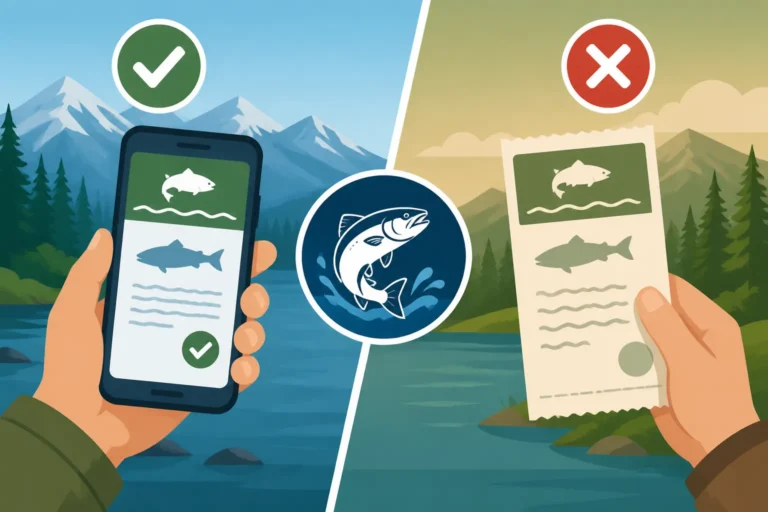
Now, this is an important part of the process. While many anglers prefer to keep their license on their smartphone or tablet, it is highly recommended that you print a physical copy. Why? Batteries die, screens crack, and cell service can be non-existent in remote fishing locations. A physical copy means you’re always compliant. Print it clearly, preferably on standard letter paper, and make sure all the details are legible.
For freshwater licenses, your annual license will show the current year's expiry date, usually March 31st of the following year, which is helpful to remember when planning your fishing season.
Our guide on "Printing or Carrying a Digital Fishing License in BC" goes into more detail about the pros and cons of each method and what to do to ensure you're always covered.
What if You Don't Have a Printer?
This is a common sticking point for many. Not everyone has a printer at home, or perhaps yours ran out of ink at the worst possible moment. Don't let that stop you from having a physical copy:
- Save to Phone/Tablet: At a minimum, save the PDF to your device. Take a screenshot as a backup.
- Email to a Friend/Family Member: Ask them to print it for you.
- Local Print Shop or Library: Most public libraries offer printing services for a small fee. Staples, FedEx, or other office supply stores can also print documents for you.
- Work/School Printer: If permissible, use a printer at your workplace or educational institution.
Once you have your printed copy, consider laminating it or placing it in a waterproof document holder. You can find excellent, durable waterproof holders at most sporting goods stores or even on sites like Amazon, which can really save your bacon if you get caught in a downpour or accidentally drop your license in the water. Having a physical backup that's protected from the elements is just smart angling practice.
Troubleshooting Common Online Purchase Issues
Even with the best intentions and preparation, sometimes technology throws a curveball. Don't let a minor glitch derail your fishing plans. Here's how to tackle some common issues you might encounter when buying your BC fishing license online.
Technical Glitches and Browser Issues
Picture this: You're almost done, hit 'submit,' and then…nothing. Or an error message pops up. Frustrating, right? Here are some common technical hiccups and quick fixes:
- Browser Compatibility: Sometimes the licensing portals prefer specific browsers (like Chrome, Firefox, or Edge). If you're using an older browser or one that's less common, try switching to a more widely supported one.
- Clear Cache and Cookies: Your browser's stored data can sometimes interfere with website functionality. Go into your browser settings and clear your cache and cookies, then try again.
- Internet Connection: A spotty Wi-Fi or cellular connection can cause timeouts. Ensure you have a stable internet connection before starting the purchase process.
- Ad Blockers/VPNs: Occasionally, ad blockers or VPN services can interfere with payment gateways or website scripts. Try temporarily disabling them if you're encountering issues.
- Server Overload: On peak days (like the start of a popular fishing season), the servers might be under heavy load. If you're getting persistent errors, try again in an hour or two.
If you've tried all these and are still stuck, it's time to reach out. Both the provincial and federal licensing systems have customer support contacts (usually phone numbers or email addresses) listed on their websites. Don't hesitate to call them for assistance.
Age Requirements and Youth Licenses
One area of frequent confusion revolves around age. "Do kids really need a license?" is a question we hear a lot. The short answer is: it depends on their age and what they're fishing for.
For freshwater fishing, youth under the age of 16 typically do not need a basic freshwater fishing license. However, if they plan to retain salmon, they will need a Freshwater Salmon Conservation Stamp, even if they don't need the base license. This nuance is really important for families fishing together. You can learn more about this in our article "BC Youth Fishing License Exemption Under 16".
For tidal (saltwater) fishing, children under 16 generally do not need a license. However, they must register for a free Tidal Waters Youth Fishing License through the DFO National Recreational Licensing System if they wish to fish. And, just like in freshwater, if they plan to retain salmon, they’ll also need to purchase a Tidal Waters Salmon Conservation Stamp.
The best rule of thumb is to always check the most current regulations for "BC Fishing License Age Requirements" before heading out, as these rules can change. It’s better to be safe than sorry and risk an accidental fine.
Residency Verification and Non-Resident Purchases
Residency is a cornerstone of BC's fishing license system, dictating who pays what. If you're not a full-time resident of British Columbia, you'll be considered a non-resident, and the licensing system is designed to verify this.
- Proof of Residency: For BC residents, your driver's license or BC Services Card linked to a valid BC address usually suffices. For non-residents, you'll need to provide your full out-of-province or out-of-country address and potentially a passport or other national ID.
- Pricing Differences: Non-resident licenses are significantly more expensive than resident licenses. This helps support the conservation and management of BC's world-class fisheries, which are a valuable resource for all. Our guide on "Resident vs Non-Resident Fishing License Costs in BC" lays out the price differences clearly.
- Short-Term Options: If you're a non-resident on a quick trip, look for the short-term license options, such as the "BC non-resident 1-day freshwater fishing license cost". These can be much more cost-effective than an annual non-resident license.
Always ensure the information you provide matches your official identification. Any discrepancies could lead to delays or issues with your license validity.
Your Responsibilities After the Click: Regulations and Records
So, you've successfully purchased your BC fishing license online. Great job! But the process doesn't end there. Having a license is just the first step; understanding your responsibilities and staying informed is crucial for a rewarding and legal fishing experience.
Always Carry Your License
This might sound obvious, but you'd be surprised how many anglers forget their license at home or leave it in their other jacket. Whether it’s a printed copy or a digital version on your phone, you must have your valid fishing license (and any required stamps) with you at all times while fishing. Conservation Officers have the authority to ask for it, and if you can’t produce it, you could face significant penalties.
Imagine hooking into the fish of a lifetime, only to have a CO show up and discover you don't have your license. That once-in-a-lifetime memory instantly turns into a massive headache, potentially a fine, and even confiscation of your gear or catch. Don't let this happen to you! Keep it waterproofed and easily accessible. A small, dry bag or a specific pocket in your fishing vest is ideal. I personally keep mine laminated and clipped to my vest, so it's always there. For additional peace of mind, you might consider picking up a durable waterproof license holder, like those readily available on Amazon, to protect your precious paper. If you're ever caught without it, our article on "Fishing Without a License in BC: Penalties" details the consequences, and trust me, you don't want to experience them.
Understanding Fishery Notices and Updates
BC's fisheries are dynamic, with regulations often changing mid-season due to conservation concerns, shifting fish stocks, or environmental factors. Relying solely on the regulations synopsis you downloaded at the start of the year might not be enough.
It is your responsibility as an angler to stay informed about any in-season closures, special restrictions, or amendments to bag limits. Both the provincial government and DFO issue regular "Fishery Notices" that announce these changes. Before every fishing trip, especially if you're targeting sensitive species like salmon or steelhead, make it a habit to check the relevant fishery notice websites. For freshwater, this is typically part of the BC Government's angling regulations site. For tidal waters, the DFO website has a dedicated section for Pacific Fishery Notices. Our article "BC Fishery Notices and In-Season Closures, Explained" offers a comprehensive guide on how to access and interpret these critical updates.
Lost License? No Problem (Usually)
Life happens. Maybe your wallet went for an unexpected swim, or your license simply vanished into the abyss of your tackle box. The beauty of the online system is that replacing a lost license is usually a breeze.
If you purchased your license online, you can simply log back into the respective provincial or federal licensing portal using your account details. From there, you should have access to your purchase history and the option to re-download and print a new copy of your valid license. There's typically no additional fee for reprinting it yourself. This is a huge relief compared to the old days when you might have had to pay for a replacement or jump through hoops at a vendor. For more detailed instructions, consult our post on "Replacing a lost BC fishing license". Just remember to print that new copy and perhaps invest in one of those sturdy waterproof holders from Amazon to prevent future mishaps!
Disclaimer
Please remember that while this guide provides comprehensive information, fishing regulations and licensing requirements in British Columbia can change. Always consult the official BC Freshwater Fishing Regulations Synopsis and the Fisheries and Oceans Canada (DFO) Pacific Region Recreational Fishing website for the most current and accurate information before heading out on the water. This content is for informational purposes only and does not constitute legal advice.