Where the biggest chinook live in BC
Oh, the elusive trophy Chinook! Every angler who's spent a day on the water in British Columbia has that dream: the reel screaming, the rod bent double, and the unmistakable head shakes of a truly colossal King salmon. It's a quest that can drive us absolutely wild, because finding those giants isn't just about showing up with a rod; it's about understanding their world, their migrations, and the specific places where they feed and grow to epic proportions. This guide is all about peeling back the layers to reveal where these magnificent fish truly live and thrive in BC.
The Quest for the King: Understanding Trophy Chinook
Let's be honest, not every Chinook you catch in British Columbia is going to be a wall-hanger. The vast majority are respectable, powerful fish, but a true "King" or "Tyee" – a Chinook weighing 30 pounds or more – that's a whole different ballgame. These fish are veterans, survivors of countless oceanic challenges, and they've spent years gorging themselves on protein-rich baitfish to reach their formidable size. Their sheer power and size come from a combination of genetics, a long ocean residency, and incredibly rich feeding grounds. Knowing this helps us narrow down our search significantly.
What Makes a Chinook a True "King"?
A Chinook's journey begins in a freshwater river or stream, but its growth to monumental size happens almost entirely in the vast, nutrient-rich waters of the Pacific Ocean. Unlike some salmon species that mature quickly, Chinook often spend multiple years, sometimes up to seven, feeding offshore. During this time, they develop incredible muscle mass and accumulate fat reserves necessary for their arduous return journey to spawn. The longer they stay in the ocean, and the richer their feeding grounds, the bigger they get. We're talking about fish that are not only long but incredibly thick through the shoulders, capable of peeling line off your reel with astonishing speed.
It’s not just about the weight, though that's usually the benchmark. A true King has that undeniable presence, a broad tail, a deep body, and an aggressive fight that will test every bit of your tackle and your resolve. These fish aren't just big; they're smart, they're powerful, and they demand respect. Understanding what drives this growth – consistent access to food like herring, needlefish, and squid – is key to understanding where to target them. Many anglers will tell you that the biggest fish often come from areas with abundant baitfish schools and deep, cold ocean currents.
Genetics and Environment: The Recipe for Giants
While all Chinook have the potential for size, some populations are genetically predisposed to grow larger and live longer than others. For example, certain river systems in BC are renowned for producing exceptionally large Chinook year after year. These genetic traits, combined with optimal environmental conditions in their feeding grounds, create the perfect storm for growing behemoths. Water temperature, oxygen levels, and the sheer volume of available prey all play critical roles. If a Chinook has an uninterrupted food supply and stable ocean conditions, it has a much better chance of reaching that coveted trophy status.
Think of it this way: some areas are like a five-star buffet for salmon. When they find these spots, they linger, they feast, and they pack on the pounds. This is why certain geographical regions consistently outperform others when it comes to trophy Chinook. It’s also why timing is so crucial; you want to intercept these fish when they are at their absolute peak, just before they embark on their final, non-feeding migration to their natal rivers. The pursuit of these giants often involves a deep dive into Chinook Salmon Migration Patterns in BC to understand their annual movements.
Coastal Strongholds: Where Ocean Giants Roam
When we talk about where the biggest Chinook live, we're primarily talking about their ocean feeding grounds. They don't just hang out anywhere; they congregate in specific, often remote, areas of BC's vast coastline where conditions are prime for growth. These are the spots where charter captains make their living, knowing that these migratory highways and feeding stations consistently hold the fish of a lifetime.
Queen Charlotte Islands (Haida Gwaii): The Ultimate Proving Ground
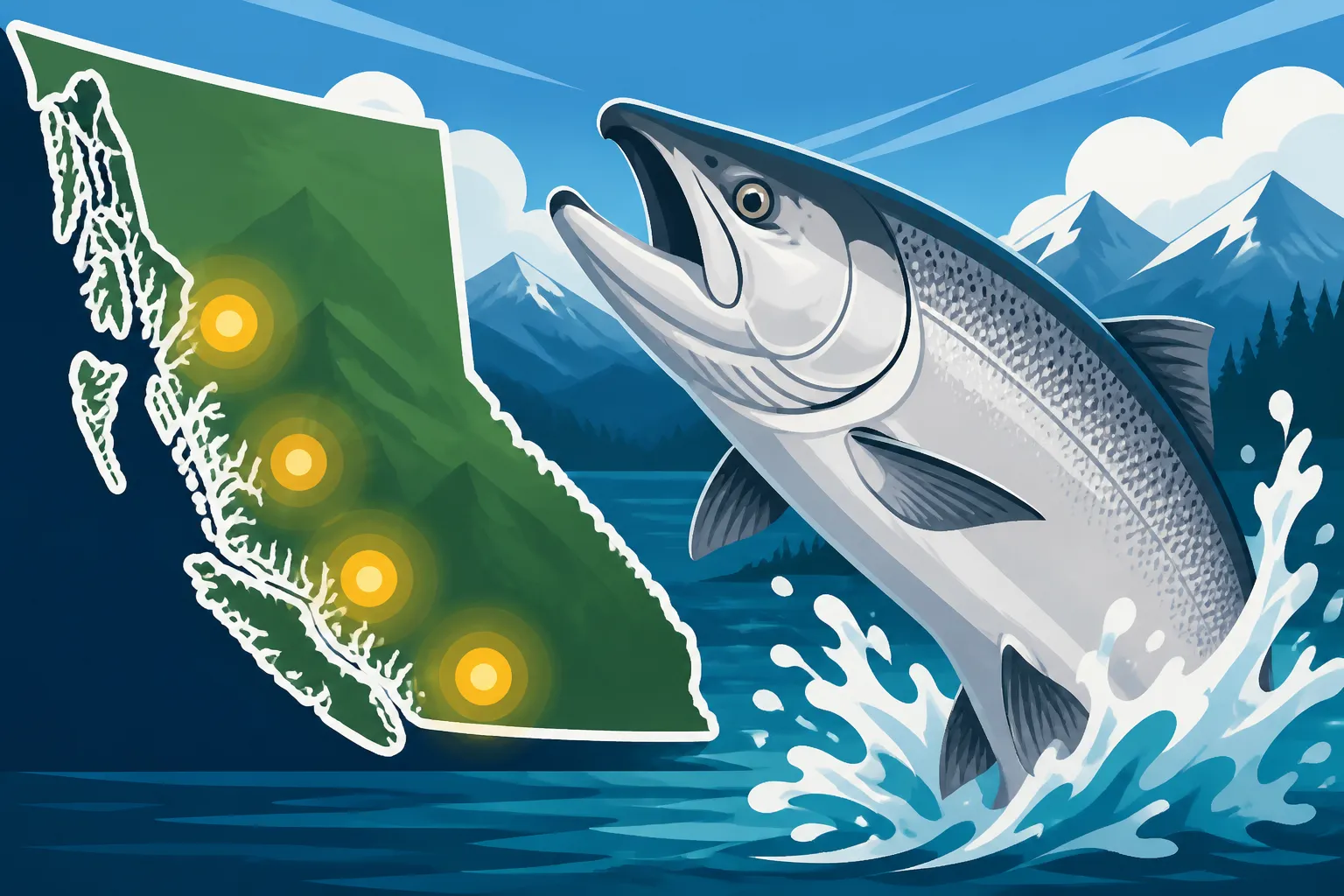
Without a doubt, the waters surrounding Haida Gwaii (formerly the Queen Charlotte Islands) are legendary for producing some of the largest Chinook salmon in British Columbia, and indeed, the world. These remote islands sit on the edge of the continental shelf, where deep, nutrient-rich Pacific currents meet shallower feeding banks. This convergence creates an unbelievably productive ecosystem, teeming with baitfish like herring and needlefish. Chinook from river systems all along the West Coast migrate here to feed and grow.
Anglers targeting Haida Gwaii often report multiple hook-ups with fish in the 30-to-50-pound range, and much larger specimens are not uncommon. Places like Langara Island and Hippa Island are synonymous with "Tyee fishing" for a reason. These areas are characterized by strong currents, rocky structure, and massive bait balls that attract hungry Kings. The season typically runs from late spring through late summer, with June and July often being peak months for trophy fish. If you're looking for a truly epic adventure and the best chance at a record-breaking Chinook, Haida Gwaii should be at the top of your list. Many of the most respected Best Fishing Charters in British Columbia operate out of this region.
West Coast of Vancouver Island: A Feast for the Kings
Another prime location for colossal ocean-dwelling Chinook is the exposed west coast of Vancouver Island. Areas like Nootka Sound, Barkley Sound, and the waters offshore from Ucluelet and Tofino are renowned for their consistent action and the sheer size of their resident and migratory Chinook populations. These waters are also influenced by strong ocean currents and are incredibly rich in marine life, providing an endless buffet for growing salmon.
Here, Chinook can be found feeding along submarine canyons, ledges, and over offshore banks. They often stage in these areas before making their final push into the coastal rivers to spawn. The fishing here is often about covering ground, trolling with large spoons or baitfish imitations deep in the water column. The season generally kicks off in late spring, building through summer, with some of the biggest fish showing up in late July and August. Charters out of Ucluelet and Tofino are well-versed in these waters and can put you on the fish. You can learn more about Halibut Fishing Techniques for BC's Coast in these same waters, as the species often share feeding grounds.
Central Coast and Northern BC: Untamed Waters, Untapped Potential
While perhaps less accessible than Vancouver Island, the central and northern BC coast, including areas like Rivers Inlet and the waters around Prince Rupert, also hold incredible populations of large Chinook. Rivers Inlet, in particular, has a storied history of producing some of the largest average-sized Chinook in the province, often referred to as "Rivers Inlet Reds" for their deep red flesh. The remote nature of these regions means less fishing pressure in some areas and pristine, food-rich environments.
Access to these areas often involves fly-in lodges or multi-day boat trips, making them true wilderness fishing experiences. The rewards, however, can be extraordinary. Anglers here often employ classic mooching or slow trolling techniques with cut-plug herring, targeting deep water where these massive Chinook prefer to ambush their prey. These regions offer not just phenomenal fishing but an opportunity to immerse yourself in the untouched beauty of BC's wild coastline. Consider checking out Best Salmon Fishing Spots in BC for more insights into these untouched gems.
River Monsters: Fraser and Other Mighty Rivers
While the ocean is where Chinook grow big, their final journey into freshwater rivers marks a distinct phase of their life cycle, and for anglers, a different kind of challenge. Some of the largest fish in the province are caught in these rivers, particularly the Fraser, as they return home, still carrying the immense size they acquired in the ocean.
The Fraser River: Home of the Legendary "Fraser Giants"
The Fraser River is an undeniable icon for Chinook salmon in British Columbia. As the largest salmon-producing river in the world, it sees incredible runs of all five Pacific salmon species, and its Chinook runs are truly legendary. These are the "Fraser Giants," fish that have traveled thousands of miles and spent years at sea, returning to their natal spawning grounds. While they aren't feeding once they enter freshwater, they are still immense, powerful, and aggressively territorial.
The lower and middle stretches of the Fraser, from Vancouver upstream past Chilliwack and Hope, are prime areas for targeting these giants. During peak migration, usually from late August through October, anglers use heavy gear to contend with the powerful currents and the sheer size of these fish. Bar fishing with roe or large plugs, and jet boating to prime spots are common methods. Keep in mind that specific retention rules and even closures can vary greatly year to year based on conservation concerns, so always check the current BC Fishing Regulations Explained before heading out. For those interested in the sheer power of the Fraser, exploring Fraser River Fishing Guide can offer extensive detail.
| Region / River | Primary Habitat | Peak Season | Typical Target Size | Primary Fishing Method | Notes |
|---|---|---|---|---|---|
| Haida Gwaii | Offshore Banks, Reefs | June – August | 30-60+ lbs | Trolling, Mooching | Remote, world-class trophy potential |
| West Vancouver Island | Coastal Shelf, Inlets | July – September | 25-50+ lbs | Trolling, Mooching | Accessible, strong ocean influence |
| Central/Northern Coast | Fjords, River Mouths | July – September | 20-40+ lbs | Trolling, Mooching | Wild, pristine, excellent average size |
| Fraser River (Lower/Mid) | Large River Channels | Late Aug – October | 20-60+ lbs | Bar Fishing, Boat Casting | Post-ocean, incredible power, regulations vary |
Other Major River Systems: Skeena, Stamp, and More
Beyond the Fraser, other major river systems in BC also see impressive runs of large Chinook. The Skeena River system in Northern BC, for instance, is famous not just for its Steelhead Fishing in BC but also for its powerful Chinook. While perhaps not as numerous as the Fraser, the Skeena and its tributaries can produce some truly massive fish. Anglers here often use drift fishing techniques with roe or large artificials, or fly fishing with heavy sink tips and large flies.
Further south, rivers on Vancouver Island like the Stamp River (a tributary of the Somass) are known for their strong returns of Chinook, particularly in the fall. These rivers are generally smaller and more intimate than the Fraser, offering different angling experiences. Again, checking specific regulations for each river is paramount, as different systems have different rules regarding retention, gear, and bait. Understanding Salmon Fishing Techniques for BC Rivers will be crucial for success in these varied environments.
The Challenge of River Fishing for Big Chinook
Fishing for big Chinook in rivers presents unique challenges compared to ocean fishing. In the river, these fish are focused on their spawning mission, not feeding. They hit out of aggression or territoriality, and their energy is entirely devoted to fighting the current and protecting their redds (spawning beds). This means they fight differently – deep, powerful runs that utilize the river's current to their advantage.
You'll need heavier tackle, strong leaders, and a willingness to often practice catch-and-release, especially on wild, vulnerable stocks. The satisfaction of connecting with a Fraser River giant, however, is an experience that stays with you forever. It's a testament to the incredible journey these fish undertake and the raw power they possess even after months without food.
Strategies for Landing a Legend: Gear and Tactics
So, you know where the big Chinook live. Now, how do you actually catch one? It's not just about being in the right place; it's about having the right gear, understanding the fish's behaviour, and applying effective techniques. Targeting trophy Chinook requires a commitment to heavy-duty tackle and a strategic approach.
Equipping Yourself for the Fight
When chasing a 30, 40, or even 50-pound Chinook, your gear needs to be up to the task. Light tackle won't cut it, and a failure could mean losing the fish of a lifetime.
Rods and Reels: For saltwater, you'll want a sturdy salmon rod, typically 9-10.5 feet, rated for 20-50 lb line. Paired with a robust level-wind or star drag reel capable of holding at least 300 yards of 30-40 lb monofilament or braid. Brands like Islander, Shimano, and Penn are popular choices. For river fishing, a strong 10-12 foot heavy-action rod is often preferred, allowing for better line control and leverage against strong currents.
Line and Leader: Braided line is highly recommended for its strength and sensitivity, typically 50-80 lb test for ocean fishing, especially when using downriggers. For leaders, fluorocarbon in the 40-60 lb range is common, offering excellent abrasion resistance and low visibility. For river fishing, braided mainline to a heavy fluorocarbon or monofilament leader (30-50 lb) is standard. You can find robust braided lines and fluorocarbon leaders on Amazon if you're looking to stock up before your trip.
Terminal Tackle: Large, strong hooks are essential – 4/0 to 6/0 barbless octopus or treble hooks are common, depending on local regulations and bait. Swivels, snap swivels, and heavy-duty snaps are also crucial for preventing line twist and securing your gear. When bar fishing on the Fraser, you'll need heavy pyramid weights, often 8-16 ounces, to hold bottom in the strong current.
Ocean Tactics: Trolling and Mooching
In the ocean, trolling is the most common and effective method for covering water and finding actively feeding Chinook.
- Downrigger Trolling: This allows you to present your bait or lure at precise depths where salmon are feeding. Chinook often feed deep, so knowing how to use and interpret your sonar to find bait balls and thermoclines is key. Baits often include whole or cut-plug herring, anchovies, or large spoons and artificial hoochies. How to rig herring for chinook trolling is an art form in itself and critical for success.
- Mooching: This technique involves drifting with the current, presenting a cut-plug herring or anchovy in a natural, wounded baitfish presentation. It's a very hands-on, interactive method that can be incredibly effective when you've located schools of feeding Chinook. It requires a good boatman and a feel for the bite, often resulting in spectacular fights.
- Finding the Bait: This is paramount. Locate the herring, anchovies, or needlefish on your sonar, and the Chinook won't be far behind. Look for structure like submarine humps, pinnacles, and current lines where bait tends to congregate.
River Tactics: Bar Fishing, Drifting, and Casting
River fishing for big Chinook is typically about intercepting them as they move upstream or provoking a strike out of aggression.
- Bar Fishing: This is a popular method on the Fraser River. Anglers anchor their boats or fish from shore on gravel bars, casting heavy lines with large weights and a roe bag or large plug. The current washes the bait downstream, and anglers wait for the tell-tale thud of a powerful Chinook strike. It's a game of patience, but the rewards can be immense.
- Drift Fishing: This involves drifting roe bags, worms, or large jigs through likely holding water, such as deep pools, current seams, and behind large boulders. This technique is often used in smaller to medium-sized rivers and can be highly effective for active fish.
- Casting Plugs/Spoons: Large diving plugs or heavy casting spoons can also provoke aggressive strikes from Chinook in rivers. Casting into prime holding water and working the lure back through the current can be exhilarating. Best bait for chinook salmon on the Fraser often comes down to personal preference and what the fish are keying on that day.
Hiring a Professional: Charter vs. Guide
For your best chance at a true trophy, especially if you're not an experienced BC angler, consider hiring a reputable fishing charter or river guide. They have the local knowledge, the right equipment, and the experience to put you on big fish.
- Ocean Charters: For Haida Gwaii, West Vancouver Island, or the Central Coast, an ocean charter is almost a necessity. They have purpose-built boats, top-of-the-line electronics, and vast experience navigating offshore waters. They know the bait concentrations, the currents, and the best tides. You can explore Best Salmon Charters in Campbell River or Best Halibut Charters out of Tofino for examples of professional operations. Many charters also offer specialized trips targeting Best charters that target trophy chinook over 30 pounds.
- River Guides: On the Fraser, Skeena, or other major rivers, a river guide in a jet boat or drift boat can be invaluable. They know the river's constantly changing channels, the productive bars, and the exact spots where big Chinook hold. Their expertise is crucial for safety and success in powerful river systems.
Catching a truly massive Chinook in British Columbia is a pinnacle experience for any angler. It requires dedication, preparation, and a healthy respect for these incredible fish and their journey. By understanding where they live, why they grow so large, and how to effectively target them, you significantly increase your chances of finally tying into that legendary King.
Disclaimer
This article is for general informational purposes only and does not constitute professional advice. Laws, prices and regulations vary by location and change over time. Consult a qualified professional for guidance on your specific situation.