Best bait for chinook salmon on the Fraser
Fishing for Chinook salmon on British Columbia's mighty Fraser River can be one of the most exhilarating and, let's be honest, sometimes frustrating experiences an angler can have. These magnificent fish, often referred to as "kings," become incredibly discerning once they leave the saltwater and enter the river system. Knowing what bait to present, and how to present it effectively, is absolutely crucial for success. This comprehensive guide will break down the best baits for Fraser River Chinook, delving into their habits, water conditions, presentation techniques, and seasonal adjustments to help you land that trophy.
Understanding Chinook Salmon Habits on the Fraser
When Chinook salmon enter the Fraser River, they undergo a profound transformation. They transition from actively feeding predators in the ocean to single-minded spawners focused solely on their biological imperative. This shift dramatically influences what baits they will strike, moving away from pure feeding responses to more aggressive or territorial reactions.
Chinook Salmon's Diet and Behavior in Freshwater
Out in the Pacific, Chinook salmon are voracious eaters, preying on herring, needlefish, and other baitfish. But once they hit the Fraser's fresh water, their stomachs essentially shut down. They're no longer "feeding" in the traditional sense to gain energy. Instead, they strike baits out of instinct, aggression, territoriality, or simply because something looks like an easy meal or an irritant. This means your bait needs to appeal to these primal instincts. Think about what might provoke a reaction: a familiar scent, an easy target, or something flashy that invades their space. As they hold in deeper pools or travel upriver, they conserve energy, making precise bait placement and natural presentation even more critical.
The Impact of Water Conditions on Bait Choice
The Fraser River is a dynamic system, and its conditions can change dramatically with rainfall, snowmelt, and tidal influences. These fluctuations directly impact water clarity, temperature, and flow, which in turn dictate the effectiveness of your chosen bait.
- Water Clarity: In clear water, Chinook can be very visual. Subtle, natural-looking baits with less flash might be more effective. Conversely, in murky or high-turbidity water, visibility is low. This is when scent becomes your absolute best friend, combined with baits that create vibration or have a strong profile.
- Water Temperature: Salmon are sensitive to temperature. During colder periods, their metabolism slows, and they might be less aggressive. A slower, more enticing presentation with potent scent can be key. Warmer water can make them more active, but also potentially more stressed, so stealth might be important.
- Water Flow and Speed: Strong currents demand heavier weights and streamlined baits to get down to the fish. Slower sections allow for lighter rigs and more delicate presentations. Understanding how your bait will behave in different current speeds is vital for maintaining a natural drift, which is often crucial for fooling wary Chinook.
Top Natural Baits for Fraser River Chinook Salmon
When it comes to tempting a Fraser River Chinook, natural baits often have an undeniable edge. Their inherent scent, texture, and appearance can trigger a strike when artificials fall short.
Cured Roe Salmon Eggs: The Unrivaled Classic
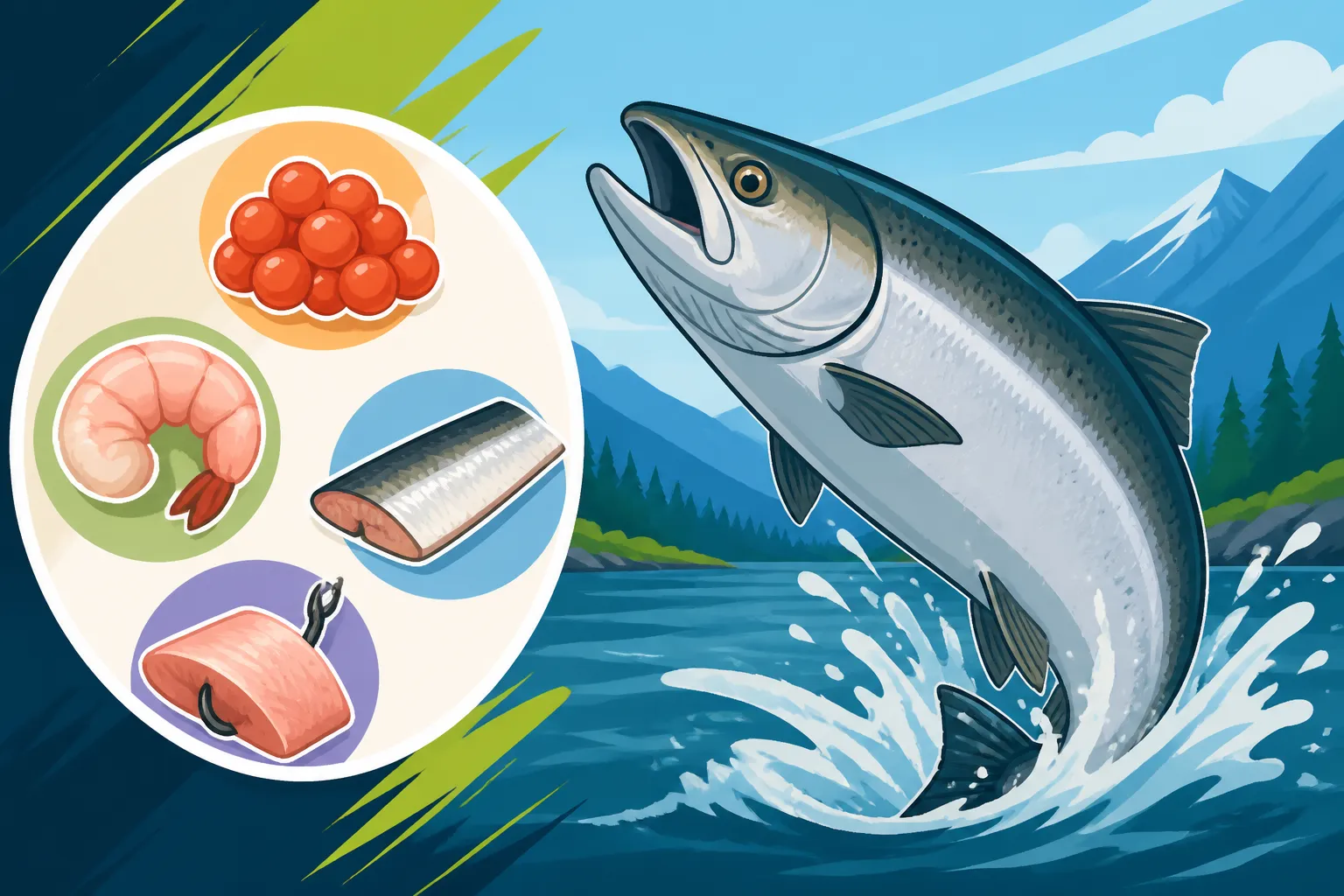
If there's one bait that Fraser River Chinook find almost irresistible, it's properly cured salmon roe. The natural oils, scent, and softness of roe are incredibly appealing. It's truly a classic for a reason.
- Why Roe Works: Chinook, even when not actively feeding, are drawn to the scent and familiarity of salmon eggs. It's a natural food source they encounter from birth, and the rich oils disperse scent effectively in the water. Plus, the soft texture allows for a natural "squish" when a fish mouths it, often leading to a solid hook-up. Many anglers believe it's an instinctual "food" trigger, even if they aren't digesting it.
- Types of Roe: While any salmon roe can work, Chinook roe itself is often considered top-tier due to its large, oily eggs. Coho and Sockeye roe are also popular choices. The key is freshness.
- Curing Techniques: Raw roe is delicate and won't last long on a hook. Curing transforms it, making it tougher, enhancing its scent, and often adding vibrant color. Popular curing agents include borax, Nofish, and various commercial brines. A good cure often involves a mix of salt, sugar, and dyes (like fluorescent red or orange) to make the eggs tougher, preserve them, and boost their visual appeal. Many anglers have their secret "recipes," but the goal is always a firm, vibrant, and incredibly pungent egg sack. You can find a wide range of roe curing supplies, from specialized borax to dyes and brines, readily available online, for instance, on Amazon.
- Presentation Methods: Roe is typically presented in small, mesh "roe bags" (often made from pantyhose or specialized netting) to keep the eggs together on the hook. The size of the bag can vary, from dime-sized for subtle presentations to quarter-sized for more aggressive fish or murkier water. You can also fish loose roe, though this is less common for Chinook in heavy current. Ensuring your hook is fully hidden within the bag is paramount.
Fresh or Brined Herring and Sardines
While roe might be king, baitfish like herring and sardines are incredibly effective, especially in tidal portions of the Fraser or when fish are still somewhat "green" from the ocean. These baits mimic what Chinook actively feed on.
- Why These Baitfish Are Effective: Herring and sardines are packed with natural oils and provide a realistic profile. Their scales flash, and when properly cut, they can create enticing action in the current. The scent trail they leave is a powerful attractant.
- Importance of Freshness and Brining: Freshness is paramount. A fresh, firm baitfish will hold up better on the hook and release more natural oils. Brining (soaking in a saltwater solution, often with additives like Mrs. Stewart's Bluing for scale brightness) toughens the bait, making it more durable and enhancing its visual appeal. Many anglers swear by a good brine for improving their bait's effectiveness and longevity.
- Cutting Techniques: For drift fishing, herring or sardine fillets are commonly used. A long, thin fillet, tapered to create a "flapping" action in the current, can be deadly. Another common method is using a "plug cut," where the baitfish is cut at an angle, allowing it to spin enticingly in the water, mimicking an injured baitfish.
- Rigging for Drift Fishing: Typically, baitfish are rigged on a two-hook leader system, often with one hook inserted near the head and the other trailing mid-body or in the tail. This ensures good hook-up ratios and allows the bait to present naturally. When drifting, it's crucial to ensure your bait is rolling or fluttering enticingly, not just spinning wildly or hanging limp.
Lamprey Eel Segments and Other Local Baits
Beyond the mainstream choices, some local and niche baits can also be incredibly effective, often surprising anglers with their pulling power.
- Lamprey Eel Segments: Lamprey eels are a natural food source for Sturgeon on the Fraser River, and segments of these oily, tough eels can also be surprisingly effective for Chinook. They offer a strong scent and a very durable bait that can withstand multiple strikes and currents. They are not always easy to source, but if you can get your hands on them, they can be a game-changer.
- Other Less Common Baits: Sometimes, anglers will experiment with other natural offerings, such as chunks of oily fish (like Oolichan), or even cured pieces of internal organs from previous catches. The common thread is always a strong, natural scent and durability in the current.
Artificial Baits and Scents for Fraser River Chinook
While natural baits often steal the show, artificials have their place, especially when combined with powerful scent attractants. They offer durability, consistent action, and can be critical when natural bait is scarce or regulations restrict its use.
Scented Soft Plastics and Jigs
Modern soft plastics have come a long way, and when infused with scent or combined with a strong scent additive, they can be highly effective.
- Popular Soft Plastic Shapes: Worms, paddle tails, and even certain creature baits can be adapted for Chinook. The action of a soft plastic, especially one with a paddle tail or a wiggly design, can mimic an injured baitfish or a natural food item struggling in the current. Brands like Berkley Gulp! offer pre-scented options that are known for attracting various fish species. You can often find a great selection of these on Amazon.
- Adding Scent to Enhance Appeal: Even if a soft plastic is pre-scented, adding a boost of a strong attractant can make a huge difference, especially in the often-turbid waters of the Fraser. Dousing your soft plastic with a krill, prawn, or anise-based scent just before casting can significantly increase your chances.
- Jigging Techniques with Artificials: Jigs, often tipped with a scented soft plastic or a piece of natural bait, are excellent for probing deeper holes and targeting holding fish. A slow, rhythmic jigging motion can trigger a reaction strike from a Chinook that might ignore a drifted bait. The flash of the jig head combined with the scent and action of the plastic can be a deadly combination.
Spinners and Spoons with Scent Boosters
Classic hardware baits like spinners and spoons rely on flash, vibration, and erratic action to provoke strikes. When fishing for Chinook in the Fraser, adding scent can elevate their effectiveness significantly.
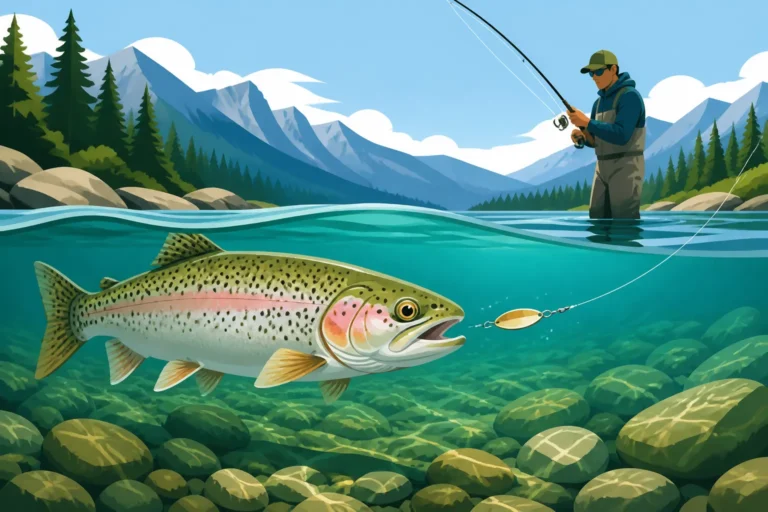
- Classic Hardware Baits: Spinners (e.g., Gibbs-Delta, Blue Fox) and spoons (e.g., Luhr Jensen, Len Thompson) are time-tested salmon catchers. Their bright colors, reflective surfaces, and unique actions mimic fleeing baitfish or simply annoy a Chinook enough to strike.
- Importance of Vibration and Flash: Chinook possess a keen lateral line system, allowing them to detect vibrations in the water. The thumping or wobbling action of a well-designed spinner or spoon sends out irresistible signals, especially in low light or murky conditions. The flash from polished metal or reflective tape also grabs their attention.
- Applying Scent to Blades and Bodies: This is where you transform an effective artificial into a truly potent offering. Many anglers will smear scent gels or sprays directly onto the blades, bodies, and skirts of their spinners and spoons. The scent slowly disperses as the lure moves through the water, creating a powerful scent trail that can draw fish in from a distance or entice a reluctant Chinook to commit.
- Popular Types for Chinook: Larger, heavier spinners and spoons are often preferred for Fraser River Chinook to help them get down in the current. Colors like chartreuse, orange, metallic silver, and brass are common choices, often with a contrasting stripe or dot.
The Power of Scent Additives
Whether you're using natural bait or artificials, scent additives are a non-negotiable part of serious Fraser River Chinook fishing. They provide that extra edge, especially when fish are less aggressive or water conditions are challenging.
- Types of Scents: There's a vast array of scents available, each with its proponents. Popular choices for salmon include anise, krill, prawn, garlic, sardine, and various "super scents" that blend multiple attractants. Each has a distinct profile, and experimentation is often key to finding what works best on a given day.
- How to Apply Them to Natural and Artificial Baits: Scent can be applied in various forms: gels that stick to bait, oils that soak in, and sprays for quick application. For natural baits, you can inject scents into herring or sardines, or marinate roe in them. For artificials, generously coating soft plastics, spinner blades, or spoon bodies is the norm. Re-application throughout your fishing session is important, as scents can wash off.
- Benefits in Murky Water or Slow Bites: Scent is particularly crucial in murky water where visual cues are limited. A strong scent trail becomes the primary way for Chinook to locate your bait. Even in clear water, during a slow bite or when fish are pressured, a potent scent can be the difference between a blank day and a successful one. You'll find a wide selection of these powerful scent sprays and gels available from various brands on Amazon.
Presentation is Key: Rigging and Techniques
Having the best bait in the world won't matter if you don't present it correctly. For Fraser River Chinook, understanding the nuances of rigging and technique is as important as the bait itself. The goal is always a natural, enticing presentation that gets your bait into the strike zone.
Drift Fishing with Natural Baits
Drift fishing is one of the most effective and popular methods for targeting Chinook in the Fraser. It involves allowing your bait to tumble naturally along the bottom, mimicking a dislodged food item or an injured baitfish.
- Detailed Step-by-Step for a Drift Rig:
- Mainline: Use strong braided line (e.g., 50-80 lb) as your mainline for sensitivity and power.
- Sliding Sinker: Thread a sliding sinker (typically a cannonball or pyramid weight, 4-12 oz depending on current) onto your mainline. The sliding nature allows the fish to pick up the bait without feeling the weight immediately.
- Bumper Bead: Add a plastic or rubber bumper bead below the sinker to protect your knot.
- Swivel: Tie on a strong barrel swivel (e.g., 100 lb test).
- Leader: To the other side of the swivel, tie a fluorocarbon leader (e.g., 30-60 lb test, 3-6 feet long). Fluorocarbon is less visible in water and abrasion resistant. The length of the leader is critical; too short and the bait might not drift naturally, too long and it can be hard to feel subtle bites.
- Hooks: Attach your roe bag or baitfish rig (often a two-hook setup for baitfish) to the end of the leader.
- Weighting, Leader Length, Hook Choice: Your weight should be just heavy enough to tick the bottom occasionally without getting snagged. Too light, and your bait floats unnaturally; too heavy, and you're just dragging bottom. Adjust your leader length based on water clarity and current; shorter in murky, faster water, longer in clear, slower water. Hook choice depends on bait size; generally, strong, sharp octopus or Gamakatsu hooks are preferred.
- Reading the Current and Bottom: This is an acquired skill. You want your bait to drift slightly slower than the current, rolling naturally over the bottom structure. Pay attention to seams, eddies, and changes in depth where Chinook might be holding. Learning to read the river, as covered in a How to fish a river for Chinook Salmon guide, is paramount.
Bar Fishing for Anchored Success
Bar fishing is a popular technique on the Fraser, particularly during peak salmon runs. It involves anchoring your boat (or fishing from shore on a gravel bar) and casting heavy rigs out, allowing them to sit on the bottom in productive channels.
- Explanation of Bar Fishing Setup: Bar fishing uses a heavier version of a drift rig. You'll typically use a very stout rod and reel, a heavy mainline (80-100 lb braid), and a large pyramid or flat-bottomed lead weight (8-24 oz) to hold bottom in the strong current. The leader is often shorter (2-4 feet) but very strong.
- Rod Holders, Heavier Weights, Longer Soaks: Multiple rods are often deployed from sturdy rod holders, allowing anglers to cover a wider area. The bait (usually a large roe bag, entire herring, or lamprey eel segment) is left to soak for extended periods, relying on its strong scent to attract fish. Patience is key with bar fishing.
- Importance of Location: Finding the right gravel bar or deep channel is crucial. Chinook often travel along specific pathways or hold in deep depressions, especially on an incoming tide. Local knowledge or a detailed Fraser River Fishing Guide can point you to prime locations for this technique.
Back-Trolling and Back-Bouncing
These boat-based techniques offer precise bait presentation, allowing anglers to systematically work specific holding areas or travel lanes.
- How These Techniques Work to Present Baits:
- Back-trolling: Involves using a boat's motor (often a kicker motor) in reverse to slowly move upstream, allowing your bait to drift downstream, slightly slower than the current, covering water thoroughly. This gives your bait a very natural, enticing presentation.
- Back-bouncing: Similar to drift fishing but controlled from a boat, where the angler uses the boat's position and motor to keep the bait "bouncing" along the bottom in a controlled manner, slowly moving downstream through a productive stretch.
- When to Use Them: These techniques are excellent for working specific runs, deep holes, or known travel corridors where Chinook are holding or migrating. They allow for meticulous coverage of prime water, ensuring your bait spends maximum time in the strike zone. They are particularly effective when targeting fish that are holding rather than actively migrating.
Seasonal Considerations and Bait Adjustments
The Fraser River Chinook season offers varying conditions, and adjusting your bait and technique to the time of year can significantly boost your success. The BC Chinook salmon spring season dates on the Fraser often dictate the early strategies.
Spring and Early Summer Chinook Strategies
Early season Chinook, often called "springers," are typically chrome-bright and still aggressive, having recently entered the river.
- Focus on Aggressive Feeders: These fish are less likely to be completely shut off from feeding instincts. They respond well to baits with strong visual appeal and robust scent.
- Brighter Colors, Stronger Scents: Fluorescent roe, vibrant colored artificials, and potent scent additives like krill or sardine can be highly effective. These fish are often traveling quickly and need something that stands out.
- Location: Target tidal influence areas and the lower stretches of the Fraser. Consider a BC Freshwater vs Tidal Waters License, Explained to ensure you're covered for both environments.
Peak Summer and Fall Run Adjustments
As the summer progresses and the main fall runs begin, Chinook numbers swell, but the fish often become more wary the longer they've been in fresh water, especially as they get closer to their spawning grounds.
- More Wary Fish, Refined Presentations: These fish have seen a lot of gear. Subtle presentations become more effective. Smaller roe bags, natural-colored baits, and exceptionally clean drifts are crucial.
- Importance of Natural Presentation: Mimicking a natural event, like a loose egg or an injured baitfish struggling in the current, is key. Overly aggressive or unnatural presentations can spook fish.
- Adjusting to Water Levels: Summer and fall can bring lower, clearer water, making fish more visible and easily spooked. Stealth, longer leaders, and more refined techniques are necessary. Conversely, heavy rains can muddy the water, making strong scents and vibrating lures indispensable. Keep an eye on BC Fishery Notices and In-Season Closures, Explained as these can impact what and where you can fish.
Here’s a quick overview of bait types and their ideal conditions:
| Bait Type | Pros | Cons | Ideal Conditions | Key Techniques |
|---|---|---|---|---|
| Cured Salmon Roe | Unrivaled scent, natural appeal, soft texture for good hook-ups. | Can be delicate, requires proper curing, expensive. | All conditions, especially murky water and wary fish. | Drift fishing, Bar fishing |
| Fresh/Brined Herring | Strong natural oils, realistic profile, good action when cut. | Requires freshness, can wash out in strong currents, messy to rig. | Tidal Fraser, clearer water, aggressive "green" fish. | Drift fishing, Back-trolling |
| Lamprey Eel Segments | Extremely durable, potent scent, natural food source. | Difficult to source, less visual appeal, unusual texture. | Murky water, strong currents, when other baits fail. | Drift fishing, Bar fishing |
| Scented Soft Plastics | Durable, consistent action, can be re-scented. | Less natural scent than real bait, can be ignored by wary fish. | Murky water, when active fish are present, jigging deeper holes. | Jigging, Drift fishing with added weight |
| Spinners/Spoons (w/scent) | Strong flash and vibration, covers water quickly, durable. | Can snag easily, less natural presentation than bait. | Clear to slightly turbid water, aggressive fish, covering wide areas. | Casting & retrieving, Back-trolling |
| Scent Additives | Boosts appeal of any bait, enhances visibility in murky water. | Requires frequent re-application, can be messy. | Essential in all conditions, especially low visibility or slow bites. | Applied to all baits |
Ultimately, the best bait for Chinook salmon on the Fraser River isn't a single magical item but rather a thoughtful combination of high-quality bait, precise presentation, and an understanding of the conditions and the fish's behavior. Don't be afraid to experiment, stay current with river conditions, and learn from every outing. Happy fishing!
Disclaimer
Fishing regulations in British Columbia are subject to change without notice. It is the angler's responsibility to review and understand the most current British Columbia Freshwater Fishing Regulations Synopsis, as well as any in-season fishery notices from Fisheries and Oceans Canada (DFO) before heading out. Always carry your valid fishing license and be aware of all bag limits, possession limits, and special restrictions for the waters you are fishing.