What lures imitate the baitfish steelhead eat
Steelhead fishing in British Columbia is often described as a pursuit of a thousand casts, and many anglers experience the frustration of presenting every "hot" lure in their tackle box without a single strike. One of the biggest mysteries is cracking the code of what these elusive chrome giants are actually keyed in on, especially when they're not in a mood for roe or worms. This guide is designed to peel back the layers of that mystery, helping you understand the primary baitfish species steelhead eat and, crucially, the lures that do the best job of imitating these natural food sources, increasing your chances of a memorable fight on the river.
Understanding Steelhead Foraging Habits in BC
Steelhead, the anadromous form of rainbow trout, return to our freshwater rivers in British Columbia primarily to spawn. Unlike salmon, they don't necessarily die after spawning and can return to the ocean and come back multiple times. This means they often arrive in rivers with a different mindset than, say, a Chinook salmon pushing its last ounce of energy towards the redds. While they might reduce active feeding drastically in freshwater compared to their ocean phase, they remain opportunistic predators. They're wired to strike anything that looks like an easy, high-energy meal, especially if it's struggling or looks vulnerable.
Factors like water temperature, clarity, and river flow all play a significant role in how and what steelhead might forage on. In cold, clear water, they might be more lethargic and less willing to chase, preferring a subtle presentation that drifts right into their holding lie. In warmer, slightly off-colour water, they might be more aggressive, hitting a faster-moving, more vibrant offering. They’re not actively 'feeding' in the same way they would be in the ocean, but rather reacting to a perceived threat or an easy meal that looks too good to pass up. Think of it less as a hungry diner and more as a sophisticated predator defending its territory or capitalizing on a vulnerable morsel.
Key Baitfish Species Steelhead Target
When steelhead are in a river, they are surrounded by a variety of smaller fish that can become an opportunistic meal. While they certainly consume salmon eggs, aquatic insects, and worms, baitfish are a critical part of their diet, particularly larger, ocean-bright fish that haven't been in the river system for long, or those holdovers regaining strength. Knowing what these local baitfish look like is your first step in choosing the right lure.
Sculpins: The Bottom-Dwellers
Sculpins are perhaps the unsung heroes of the steelhead diet. These small, bottom-dwelling fish are incredibly common in many BC steelhead rivers, from the gravelly runs of the Thompson to the rocky pockets of the Skeena system. They have a mottled, camouflaged appearance, usually brown, grey, or olive, allowing them to blend seamlessly with the riverbed. Their bodies are broad at the head, tapering back to a thinner tail, and they typically "dart" rather than swim smoothly. This makes them a prime target for steelhead lying in wait, as they're often dislodged by current or moving between rocks. Steelhead will often hold in prime lies where sculpins are abundant, waiting for one to drift by.
Juvenile Salmon and Trout: Fry and Parr
Our BC rivers are teeming with the offspring of various salmon and trout species. Think about the countless juvenile Chinook, Coho, or even rainbow trout (parr) that inhabit these waters. These young fish are typically silvery, often with parr marks (vertical bars) along their sides for camouflage. They swim in schools or hide among rocks and vegetation, but are constantly vulnerable to larger predators. When water levels fluctuate or freshets occur, these juveniles can be displaced, becoming easy pickings for an opportunistic steelhead. A flash of silver or a struggling, darting movement can trigger an immediate predatory response. Anglers often find success imitating these vulnerable young fish, especially during periods when they are naturally on the move. Salmon Fishing Techniques for BC Rivers details more about these important species.
Lamprey Ammocoetes: The Eel-like Treat
While not technically a "fish," the larval stage of lampreys, known as ammocoetes, are a common and highly nutritious food source for many anadromous fish, including steelhead. These worm-like creatures burrow in soft river bottoms and can be dislodged by currents or even by the angler's boots disturbing the riverbed. They are typically dark brown or grey, somewhat plump, and have a distinctive, subtle wiggle when free-swimming. Although often overlooked, many effective steelhead lures and flies are designed to mimic these succulent morsels, particularly in slower, deeper sections of rivers where they might accumulate.
Top Lures for Mimicking Steelhead Forage
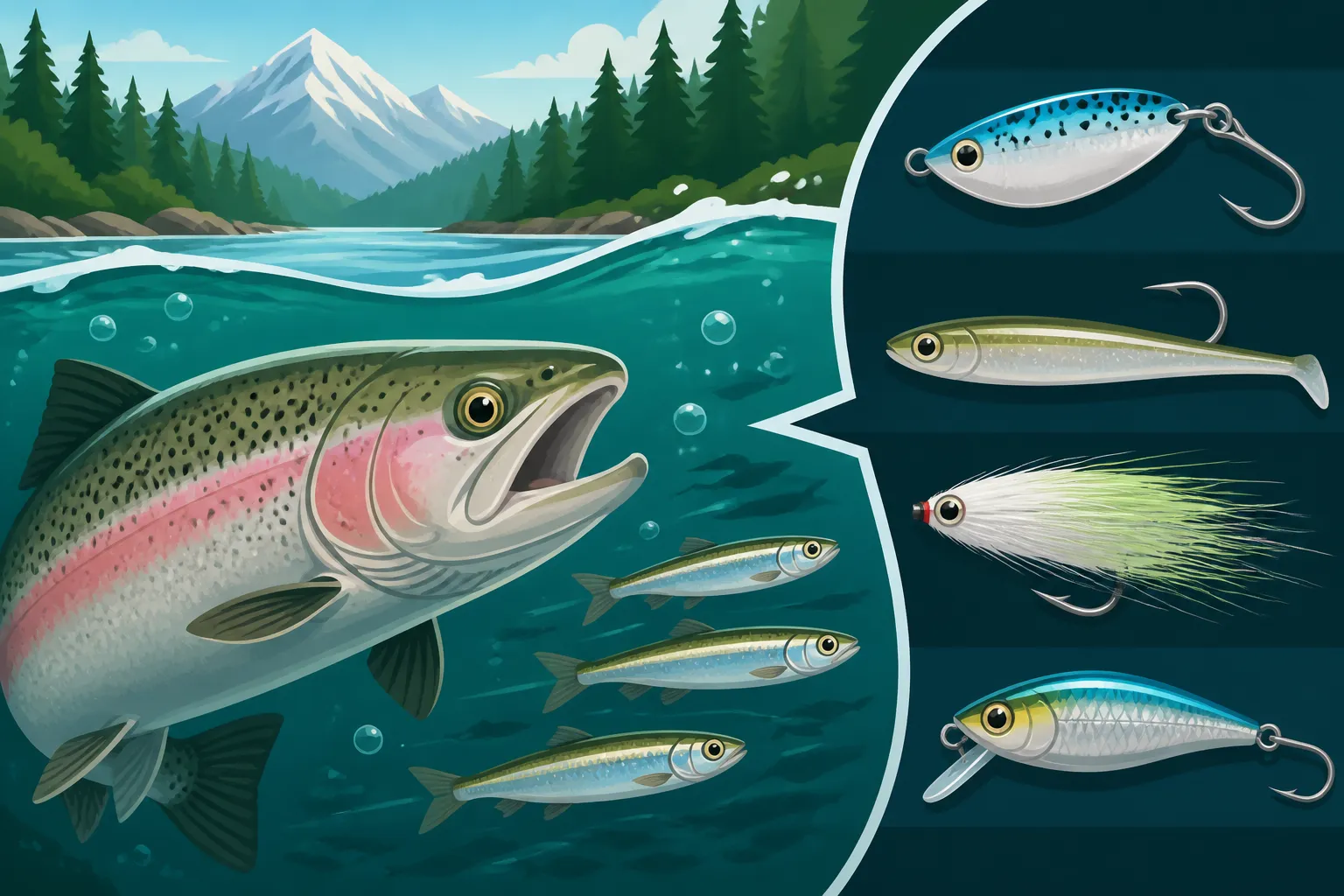
Now that we know what steelhead might be eating, the next step is to choose lures that do a convincing job of imitating these natural food items. The key isn't always about perfect anatomical replication, but rather mimicking the profile, colour, action, and vulnerability of the baitfish.
Jigs: The Versatile Imitators
Jigs are arguably one of the most effective and versatile lure categories for imitating baitfish. Their weight-forward design allows them to sink quickly and work near the bottom, right where sculpins often reside.
- Marabou Jigs: These are steelhead staples for a reason. The soft marabou feathers breathe and undulate in the current, creating a lifelike swimming motion that perfectly mimics a struggling or darting baitfish. For sculpins and darker fry, natural colours like black, olive, brown, and grey are excellent choices. For more flash or to imitate juvenile salmon, chartreuse, white, or even pink can be effective, especially in lower light or off-colour water. Weights typically range from 1/8 to 1/2 ounce, depending on current and depth. You can find an incredible array of marabou jigs on Amazon in various colors and weights, making it easy to stock up for different river conditions.
- Rabbit Fur Jigs (Bunny Leeches): Similar to marabou but with a slightly different action, rabbit fur jigs offer a fantastic profile and movement in the water. The fur pulsates and flares, especially on the retrieve or while drifting. These are particularly good for imitating larger sculpins or even a juvenile trout. Darker colours such as black, purple, or olive are highly effective, often with a hint of flash incorporated.
- Intruder-style Jigs: While often thought of as fly patterns, jig versions of intruder-style flies have gained popularity. These often feature composite materials, flash, and rubber legs, giving them a larger, more aggressive profile that can imitate a substantial baitfish or a general "buggy" meal. They are excellent for targeting aggressive steelhead in strong currents.
Spoons and Spinners: Flash and Vibration
Sometimes, steelhead need a bit more flash and vibration to trigger a strike. Spoons and spinners excel at this, often imitating a fleeing or disoriented baitfish.
- Casting Spoons: Small, thin casting spoons, particularly those with a vibrant wobbling action, can be highly effective. Patterns that mimic herring or small salmon smolts, such as silver, brass, or even combinations of green/silver or blue/silver, work well. The flash of a spoon can be incredibly attractive, especially in clear to slightly stained water. They are excellent for covering water and targeting steelhead holding in slower currents or pools. You'll find many popular brands offering these on Amazon.
- Spinners: While often considered more of an attractor, the flash and vibration of an inline spinner can effectively imitate a distressed baitfish. Vibrax spinners in sizes 3-5 in silver, gold, or copper blades with black, white, or chartreuse bodies are classic steelhead producers. The rotating blade creates a pulse that steelhead can detect through their lateral line, even in murky conditions. The Best Baits for Steelhead on the Skeena delves into more specific options.
Soft Plastics: Realistic Profiles and Subtle Action
Soft plastic lures have come a long way and offer incredibly realistic profiles and subtle, enticing actions.
- Small Swimbaits: These are mini replicas of baitfish, often with a paddle tail that creates a subtle thumping action. Rigged on a jig head, they can be retrieved or drifted to imitate sculpins, dace, or juvenile salmon. Natural colours like browns, greens, and greys are great, but don't shy away from white or chartreuse for contrast. Their soft texture makes them feel more natural to a steelhead when it takes the bait.
- Grubs/Paddletails: Similar to swimbaits but often with a more generic body profile, grubs with paddle or curly tails offer fantastic action. They are particularly good for imitating smaller fry or dislodged insects, but a larger profile can also mimic a small baitfish. Again, natural colours are key, and a slow, bouncy retrieve near the bottom can be deadly.
- Worm Imitations (Though Not Baitfish): While not baitfish, it's worth a quick mention that soft plastic worms, often in bright colours like pink or orange, are extremely effective for steelhead. They mimic annelid worms, which are another natural food source and often trigger strikes, especially when drifted naturally.
Flies: The Art of Imitation
For fly anglers, streamers are the primary category for imitating baitfish. This is where the "match the hatch" concept truly shines, with patterns designed specifically to look like various aquatic creatures.
- Sculpin Patterns: Flies like the Muddler Minnow, Sculpzilla, or various articulated sculpin patterns are designed to mimic the broad-headed, mottled appearance of a sculpin. They are often weighted to get down quickly and fished with short strips or dead-drifted to mimic their darting movement.
- Zonkers and Leech Patterns: These flies, often tied with rabbit strips or marabou, create incredible movement in the water. They can imitate a variety of baitfish, from juvenile salmon to lamprey ammocoetes, depending on size and colour. Black, olive, and natural browns are common, but chartreuse or even blue can be effective. Fly Patterns for BC Steelhead Rivers provides more specific details for these.
- Flash Flies: Patterns incorporating significant amounts of flash can imitate the silvery sides of juvenile salmon or trout. These are often tied with synthetic materials that shimmer and move enticingly in the current.
Matching the Hatch: Tips for Success
Choosing the right lure is only half the battle; how you present it is just as crucial. Here are some tips to help you effectively imitate the baitfish steelhead are looking for:
Observe Your Environment
Before you even make a cast, take a moment to observe the water. What is the clarity like? Is the river high and murky, or low and crystal clear? What's the water temperature? These factors will influence not only the colour and size of your lure but also the type of action you want to impart. In clear water, more natural, subtle colours and presentations are often best. In murkier water, brighter colours and more vibration can help steelhead locate your offering. Pay attention to any small fish you see darting around the edges or in eddies; this can give you clues about the local baitfish population.
Size and Profile Matter
Try to match the size of your lure to the prevalent baitfish in the system, or to the general size of the forage steelhead might be expecting. If the river has small, 2-3 inch sculpins, a huge 6-inch swimbait might be ignored. Conversely, if there are larger juvenile salmon, a tiny jig might not draw enough attention. It's often better to start with a lure that's slightly smaller than what you think they might be eating, and then scale up if needed. The profile, or shape, of your lure should also roughly resemble the baitfish you're trying to imitate – broad-headed for sculpins, slender for juvenile salmon, and so on.
Colour Selection: Natural vs. Attractor
This is where many anglers get caught up. While natural colours (olives, browns, greys, black) are usually a good starting point for mimicking actual baitfish, sometimes an attractor colour (pink, chartreuse, orange) is what it takes to trigger a strike, especially for a steelhead that isn't actively feeding but rather reacting instinctively.
- Natural Colours: Best in clear water and sunny conditions. They aim to blend in and look exactly like the real thing. Think about matching the belly and back colours of the local baitfish.
- Attractor Colours: Excellent in low light, cloudy water, or when fishing deeper holes. These colours stand out and provoke a reaction strike, even if they don't perfectly mimic a natural food source. Often, a combination (e.g., an olive jig with a chartreuse head) gives you the best of both worlds.
Presentation: Movement and Drift
The most realistic lure in the world is useless if it doesn't act like a baitfish. Steelhead are finely tuned to detect natural movement.
- Dead Drifting: For jigs and flies, a dead drift (allowing the lure to tumble naturally with the current, just like a dislodged baitfish) is often incredibly effective. This means reducing drag and letting the current do most of the work, with just enough tension to feel a strike. This is a core concept in Drift Fishing for Steelhead in BC Rivers.
- Subtle Strips/Twitches: For streamers or soft plastics, short, subtle strips or twitches can imitate a baitfish darting, struggling, or attempting to escape. Don't overdo it; a little movement goes a long way.
- Swing: For fly anglers, the "swing" technique allows a streamer to drift across the current, then come under tension and swing downstream, mimicking a baitfish moving across the current or getting swept away. This can be absolutely deadly.
No matter what lure you choose, practice your presentation. Work on mending your line to achieve the most natural drift or retrieve possible. Steelhead are incredibly sensitive, and often, it's the subtle differences in presentation that make all the difference. Many anglers find the convenience of shopping for various lure types and brands on Amazon helpful for building a diverse tackle box ready for any condition.
By understanding the diet of these magnificent fish and selecting lures that accurately imitate their natural prey, you're not just casting randomly; you're speaking the language of the river. Good luck out there, and tight lines!
Disclaimer
This article is for general informational purposes only and does not constitute professional advice. Laws, prices and regulations vary by location and change over time. Consult a qualified professional for guidance on your specific situation.