White Sturgeon Habits on the Fraser River
There's a unique thrill that comes with the thought of hooking into a prehistoric giant right here in British Columbia's backyard. Many anglers dream of encountering the legendary white sturgeon of the Fraser River, but the sheer size and elusive nature of these magnificent creatures can feel daunting. This comprehensive guide is here to demystify the fascinating habits of white sturgeon, offering you a deeper understanding of their world in the Fraser River and equipping you with the knowledge to appreciate and protect them.
The Ancient Giants of the Fraser River
The Fraser River is not just a waterway; it's a living, breathing ecosystem that supports an incredible diversity of life, and at its heart are the white sturgeon. These fish are true living fossils, having patrolled these waters for millions of years. Their presence connects us directly to a primeval past, offering a glimpse into a time before humanity even walked the earth. For many, simply knowing they exist in such numbers is a wonder, let alone the opportunity to engage with them.
A Living Dinosaur in British Columbia
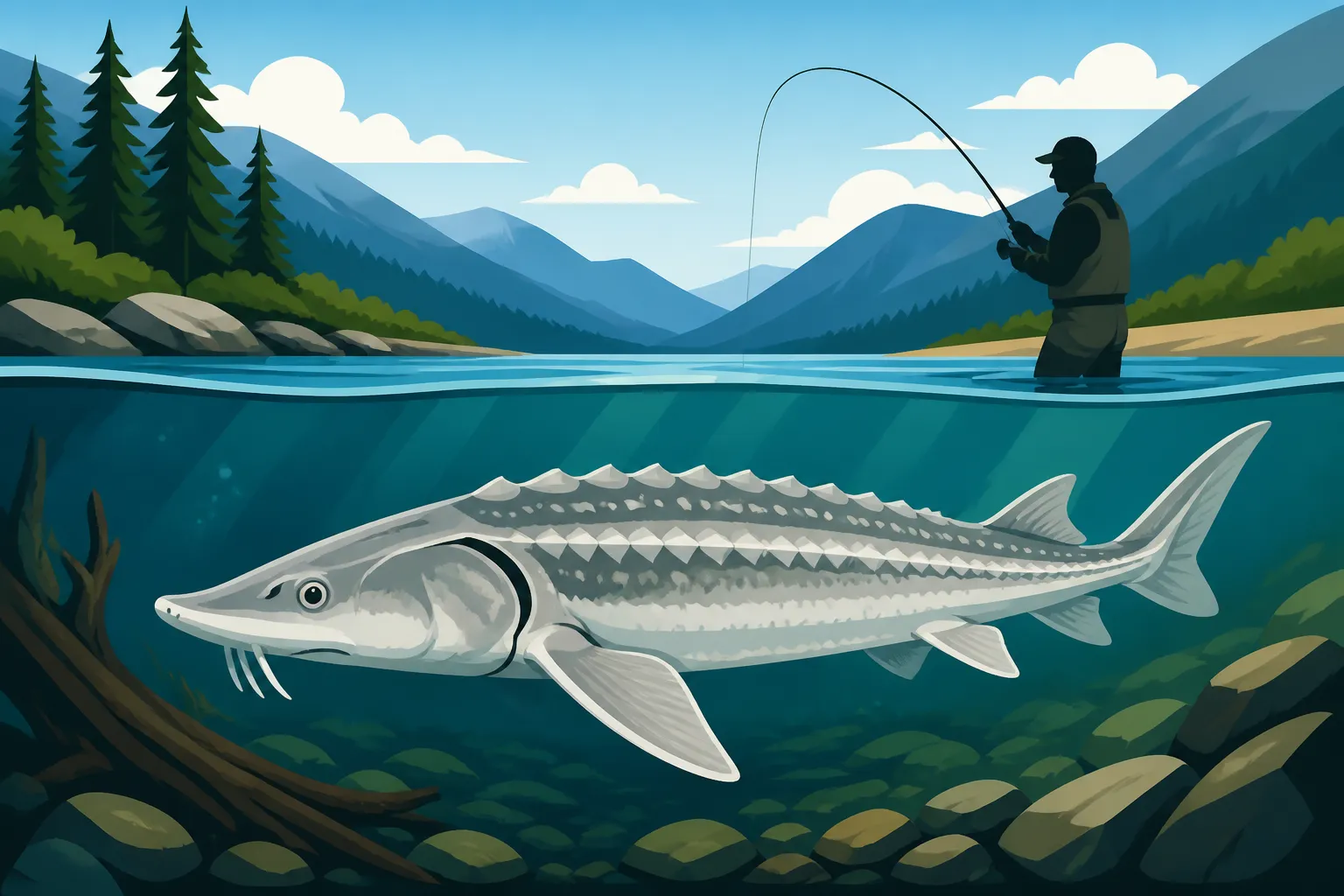
Imagine a creature that has changed little since the dinosaurs roamed, a fish that can outlive multiple human generations and grow to truly astounding sizes. That's the white sturgeon for you. Their cartilaginous skeletons, rows of bony scutes, and toothless mouths are all hallmarks of an ancient lineage. When you see one breach the surface, its powerful tail sending spray high into the air, it's a moment that feels less like fishing and more like an encounter with history itself. They are robust, adaptable, and incredibly powerful, perfectly suited to the dynamic environment of the Fraser River. They represent a significant part of British Columbia's natural heritage and are a testament to the resilience of nature when given a chance.
These magnificent fish aren't just big; they're incredibly long-lived. It's not uncommon for a large sturgeon to be 80, 90, or even over 100 years old. Think about that for a moment – some of the sturgeon you might encounter today were swimming in the Fraser before your grandparents were born. This incredible longevity means they've witnessed countless salmon runs, floods, and changes to the river landscape. Their very existence reminds us of the importance of preserving these wild spaces for future generations, ensuring these living legends continue their ancient dance through the currents.
The Fraser's Unique Ecosystem for Sturgeon
The Fraser River provides an unparalleled habitat for white sturgeon. Its vast network of mainstem river, side channels, sloughs, and deep holes offers everything these bottom-dwelling fish need to thrive. From the tidal reaches near the Strait of Georgia all the way up into the canyon, the river presents a complex tapestry of varying currents, depths, and substrate types. This diversity allows sturgeon of all sizes and ages to find suitable areas for feeding, resting, and spawning. The river's incredible salmon runs are also a critical component, providing a massive food source that fuels the growth of these giants.
What truly makes the Fraser special for white sturgeon is the sheer abundance and variety of their food sources, particularly the incredible biomass of migrating salmon. While sturgeon are opportunistic feeders that will consume a wide array of benthic organisms, insect larvae, and smaller fish, the annual salmon runs are a feast of epic proportions. Millions of salmon, after their long journey at sea, return to the Fraser to spawn and die, providing an easily accessible, nutrient-rich bounty for the sturgeon. This consistent and immense food supply allows the sturgeon to reach truly incredible sizes, making the Fraser famous for its trophy fish. Understanding these larger ecological connections is key to appreciating White Sturgeon Fishing on the Fraser River.
What Makes a Sturgeon Tick: Diet and Habitat Preferences
Understanding what sturgeon eat and where they prefer to hang out is fundamental to locating them and appreciating their role in the ecosystem. They are creatures of habit in many ways, driven by instinct and opportunity, always looking for the easiest meal in the most comfortable spot. This often means deep, slow-moving water near a food source.
A Bottom Feeder's Diverse Diet
White sturgeon are primarily benthic feeders, meaning they forage along the river bottom. Their unique, protractile mouth, located on the underside of their head, is perfectly adapted for vacuuming up food from the substrate. They don't have teeth in the traditional sense, but their powerful jaws and suction capabilities are incredibly effective. Their diet is surprisingly varied, shifting with the seasons and the availability of different food items. During the spring and early summer, they might focus on lamprey, eulachon (hooligan), and various insect larvae. As the massive salmon runs begin in late summer and fall, salmon carcasses and eggs become a primary food source. They are truly opportunistic eaters, making the most of whatever the river provides.
While the salmon runs are a critical period of feasting, sturgeon aren't solely reliant on them. Their diet also includes a variety of freshwater mussels, clams, crayfish, and smaller fish species like sculpins and sticklebacks. This adaptability in their diet is one of the reasons they've been so successful over millennia. They're not picky eaters, which means they can thrive even when specific food sources are less abundant. This broad palette is also why a range of baits, from salmon roe to lamprey to commercial sturgeon baits available on platforms like Amazon, can be effective when targeting them. Understanding these dietary preferences is a crucial part of knowing What white sturgeon eat in the Fraser River.
Preferred Habitat and River Structure
Sturgeon are often found in deeper sections of the river, especially those with slower currents or eddies that allow them to conserve energy. They love structure – deep holes, ledges, submerged log jams, rock piles, and drop-offs. These areas offer shelter from strong currents, places to hide, and often concentrate food. Imagine a deep scour hole behind a submerged island, or a long, deep trough running alongside a riverbank; these are prime sturgeon territories. They use their sensitive barbels, located near their mouth, to feel along the bottom, detecting the scent and presence of food hidden in the silt and gravel.
The specific type of bottom substrate also plays a role in their habitat selection. While they will cruise over various bottoms, they often prefer areas with a mix of gravel, sand, and silt, where many of their invertebrate food sources reside. Heavy clay bottoms or areas with extremely swift, turbulent currents are generally less productive. The Fraser River's constantly shifting channels and gravel bars mean that what was a prime spot last year might be different this year, so understanding the general principles of their preferred habitat is more valuable than memorizing exact GPS coordinates. Experienced guides often spend years learning these subtle changes, but even a keen eye can spot areas that look "sturgeon-y."
Sensory Prowess: How Sturgeon Find Food
Sturgeon have a highly developed sensory system that allows them to locate food in even the murkiest of Fraser River waters. Their four prominent barbels around their mouth are essentially taste and touch sensors, sweeping the riverbed to detect prey. These barbels are packed with chemoreceptors, allowing them to "smell" and "taste" food particles in the water. This incredible sensitivity is why even a small piece of bait can attract a sturgeon from a distance.
Beyond their barbels, sturgeon also possess a lateral line system, a series of sensory pores running along their sides, which detects vibrations and changes in water pressure. This allows them to "feel" the presence of struggling fish, moving prey, or even the subtle movements of salmon carcasses rolling along the bottom. Their vision, while not as crucial as their other senses in the often-turbid Fraser, is still utilized in clearer conditions, but it's really their incredible sense of smell and touch that makes them such effective bottom predators. This multi-sensory approach ensures they rarely miss a meal, even when visibility is near zero.
Where and When to Find Them: Seasonal Movements
Sturgeon are not static creatures; their movements within the Fraser River are influenced by a combination of water temperature, flow rates, and the availability of food, especially the seasonal salmon runs. Understanding these patterns is key to successful angling and conservation efforts.
Seasonal Migration Patterns
White sturgeon exhibit seasonal migration patterns, moving throughout different sections of the Fraser River system depending on the time of year. In the colder months of winter, they tend to congregate in deeper, less turbulent pools, where water temperatures are more stable and they can conserve energy. As spring arrives and water temperatures begin to rise, they become more active, moving into shallower areas and often into side channels to feed on eulachon and other early spring food sources. This is a period of increasing activity as they prepare for spawning.
Summer sees them dispersed throughout a wide range of habitats, continuing to feed and growing larger. As late summer and fall approach, their movements become heavily influenced by the returning salmon. They'll often follow the salmon migrations, moving upstream to capitalize on the abundant food source provided by spawning salmon and their eggs. This congregation in salmon-rich areas makes them more predictable for anglers during these peak times. After the salmon runs dwindle, they'll gradually retreat back to their deeper wintering holes.
Key Fraser River Sections for Sturgeon
The Fraser River system is vast, but certain sections are consistently known for their white sturgeon populations. The Lower Fraser, from its mouth up to areas like Hope, is particularly famous, holding a significant portion of the population and producing many of the record-breaking giants. This area features numerous deep pools, sloughs, and side channels that provide ideal habitat. Specific stretches within the Lower Fraser, such as those around Mission, Chilliwack, and even parts closer to Vancouver, are legendary for sturgeon. Best sturgeon spots on the Lower Fraser River often refer to these areas.
Further upstream, past the Fraser Canyon, sturgeon populations also exist, though generally in lesser densities and often of smaller average size compared to the giants of the lower river. The Middle and Upper Fraser sections still offer excellent opportunities, particularly in specific deeper pools and confluence zones where food might concentrate. Each section of the river presents its own unique challenges and rewards, from the wide, powerful currents of the mainstem to the more intimate settings of smaller tributaries and sloughs. Always consult BC Fishery Notices and In-Season Closures, Explained before heading out, as regulations can vary.
Here's a quick look at how sturgeon habits might differ by Fraser River section:
| Fraser River Section | Typical Sturgeon Size | General Abundance | Seasonal Focus | Preferred Habitat |
|---|---|---|---|---|
| Lower Fraser (tidal to Hope) | Very Large (Trophy Potential) | High | Year-round, peaks with salmon runs | Deep pools, sloughs, mainstem drop-offs, log jams, tributary mouths |
| Middle Fraser (Hope to Lytton) | Medium to Large | Moderate | Spring/Summer/Fall | Deep eddies, canyon pools, rock slides, confluence zones |
| Upper Fraser (Lytton upstream) | Small to Medium | Lower | Summer/Early Fall | Deeper bends, log jams, slower pools in mainstem and larger tributaries |
The Life Cycle of a Fraser River Sturgeon
The life cycle of the white sturgeon is a slow, deliberate journey, reflecting their ancient heritage. From spawning to reaching their immense size, every stage is characterized by patience and resilience.
Spawning Rituals and Early Life
White sturgeon are late bloomers, not reaching sexual maturity until they are quite old. Females typically mature between 18 and 20 years of age, and males a few years earlier. Spawning usually occurs in late spring or early summer, when water temperatures range from about 14 to 18 degrees Celsius (57-64°F). They migrate to specific spawning grounds, often in areas with swift currents over clean gravel and cobble substrates. These areas are typically shallower than their feeding or resting habitats, allowing the eggs to adhere to the rocks and receive plenty of oxygen from the flowing water.
The spawning process itself is quite spectacular. Females can release hundreds of thousands, or even millions, of tiny, sticky eggs, which are then fertilized by the males. The eggs quickly adhere to the river bottom, camouflaged against the gravel. Unlike salmon, sturgeon do not die after spawning; they can spawn multiple times throughout their long lives, though not necessarily every year. After hatching, the larval sturgeon are vulnerable, drifting downstream before settling into nursery areas in calmer, shallower waters, slowly growing and developing their distinct sturgeon features. This prolonged early life stage highlights the importance of undisturbed river habitats.
Growth, Size, and Longevity
The growth rate of white sturgeon is relatively slow, especially in their early years, but it is continuous throughout their lives. This slow and steady growth is what allows them to reach truly monumental sizes and achieve incredible longevity. A typical juvenile might grow a few inches a year, while a mature sturgeon might add only an inch or two annually, but over a century, those inches add up. The largest white sturgeon ever documented from the Fraser River are truly giants, exceeding 10 feet in length and weighing over 1000 pounds. This is why when you're targeting these fish, particularly the larger ones, you're not just catching a fish; you're connecting with a living monument. To understand the scale of these fish, you might be interested in How big white sturgeon get in the Fraser River.
Their longevity is one of their most remarkable traits. It's not uncommon for Fraser River white sturgeon to live for 80, 90, or even over 100 years. Some estimates suggest they could live even longer under ideal conditions. This makes them one of the longest-living freshwater fish species in North America. Their robust nature, efficient metabolism, and ability to exploit diverse food sources contribute to this incredible lifespan. Catching and releasing a sturgeon, therefore, is not just about a momentary thrill; it's about respecting a creature that has traversed more history than most of us can comprehend. This long lifespan also means that population recovery, if numbers decline, is an incredibly slow process, underscoring the importance of strict conservation. Learn more about the Life span of a white sturgeon in the wild.
Conservation Efforts and Your Role
Given their slow growth, late maturity, and incredible longevity, white sturgeon are particularly vulnerable to environmental changes and overfishing. Thankfully, robust conservation efforts are in place, and every angler plays a crucial role in their ongoing protection.
Understanding Catch and Release Practices
The white sturgeon fishery on the Fraser River is strictly catch and release. This isn't just a suggestion; it's a legal requirement and a fundamental ethic that underpins the entire fishery. Proper catch and release techniques are paramount to ensuring the survival of these magnificent fish after they've been caught. This includes using appropriate heavy tackle to minimize fight time, avoiding taking the fish out of the water for prolonged periods (especially the larger specimens), and ensuring a gentle release. You'll find many specialized tools and resources, some even on Amazon, designed to aid in safe sturgeon handling.
When you're fighting a sturgeon, remember that minimizing stress is key. Don't play the fish to exhaustion. Once landed, keep the fish in the water as much as possible. If a photograph is desired, ensure the fish is supported horizontally by multiple people, and never drag it onto sharp rocks or rough ground. Remove the hook carefully, and if it's deeply embedded, cut the line as close to the hook as possible. Always ensure the fish is fully revived and can swim away strongly on its own power before letting it go. Proper Sturgeon catch and release survival tips are vital for their future. Always remember that BC Fraser River Sturgeon Catch and Release Requirement is not just a guideline, it's a law designed to protect these incredible fish.
Supporting Research and Monitoring
Beyond individual catch and release practices, supporting ongoing research and monitoring programs is vital for white sturgeon conservation. Various government agencies, academic institutions, and non-profit organizations are continuously studying sturgeon populations, tracking their movements, assessing their health, and identifying threats. Anglers can contribute by reporting tagged fish, participating in citizen science initiatives, and adhering to all regulations. Many guides, especially those like the Best sturgeon guides on the Fraser River, are actively involved in these efforts, often tagging fish and collecting data.
Donations to conservation groups, purchasing fishing licenses and conservation stamps (which directly fund research and management), and simply spreading awareness about the importance of sturgeon conservation are all ways to help. These efforts ensure that scientists have the data they need to make informed management decisions, adapting regulations as necessary to protect the population. The future of these ancient giants depends on a collective effort from anglers, guides, scientists, and the public alike. It's reassuring to know that your passion for fishing these magnificent creatures directly contributes to their survival. It is also important to note that Is It Legal to Release a Sturgeon You Catch in BC? – yes, it absolutely is, and it's mandatory.
Disclaimer
This article is for general informational purposes only and does not constitute professional advice. Laws, prices and regulations vary by location and change over time. Consult a qualified professional for guidance on your specific situation.