White Sturgeon Fishing on the Fraser River
There's nothing quite like the sheer awe and adrenaline rush of hooking into a white sturgeon on the mighty Fraser River. For many anglers, the thought of pursuing these colossal, prehistoric fish can feel a bit daunting – where do you start? What gear do you need? And how on earth do you even land a fish that could be older than your grandparents and bigger than you are? This comprehensive guide is designed to cut through the confusion and equip you with the knowledge, techniques, and confidence to embark on your own incredible white sturgeon fishing adventure on the iconic Fraser.
What Makes Fraser River Sturgeon So Special?
The Fraser River is not just any river; it's a living artery that pulses with life, and at its heart are the magnificent white sturgeon. These incredible fish represent a link to the past, a truly unique angling experience, and a testament to dedicated conservation efforts. Many anglers come from around the world just for the chance to encounter one of these giants, and for good reason.
A Living Dinosaur: History and Longevity
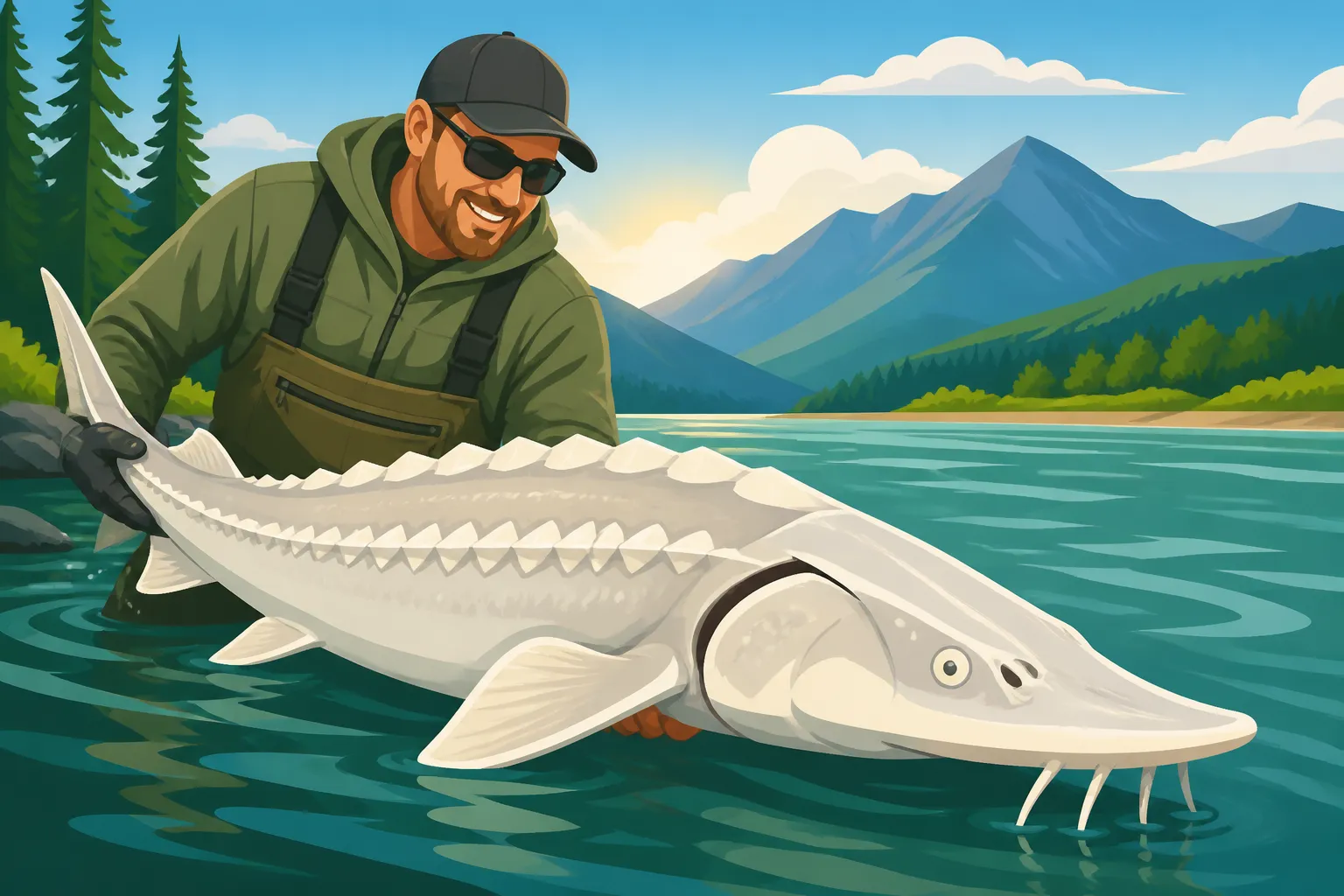
Imagine a fish that was swimming in these very waters when dinosaurs roamed the earth. That's essentially what a white sturgeon is! These ancient creatures can live for over 100 years, growing continuously throughout their long lives. They are North America's largest freshwater fish, a true living fossil with a cartilaginous skeleton, rows of bony plates (scutes) instead of scales, and a distinctive flattened snout with barbels that help them find food along the river bottom. The sheer history you feel when you're holding one of these magnificent beasts is palpable, connecting you to generations of the river's past.
The slow growth rate and incredible longevity of white sturgeon make their conservation paramount. Each large fish is a venerable elder of the river, having survived countless seasons and changes. Their life cycle is slow, and they don't reach sexual maturity until they are many years old, making them particularly vulnerable to overfishing or habitat degradation. This understanding frames the entire approach to sturgeon fishing on the Fraser: it's not just about the catch, but about respect for a truly ancient species.
Trophy Potential: Size and Strength
Let's be honest, one of the biggest draws to sturgeon fishing is the promise of hooking into something truly monumental. The Fraser River is legendary for producing some of the largest white sturgeon on the planet. Fish regularly push past the 8-foot mark, and there are stories – and documented catches – of sturgeon exceeding 10 or even 12 feet in length, weighing hundreds of pounds. Imagine the pure, unadulterated power of a fish that size at the end of your line! It's a fight of endurance, strength, and strategic angling that can last for an hour or more.
The sheer power these fish possess means they can put incredible strain on your gear and your body. They're known for their acrobatic jumps, powerful runs, and stubborn refusal to come to the boat. It's a true test of an angler's mettle, and landing one of these giants is an experience that stays with you forever. The battle isn't just about reeling; it's about leverage, patience, and knowing when to give line and when to pull.
Cultural Significance and Conservation History
The white sturgeon holds deep cultural significance for the Indigenous peoples of the Fraser River, who have harvested them for food and cultural purposes for thousands of years. Their presence is interwoven with the history and identity of the region. However, like many large, long-lived species, white sturgeon populations faced severe declines in the past due to overfishing and habitat destruction.
Thankfully, dedicated conservation efforts, strict regulations, and a robust catch-and-release mandate have helped the Fraser River white sturgeon population rebound significantly. Today, fishing for sturgeon is a highly regulated, catch-and-release only fishery, emphasizing the importance of protecting these incredible fish for future generations. This focus on sustainability means every angler plays a direct role in the ongoing success story of the Fraser River sturgeon. Understanding BC Fraser River Sturgeon Catch and Release Requirement is not just good practice, it's the law.
Understanding White Sturgeon Habits on the Fraser
To consistently find and hook these elusive giants, it’s crucial to understand their behaviour. White sturgeon are opportunistic feeders that prefer specific types of river bottom and water conditions. Knowing their habits will dramatically increase your chances of success.
Diet and Foraging Behaviour
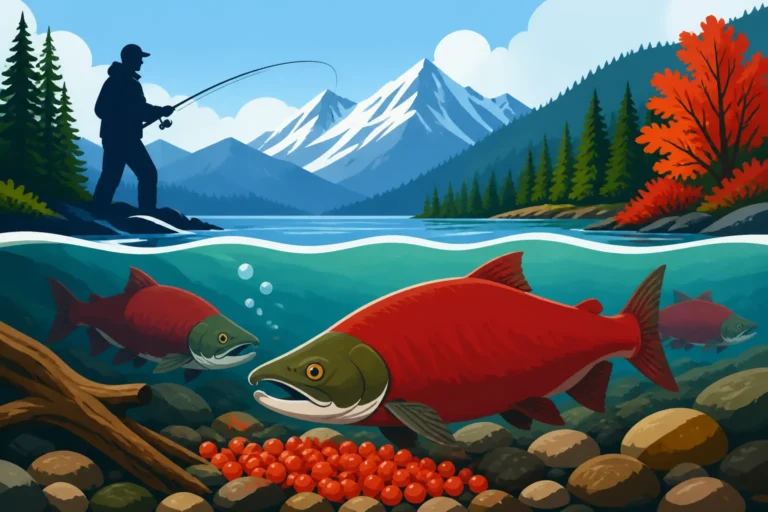
White sturgeon are primarily bottom feeders, using their sensitive barbels to detect food sources along the riverbed. They have a fascinating vacuum-like mouth that extends to suck up prey. Their diet on the Fraser River is quite varied, shifting with the seasons and the availability of food. During salmon runs, salmon eggs and decaying salmon carcasses become a prime food source. At other times, they'll forage for anything from eulachon (candlefish), lampreys, and various invertebrates to smaller fish species like smelt and even crawfish.
This opportunistic feeding behaviour means that your bait selection can be critical. You want to offer something that mimics a natural food source the sturgeon are actively seeking. They're not particularly picky, but presenting a fresh, appealing bait can make all the difference. Their sense of smell is highly developed, so fresh, oily baits that disperse scent in the current are often the most effective.
Preferred Habitats and Holding Water
Sturgeon are often found in deeper pools, troughs, and seams along the river bottom, especially where there's a good current flow that brings food to them. They tend to congregate in areas where the current drops off, allowing them to expend less energy while waiting for a meal. Look for areas downstream of significant bends in the river, deep holes adjacent to shallow flats, or ledges and submerged structures. These features create natural ambush points or resting areas.
They also show a preference for softer, sandier, or silty bottoms where they can easily root around for food. While they can be found near rocky areas, they typically avoid intensely turbulent or shallow, fast-moving water. Understanding the riverbed topography and how the current interacts with it is key to locating productive sturgeon habitat. Your boat's sonar or fishfinder can be an invaluable tool for identifying these deeper holding areas.
Sturgeon Migration and Seasonal Movements
While white sturgeon don't undertake massive ocean-to-river migrations like salmon, they do exhibit seasonal movements within the Fraser River system. Their movements are largely influenced by water temperature, food availability, and spawning cycles. In the warmer summer months, they might be more widely dispersed, actively feeding in a variety of depths. As temperatures drop in fall and winter, they tend to move into deeper, more stable waters where they can conserve energy.
During major salmon runs – particularly sockeye and Chinook – sturgeon will congregate in areas where salmon are spawning or where carcasses accumulate. This provides a massive, easily accessible food source. Understanding these seasonal patterns helps anglers target the right areas at the right time. Keeping an eye on BC Fishing Season Dates and Closures can also give you clues about when other fish species (like salmon) might be providing a food source for sturgeon.
Essential Gear for Fraser River Sturgeon Fishing
Sturgeon fishing is not for the faint of heart, nor for light tackle. These fish are incredibly powerful, and your gear needs to be up to the task. Skimping on quality here can lead to heartbreak, lost fish, and potentially lost gear.
Heavy Duty Rods and Reels
When we talk about "heavy-duty," we mean it. You'll need a stout, powerful rod, typically 7 to 9 feet in length, with a heavy action and a strong backbone designed for large game fish. Look for rods rated for 50-100 lb test line, capable of handling heavy sinkers and immense pressure. These rods are not about finesse; they're about brute force and leverage. Brands known for their durability are often favoured.
Pair that rod with a high-quality conventional (baitcasting) reel, not a spinning reel. A conventional reel offers superior drag systems, more cranking power, and larger line capacity, all crucial when battling a fish that can peel off hundreds of feet of line in a single run. The drag system is paramount – it needs to be smooth and powerful to handle the long, surging runs of a big sturgeon. Many anglers find durable, high-capacity conventional reels suitable for sturgeon fishing on platforms like Amazon, offering a convenient way to compare features and read reviews before making a significant investment.
Line, Leaders, and Terminal Tackle
Your mainline should be a strong, braided superline, typically in the 80 to 150 lb test range. Braided line offers minimal stretch, which provides excellent sensitivity for detecting subtle bites and maximum power for setting the hook and fighting the fish. You'll need a long leader of heavy monofilament or fluorocarbon, often 100-200 lb test, attached to your mainline via a strong swivel. This leader material offers abrasion resistance against the sturgeon's rough scutes and sharp gill plates, as well as the rocky river bottom.
Terminal tackle must also be robust. You'll need heavy-duty barrel swivels (rated for hundreds of pounds), stout circle hooks (often sizes 10/0 to 16/0), and pyramid or flat sinkers ranging from 8 ounces to a pound or more, depending on the current. The key is to use tackle that won't fail under extreme pressure. Consider stocking up on a variety of sinker weights and hook sizes, which you can often find readily available from online fishing suppliers or a local tackle shop.
Bait Selection: What Sturgeon Can't Resist
Sturgeon are drawn to strong scents, so fresh, oily baits are usually your best bet. Popular choices on the Fraser include eulachon (candlefish), salmon eggs (often cured), salmon roe, lamprey, and even various coarse fish like smelt or herring. Many anglers swear by a "cocktail" of baits, combining different scents to create an irresistible offering. The fresher the bait, the better – a key factor often overlooked by novice anglers.
Presentation is also important. You want your bait to be securely hooked and positioned so it drifts naturally with the current, attracting attention without falling apart. A good bait presentation ensures the sturgeon can easily find and suck it up. Some anglers pre-tie their bait rigs at home, making it easier to re-bait quickly once on the water.
Here's a quick look at common sturgeon baits:
| Bait Type | Key Attraction | Best Use Cases | Tips for Use |
|---|---|---|---|
| Eulachon | Oily, strong scent | Year-round, especially when available | Use whole or in chunks, secure well on hook |
| Salmon Eggs | Natural food source | During and after salmon runs (fall/winter) | Cured eggs work best, use in egg sacs or clusters |
| Lamprey | Oily, distinct scent | Effective year-round | Use in chunks, skin-on for durability |
| Smelt/Herring | Oily, natural forage | Good when eulachon are scarce | Cut into chunks, bleed for extra scent |
| Roe Bags | Concentrated scent bomb | Excellent during active salmon spawning | Use mesh bags to secure roe, keep fresh |
Key Techniques for Success
Hooking a Fraser River sturgeon is only half the battle. Knowing how to present your bait, anchor your boat effectively, and fight one of these powerful fish is essential for success and, more importantly, for the safety of both angler and fish.
Anchoring for Stability and Presentation
Sturgeon fishing on the Fraser River is almost exclusively done by anchoring. The immense current requires a robust anchoring system to keep your boat stable and your bait in the strike zone. You'll typically need two anchors – a main anchor (often a heavy river anchor or a Bruce/claw style) off the bow, and a smaller stern anchor for fine-tuning your position. Your main anchor line should be incredibly strong, with plenty of chain to help the anchor dig in.
The goal is to position your boat so your bait presents naturally downstream in a likely sturgeon holding area. Pay close attention to current seams, depth changes, and underwater structure. Properly anchored, your boat will remain relatively stationary, allowing your bait to sit on the bottom and disperse scent. Improper anchoring can be dangerous and ineffective, leading to your boat drifting or your gear getting snagged, so ensuring you know your BC Boating Laws for Anglers and proper anchoring techniques is crucial.
Baiting Strategies and Presentation
Once anchored, casting your baited rig upstream and allowing it to drift naturally downstream until it settles on the bottom is the standard technique. The goal is to have your sinker firmly on the riverbed, holding your bait in place, but not so heavy that it creates a drag point if a fish picks it up. Use enough weight to hold bottom in the current, but no more. The amount of line you let out after your rig hits bottom can vary; some anglers prefer a tighter line, while others let out a bit more slack to allow the bait to roll slightly in the current, mimicking a natural offering.
The tension on your line is critical for detecting bites. Sturgeon bites can range from a subtle tap to a violent yank. Watch your rod tip constantly. When you feel a definite pull or the rod tip starts bouncing rhythmically, let the fish take the bait for a moment (the "run") to ensure it's fully committed before setting the hook with a strong, sweeping motion. Patience is key here; striking too early can pull the bait right out of the sturgeon's mouth.
Fighting and Landing a Giant Sturgeon
Prepare for a battle! Fighting a large white sturgeon is an experience you won't soon forget. Once hooked, these fish will make powerful runs, often heading downstream with the current, or surprise you with spectacular acrobatic jumps out of the water. Your drag setting is paramount: it needs to be tight enough to put pressure on the fish but loose enough to allow line to be taken during strong runs, preventing snapped lines or pulled hooks.
The key to fighting a big sturgeon is leverage and endurance. Use your rod to pump the fish towards you, gaining line when you can, and reel down quickly. When the fish runs, let the drag do its job and only apply thumb pressure to the spool if absolutely necessary. Communication is vital if you're with a guide or other anglers – call out "fish on!" and communicate its direction. Once the fish is alongside the boat, it's about control. Remember, sturgeon are never removed from the water for photography, especially the larger ones, due to the risk of internal organ damage. Instead, they are typically brought boatside or to a shallow beach for proper handling, tagging, and release. This responsible approach is at the core of Sturgeon Catch and Release Survival Tips.
Best Times and Spots for Fraser River Sturgeon
The Fraser River is vast, and knowing when and where to target sturgeon can significantly impact your success. While sturgeon can be caught year-round, certain seasons and locations offer better opportunities.
Seasonal Sturgeon Fishing Opportunities
While sturgeon can be caught throughout the year, fishing opportunities and locations often vary with the seasons.
- Spring (March – May): As the river starts to warm and snowmelt increases, sturgeon become more active. They'll often be found in transitional areas where the current is still strong but accessible. This can be a great time to target them before the main salmon runs begin.
- Summer (June – August): With warmer water temperatures, sturgeon are very active feeders. However, higher water levels from glacial melt can make finding them a bit more challenging as they spread out. The periods between major salmon runs can still be very productive.
- Fall (September – November): This is often considered prime time! The massive salmon runs (especially sockeye and Chinook) provide an incredible feast for sturgeon. They will actively gorge on salmon eggs and carcasses, making them easier to locate in areas where salmon are spawning or decaying. Many anglers consider the fall to be the most consistent time for trophy fish.
- Winter (December – February): While less popular due to colder weather, winter fishing can still yield big sturgeon. They tend to congregate in deeper, calmer holes, and while bites might be less frequent, they can often be from very large, less pressured fish.
Prime Locations on the Lower and Middle Fraser
The Fraser River stretches for hundreds of kilometres, but the most popular and productive sturgeon fishing areas are generally found in the lower and middle sections, from just upstream of Vancouver all the way into the Fraser Canyon.
- Lower Fraser River (Downstream of Hope): This section is highly accessible and offers incredible fishing. Key areas include the waters around Mission, Chilliwack, and Agassiz. The river here is wide and braids into numerous channels, offering a variety of depths and current structures. This is where you'll find guides and anglers targeting Lower Fraser River Sturgeon Fishing.
- Middle Fraser River (Fraser Canyon to Hope): This section, particularly around the Hope and Yale areas, is characterized by deeper, more turbulent waters in some spots, but also offers significant slower pools and eddies that hold large sturgeon. Access can be more challenging here, but the rewards can be immense, especially for those seeking less pressured fish.
It's always a good idea to consult local guides or tackle shops for current conditions and specific hot spots, as the river's dynamics can change year-to-year. A detailed Fraser River Fishing Guide will often pinpoint key stretches.
Reading the River: Currents and Structure
Learning to "read the river" is a fundamental skill for any successful sturgeon angler. You're looking for indicators of where sturgeon might be holding. This includes:
- Current Seams: These are lines where two different currents meet. Often, one current is faster and the other slower, creating a "seam" that drops food. Sturgeon will often sit on the slower side, just out of the main current, waiting for food to wash by.
- Eddies and Back-Eddies: These are areas where the current swirls or flows upstream. They provide natural resting places for fish and often accumulate food. Anchoring on the edge of a strong eddy can be very productive.
- Depth Changes: Sturgeon love structure, and depth changes are a primary form of structure in a big river like the Fraser. Look for ledges, drop-offs, or areas where shallow flats suddenly plunge into deeper channels. These are prime ambush points.
- Submerged Obstacles: Sunken logs, gravel bars, and rock piles can all create current breaks and holding areas. However, they can also be snag hazards, so approach with caution.
Using your boat's sonar is invaluable for identifying these underwater features. It allows you to see the depth, the river bottom composition, and sometimes even the fish themselves, giving you a distinct advantage.
Conservation and Regulations for Sturgeon Fishing
Fishing for white sturgeon on the Fraser River is a privilege, not a right. The future of this magnificent species depends on every angler adhering to strict conservation practices and regulations. Violations can result in significant penalties, including fines and gear seizure, not to mention harming the very fishery we all cherish.
Strict Catch and Release Protocol
The most critical regulation is the mandatory catch-and-release policy for white sturgeon. This means absolutely no retention of sturgeon is permitted. Every sturgeon caught must be released alive and unharmed. This policy is the cornerstone of the Fraser River sturgeon recovery program.
When handling a sturgeon:
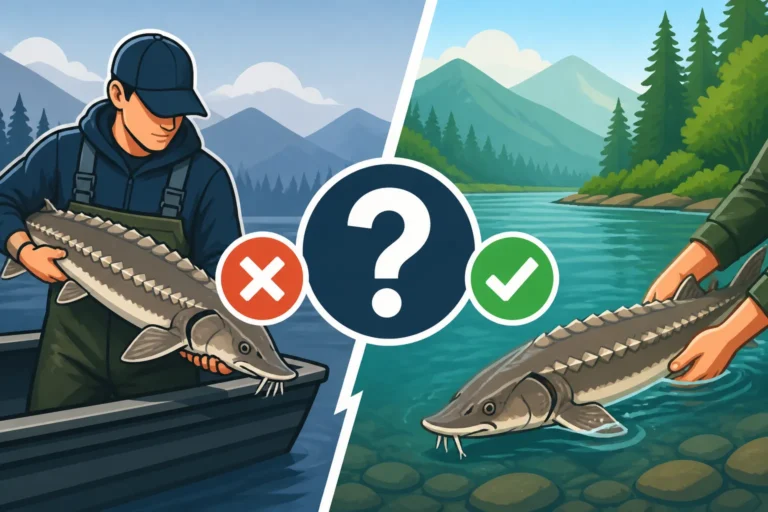
- Keep it in the water: Larger sturgeon must never be removed from the water. Bring the fish boatside or to a shallow sandy bank. If photographing, ensure the fish's entire body, especially its internal organs, remains submerged.
- Minimize handling: Touch the fish as little as possible. Wet your hands before touching it to protect its slime coat.
- Support its weight: If you must momentarily lift a smaller sturgeon, support its entire body horizontally. Never hold a sturgeon vertically by its tail or head, as this can cause severe internal damage.
- Remove hooks carefully: Use pliers or a hook remover to gently remove the hook. If the hook is deeply swallowed, cut the line as close to the hook as possible. Circle hooks are mandatory because they typically hook the fish in the jaw, making release much easier and less harmful.
Understanding BC Fraser River Sturgeon Catch and Release Requirement is not just a suggestion; it's a direct responsibility for all anglers.
Reporting and Tagging Requirements
British Columbia has a robust sturgeon tagging and reporting program that is vital for monitoring the health and population dynamics of the species. Many Fraser River sturgeon have a small, numbered tag near their dorsal fin. If you catch a tagged sturgeon, it's essential to record the tag number and report it to the relevant authorities (often through the Fraser River Sturgeon Society or a government fishery office). This data helps scientists track individual fish, their growth rates, and movement patterns.
Even if a sturgeon doesn't have a tag, you might be required to record details of your catch, such as estimated length. Always check the current BC Fishing Regulations Explained before heading out to ensure you're aware of any specific reporting requirements for sturgeon. This scientific data is invaluable for ensuring the long-term sustainability of the fishery.
Protecting the Future of Fraser Sturgeon
Conservation extends beyond just catch and release. It involves being a responsible steward of the entire river ecosystem. This means:
- Respecting spawning areas: Be aware of any closures or restrictions around sturgeon spawning grounds, which are put in place to protect vulnerable populations.
- Practicing ethical angling: Don't leave trash or discarded fishing line in or near the river. Keep noise to a minimum, and respect other anglers and wildlife.
- Understanding other regulations: Familiarize yourself with broader BC Fishing Regulations Explained, including those for other species like salmon, which share the same waters. Often, the health of one species can impact others.
By following these guidelines, every angler contributes to the legacy of white sturgeon fishing on the Fraser River, ensuring that future generations can also experience the thrill of connecting with these magnificent living dinosaurs.
Hiring a Fraser River Sturgeon Guide
While it's possible to fish for sturgeon on your own, especially if you have experience with large rivers and heavy tackle, hiring a professional guide is highly recommended, particularly for first-timers or those unfamiliar with the Fraser. A good guide offers invaluable expertise and significantly increases your chances of a successful and safe trip.
Why a Guide is Often Your Best Bet
The Fraser River is a vast, powerful, and often complex system. Navigating its currents, understanding its ever-changing bottom structure, and knowing the current hot spots for sturgeon takes years of experience. A professional sturgeon guide brings that experience directly to your trip. They know where the fish are likely to be, what baits are working best, and how to safely navigate the river.
Beyond just finding fish, guides provide all the necessary, specialized heavy tackle. This saves you the considerable expense and hassle of acquiring sturgeon-specific rods, reels, and terminal gear, which can be a significant investment. They also ensure you're fishing legally and safely, providing expert instruction on proper catch-and-release techniques to protect the fish. For many, a guide is the difference between a frustrating blank day and an unforgettable encounter with a Fraser River giant. If you're wondering How Much Does a BC Fishing License Cost for non-residents, a guide will often clarify all requirements.
What to Expect from a Guided Trip
A typical guided sturgeon trip on the Fraser River usually starts early in the morning. You'll meet your guide at an agreed-upon boat launch, often near areas like Mission, Chilliwack, or even further upstream. Guides typically operate out of large, comfortable, and very stable jet boats specifically designed for the Fraser River's challenging conditions. These boats are equipped with powerful motors, advanced electronics (like sonar and GPS), and all the safety gear required by BC required boat safety equipment checklist.
Once on the water, your guide will take you to known sturgeon holding areas. They'll instruct you on how to bait your hook, cast your line, and what to watch for. When a fish bites, they'll coach you through the fight, helping you gain line and ensure a safe, quick, and responsible release. Most guides are passionate about sturgeon conservation and will emphasize proper fish handling. They'll often provide snacks and drinks, but always confirm what's included when booking. Expect a full day of exhilarating fishing and learning.
Choosing the Right Guide for Your Adventure
Selecting the right guide is crucial for a positive experience. Look for guides who are:
- Experienced and Licensed: Ensure they are fully licensed and insured, with years of experience specifically guiding for sturgeon on the Fraser River. Don't be afraid to ask about their credentials.
- Safety-Conscious: Prioritize guides who emphasize safety on the water, have well-maintained equipment, and are certified in first aid.
- Conservation-Minded: A good guide will be deeply committed to sturgeon conservation and will strictly adhere to catch-and-release protocols, teaching you how to handle the fish with care.
- Well-Reviewed: Check online reviews and testimonials from previous clients. Word-of-mouth recommendations are also powerful.
- Communicative: A good guide will be responsive to your questions and clearly explain what to expect before, during, and after your trip.
Websites like the one you're on, or dedicated fishing forums, often have recommendations for the Best Sturgeon Guides on the Fraser River. Don't hesitate to call a few different guides to discuss your expectations and find the perfect fit for your Fraser River sturgeon adventure.
Safety on the Water
The Fraser River is a powerful and dynamic waterway. While the excitement of sturgeon fishing is undeniable, safety should always be your top priority. Understanding the river's conditions and adhering to boating safety rules are non-negotiable.
Navigating the Fraser's Currents and Obstacles
The Fraser River is known for its strong, often turbulent currents, especially during higher water periods in spring and early summer. These currents can be deceptively powerful and create dangerous situations for inexperienced boaters. There are also numerous submerged obstacles, such as sandbars, log jams, and rock formations, which can appear or shift with changing water levels. It is absolutely essential to operate a boat with caution and a deep respect for the river's power.
If you're not intimately familiar with the Fraser, especially in areas with braided channels or strong currents, proceeding slowly and observing local navigation aids is critical. Always be aware of other river traffic, including commercial vessels, and maintain a safe distance. Having up-to-date charts and a reliable GPS unit can be invaluable for navigation, helping you identify channels and avoid hazards.
Essential Safety Equipment and Practices
Operating any vessel on the Fraser River requires adherence to Transport Canada's boating safety regulations. This means having all required safety equipment on board, including:
- Life Jackets (PFDs): One approved life jacket for each person on board, readily accessible. Kids should wear them at all times.
- Sound-Signaling Device: A whistle or horn to signal other vessels or in emergencies.
- Bailer or Hand Pump: To remove water from the boat.
- Throw Line: A buoyant heaving line at least 15 meters (49 feet) long.
- Fire Extinguisher: If your boat has an inboard engine, fixed fuel tank, or cooking/heating appliances.
- Navigation Lights: If operating between sunset and sunrise or in periods of restricted visibility.
Beyond legal requirements, it's wise to carry extra warm clothing, a first-aid kit, emergency food and water, and a reliable communication device like a fully charged cell phone (with a waterproof case) or a VHF radio. Always tell someone on shore your float plan – where you're going and when you expect to return. Familiarize yourself with BC Boating Laws for Anglers and BC required boat safety equipment checklist for a complete rundown.
Weather Awareness and River Level Changes
British Columbia weather can be unpredictable, especially in the Fraser Valley. Conditions can change rapidly, with calm mornings giving way to strong winds, heavy rain, or even thunderstorms. Always check the marine weather forecast before heading out and be prepared to cut your trip short if conditions deteriorate. Strong winds can make anchoring difficult and create dangerous choppy waters on the wide-open sections of the Fraser.
River levels are another critical factor. The Fraser River experiences significant fluctuations, particularly during spring freshet (snowmelt) when water levels can rise dramatically and currents become incredibly strong. High water can also carry dangerous debris, like large logs. Conversely, extremely low water can expose new hazards and make some areas impassable. Stay informed about current river conditions and levels through local news, government websites, or by consulting experienced local anglers or guides. These fluctuations can impact everything from fish location to safe navigation.
Disclaimer
This article is for general informational purposes only and does not constitute professional advice. Laws, prices and regulations vary by location and change over time. Consult a qualified professional for guidance on your specific situation.