Best sturgeon spots on the Lower Fraser River
Few fishing experiences in British Columbia match the sheer excitement and challenge of tangling with a prehistoric White Sturgeon on the Lower Fraser River. Many anglers dream of landing one of these magnificent giants, but knowing where to cast your line in such a vast, powerful river can feel like searching for a needle in a haystack. This comprehensive guide is designed to cut through that confusion, pointing you directly to the best sturgeon spots on the Lower Fraser River and equipping you with the knowledge to make your next trip a success.
Unlocking the Lower Fraser River's Sturgeon Secrets
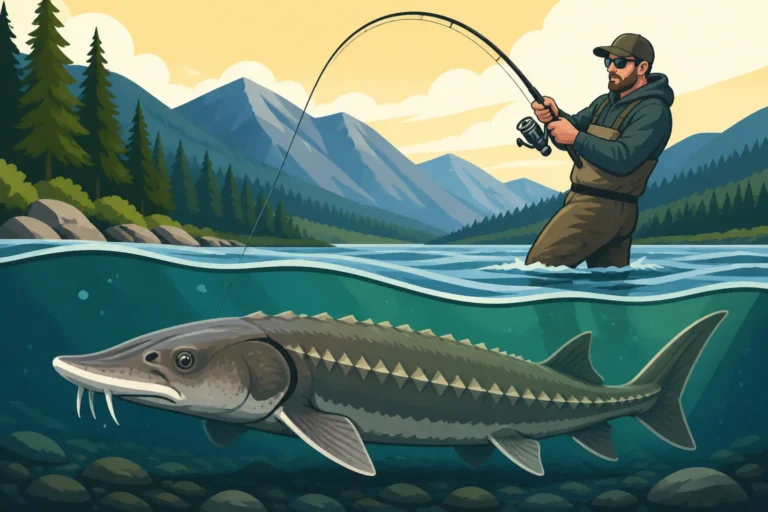
The Lower Fraser River, stretching from just below Hope all the way to the Strait of Georgia, is world-renowned for its incredible population of White Sturgeon. These aren't just any fish; they are living dinosaurs, capable of growing to immense sizes – sometimes well over 10 feet long and hundreds of pounds. The sheer power and ancient beauty of these creatures draw anglers from across the globe, eager for the challenge of a lifetime. But what makes this particular stretch of river so perfect for them?
It's a combination of factors: the consistent flow of nutrient-rich water from the interior, the constant influx of salmon runs providing a seasonal feast, and a diverse underwater topography of deep holes, gravel bars, and current seams that offer ideal habitat. Unlike some smaller rivers where sturgeon might be found in isolated pockets, the Lower Fraser is practically their highway, making it one of the most reliable places to pursue them. However, just because they're abundant doesn't mean they're easy to find. Understanding the nuances of the river and where these giants prefer to hold is key to a productive outing.
Why the Lower Fraser is a Sturgeon Mecca
The Fraser River is an incredibly dynamic ecosystem, and its lower reaches are particularly productive. It's not just the size of the river that makes it special, but its intricate network of tributaries, sloughs, and ever-changing gravel bars. These conditions create diverse feeding opportunities and resting areas for sturgeon throughout the year. As annual salmon runs, like the epic Fraser River sockeye 5-week closure window dates, bring millions of fish into the system, the sturgeon take full advantage, gorging themselves on eggs and carcasses. This abundance of food contributes to their impressive growth rates and large numbers.
Furthermore, the deeper sections and slower currents found in many parts of the Lower Fraser offer critical refuge from the powerful main current, especially during periods of high water. These areas become thermal refuges in colder months and oxygen-rich havens in warmer ones. The river's natural features, combined with strict conservation efforts, have allowed the White Sturgeon population to thrive, offering an unparalleled sportfishing opportunity right in British Columbia's backyard.
The Dynamics of River Flow and Sturgeon Activity
Understanding the Fraser River's flow dynamics is absolutely crucial when planning your sturgeon fishing trip. The river levels can fluctuate dramatically depending on the season, influenced by snowmelt in the interior and heavy rainfall. During high water periods, often in late spring and early summer, the river becomes powerful and murky, pushing sturgeon into shallower, calmer back channels and eddies where they can escape the current and find food more easily. Conversely, during low water, typically in late summer and fall, the main river channels become more defined, and sturgeon tend to concentrate in deeper holes and along distinct current seams.
The tides, especially closer to the river mouth, also play a significant role. An incoming tide can push saltwater upriver, creating slack water or even reversing the current in certain areas, which can trigger feeding activity. Many experienced anglers closely monitor tide charts and real-time river levels to predict the best fishing conditions, knowing that the perfect combination of flow and depth can make all the difference in locating these elusive fish.
Navigating the Best Sturgeon Hotspots: East to West
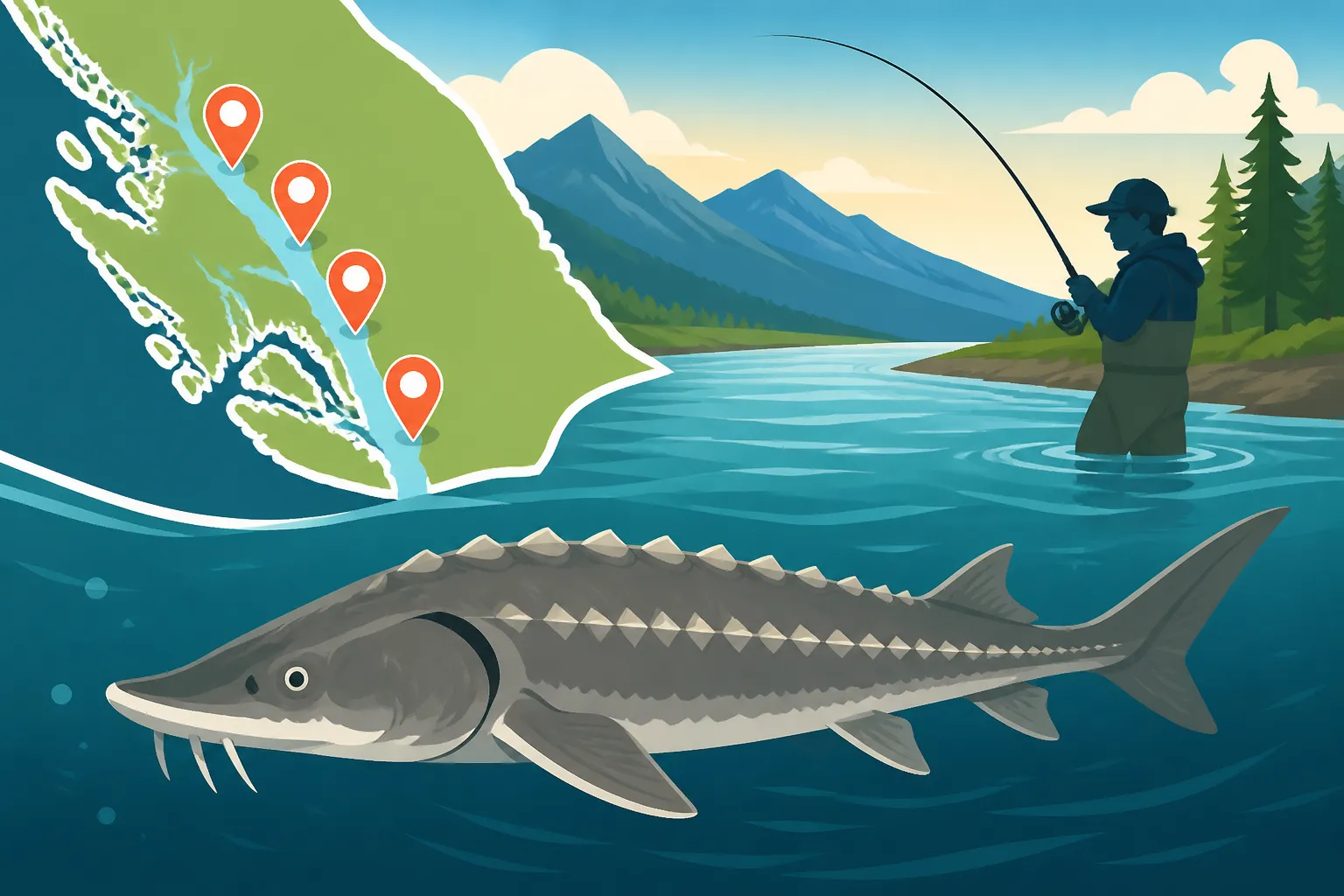
The Lower Fraser River offers a wealth of sturgeon fishing opportunities, each with its own characteristics. From the clearer waters near the Canyon mouth to the tidal flats closer to the ocean, here's a breakdown of some of the most productive spots as you move downstream.
Hope and Bridal Falls Area: The Upper Lower Fraser
As the Fraser River emerges from the canyon at Hope, the water often starts clearer than further downstream, and the riverbed is characterized by large gravel bars and deeper, more defined channels. This area is often overlooked by anglers who focus on the more popular spots, but it can be incredibly productive, especially during lower water conditions.
Look for the confluence of the Fraser with major tributaries like the Coquihalla River. These confluences often create deeper scour holes and eddy lines where sturgeon will rest and feed on debris and baitfish washed in from the smaller rivers. The stretch around Bridal Falls and the gravel pits can also hold significant numbers of sturgeon. Access can sometimes be more challenging here, often requiring a boat and a good understanding of the shifting sand and gravel bars.
Chilliwack, Vedder, and Harrison Confluences: The Heart of the Action
This region, extending from around Chilliwack westward to Mission, is arguably the most famous and heavily fished stretch of the Lower Fraser for sturgeon. The sheer volume of salmon returning to spawn in the Vedder, Chehalis, and Harrison rivers, among others, creates an irresistible buffet for sturgeon.
- Chilliwack/Vedder River Mouth: The confluence of the Vedder (also known as the Chilliwack River) with the Fraser is a perennial hotspot. The deep channels and eddy lines formed by the merging currents concentrate both baitfish and salmon carcasses, drawing sturgeon in droves. Access is generally good from various public boat launches and even some shore fishing points, although boat fishing is most effective here. Many reputable guides, which you can often find listed on platforms like FishingBooker, operate out of this area due to its consistent productivity.
- Harrison River Mouth: Further downstream, the Harrison River joins the Fraser, creating another legendary sturgeon hub. The Harrison is a major salmon highway, and during the fall salmon runs, the sturgeon activity here can be phenomenal. The confluence area features extensive gravel bars, deep pockets, and calmer back channels. The community of Harrison Hot Springs itself offers some stunning scenery and access points to the Harrison River, but most serious sturgeon fishing takes place where the Harrison meets the Fraser.
- Mission Area: The waters around Mission, including Hatzic Lake and the various sloughs that feed into the Fraser, offer diverse opportunities. The main Fraser channel here is wide and powerful, but numerous backwaters and deep depressions along the banks provide sanctuary for sturgeon. During certain times of the year, especially with strong salmon runs, the main river channels around Mission can also be exceptionally productive. This area is also popular for catching other species, and you can learn more about fishing in this region in our Mission BC Fishing Access guide.
Fort Langley and Derby Reach: Historical Hotbeds
Moving further west, the river widens, and the tidal influence becomes more pronounced, though still predominantly freshwater. The areas around Fort Langley and Derby Reach are steeped in history and remain prime sturgeon grounds.
- Fort Langley: The river here features significant depths and current breaks, particularly around the historic fort itself and the various islands and channels. The depth and diverse structure make it a year-round holding area for sturgeon. Many anglers launch from nearby ramps and target the deeper sections just downstream of Fort Langley.
- Derby Reach Regional Park: This beautiful park offers excellent shore fishing opportunities, a rarity for such a large river. The deep channels that hug the park's shoreline, combined with slower currents and submerged structure, attract sturgeon. It's a great spot for those without a boat, though patience is key. The convenience and beauty of this location make it a popular choice, especially for families.
Queensborough and Tidal Influence: The Estuary Edge
As the Fraser River nears its mouth and splits into various arms (North Arm, Middle Arm, South Arm), the tidal influence becomes the dominant factor. While many anglers prefer the purely freshwater sections, the lower reaches near Queensborough can still yield impressive sturgeon catches, especially for those who understand the tides.
The waters here are generally shallower but feature many submerged log booms, jetties, and deeper dredged channels. Sturgeon in this area often move with the tides, using the incoming flow to push into shallower feeding areas and retreating to deeper channels on the outgoing tide. This zone requires a different approach, often favoring shorter drifts and precise bait placement. The proximity to Vancouver makes this area accessible for many local anglers, and you can explore more about BC Freshwater vs Tidal Waters License, Explained to ensure you have the correct endorsement for fishing these varied waters.
| Sturgeon Hotspot | General Location | Key Features | Best Conditions / Notes |
|---|---|---|---|
| Hope / Bridal Falls Confluence | Upper Lower Fraser | Deep scour holes, tributary confluences, gravel bars | Lower water levels, often clearer water |
| Chilliwack/Vedder River Mouth | Central Lower Fraser (Chilliwack) | Major salmon highway, deep channels, eddy lines | Fall salmon runs, year-round productivity |
| Harrison River Mouth | Central Lower Fraser (Harrison) | Extensive gravel bars, deep pockets, major salmon highway | Fall salmon runs, good during moderate flows |
| Mission Main Channel / Sloughs | Central Lower Fraser (Mission) | Wide powerful channels, calmer backwaters, deep depressions | Varying with salmon runs and river levels |
| Fort Langley / Derby Reach | Mid-Lower Fraser | Significant depths, current breaks, historical structure, shore access | Consistent holding water, good for boat and shore anglers |
| Queensborough / Tidal Arms | Lower Fraser Estuary | Shallower channels, submerged structure, jetties, strong tidal influence | Moving tides, precise bait placement, strong current knowledge |
Beyond the Spot: Understanding Sturgeon Habitat and Behavior
Simply knowing a "hotspot" isn't enough; true success comes from understanding why sturgeon are there and how they behave. These ancient fish are highly sensitive to their environment, especially changes in water flow, depth, and the availability of food. Mastering the art of reading the river is as important as knowing where to launch your boat.
Reading the River: Depths, Currents, and Structure
Sturgeon, particularly the larger ones, are primarily bottom dwellers. They're built for holding in strong currents, but they often seek out seams, eddies, and depressions where they can conserve energy and ambush food.
- Deep Holes and Channels: These are classic sturgeon hangouts, offering refuge from the current and often concentrating bait. Use your sonar to identify the deepest parts of the riverbed, especially where the channel narrows or bends.
- Current Seams and Eddy Lines: These are the transition zones where fast-moving water meets slower water. Sturgeon will often sit just on the edge of the faster current, waiting for food to be swept past them in the calmer water. This is a prime location to present your bait.
- Submerged Structure: Log jams, old bridge pilings, rock formations, and even subtle changes in the riverbed contour (like the edge of a gravel bar dropping into a deeper trough) provide excellent ambush points and cover for sturgeon. These areas can be tricky to fish due to potential snags, but they are often worth the effort.
- Confluences: As mentioned earlier, the junctions of tributaries with the main Fraser River create complex currents and deposit nutrient-rich sediment and food, making them natural magnets for sturgeon.
Learning to interpret your fish finder and understand how the current interacts with the riverbed is a skill that develops over time, but it's essential for consistently finding fish. This knowledge helps you understand White Sturgeon Habits on the Fraser River on a deeper level.
The Role of Salmon Runs in Sturgeon Feeding Patterns
The annual Pacific salmon runs are the lifeblood of the Fraser River ecosystem, and for sturgeon, they represent a seasonal feast like no other. From late summer through fall, as millions of Chinook, Coho, Sockeye, Pink, and Chum salmon enter the river system to spawn, sturgeon shift their feeding patterns dramatically.
During these periods, sturgeon gorge themselves on salmon eggs, roe, and later, on the carcasses of spawned-out salmon. This abundance of protein allows them to bulk up and sustain themselves through leaner times. Knowing when and where specific salmon runs are peaking can give you a significant advantage. For instance, focusing on areas downstream of major salmon spawning grounds or drift fishing through sections where salmon are actively moving can be incredibly productive. However, it's also crucial to be aware of other species present and adapt your gear and techniques accordingly, especially during BC Fraser River sockeye closure windows to avoid accidental encounters.
Gear Up for Giants: Tackle, Bait, and Techniques
Pursuing White Sturgeon on the Lower Fraser River requires specialized gear and techniques. These are not your average trout or salmon. They are immensely powerful fish that demand respect and the right tools for a successful, and safe, catch and release experience.
Essential Rods, Reels, and Line
Sturgeon fishing is heavy-duty. You'll need equipment capable of handling fish that can weigh hundreds of pounds and make powerful, prolonged runs.
- Rods: Look for heavy-action sturgeon or catfish rods, typically 7.5 to 9 feet in length. These rods need a strong backbone to set hooks and fight large fish, but enough tip sensitivity to detect subtle bites. Brands like Shimano and Okuma offer excellent options for this type of fishing.
- Reels: A large, robust baitcasting or conventional reel with a strong drag system is paramount. Models like the Shimano Tekota or Penn Squall are popular choices. Ensure it can hold at least 250-300 yards of heavy line.
- Line: Braided line is the standard for sturgeon fishing due to its incredible strength-to-diameter ratio and minimal stretch, which helps with hook sets. Opt for 80-150 lb test braided line. You'll then attach a heavy monofilament or fluorocarbon leader (100-200 lb test) to the braided main line, typically via a barrel swivel. This leader provides abrasion resistance against the sturgeon's rough mouth and the rocky river bottom.
Baits of Choice for Fraser River Sturgeon
Sturgeon are opportunistic feeders with a keen sense of smell. Fresh, oily baits are usually the most effective.
- Salmon Roe: Hands down, fresh salmon roe (often from eggs cured for salmon fishing) is one of the most irresistible baits, especially during and after salmon runs. You'll typically put a large chunk of roe into a spawn sack to keep it on the hook.
- Salmon Parts: Pieces of fresh salmon, particularly belly strips or chunks of oily flesh, are also highly effective. The scent trail they leave in the current is a major attractant.
- Eulachon (Oolichan): These small, oily smelt-like fish are a natural food source for sturgeon and are incredibly effective when available. Fresh or brined eulachon are often used whole or in large pieces.
- Lamprey: Fresh or frozen lamprey sections can also be a highly productive bait, especially for larger fish.
- Coarse Fish: Sometimes, cut pieces of fresh coarse fish like Northern Pikeminnow can also work well, especially if other prime baits are scarce.
Always prioritize freshness and oiliness in your bait. The stronger the scent, the better your chances.
Rigging and Presentation: Bottom Bouncing for Sturgeon
The primary technique for sturgeon fishing on the Fraser River is bottom fishing with a stationary bait.
- The Weight-Forward Rig: This is the most common and effective rig. It consists of a heavy lead sinker (often 8-20 ounces or more, depending on current) attached to your main line via a three-way swivel or a sliding weight setup. A short leader (18-36 inches) of heavy monofilament or fluorocarbon is then tied to the swivel, terminating in a large, strong circle hook.
- Hooks: Use robust, barbless circle hooks ranging from 8/0 to 12/0. Circle hooks are essential for minimizing harm to the fish as they are designed to hook in the corner of the mouth, making for easier release. Remember, a BC Fraser River Sturgeon Catch and Release Requirement is mandatory.
- Casting and Setting: Cast your rig upstream and let it sink and settle on the bottom. The goal is to keep your bait stationary in a productive seam or hole. Watch your rod tip closely for the characteristic "sturgeon tap" – often a subtle vibration or gentle pull before a more definitive bite. Resist the urge to aggressively set the hook; instead, just reel down firmly until the line comes tight and the circle hook does its job.
- Patience and Persistence: Sturgeon fishing is often a game of patience. It might take some time for a fish to locate your bait, especially in a large river system. Be prepared to wait, but also be ready to reel in and check your bait periodically, especially if you've been sitting for a long time without a bite.
For those looking for an unparalleled experience, booking a guided trip is highly recommended. Professional guides provide all the necessary gear, bait, and local knowledge, significantly increasing your chances of success. Many reputable guides can be found and booked through platforms like FishingBooker, which makes finding the right expert for a Best Sturgeon Guides on the Fraser River trip incredibly easy.
Catching Responsibly: Conservation and Regulations
The White Sturgeon of the Fraser River are a truly special resource, and their continued health relies heavily on responsible angling practices. Catch and release is not just a suggestion; it's the law, and handling these large fish correctly is paramount for their survival.
Strict Catch and Release Rules
The Fraser River White Sturgeon fishery is 100% catch and release. This means every sturgeon you catch, regardless of size, must be released unharmed. There are no retention limits. Anglers are encouraged to minimize the time a fish is out of the water, handle them gently, and ensure they are revived properly before release.
Safe Handling Guidelines for Sturgeon
Handling these massive fish can be a challenge, but following these guidelines will maximize their chances of survival:
- Keep the Fish in the Water: Whenever possible, keep the sturgeon in the water, especially for measuring and photographing. If you must bring it aboard, use a large, soft-mesh cradle or mat, and keep it wet.
- Support Its Body: Never lift a large sturgeon by its head or tail alone. Always support its full body weight, ideally with one person at the head and another at the tail, or by keeping it in a cradle.
- Minimize Out-of-Water Time: Exposure to air is stressful for fish. Aim for photos and measurements to take no more than a minute or two.
- Revive Properly: If the fight was long or the fish appears lethargic, hold it upright in the current, facing upstream, until it regains its strength and swims away on its own. Never just toss it back.
- Barbless Hooks are Mandatory: As mentioned, barbless circle hooks are required to facilitate quick and easy removal with minimal injury.
- Avoid the Gills: Never put your hands or fingers into the sturgeon's gills.
By adhering to these practices, we ensure that future generations can continue to experience the thrill of catching these magnificent creatures. Always check the most current BC Fishing Regulations Explained before heading out, as rules can change.
The Importance of Reporting Tagged Sturgeon
Many sturgeon in the Fraser River have been tagged as part of ongoing research and conservation efforts. These tags are typically small, yellow, plastic tags located near the dorsal fin. If you catch a tagged sturgeon, carefully note the tag number, the approximate length and girth of the fish, and the location where it was caught. You can then report this information to the Fraser River Sturgeon Conservation Society or the Department of Fisheries and Oceans Canada. This data is invaluable for scientists studying sturgeon populations, migration patterns, and growth rates, helping to inform future conservation strategies. Your contribution, even a single report, makes a real difference!
Disclaimer
Fishing regulations and conditions in British Columbia can change frequently. Always consult the official BC Freshwater Fishing Regulations Synopsis and relevant Fisheries and Oceans Canada notices before heading out on the water. This guide is for informational purposes only and does not supersede official government regulations.