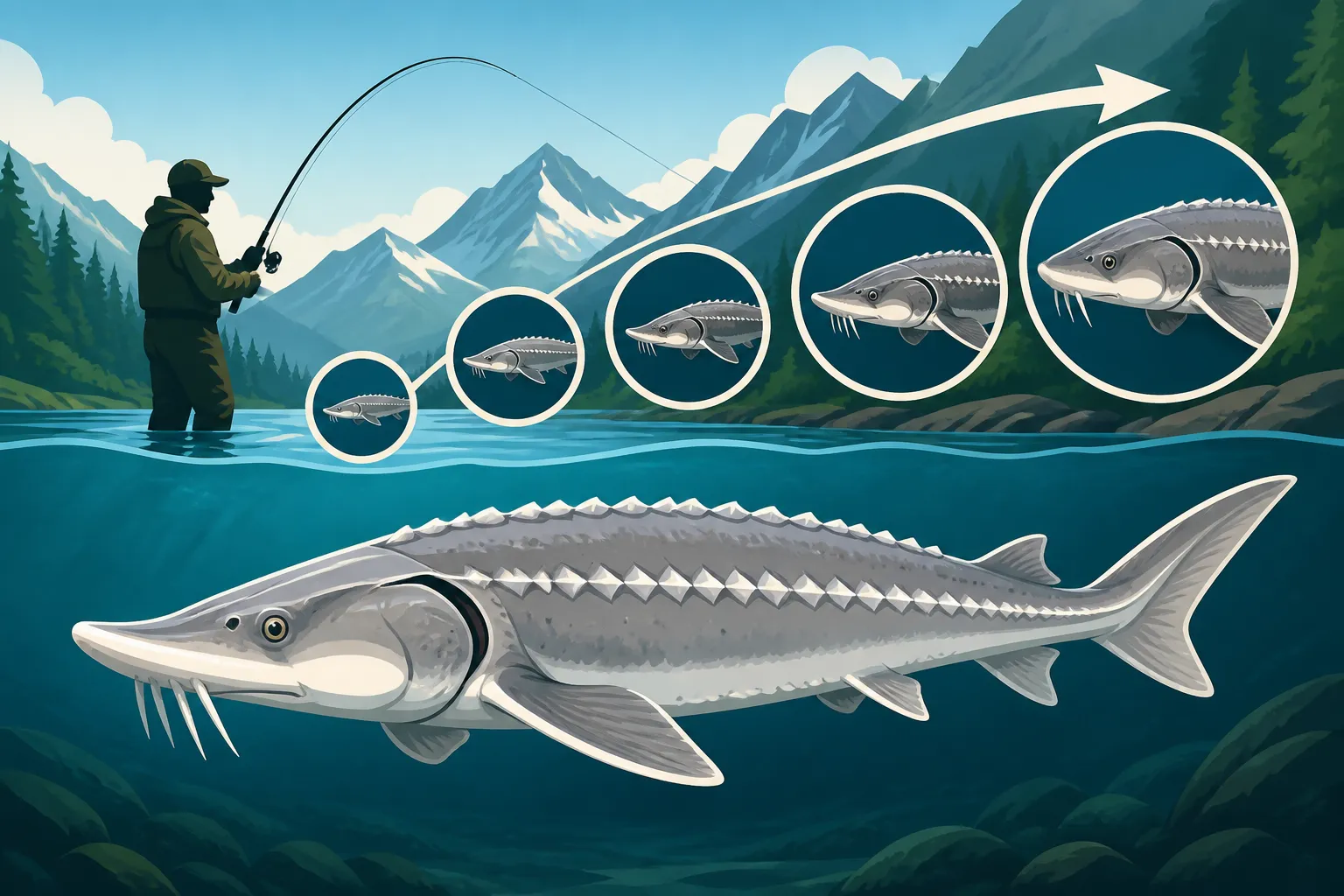
Life span of a white sturgeon in the wild
One of the most awe-inspiring aspects of British Columbia's white sturgeon is their incredible longevity, yet many anglers and enthusiasts don't fully grasp just how long these ancient fish can grace our waters. It's a question that often comes up: just how old can a white sturgeon get in the wild? This comprehensive guide will dive deep into the fascinating lifespan of these magnificent creatures, exploring the factors that contribute to their impressive age and the critical role conservation plays in ensuring they continue to thrive for generations to come.
The Remarkable Longevity of British Columbia's White Sturgeon
When you think about the fish that swim in British Columbia's vast rivers and lakes, chances are you imagine salmon, trout, or maybe even bass. But there's one species that stands apart, not just for its prehistoric appearance and immense size, but for its truly astounding longevity: the white sturgeon. These incredible fish are often referred to as "living fossils" because their lineage dates back millions of years, largely unchanged. And when we talk about how long they live, we're not talking about a few years, or even a few decades. We're talking about a lifespan that can rival that of humans, and sometimes even surpass it.
It's a marvel of nature, really, to consider a creature that could have been swimming in the Fraser River when your great-grandparents were children, or even earlier. While exact figures can vary depending on individual fish and specific conditions, wild white sturgeon in BC, particularly those in the Fraser River system, are known to live for a century or more. Some estimates suggest they can reach ages well over 100 years, with anecdotal evidence and scientific studies pointing to individuals pushing towards 150 years or even more in rare cases. Imagine the history they've witnessed, the changes to the river and its surroundings, all from their watery perspective. This immense lifespan is a testament to their incredible resilience and adaptability, characteristics that have allowed them to survive countless environmental shifts throughout geological time.
Their slow metabolism is a significant contributor to this extended lifespan. Unlike many faster-growing, shorter-lived fish species, white sturgeon take their time. They grow slowly, mature late, and their biological processes operate at a more measured pace. This isn't just a quirky evolutionary trait; it's a fundamental aspect of their survival strategy. Their tough, scute-armored bodies offer protection, and their ability to withstand varying conditions, from powerful currents to changes in water temperature, also plays a part. When you hook into one of these magnificent fish, you're not just encountering a powerful angler's dream; you're connecting with an ancient being that has potentially lived through multiple human generations. It really puts the experience into perspective, underscoring the importance of treating them with the utmost respect and care.
Key Factors Influencing White Sturgeon Lifespan in the Wild
While white sturgeon are built for longevity, their impressive lifespan isn't guaranteed. A multitude of environmental and human-influenced factors play a critical role in determining how long an individual sturgeon will ultimately live in the wild. Understanding these factors is crucial for appreciating the challenges these fish face and for guiding effective conservation efforts. It's a delicate balance, and any disruption can have significant consequences for a species that takes so long to mature and reproduce.
One of the most paramount factors is habitat quality and availability. Pristine, healthy river systems with ample deep pools, varied bottom structure, and clean, oxygenated water are essential for sturgeon at all life stages. The Fraser River, often hailed as the stronghold of BC's white sturgeon population, provides the perfect example. Its vastness, diverse habitats, and abundant food sources create an ideal environment for these fish to grow old. Conversely, habitat degradation due to pollution, industrial development, dam construction, and alteration of natural river flows can severely limit their ability to find food, shelter, and suitable spawning grounds. A river that once offered clear passage and rich feeding lanes can become fragmented or choked, directly impacting a sturgeon's ability to thrive and reach its full lifespan potential. These changes don't just affect individual fish; they can impact entire populations over time, especially for a species with such a slow reproductive cycle.
Another vital element is food availability. As opportunistic bottom feeders, white sturgeon rely on a consistent and abundant food supply, which includes everything from insect larvae and worms to smaller fish, crayfish, and, significantly, salmon carcasses. The annual salmon runs in systems like the Fraser River are a lifeline for sturgeon, providing a massive influx of protein-rich food that helps them grow and sustain their large bodies. A healthy salmon population directly correlates with a healthy sturgeon population. If salmon runs decline, sturgeon can face food shortages, which can lead to slower growth, reduced health, and potentially shorter lifespans. It's a stark reminder of the interconnectedness of our aquatic ecosystems; what affects one species inevitably affects others. Understanding What white sturgeon eat in the Fraser River gives you a better appreciation for their ecological niche.
Finally, and perhaps most critically in recent history, fishing pressure and effective conservation strategies are enormous determinants of sturgeon longevity. Historically, white sturgeon faced immense commercial fishing pressure, particularly during the late 19th and early 20th centuries, when they were harvested for their meat and roe (caviar). This led to severe population declines. Thankfully, stringent conservation measures and a shift to a strictly catch-and-release fishery have been implemented across much of BC. Today, anglers are passionate about ensuring the future of these fish, adhering to strict rules about gear, handling, and immediate release. Guides and organizations promote best practices for Sturgeon catch and release survival tips, which are vital for reducing stress and injury to these long-lived fish. Knowing Is It Legal to Release a Sturgeon You Catch in BC? is fundamental for any angler. These protective measures, combined with ongoing monitoring, tagging programs, and habitat restoration, are absolutely essential for allowing sturgeon to live out their natural, impressive lifespans.
Understanding Sturgeon Growth, Maturity, and Age Determination
The incredible longevity of white sturgeon is intrinsically linked to their unique life history, particularly their growth patterns and the late age at which they reach sexual maturity. Unlike many fish that grow rapidly and reproduce early, sturgeon are in it for the long haul, and that means a slower, more deliberate journey through life.
Sturgeon exhibit what scientists call indeterminate growth, meaning they continue to grow throughout their entire lives, albeit at a decreasing rate once they reach maturity. They don't have a fixed adult size like many mammals; a 100-year-old sturgeon will generally be much larger than a 50-year-old one, assuming similar environmental conditions. This slow growth rate is a key factor in their longevity. They aren't burning through their life energy quickly; instead, they are steadily building mass over many years. This is why you often hear tales of genuinely enormous sturgeon in BC, sometimes exceeding 10 feet in length and weighing hundreds of pounds. When you consider How big white sturgeon get in the Fraser River, it's clear these giants represent decades, if not a century, of continuous growth.
Sexual maturity in white sturgeon is reached remarkably late compared to most other fish species. Females typically don't begin spawning until they are between 18 and 25 years old, and sometimes even later, while males mature a few years earlier, usually around 12 to 18 years of age. This delayed maturity means that a significant portion of their potential lifespan is spent simply growing and developing before they ever contribute to the next generation. This strategy makes them particularly vulnerable to threats that reduce adult populations, as it takes a long time for a cohort of young sturgeon to reach reproductive age. Once mature, females don't spawn every year; they may only reproduce every 2 to 11 years, further emphasizing the importance of protecting every adult sturgeon.
So, how do scientists figure out the age of a sturgeon that can live for over a century? It's not as simple as asking them! Researchers use methods similar to how you might age a tree: by looking at growth rings. Sturgeon, like many other fish, have calcified structures that lay down annual growth rings. The most common and reliable method involves taking a small, harmless cross-section of a pectoral fin ray. These rays, located in the fins, contain distinct rings that correspond to years of growth, much like the rings in a tree trunk. By carefully examining these rings under a microscope, scientists can count them and accurately determine the fish's age. This non-lethal technique provides invaluable data for understanding population dynamics, growth rates, and, of course, the astonishing lifespans of these fish. These studies are often supported by equipment purchased from retailers like Amazon, ensuring researchers have the best tools for their vital work.
Here’s a simplified look at the general relationship between size and age for Fraser River white sturgeon, though individual growth rates can vary widely depending on food availability and habitat:
| Length (feet) | Estimated Age (years) | Notes |
|---|---|---|
| 2-4 | 5-15 | Juveniles, rapid early growth. |
| 4-6 | 15-30 | Sub-adults, approaching maturity for males, females still growing. |
| 6-8 | 30-60 | Mature adults, active spawners. |
| 8-10 | 60-100 | Large, often trophy-sized individuals, long-term contributors. |
| 10+ | 100+ | Very old, rare giants; truly ancient residents of the river. |
This table illustrates why catching a truly massive sturgeon, often seen in Where white sturgeon get the biggest in the Fraser, is such a profound experience; you're holding a living piece of history.
Conservation Efforts and the Future of Sturgeon Longevity
The impressive longevity of white sturgeon, while a natural marvel, also means that protecting them requires a long-term vision and sustained effort. Because these fish live so long and mature so late, any negative impact on their population takes decades, if not generations, to recover from. This is why robust and ongoing conservation efforts are not just important; they are absolutely critical for the survival and flourishing of this ancient species. The good news is that British Columbia has been a leader in sturgeon conservation, and anglers play a significant role in these efforts.
At the heart of BC's sturgeon conservation strategy is the strictly enforced catch-and-release fishery. For more than two decades, keeping a white sturgeon has been illegal, transforming recreational fishing into a powerful force for conservation. This policy directly addresses the historical overharvesting that decimated populations. When you book a trip with one of the Best Sturgeon Guides on the Fraser River, their primary directive, and yours as an angler, will be the safe handling and immediate release of every fish caught. This isn't just a rule; it's a deep-seated ethos among those who cherish these incredible creatures. Guides are often trained in best practices, including proper netting, minimal air exposure, and revival techniques to ensure the sturgeon swims away strong. The BC Fraser River Sturgeon Catch and Release Requirement is not just a formality; it’s a commitment to the fish’s future.
Beyond catch-and-release, numerous organizations and government agencies are involved in active sturgeon conservation programs. These initiatives often include extensive tagging and monitoring programs. Scientists and trained volunteers carefully tag sturgeon with unique identifiers before releasing them. This data helps track individual fish movements, growth rates, population sizes, and, crucially, their survival rates over many years. Every time a tagged sturgeon is caught and its tag reported (often through online portals or dedicated phone lines), it contributes vital information to the ongoing research. This long-term data collection is essential for understanding the health of the population and for adapting management strategies as needed. Resources like the BC Fishery Notices, which can be reviewed to stay informed, explain BC Fishery Notices and In-Season Closures, Explained regarding any changes or updates relevant to sturgeon.
Habitat restoration is another cornerstone of these efforts. This can involve projects to improve water quality, restore spawning and rearing habitats, and remove barriers to fish migration. Working to maintain the health of the entire river ecosystem, particularly the Fraser, is paramount because sturgeon rely on a complex web of environmental factors to survive and reproduce. Furthermore, public education plays a huge part. By raising awareness about the unique biology of white sturgeon, their conservation status, and the simple actions everyone can take to protect them, we can build a stronger foundation for their future. Many people learn about these efforts through documentaries or books, often found on platforms like Amazon, which highlight the plight and success stories of sturgeon conservation.
The future of white sturgeon longevity in BC looks promising, thanks to these dedicated efforts. However, challenges remain. Issues like climate change impacting water temperatures and flow regimes, ongoing industrial development, and the continued need for vigilance against poaching mean that conservation can never truly rest. But with continued dedication from anglers, scientists, and the public, these magnificent "living fossils" can continue to swim in our rivers, reaching their incredible lifespans, for many generations to come. Your participation, even just by learning about these fish and practicing responsible angling, contributes to this vital legacy, ensuring that the White Sturgeon Fishing on the Fraser River remains a truly special experience for all.
Disclaimer
This article is for general informational purposes only and does not constitute professional advice. Laws, prices and regulations vary by location and change over time. Consult a qualified professional for guidance on your specific situation.