Best technique for docks and laydowns
It's incredibly frustrating when you see a promising patch of water around a dock or a fallen tree, but your casts just aren't connecting, or worse, you're constantly snagging. These spots scream "fish live here!" yet getting them to bite can feel impossible. This guide is all about equipping you with the best techniques to confidently fish docks and laydowns in British Columbia, turning those snag-prone areas into your next successful fishing spot.
Why Docks and Laydowns are Goldmines for BC Anglers
Docks and laydowns aren't just random bits of structure; they're essential habitats that provide everything a fish needs to thrive: shelter, ambush points, and food. Understanding this is the first step to truly mastering these locations in British Columbia.
Understanding Fish Behavior Around Structure
Think about it from a fish's perspective. The sun is beating down, predators are lurking, and food needs to be found. A dock or a laydown offers a perfect solution. For predatory fish like largemouth bass, smallmouth bass, or even bull trout, these structures are prime ambush points. They can hide in the shadows or within the branches, waiting for an unsuspecting minnow, bug, or frog to swim by. The sudden burst from cover gives them a significant advantage.
Beyond ambush, these structures provide crucial shade and cover. On a bright, sunny day, fish will often tuck themselves deep under a dock or within a dense laydown to escape the intense UV rays. This is particularly true for many BC lake species like trout and bass, which prefer cooler water or at least a break from direct sunlight. The structure also offers protection from overhead predators like ospreys or eagles, giving smaller fish a sense of security. Even species like kokanee, while typically found in open water, might briefly utilize edges of laydowns or deeper dock pilings for refuge from larger predators or current breaks.
Prime Locations in British Columbia's Lakes and Rivers
You'll find docks and laydowns practically everywhere there's human settlement or natural erosion. In BC, this means a huge variety of waters.
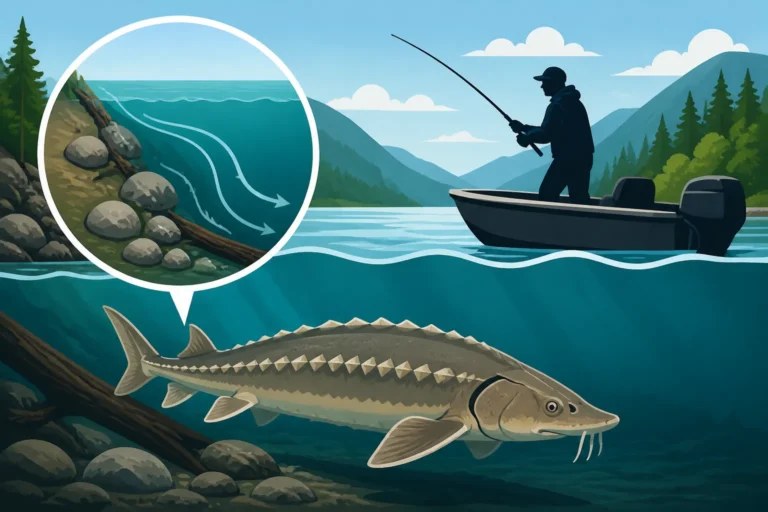
For docks, think about popular recreational lakes like Okanagan Lake, Shuswap Lake, or Cultus Lake. Marinas, private cottages, and public swimming areas all feature docks that extend into the water. The older, creakier docks with moss and barnacles often hold the most fish, as they offer more natural habitat and cover. Don't overlook abandoned or decaying docks either; these can be absolute magnets for larger, more wary fish that prefer less human activity. You might even find them on some larger rivers, like the Fraser River, where old logging docks or remnants of industrial infrastructure can create fantastic ambush points for sturgeon and salmon fry.
Laydowns, on the other hand, are more common in natural settings, particularly in rivers and forested lakes. River systems like the Fraser River, Thompson River, or even smaller coastal streams often have banks lined with fallen trees due to erosion, floods, or simply old age. These "sweepers" or log jams create incredible current breaks and hiding spots. In interior lakes, especially those with fluctuating water levels or surrounded by dense forest, you'll find entire submerged forests or extensive fields of partially submerged timber. These can be particularly prevalent in reservoirs or lakes formed by damming. These submerged wood structures are especially attractive to species like rainbow trout, bull trout, and bass. For example, some sections of the Thompson River steelhead regulations areas might feature laydowns that become crucial holding water.
Essential Gear for Fishing Docks and Laydowns
Successfully fishing these tricky spots means having the right tools for the job. You're not just casting into open water; you're often getting into close-quarters combat with fish that are trying to escape into dense cover.
Rods, Reels, and Line Choices for Close-Quarters Combat
When fishing docks and laydowns, you need gear that offers a blend of precision, power, and sensitivity.
Rods:
- Length: A 6'6" to 7'6" rod is generally ideal. Shorter rods offer better accuracy for pitching and flipping into tight spaces, while longer rods can help with skipping under docks or reaching further into laydowns.
- Action: A medium-heavy to heavy power rod with a fast or extra-fast action is usually preferred. The fast action tip provides the sensitivity to feel subtle bites and obstacles, while the robust backbone gives you the power to pull fish out of cover quickly and set the hook effectively through heavy plastic baits.
- Material: Graphite rods are excellent for their sensitivity and light weight, which reduces fatigue during repetitive casting.
Reels:
- Baitcasting Reels: These are king for precision casting and handling heavier lines and lures. Their thumb-controlled spool allows for incredible accuracy, essential for hitting those tiny pockets under docks or between branches. Make sure you have a smooth drag system, as you'll often be fighting fish at close range.
- Spinning Reels: While baitcasters are often preferred, a good quality spinning reel can also work, especially for lighter presentations or if you're less experienced with a baitcaster. Opt for a size 2500-3000 reel paired with a medium-heavy spinning rod for good balance and power. They are particularly useful for techniques like skipping lightweight jigs or weightless worms.
Line:
- Braided Line: This is often the primary line choice when fishing heavy cover. Braid has no stretch, offering incredible sensitivity and powerful hook sets. More importantly, its abrasion resistance is superior to monofilament, and it can often cut through light vegetation or thin branches, helping to free snags. A 20-50 lb test is common, depending on the target species and density of cover.
- Fluorocarbon Line: Excellent as a leader material due to its near invisibility underwater and good abrasion resistance. It has less stretch than mono but more than braid, offering a nice compromise. A 10-20 lb test fluorocarbon leader (2-4 feet long) tied to your braid mainline is a popular setup. You can find a wide variety of high-quality fluorocarbon lines on Amazon.
- Monofilament Line: While not as abrasion-resistant or sensitive as braid, monofilament has more stretch, which can be advantageous for certain reaction baits like crankbaits or topwater lures. Its buoyancy also makes it good for topwater presentations. A 10-17 lb test mono might be used in specific scenarios where finesse or lure action is paramount.
Here's a quick table to summarize gear considerations:
| Gear Type | Ideal Characteristics for Docks & Laydowns | Why It Matters |
|---|---|---|
| Rod | 6'6" – 7'6" Medium-Heavy to Heavy, Fast/Extra-Fast Action | Precision casting, powerful hook sets, sensitivity for bites |
| Reel | Baitcaster (smooth drag, thumb control) | Accuracy, line control, handling heavier setups |
| Line | Braided (20-50lb) with Fluorocarbon Leader (10-20lb) | Strength, sensitivity, abrasion resistance, invisibility |
Lures and Baits to Entice Fish from Cover
The key here is presenting something that looks natural, can navigate the cover, and triggers a strike from a fish hiding within.
- Soft Plastics: These are incredibly versatile.
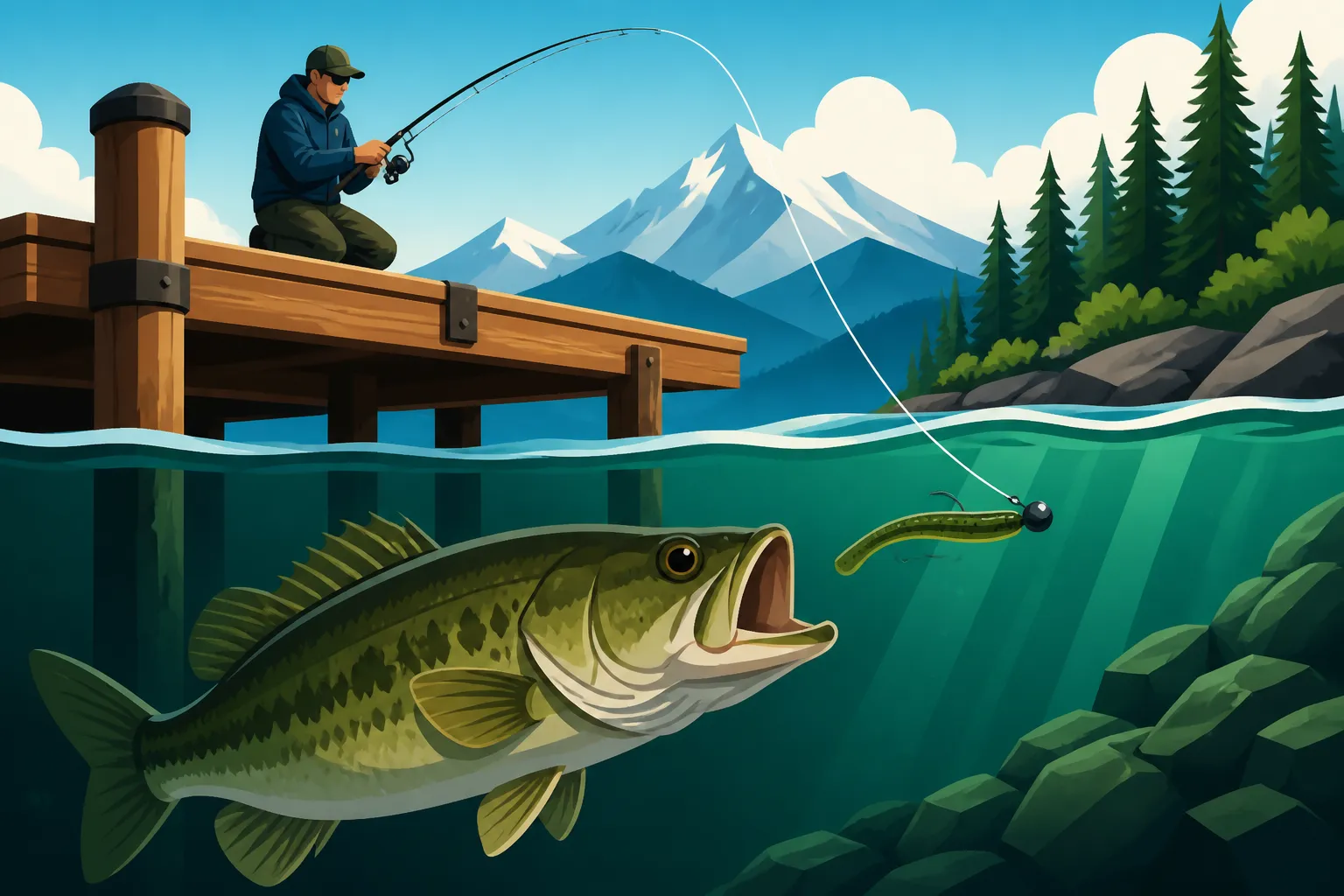
- Jigs: Flipping jigs and swim jigs (1/4 to 3/4 oz) with plastic trailers (craws, chunks) are outstanding. They penetrate cover well, offer a compact profile, and can be worked slowly. The weed guard on a flipping jig is invaluable for reducing snags.
- Creature Baits & Worms: Texas-rigged creature baits (like a soft plastic crawfish) or straight-tail worms (like a Senko) are weedless and imitate natural forage. Their subtle action on the fall is often irresistible. Wacky rigging a Senko can also be deadly for bass around dock pilings or the outer edges of laydowns.
- Grubs: Small grub tails on light jig heads can be effective for panfish, small trout, or even crappie under docks.
- Hard Baits:
- Crankbaits: Squarebill crankbaits that deflect off wood and rock can trigger aggressive reaction strikes. Choose ones that dive to the depth of the cover you're fishing. They are particularly effective for working parallel to laydowns.
- Jerkbaits & Topwater: Suspending jerkbaits worked around the edges of docks can entice trout or bass, while topwater frogs or poppers are explosive over dense matted vegetation near laydowns on warmer days.
- Spinnerbaits & Chatterbaits: These can be retrieved through sparse cover fairly well due to their single hook and wire frame. The flash and vibration can draw fish out of cover.
- Live Bait: Don't forget the classics! A simple worm, minnow, or crawfish on a weedless hook or under a bobber can be incredibly effective, especially for wary fish. For instance, if you're targeting trout under a dock, a dew worm might outperform a fancy lure. Just be sure to check local regulations on live bait use in BC.
Remember to consider the natural forage in the area. If there are lots of crawfish, use a craw imitation. If small baitfish are abundant, a swim jig or spinnerbait might be best. Best baits for chinook salmon on the Fraser or Best lure retrieve for coho in coastal streams might be different, but the principle of matching the hatch remains important here.
Top Techniques for Targeting Docks and Laydowns
Now that you have your gear sorted, let's get into the nitty-gritty of how to present your bait effectively.
Precision Casting and Skipping Under Docks
Docks are fantastic because they offer deep shade, often extending far back from the visible edge. This is where the fish hide, especially on sunny days. Getting your lure into these dark recesses is key, and it requires precision.
Skipping: This technique involves throwing your lure with a low trajectory, allowing it to "skip" across the water's surface, much like a skipping stone. It's incredibly effective for reaching far under docks where fish feel safe.
- Low Sidearm Cast: Hold your rod tip low, almost parallel to the water. Swing your rod in a smooth sidearm motion.
- Angle is Key: Aim for a spot about 1-2 feet in front of the dock, at an angle that allows the lure to hit the water and skip underneath. Too steep, and it splashes; too flat, and it won't skip.
- Lure Choice: Weedless jigs, soft plastic worms (Texas-rigged), or small swimbaits are excellent for skipping. They slide easily and don't catch on the dock's underside.
- Practice: This takes practice, but once you master it, you'll be amazed at how much more water you can cover under docks.
Flipping and Pitching: These techniques are for very close-range, accurate presentations, perfect for hitting specific pilings, crossbeams, or small openings under docks.
- Flipping: This is a pendulum-like motion where you use your free hand to pull line from your reel, letting the lure swing forward with a gentle flick of the wrist. It's used for very short distances, typically less than 10-15 feet.
- Pitching: A slightly longer version, you release line from your spool with your thumb and use a gentle rod sweep to lob the lure to your target. It's still accurate but for slightly longer distances, up to 30 feet.
- Presentation: Once your lure is under the dock, let it sink naturally. Most strikes happen on the fall. Give it a few gentle twitches, let it sit, then slowly reel it out or reposition for another drop. Remember, fish under docks are often less active and need more time to decide to bite.
Working Laydowns and Fallen Timber
Fallen trees and submerged logs offer a different kind of challenge and opportunity. These are often more rugged and prone to snags, but they hold big fish.
Approach and Placement:
- Parallel to the Trunk: If the laydown is relatively clear on the outside, cast your weedless lure parallel to the main trunk or branches. Let it sink, then slowly work it along the structure, bumping it against the wood.
- Into the Branches: For denser laydowns, target openings within the branches. Pitch or flip your lure into the thickest part where fish are most likely to hide. This is where your heavy braided line truly shines, as it helps you winch fish out of cover and minimizes snagging.
- Current Breaks: In rivers, laydowns create vital current breaks. Fish will sit in the slack water just behind or in front of the logs, conserving energy and waiting for food. Target these transition zones. For example, if you're after Bull Trout in BC's Interior Rivers, they'll often be found in the deeper, slower pockets around these structures.
Retrieval and Rigging:
- Weedless is Essential: Use Texas rigs for worms and creature baits, or jigs with stout weed guards. This is non-negotiable if you want to avoid constant snags.
- Slow and Methodical: Don't rush your retrieve. Work your lure slowly over, under, and around branches. When you feel contact with wood, pause, then gently lift and drop your rod tip to slide the lure over the obstruction.
- Feeling the Bite: Bites in laydowns can be subtle – a slight tick, a spongy feeling, or just your line moving sideways. Set the hook hard! The fish will try to dive deeper into the cover the moment it feels pressure.
- Maneuvering: If you're in a boat or kayak, consider your approach carefully. For Best kayak fishing on the Fraser River, positioning is key to avoid getting hung up in the current while trying to work a laydown.
Seasonal Considerations for Dock and Laydown Fishing
Fish behavior around structure changes with the seasons, mainly due to water temperature and spawning cycles.
- Spring (Pre-spawn): As water temperatures rise, fish like bass and trout become more active and start moving towards shallower areas to feed and prepare for spawning. Docks and laydowns close to spawning flats (shallow, protected areas) become feeding stations. Fish might be more aggressive, hitting reaction baits like squarebill crankbaits. For trout, they might be cruising the edges more often.
- Summer: This is prime time for dock and laydown fishing. The intense sun drives fish deep into the shade and cover these structures provide. They'll be tightly tucked against pilings, under platforms, or deep within submerged brush piles. Slow, precise presentations with jigs and soft plastics are often most effective. Early morning and late evening might see them move to the outer edges to feed. This is especially true for Largemouth Bass in Okanagan Lakes.
- Fall: As water temperatures cool and baitfish schools become more active, fish start feeding heavily to prepare for winter. They might use laydowns as ambush points along migration routes or docks as a temporary stopping point. Both aggressive reaction baits and slower presentations can work depending on the day. Fish might be more willing to chase lures out of cover.
- Winter: In many BC lakes, winter fishing means ice fishing, which isn't typically focused on docks or laydowns (unless the ice is off and you're targeting specific deep structures). However, in unfrozen river sections, fish might relate to deep laydowns for warmth and shelter from strong currents. Species like burbot, for example, might be found in deep wood structure, though that might require Best rig for bottom fishing for sturgeon type techniques.
Overcoming Challenges and Maximizing Your Success
Fishing around docks and laydowns isn't always easy. It's a game of patience, precision, and accepting that sometimes, you're going to get hung up.
Dealing with Snags and Lost Lures
Snags are an inevitable part of fishing these high-percentage areas. The trick is to minimize them and know how to deal with them when they happen.
- Weedless Rigs: As mentioned, this is your first line of defense. A well-rigged Texas rig or a jig with a good weed guard will save you countless lures.
- Rod and Line Angle: Keep your rod tip up when retrieving over obstacles. This helps guide your lure up and over branches. If you feel a snag, don't just pull hard. Try to shake your rod tip, change your angle, or even let some slack in your line to see if the lure floats free.
- Snag Retrievers: These are simple tools, often a heavy chain or weight on a rope, that you slide down your line to dislodge snagged lures. They are absolutely worth their weight in gold and can save you a lot of money in lost tackle. You can usually find a good selection on Amazon.
- Sacrifice a Few: Be prepared to lose some lures. It's part of the price of fishing where the big fish live. Sometimes, getting that bait into the absolute nastiest cover is what it takes to get a bite, and sometimes, that bait just isn't coming back.
Reading the Water and Adjusting Your Approach
Every dock and every laydown is different. What works on one might not work on another, and conditions change constantly.
- Observe: Pay attention to the water clarity, current, sun angle, and even any visible baitfish or insect activity. Clearer water might require smaller lures and lighter line, while murky water allows for more aggressive presentations and brighter colors. The sun's position will tell you where the deepest shade is under a dock.
- Experiment: Don't be afraid to try different lures, colors, and retrieval speeds. If fish aren't hitting a jig, try a weightless worm. If they're not biting slowly, try a faster retrieve with a squarebill. Sometimes, a tiny change, like adding a scent to your soft plastic, can make all the difference.
- Depths: Docks often extend into different depths. Start shallow, then work your way deeper along the pilings. Laydowns might have pockets of deeper water or create shelves where fish sit. Vary your retrieve depth until you find the strike zone.
- Patience: These fish are often holding tight to cover and might need a few casts to entice them out. Work an area thoroughly before moving on. However, if a spot isn't producing after a good 10-15 minutes of varied presentations, it's often best to move on to the next promising looking spot. Sometimes, the fish just aren't there, or they're not biting. Learning How to pattern trout on an unfamiliar BC lake involves careful observation, and the same applies here.
Fishing docks and laydowns is an art form, demanding both technical skill and an understanding of fish behavior. But with the right gear, a bit of practice, and a willingness to adapt, you'll soon be pulling some impressive catches from these high-percentage spots all across British Columbia. From targeting a big bass hiding under a cottage dock on Okanagan Lake to extracting a feisty bull trout from a tangled log jam in a northern BC river, the rewards are definitely worth the effort.
Disclaimer
This article is for general informational purposes only and does not constitute professional advice. Laws, prices and regulations vary by location and change over time. Consult a qualified professional for guidance on your specific situation.