How to catch holdover rainbow trout in BC
There’s nothing quite like the thrill of fishing in British Columbia, is there? We’ve all been there: you head out to a beautiful lake, full of hope, maybe even feeling a bit cocky after easily reeling in a few newly stocked rainbow trout. But then you encounter the elusive holdover rainbow trout – fish that have survived one or more seasons, grown larger, and become incredibly smart. They ignore your flashy lures, scoff at your PowerBait, and seem to vanish the moment your shadow hits the water. It can be incredibly frustrating to know those big, beautiful fish are there, but you just can't crack the code. This comprehensive guide is here to help you understand the subtle art and science of targeting these wily, seasoned survivors, giving you the insights and techniques to turn that frustration into triumphant catches.
Understanding Holdover Rainbow Trout: The Wily Survivors
Holdover rainbow trout are a different breed altogether. They’re not your typical, hatchery-raised “stockers” that hit anything that moves. These are fish that have adapted to their natural environment, learned to avoid predators (including us anglers!), and developed a discerning palate. When you’re fishing for holdovers, you’re essentially matching wits with a wild animal, which is precisely what makes the pursuit so rewarding.
What Makes a Holdover Different?
Think of a holdover rainbow trout as the grizzled veteran of the lake. They've seen it all. Unlike freshly stocked trout, which are often naive and accustomed to pellet feed, holdovers have spent months, if not years, in the wild. This means they've developed keen survival instincts. They recognize unnatural presentations, learn to associate certain sounds or shadows with danger, and become incredibly selective about what they’ll eat.
Their physical characteristics often reflect their time in the wild. They tend to be leaner, more vibrant in colour, and have stronger fins compared to their hatchery counterparts. Their diet shifts entirely from pellets to whatever natural food sources are available in their specific lake or river. This adaptation makes them much harder to fool, but also much more exciting to catch. It’s a true test of an angler’s skill and patience. You’re not just catching a fish; you’re outsmarting one that has actively survived in a challenging environment.
Where Do Holdovers Live?
Holdover rainbow trout aren't just lounging around where the stocked fish are. They gravitate towards areas that offer both food and protection. In lakes, this often means deeper waters during the warmer months, where the water is cooler and oxygen levels are higher. They'll hug structure like submerged logs, rock piles, ledges, and weed lines – places where they can ambush prey and quickly hide from threats. Drop-offs, where the lake bottom suddenly plunges, are also prime real estate, as these areas provide easy access to different depths and thermal layers.
In rivers and streams, holdovers will seek out deeper pools, undercut banks, and current seams – spots where food is delivered to them, and they can expend less energy. They’re masters of finding "holding water" where they can rest, feed, and remain concealed. Understanding these preferred habitats is the first step in locating them. You won't find trophy holdovers cruising the shallow, open bays as readily as you might find a freshly introduced fish; they're in the places that offer security and a consistent food supply.
Their Natural Diet
One of the biggest reasons holdovers are so difficult to catch is their natural diet. They've moved on from hatchery pellets to a diverse menu of what nature provides. This includes a wide array of insects (both aquatic and terrestrial), small baitfish, crustaceans like freshwater shrimp and scuds, leeches, and even small frogs or mice that might accidentally fall into the water.
This diverse diet means they can be incredibly opportunistic, but also highly selective. They might key in on a specific insect hatch for days or weeks, ignoring everything else. For example, during a chironomid hatch on an interior BC lake, a holdover might refuse a worm or a spinner, but readily take a tiny chironomid fly. Successful anglers know they need to "match the hatch" or present something that closely imitates their natural food sources. You can find detailed information on these topics in articles like BC Fishing Seasons by Month and Reading the BC Freshwater Fishing Regulations Synopsis to help understand these patterns.
Essential Gear and Tackle for Holdover Rainbows
Catching holdover rainbow trout demands a more refined approach when it comes to your gear. Forget the heavy lines and clunky hardware you might use for other species; holdovers require finesse and a keen eye for detail. Your tackle needs to be as subtle as possible to avoid spooking these wary fish.
Rods, Reels, and Line: The Finesse Factor
When it comes to rods, think light, sensitive, and moderate-fast action. A rod in the 6’6” to 7’6” range, designed for 4-8 lb test line, is ideal. This length gives you enough casting distance while maintaining control for accurate presentations. Sensitivity is key because holdovers often have a very subtle bite; you need to feel every tap. Brands like Fenwick, Shimano, or even some of the more affordable options available on Amazon, offer excellent choices that strike a good balance between sensitivity and backbone.
For reels, a high-quality spinning reel in the 1000 to 2500 size range will balance perfectly with your light rod. Look for a smooth drag system, which is crucial for fighting larger, strong holdovers on light line without breaking off.
Line choice is perhaps one of the most critical factors. Forget bright, heavy monofilament. You'll want to opt for fluorocarbon line, either as your main line or, more commonly, as a leader. Fluorocarbon is nearly invisible underwater due to its refractive index, and it’s remarkably abrasion-resistant, which is a huge plus when fishing around structure. A 4 to 6 lb test fluorocarbon leader is often all you need. If you're using braided mainline, tie on a long (6-10 foot) fluorocarbon leader for stealth. For techniques where a bit of stretch is beneficial, like trolling, a good quality monofilament in 4-6 lb test can still work as a main line, again, always with a fluorocarbon leader. When in doubt, go lighter than you think you need.
Lures and Baits: Natural Presentations Are Key
Holdovers are highly discerning, so your lure and bait choices need to reflect their natural diet and habits. Presentation is paramount.
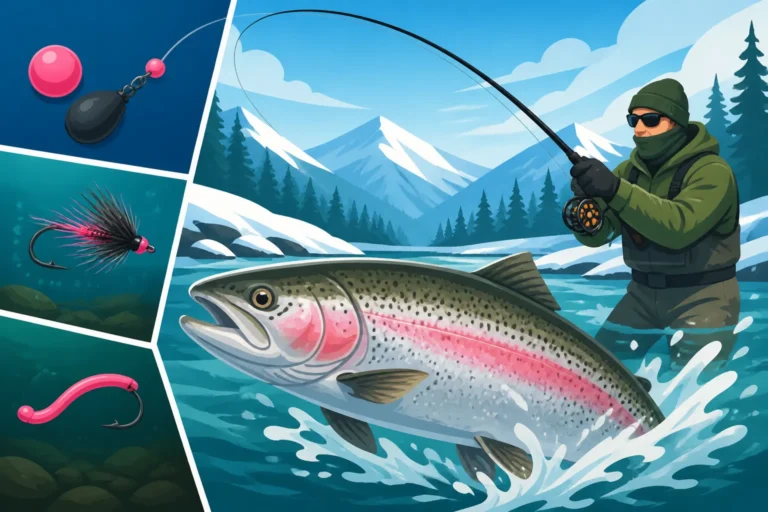
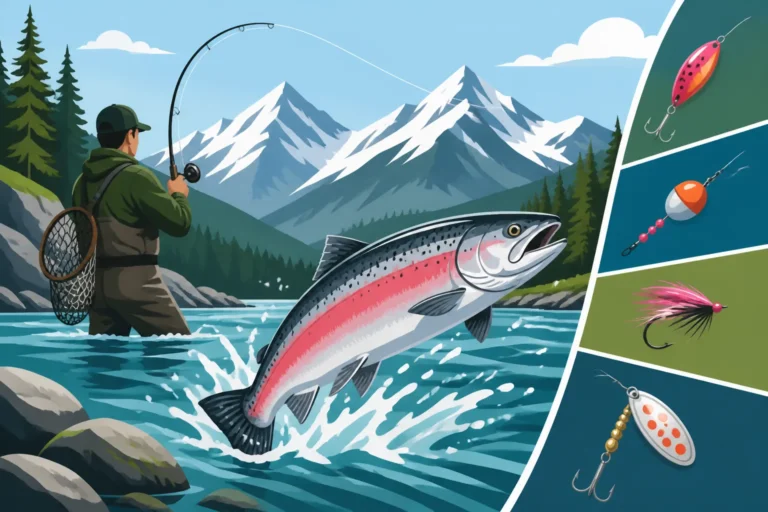
For lures, think small and subtle. Tiny spoons, like a ½ to ⅛ ounce Williams Wabler or a small Dick Nite spoon, can be very effective, especially when trolled slowly. Spinners, such as a size 0 or 1 Mepps Aglia or Blue Fox Vibrax, can also entice strikes, but again, keep them small. For fly fishing, which is often deadly for holdovers, matching the hatch is crucial. Chironomids, leeches, caddis, mayfly nymphs, and even small streamer patterns imitating sculpins or minnows are excellent choices. Local fly shops in areas like the Okanagan or Kootenays can often provide specific patterns that are currently working. For those who prefer to buy online, Amazon has a vast selection of fly patterns and small lures that can be delivered right to your door.
When it comes to bait, live bait, if permitted, can be incredibly effective. Earthworms or mealworms, presented naturally on a small hook with minimal weight, are often irresistible. PowerBait, while great for stockers, is generally less effective for holdovers unless it’s very specific to a local food source. Instead, consider using cured roe, small pieces of shrimp, or even a single kernel of corn (again, check regulations for bait restrictions). The key is a natural look and feel. A #6 or #8 baitholder hook is usually sufficient, ensuring the hook is as small as possible to avoid detection.
Importance of Stealth: Approaching with Care
This cannot be stressed enough: holdovers are incredibly spooky. They have survived precisely because they are wary. Any sudden movements, loud noises, or even your shadow cast over the water can send them scattering. When approaching a fishing spot, move slowly and deliberately. Wear neutral-coloured clothing that helps you blend in with the environment rather than stand out.
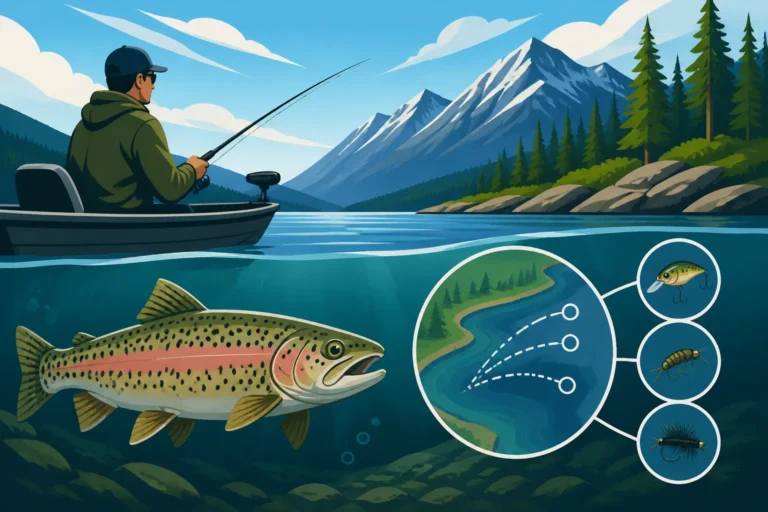
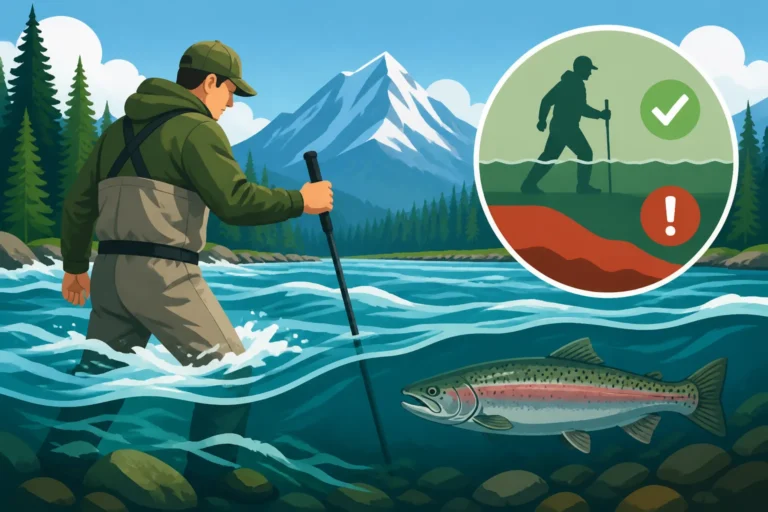
If you’re fishing from a boat, approach your chosen area slowly, using an electric trolling motor if possible, rather than a noisy gas engine. Avoid banging tackle boxes or dropping items on the boat floor. If you're wading a river, proceed upstream against the current to minimize disturbing the water ahead of you, and cast upstream or across stream to avoid presenting your line over the fish's head. Keep a low profile, especially in clear, shallow water. Sometimes, just kneeling or sitting down on the bank can make all the difference. Remember, the goal is to present your offering as naturally as possible, and that starts with an unnoticed approach.
Effective Techniques for BC Holdover Rainbows
Once you've got your refined gear, it's time to talk tactics. Catching holdover rainbows isn't about brute force; it's about subtlety, patience, and understanding fish behaviour. You need to present your offering in a way that looks utterly natural and irresistible.
Stillwater Strategies: Lakes and Ponds
Lakes and ponds are often home to some of the largest holdover rainbow trout in BC, especially in regions like the Okanagan and the Kootenays. These waters offer diverse habitats, and your approach needs to be just as varied.
Trolling: This is a fantastic way to cover water and find where the holdovers are actively feeding. Slow trolling is key. Use small gang trolls or dodgers ahead of a short leader (18-36 inches) rigged with a small spoon, a wedding band, or a fly pattern like a micro-leech or chironomid. Experiment with depths. Holdovers often suspend in the water column or hug structure. Downriggers can be invaluable for consistently hitting a specific depth, especially when targeting fish holding deep in summer. Your speed should be just enough to give your lure or fly action – often a leisurely 1 to 2 miles per hour. Keep an eye on your fish finder; if you see fish at 25 feet, set your gear to that depth. More tips on this can be found in Trolling Techniques for BC Lake Trout.
Still-Fishing (Anchoring): For those times when fish are concentrated in a specific area, still-fishing can be incredibly productive. Anchor your boat quietly well away from where you intend to fish, then cast your bait or fly into the target zone. A popular setup involves a slip bobber or a very light bottom rig. If using bait like worms or cured roe, present it on a small hook with minimal weight, allowing it to drift or settle naturally. For fly anglers, suspending chironomid or bloodworm patterns under an indicator can be deadly. Pay close attention to subtle takes, as holdovers often "mouth" the bait before committing.
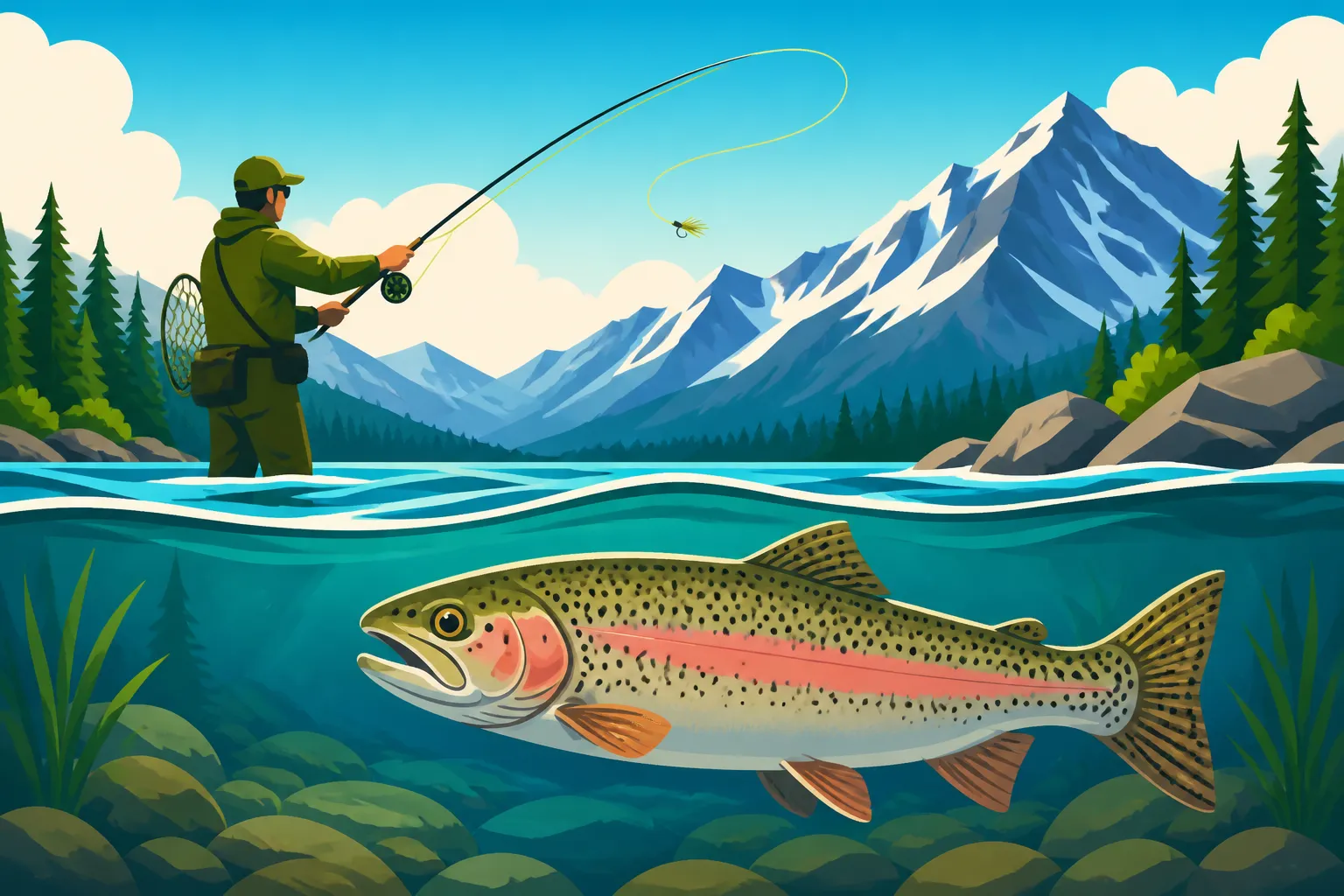
Fly Fishing: For many, fly fishing is the ultimate stillwater strategy for holdovers. It allows for incredibly natural presentations. During insect hatches, holdovers will often rise to the surface, and a well-placed dry fly can be irresistible. However, much of the time, they are feeding sub-surface. Techniques like "chironomid fishing" (suspending tiny fly patterns under an indicator) or "leech fishing" (slowly stripping leech patterns) are hugely effective. Don't be afraid to try different retrieval speeds and depths. Patience is paramount, and a subtle twitch can often trigger a strike.
River and Stream Tactics: Moving Water Challenges
Rivers and streams present a different set of challenges, mainly due to current and often clearer, faster-moving water. Holdovers here are typically even more streamlined and powerful, accustomed to battling currents. You might want to check out Best Fishing Rivers in British Columbia for some ideas on where to apply these techniques.
Drift Fishing: This is a classic and highly effective method for river holdovers. The goal is to present your bait or lure as naturally as possible, tumbling downstream with the current, just as a natural food item would. Use minimal weight – often just a split shot or two – placed a foot or two above a small baited hook (worm, roe) or a small, single-hooked lure like a sparse fly or bead. The key is to achieve a "dead drift" where your line doesn't drag or pull the bait unnaturally. Read the current, identify seams and eddy lines, and cast slightly upstream to allow your offering to drift into prime holding water.
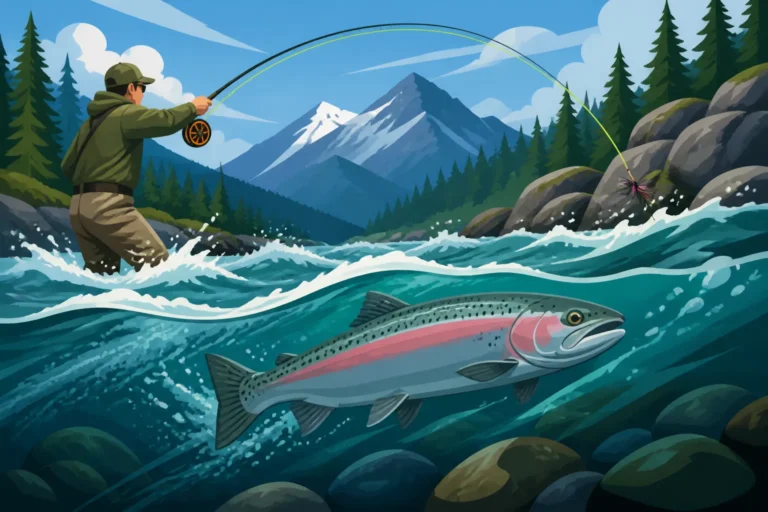
Nymphing (Fly Fishing): For fly anglers, nymphing is a powerful technique in rivers. This involves casting weighted fly patterns that imitate aquatic insects (nymphs) and allowing them to drift naturally near the bottom. Techniques like Euro Nymphing, where you use a specialized rod and leader to maintain direct contact with your flies, are incredibly effective at detecting subtle strikes. Focus on riffles, runs, and the heads of pools where fish actively feed. Matching the size and colour of local insects is crucial. Fly Patterns for BC Steelhead Rivers can give you some excellent starting points, even for trout.
Small Spinners and Spoons: When spin fishing, small spinners (size 0-2) and spoons (1/16 to 1/8 ounce) can be deadly, especially in pocket water or slower runs. Cast them upstream or slightly quartering upstream and retrieve just fast enough to get the blade spinning or the spoon wobbling, allowing the current to assist with the action. The key is to keep the retrieve slow and controlled, mimicking a wounded baitfish or drifting insect. Again, fluorocarbon leader is essential for stealth.
Reading the Water for Holdovers
Successfully targeting holdovers hinges on your ability to "read the water." This isn't just about spotting fish, which is rare for holdovers, but understanding where they should be based on their survival instincts.
Currents: In rivers, identify current seams, eddy lines, and slack water behind obstacles. Fish often hold in these less strenuous areas, waiting for food to be swept past them. The "inside bend" of a river often has slower water and deeper pockets where fish can rest.
Structure: Look for submerged logs, large boulders, rock piles, or dense weed beds in both lakes and rivers. These provide cover from predators and ambush points for prey. Drop-offs and ledges are also critical, offering easy access to different depths. On a lake, if you have a fish finder, use it to map out the contours of the bottom.
Depth Changes: Holdovers in lakes will often relate to specific depths depending on light conditions, water temperature, and food availability. In spring and fall, they might be shallower, but in summer, they often retreat to cooler, deeper water. In rivers, deeper pools provide refuge and often hold the largest fish. Paying attention to these subtle nuances will significantly increase your chances of finding these elusive beauties.
Seasonal Considerations and Best Practices
Fishing for holdover rainbow trout isn’t a one-size-fits-all affair. The time of year, weather conditions, and even the time of day can dramatically influence their behaviour and where they can be found. Adapting your strategy to the seasons is critical for consistent success.
Spring and Fall Opportunities: Active Feeding Times
Spring and fall are arguably the prime seasons for targeting holdover rainbow trout in British Columbia. The water temperatures are moderate, and food sources are often abundant, leading to more active feeding behaviour.
Spring: As the ice melts and waters begin to warm, holdovers become incredibly active. They've often spent the winter with reduced feeding, and now they're ready to put on weight. This is a fantastic time for both stillwater and river fishing. In lakes, trout will often move into shallower bays and flats where insect hatches (like chironomids) are starting, and water temperatures are rising. Fly fishing with nymph patterns under an indicator, or slow trolling small spoons and flies, can be incredibly effective. In rivers, increased runoff can bring in fresh food, making drift fishing with natural baits or small lures a great choice. Look for fish congregating near inlets where fresh water brings new nutrients.
Fall: Similar to spring, fall offers excellent fishing as water temperatures cool, and trout begin to feed heavily in preparation for winter. Many insect hatches occur, and baitfish are abundant. Holdovers will often be found cruising shorelines or congregated near spawning tributaries (if applicable and legal to fish). Trolling with spoons or plugs that imitate baitfish can be very productive in lakes. Fly fishing with streamer patterns that mimic sculpins or leeches is also a great option. In rivers, the lower, clearer water often found in fall makes precise presentations crucial. Consider opportunities in the Fraser River system, perhaps by looking at BC Fraser River Sockeye Closure Windows to avoid restricted areas, or BC Chinook Salmon Spring Season Dates on the Fraser for species-specific timings.
Summer and Winter Challenges: Adapting to Extremes
While spring and fall are prime, holdovers can certainly be caught in summer and winter, but they require a more specialized approach.
Summer: As temperatures rise, particularly in warmer interior lakes, holdovers will retreat to deeper, cooler water. This means you'll need to focus your efforts on thermoclines, deep drop-offs, and areas with underwater springs or structure that provide refuge. Trolling with downriggers to get your lures or flies into the deeper zones is often the most effective method. Fish activity will often be concentrated during the cooler parts of the day – early mornings and late evenings are typically your best bet. Avoid the midday heat unless you're fishing very deep. In rivers, look for deeper pools with good oxygenation, or fish during overcast days.
Winter (Ice Fishing): For those brave enough to venture out onto the ice in areas like the Cariboo or Shuswap, winter can offer incredible opportunities for holdovers. Under the ice, trout often become less active but can be caught by jigging small spoons, ice flies, or baits like maggots or mealworms. The key is to find them. Use a fish finder to locate schools or individual fish, and drill multiple holes to cover different depths and areas. Patience is paramount, and a subtle jigging action is often more effective than aggressive movements. Always prioritize safety on the ice!
Adapting to Conditions: Weather, Water Clarity, and Pressure
Holdover trout are highly sensitive to environmental changes. A sudden change in weather, water clarity, or even fishing pressure can turn a hot bite cold.
Weather: Overcast days or periods of light rain can often be excellent for holdovers, as the reduced light makes them feel more secure and willing to feed in shallower water. Bright, sunny days often push them deeper or into shaded cover. Pay attention to barometric pressure; a stable or slowly falling barometer can indicate good fishing, while rapidly changing pressure might shut them down.
Water Clarity: In gin-clear water, stealth becomes even more critical. Longer, lighter fluorocarbon leaders are a must, and your lures or flies should be subtle in colour and size. If the water is murky (e.g., after heavy rain), bolder colours or offerings that create more vibration (like a larger spinner) might be necessary to attract attention. However, very dirty water often means tough fishing for holdovers.
Fishing Pressure: Perhaps the biggest factor in BC's more popular lakes and rivers is fishing pressure. Holdovers quickly learn to associate human presence with danger. If a spot has been hammered by anglers, those smart fish will either move or simply refuse to bite. Seek out less pressured areas, fish during off-peak hours, or use very subtle, small presentations that might tempt a wary fish. Sometimes, simply waiting an hour after a few other anglers have left can make all the difference. Remember, the challenge and reward of holdover fishing come from understanding and adapting to these complex factors.
| Feature | Newly Stocked Rainbow Trout (Stockers) | Holdover Rainbow Trout |
|---|---|---|
| Appearance | Often plump, softer fins, duller colour, sometimes clipped fins. | Leaner, more vibrant colours, strong fins, wilder appearance. |
| Diet | Primarily hatchery pellets; opportunistic with natural food. | Diverse natural diet (insects, crustaceans, small fish); selective. |
| Behaviour | Naive, less wary, often school, prone to quick bites. | Wary, easily spooked, solitary or small groups, subtle bites. |
| Habitat | Often found shallower, near stocking points, open areas. | Deeper water, complex structure, current seams, cover. |
| Best Lures/Bait | PowerBait, corn, worms, flashy spoons, bright spinners. | Small, natural-coloured lures, flies (nymphs, leeches), live bait. |
| Fishing Method | Simple casting, bobber fishing, basic trolling. | Finesse, matching the hatch, precise casting, slow trolling. |
| Line Choice | Can get away with heavier mono. | Light fluorocarbon leaders are essential for stealth. |
| Time to Catch | Often caught quickly after stocking. | Requires patience, skill, and careful observation. |
Disclaimer
This article is for general informational purposes only and does not constitute professional advice. Laws, prices and regulations vary by location and change over time. Consult a qualified professional for guidance on your specific situation.