How to tell a Kamloops trout from a Gerrard rainbow
It's a common scenario for any angler in British Columbia: you've got a beautiful rainbow trout on the line, its sides flashing in the sunlight, and your heart is pounding. As you bring it closer, a question pops into your head – is this a feisty Kamloops or one of those legendary Gerrard rainbows? Distinguishing between these two iconic BC trout can be tricky, especially when excitement takes over, but understanding their unique characteristics is key to truly appreciating the diverse fisheries we have. This guide will help you confidently identify the differences, from their appearance to where they call home.
The Enigma of the Kamloops Trout
When we talk about "Kamloops trout," we're often referring to a specific strain of rainbow trout (Oncorhynchus mykiss) that's native to the vast interior plateau of British Columbia. However, the term has also become a colloquial shorthand for many of the resident rainbow trout found throughout BC's freshwater lakes and rivers, particularly in the Interior. These fish are celebrated for their vibrant colours and spirited fights, making them a perennial favourite among anglers.
Where Do Kamloops Trout Roam?
True Kamloops trout are intrinsically linked to the geographical region of British Columbia's Interior, especially around the Kamloops area, as the name suggests. They thrive in the nutrient-rich, often deep lakes and connecting river systems of this region, such as Kamloops Lake, Paul Lake, and many others in the Okanagan and Cariboo regions. They are perfectly adapted to these environments, moving between lakes and their spawning tributaries.
Many of the rainbow trout stocked into countless smaller lakes across the province, particularly by the Freshwater Fisheries Society of BC, are also derived from Kamloops strains. This means you can find "Kamloops-type" rainbows in a surprising variety of waters, from high-alpine lakes to easily accessible provincial park ponds. These fish are very much a part of the fabric of Rainbow Trout Fishing in BC.
Distinctive Features and Habits
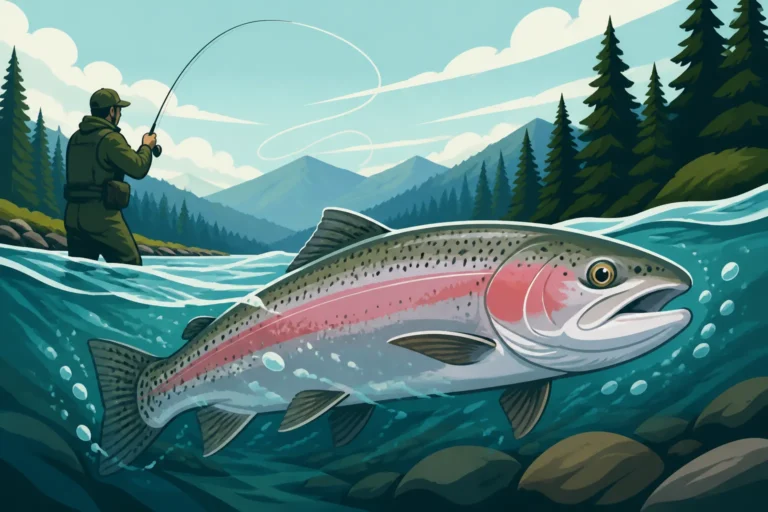
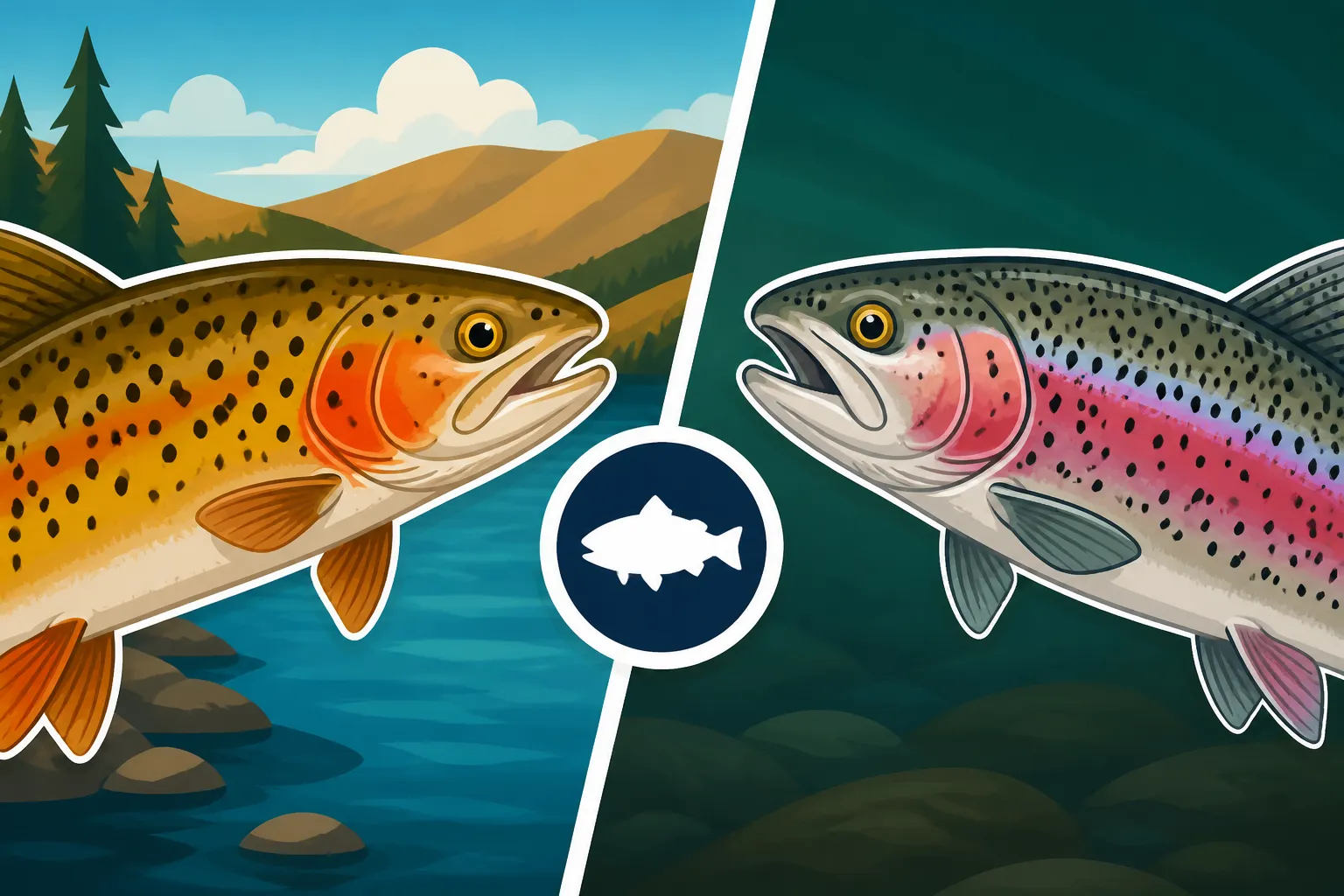
Kamloops trout typically exhibit a more vibrant, almost jewelled appearance compared to some other rainbow strains. They often have a bright, iridescent pink or red lateral band running along their sides, which can be particularly striking in mature specimens. Their bodies are usually liberally spotted with distinct dark spots, extending from their head all the way to their caudal (tail) fin, and often onto their dorsal, adipose, and even pectoral fins. The background colour can range from a bright silvery-green in open-water fish to a darker olive or even bronze in stream-dwelling or shallower-lake populations.
Their size can vary considerably based on the productivity of their environment. In smaller, less fertile lakes, they might be pan-sized, while in richer systems, they can grow to several pounds, sometimes reaching up to 10 pounds or more. These fish are known for their acrobatic jumps and strong runs when hooked, providing an exhilarating angling experience whether you're fly fishing, trolling, or casting from shore. Many anglers consider the Kamloops Trout in Okanagan Lakes to be among the strongest fighting freshwater fish.
Unpacking the Legend of the Gerrard Rainbow Trout
Now, let's talk about the Gerrard rainbow trout. This isn't just any rainbow trout; it's a specific, highly unique strain of rainbow trout found almost exclusively in one place on Earth: Kootenay Lake in southeastern British Columbia. The Gerrard strain is legendary for its massive size, making it a true trophy fish and a bucket-list species for many anglers worldwide. These fish represent an evolutionary marvel, exhibiting an almost anadromous lifecycle within a freshwater system.
The Exclusive Domain of Kootenay Lake
The Gerrard rainbow trout are intrinsically linked to Kootenay Lake and its main spawning tributary, the Lardeau River. This deep, cold, and nutrient-rich lake provides the perfect environment for these fish to grow to gargantuan proportions. Unlike salmon that migrate to the ocean and return to spawn, Gerrards perform a "potamodromous" migration, living and feeding in the vast expanse of Kootenay Lake for years before returning to the Lardeau River to reproduce.
The isolation of this population and the unique conditions of Kootenay Lake have allowed the Gerrard strain to evolve distinct characteristics, primarily their incredible growth rate. This genetic uniqueness, combined with the abundance of their primary food source, makes Kootenay Lake a truly special fishery, often highlighted in any Kootenay Lake Fishing Guide.
What Makes a Gerrard a Gerrard?
The most defining characteristic of the Gerrard rainbow trout is its size. These fish are world-renowned for their potential to reach double-digit weights, with many specimens caught in the 15-25 pound range, and the provincial record (and former world record) exceeding 35 pounds. When you hook into a Gerrard, you know it. They are powerful, deep-bodied fish, built for cruising the open waters of a large lake.
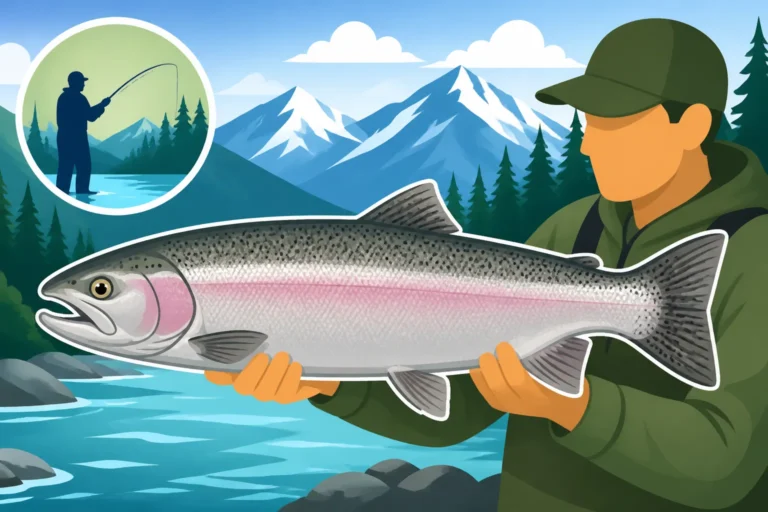
Visually, Gerrards often have a more streamlined, "steelhead-like" profile than the typical Kamloops trout, particularly when mature. Their coloration tends to be a more subdued, steely-blue or silvery-green on the back, fading to bright silver on their sides and belly. While they do have spots, they are usually much fainter, smaller, and less numerous than on a Kamloops trout, often concentrated more on the upper half of their body and tail fin, with the lateral band being less pronounced or even absent. Their fins may appear slightly larger in proportion to their body, hinting at their powerful swimming abilities.
Their diet is another key differentiator. Gerrard rainbows are piscivores, meaning they primarily feed on other fish. Specifically, they gorge themselves on the abundant kokanee salmon that inhabit Kootenay Lake. This rich, protein-packed diet is a major factor in their extraordinary growth and size. Anglers targeting these giants often use large spoons or plugs to imitate the kokanee that these fish pursue.
Key Differences: A Side-by-Side Comparison
Now that we've looked at each species individually, let's put them side-by-side to highlight the crucial differences that will help you identify them on the water. It's not always cut and dry, especially with variations within each strain, but these points will give you a solid framework.
| Feature | Kamloops Trout | Gerrard Rainbow Trout |
|---|---|---|
| Primary Habitat | Interior BC lakes and rivers (e.g., Okanagan, Cariboo) | Kootenay Lake (and Lardeau River for spawning) |
| Typical Size | 1-5 lbs, up to 10+ lbs in rich systems | 10-20+ lbs, can exceed 30 lbs in Kootenay Lake |
| Body Shape | Generally more torpedo-shaped, variable depth | Deeper-bodied, more streamlined/steelhead-like |
| Lateral Band | Often a distinct, vibrant pink or red stripe | Fainter, less pronounced, or sometimes absent |
| Spotting | Numerous, distinct dark spots on head, body, and all fins | Fewer, smaller, fainter spots, often concentrated on upper body/tail |
| Overall Color | Vibrant, iridescent, silvery-green to olive/bronze | Steely-blue/silvery-green back, bright silver sides/belly |
| Primary Diet | Aquatic insects, leeches, small fish | Primarily Kokanee salmon |
| Genetic Origin | Strain of Oncorhynchus mykiss native to interior BC | Genetically unique strain of Oncorhynchus mykiss from Kootenay Lake |
It's important to remember that these are general guidelines. A very large Kamloops trout from a highly productive lake might share some characteristics with a smaller Gerrard, and vice-versa. Environmental factors, diet, and age can all influence a fish's appearance. However, by considering these points together, you'll be much better equipped for accurate identification. A quality waterproof fish identification guide, which you can easily find on Amazon, can also be a tremendous asset to keep in your tackle box.
Visual Cues in Action
Imagine you've landed a beautiful rainbow. First, look at its overall shape. Does it have that deep, thick body reminiscent of a mini-salmon, built for powering through huge lake expanses? Or is it a more classic, cylindrical trout shape, perhaps a bit leaner? This is often the first major indicator.
Next, scrutinize the spots. Are they everywhere – on the gill plate, belly, and all fins, bold and black? That leans towards Kamloops. Or are they sparse, almost faded, and mostly confined to the back and upper tail, making the fish appear very clean and silver on its lower flanks? That's a strong hint for a Gerrard. The lateral band also tells a story. A vibrant, unmistakable red stripe is a Kamloops hallmark, while a ghost of a band or none at all suggests a Gerrard. If you're fishing Kootenay Lake Fishing Guide territory, and you land a fish over 10 pounds with minimal spotting and a silvery sheen, you can be pretty confident it's a Gerrard.
Why Does Accurate Identification Matter?
Beyond satisfying your angling curiosity, knowing whether you've caught a Kamloops or a Gerrard rainbow trout holds real significance, touching upon conservation, regulations, and even the sheer thrill of the catch.
Conservation and Regulations
British Columbia takes its fisheries management seriously, and regulations are often tailored to protect specific populations or strains. While both are rainbow trout, the unique status of the Gerrard, as a trophy-class fish and an apex predator in its ecosystem, sometimes leads to very specific regulations on Kootenay Lake regarding retention limits or size restrictions. For example, some large fish may be designated as catch-and-release only. Understanding the BC Fishing Regulations Explained and checking the Reading the BC Freshwater Fishing Regulations Synopsis for the specific body of water you're fishing is always paramount.
Misidentification could lead to inadvertently violating regulations or, more importantly, failing to appreciate the conservation efforts in place for these magnificent fish. Knowing you're handling a Gerrard means recognizing its rare genetic heritage and acting as a responsible steward.
Angling Approach and Pride
From an angling perspective, knowing the difference can also subtly inform your approach. While both are rainbows, the tactics for targeting these fish often differ. How to Catch Rainbow Trout in BC Lakes might involve a range of techniques for Kamloops, from small flies to spoons, depending on where you're fishing. For Gerrards, however, given their size and predatory nature, anglers often employ heavy trolling gear with large plugs or baitfish imitations, specifically designed to entice these giants of Kootenay Lake.
Finally, there's the immense pride in correctly identifying your catch. Landing a trophy-sized Gerrard rainbow is a truly special achievement, and knowing you've encountered one of the world's most unique freshwater trout adds another layer of satisfaction to the experience. Likewise, appreciating the feisty spirit and beautiful markings of a wild Kamloops trout from a pristine interior lake is a reward in itself. Every fish tells a story, and knowing which story it is makes the memory that much richer.
Tips for Identification in the Field
It can be tough to make a definitive call when you're out on the water, especially if the fish is thrashing, or the light isn't ideal. But with a few practical tips, you can improve your chances of accurate identification.
Observe Quickly and Carefully
When you land a rainbow trout, take a moment to observe its key features before releasing it. Look at its overall body shape: is it slender and long, or thick and deep? Scan for the prominent red lateral band, or its absence. Pay close attention to the spotting pattern – are the spots abundant and spread out, or sparse and localized? These initial observations are your most valuable clues. If you can take a quick, clear photo, that can also help for later identification.
Consider the location. If you are on Kootenay Lake, then a large rainbow trout is almost certainly a Gerrard. If you are fishing in the Okanagan, the Shuswap, or the Cariboo region, a rainbow is far more likely to be a Kamloops strain, or a rainbow with similar characteristics. Understanding the Best Fishing Lakes in British Columbia and the predominant species in each can give you a head start.
The Nuances of Appearance
Sometimes the differences are subtle, and not every fish will be a perfect textbook example. For instance, a Kamloops trout that has been feeding exceptionally well in a rich lake might develop a deeper body and more silvery coloration, making it look somewhat like a Gerrard. Conversely, a younger Gerrard might not have achieved its full massive size or distinctive deeper body shape yet.
One key aspect often overlooked is the overall impression. Does the fish feel ancient and powerful, like a miniature shark, built for open-water predation? That's the Gerrard vibe. Does it feel agile and feisty, with vibrant colours, hinting at a life spent darting through varied lake and river environments? That's often a Kamloops. And remember, the genetics are the core difference; their appearance is a reflection of that and their environment. Some excellent books on Trout Species Identification Guide for BC can be purchased on Amazon and often have detailed photos and diagrams that can be referenced in the field.
When in Doubt, Consult Resources
If you're still unsure, don't sweat it too much! Even experienced anglers can sometimes pause over a particularly unique specimen. The most important thing is to follow local regulations. If there are different rules for different types of rainbow trout, err on the side of caution or release the fish if you're not confident in your identification.
Referencing the official BC Freshwater Fishing Regulations Synopsis is always a good practice. Online forums and local fishing groups can also be excellent resources, as fellow anglers often have firsthand experience and photos to share. The beauty of fishing in British Columbia lies in its incredible biodiversity, and learning about these distinct species only adds to the richness of the experience.
Disclaimer
This article is for general informational purposes only and does not constitute professional advice. Laws, prices and regulations vary by location and change over time. Consult a qualified professional for guidance on your specific situation.