What Arctic grayling look like and where they live
For many anglers exploring the vast and varied waters of British Columbia, species like salmon, steelhead, and trout often grab the spotlight. But there’s a truly unique and captivating fish lurking in the colder, clearer waters of BC's northern reaches – the Arctic grayling. Many might not even know they exist here, or if they do, aren't quite sure how to distinguish them from other trout or whitefish. This guide is dedicated to shedding light on this beautiful, often overlooked species, detailing their unmistakable appearance and pinpointing their specific habitats within our incredible province.
The Distinctive Beauty of Arctic Grayling: What They Look Like
If you've ever had the privilege of seeing an Arctic grayling in person, you know there's no mistaking its elegant profile and particularly its striking dorsal fin. These fish are true gems of the northern wilderness, possessing a delicate beauty that sets them apart from their more common cousins in BC's waters. It's not just their colours, but their overall grace that makes them such a coveted catch for many dedicated anglers.
Their Iconic Dorsal Fin
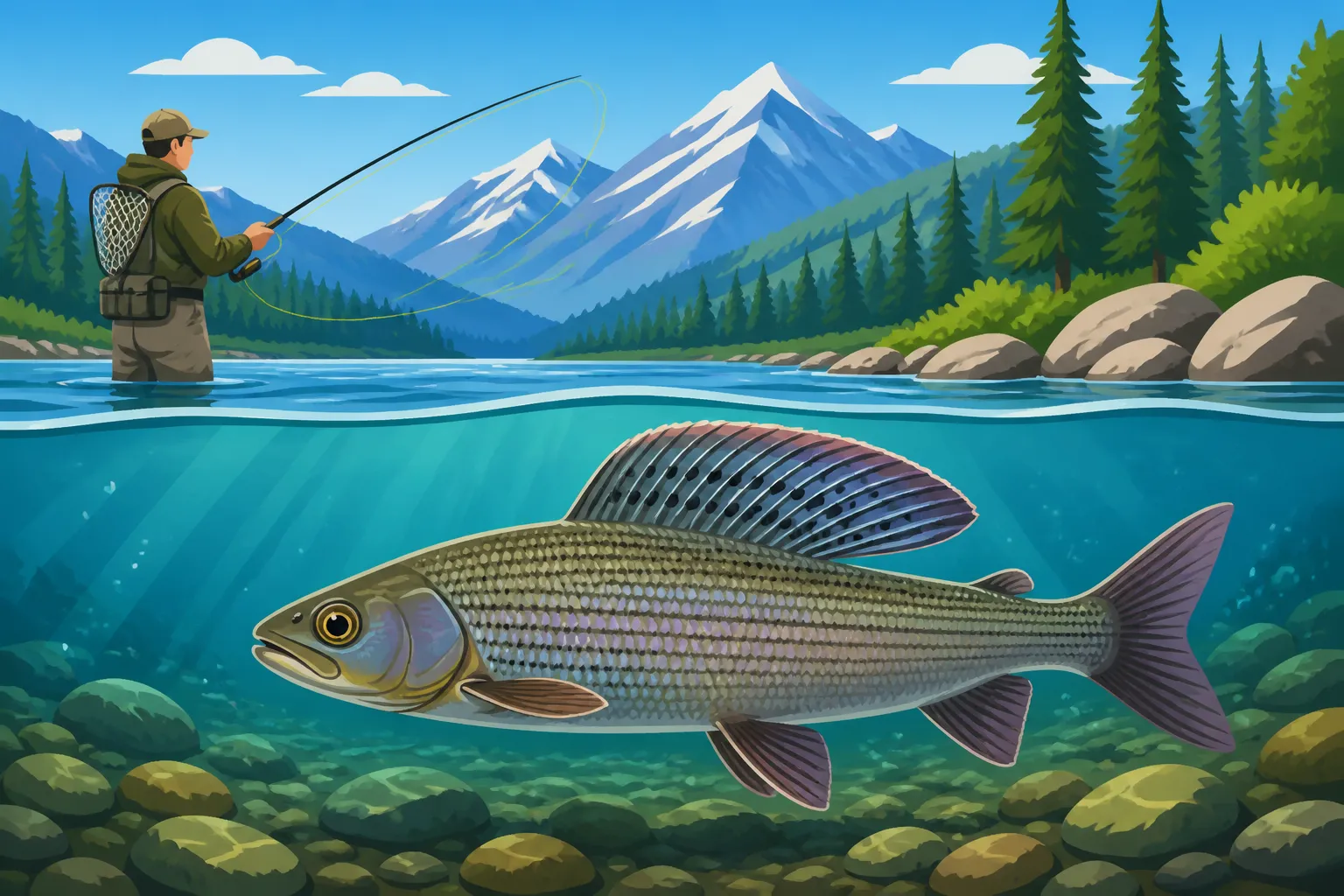
Let's start with the feature that truly makes the Arctic grayling stand out: its magnificent, sail-like dorsal fin. This isn't just any fin; it's unusually large and tall, especially in adult males, extending almost the entire length of their back. Imagine a vibrant, iridescent sail, often edged in crimson or orange, with rows of darker, sometimes purplish or greenish, spots and dashes. The coloration can shift with the light, offering flashes of blue, green, and violet. It’s truly a spectacle, fluttering subtly in the current.
This dorsal fin is much more pronounced than anything you'd see on a rainbow trout or even a mountain whitefish, making it the primary identification marker. When you catch one, it's almost a shame to handle it too much, as the fin's delicate rays are easily damaged. Its size and beauty are a testament to the evolutionary path of a species perfectly adapted to its environment, allowing it to navigate currents and display dominance during spawning.
Colouration and Body Shape
Beyond that show-stopping dorsal fin, the Arctic grayling boasts a sleek, streamlined body that hints at its agile nature in fast-flowing, cold waters. Their overall body colour tends to be a silvery-grey or olive-brown along their back, fading to silvery-white on their belly. What truly catches the eye, however, are the iridescent flanks, which often shimmer with a subtle purplish or bluish sheen, especially when wet and held in good light.
You'll also notice small, distinct black spots scattered across their sides, often more prominent towards the front of their body. Their head is relatively small, with a somewhat pointed snout and a small mouth, indicating their diet primarily consists of insects. This makes them a joy for fly anglers. Their scales are relatively large and smooth, adding to their elegant appearance. Unlike some trout species that can be quite robust, grayling tend to have a more slender, almost delicate build, perfectly suited for the clear, cold northern streams they call home.
Telling Them Apart: Grayling vs. Other BC Fish
It's understandable to wonder how to tell an Arctic grayling apart from other fish in BC, especially since they share some general characteristics with trout and whitefish. However, once you know what to look for, distinguishing them becomes quite easy. The dorsal fin, as mentioned, is your number one clue. No other freshwater fish in British Columbia has such a large, colourful, and sail-like dorsal fin.
Let's consider a few comparisons:
- Rainbow Trout: While rainbow trout have a colourful lateral band and often spots, their dorsal fin is much smaller and lacks the dramatic sail-like structure and vibrant patterning of the grayling. Rainbow trout also tend to have a more robust, deeper body, especially in larger specimens. You can learn more about Rainbow Trout Fishing in BC.
- Lake Whitefish/Mountain Whitefish: These fish share a similar streamlined body shape and silvery colouration, but they completely lack the prominent dorsal fin. Their mouths are typically smaller and downturned, adapted for bottom feeding. Whitefish also lack the distinctive spotting and iridescent hues of the grayling.
- Cutthroat Trout: Cutthroat trout are identified by the distinctive red or orange slash marks under their jaw. Their dorsal fins, like rainbows, are much smaller than a grayling's.
Here's a quick comparison table to help differentiate Arctic Grayling from a common BC trout species:
| Feature | Arctic Grayling | Rainbow Trout (General) |
|---|---|---|
| Dorsal Fin | Very large, sail-like, colourful, spotted | Smaller, less colourful, typically few spots |
| Body Shape | Slender, streamlined, delicate | More robust, deeper body, strong fighting fish |
| Colouration | Silvery-grey/olive, iridescent flanks, black spots | Silvery-pinkish, iridescent lateral band, dark spots |
| Mouth | Small, slightly upturned | Moderate to large, terminal |
| Overall Feel | Elegant, delicate | Powerful, athletic |
When you're out on the water, especially in northern BC, keeping these distinctions in mind will help you appreciate the unique fish you encounter. Understanding the appearance of these fish is not just for identification; it's also crucial for understanding their behaviour and diet, which in turn influences fishing techniques.
Where to Find Arctic Grayling: Their Habitat in British Columbia
Knowing what an Arctic grayling looks like is one thing, but knowing where to actually find these elusive beauties in British Columbia is another challenge entirely. Unlike the widespread trout populations, grayling have a much more specific and limited range within our province. They are truly a species of the northern frontier, preferring conditions that are far from the warmer, more temperate waters found in the southern parts of BC.
The Northern Frontier: BC's Grayling Strongholds
If you're dreaming of hooking into an Arctic grayling, you need to set your sights on the vast, pristine wilderness of Northern British Columbia. Their distribution is primarily restricted to the drainages that flow north towards the Arctic Ocean, meaning you'll find them in the Peace River region and the Liard River basin. This includes a network of small to medium-sized rivers, clear tributary streams, and certain cold, deep lakes.
Think of areas like:
- The Fort Nelson region: Rivers and lakes in this remote corner of BC, part of the Liard River drainage, offer some of the most reliable grayling habitat. These waters are often crystal clear, fed by snowmelt, and rich in the insect life that grayling thrive on.
- The Peace River watershed: Tributaries to the mighty Peace River, particularly those farther north and east, can also hold good populations. These are typically less disturbed environments, retaining the cold water temperatures and clean gravel necessary for grayling survival and reproduction.
These are remote areas, often requiring significant travel and sometimes even float plane access to reach the best spots. This inaccessibility is part of what preserves their pristine habitat and keeps the grayling populations healthy. When you venture into these regions, you're truly immersing yourself in a wild and untamed part of BC, far from the bustling fishing spots of the south. Many of these regions represent some of the Best Fishing Rivers in British Columbia and Best Fishing Lakes in British Columbia for those seeking truly wild experiences.
Preferred Water Conditions and Environment
Arctic grayling are incredibly sensitive fish, acting as excellent indicators of water quality. They demand very specific environmental conditions to thrive. If you find grayling, you can almost guarantee the water is clean, cold, and well-oxygenated.
Their ideal habitat includes:
- Cold, Clear Water: This is non-negotiable. Grayling prefer water temperatures that rarely exceed 18-20°C (64-68°F), and they are most active in much colder water. This is why their presence is restricted to northern latitudes or high-elevation waters that maintain consistently low temperatures. The clarity of the water is also vital for their sight-feeding habits.
- Gravel and Cobble Substrates: Spawning grayling need clean gravel beds in riffle areas of rivers or shallow lake shoals. These areas provide the perfect substrate for egg deposition and development. Even outside of spawning, they prefer bottoms composed of gravel, cobble, or small boulders, often with patches of aquatic vegetation.
- Moderate Current: In rivers and streams, grayling are often found in riffles, runs, and the heads of pools where the current provides a steady supply of food and oxygen. They use current breaks behind rocks or logs to conserve energy while waiting for insects to drift by. In lakes, they'll congregate around inflows and outflows, or in shallower areas with good insect hatches.
- Abundant Insect Life: Grayling are primarily insectivores. Their diet consists heavily of aquatic insects like mayflies, caddisflies, stoneflies, and chironomids, as well as terrestrial insects that fall into the water. This is why healthy riparian zones and clean water are so crucial; they support the entire food web that grayling depend on.
Understanding these preferences is key to successful grayling fishing. If you find a northern stream with clear, cold water, a good current, and plenty of bugs, you're likely in grayling territory.
Why You Won't Find Them Everywhere in BC
It's a common misconception that grayling might be found across more of BC, similar to how rainbow trout are widely distributed. However, their specific biological needs mean they have a much more limited range. You simply won't find Arctic grayling in the Okanagan lakes, the Fraser River canyon, or the coastal rivers of Vancouver Island. Their presence is a hallmark of truly northern ecosystems.
Their historical range in BC has largely remained confined to these northern, Arctic-draining watersheds. Unlike species that have been widely stocked, grayling populations in BC are almost entirely wild and self-sustaining, making their conservation particularly important. Factors like increasing water temperatures, habitat alteration from industrial development, and even invasive species can quickly threaten these delicate populations.
Their absence from much of BC underscores their unique ecological niche and the importance of preserving their pristine northern habitats. If you want to fish for Arctic grayling, you need to commit to a northern adventure, respecting the delicate balance of these remote ecosystems. Always check BC Fishing Regulations Explained for specific rules in these areas, as grayling are often subject to catch-and-release only rules or special limits due to their sensitivity. You might even find some BC Catch and Release Only Waters specifically for their protection.
Conservation and the Future of Arctic Grayling Fishing in BC
The Arctic grayling is more than just a beautiful fish; it's a barometer of ecosystem health. Its sensitivity to environmental changes means that healthy grayling populations indicate healthy, pristine northern waters. For anglers who seek out these fish, there's often a deep appreciation for the remote, untouched wilderness they inhabit, and a strong commitment to their conservation.
Understanding Their Vulnerability
Despite their resilience in their specific northern habitats, Arctic grayling are quite vulnerable to human impacts. Their reliance on cold, clean, oxygenated water and pristine spawning grounds makes them susceptible to several threats:
- Habitat Degradation: Activities like logging, mining, and road building can lead to sedimentation in rivers, altering critical spawning gravels and reducing water quality. Industrial discharges can also be devastating to grayling populations.
- Climate Change: Rising global temperatures pose a significant threat. Even a few degrees increase in water temperature can push grayling habitats beyond their physiological tolerance, forcing them into smaller, colder refugia or reducing their reproductive success.
- Overfishing: While not as prevalent in BC's remote grayling waters, localized overfishing in easily accessible areas could quickly impact populations given their slower growth rates and specific habitat requirements.
- Barrier Culverts and Dams: Structures that block upstream migration can fragment populations, isolating them from critical spawning or feeding grounds, leading to genetic isolation and reduced resilience.
Responsible angling practices are paramount when pursuing grayling. Many anglers who target grayling often practice catch-and-release to ensure these populations remain vibrant for future generations. Minimizing handling time, keeping the fish in the water as much as possible, and using barbless hooks are all crucial for their survival post-release.
Fishing for Grayling: A Unique Northern Experience
Fishing for Arctic grayling is less about filling a cooler and more about the experience of connecting with nature in its purest form. It's a journey into BC's wild north, where the landscape is breathtaking, and the fishing is a gentle art.
Typically, light tackle is preferred, often ultra-light spinning gear or, more commonly, fly fishing setups. Grayling are voracious insect eaters, and they will readily rise to a well-presented dry fly during a hatch. Small nymphs, emergers, and wet flies are also very effective, mimicking the aquatic insects that make up the bulk of their diet. Fly fishing for grayling is a delicate dance, requiring precise casts and a gentle touch, much like stalking Best Steelhead Rivers in BC or a finicky trout. Many of the techniques and even some Fly Patterns for BC Steelhead Rivers might even cross over.
The reward isn't just the catch; it's the fight of a spirited fish on light line, the iridescent flash of its dorsal fin in the northern sun, and the serene backdrop of an untouched wilderness. It's a reminder of what makes British Columbia such a special place for anglers and nature lovers alike. Remember to always have your BC resident freshwater fishing license cost 2026 in order before venturing out.
Disclaimer
This article is for general informational purposes only and does not constitute professional advice. Laws, prices and regulations vary by location and change over time. Consult a qualified professional for guidance on your specific situation.