Average size of a BC steelhead
When you talk about BC steelhead, you're not just talking about any fish; you're talking about a true icon of our wild rivers, a magnificent creature that inspires awe and obsession in anglers worldwide. Many of us dream of hooking into one of these chrome beauties, and naturally, a common question floats to the top: "What's the average size of a BC steelhead?" It’s a great question because, frankly, what you consider "average" can vary quite a bit depending on where you are in this incredible province and what time of year it is. This guide will dive deep into the fascinating world of British Columbia steelhead, breaking down what influences their size, where you might encounter the biggest ones, and what to expect when you're out on the water.
Understanding the BC Steelhead: A Brief Overview
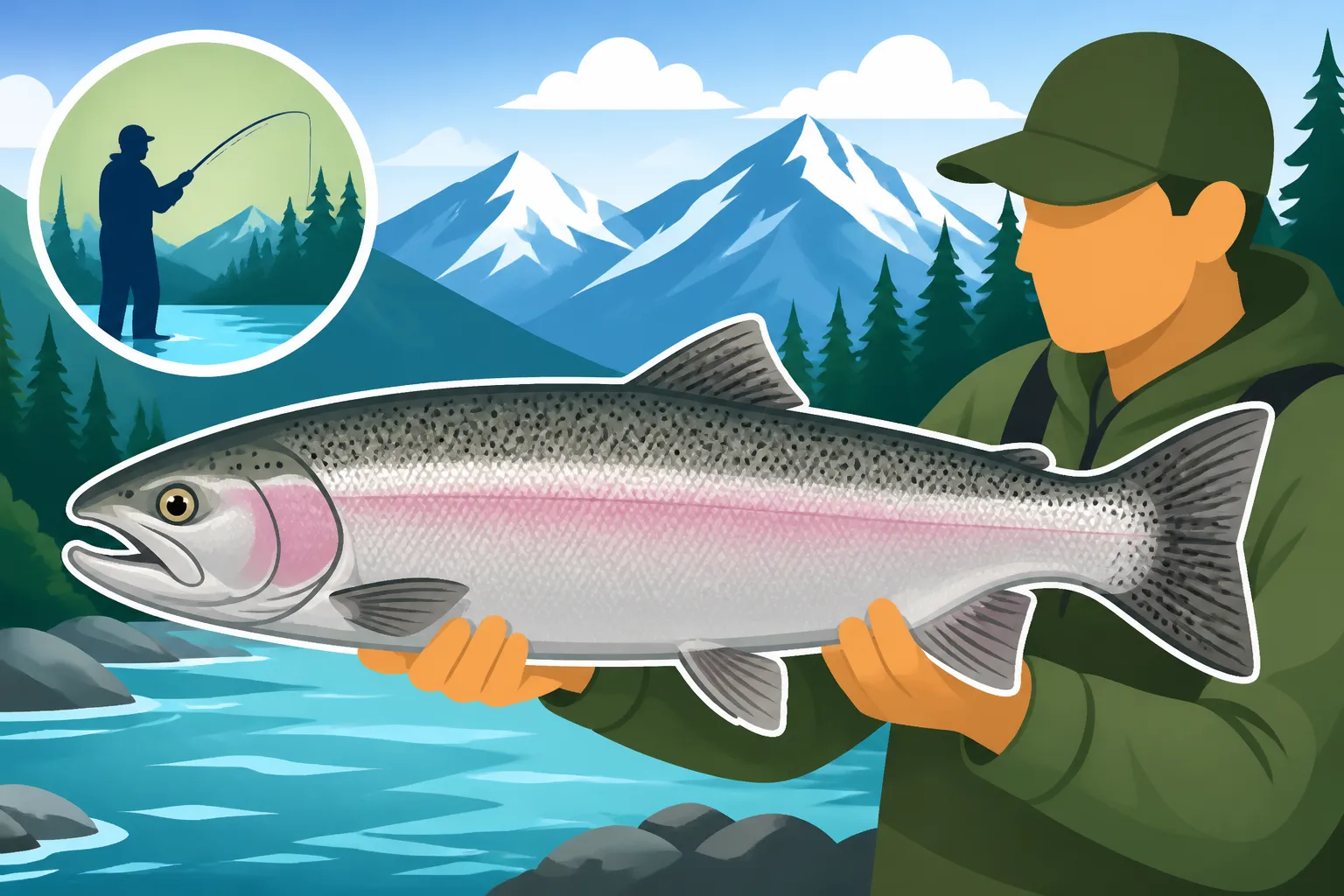
Before we get into the nitty-gritty of measurements, let’s take a moment to appreciate the steelhead itself. These aren't just any rainbow trout; they're anadromous rainbow trout, meaning they're born in freshwater, migrate to the ocean to grow large and powerful, and then return to their natal rivers to spawn. This incredible journey is what gives them their distinctive chrome, their immense strength, and their legendary fighting spirit.
What Makes BC Steelhead So Special?
British Columbia is globally renowned for its steelhead populations. Our vast network of clean, cold rivers and nutrient-rich coastal waters provides the perfect habitat for these migratory giants. The journey from river to ocean and back again is fraught with peril, meaning only the strongest and most adaptable fish complete the cycle. This natural selection creates a fish that is robust, incredibly elusive, and a true challenge for even the most seasoned angler. When you hook into a BC steelhead, you're connecting with a wild, powerful force of nature. It's an experience that stays with you long after the fish has been safely released.
The Allure of Steelhead Fishing
For many anglers, steelhead fishing isn't just a pastime; it's a pilgrimage. The pursuit often involves navigating remote, pristine wilderness, enduring challenging weather, and spending countless hours perfecting a cast or a drift. It's the ultimate test of patience, skill, and perseverance. The reward isn't just the fish itself, but the entire experience: the stunning scenery, the quiet solitude of the river, and the profound connection to the natural world. It's a quest for a fish that demands respect, and every successful hook-up feels like a hard-earned triumph. You might fish all day for a single grab, but that one grab can make your entire season. If you're new to the pursuit, you'll definitely want to read up on How to Catch Steelhead in BC.
Different Strains and Their General Characteristics
Not all steelhead are created equal, and BC is home to several distinct strains. Broadly speaking, we categorize them into "coastal" and "interior" steelhead, and further by "wild" and "hatchery" fish.
- Coastal Steelhead: These fish typically inhabit rivers that flow directly into the Pacific Ocean, from Vancouver Island up to the northern coast. They tend to enter rivers throughout the winter and spring, often showing up in incredible condition, sleek and powerful. They generally don't have to travel as far upriver to reach their spawning grounds, which can influence their body shape and stamina compared to their interior cousins.
- Interior Steelhead: Found in the vast river systems of the BC interior, such as tributaries of the Fraser River like the Thompson and Chilcotin, these fish embark on epic migrations, often traveling hundreds, even thousands, of kilometers from the ocean to their spawning grounds. This incredible journey means they often enter rivers earlier in the fall, and are built for endurance, appearing thicker-bodied and incredibly strong.
- Wild vs. Hatchery Steelhead: While many rivers are supported by hatchery programs, wild steelhead are the backbone of BC's world-class fishery. Wild fish tend to be more resilient, having survived natural selection, and often exhibit more aggressive fighting qualities. Hatchery fish, while providing angling opportunities, typically have clipped adipose fins, making them identifiable and allowing for different retention regulations in some areas. Understanding these differences is key to appreciating the diversity within BC's steelhead populations.
Decoding the Average Size of BC Steelhead
Now for the question that brought us here: the average size. It's tough to give a single, definitive number because "average" varies significantly by region, river system, and even year to year. However, we can certainly give you a strong sense of what to expect and what factors contribute to these variations.
Coastal vs. Interior Steelhead: Size Discrepancies
As we touched on, the geographical location and migration patterns play a huge role in the size of steelhead you'll encounter.
- Coastal Steelhead (e.g., Vancouver Island, Lower Mainland rivers): Generally, coastal steelhead typically range from 6 to 12 pounds, with many fish falling in the 8 to 10-pound range. A fish over 15 pounds is considered a very respectable catch on a coastal river, and anything pushing 20 pounds is a true trophy. These fish often appear incredibly bright and powerful, having spent less time in freshwater before being caught, retaining their ocean-going strength. The abundant food sources in the coastal marine environment contribute to their robust growth.
- Interior Steelhead (e.g., Thompson, Skeena River tributaries): Due to their immense upstream migrations and the genetics that favour large, powerful fish, interior steelhead often average larger. Here, a common "average" can range from 8 to 18 pounds. Fish in the 12 to 15-pound range are frequently encountered, and fish exceeding 20 pounds are not uncommon. These river systems, particularly the renowned Skeena watershed, are famous for producing some of the largest steelhead on the planet, with fish in the high 20s and even pushing 30 pounds being recorded. Their extended ocean residence and genetic predispositions are key factors in their impressive stature. You can explore some of these legendary locations in Best Steelhead Rivers in BC.
Factors Influencing Steelhead Size
Several biological and environmental factors come together to determine how large a steelhead will grow. It's a complex interplay, which is part of what makes these fish so fascinating.
- Age and Sex: Like most fish, steelhead grow throughout their lives. Older fish, especially those that have made multiple spawning migrations (known as "repeat spawners" or "kelts" if they've spawned and returned to the ocean), tend to be larger. Males and females can differ in size, with females often growing larger to carry more eggs, though this isn't always a strict rule.
- Ocean Conditions and Food Availability: The time a steelhead spends in the ocean is crucial for its growth. Abundant food sources, favourable ocean currents, and temperate water conditions allow steelhead to gorge and pack on weight rapidly. Conversely, poor ocean conditions, like warmer waters or scarcity of prey, can lead to smaller overall fish.
- River System Productivity: The health and productivity of the natal river also play a role. Rivers with rich aquatic insect life and healthy parr populations provide good initial growth for juvenile steelhead before they head to the ocean. The journey itself demands tremendous energy, so a healthy river environment supports stronger fish.
- Genetics: Different steelhead populations possess distinct genetic traits. Some river systems naturally produce larger-bodied fish, a genetic adaptation that has evolved over millennia to suit their specific migration challenges and environment. This is why certain river systems are consistently known for their "trophy" sized fish.
- Fishing Pressure and Regulations: While not directly influencing individual fish growth, intense fishing pressure can indirectly affect the average size of fish encountered. Strict BC Bag and Possession Limits by Species and mandatory catch-and-release practices on many steelhead rivers are vital for protecting larger, older fish that are crucial for successful spawning, thus helping to maintain healthy populations and the potential for larger individuals.
What "Average" Really Means
When we talk about "average," it's important to understand it as a range rather than a fixed number. On any given day, in any given river, you might hook a smaller "grilse" (a young steelhead returning early, often after only one winter in the ocean) or a true giant. The average gives you a general expectation.
Think of it this way: if a river's average is 10 pounds, you'll probably catch more fish in the 8-12 pound range, but you'll still get a few 6-pounders and occasionally that magnificent 15-pounder that makes your day. The beauty of steelhead fishing is that you never truly know what you've hooked until it's at your feet. Every bend in the rod could be a surprise!
Beyond Averages: The Hunt for Trophy Steelhead in BC
While "average" is a useful benchmark, many anglers come to British Columbia with dreams of a true "trophy" steelhead. These are the fish of legend, the ones that push the boundaries of size and power.
Defining a "Trophy" Steelhead
What constitutes a "trophy" steelhead is somewhat subjective, but there are generally accepted benchmarks. For coastal rivers, a steelhead over 15 pounds is often considered a trophy, while a fish over 20 pounds is truly exceptional. In the interior systems, particularly the Skeena and its tributaries, a trophy often starts at 20 pounds, with anything over 25 pounds being the fish of a lifetime. These incredible fish are often several years old, having survived multiple ocean journeys and spawning migrations, displaying incredible resilience and strength. You can often find reports about BC record steelhead weight to see the upper limits!
Key Regions for Larger Steelhead
If your goal is to tangle with one of these river monsters, certain regions in BC offer a higher probability.
- The Skeena River System: This vast watershed in northern BC is arguably the most famous steelhead destination in the world. Rivers like the Bulkley, Kispiox, and Babine within the Skeena system are renowned for their massive runs of large, powerful steelhead. The genetics and abundant food in the Pacific make this region a hotspot for trophy-class fish. Anglers come from all over the globe to experience these legendary waters. To learn more about the runs, check out Steelhead Runs on BC's North Coast Rivers.
- The Thompson River: A tributary of the Fraser River in the BC interior, the Thompson is historically known for its incredibly large and robust summer-run steelhead. These fish undertake one of the longest freshwater migrations on the planet, making them exceptionally strong. While conservation concerns have led to stricter regulations and sometimes closures on the Thompson, its reputation for producing giants is well-earned.
- The Dean River: Located on BC's central coast, the Dean is a fly-fishing-only river famous for its incredibly hot, chrome-bright steelhead. While not always the absolute largest, the Dean's fish are known for their spectacular acrobatic displays and incredible power, often punching well above their weight class. They are a highly sought-after trophy for fly anglers.
It's important to remember that pursuing trophy steelhead often means embracing solitude, patience, and often challenging conditions. These fish didn't get big by being easy to catch! Exploring Best Rivers for Trophy Steelhead in BC might give you more ideas for your next adventure.
The Role of Conservation in Trophy Steelhead
The existence of trophy steelhead in BC is a testament to dedicated conservation efforts. Most of the premier steelhead rivers operate under strict catch-and-release regulations. This means that after you've landed, admired, and photographed your fish, it must be carefully returned to the water to continue its life cycle.
Ethical angling practices, such as using single, barbless hooks, minimizing fight time, and keeping the fish in the water as much as possible, are paramount. Protecting these larger, older fish is critical for the genetic health and resilience of the entire population. Every angler has a responsibility to practice good stewardship to ensure future generations can also experience the thrill of BC's magnificent steelhead. Your choice of gear, like a wide, knotless landing net, can significantly improve the fish's survival chances, and you can find excellent options on Amazon to suit your needs.
Practical Tips for Estimating and Documenting Your Catch
So, you've hooked into a beautiful BC steelhead! How do you determine its size without harming it, and how do you capture that memory responsibly?
Measuring and Weighing Steelhead on the River
The priority when measuring or weighing a steelhead is the fish's safety and quick release.
- Measuring: The easiest and most ethical way to get a good estimate is to measure the length. Use a flexible tape measure or a marked landing net handle. Place the fish gently on a wet measuring board or beside your rod (which can also be marked for quick estimates). Measure from the tip of the nose to the fork of the tail. Avoid holding the fish vertically by the jaw or tail, as this can cause internal damage. Keep the fish in the water or hold it horizontally with wet hands.
- Weighing: If you want a weight, a cradle sling scale is the best option for larger fish. A simple lip gripper with a built-in scale can work for smaller fish, but again, ensure the fish is well-supported horizontally. Always wet the net and the sling before placing the fish in it. If you don't have a scale, you can use length-to-weight conversion charts found online, though these are just estimates.
- Photo Tips: Get your camera ready before you even land the fish. Have a buddy ready to snap the shot. Keep the fish in the water for as long as possible. When you lift it for a quick photo, support its belly with one hand and gently cradle its head with the other, keeping it horizontal. Avoid prolonged air exposure, especially in warm weather. A quick shot is all you need before a careful release.
Essential Gear for Responsible Anglers
Having the right gear not only enhances your fishing experience but also ensures you can practice responsible angling.
- Large, Knotless Rubber Net: This is a non-negotiable item for steelhead fishing. A large net makes landing the fish easier, and the knotless rubber material protects the fish's delicate slime coat and fins. You can find a variety of excellent rubber nets on
Amazonthat are specifically designed for catch and release. - Measuring Device: A foldable measuring tape or a stick-on ruler for your boat or net handle is incredibly useful for quickly getting a length estimate.
- Digital Scale (with a cradle or sling): If accurate weight is important to you, invest in a quality digital scale. Look for models that can handle larger weights and have a tare function. Again,
Amazonoffers many reliable options. - Pliers/Forceps: Essential for quickly and safely removing hooks, especially when using barbless hooks.
- Camera: A good waterproof camera or smartphone is great for capturing those moments. Many anglers also use action cameras mounted to their hats or chests to record the entire fight.
Remember, the quicker and gentler you are with the fish, the higher its chances of survival, allowing it to potentially grow even larger and spawn again.
The Importance of Accurate Reporting
Beyond personal bragging rights, accurate measurement and reporting of your catch, especially trophy-sized fish, can contribute valuable data to fisheries management. Conservation organizations and government agencies often collect data from anglers, which helps them monitor fish populations, understand growth rates, and inform future regulations. If you catch an exceptionally large fish, consider reporting it to the appropriate BC fisheries authority or a local fishing lodge. Your data point, combined with others, helps paint a clearer picture of the health and status of BC's incredible steelhead resources. Understanding the local rules is critical, and a quick check of BC Fishing Regulations Explained before you head out is always a good idea.
| Steelhead Type | Typical Weight Range (Pounds) | Average Length Range (Inches) | What is Considered a Trophy (Pounds) | Common Rivers/Regions |
|---|---|---|---|---|
| Coastal Steelhead | 6 – 12 | 24 – 32 | 15+ | Vancouver Island (e.g., Stamp, Cowichan), Lower Mainland |
| Interior Steelhead | 8 – 18 | 28 – 38 | 20+ | Skeena System (Bulkley, Kispiox), Thompson, Dean |
It's clear that the average size of a BC steelhead is not a single, static number, but rather a dynamic range influenced by everything from their genetics and ocean feeding grounds to the specific river system they call home. From the sleek, powerful 8-pounders of coastal rivers to the massive, tenacious 20-pound-plus giants of the Skeena, British Columbia offers an unparalleled diversity of steelhead angling experiences.
Ultimately, whether you're chasing an average-sized chromer or the trophy of a lifetime, the true reward lies in the pursuit itself – the stunning scenery, the challenge of the cast, and the fleeting, powerful connection with one of nature's most magnificent creatures. Remember to always prioritize the well-being of these incredible fish, practicing responsible catch-and-release so that the legend of the BC steelhead can continue to thrive for generations to come. Exploring resources like Steelhead Fishing in BC can further enhance your understanding and success on the water.
Disclaimer
This article is for general informational purposes only and does not constitute professional advice. Laws, prices and regulations vary by location and change over time. Consult a qualified professional for guidance on your specific situation.