Best bait for opening day trout in BC
The crisp air, the promise of spring, and the eager anticipation of casting that first line of the season – opening day for trout fishing in British Columbia is truly an event. But let's be honest, it can also be a bit of a head-scratcher. You've waited all winter, bought new gear, and then you get to the lake, only to find the fish aren't biting what you thought they would. The frustration is real when you see someone else pulling in fish after fish while your tackle box seems to have all the wrong answers. This guide will walk you through the very best baits for opening day trout in BC, helping you understand what these freshly-active fish are looking for so you can maximize your chances of a successful and memorable day on the water.
Understanding Opening Day Trout Behaviour in BC
When we talk about opening day trout fishing in British Columbia, we're often talking about a unique set of circumstances, especially in stocked lakes. Many of our smaller, easily accessible lakes are heavily stocked with rainbow trout, sometimes even Kamloops trout, specifically for these early season anglers. These fish behave differently than their wild counterparts, and understanding that is your first step to success. They're often recently released, maybe a little disoriented, and definitely driven by hunger.
The Hatchery Factor
Think about where many of these trout come from: a hatchery. In these controlled environments, fish are fed a specific diet, usually in pellet form. This means they are often accustomed to a consistent, processed food source, and their natural instincts for foraging might be a bit dulled. When they're first released into a lake, they're looking for something familiar, or something that triggers an easy feeding response. This knowledge is crucial when you're standing at the water's edge, debating between a worm and a bright, colourful dough bait.
Moreover, these hatchery-reared fish haven't had to contend with predators or extensive natural food chains. They're programmed to eat what's given to them. This can make them less wary of unusual offerings and more likely to strike at something bright or strongly scented. It's not always about perfectly imitating a natural food source, but often about standing out and providing an easy meal.
Post-Stocking Adjustments
Even if the fish have been in the lake for a little while, the colder waters of early spring mean their metabolism is still relatively slow. They aren't going to be chasing down agile prey with the same vigour they would in warmer summer months. They prefer an easy target, something that presents itself without much effort on their part. This is where still-fishing with scented baits or slowly retrieved lures truly shines. The cooler water also means less insect activity, so natural hatches aren't usually the primary food source yet.
Understanding these nuances helps explain why certain baits dominate the opening day catch. It’s a blend of familiarity, ease of access, and triggering a strong feeding response in fish that are either recently released or still somewhat sluggish from the cold. For more insights on fish behaviour, check out our guide on How to catch trout right after stocking in BC.
Top Natural Baits for Opening Day Trout
When in doubt, Mother Nature often provides the best answers, and for opening day trout, natural baits are frequently irresistible. These options tap into the trout's primal feeding instincts, offering scent, texture, and movement that artificial lures sometimes can't replicate.
The Ever-Reliable Worm
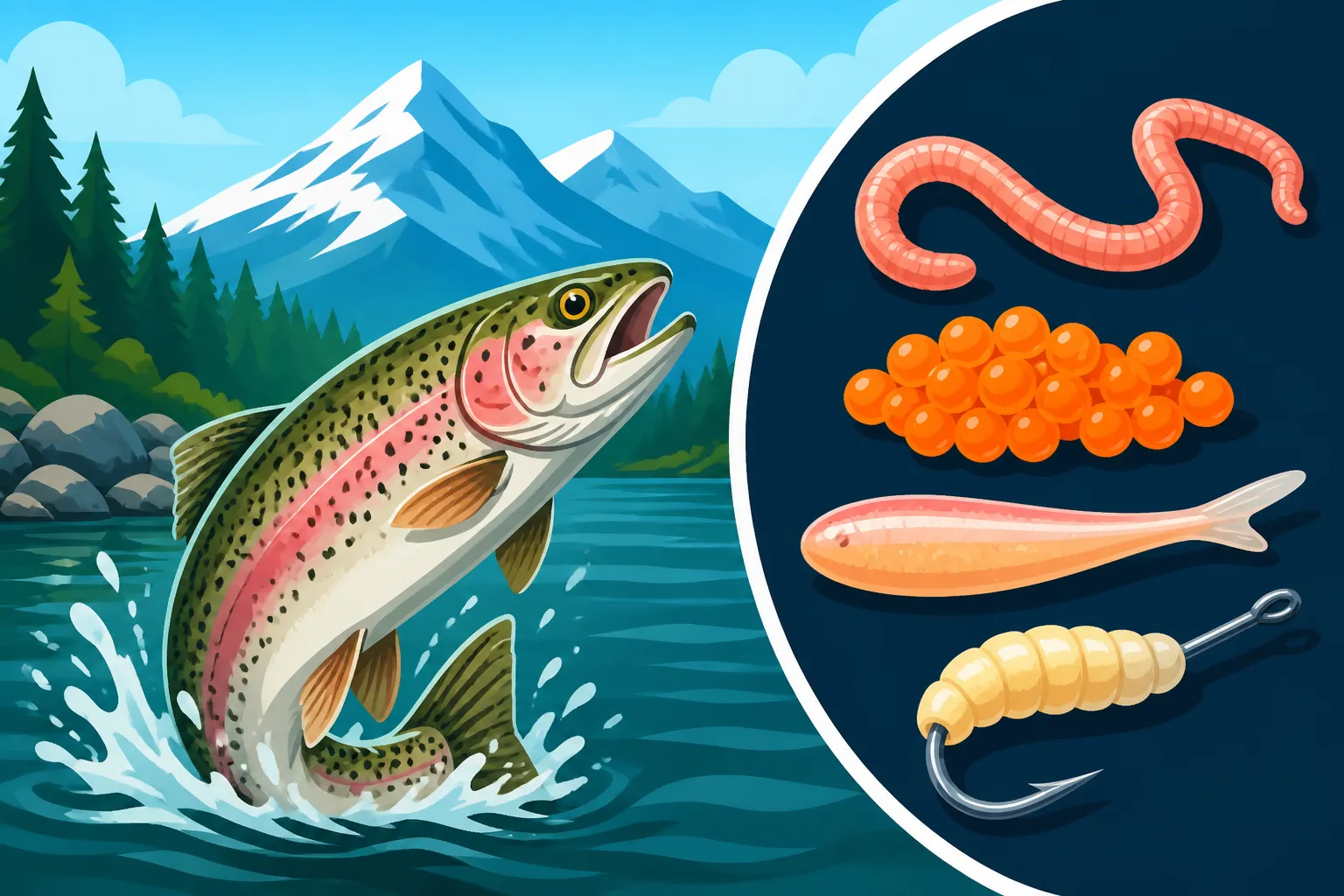
Ah, the humble worm! Red wigglers, nightcrawlers – these wriggly morsels are trout magnets, especially on opening day. There's something about their natural movement and earthy scent that fish simply can't ignore. They're a staple for a reason: they work.
On opening day, I often rig a small piece of worm on a light hook, suspended just off the bottom with a small split shot or under a bobber. This allows the worm to undulate naturally, mimicking a fallen insect or a grub disturbed from the lakebed. For trout that might be a bit lethargic in the colder water, the slow, natural presentation is often key. You can also try threading a whole small worm onto the hook, letting the ends dangle freely for maximum action. Many anglers swear by the effectiveness of a simple worm when nothing else seems to work, and you can easily find them at any local tackle shop or even on Amazon if you prefer to stock up beforehand.
Powerfully Scented Salmon Eggs
For many trout anglers in BC, salmon eggs are a secret weapon, particularly on opening day. These vibrant little spheres pack a powerful scent punch that's incredibly appealing to trout, especially rainbows and kokanee. They mimic a natural food source found in many of BC's rivers and lakes, even if the trout you're targeting haven't seen an actual salmon egg in their life.
There are various ways to fish them: single eggs on a small, sharp hook, or clusters of eggs. I prefer a small, size 10 or 12 single egg hook, barely concealing the hook point within the egg to ensure a good hook set. Suspend them off the bottom or fish them under a small float, allowing them to drift naturally. The key is to keep the presentation light and subtle. Their bright colours also provide a visual attractant in the often-murky waters of early spring.
Live Minnows or Fry Imitations
While not always legal in all BC waters (always check the current BC Fishing Regulations Explained first!), where permitted, live minnows or minnow-like baitfish can be devastatingly effective. Larger trout, in particular, are opportunistic predators, and a struggling minnow is an easy meal they can't pass up.
If live bait is allowed, a small shiner or similar minnow hooked lightly through the back or lips and fished under a float can entice larger, more aggressive trout. The natural swimming action is hard to beat. Alternatively, for waters where live bait is prohibited, soft plastic minnow imitations or even small spoons designed to mimic baitfish can be very successful. These should be fished with a slow, erratic retrieve to imitate a wounded or disoriented fish, presenting an easy meal to opening day trout.
Prepared & Artificial Baits for Consistency
Sometimes, you need something a bit more uniform, more durable, or with a specific attractant that natural baits just can't offer. This is where prepared and artificial baits shine, offering consistency and a wide range of options for discerning trout.
Scented Dough Baits and Pastes
Prepared dough baits, often known by popular brands like PowerBait, are absolute game-changers for opening day trout, especially for hatchery-raised rainbow trout. These fish are often "imprinted" on the scent and taste of the pellets they were fed in the hatchery, and many dough baits are specifically formulated to mimic that. They come in a dazzling array of colours and scents, from garlic to cheese to corn.
The key to fishing these baits is to mold them around a small treble or single hook, ensuring the hook point is fully covered. Many of these baits are designed to be buoyant, so they float off the bottom, presenting an irresistible, colourful blob right at the trout's eye level. This is particularly effective in lakes with a silty or weed-covered bottom, as it keeps your bait visible. Experiment with different colours – bright chartreuse, orange, and rainbow swirl are often excellent choices for attracting attention in cold, early spring waters. You'll find a huge selection of these baits at your local tackle shop, or you can browse a wide range on Amazon to find the perfect colour and scent for your next trip.
Soft Plastic Worms and Eggs
Beyond the traditional dough baits, soft plastic imitations of worms and salmon eggs have become incredibly popular. These offer durability and can be impregnated with powerful scents. Brands like Gulp! by Berkley have revolutionized this category, offering plastics that release a scent trail that's often as effective, if not more so, than natural bait.
Small, scented soft plastic worms in red, pink, or chartreuse can be rigged weedless or on a small jig head and slowly retrieved or suspended under a bobber. Their subtle action and potent scent make them deadly for finicky trout. Similarly, soft plastic salmon egg imitations can be fished just like their natural counterparts but offer the advantage of not needing refrigeration and lasting through multiple bites. They are fantastic for still-fishing when the fish are less active, and many anglers even use them for a bit of Trolling Techniques for BC Lake Trout.
Spinners and Spoons for Active Fish
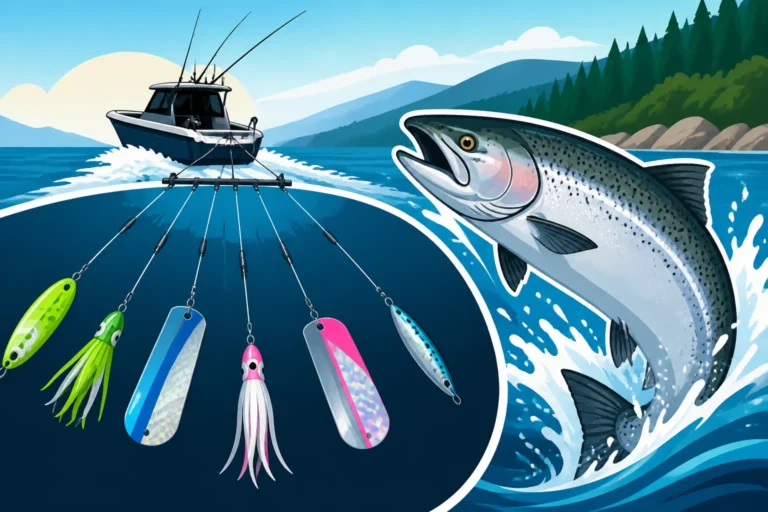
For those days when trout are a bit more aggressive and willing to chase, small spinners and spoons are unbeatable. The flash, vibration, and erratic movement of these lures can trigger aggressive strikes, especially if the fish are cruising near structure or along drop-offs. Brands like Mepps, Panther Martin, and Acme Kastmaster are classics for a reason.
Choose smaller sizes (1/8 to 1/4 ounce) in bright, reflective colours like silver, gold, brass, or even fluorescent patterns. Cast them out and retrieve them steadily, varying your speed to see what the fish prefer. Sometimes a slow, deliberate retrieve is best, while other times a faster, more erratic "stop and go" action can provoke a bite. These lures are particularly effective in clear water or when you're trying to cover a lot of ground from shore. If you're looking to stock up on a variety of these tried-and-true lures, many kits are available on Amazon, offering different sizes and colours to match various conditions.
Presentation and Location Strategies for Opening Day
Having the right bait is only half the battle. How and where you present it can make all the difference between a limit catch and a long, fishless day. Opening day conditions in BC often dictate a slower approach, especially with colder water temperatures.
Still-Fishing and Bottom Rigs
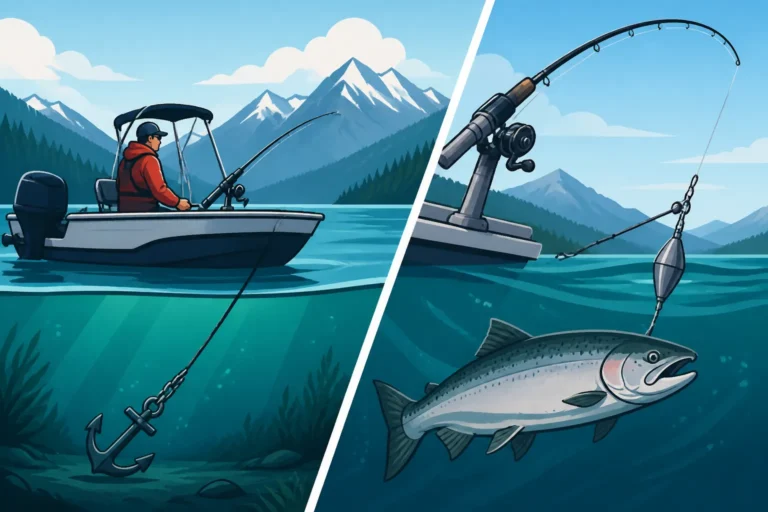
For those fresh, hatchery-stocked trout, or when the water is still quite cold, still-fishing is a highly effective method. This involves casting your bait out and letting it sit, allowing the scent to disperse and the bait to present itself as an easy meal. A simple Carolina rig or a slip-sinker rig works wonders.
To set up a basic bottom rig, slide an egg sinker onto your main line, followed by a small bead, and then tie on a barrel swivel. To the other end of the swivel, attach about 12-24 inches of fluorocarbon leader (lighter line than your main line) and then your hook. This setup allows the fish to take the bait without feeling the weight of the sinker, and the bead protects your knot. Bait with powerbait, a worm, or salmon eggs. The buoyancy of many dough baits means they will float up off the bottom, keeping them visible above any weeds or silt. Consider checking out tips on Best technique for bank fishing a stocked lake for more ideas.
Float Fishing (Bobber Fishing)
Float fishing, or using a bobber, is another excellent strategy for opening day, particularly in shallower areas or around docks and fallen trees. This method keeps your bait suspended at a specific depth, which is ideal when trout are cruising at a consistent level or when you want to avoid snags on the bottom.
Use a sensitive bobber that signals even the lightest bite. Adjust the depth so your bait is suspended anywhere from 1 to 6 feet deep, depending on the water depth and where you're marking fish on your sonar (if you have one). Baits like worms, salmon eggs, or small pieces of scented dough bait work exceptionally well under a float. The visual aspect of a bobber disappearing under the surface is also incredibly exciting, making it a favourite for family outings.
Slow Retrieval Techniques
If you're opting for lures like spinners, spoons, or soft plastics, a slow and steady retrieve is often the most productive on opening day. Remember, trout are still a bit sluggish in the cold water. They're less likely to expend a lot of energy chasing a fast-moving lure.
Cast your lure out, let it sink for a few seconds (counting down to estimate depth), and then begin a slow, consistent retrieve. Incorporate pauses or slight twitches to give the lure an erratic, injured appearance. This can often trigger a reaction strike from a hesitant trout. Don't be afraid to experiment with retrieve speed and depth until you find what the fish are responding to. Sometimes, a very slow, almost agonizing retrieve is what it takes.
Essential Gear and Considerations for Opening Day Success
Beyond just the bait, having the right supporting gear and paying attention to a few key details can significantly boost your opening day success in BC. It's about putting the whole package together.
Light Tackle is Key
For opening day trout, especially in smaller lakes or when targeting recently stocked fish, light tackle is your best friend. A light to medium-light action spinning rod (6-7 feet long) paired with a small spinning reel spooled with 4-6 pound test monofilament or fluorocarbon line is ideal. This setup allows for long, accurate casts with lightweight baits and provides excellent sensitivity to detect those subtle trout bites.
Light line is less visible to wary trout and allows your baits to present more naturally. Fluorocarbon leaders are particularly useful as they are nearly invisible underwater and offer good abrasion resistance. The right rod will have enough backbone to fight a decent trout but enough flexibility in the tip to prevent pulling the hook out of a soft mouth.
Always Check the Regulations!
I cannot stress this enough: always, always check the current BC Fishing Regulations Explained before heading out. Regulations, season dates, and specific bait restrictions can vary significantly from lake to lake and can even change mid-season. What's legal in one spot might be prohibited just a few kilometres away.
Pay close attention to specific lake closures, bait restrictions (e.g., "no bait" waters are common for fly-fishing-only streams), and bag limits for the species you're targeting. For instance, some lakes might have special regulations for large rainbow trout or other species. Ignorance of the rules is no excuse, and fines for infractions can be substantial. You can find detailed information in the annual Freshwater Fishing Regulations Synopsis, usually available online or at tackle shops.
Be Patient and Adaptable
Opening day can sometimes be overwhelming with a lot of anglers sharing the same water. Patience is a virtue. Don't get discouraged if the fish aren't biting immediately. Trout, especially those newly introduced, can be finicky. Keep trying different baits, vary your retrieve, and experiment with different depths.
If your usual spot isn't producing, don't be afraid to move. Walk the shoreline, try a different access point, or even switch to a different lake if you have options. Fish behaviour can change throughout the day based on sunlight, temperature, and pressure from other anglers. The most successful anglers are often those who are willing to adapt and try new things when their initial plan isn't working. Sometimes, it's just a matter of finding the right combination that the fish are keying in on that particular day.
Comparing Trout Bait Options for Opening Day
To help you decide what to bring to your next opening day adventure in BC, here’s a quick comparison of the common bait types discussed:
| Bait Type | Pros | Cons | Ideal for Opening Day? |
|---|---|---|---|
| Natural Worms | Strong natural scent, familiar food source, lively action. | Can be messy, less durable, need live storage. | Excellent, especially for less active or newly stocked trout. |
| Salmon Eggs | Potent scent, bright visual, natural food source. | Can be fragile, sometimes messy, small hook required. | Very effective, particularly for rainbow and kokanee. |
| Dough Baits | Wide range of scents/colours, buoyant, easy to use, durable. | Artificial, may not appeal to all trout, can be messy. | Highly recommended for hatchery-stocked trout; very consistent. |
| Soft Plastics | Durable, pre-scented, versatile rigging, no refrigeration. | Artificial feel, some fish may be wary, requires specific jigging. | Great for slow retrieves or still-fishing with strong scent. |
| Spinners/Spoons | Flash and vibration attract aggressive fish, covers water quickly. | Less effective for lethargic fish, can be snag-prone. | Good for actively feeding fish or searching new water; requires movement. |
| Live Minnows | Extremely natural action and scent, targets larger fish. | Often regulated/prohibited, requires aeration, can be expensive. | Where legal, highly effective for larger, predatory trout. |
Opening day trout fishing in BC can be incredibly rewarding. By understanding the unique behaviour of early-season trout and arming yourself with the right baits and techniques, you'll be well on your way to a memorable start to your fishing season. Good luck out there!
Disclaimer
This article is for general informational purposes only and does not constitute professional advice. Laws, prices and regulations vary by location and change over time. Consult a qualified professional for guidance on your specific situation.