How to catch trout in a beaver pond stream
There's something truly special about discovering a beaver pond stream, isn't there? These hidden gems, often tucked away off the beaten path, can be incredibly intimidating to approach if you're not sure how to read their unique environment. Many anglers just walk right past them, seeing only dense brush and obstacles, but with the right approach and a bit of patience, these small waterways can offer some of the most rewarding and intimate trout fishing experiences British Columbia has to offer. This guide will walk you through everything you need to know to confidently tackle these fascinating ecosystems, from understanding the subtle dynamics of the water to the precise techniques that will help you land some beautiful trout.
Understanding the Unique Ecosystem of Beaver Pond Streams
Beaver pond streams are their own little worlds, completely distinct from open rivers or large lakes. They are, quite literally, engineered by beavers, and this engineering creates a habitat that is incredibly rich for trout, yet often challenging for anglers to navigate. Before you even think about casting, it's crucial to understand what makes these places tick.
The Beaver's Engineering Masterpiece
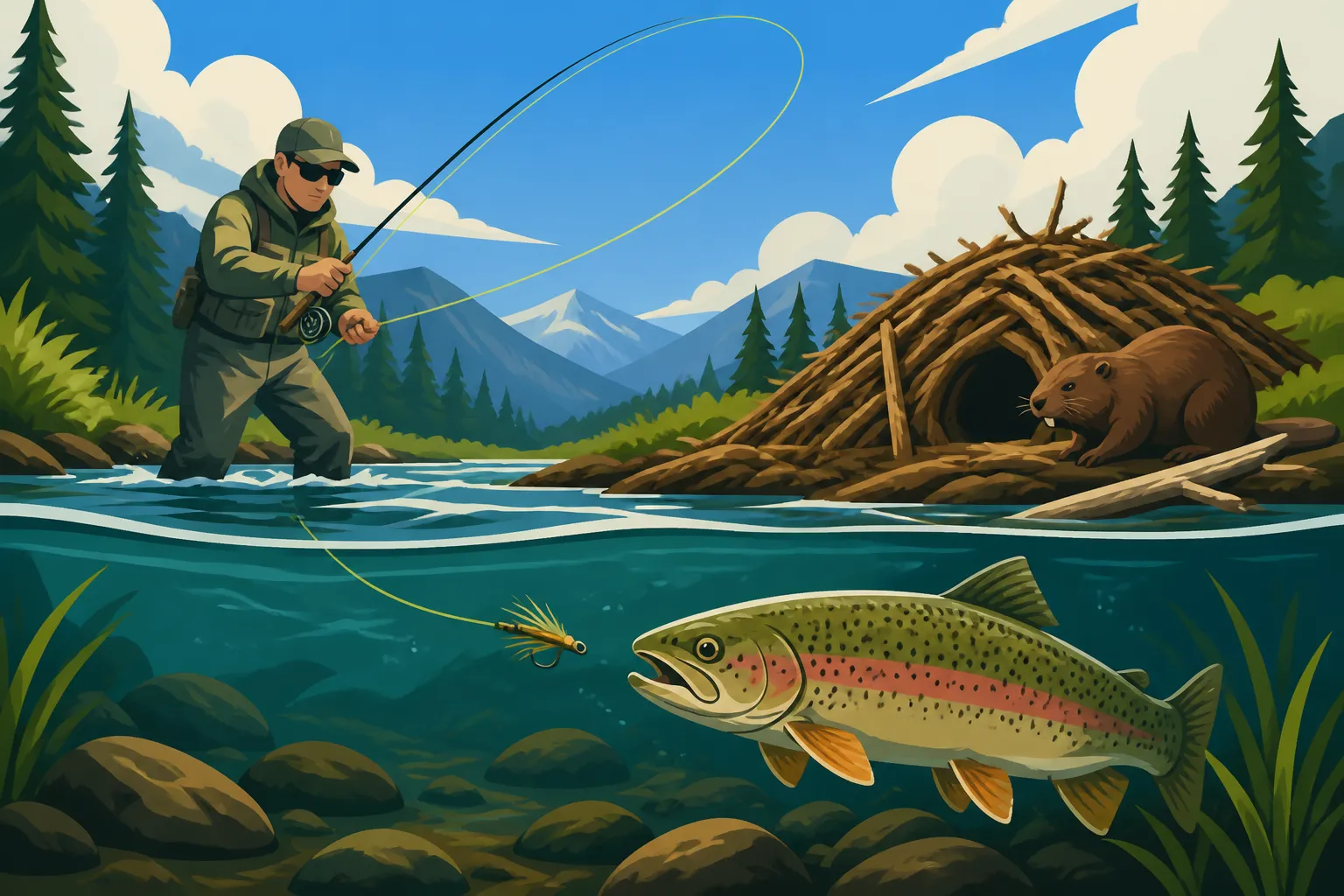
Think of a beaver pond as a series of interconnected pools and slow-moving channels, all created by the damming activities of beavers. These dams disrupt the natural flow of a stream, backing up water into wider, deeper pools and often creating a labyrinth of submerged timber, mud flats, and undercut banks. This isn't just a stagnant puddle; it's a dynamic system. The constant work of beavers felling trees, maintaining dams, and digging channels reshapes the landscape, providing an abundance of structure, varied water depths, and an incredible food source for trout. These conditions are exactly what trout, especially native rainbow and cutthroat, absolutely thrive in. The slower, warmer water encourages prolific insect hatches and provides shelter from predators, while the deeper pockets offer refuge from fluctuating temperatures and low water levels.
Water Dynamics and Flow Patterns
Despite the apparent stillness of some beaver ponds, there's always an underlying current. The water is constantly moving, however subtly, from the upstream input, through the ponds, and over or around the beaver dams. It's not a roaring river current, but understanding these gentle flows is key. Trout will position themselves in spots where the current brings food to them without expending too much energy. This often means the deeper pockets just above or below a dam, along the edges of submerged timber where the current eddies, or in the slower water adjacent to the main flow. Observing the inflow and outflow points, and how the water swirls around obstacles, will give you critical clues as to where the trout are holding. The water itself in these ponds can vary from crystal clear in spring-fed areas to murky and tea-stained, depending on the bottom composition and the amount of organic matter stirred up by the beavers.
Seasonal Considerations for Beaver Ponds
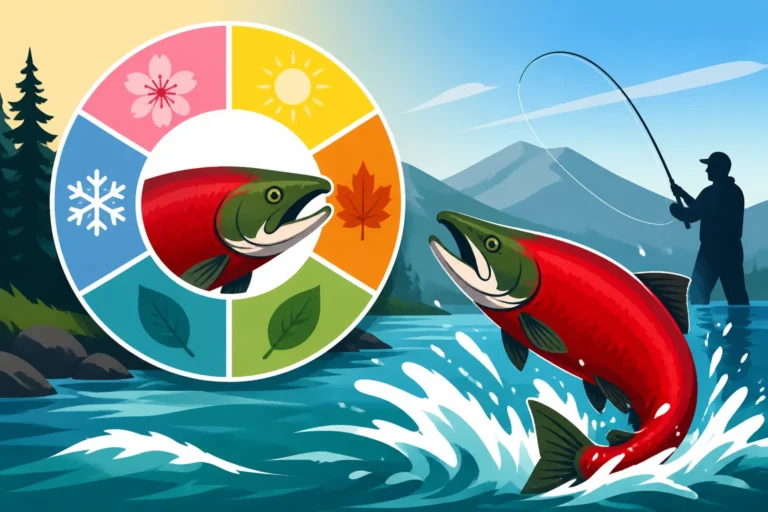
Just like any other fishery in BC, beaver pond streams are subject to seasonal changes that greatly influence trout activity. In spring, as snowmelt feeds the streams, water levels will rise, and trout will often be more active, feeding heavily on emerging insects. This is also a time when you might find fish moving between ponds or up and down the stream system. Summer can present warmer water temperatures, which might push trout into deeper, cooler sections or make them more active during dawn and dusk. Fall brings cooler temperatures again, and trout will often be putting on weight before winter, making them aggressive feeders. Winter, if the pond freezes over, will mean ice fishing, but in milder climates or deeper ponds, fish can still be caught with the right approach, albeit less actively. Always be sure to check the specific BC Fishing Season Dates and Closures for your chosen area, as some streams may have seasonal restrictions.
Essential Gear and Tackle for Beaver Pond Adventures
Fishing in a beaver pond stream isn't like fishing a wide-open lake or a big, powerful river. The tight quarters, abundant vegetation, and unique structure call for a slightly different setup. Being prepared with the right gear can make all the difference between a frustrating tangle and a successful day on the water.
Rod and Reel Selection
For beaver pond streams, you'll want to prioritize shorter, lighter rods that offer good accuracy and control in tight spaces. A longer rod becomes a liability when you're casting under low-hanging branches or maneuvering around dense bushes.
- Spinning Gear: A light-action spinning rod, typically 5 to 6.5 feet long, paired with a small, ultralight spinning reel, is often ideal. This setup allows for precise casting of small lures or bait, and the shorter rod length is much easier to manage in the tight quarters of a beaver pond. You want a rod with enough backbone to turn a surprisingly strong trout away from snags, but sensitive enough to feel subtle bites.
- Fly Fishing Gear: If you're a fly angler, a short, light fly rod (think 2 to 4-weight, 6 to 7.5 feet long) is your best friend. A weight-forward floating line will help with quick, accurate casts and delicate presentations. Short rods excel at roll casts and bow-and-arrow casts, which are invaluable for getting flies into tight pockets without much backcast room. For a great selection of ultralight rods and reels, you might check online retailers like Amazon, which often have user reviews to guide your choice.
Line, Leaders, and Tippet Considerations
Your line setup needs to be robust enough to handle unexpected snags, yet subtle enough not to spook wary trout in often clear, shallow water.
- Monofilament or Fluorocarbon for Spinning: For spinning reels, a 4 to 6-pound test monofilament line is a versatile choice, offering good knot strength and shock absorption. If the water is particularly clear, or if you find the trout are line-shy, consider a fluorocarbon leader of the same test. Fluorocarbon is nearly invisible underwater and can make a big difference in finicky conditions. Carry extra line, as snags are an inevitability.
- Fly Leaders and Tippet: For fly fishing, a tapered leader of 7.5 to 9 feet, ending in a 4x to 6x tippet, is usually appropriate. The longer leader helps with delicate presentations, while the finer tippet offers stealth. You'll likely go through a few leaders and spools of tippet over the day, so bring plenty of spares. Again, if you need to stock up on various leader and tippet sizes, you can find a wide range on Amazon.
Lures, Flies, and Bait for Success
The type of forage available in beaver pond streams dictates what trout will be looking for. Mimicking these natural food sources is key.
- Lures for Spinning: Small inline spinners (size 0 or 1) in natural colours like brown, black, or silver are highly effective. Tiny spoons that flutter seductively on the retrieve, or micro-jigs (1/32 to 1/16 oz) tipped with a small worm or plastic grub, can also produce excellent results. Experiment with different colours and retrieves to see what the trout are keying into on a given day.
- Flies for Fly Fishing: This is where fly fishing truly shines in beaver ponds.
- Dry Flies: Caddis, Mayfly, Stonefly, and Terrestrial patterns (like ants, beetles, and grasshoppers) in sizes #12-18 are usually excellent choices, especially on warmer days when insects are active. Trout in these environments often feed readily on the surface.
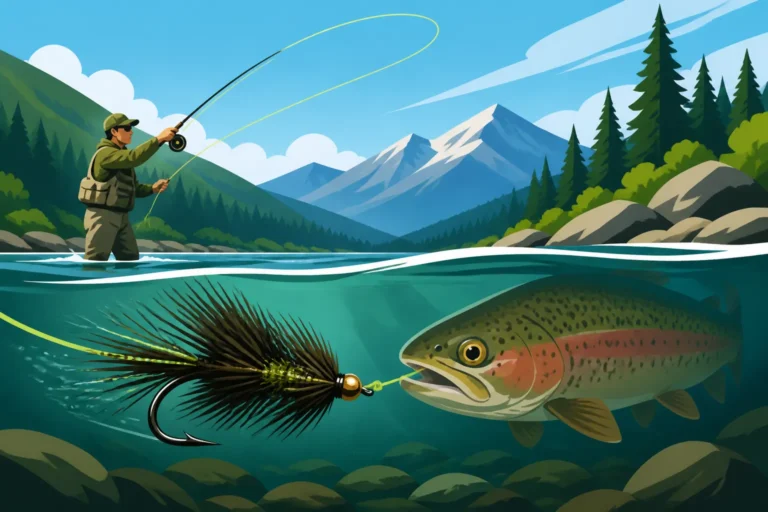
- Nymphs: Gold-ribbed Hare's Ear, Pheasant Tail, Prince Nymph, and small caddis larvae patterns in sizes #14-20 are indispensable for subsurface feeding trout. A technique like Euro Nymphing BC Interior Streams can be very effective in the deeper channels and pools.
- Streamers: Small woolly buggers (black, olive, or brown) in sizes #8-12 can imitate leeches, sculpins, or baitfish, and can entice larger trout, especially in deeper water or overcast conditions.
- Bait: Worms, salmon eggs, or powerbait can be highly effective, especially when fished under a small float or on a very light bottom rig. Be mindful of local regulations, as some "Special Regulation Waters in BC" may have bait restrictions. Always check the BC Freshwater Fishing Regulations Synopsis for the specific stream you plan to fish.
| Gear Type | Recommended Specs | Why it's useful for beaver ponds |
|---|---|---|
| Spinning Rod | 5' – 6.5' light action | Maneuverability in tight spaces, accurate short casts. |
| Spinning Reel | Ultralight (500-1000 series) | Balances small rod, handles light lines, smooth drag. |
| Fly Rod | 6' – 7.5' 2-4 weight | Delicate presentation, easy roll/bow-and-arrow casts. |
| Fly Reel | Matched to rod weight, click-and-pawl | Simple, lightweight, holds appropriate line. |
| Spinning Line | 4-6 lb mono or fluorocarbon | Stealth, moderate strength for snags, good castability. |
| Fly Leader | 7.5' – 9' tapered, 4x-6x tippet | Delicate turnover, nearly invisible. |
| Lures | Size 0-1 spinners, micro-jigs, tiny spoons | Mimic small forage, effective in shallow, slow water. |
| Flies | Dry flies (#12-18), Nymphs (#14-20), Woolly Buggers (#8-12) | Cover surface, subsurface, and baitfish imitation. |
| Bait | Worms, salmon eggs, powerbait | Effective in varying conditions, good scent trail. |
| Waders/Boots | Lightweight chest waders, felt/rubber soles | Access tricky spots, stay dry, good traction on slippery banks. |
Master the Techniques for Tricky Waters
Once you have your gear sorted, the real fun (and challenge) begins: actually fishing these unique spots. Success in beaver pond streams often hinges on a blend of stealth, precision, and understanding how to work within the confines of the environment.
Stealth and Approach are Paramount
Trout in small, clear waters like beaver ponds are incredibly wary. Heavy footfalls, sudden movements, or a visible silhouette against the sky can send them scurrying for cover before you even make a cast.
- Move Slow and Low: Approach the water's edge slowly, keeping a low profile. Often, kneeling or even crawling the last few feet to a promising spot will significantly increase your chances. Use existing vegetation as cover.
- Observe Before You Cast: Don't just rush in and cast. Take a moment to observe the water. Look for rises, subtle swirls, or even the shadows of fish. Pay attention to insect activity. Often, the first cast into an untouched pool is your best shot. If you spot a fish, plan your cast to land well beyond it, or to the side, and then gently draw your lure or fly into its feeding zone.
- Control Your Shadow: Be mindful of where the sun is. Your shadow falling over the water can spook fish just as easily as direct movement. Try to keep the sun to your front or side, rather than casting a large shadow directly over the fishing spot.
Casting in Tight Quarters
Overhanging branches, dense bushes, and high banks are the norm in beaver pond streams. This isn't the place for long, sweeping casts. Precision is key.
- Roll Casts (Fly Fishing): This is your bread and butter for fly fishing in tight spots. With no backcast room, a roll cast allows you to send your fly out with just the rod tip. Practice varying distances and angles.
- Bow-and-Arrow Casts (Fly Fishing): For extremely tight spots, or when you need to shoot a fly under an overhanging branch, the bow-and-arrow cast is invaluable. Hold the fly between your thumb and forefinger, bend the rod back, and release the fly like an arrow, letting the rod's stored energy propel it forward.
- Flipping and Pitching (Spinning/Bait): Similar to bass fishing techniques, flipping and pitching allows you to gently present your lure or bait into small openings with minimal splash and maximum accuracy. This involves a short, controlled pendulum swing of your lure. For delicate presentations, especially with bait, remember that "Best bait for opening day trout in BC" often means subtle presentations are key.
Presentation Strategies for Wary Trout
How you present your lure, fly, or bait is often more important than what you're using. Natural movement and stealthy entry are paramount.
- Dead Drifting: For both flies and bait, a perfect dead drift is often the most effective. This means allowing your offering to float naturally with the current, as if it were unattached food. Eliminate drag from your line, which can make your fly or bait move unnaturally. This is particularly crucial when you're trying to fool a trout in a slow-moving beaver pond.
- Short Strips and Twitches: With small spinners, spoons, or streamers, a slow retrieve with occasional pauses or subtle twitches can mimic an injured baitfish or an insect struggling on the surface. Don't overdo it – subtle movements are usually more effective than aggressive ones.
- Targeting Structure: Always aim your casts to land as close to structure as possible – submerged logs, undercut banks, beaver lodges, or the edges of vegetation. Trout use these as ambush points and for protection. Often, getting your offering right into the tightest, most difficult-to-reach spots is where the biggest rewards lie.
Reading the Water and Finding Trout
Identifying where trout might be holding in a beaver pond stream is a puzzle, but one that becomes much easier once you understand their basic needs: food, cover, and comfortable water conditions.
Identifying Key Holding Lies
Trout aren't just randomly swimming around; they're strategically positioned. Learning to spot these "holding lies" will drastically improve your success.
- Above and Below Dams: Beaver dams create distinct changes in water flow and depth. Just above a dam, the water often pools and deepens, offering trout a comfortable lie and a steady supply of food drifting over the dam. Below the dam, the churning water can create oxygenated pockets and scour out deeper holes, again attracting hungry fish.
- Submerged Timber and Structure: Every log, branch, or underwater bush is potential cover and an ambush point for trout. Fish will often hold tight to these structures, darting out to grab food that drifts by. Cast your lure or fly as close to these submerged elements as you dare.
- Undercut Banks: The erosion caused by the stream's flow often creates undercut banks – areas where the bank overhangs the water, creating a dark, protective ceiling. These are prime lies for trout, offering shade, cover from predators, and easy access to drifting food. Gently present your offering right into the shadows of these banks.
- Channels and Deep Pockets: Beaver activity often creates deeper channels connecting the larger ponds. These channels, along with any naturally occurring deep pockets, provide thermal refuge and security for larger trout. Look for darker areas in the water, which often indicate greater depth.
Navigating Obstructions and Access Points
Beaver pond streams are notorious for being overgrown. Getting to the water, let alone casting, can be an adventure in itself.
- Scouting is Key: Before you even rig up, take some time to walk the banks (if accessible and legal, respecting private property and conservation zones). Identify potential access points, clearings, and areas where casting might be possible. Sometimes, a short bushwhack can open up a fantastic, unpressured spot.
- Wear Appropriate Gear: Chest waders can be a game-changer, allowing you to wade into shallow areas and navigate around bankside brush. Good wading boots with felt or rubber soles will provide traction on slippery, muddy banks and underwater debris. Don't forget bug spray – mosquitoes and black flies can be intense near standing water.
- Mind the Muck: Beaver ponds are often very muddy and silty. Be aware of where you step, both for your safety and to avoid stirring up sediment that could spook fish or foul your presentation.
Understanding Trout Behavior in these Environments
Trout in beaver ponds can behave slightly differently than their river or lake counterparts, primarily due to the unique pressures and opportunities of their habitat.
- Opportunistic Feeders: With an abundance of insects, crustaceans, and even small amphibians or minnows, trout here are highly opportunistic. They'll key into whatever is most readily available. This means being flexible with your lure or fly choice. If there's a strong hatch, match the hatch. If not, a general attractor pattern or a small baitfish imitation might work.
- Territorial Nature: Larger trout, especially, can be quite territorial in these smaller pools. If you catch a decent fish from a specific spot, it's often worth working that area again, as another fish may move in to claim the prime lie.
- Reaction Strikes: Because food is so abundant, trout might not always chase something that drifts by. Sometimes, a sudden twitch or an erratic retrieve can trigger a "reaction strike" out of aggression or instinct, rather than hunger. Don't be afraid to experiment with your retrieve speed and action, especially with lures. Understanding "How to fish after a heavy rain on BC rivers" can also give you insight into how trout react to sudden changes in their environment, even in smaller streams.
Beaver pond streams are truly wild places, and fishing them is an experience that connects you with nature in a profound way. The trout you find here are often stunning, vibrant fish that have learned to thrive in these specialized environments. Go out there, explore, and enjoy the peace and quiet that these forgotten corners of British Columbia offer. Remember to always respect the environment, practice responsible catch and release, and leave no trace behind. Happy fishing!
Disclaimer
This article is for general informational purposes only and does not constitute professional advice. Laws, prices and regulations vary by location and change over time. Consult a qualified professional for guidance on your specific situation.