Best steelhead flies for the Skeena River
There’s nothing quite like the immense challenge and incredible reward of pursuing steelhead on British Columbia’s iconic Skeena River. Anglers often face the daunting task of selecting the perfect fly from a vast array of options, wondering which pattern will tempt one of these chrome bright beauties in the Skeena's powerful currents. This comprehensive guide is dedicated to breaking down the mystery of fly selection, helping you understand the best steelhead flies for the Skeena River and how to effectively present them, ensuring you're well-equipped for your next legendary fishing adventure.
Understanding Skeena River Steelhead and Their Forage
The Skeena River system is legendary for a reason, drawing anglers from around the globe in pursuit of its magnificent steelhead. But to consistently hook into these incredible fish, you need to think like one, understanding their environment and what drives them.
The Mighty Skeena System and Its Unique Challenges
The Skeena River isn't just a river; it's a vast, complex network of tributaries, each with its own character, from broad, glacial-fed mainstem stretches to intimate, clear-water tribs. This immense diversity means that water conditions can vary wildly throughout the system and even within a single day. You might encounter heavy, turbid water after a rain event, followed by clearer, dropping conditions a few days later. This dynamic environment presents both challenges and opportunities for fly anglers. The sheer volume and speed of the water in many parts of the Skeena demand flies that can get down effectively and maintain their profile. Furthermore, the light penetration can differ drastically; deep, dark pools or overcast days might call for brighter, more contrasting patterns, while sunny, clear conditions might require more subtle, natural presentations. Understanding these nuances is the first step to becoming a more effective Skeena steelhead angler.
Beyond the main stem, the Skeena’s tributaries, such as the Bulkley River and Kispiox River, offer distinct experiences. While these rivers share the overall Skeena "steelhead character," their individual flow rates, gradient, and water clarity can lead to subtle preferences in fly choice. For instance, the gin-clear sections of certain tributaries often demand smaller, more sparsely tied flies, whereas the mainstem Skeena might require larger, heavier patterns to cut through its powerful currents. Knowing the specific section you'll be fishing will greatly influence your decision on not just which fly, but also how you fish it. For more insights on where these incredible fish can be found, check out our guide on Steelhead Runs on BC's North Coast Rivers.
What Skeena Steelhead Actually Eat
Unlike resident trout, anadromous steelhead entering the river from the ocean are not primarily focused on feeding in the same way they were in saltwater. Their primary instinct is to migrate and spawn. However, that doesn't mean they won't strike a fly. Their aggression is often a territorial response, a memory of feeding in the ocean, or simply an opportunistic grab. When they do "eat" a fly in the river, it's usually because it mimics something familiar or triggers an innate predatory response. In the ocean, they gorge on baitfish, crustaceans, and squid. Upon entering freshwater, their diet changes drastically. They might occasionally pick off a stray salmon egg, an insect nymph, or even a small sculpin, but these instances are rare compared to their saltwater feeding frenzies.
Therefore, the "best" steelhead flies aren't necessarily perfect imitations of riverborne food items. Instead, they are designed to:
- Trigger an aggressive response: Bright colors, pulsing materials, and large profiles often get a reaction.
- Mimic common forage: Patterns that suggest baitfish (like sculpins or smolts) or salmon eggs, even if not perfectly, can be effective.
- Offer a vulnerable profile: Flies that look like an easy meal or a lost, drifting morsel.
The most effective patterns often combine elements of these, presenting a tempting target that can be seen and felt in challenging water. While some anglers swear by specific imitations, many of the most popular Skeena flies are more "attractors" than strict "match-the-hatch" patterns. You'll find that having a diverse fly box, ranging from subtle to flashy, will serve you best on a river system as varied as the Skeena. If you're looking for broader strategies, consider diving into How to Catch Steelhead in BC.
Essential Fly Categories for Skeena Steelhead
When you open a steelhead angler's fly box for the Skeena, you'll see a tapestry of colors, sizes, and textures. While there are countless patterns out there, they generally fall into a few key categories, each designed to excel in different conditions and provoke specific reactions from these elusive fish.
Classic Spey and Dee Flies
These are the patterns steeped in tradition, hailing from the famous Spey and Dee Rivers of Scotland. They are characterized by their elegant, flowing lines, sparse dressings, and often subdued, natural colors. While some might think of them as relics, classic Spey and Dee flies remain incredibly effective on the Skeena, especially in clearer water or when fish are pressured. Their design allows them to swim beautifully, "breathing" and undulating with the current, which can be incredibly enticing. The longer hackle and wing materials create a larger profile in the water than their sparse appearance might suggest, and the natural movement is key.
Popular Patterns and Their Appeal:
- Green Butt Skunk: A perennial favorite, the Green Butt Skunk (often with a red butt variation) is a minimalist yet highly effective pattern. Its black body, white wing, and chartreuse butt create a silhouette that fish can easily spot, even in slightly off-color water. It’s an excellent choice for a wide range of conditions, often performing well when other, flashier flies fail. Its subtle appeal often works wonders on fish that have seen a lot of flies.
- Purple Peril: This fly is known for its understated elegance and consistent performance. The combination of purple, black, and sometimes a hint of blue or silver, creates a deep, rich profile that can be irresistible. It's particularly good in water with a slight stain or on overcast days when a darker silhouette is preferred.
- Black Spey: Simple, yet deadly. A black body with a flowing dark wing creates a powerful silhouette. It’s a fantastic choice for low light, dark days, or even bright days when a stark contrast is needed to grab attention. Many anglers, myself included, have a deep respect for the subtle power of a well-presented Black Spey.
These flies are typically fished on a classic swung-fly presentation, allowing the current to animate their natural materials. You can find quality classic Spey and Dee flies from specialized fly shops or even larger online retailers like Amazon, though for custom or artisanal ties, smaller independent tiers are often the way to go.
Modern Intruders and Articulated Flies
On the other end of the spectrum from the classics are the modern intruders and articulated flies. These patterns are generally much larger, often heavily weighted, and packed with flashy, pulsating materials like marabou, rabbit strip, and flashabou. They are designed to create a big profile, move a lot of water, and provoke an aggressive strike. They've revolutionized steelhead fishing, especially in powerful, high-volume rivers like the Skeena, where getting a fish's attention can be a challenge.
Key Characteristics and Applications:
- Large Profile and Movement: The primary goal is to present a substantial, lively target. The articulated shanks allow for incredible movement in the water, making the fly look like a fleeing baitfish or something trying to escape.
- Weight and Sink Rate: Many intruders are tied with weighted eyes (lead or tungsten) to help them sink quickly into the strike zone in heavy currents. This is crucial on the Skeena where you need to get down to the fish.
- Flash and Color: Intruders often incorporate bright, contrasting colors and plenty of flash to make them highly visible, especially in turbid or deep water. Chartreuse, pink, orange, and blue are common dominant colors.
Popular Patterns:
- OPST Swing Fling: While more of a style than a single pattern, the OPST Swing Fling is indicative of modern intruder design. These flies are often tied with a blend of contrasting colors, plenty of flash, and lightweight but voluminous materials that really push water. They're excellent for getting down and getting noticed.
- "Pick Your Poison" Intruders: Many tiers have their own variations, but general patterns like the "Pillager" or the "Skit Dog" with their heavy lead eyes, rabbit strip tails, and marabou bodies are widely effective. Colors like black and blue, pink and purple, chartreuse, and sometimes even hot orange are mainstays. The idea is to create a large, aggressive looking profile.
- Trailer Hooks: A common feature is a short piece of monofilament or braid that attaches a small, sharp stinger hook at the very end of the fly, ensuring better hookups on fish that might just nip at the tail.
These flies are your go-to for high, off-color water, or when you want to make a bold statement. The effectiveness of intruders on the Skeena is undeniable, especially when targeting chrome-bright fish fresh from the ocean.
General Purpose Attractor Patterns
Sometimes you don't need a deeply traditional Spey fly or a massive intruder. You just need a solid, all-around pattern that screams "eat me" to a steelhead. These general-purpose attractors are incredibly versatile and should be a staple in any Skeena angler's box. They often blend elements of both classic design and modern flash, striking a balance that works in a wide range of conditions.
Versatile Choices:
- Egg Sucking Leech (ESL): This one is a classic for a reason. Combining the movement of a marabou leech with the bright appeal of a salmon egg, the ESL is incredibly effective. The egg can be pink, orange, or even red, while the body is typically black, purple, or blue. It suggests both a potential food source and something worth chasing. This fly is especially good in tributary systems where salmon spawn and eggs are naturally present.
- Stonefly Nymphs (Large): While not purely an attractor, large stonefly nymphs (think sizes 2-6) can act as an attractor, especially in areas with a healthy aquatic insect population. Patterns like the Kaufmann Stone or a Girdle Bug in black, brown, or olive can mimic a substantial food item or simply provoke a strike. Steelhead will often key in on large, dark forms drifting near the bottom.
- Woolly Bugger (Weighted): The ultimate utilitarian fly. A weighted Woolly Bugger in black, olive, or purple, especially with a bit of flash, is an absolute must-have. It can imitate a leech, a sculpin, or simply look like a tasty, vulnerable morsel. Fish it on a swing, retrieve it with strips, or bounce it along the bottom. Its versatility makes it invaluable. You can easily find packs of these on Amazon for a reasonable price.
These flies are your workhorses, reliable in many situations. They may not be the flashiest or the most traditional, but they often get the job done when other patterns are overlooked.
Nymphs and Egg Patterns When and Why
While many anglers associate steelhead fishing with swinging flies, there are specific situations on the Skeena and its tributaries where nymphs and egg patterns can be incredibly effective, especially when fish are less aggressive or holding in specific lies. This approach is often more subtle and can be a game-changer when conditions aren't ideal for swinging larger flies.
Situational Effectiveness:
- Post-Spawn or Holdovers: Steelhead that have spent a long time in the river, particularly those that have spawned and are now "dropping back" to the ocean, often revert to a more resident trout-like feeding behavior. They may be more inclined to pick off nymphs or eggs.
- Clear, Low Water: In crystal-clear, low water conditions, particularly in smaller tributaries, large swung flies can spook fish. A dead-drifted nymph or egg pattern offers a much more natural, stealthy presentation.
- Bottom-Oriented Fish: Sometimes steelhead are just hugging the bottom, unwilling to move far for a swung fly. A properly weighted nymph or egg presented on a high-stick nymphing rig can get right into their strike zone.
Effective Patterns:
- Glo Bugs/Oregon Cheese: These are classic egg patterns, designed to mimic single salmon or steelhead eggs. They are usually tied in bright fluorescent colors like orange, pink, or chartreuse. They are especially potent during or shortly after salmon spawning season, when eggs are naturally drifting in the current.
- Battle Creek Nymph: A popular pattern in BC, this is often a larger, buggy nymph tied to imitate a stonefly or caddis larva. Its weighted body and natural colors (brown, black, olive) make it ideal for getting down and drifting naturally.
- Sculpin Patterns: Flies like the Muddler Minnow (if fished subsurface) or various sculpin imitations in olive, brown, or black can be excellent. They mimic a common bottom-dwelling baitfish that steelhead will absolutely prey on if given the chance.
Fishing these patterns typically involves a dead-drift presentation under an indicator, or by high-stick nymphing. While not the primary method for many Skeena steelhead anglers, having a selection of these patterns, especially a few different colored Glo Bugs, can save a slow day. For a different perspective on offerings, you might want to look at Best Baits for Steelhead on the Skeena, though we're focusing on flies here!
Matching Flies to Skeena River Conditions
The Skeena River is a dynamic system, and successful fly fishing often hinges on adapting your fly choice to the prevailing conditions. What works in clear, cold water might be completely ignored in high, muddy flows.
Clear Water, Low Light Conditions
When the Skeena or its tributaries run low and clear, and especially on overcast days, fish can be spooky and more discerning. This is when finesse and subtlety become paramount. The goal is to present a fly that looks natural and non-threatening, but still enticing enough to trigger a strike.
Fly Choices for Finesse:
- Small, Sparse Spey Flies: This is where the true beauty of the classic Spey and Dee flies shines. Patterns like the Green Butt Skunk, Purple Peril, or a small Black Spey in sizes 4-8 are excellent. Their subtle movement and natural materials are less likely to spook fish.
- Smaller Intruders in Natural Tones: While often associated with large, flashy patterns, modern intruders can be tied smaller and in more natural colors for clear water. Think olive, black, or blue, perhaps with minimal flash. The key is to reduce the "shock value" while still retaining the movement. The "fishy" movement is still key.
- Darker, Shaded Patterns: On those low-light, clear water days, a dark silhouette can be very effective. Patterns with black or dark purple bodies and wings can stand out just enough against the muted light without being overly aggressive. Consider a Black Francis or even a small, sparse Black Intruder.
- Focus on Presentation: In these conditions, the fly itself is only half the battle. Your cast, mend, and swing need to be flawless. A dragging fly, even a perfect one, will rarely get a take. Master your presentation, and these subtle flies will do the rest. Our guide on Wading Techniques for BC Steelhead Rivers offers great advice on getting into position.
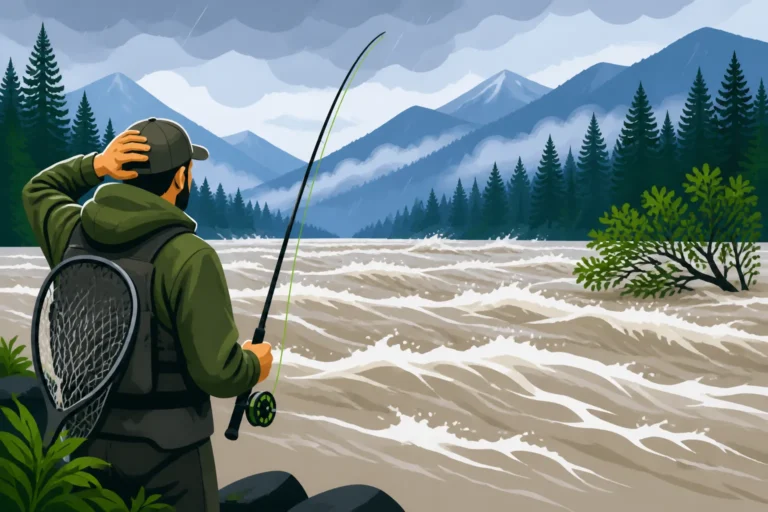
High, Turbid Water and Bright Days
Conversely, when the river is running high and discolored (turbid), or on bright, sunny days, your strategy needs to shift dramatically. The challenge now is visibility – getting your fly noticed in the murky depths or under glaring sunlight.
Flies for Maximum Visibility and Attraction:
- Large, Bright Intruders: This is prime time for your biggest, flashiest intruders. Think hot pink, chartreuse, orange, or combinations like pink and purple or orange and black. The heavy weighting of these flies helps them cut through the strong currents and get into the strike zone. The voluminous materials help them stand out visually and create strong vibrations that fish can sense.
- Flies with Contrasting Colors: High-contrast patterns are key. A black fly with a hot pink head or a blue body with a chartreuse butt will create a stark silhouette that is easier for a steelhead to pick out in off-color water.
- Heavy Lead Eyes and Cones: To ensure your fly gets deep enough in powerful, turbid flows, flies tied with substantial lead eyes (e.g., barbell eyes) or heavy coneheads are essential. If your fly isn't in the fish's face, it won't get eaten. You can find pre-tied heavy-duty flies and materials on Amazon if you're a fly tier.
- Flashy Materials: Incorporate plenty of flashabou or Krystal Flash in your fly's wing or body. The reflective properties can catch any available light, making your fly shimmer and stand out in otherwise drab conditions.
- Bright Egg Patterns (if applicable): If you're in an area where salmon are spawning and there's a lot of turbidity, a large, bright Glo Bug or similarly colored egg pattern can still be very effective, especially if fish are responding to potential food sources.
When the water is high and murky, trust your instincts to go big and bright. It's often the only way to get your offering seen by a steelhead that might be holding tight to the bottom or structure. For more on navigating challenging conditions, check out Best Technique for High Water Spring Steelhead Fishing.
Seasonal Considerations
The Skeena River steelhead season typically stretches from late summer through early spring, and your fly choice should evolve with the changing seasons and water temperatures. The behavior of steelhead shifts as they progress through their migration cycle, and so should your approach.
Fall Steelhead (Late August to October):
- Fresh from the Ocean: These fish are typically chrome bright, hot, and aggressive. They respond well to larger, flashier patterns.
- Fly Choices: Intruders in vibrant colors (pink, orange, chartreuse, blue, purple combinations) are excellent. Classic Spey flies like the Green Butt Skunk and Purple Peril also shine, especially on fish that have been in the river for a few days. You want flies that command attention and trigger an aggressive take.
- Water Conditions: Often moderate to high, with variable clarity depending on rainfall. Be prepared with both bright and slightly more subdued patterns.
Winter Steelhead (November to February):
- Colder Water, More Subtle Fish: As water temperatures drop, steelhead generally become less aggressive and more lethargic. They still strike, but often require a slower, deeper, and more deliberate presentation.
- Fly Choices: Focus on smaller, darker, and more natural-colored flies. Black and blue intruders or Spey flies are excellent. Weighted patterns are critical to get the fly down slow and deep. Sometimes a subtle hint of flash is all you need. Flies like the Black Francis or even sparsely tied patterns can be very effective.
- Water Conditions: Often very cold, can be clear or occasionally high and murky after a winter rain. Slower swings and deep presentations are paramount. This is also a time when a perfectly presented nymph might get a look. Best Winter Steelhead Fishing offers more insights into this challenging but rewarding season.
Spring Steelhead (March to Early May):
- Warming Water, Pre-Spawn Aggression: As water temperatures begin to rise, pre-spawn steelhead can become incredibly aggressive. Post-spawn "drop-back" fish are also common, and they may be more inclined to feed.
- Fly Choices: A mix of large, bright intruders for aggressive fish and smaller, more natural patterns for drop-backs. Egg patterns can be highly effective during and after spawning. Again, pinks, purples, and oranges shine, as do black and blue combinations.
- Water Conditions: Can be highly variable, from clear and cold in early spring to rising and turbid with spring melt. Be ready with a diverse selection.
Understanding these seasonal nuances and adjusting your fly box accordingly will significantly increase your chances of success on the Skeena. The Best Time of Year to Fish in BC can further help you plan your trips.
Essential Tips for Fishing Flies on the Skeena
Having the right flies is only half the battle. How you present them and the rest of your tackle setup are equally, if not more, important when targeting Skeena River steelhead.
Presentation is Key
You could have the most perfectly tied, "fishy" fly in your box, but if your presentation is sloppy, it's just going for a ride. Steelhead are incredibly sensitive to how a fly moves through the water. They often prefer a natural, uninhibited swing that allows the fly to swim and pulse enticingly.
Mastering the Swing:
- The Cast: Whether you're using a single-hand rod with a shooting head, or more traditionally, a two-hand Spey rod, your cast needs to deliver the fly accurately to your target. Aim for the "sweet spot" where fish are likely holding – usually current seams, soft pockets behind structure, or the tailouts of runs.
- The Mend: Immediately after your cast, you need to mend your line to control the swing and eliminate drag. An upstream mend will slow the fly down and allow it to sink deeper, while a downstream mend might speed it up. The goal is to keep the fly swinging naturally, broadside to the current, allowing it to "swim" without being pulled unnaturally fast or dragged across current seams.
- The Follow-Through: Don't pull your fly out of the water prematurely. Let it complete its full swing right to the dangle below you. Many strikes occur at the very end of the swing as the fly slows down and "hangs" in the current, creating a vulnerable profile. This is often where fish, particularly fresh ones, will decide to commit.
- Vary Your Angle and Depth: Don't just cast straight across. Vary your casting angle, from quartering upstream to quartering downstream, to explore different depths and speeds of swing. Experimentation is crucial, especially in unfamiliar water.
A perfect presentation of even a simple fly will almost always outfish a poor presentation of the "best" fly. This is a skill that takes practice, but the rewards are immeasurable.
Choosing the Right Size and Weight
Getting your fly into the strike zone – and keeping it there – is fundamental. The size and weight of your fly play a huge role in this, and you need to adapt these factors to the specific conditions you face.
Factors to Consider:
- Water Depth: In deep pools, you'll need heavier flies or additional weight (like sink tips) to get down quickly. In shallower runs, lighter flies are sufficient and prevent snagging.
- Current Speed: Fast, powerful currents demand heavier, denser flies to penetrate the water column. Slower currents allow for lighter, more buoyant patterns to be fished effectively.
- Water Clarity: In clear water, smaller flies (sizes 4-8) are generally preferred to avoid spooking fish. In turbid water, larger flies (sizes 1/0 to 2) are necessary to create enough visibility and displacement to attract attention.
- Fish Aggression: When fish are aggressive, they might move for a larger, more imposing fly. When they're lethargic, a smaller, more subtle offering might be preferred.
General Guidelines:
- Intruders: Typically fished in sizes ranging from 2 to 1/0, with varying amounts of lead eyes or coneheads.
- Spey Flies: Usually tied in sizes 4 to 8, with less inherent weight, relying more on line density for depth.
- Nymphs/Eggs: Can range from size 6 to 12, often tied with bead heads for weight.
Don't be afraid to change flies frequently until you find the right combination of size, weight, and color that the fish are responding to on that particular day. Sometimes, just going up or down one size can make all the difference.
Line and Leader Setup for Success
Your fly line, leader, and tippet are the critical link between you and the fish. A robust and well-matched setup is essential for casting heavy flies, penetrating strong currents, and ultimately, landing powerful Skeena steelhead.
Key Components:
- Fly Line: For Spey casting, a Skagit or Scandi head is standard. Skagit lines excel at casting heavy, wind-resistant flies (like intruders) and heavy sink tips, perfect for the Skeena's powerful currents. Scandi lines are better for presenting smaller, more delicate flies. For single-hand rods, a heavy integrated shooting head or a specific steelhead taper is recommended.
- Sink Tips: These are crucial for getting your fly to depth. They come in various lengths and sink rates (e.g., T-11, T-14, T-17). Match the sink tip to the depth and speed of the water you're fishing. Heavier tips (like T-14 or T-17) are vital for deep, fast runs, while lighter tips (like T-11) suffice for shallower or slower water.
- Leader Material: For swinging flies, a relatively short leader (3-6 feet) of stout monofilament or fluorocarbon is typical. This minimizes hinge points and helps turn over heavy flies and sink tips. Choose a leader with good abrasion resistance, as steelhead often fight hard and can find structure.
- Tippet Strength: Generally, a tippet strength of 15-20lb test is appropriate for Skeena steelhead. Fluorocarbon is often preferred due to its invisibility underwater and superior abrasion resistance. Don't skimp on tippet strength – these are powerful fish, and a broken line is a heartbreaking end to a battle.
Choosing the right line and leader setup means being able to cast effectively, get your fly to the fish, and have the strength to bring a trophy to hand. For overall readiness on the water, you might also find our guide on BC Boating Laws for Anglers helpful if you're using a boat to access different sections of the river.
| Fly Category | Typical Patterns | Preferred Conditions | Why it Works |
|---|---|---|---|
| Classic Spey/Dee Flies | Green Butt Skunk, Purple Peril, Black Spey | Clear water, low light, pressured fish, medium current | Subtle movement, elegant profile, natural look, less intimidating |
| Modern Intruders/Articulated | OPST Swing Fling, Skit Dog, "Pick Your Poison" | High/turbid water, bright days, aggressive fish, strong current | Large profile, lots of movement, high visibility, triggers aggression |
| General Purpose Attractors | Egg Sucking Leech, Weighted Woolly Bugger, Girdle Bug | Variable conditions, adaptable for many scenarios | Versatile, mimics various forage/targets, generally reliable |
| Nymphs/Egg Patterns | Glo Bug, Battle Creek Nymph, Sculpin imitations | Clear/low water, less aggressive fish, post-spawn, deep pockets | Natural drift, imitates specific food sources, good for bottom-holding fish |
Disclaimer
Please note that fishing regulations, seasons, and licensing requirements in British Columbia can change. Always consult the most current BC Freshwater Fishing Regulations Synopsis or the BC Government's fisheries website before heading out. The information provided in this guide is for general informational purposes only and does not constitute legal or official advice.