Best jig for winter rockfish
The biting chill of a British Columbia winter doesn't mean the fishing has to stop. In fact, some of the most rewarding angling experiences, particularly for the feisty and delicious rockfish, happen when the temperatures drop. But hitting the water in winter, especially when you're targeting those deep-dwelling rockfish, comes with its own unique set of challenges. You need the right gear to get down to where they live, to mimic their prey, and to withstand the elements, and that often starts with choosing the best jig. This guide will dive deep into selecting the ideal jigs for winter rockfish, ensuring you're well-equipped for success on BC's diverse coast.
Understanding Winter Rockfish Behavior and Habitat
To pick the best jig, you first need to understand where rockfish are likely to be in the colder months and what makes them tick. Winter in British Columbia often sees rockfish, much like many other species, moving to deeper, more stable environments. They’re looking for structure, shelter from strong currents, and consistent food sources, all while conserving energy.
Deeper Waters and Preferred Structures
During winter, rockfish tend to congregate in deeper waters, sometimes upwards of 100-300 feet, though you can still find them shallower in certain areas, especially on overcast days or during high tide. They're masters of ambush, so they'll hug tight to prominent underwater structures. Think rocky reefs, ledges, deep pinnacles, submerged wrecks, and steep drop-offs. These areas provide both protection from predators and ideal ambush points for unsuspecting baitfish, shrimp, and crustaceans.
On the coast of Vancouver Island, particularly around the Broken Group Islands or the deeper channels of the Gulf Islands, you’ll find these fish tucked into complex reef systems. The waters near Port Hardy or Prince Rupert offer similar, often more pristine, deep-water structure. It’s crucial to use your sonar to identify these features and mark fish schools, as simply drifting over flat bottom won't yield much success. Understanding how to interpret your sonar readings can make or break a winter rockfish trip.
Feeding Habits in Colder Temperatures
While rockfish are generally less active in colder water, they still need to eat. Their metabolism slows down, meaning they might not chase a fast-moving lure as aggressively as they would in summer. Instead, they prefer an easy meal that presents itself directly in their strike zone. This often translates to a slower, more deliberate retrieve and presentation. They're less likely to wander far from their chosen ambush point, waiting for food to come to them.
This change in feeding behavior directly influences your jig selection. You'll want jigs that can be worked slowly and deliberately, suspending tantalizingly in the water column or bouncing subtly off the bottom without requiring a lot of frantic rod action. Subtle movements and realistic presentations become paramount, making jig selection even more critical.
Key Characteristics of Effective Winter Rockfish Jigs
When the thermometer drops and the fish move deep, not just any jig will do. The best jigs for winter rockfish possess a specific set of characteristics that allow them to perform optimally in these challenging conditions. It’s a balance of weight, profile, action, and durability.
Weight and Sinking Rate for Deep Water
This is arguably the most critical factor. Winter rockfish often hold in 100 to 300 feet of water, and sometimes even deeper. To reach these depths efficiently, especially in areas with moderate to strong currents, you need a heavy jig. Lightweight jigs will simply drift away or take too long to get into the strike zone, wasting valuable fishing time.
Typically, you're looking at jigs ranging from 4 ounces up to 10 ounces, and sometimes even heavier (12-16 ounces) for extremely deep water or strong tidal flows, particularly around areas like Johnstone Strait or Queen Charlotte Sound. The exact weight will depend on the depth you're fishing, the boat's drift speed, and the strength of the current. A good rule of thumb is to use the lightest jig you can get away with while still maintaining bottom contact and a vertical presentation. If your line is angled significantly, you need a heavier jig. Trying to fish a 2-ounce jig in 200 feet of water with a decent current is just asking for frustration.
Realistic Profile and Action
Remember, rockfish are looking for an easy meal. Your jig should imitate common winter baitfish like herring, sandlance, or smaller schooling fish, or even crustaceans. A slender, elongated profile is often effective for mimicking baitfish, while a broader, flatter profile might emulate a sculpin or a prawn.
The action of the jig is also paramount. In colder water, a jig that flutters, glides, or sways with minimal effort from the angler is often more appealing than one that requires aggressive jigging. This "slow pitch" or "flutter fall" action allows the jig to hang in the strike zone longer, giving sluggish rockfish more time to react and strike. Jigs that have a good belly flash on the drop can also be incredibly enticing, mimicking a wounded baitfish struggling in the water column.
Glow and UV Enhancements
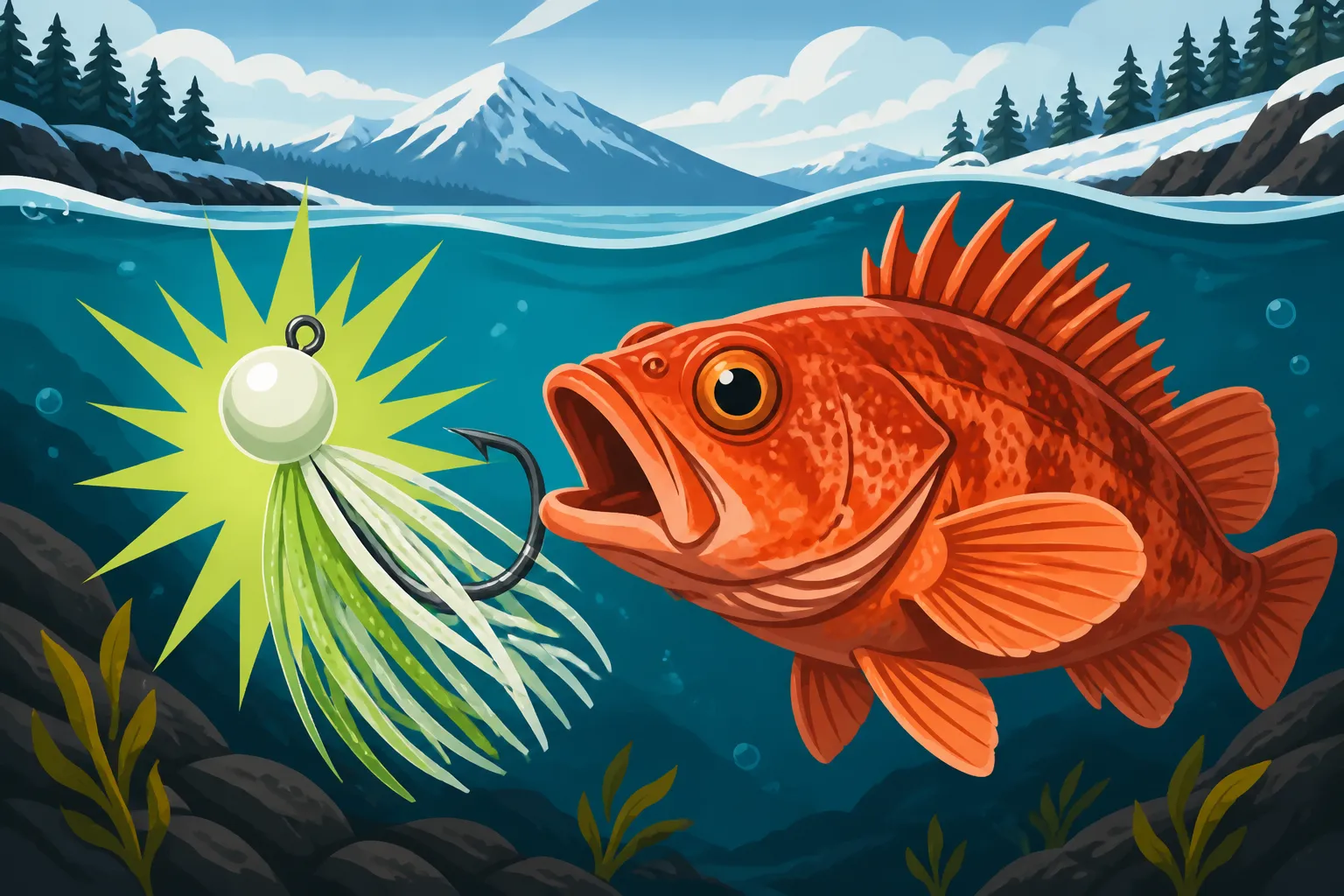
Sunlight struggles to penetrate deep into the water column. At 100 feet down, it's already significantly dimmer, and at 200-300 feet, it's practically dark. This is where glow-in-the-dark and UV-reactive features become invaluable. Many rockfish species have excellent low-light vision, and a glowing or UV-enhanced jig can stand out like a beacon in the gloom.
Look for jigs with phosphorescent coatings that you can charge with a flashlight or UV light before dropping them down. Many manufacturers, readily available on platforms like Amazon, offer jigs specifically designed with these features. Even a small glow strip or a UV-enhanced skirt can make a significant difference. Some anglers even prefer to "charge" their jigs with a powerful UV flashlight just before each drop.
Durable Construction and Sharp Hooks
Winter fishing often means bigger fish and rougher conditions. Rockfish, while not always the largest, can be aggressive biters, and they live in abrasive environments. Your jigs will repeatedly hit rocky bottoms, so they need to be built to last. Look for jigs with a robust finish that won't chip or peel after a few bumps.
More importantly, ensure the jig comes equipped with strong, sharp hooks. Many jigs are sold with treble hooks, which can be effective but can also cause deep hooking, especially with sensitive species that you might need to release. Consider swapping out trebles for strong single assist hooks, tied short to the jig's eye or off the belly. These often result in cleaner hookups in the corner of the mouth, increasing the fish's survival chances, which is important for practicing ethical angling and adhering to regulations on species like Yelloweye Rockfish. Always check the BC Bag and Possession Limits by Species before your trip.
Top Jig Styles and Weights for BC Winter Rockfish
Now that we understand what makes a good winter rockfish jig, let's explore some of the most effective styles and specific weight ranges that perform exceptionally well in British Columbia's diverse waters.
Heavy Metal Vertical Jigs (Speed Jigs and Flutter Jigs)
These are probably the most popular and versatile jigs for deep-water rockfish. Their dense, often slender profile allows them to cut through the water column quickly, getting down to depth fast.
- Speed Jigs (Knife Jigs): Characterized by their long, narrow, often asymmetrical profile, these jigs are designed for a fast drop and a quick, erratic retrieve. While the "speed" aspect might seem counterintuitive for sluggish winter fish, the fall is what's important. When you lift and drop these jigs, they often dart and flutter on the descent, mimicking a panicked baitfish.
- Recommended Weights: 4 oz to 10 oz for general use. Go heavier (12-16 oz) for depths over 250 feet or strong currents.
- Colors: Chrome, blue/silver, pink/silver, glow-in-the-dark. Brands like Shimano Butterfly or JYG Pro offer excellent options, and you can find a great selection of these jigs on online retailers like Amazon.
- Flutter Jigs: These jigs typically have a broader, flatter profile than speed jigs, designed to "flutter" or "leaf-fall" more slowly and enticingly on the drop. This slower, more erratic descent can be deadly for less active rockfish.
- Recommended Weights: 3 oz to 8 oz are common, with heavier options available. The broader profile provides more resistance, so they feel heavier than a speed jig of the same weight.
- Colors: Natural baitfish patterns, glow white, chartreuse, and vibrant pink. These are often great for triggering a strike from a hesitant fish.
Soft Plastics on Jig Heads
Soft plastics offer unparalleled versatility and a realistic feel that can be incredibly effective when rockfish are finicky. The combination of a weighted jig head and a supple, lifelike soft plastic tail creates an irresistible presentation.
- Paddle Tails: These are perhaps the most popular soft plastic choice. The paddle tail creates a thumping, vibrating action on the retrieve and an enticing wiggle on the drop, mimicking a swimming baitfish. Rig them on an appropriately sized and weighted jig head.
- Jig Head Weights: 1 oz to 6 oz. Match the weight to the depth and current, remembering that soft plastics have more drag than metal jigs. For deeper winter rockfish, 3-6 oz jig heads are often necessary.
- Soft Plastic Sizes: 5-inch to 9-inch paddle tails are standard.
- Colors: Natural tones like white, pearl, clear with glitter, brown, and green pumpkin work well. For low light, chartreuse, pink, and glow patterns are stellar. Many anglers stock up on different weights and colors from Amazon before their winter trips.
- Curly Tails and Grubs: These are simpler but highly effective. The thin, curly tail wiggles and undulates with even the slightest movement, creating a subtle action that can tempt lethargic rockfish.
- Jig Head Weights: Similar to paddle tails, 1 oz to 6 oz depending on conditions.
- Soft Plastic Sizes: 4-inch to 8-inch grubs.
- Colors: Often brighter colors like chartreuse, orange, or glow can be particularly effective in the deep, dark water. Don't forget to check Amazon for jig heads and soft plastic tails.
- Scented Soft Plastics: Some soft plastics come impregnated with scent, or you can add a scent paste or spray. This can provide an extra edge, especially when rockfish are using their sense of smell in murky or dark conditions. Berkley Gulp! baits are a prime example, offering both visual appeal and a strong scent trail.
Lead Jigs (Diamond Bar, Point Wilson Dart, or Flat-Fall Styles)
These classic jigs have been catching fish for decades for a reason: they work. Their simplicity and effectiveness make them a staple in many BC anglers' tackle boxes.
- Diamond Bar Jigs: These are solid, typically chrome-plated, and often resemble a diamond shape in cross-section. They sink fast and have a distinct flutter on the drop. They are incredibly robust and can withstand heavy abuse against rocky bottoms.
- Recommended Weights: 4 oz to 12 oz.
- Colors: Chrome is the most common, often with prism tape or painted sections in blue or green.
- Point Wilson Dart Jigs: Originally designed for salmon, these jigs are also incredibly effective for rockfish. They have a more compact, teardrop shape and wobble enticingly on the drop.
- Recommended Weights: 3 oz to 8 oz.
- Colors: Typically white, green, or blue, often with a glow belly.
- Flat-Fall Jigs: These jigs are designed to fall horizontally with a distinct wobbling action, mimicking a stunned baitfish. They are excellent for slow-pitch jigging techniques.
- Recommended Weights: 4 oz to 8 oz.
- Colors: A wide array of natural baitfish patterns, often with glow strips.
When choosing between these, consider the current and depth. For faster sinking and penetrating tough currents, the heavy metal vertical jigs excel. For a slower, more natural presentation where fish are less aggressive, soft plastics or flutter jigs can be the ticket. Many anglers will have a mix of all three in their tackle box to adapt to changing conditions on the water.
Rigging and Presentation Techniques for Success
Having the best jig is only half the battle; knowing how to rig it properly and present it effectively is just as crucial for enticing winter rockfish to bite.
Rod, Reel, and Line Setup
For winter rockfish jigging, you need a robust setup that can handle heavy jigs and powerful fish.
- Rod: A medium-heavy to heavy power rod with a fast or extra-fast action is ideal. This provides the backbone to work heavy jigs and pull fish out of deep water, along with the sensitivity to detect subtle bites. Rods designed for bottom fishing, halibut jigging, or even some salmon mooching rods can work. A length of 6'6" to 7'6" is generally preferred for jigging.
- Reel: A conventional baitcasting reel or a stout spinning reel capable of holding at least 200-300 yards of braided line is recommended. Make sure it has a smooth, strong drag system. For deeper applications, a level-wind feature on a conventional reel can be very helpful for even line lay.
- Line: Spool your reel with 30-60 lb braided mainline. Braid has no stretch, offering superior sensitivity to feel light bites and better power to set the hook in deep water. It also cuts through the water better than monofilament, reducing drag and allowing your jig to get down faster.
- Leader: Tie a 4-6 foot fluorocarbon leader to your braided mainline. Fluorocarbon is less visible to fish than monofilament and is more abrasion-resistant, which is crucial around rocky structures. Use a heavy leader, typically 40-80 lb test, as rockfish aren't leader shy, and the heavy line will help protect against abrasions from rocks and sharp teeth. A strong knot like an FG knot or an Albright knot is essential for connecting braid to fluoro. Looking for durable braided line or high-quality fluorocarbon leaders? Amazon has a wide array of options.
Effective Jigging Techniques
Winter rockfish often require a more measured approach than their summer counterparts. Forget aggressive, fast retrieves; think slow, methodical, and enticing.
- The Lift and Drop (Vertical Jigging): This is the bread and butter technique. Drop your jig to the bottom, then lift your rod tip sharply about 2-4 feet, letting the jig flutter back down on a semi-slack line. The bite often occurs on the drop. Pause for a second or two before repeating the lift. This technique effectively covers the water column just above the bottom. Keep your eye on your line for any twitch or hesitation as the jig falls – that's often a bite.
- Slow Pitch Jigging: This technique uses specific rods and reels designed to impart a specific "slow pitch" action to the jig. The rod flexes and rebounds, giving the jig a tantalizing, almost horizontal flutter on the fall. While dedicated slow pitch gear helps, you can adapt a similar, gentler lift-and-drop motion with heavier flutter jigs using conventional tackle. The key is to let the jig do the work on the fall.
- Bouncing the Bottom: For extremely lethargic fish or when you've located fish directly on the structure, lightly bouncing your jig off the bottom can be effective. This creates puffs of sediment, mimicking a foraging creature. Be careful not to snag too often, especially in very rocky areas. If you feel a snag, immediately lift your rod tip to try and free the jig.
- Drift Fishing with Jigs: If you're covering a large area of complex structure, drift fishing can be productive. Let the boat's drift carry your jig over different areas. Continuously monitor your depth sounder to stay on target. As you drift, maintain bottom contact using the lift-and-drop technique. Adjust your jig weight as needed to stay vertical with the changing current and depth.
Locating Fish and Staying on the Zone
Modern electronics are your best friend for winter rockfish. A reliable fishfinder with good bottom discrimination is invaluable.
- Sonar: Use your sonar to identify hard bottom, rocky reefs, pinnacles, and most importantly, schools of fish. Rockfish often appear as dense marks right on the structure or slightly above it. Once you find them, mark your position on your GPS.
- Spot-Lock Technology: If your boat is equipped with a Minn Kota Ulterra or similar trolling motor with Spot-Lock, it's a game changer. This technology allows you to hold your boat precisely over a productive piece of structure, letting you repeatedly drop your jig into the strike zone without constant repositioning. This is particularly useful on windy days or in strong currents.
- Current and Tide: Always pay attention to the tides and currents. Fishing during slack tide can sometimes be easier as less weight is needed, and your presentation is more controlled. However, moving water can also trigger bites. Consult a tide chart and choose your fishing times wisely. For detailed information on tidal conditions, you might want to look at BC Fishing Season Dates and Closures.
Other Essential Considerations for Winter Rockfish
Beyond the jigs and techniques, a successful winter rockfish outing requires attention to safety, regulations, and proper fish handling.
Safety on the Water
Winter in British Columbia can be unpredictable. Cold water, strong winds, and sudden storms are real concerns.
- Weather Monitoring: Always check marine weather forecasts before heading out. Don't take chances with rough seas or high winds.
- Appropriate Gear: Dress in warm, waterproof, and layered clothing. Hypothermia is a serious risk if you get wet. Always wear a PFD (Personal Flotation Device), even if you're an experienced boater.
- Vessel Readiness: Ensure your boat is in top condition, with all safety equipment onboard and operational. Let someone know your float plan. Understanding Life Jacket Requirements for BC Boaters is not just a good idea, it's the law.
Regulations and Conservation
British Columbia is home to a diverse array of rockfish species, and many of them are subject to strict regulations due to conservation concerns.
- Species Identification: Familiarize yourself with Rockfish Species Identification Guide for BC. Some species, like Yelloweye Rockfish, are often catch-and-release only or have extremely low retention limits. Misidentifying your catch can lead to heavy fines.
- Bag and Possession Limits: Always check the most current BC Bag and Possession Limits by Species and fishery notices before you go. These can change in-season due to conservation measures. For instance, in many areas, specific rockfish conservation areas are in place where retention is prohibited.
- Barotrauma: When bringing rockfish up from deep water, they often suffer from barotrauma (swim bladder expansion). If you intend to release a fish, consider using a descending device to help it return to depth and improve its survival chances. Many descending devices are inexpensive and readily available. Is it legal to release a sturgeon you catch in BC? While the answer for sturgeon is always yes, understanding the nuances of safe release for all species is critical.
General Tips for Winter Success
- Keep Moving: If a spot isn't producing, don't be afraid to move. Rockfish can be tightly schooled, and sometimes moving 50 feet can make all the difference.
- Vary Your Retrieve: Don't stick to just one jigging style. Experiment with faster lifts, slower drops, longer pauses. Let the fish tell you what they prefer on that particular day.
- Scent and Attractants: Adding a bit of scent to your jigs, especially soft plastics, can often give you an edge in cold water where fish might be relying more on smell.
- Patience: Winter fishing often requires more patience. Bites can be subtle, and fish might take longer to commit.
- Bring a Dehooker: A long dehooking tool can be invaluable for quickly releasing fish without handling them unnecessarily, especially if you're dealing with deep-hooked fish or those with venomous spines.
By focusing on the right jigs and understanding the subtle art of presenting them to winter rockfish, you'll be well on your way to a successful and enjoyable fishing adventure on the beautiful British Columbia coast. Good luck out there!
Disclaimer
Fishing regulations and conditions in British Columbia can change frequently. Always consult the latest BC Freshwater Fishing Regulations Synopsis or the Department of Fisheries and Oceans (DFO) Pacific Region website for tidal water regulations before heading out. This guide is for informational purposes only and does not constitute legal advice regarding fishing regulations.