BC Fraser River sturgeon catch and release rule
There's a unique thrill that comes with hooking into a prehistoric White Sturgeon on British Columbia's mighty Fraser River. These magnificent creatures are truly living dinosaurs, often reaching incredible sizes and offering a fight you'll never forget. However, the immense privilege of targeting them comes with an equally immense responsibility: adhering to the strict catch-and-release rules. Many anglers feel confused or frustrated by the seemingly complex regulations, wondering why such strict measures are in place. This comprehensive guide will cut through the confusion, clearly explaining the vital BC Fraser River sturgeon catch and release rule and equipping you with the knowledge to protect these awe-inspiring fish for generations to come.
The Absolute Necessity of Catch and Release for Fraser River Sturgeon
When you're out on the Fraser, the sheer power of a sturgeon on the end of your line can make you feel like you've tapped into something ancient and boundless. But the truth is, these incredible fish are more vulnerable than they appear, and the catch-and-release rule isn't just a suggestion; it's a lifeline for their survival. Without these strict measures, the future of Fraser River sturgeon would be very bleak indeed.
Why Sturgeon Are So Vulnerable
Imagine a creature that has been swimming the Earth's waters for over 200 million years, predating the dinosaurs! That's the White Sturgeon. This incredible lineage is also why they're so delicate when it comes to human impact. Unlike many fish species that reproduce quickly, sturgeon have a notoriously slow life cycle. They take a long time to reach sexual maturity – often not until they're 15 to 25 years old, or even older for the really big ones. This means they don't produce offspring as frequently as other fish. Their growth rate to trophy size is also incredibly slow, meaning any loss of mature, breeding fish has a huge ripple effect on the population.
Historically, overfishing in the late 19th and early 20th centuries, combined with habitat loss, dam construction, and pollution, devastated sturgeon populations. They were once caught in such numbers that their eggs were prized for caviar, and their flesh was a commercial commodity. These practices pushed them to the brink, and it took a significant shift in conservation philosophy to bring them back from the precipice. The Fraser River population, while showing signs of recovery in some areas, is still considered a species of special concern, and that's why every single fish caught must be handled with the utmost care and released. Their future truly rests on our responsible actions. If you're curious about What white sturgeon eat in the Fraser River, you'll see why they're such an integral part of the ecosystem.
The Legal Framework: What "Catch and Release Only" Truly Means
Let's be absolutely clear: it is 100% illegal to retain any White Sturgeon caught from the Fraser River or its tributaries. This isn't a rule with exceptions for size, injury, or personal consumption. It means zero retention, period. There's no grey area here. You catch it, you enjoy the fight, you handle it carefully, and you release it. This rule applies to everyone, whether you're a seasoned local angler or a visitor hoping for a bucket-list catch. This unwavering commitment to catch-and-release is foundational to the conservation efforts for these magnificent fish.
The penalties for not adhering to these rules are severe and can include substantial fines, confiscation of gear, and even imprisonment. Fisheries officers actively patrol the Fraser River, and they take these violations very seriously. Ignorance of the law is not an excuse. It's your responsibility as an angler to know and follow the rules. If you're ever in doubt about the legal ramifications, especially for serious infractions, you can find more information on Fishing Without a License in BC: Penalties. It's a stark reminder that responsible angling is not just about ethics, but also about legal compliance.
Best Practices for Handling and Releasing Fraser River Sturgeon Safely
Catching a Fraser River sturgeon is an incredible experience, but the true mark of a responsible angler is how you handle the fish once it's alongside the boat or on the bank. These powerful fish are surprisingly delicate, and improper handling can lead to injury, stress, or even death after release. The goal is always to ensure the sturgeon swims away strong and healthy, ready to live another 100 years.
Gear and Rigging for Minimal Impact
The right gear isn't just about landing the fish; it's about landing it quickly and with minimal stress. You'll need a heavy-duty rod and reel combo, often rated for 80-120 lb test line, spooled with strong braided line. This allows you to apply ample pressure and bring the fish in efficiently, reducing the fight time and subsequent exhaustion for the sturgeon. A long, sturdy rod (8-10 feet) also helps absorb the shocks and protect your back.
When it comes to terminal tackle, the rules are very specific and vital for sturgeon survival:
- Hooks: Only single, barbless hooks are permitted. Offset hooks are generally not allowed as they can cause deeper hooking. This ensures that the hook can be easily removed, minimizing injury. You can find robust, heavy-duty circle hooks specifically designed for sturgeon on online retailers like Amazon, and ensuring they are truly barbless is as simple as pinching down the barb with pliers.
- Leader: Use a heavy monofilament or fluorocarbon leader, typically 150-200 lb test. This prevents break-offs, which can leave a sturgeon trailing line and hook, impacting its ability to feed or survive.
- Weight: A heavy lead weight (8-16 ounces or more, depending on current) is used to hold your bait on the bottom. Ensure your weight is rigged in a way that it can slide off the main line in case of a break-off, freeing the fish from dragging heavy lead.
Choosing appropriate gear is the first step in responsible sturgeon fishing. If you're looking for more in-depth information on specific tackle, check out How to Catch Sturgeon on the Fraser River.
On-Water Handling: Keeping the Fish in the Water
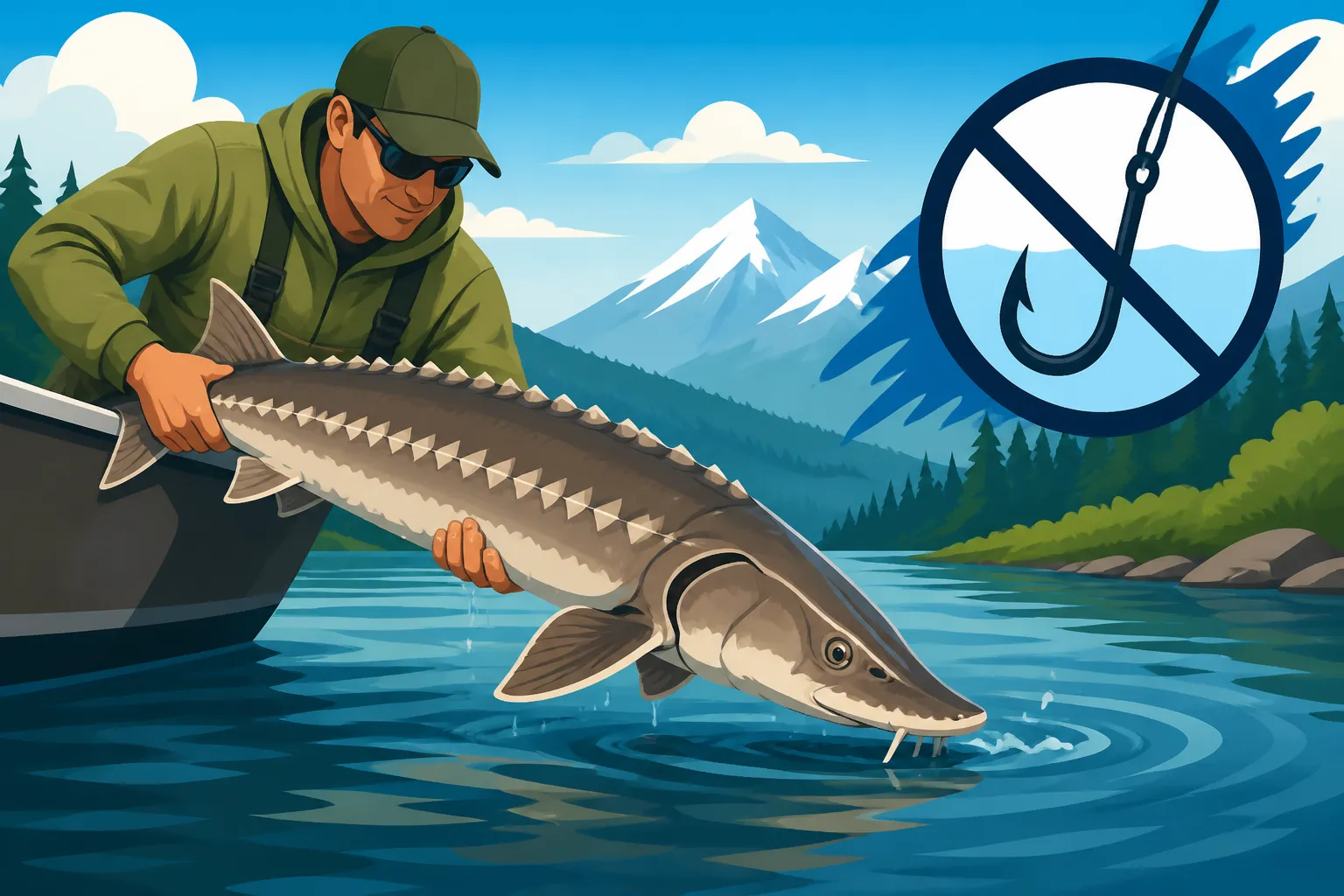
This is perhaps the most critical rule for sturgeon welfare: keep the sturgeon in the water at all times. Their massive bodies are not designed to support their own weight out of the water, especially larger specimens. Removing them can cause severe internal damage to their organs, spines, and fins.
Here's how to handle a sturgeon safely:
- Landing: Use a large, knotless landing net for smaller fish. For larger sturgeon, it's best to guide them to a shallow, sandy bank where you can safely work on them with their body mostly submerged. Avoid rocky or gravelly areas that can scrape their delicate skin.
- Measuring & Tagging: If you're fishing with a licensed guide, they often participate in DFO's tagging program. All measurements and tagging should be done with the fish still in the water, or with minimal exposure on a wet mat, ensuring most of its body remains submerged. The guide will typically demonstrate how to do this quickly and efficiently.
- Photography: We all want that epic photo, but it must be done with the fish in the water. Get down to the fish's level. You can use waterproof cameras like a GoPro, or a phone in a waterproof case, easily purchased on Amazon, to capture those incredible in-water moments. A quick, well-composed in-water shot is far better for the fish than a prolonged, stressful photo session out of the water. The goal is to minimize its time out of its natural element to just a few seconds if absolutely necessary, but ideally, never fully removed.
The Release Process: Ensuring a Strong Swim-Away
The moment of release is just as important as the fight itself. You want to ensure the sturgeon swims off vigorously, not disoriented or exhausted.
Here's a good release protocol:
- Support: Gently support the fish upright, holding it by the tail and under the belly (if it's a manageable size, or with specialized lifting straps for large fish, used by guides). Point its head into a gentle current if possible, allowing oxygenated water to flow over its gills.
- Revivification: If the fish seems sluggish or disoriented, continue to hold it gently in the current, moving it back and forth slightly if there's no natural flow, until you feel it start to kick and try to swim away under its own power. Do not let go until it is strong enough to swim off on its own.
- Observation: Watch the fish as it swims away to ensure it goes down and doesn't float listlessly on the surface. If it resurfaces, gently guide it back into the current and continue revivification.
- Injuries: While rare with proper technique, if a sturgeon is clearly injured (e.g., deep hook wound, severe bleeding), you should contact Fisheries and Oceans Canada (DFO) immediately. Do not attempt to take the fish with you or try extensive medical procedures yourself.
These practices, especially outlined in guides like Sturgeon Catch and Release Survival Tips, dramatically increase the chances of a successful and healthy release.
Understanding the Regulations and Conservation Efforts
The Fraser River sturgeon catch and release rule isn't an arbitrary imposition; it's a carefully considered piece of a much larger conservation puzzle. Understanding the framework behind these regulations helps us appreciate their importance and our role within them.
The Role of Fisheries and Oceans Canada (DFO)
Fisheries and Oceans Canada (DFO) is the federal body responsible for the management and protection of fisheries resources, including the iconic White Sturgeon. Their mandate involves comprehensive scientific research, population monitoring, habitat protection, and the enforcement of fishing regulations. They collaborate with provincial agencies, Indigenous communities, and local conservation groups to ensure the long-term sustainability of the species.
DFO runs extensive tagging programs on the Fraser River. When a guide measures and tags a sturgeon, that information is collected and analyzed by DFO scientists. This data helps track individual fish, understand migration patterns, growth rates (Sturgeon Growth Rate to Trophy Size, and overall population health. These scientific findings are crucial for making informed decisions about conservation strategies and adapting regulations as needed. Anglers who choose to fish with licensed guides are directly contributing to this vital research, even if they're not physically placing the tag themselves.
Specific Rules and Prohibitions
Beyond the overarching catch-and-release rule, there are other specific regulations designed to protect sturgeon and ensure ethical angling:
- Barbless Hooks Only: As mentioned, this is non-negotiable for all sturgeon fishing. Barbless hooks minimize tissue damage and make hook removal quick and easy.
- Prohibited Gear: Treble hooks are strictly prohibited for sturgeon fishing. Gaffs are also illegal to use for landing sturgeon. These tools can cause irreversible damage to the fish.
- No Retention: This can't be stressed enough. It means no keeping, no exceptions. You might wonder, Is It Legal to Release a Sturgeon You Catch in BC? and the answer is not just "yes," but it's the only legal option.
- Closures and Special Regulations: From time to time, specific areas of the river or certain seasons might be subject to additional closures or restrictions to protect vulnerable populations or spawning areas. It's crucial to always check the latest regulations before heading out. A great resource for this is BC Fishery Notices and In-Season Closures, Explained, which provides up-to-date information on any changes.
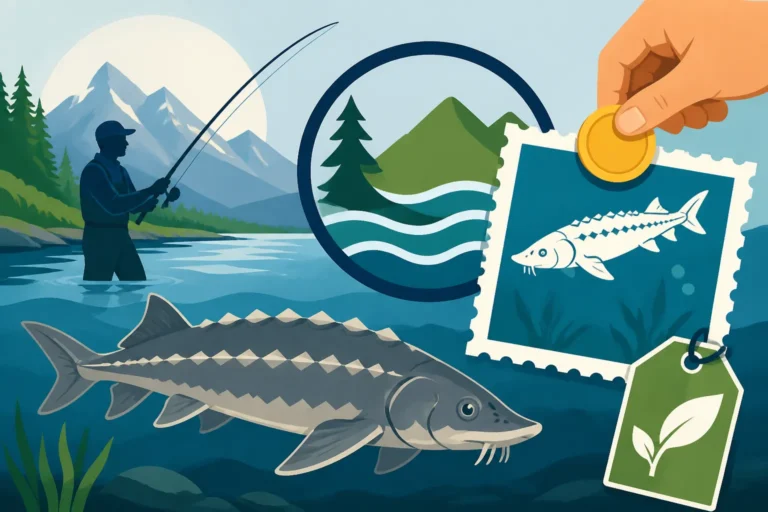
Staying informed by regularly consulting the official Reading the BC Freshwater Fishing Regulations Synopsis is essential for any angler targeting sturgeon. These guidelines are in place to ensure both your safety and the sturgeon's well-being. Additionally, be aware of specific fees like the BC Sturgeon Conservation Surcharge Stamp Cost which helps fund these vital conservation efforts.
Contributing to Sturgeon Conservation
Every angler who fishes for Fraser River sturgeon has a role to play in their conservation. It's more than just following the rules; it's about active participation and advocacy.
- Report Tagged Fish: If you catch a tagged sturgeon (even if it's already been reported by a guide), note the tag number, location, and estimated size, and report it to DFO. This data is invaluable.
- Support Responsible Guides: Choosing a reputable, licensed sturgeon guide means you're supporting professionals who understand and strictly adhere to conservation best practices. They're often at the forefront of conservation efforts, assisting with tagging and data collection. Many of these guides offer trips focused on White Sturgeon Fishing on the Fraser River, ensuring ethical practices.
- Citizen Science: Pay attention to your observations. If you notice unusual fish behavior, signs of distress, or potential violations, report them to the appropriate authorities. Your eyes and ears on the water are a valuable asset.
- Educate Others: Share your knowledge with fellow anglers. Gently remind others about best practices for handling and releasing sturgeon. By being a positive example, you help foster a culture of conservation within the angling community. This collective effort is what allows organizations to better understand White Sturgeon Habits on the Fraser River.
Common Misconceptions and Ethical Angling
Despite clear rules and extensive information, some misconceptions persist around sturgeon fishing and the importance of catch-and-release. Addressing these directly helps clarify why ethical angling is paramount for these magnificent fish.
"Just a Quick Photo" – The Harmful Reality
It's natural to want a photograph with such a monumental catch. You've battled a giant, and you want proof and a memory to cherish. However, the urge for that "hero shot" out of the water can be incredibly detrimental to a sturgeon, especially large ones. Many anglers think, "It's just for a few seconds," but those few seconds of air exposure can cause significant physiological stress. A sturgeon's internal organs are not supported by a skeletal structure designed for gravity outside of water, and its gills are adapted to extracting oxygen from water, not air.
For larger sturgeon, even a brief lift out of the water can result in:
- Internal Organ Damage: Their sheer weight can crush internal organs when unsupported by water.
- Spinal Damage: The spine can be easily damaged, leading to paralysis or chronic pain.
- Suffocation/Gill Damage: Gills can dry out and become damaged quickly, impairing the fish's ability to breathe once returned to the water.
- Scale/Slime Coat Removal: Rough handling or contact with dry surfaces can remove their protective slime coat and damage their bony plates (scutes), making them vulnerable to infection.
Instead of a potentially harmful out-of-water shot, embrace the power of in-water photography. Work with your guide to get stunning shots of the sturgeon right alongside the boat or gently on a wet, sandy bank with its body largely submerged. These photos often convey the true majesty of the fish even better, showcasing its natural environment.
The Myth of Unlimited Retention in the Past
Some long-time anglers might recall a time when sturgeon retention was permitted, perhaps even a daily limit. This past reality often leads to questions or frustration about the current strict rules. It's true that historical fishing practices were vastly different. However, those practices led directly to the severe decline of sturgeon populations, pushing them towards endangered status.
The current "catch and release only" rule is not an overreaction; it's a necessary intervention based on decades of scientific research and a clear understanding of the species' vulnerability and recovery needs. The Fraser River sturgeon population is still in a recovery phase, and every single fish, especially the large, sexually mature individuals, is critical to ensuring the species' future. We've learned from the mistakes of the past, and these rules are a testament to that learning.
Being a Responsible Ambassador for Fraser River Sturgeon
Ultimately, being an ethical angler for Fraser River sturgeon means accepting the responsibility that comes with targeting such a unique and vulnerable species. It's about recognizing that you're a steward of a precious natural resource.
- Lead by Example: Others will observe your actions. Be a role model for safe handling, quick releases, and adherence to regulations.
- Share Knowledge, Not Judgment: When you see someone struggling with best practices, offer gentle advice and education rather than criticism. Foster a supportive community of conservation-minded anglers.
- Appreciate the Privilege: Fishing for Fraser River sturgeon is a world-class experience. Respect the fish, respect the rules, and respect the river. Your actions today directly impact the ability of future generations to share in this incredible experience.
By embracing these principles, we ensure that the Fraser River continues to be home to these magnificent living dinosaurs for centuries to come.
| Step | Action | Why It Matters |
|---|---|---|
| 1. Use Proper Gear | Employ heavy rods, reels, braided line, and robust, single, barbless circle hooks. Avoid treble hooks and light tackle. | Minimizes fight time and injury, ensures quick, clean hook removal. |
| 2. Fight Quickly & Efficiently | Apply steady, strong pressure to land the fish as fast as safely possible. | Reduces exhaustion and stress for the sturgeon. |
| 3. Keep Fish in Water | Never fully remove a sturgeon from the water. For measurements/photos, guide to a shallow, wet, sandy bank or keep in a large, knotless net. | Prevents internal organ damage, spinal injury, and gill/slime coat damage. |
| 4. Quick Release | Minimize handling time. If measuring or tagging, do it swiftly with the fish submerged. | Less time out of water reduces stress and increases survival chances. |
| 5. Revivify if Needed | Support the fish upright, facing into a gentle current (if possible), until it shows strong signs of recovery and swims away under its own power. | Ensures the fish has enough oxygen and strength to survive after release. |
| 6. Observe Departure | Watch the sturgeon swim away to confirm it descends and doesn't float listlessly on the surface. | Provides confidence in a successful release; allows for re-revivification if necessary. |
Disclaimer
The information provided in this guide is for general informational purposes only and is subject to change. Anglers are solely responsible for understanding and adhering to all current British Columbia fishing regulations and federal DFO regulations before engaging in any fishing activity. Always consult the official BC Freshwater Fishing Synopsis and DFO fishery notices for the most up-to-date rules and closures.