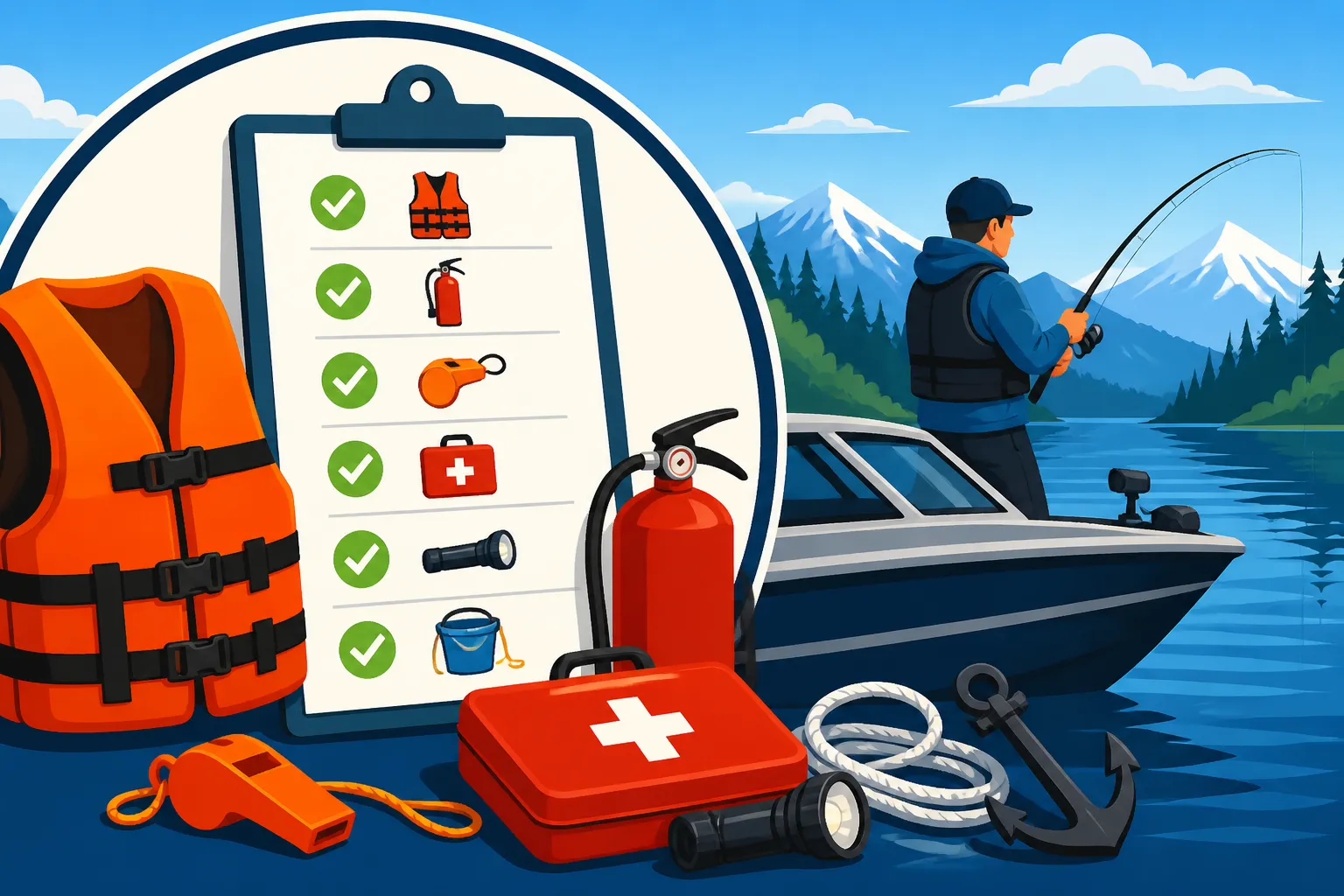
BC required boat safety equipment checklist
Oh, the sheer joy of planning a fishing trip in British Columbia! The anticipation of reeling in a trophy salmon, the quiet serenity of a remote lake, or the thrill of battling a Fraser River sturgeon. It’s easy to get swept up in that excitement, but let’s be real, forgetting something crucial can turn an incredible day into a stressful, or even dangerous, ordeal. Overlooking the essential boat safety equipment required by law isn't just a minor oversight; it's a risk to your life, your passengers, and your wallet. This comprehensive guide is here to walk you through every single piece of boat safety equipment mandated by Transport Canada and BC regulations, ensuring you’re not only fully prepared but also legally compliant and, most importantly, safe on every single angling adventure.
Understanding BC's Boating Safety Regulations
Navigating the waters of British Columbia, whether it's the vast Pacific coastline or the myriad of freshwater lakes and rivers, requires more than just a keen eye for fish. It demands a thorough understanding of the regulations designed to keep everyone safe. It’s not about stifling your fun; it’s about providing a framework that prevents tragedies. Trust me, nobody wants to be caught in a tricky situation only to realize they're missing a critical piece of gear.
The Role of Transport Canada in BC Boating
While you’re out on a beautiful BC lake or the Pacific Ocean, you might assume provincial rules are the be-all and end-all. However, when it comes to vessel safety, the federal government, through Transport Canada, sets the primary regulations that apply nationwide. This means whether you're fishing in the Kootenays or off the coast of Vancouver Island, the core safety requirements for your boat are consistent. These regulations cover everything from the type of personal flotation devices (PFDs) you need to the signaling equipment you must carry. Think of them as the foundational rules that ensure a baseline of safety for everyone enjoying Canadian waters.
These rules aren't just arbitrary; they're based on years of incident data, expert advice, and a deep understanding of marine environments. They're designed to give you the best chance of survival and assistance in an emergency. It’s easy to grumble about bureaucracy, but when you’re out there on the water, far from shore, these regulations are literally your lifeline. They dictate things like proper lighting, sound signals, and fire extinguishers, all crucial items you hope you never need, but are eternally grateful for if you do. Knowing these rules is the first step in responsible boating, and it means less stress, fewer fines, and more peaceful fishing.
Why Safety Equipment is Non-Negotiable
For many of us, getting out on the water is about escaping the rules and routines of daily life. But when it comes to boat safety, compliance is genuinely non-negotiable. Firstly, there’s the obvious legal aspect: Canadian law enforcement, including the RCMP, Coast Guard, and provincial conservation officers, has the authority to stop and inspect your vessel at any time to ensure you meet all the requirements. Getting caught without the correct safety gear can lead to hefty fines, which can quickly turn that dream fishing trip into an expensive nightmare. Imagine getting a ticket for not having enough life jackets while you’re trying to enjoy a peaceful day fishing on Okanagan Lake! It completely ruins the vibe. You can even read up on specific penalties, like the BC minimum fine for no Pleasure Craft Operator Card, to understand the financial implications.
Beyond the legal ramifications, which are a major motivator for many, the real reason safety equipment is non-negotiable is your personal safety and the safety of your passengers. Accidents happen, often when and where you least expect them. A sudden change in weather, an unexpected mechanical failure, or a collision can quickly turn a calm day into a perilous one. Having the right gear, from a well-maintained life jacket to functioning signaling devices, can be the difference between a close call and a serious emergency. It's about being prepared for the unpredictable nature of the water, validating that small voice in the back of your head that says, "What if?" It’s a small investment in peace of mind.
Essential Safety Gear for All Power-Driven Vessels
Alright, let's get down to brass tacks. Regardless of whether you're piloting a small aluminum runabout on a local river or a robust offshore cruiser heading for deep water, there's a core list of safety items every power-driven vessel must have in British Columbia. This isn't just a suggestion; it's the law, and these items are truly the backbone of marine safety.
Personal Flotation Devices PFDs
This is probably the most critical item on any boat safety checklist. Every single person on your vessel, including yourself, must have a Canadian-approved PFD or lifejacket that is of appropriate size and in good working condition. And here’s a crucial point: it’s not enough to simply have them on board; they need to be readily accessible. Shoving them deep inside a storage locker under a pile of gear won't cut it. They should be easy to grab in an instant. For a deeper dive, check out the Life Jacket Requirements for BC Boaters.
There are a few types of PFDs, and it’s good to know the difference. The traditional bright orange inherently buoyant life jackets are always a solid choice. They offer excellent flotation and often turn an unconscious person face-up in the water. Then you have the more modern, often slimmer, PFDs that are designed for comfort and mobility, especially popular with active anglers. Some are inflatable, either manually or automatically, which are incredibly comfortable for all-day wear but require more regular maintenance and careful storage to ensure they're always ready to deploy. Regardless of the type, ensure it's Canadian-approved (look for the Transport Canada approval stamp) and fits properly. A PFD that's too big can ride up, and one that's too small won't provide adequate buoyancy. Think about it: if you unexpectedly end up in the frigid waters of a BC lake, having a properly fitting PFD is literally the only thing that might save you from hypothermia or drowning while you wait for help. You can often find a good selection of certified PFDs on platforms like Amazon, but always double-check for the Canadian approval stamp before purchasing.
Visual and Audible Signaling Devices
Imagine you're out fishing for salmon in the Strait of Georgia, and suddenly, fog rolls in thick and fast, or your engine sputters and dies, leaving you adrift. How do you alert others to your presence or call for help? That’s where signaling devices come in.
For audible signals, every power-driven vessel needs a sound-signalling device, like a whistle or a horn. For boats under 12 metres, a pealess whistle is usually sufficient and surprisingly effective. Larger vessels often carry a compressed air horn or a ship’s bell. These are crucial for signaling in reduced visibility, like fog, or to warn other vessels of your presence. A simple, loud whistle can be purchased for a few dollars, but its value in a low-visibility emergency is priceless.
Visual signals are equally vital. For daylight, a buoyant heaving line (at least 15 meters long) is required. This is for rescuing someone in the water or for passing a line to another vessel. For night-time and distress situations, pyrotechnic distress signals, like flares, are often required, especially for vessels operating more than one nautical mile from shore. These are categorized into different types: A (parachute flare), B (multi-star flare), C (hand-held flare), and D (smoke signal). Flares have expiry dates, typically four years from the date of manufacture, so it’s imperative to regularly check and replace them. You don't want to be in an emergency only to find your flares are expired and won't ignite. Alternatives to flares are becoming more popular, such as an approved electric distress signal (like a flashing light), which offers a non-pyrotechnic option with a much longer lifespan. Having a reliable visual signal is the best way to get attention when a search and rescue team is looking for you in the vast expanse of the ocean or a large lake.
Fire Safety and Prevention
Fire on a boat is one of the most terrifying scenarios imaginable. Unlike a house fire, there's nowhere to go, and your vessel can be consumed rapidly. That's why having appropriate fire safety equipment is absolutely mandatory for most power-driven boats.
Every power-driven vessel needs at least one Canadian-approved fire extinguisher, often a 5BC dry chemical type, strategically placed to be easily accessible. Larger vessels may require more than one extinguisher and sometimes even an automatic system in the engine compartment. Knowing how to use your extinguisher is just as important as having it. Remember the PASS acronym: Pull the pin, Aim at the base of the fire, Squeeze the handle, Sweep side to side. It’s also crucial to understand the different classes of fire extinguishers. A "5BC" rating means it's effective on Class B fires (flammable liquids like fuel and oil) and Class C fires (electrical fires), both common culprits on a boat. Beyond extinguishers, proactive fire prevention is key: regularly check fuel lines for leaks, ensure electrical wiring is sound, and be extremely careful with anything involving open flames onboard. Imagine you’ve just filled up your boat, and a small fuel leak starts. Without an extinguisher, that minor issue could escalate into an inferno in seconds. Always ensure your boat's registration and licensing rules are up to date, as these often include safety checks.
Anchoring and Manual Propulsion
What happens if your engine suddenly dies, or you need to hold position in a strong current? This is where your anchoring system and manual propulsion come into play.
Every power-driven vessel needs an anchor, with at least 15 meters of anchor line, chain, or a combination of both (known as rode). The size and type of anchor should be appropriate for your vessel's size and the typical seabed conditions you'll encounter. For example, a Danforth-style anchor is great for sand or mud, while a Bruce or claw anchor works well in various bottom types. A proper anchoring system can prevent your boat from drifting into hazards or onto shore if you lose power. It’s your emergency brake and your holding point in windy conditions. Imagine fishing for sturgeon on the Fraser River; the current can be incredibly powerful. A reliable anchor is not just for holding your spot; it's a safety device to prevent you from being swept downstream.
For manual propulsion, all power-driven vessels (except personal watercraft) must carry either oars, paddles, or a secondary means of propulsion if the main engine fails. For smaller boats, a sturdy pair of oars or paddles is perfectly acceptable. For larger boats, this might mean a small auxiliary outboard motor. The idea is simple: if your primary engine gives up the ghost, you need a way to get yourself safely back to shore or at least out of immediate danger. Don't underestimate the power of a pair of paddles in a pinch – they might be slow, but they're reliable when all else fails.
Additional Requirements Based on Boat Size and Type
While the core safety items are universal, Transport Canada regulations also factor in the size of your vessel, as larger boats often venture further offshore and face different challenges. It's not a one-size-fits-all world, and your boat's length significantly impacts what additional gear you'll need.
Vessels Under 6 Metres (Approx. 19.7 feet)
These are often your smaller fishing boats, runabouts, and utility vessels. For many weekend anglers targeting trout in local lakes or coastal salmon near shore, this is likely your category. Beyond the PFDs, sound signal, heaving line, and fire extinguisher (if applicable, which it almost always is for power-driven vessels), you'll also need to consider:
- Bailer or manual pump: If your boat doesn’t have a self-bailing design, you need a way to remove water that gets into the boat. This is crucial for preventing swamping. A simple bucket can sometimes suffice for a bailer, but a proper manual bilge pump is always better.
- Navigation lights: If you're operating between sunset and sunrise, or in periods of restricted visibility, proper navigation lights are a must. This typically includes a masthead light, sidelights (red for port, green for starboard), and a stern light. Visibility is key to avoiding collisions, especially during those magical dawn or dusk fishing hours.
- Watertight flashlight: This is a good idea for any vessel, but specifically mentioned for smaller ones. Essential for checking equipment, reading charts, or signaling in the dark.
- Magnetic compass: If your boat is not equipped with an electronic compass or GPS. Knowing your bearing, especially in fog or at night, is vital.
It’s easy to overlook these seemingly small items on a compact boat, thinking "it's just a little lake boat." But even on seemingly calm waters, conditions can change rapidly. A sudden squall on a large lake like Kootenay Lake can quickly put a small vessel in distress, and having these items can make all the difference.
Vessels Between 6 and 9 Metres (Approx. 19.7 to 29.5 feet)
As boats get larger, their operational capabilities expand, and so do the safety requirements. These are often cuddy cabins, larger fishing vessels, and smaller cruisers that might venture further from shore.
In addition to everything required for smaller vessels, boats in this category must also carry:
- Anchor and 30 meters of rode: The increased length and weight of these vessels necessitate a more substantial anchoring system.
- Spare propeller and tools or an alternate means of propulsion: Beyond oars/paddles, having a spare prop and the tools to change it can save you from a lengthy tow, especially if you hit a submerged log. An auxiliary engine is another common choice.
- Visual distress signals: If operating beyond one nautical mile from shore. This is often where flares become a critical part of your kit.
- Radar reflector: This passive device helps your vessel show up more clearly on other boats' radar screens, significantly increasing your visibility to commercial traffic or larger vessels, especially in fog or at night. This is something often overlooked but could be crucial when navigating busy channels like those around the Discovery Islands. You can find various types of radar reflectors, including collapsible ones, which are useful for smaller boats that want to stow them away when not in use. Some even clip onto your existing rigging.
When you're venturing out for salmon in the open waters of the coast, having a complete and updated safety kit is absolutely paramount. Don't cut corners; invest in good quality gear that you can rely on.
Vessels 9 Metres or More (Approx. 29.5 feet and up)
These are typically your larger cruisers, sportfishing yachts, and vessels designed for extended offshore trips. They often carry more passengers and operate in more challenging conditions. The list of safety requirements grows accordingly.
For vessels 9 metres or more, you'll need:
- Anchor and 50 meters of rode: Even more robust anchoring capabilities are needed for these larger, heavier vessels.
- Heaving line, 30 meters: A longer heaving line for rescue scenarios.
- Two fire extinguishers: Strategically placed throughout the vessel to combat multiple potential fire sources.
- Emergency steering device: If your primary steering mechanism fails, you need a way to control the vessel. This could be a tiller for an outboard or an emergency rudder system.
- Manual bilge pump or an additional powered bilge pump: Larger boats collect more water and need more powerful or redundant pumping capabilities.
- Navigation lights: These are required for all boats operating after dark, but for larger vessels, they need to be positioned and visible according to stricter international standards.
- Radar reflector: Absolutely essential for clear visibility to other vessels in all conditions.
Operating a larger vessel means a greater responsibility. These boats often carry more fuel, have more complex electrical systems, and venture into areas where help might be hours away. A comprehensive BC Boating Laws for Anglers guide is always a good reference for specific requirements, but the principle is clear: the bigger the boat, the more comprehensive your safety setup needs to be. For anglers planning an offshore adventure, ensuring your boat is fully compliant will allow you to focus on the fishing, not worrying about a safety check or an emergency.
Here's a handy table summarizing the basic safety equipment requirements for power-driven vessels in BC, keeping in mind specific conditions like operating at night or distance from shore may add further requirements:
| Equipment Category | Under 6m (19.7 ft) | 6m to <9m (19.7 to <29.5 ft) | 9m to <12m (29.5 to <39.4 ft) | 12m to <24m (39.4 to <78.7 ft) |
|---|---|---|---|---|
| Personal Flotation Devices (PFDs) | 1 per person | 1 per person | 1 per person | 1 per person |
| Sound-Signalling Device | Whistle/Horn | Whistle/Horn | Whistle/Horn | Whistle/Horn |
| Buoyant Heaving Line (15m) | Yes | Yes | Yes | Yes |
| Fire Extinguisher(s) | 1 (if engine/fuel) | 1 | 2 | 2 |
| Bailer / Manual Bilge Pump | Yes (if not self-bailing) | Yes | Yes | Yes |
| Watertight Flashlight | Yes | Yes | Yes | Yes |
| Navigation Lights | Yes (if operating at night/restricted visibility) | Yes | Yes | Yes |
| Magnetic Compass | Yes (if no electronic comp/GPS) | Yes | Yes | Yes |
| Anchor w/ Rode | 15m Rode | 30m Rode | 50m Rode | 50m Rode |
| Manual Propulsion (Oars/Paddles/Auxiliary Engine) | Yes | Yes | Yes | Yes |
| Visual Distress Signals (Flares/Electric) | (See notes) | (See notes) | (See notes) | (See notes) |
| Radar Reflector | (See notes) | Yes (if operating in certain waters) | Yes | Yes |
Notes on Visual Distress Signals & Radar Reflectors:
- Visual Distress Signals: Required for vessels operating more than one nautical mile from shore. Different types of flares/electric signals depending on conditions (day/night) and proximity to shore.
- Radar Reflector: Required for most vessels over 6m operating in specific coastal or heavily trafficked waters, or any vessel needing to be visible on radar.
Crucial Safety Practices Beyond the Checklist
Having all the right gear is fantastic, but it's only half the battle. True safety on the water comes from a combination of proper equipment and good habits. Think of it like driving a car: you need seatbelts and airbags, but you also need to know how to drive defensively and responsibly.
The Importance of a Pleasure Craft Operator Card
This is probably one of the most frequently asked questions: "Do I actually need that card?" The answer is a resounding YES. In Canada, if you operate any pleasure craft with a motor, regardless of its size or the horsepower of the engine, you are legally required to have a Pleasure Craft Operator Card (PCOC). This isn't just a recommendation; it's a mandatory certification that proves you have a basic understanding of boating safety rules and practices. Even if you're just renting a small fishing boat for the day, you'll need one. You can learn more about the specific BC Pleasure Craft Operator Card Requirement and how to obtain it.
Think about it: the PCOC course covers essential topics like navigation rules, aids to navigation, emergency procedures, environmental responsibilities, and the legal requirements for vessel operation. It's not just about passing a test; it's about gaining fundamental knowledge that could literally save lives. Many seasoned anglers might scoff, thinking their years of experience negate the need for a card, but even veterans can learn something new, and rules and best practices evolve. Plus, the consequences of being caught without one are real, including fines. It’s also good to know Does a Pleasure Craft Operator Card Expire in BC?, so you're always in compliance. It's a small investment in time and money for a huge return in safety and legal compliance.
Filing a Float Plan and Communicating Your Whereabouts
This is a practice that often gets overlooked, especially for shorter, seemingly innocuous trips, but it's one of the smartest things you can do. A float plan is essentially a detailed itinerary of your trip that you leave with a reliable person on shore – a family member, a friend, or a marina operator. It's not a formal government document; it's a personal safety measure.
What should be in your float plan?
- Your vessel details: Name, registration number, type, size, colour.
- Passenger information: How many people are on board.
- Your destination and route: Be as specific as possible. "I'm heading to the Fraser River near Chilliwack, targeting sturgeon, and will mostly stay between Hope and Mission."
- Your estimated departure and return times: Crucial for knowing when to start worrying.
- Contact information: Your cell phone, emergency contacts.
- Key equipment: List important safety gear, emergency communication devices (VHF radio, satellite messenger).
The idea is simple: if you don’t return or check in by your estimated time, the person holding your float plan knows exactly where to tell authorities to start looking. It cuts down on critical search time and gives rescuers valuable information. In an area as vast and diverse as BC, from the remote coastlines to the sprawling interior lakes, search and rescue can be a monumental task. A good float plan significantly narrows the search area, which could be the difference between a successful rescue and a tragic outcome. Always keep an eye on things like BC Fishery Notices and In-Season Closures, Explained, as they can impact your route and timing.
Pre-Departure Checks and Emergency Preparedness
Before you even untie from the dock, a thorough pre-departure check is essential. This habit, practiced by experienced boaters worldwide, helps prevent many common problems before they escalate into emergencies.
Your Pre-Departure Checklist should include, but isn't limited to:
- Fuel levels: Check your tanks! Running out of gas miles from shore is not fun.
- Engine checks: Listen for unusual noises, check oil levels, ensure coolant is topped up. Are the batteries fully charged?
- Weather forecast: Has it changed since you last checked? Are high winds or heavy rain expected? Always err on the side of caution.
- Safety equipment check: Are all PFDs easily accessible? Are flares expired? Is the fire extinguisher charged? Do you have enough clean drinking water and snacks for everyone on board?
- Communication devices: Is your VHF radio working? Is your cell phone charged? Do you have a backup?
- Bilge pump operation: Give it a quick test to ensure it's functioning properly.
- Drain plug: I know, it sounds basic, but trust me, forgetting the drain plug can ruin your day faster than anything else!
Beyond these checks, mental preparedness is also vital. Do you know what to do if someone falls overboard? How would you handle an engine fire? What's your plan if you hit a submerged object? Knowing how to react calmly and effectively in an emergency is crucial. This is where a good BC required boater safety course rules comes into play, reinforcing these practical skills.
By meticulously following these guidelines, you're not just adhering to rules; you're actively ensuring a safer, more enjoyable, and ultimately more successful fishing experience in the incredible waters of British Columbia. Tight lines, and stay safe out there!
Disclaimer
The information provided in this guide is for general informational purposes only and does not constitute legal advice. While we strive to provide accurate and up-to-date information, boating regulations can change. It is always the responsibility of the vessel operator to consult the most current Transport Canada and provincial regulations and local fishery notices to ensure full compliance before operating any vessel in British Columbia waters.