Best technique for fishing a riffle for steelhead
Oh, the riffle! That shimmering, turbulent stretch of river where the water dances over rocks and gravel, creating those perfect oxygenated pockets and feeding lanes. If you've spent any time chasing steelhead in British Columbia, you know the frustration that comes with staring at a beautiful riffle, knowing there are fish there, but just not connecting. It’s a common challenge – how do you present your offering effectively in such dynamic water? This comprehensive guide is going to break down the best techniques for fishing a riffle for steelhead, helping you understand this prime habitat and how to fish it with confidence.
Understanding the Riffle: Why Steelhead Love Them
When you're standing on the bank of a BC river, looking at a riffle, it might just seem like a section of fast-moving water. But for a steelhead, it's a bustling buffet and a natural highway. These areas are absolutely crucial holding and feeding grounds, and once you understand why steelhead prefer them, you can start to unlock their secrets.
The Dynamics of Water Flow and Oxygenation
Riffles are characterized by their shallower, faster-moving water, often broken up by rocks and varying bottom structure. This agitation does wonders for the water quality. Think of it like a natural aerator: the rapid flow and tumbling over obstacles inject a significant amount of oxygen into the water. For a powerful, athletic fish like a steelhead, especially those fresh from the ocean, oxygenated water is vital. It allows them to recover from their journey, maintain their energy levels, and remain active.
Beyond oxygen, the turbulent flow also creates subtle currents and seams that act as conveyor belts for food. Larvae, nymphs, and other aquatic insects are dislodged from the riverbed and swept downstream. Smaller baitfish or salmon fry might also find themselves struggling in the current. Steelhead, being opportunistic predators, will often position themselves in strategic lies within the riffle, expending minimal energy while waiting for this natural bounty to drift by. These aren't just random spots; they're calculated feeding stations.
Prime Feeding and Holding Lies
Identifying the prime spots within a riffle is like finding the "X" on a treasure map. Steelhead won't be in the fastest, most chaotic water; they'll be in the slightly calmer pockets or seams where they can hold without fighting the current, yet still have easy access to drifting food. Look for those subtle changes in current speed, often indicated by a slight boil or a smooth "window" in the otherwise broken water.
Key areas to focus on include:
- Seams: The boundary where fast water meets slower water. These are classic holding lies, as food gets swept down the fast lane and often eddies into the slower water, right into a waiting steelhead's strike zone.
- Boulder Pockets: Any significant rock or obstruction in the riffle creates a cushion of slower water directly upstream and a swirling eddy downstream. Steelhead love to tuck behind these boulders, out of the main current, but poised to dart out for a meal.
- Depth Transitions: The lip where a riffle drops into a deeper pool or run is often a critical area. Fish will stage here, using the slightly deeper water for cover and comfort, while still having quick access to the food coming over the riffle.
- Gravel Depressions: Subtleties in the riverbed, like a small trough or a slightly deeper depression in the gravel, can provide just enough relief from the current for a steelhead to hold comfortably. These might not be obvious from the surface, but a well-presented drift will find them.
Understanding these spots is the first step. You're not just casting aimlessly; you're placing your presentation exactly where a steelhead is likely to be resting or feeding.
Gear Up: The Right Tools for Riffle Fishing
Approaching a BC riffle for steelhead requires specialized gear, largely dictated by the powerful fish you're targeting and the challenging environment. Using the wrong setup is like trying to chop down a tree with a butter knife – frustrating and ineffective. We need gear that can handle strong currents, powerful takes, and the potential for a long, arduous fight.
Rods, Reels, and Lines for Fast Water
When it comes to rods, power and length are your friends. For conventional gear, a medium-heavy to heavy power spinning or casting rod, typically 9 to 11 feet long, is ideal. The extra length helps with line control, allowing for longer, more precise drifts and better mending to keep your presentation in the strike zone. This is especially true when you're Drift Fishing for Steelhead in BC Rivers
For fly anglers, a switch rod (11-12.5 feet, 6-8 weight) or a full two-handed spey rod (12.5-15 feet, 7-9 weight) is often the preferred choice for larger rivers like the Skeena or Thompson. These rods excel at casting in tight quarters with minimal backcasting room and handling heavy sinking lines or large indicator rigs. If you're wading smaller rivers, a stout 9-10 foot, 8-9 weight single-handed rod can also do the trick, especially when you're looking to cast heavier flies or indicator setups.
Reels need to be robust with a smooth, reliable drag system. Steelhead are famous for their powerful runs, and a sticky or unreliable drag will quickly lead to lost fish. For conventional setups, a high-quality spinning or baitcasting reel in the 3000-5000 size range with a strong retrieve rate is recommended. For fly fishing, a large arbor reel designed for steelhead or salmon will give you plenty of backing capacity and a strong, consistent drag.
Line choice is critical. For conventional gear, 12-20 lb monofilament or fluorocarbon main line is common, often paired with a lighter fluorocarbon leader for stealth. Braided line can also be used as a main line for its sensitivity and strength, but you’ll definitely want a fluorocarbon leader with it. For fly anglers, specific lines are designed for different techniques. Skagit or Scandi heads are popular for spey casting, paired with various tips (floating, intermediate, fast sinking) to get your fly to the right depth. Indicator lines are often used with a floating line and a long leader for suspending nymphs or egg patterns. You can find a fantastic selection of all these lines and accessories on platforms like Amazon, making it easy to stock up.
Terminal Tackle and Essential Accessories
Your terminal tackle selection will vary based on your chosen technique, but some items are universally important for riffle fishing. Strong, sharp hooks are non-negotiable. For bait fishing or float fishing, octopus-style hooks in sizes 2 to 2/0 are popular. For fly fishing, a variety of steelhead-specific patterns – nymphs, egg patterns, sculpins, and various intruder or spey flies – will be in your box. The Best Baits for Steelhead on the Skeena will give you some excellent starting points for conventional gear.
Weighting your presentation is crucial in fast water. Split shot, pencil lead, or lead-free alternatives like tin or tungsten weights are used to get your bait or fly down to the fish quickly and keep it drifting naturally near the bottom. For float fishing, specialized floats designed for strong currents (such as Drennan Piker or Raven floats) are excellent, allowing for proper presentation without being dragged under immediately.
Beyond the core tackle, a few accessories are essential. A good quality pair of breathable waders and wading boots with felt or studded soles are critical for safely navigating slippery riverbeds. A wading staff provides extra stability, which is invaluable in fast water. Polarized sunglasses will cut the glare, allowing you to read the water better and spot subtle changes in current or structure. A quality landing net with a rubberized mesh is also highly recommended, both for the fish's safety and to secure your prize. Don’t forget a multi-tool or forceps for hook removal and line cutting, and you can easily find compact, durable options for these tools on Amazon.
Mastering the Drift: Techniques for Presenting Your Fly or Bait
Successfully fishing a riffle for steelhead is all about achieving a natural, drag-free drift. Steelhead are incredibly sensitive to unnatural presentations, and even a slight drag on your line can make your offering look suspicious and deter a strike. We'll explore a couple of the most effective techniques.
Float Fishing for Precision and Depth Control
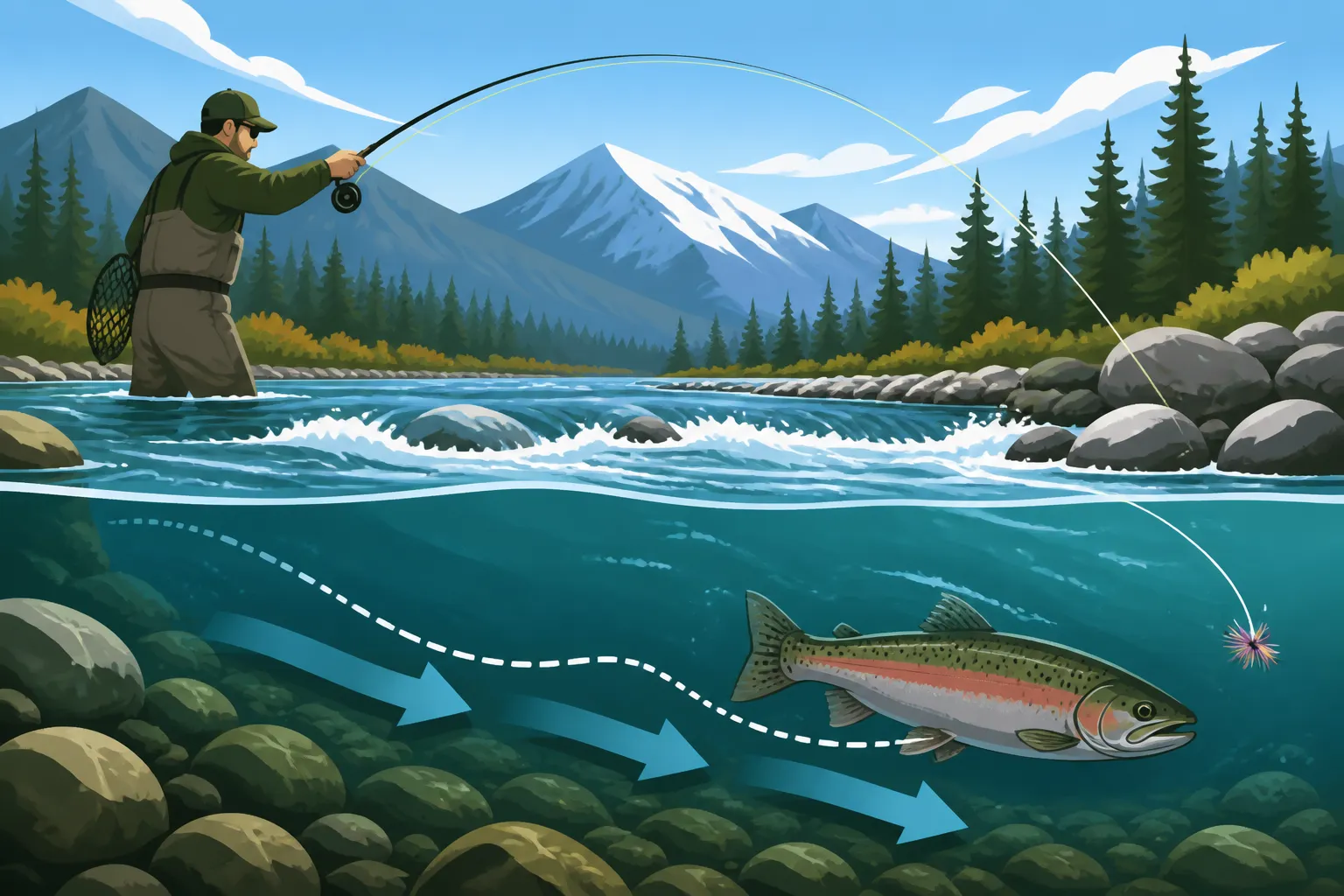
Float fishing, also known as "indicator fishing" for fly anglers, is arguably one of the most effective ways to fish a riffle. This method allows for precise depth control and excellent visibility of subtle takes. The basic principle involves suspending your bait or fly beneath a float, allowing it to drift naturally with the current. The key is to match the speed of your float with the speed of the current where you believe the fish are holding.
For conventional anglers, a durable, high-visibility float is attached to your mainline, with a series of weights (pencil lead or split shot) placed between the float and your leader to achieve the desired depth and maintain a vertical presentation. The amount and placement of weight are crucial: too little, and your bait won't get down; too much, and it will drag unnaturally or snag. Your leader, typically fluorocarbon, should be long enough to reach the bottom and allow your bait to tumble naturally. Common baits include cured roe, worm patterns, or small jigs. When you're Float Fishing the Bulkley River, you'll notice many anglers perfecting this technique to cover water effectively.
Fly anglers use a similar concept with strike indicators. A buoyant indicator is attached to the leader, with weighted nymphs or egg patterns suspended below. The weight can come from tungsten beads on the flies themselves or small split shot added to the leader. Again, the goal is a natural drift where the indicator moves at the same speed as the current directly over the fish. Watch your indicator like a hawk – any hesitation, dip, or sudden acceleration could signal a bite. Practice mending your line upstream to reduce drag, allowing your float or indicator to truly mimic a free-floating piece of debris.
Drift Fishing Without a Float: The Feel for the Bottom
Drift fishing, often done without a float, relies heavily on feel and reading the subtle movements of your line. This technique involves casting your weighted offering upstream and allowing it to tumble along the bottom, mimicking natural food items washed downstream. It’s a highly effective method, particularly in clear, lower water conditions where a float might spook wary fish.
For conventional anglers, a "slinky" weight (a small length of surgical tubing filled with lead shot) or a pencil lead rig is often used, tied on a dropper loop above a short leader and your bait or jig. The idea is for the weight to occasionally tick or bump the bottom without continually snagging. Cast upstream and slightly across, then follow your line with your rod tip, keeping just enough tension to feel the weight's contact with the bottom. A bite often feels like a subtle stoppage, a heavier tick, or a sudden pull. This is where sensitivity in your rod is paramount. You really need to be focused on Drift Fishing for Steelhead in BC Rivers to master this subtle approach.
Fly anglers employ a similar "dead drift" approach, often referred to as nymphing. Using heavier nymphs or adding split shot to a long leader, the goal is to get the fly to the bottom quickly. Techniques like Czech nymphing or Euro nymphing involve short casts upstream, keeping a high rod tip and minimal line on the water to maintain direct contact with the flies as they drift. The take is often felt as a subtle tug or seen as a slight pause in the fly line's movement. It requires intense concentration and a good understanding of how to Wading Techniques for BC Steelhead Rivers to get into the optimal casting positions.
| Technique | Key Gear | Primary Advantage | Best Conditions | Skill Focus |
|---|---|---|---|---|
| Float Fishing | Float, split shot/pencil lead, long rod | Precise depth, bite detection, less snagging | Varied depths, moderate to fast current | Line mending, visual bite detection |
| Drift Fishing | Slinky/pencil lead, short leader, sensitive rod | Stealth, natural presentation, covers bottom | Clear water, even bottom, deeper runs | Bottom feel, subtle bite detection, casting |
| Fly Nymphing | Strike indicator (optional), weighted nymphs, long leader, fly rod | Highly adaptable, covers specific pockets | Diverse river structure, clear water | Reading water, mending, line control |
Reading the Water: Identifying Key Holding Lies in Riffles
You can have the best gear and know all the techniques, but if you're not placing your presentation where the fish are, you're just practicing casting. Reading a riffle effectively means understanding where a steelhead is most likely to be holding, conserving energy, or actively feeding. It's about looking beyond the surface chop and seeing the hidden highways and hideouts beneath.
Micro-Currents and Soft Water Pockets
Steelhead, like most fish, are incredibly energy efficient. They won't fight the heaviest current unnecessarily. Instead, they’ll seek out "soft water" pockets within the riffle, areas where the current is significantly reduced, allowing them to rest comfortably. These soft spots are often found directly behind large boulders, logs, or other obstructions. The obstruction breaks the main flow, creating a "cushion" of slower water upstream and an eddy downstream. The fish can sit in these pockets, barely moving, while still having prime access to food swept down the main current.
Look for areas where the surface water looks slightly calmer or where foam lines gather. These indicators often point to a reduction in current speed below. Sometimes, the soft water might be a little deeper, providing extra cover. These micro-currents are dynamic, constantly shifting with water levels, so observation is key. Spend a few minutes watching the water flow, noting how debris or bubbles travel through the riffle. Where do they slow down? Where do they swirl? Those are your targets. A good pair of polarized sunglasses, available from any outdoor retailer or online like Amazon, can make a huge difference in spotting these subtle changes.
Transition Zones and Drop-Offs
The edges of a riffle are often incredibly productive, especially where the faster water transitions into a deeper, slower pool or run. These transition zones offer the best of both worlds: highly oxygenated water and a consistent food supply from the riffle above, combined with the deeper water of the pool for safety, cover, and a more comfortable holding temperature. Steelhead will often stage at the "lip" of a riffle, right before the water drops off into the deeper section.
These drop-offs act as natural ambush points. Food items coming over the riffle will tumble down into the deeper water, and a steelhead can intercept them with minimal effort. Similarly, the slower, deeper water at the tail end of a riffle provides an ideal resting spot after a long journey upstream. Don't overlook the very head of a riffle where it breaks from a slower section, either. Freshly arrived steelhead might pause here to catch their breath before navigating the turbulent water. Identifying these seams and changes in depth is crucial for effective placement of your presentation. When you understand How to fish a run and pool steelhead river effectively, you're already halfway there to mastering the riffle.
Seasonal Considerations and Troubleshooting
Fishing riffles for steelhead isn't a static game; the river changes with the seasons, water levels, and fish behavior. What works one day might not the next. Being adaptable and understanding these changing dynamics is key to consistent success.
Water Levels and Clarity
Water levels play an enormous role in how steelhead use riffles. In higher water, riffles might become too fast and turbulent for fish to hold comfortably. They might move to the very edges of the main current, seek out larger, more protected pockets, or drop into nearby pools and runs. Conversely, in low, clear water, steelhead in riffles can become incredibly wary. They'll be more sensitive to noise, movement on the bank, and unnatural presentations. In these conditions, stealth, longer leaders, and smaller, more natural-looking baits or flies are often the ticket. You can learn more about specific water conditions, such as When BC rivers get too high to fish for steelhead to help you plan your trips.
Water clarity also dictates your approach. In murky or stained water, steelhead rely more on their lateral line to detect vibrations and scent. This is when brighter, higher-contrast flies or baits might become more effective. Think chartreuse, hot pink, or bright orange. This is also when you might want to consider the Best lure color for murky water steelhead fishing. If the water is gin-clear, however, opt for more natural tones like olive, black, or subtle browns, and make sure your leader is pristine and free of any nicks or kinks.
Time of Year and Fish Behavior
Steelhead behavior in riffles shifts throughout their anadromous journey. Early in the season, when fish are fresh from the ocean, they're often aggressive and powerful. They'll be more inclined to hit a moving target and can be found in a wider range of holding lies within the riffle, eager to feed or simply rest. As the season progresses and fish have been in the river longer, they can become more territorial and less focused on feeding, especially pre-spawn. They might be holding tighter to structure, requiring more precise and persistent presentations.
Different times of year can also influence the size of fish you might encounter. If you’re targeting a true trophy, you’ll want to know the Best time of year for trophy steelhead in BC. For example, winter steelhead can be sluggish in colder water, often holding in slower, deeper parts of riffles or just at their edges. They might require slower, more deliberate drifts and presentations that stay in their strike zone for longer. Spring steelhead, with rising water temperatures, tend to be more active and willing to chase. Understanding these subtle seasonal nuances will help you fine-tune your technique and increase your chances of success. Always consult the BC Fishing Regulations Explained for season dates and any specific closures in your target area.
Pro Tips for Riffle Steelheading
Beyond the core techniques, there are a few additional tips that can seriously up your riffle fishing game. These are the little things that experienced anglers swear by, often learned through years of trial and error on the water.
Stealth and Approach
Steelhead are wild, wary creatures, especially in the shallower water of a riffle. Your approach can make or break your success. Walk softly on the bank, avoid stomping or making sudden movements that could send vibrations through the water. Cast from a distance whenever possible, and try to keep a low profile. If you have to wade, move slowly and deliberately, disturbing the water as little as possible. Think of yourself as a hunter, observing your prey without being detected. The first cast into a promising riffle is often your best chance, so make it count. Don't wade directly into the spot you intend to fish; approach from downstream or across the river if conditions allow, to avoid putting fish down.
Covering the Water Systematically
Don't just cast to the most obvious spot and move on. Riffles often hold multiple fish, and they might be spread out in various lies. Work the riffle systematically, covering every likely holding spot. Start by casting to the closest seams and pockets, then gradually extend your casts to cover the middle and far side. Make a few drifts through each prime area before moving a few steps downstream and repeating the process. It’s like painting a wall – you want to cover every square inch. Vary your drift speed slightly if possible, and don't be afraid to try different depths within the same run. Sometimes, a subtle change in presentation or location is all it takes to trigger a strike. Remember, persistence pays off in steelhead fishing.
Experimentation and Observation
Steelhead fishing is rarely about one magic fly or one perfect bait. Rivers and fish conditions are constantly changing. The most successful anglers are those who are willing to experiment and observe. If one technique isn't producing, try another. If your chartreuse jig isn't working, switch to a more natural egg pattern. If your float is consistently getting snagged, adjust your weight or depth.
Pay close attention to what the river is telling you. Are there signs of insect hatches? Are other anglers catching fish, and if so, what are they using or how are they fishing? Don't be afraid to change flies, change leader length, or even change your position on the bank. Sometimes, simply taking a moment to observe the water, looking for rises, subtle movements, or even the flash of a fish, can provide crucial clues. Having a variety of fly patterns, like those discussed in Best Flies for Winter Steelhead on the Bulkley, or different bait options on hand means you’re ready for whatever the river throws at you. The more flexible you are, the better your chances of unlocking the secrets of those productive BC steelhead riffles.
Disclaimer
This article is for general informational purposes only and does not constitute professional advice. Laws, prices and regulations vary by location and change over time. Consult a qualified professional for guidance on your specific situation.