Best Techniques for High Water Spring Conditions
Spring in British Columbia, with its melting snowpack and rainfall, often means rivers and streams transform into raging torrents, making fishing incredibly challenging, even intimidating. Anglers frequently face frustrations trying to navigate unpredictable currents, murky waters, and elusive fish that seem to disappear. This guide will delve deep into effective strategies and safety protocols to help you adapt your approach and find success when confronted with high water conditions.
Understanding High Water Dynamics in BC Rivers
When the rivers swell in British Columbia during spring, it's not just about more water; it's a complete shift in the aquatic environment. Understanding these dynamics is the first step to figuring out how to approach your fishing in these challenging, yet often rewarding, conditions.
Causes of Spring High Water and Turbidity
The primary culprits behind high water in BC during spring are the combination of snowmelt from the vast mountain ranges and increased rainfall. As temperatures rise, particularly from April through June, the massive snowpack accumulated over winter begins to melt, sending torrents of cold, often sediment-laden, water cascading into rivers and tributaries. Simultaneously, spring weather patterns can bring persistent rain events, further contributing to elevated water levels. This influx of water not only increases depth and flow but also picks up silt, organic matter, and debris, leading to reduced water clarity, or "turbidity."
The turbidity can range from a slight stain, where the water has a tea-like color but you can still see a few feet down, to a thick, chocolate milk consistency where visibility is virtually zero. Rivers like the Fraser and its major tributaries, or coastal streams on Vancouver Island, are particularly prone to these dramatic changes. This isn't just an aesthetic concern; murky water significantly impacts how fish see and react to your presentation, demanding a fundamental change in your tactics.
How Fish Behavior Changes in Swollen Rivers
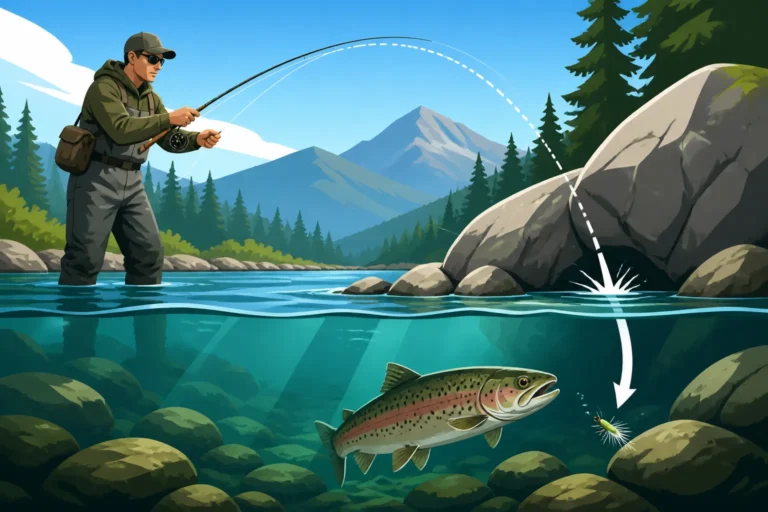
Fish don't just disappear when the rivers rise; they adapt. Their primary concerns become conserving energy, finding stable holding lies, and seeking out food in the challenging currents. The powerful main current, which might be prime holding water in lower conditions, becomes too strong and energy-intensive for most fish to fight. Instead, they’ll move to areas where the current is broken or significantly reduced. This includes eddies, seams, back channels, side sloughs, behind large boulders, fallen logs, or any structure that offers a reprieve from the relentless flow.
Their feeding behavior also changes. With reduced visibility, fish rely more on lateral line vibrations and scent to detect prey. This means small, subtle presentations might go unnoticed, while larger, more vibrant, or strongly scented offerings become more effective. They become less inclined to chase and more likely to intercept food that drifts naturally into their holding zones. Understanding these shifts is crucial; if you're casting where they should be in normal conditions, you're likely fishing empty water.
Prioritizing Safety in High Water Environments
Fishing in high water can be exhilarating, but it also carries increased risks. Neglecting safety can lead to serious consequences, so it’s absolutely paramount to put your well-being, and that of your companions, first.
Personal Safety and Wading Precautions
The sheer force of high water is deceptive. A river flowing at several thousand cubic feet per second can easily sweep an angler off their feet, even in what appears to be moderate depth. Always remember that safety in these conditions often means staying out of the water entirely, or limiting your wading to areas of absolute minimal current. If you must wade, always use a sturdy wading staff – it acts as a third point of contact, giving you stability and allowing you to probe the bottom for hazards or unexpected drops. Always wear a properly fitted personal flotation device (PFD), even if you consider yourself a strong swimmer. The cold temperatures of spring runoff can quickly incapacitate someone in the water, and a PFD is your lifeline.
Before you even step foot in the water, take the time to observe the current, identify potential escape routes, and plan your path. Wading across any significant current is generally ill-advised. Stick to the shallower edges, back channels, and areas of obvious slack water. Never wade alone, and always inform someone of your plans and expected return time. The swift, cold water can hide unstable footing, unseen obstacles, and dangerous debris, making every step a calculated risk. For more detailed information, be sure to check out our guide on Wading Techniques for BC Steelhead Rivers.
Boating Safety and Navigation Challenges
For anglers using boats, high water presents its own unique set of challenges, demanding heightened vigilance and adherence to BC Boating Laws for Anglers. The increased flow creates stronger currents, making maneuvering more difficult, especially in smaller craft. Debris, from entire logs to submerged branches, becomes a significant hazard, capable of damaging propellers, hulls, or even capsizing a boat. Water levels can also obscure familiar landmarks and create new hazards, such as submerged rocks or swift undertows near banks.
Always ensure your boat is properly equipped with all required safety gear, including multiple PFDs, a sound-signaling device, a bailer, and a watertight flashlight. Carry a reliable marine radio or satellite communication device, as cell service can be spotty in many remote BC fishing locations. Exercise extreme caution when navigating, reducing speed in areas of strong current or poor visibility. Back-trolling, a technique where you slowly motor against the current to control your drift, can be effective but requires constant attention. Consider the size of the river and your vessel's capabilities; often, high water conditions are best left to experienced boaters or professional guides.
Essential Gear and Tackle Adjustments for High Water
Fishing effectively in high water isn't just about changing your technique; it often requires a complete overhaul of your gear. The conditions demand heavier lines, stronger rods, and tackle specifically designed to get your presentation down to where the fish are holding and keep it there.
Heavier Rods, Lines, and Leaders
When rivers are swollen and flowing hard, the force of the water on your line, leader, and lure or bait is immense. Standard setups often prove inadequate, making it difficult to achieve depth or even maintain control. This is where heavier gear becomes essential. For conventional fishing, consider stepping up to a medium-heavy or heavy power rod, typically in the 9 to 11-foot range, which offers the backbone needed to cast heavy weights and manage strong currents. Matching this with a robust reel spooled with 15-25 lb monofilament or braided line is crucial. Braided line, with its thinner diameter and no-stretch properties, can cut through the current better, providing improved sensitivity and less drag.
Your leader material should also be beefed up. Fluorocarbon leaders in the 15-20 lb test range are ideal for their abrasion resistance and near invisibility underwater. The increased line strength not only helps with managing the current but also provides the necessary power to land a large fish that might be fighting in heavy flow. Don't skimp on terminal tackle either; stronger swivels, snaps, and hooks are a must to prevent failures under pressure. You can find a wide array of durable fishing lines and leaders from reputable brands on Amazon that are perfect for these demanding conditions.
Maximizing Weight and Presentation Size
Getting your bait or lure down to the fish in fast, deep, high water is often the biggest challenge. This means using significantly more weight than you would in normal conditions. Pencil weights, slinky weights, or large cannonball sinkers ranging from 1 ounce up to 6 ounces or more might be necessary, depending on the current speed and depth. The goal is to get your offering ticking along the bottom, where fish are often holding to avoid the main current. Don't be afraid to experiment with different weight configurations. Sometimes, spreading out your weight with multiple smaller sinkers can help avoid snagging, while other times a single, heavy weight is required to punch through the current.
Beyond weight, consider the size and profile of your presentation. In murky water, fish have reduced visibility, so they rely more on vibrations and scent. Larger profile baits, such as substantial chunks of roe, bigger worms, or oversized soft plastics, create a more significant visual and vibrational footprint. Bright, contrasting colors like chartreuse, hot pink, or orange can also be more visible in stained water. The key is to make your offering noticeable and easy for fish to intercept in their limited visibility windows. For specific recommendations, our guide on Best Baits for Steelhead on the Skeena offers some fantastic insights.
Strategic Fishing Techniques for High Water
Fishing high water effectively means adapting your methods to the fish's changed behavior and the river's powerful flow. It’s all about putting your presentation in the right place, at the right depth, for the right amount of time.
Utilizing Eddies, Seams, and Slack Water
In high water, the main current is often too powerful for fish to hold in comfortably. Instead, they retreat to areas where the water is slower, or even still. These "soft spots" are your prime targets. Eddies, those swirling pockets of calmer water often found downstream of obstructions like large rocks, log jams, or points of land, are classic holding lies. Fish will sit in the eddy, conserving energy, waiting for food to drift by. Fishing the "seams" – the distinct lines where fast water meets slow water – is also highly effective. Fish will often sit just inside the slower water of the seam, darting out into the faster current to grab food before retreating.
Look for side channels, backwaters, and sloughs that might be cut off from the main flow or offer significantly reduced current. These areas provide refuge and often concentrate fish, making them easier to target. When fishing these spots, focus on getting your presentation to drift naturally into and through these calmer zones. This might mean making shorter casts, upstream presentations that allow your bait to sink and drift into the eddy, or working a jig slowly along the edge of a seam. Remember, fish in high water are often reluctant to move far for a meal, so precision casting and presentation are key.
Slower Presentations and Enhanced Scent
With reduced visibility, fish rely heavily on their lateral line to detect vibrations and their sense of smell. This means a slower, more deliberate presentation is often far more effective than fast retrieves or aggressive jigging. When drift fishing, allow your bait to tumble naturally along the bottom, just slightly faster than the current. This mimics a wounded or struggling prey item, making it an easy target for fish conserving energy. Similarly, when using lures, a slow, methodical retrieve that keeps the lure in the strike zone for longer can trigger bites. Think about a wounded baitfish struggling against the current, rather than one darting away.
Scent becomes incredibly important in high, murky water. Fish can smell your offering long before they can see it. Incorporate natural baits like roe bags, worms, or cured shrimp. For artificial lures, use scent attractants or gels liberally. Brands like Pautzke, Pro-Cure, or Mike's are popular choices and can often be found on platforms like Amazon. Apply them frequently, as the strong current will wash scent away relatively quickly. The goal is to create a strong scent trail that leads fish directly to your bait, even if they can't see it clearly. The combination of a slow, natural presentation and a powerful scent can be an unbeatable tactic in these conditions.
Effective Drift and Bottom Bouncing Techniques
Drift fishing and bottom bouncing are quintessential high-water techniques, especially in BC's powerful rivers. The goal is to present your bait or lure near the bottom, where fish are holding, and allow it to drift naturally with the current. For drift fishing, particularly popular for steelhead and salmon, a standard setup involves a lead sinker (pencil lead or slinky) attached to a swivel, with a leader extending to your bait or lure. The key is to use just enough weight to keep your offering ticking the bottom without constantly snagging.
Cast slightly upstream and across the current, allowing your weight to sink and bounce along the riverbed. Keep a tight line, feeling for the distinct "tick-tick-tick" of your weight on the bottom. Any deviation from this rhythm – a solid thunk, a soft pull, or a sudden stop – could be a bite. Set the hook! This method is extremely effective for covering water and targeting fish actively feeding on the bottom. For a deeper dive into this, check out our article on Drift Fishing for Steelhead in BC Rivers. Remember, the weight needed can be substantial, so don't be afraid to go heavier than you think you need.
Species-Specific Approaches to High Water Fishing
While general high-water strategies apply across the board, different fish species will have their own unique behaviors and preferred presentations when rivers are raging. Tailoring your approach to your target species will significantly increase your success.
Targeting Salmon in High Flows
Spring often coincides with the arrival of early salmon runs in some BC rivers. While the big fall runs are still a ways off, the techniques you use for spring salmon in high water will translate. Salmon entering rivers during high flows will also seek out areas of reduced current to rest and conserve energy. Look for them in the same eddies and seams as other species, but also pay close attention to slower, deeper pools, especially those with some overhead cover or structure. These fish are powerful, but they still prefer to save their energy for the upstream migration.
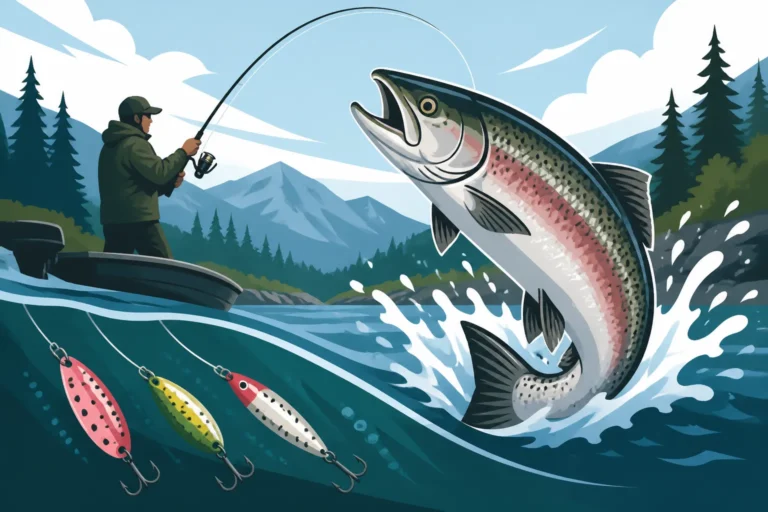
Larger, brighter lures and baits are often effective for salmon in murky, high water. Big spoons, like the Gibbs Delta Croc or Koho in vibrant colors (chartreuse, orange, bright pink), or large spinners with broad blades that create significant vibration, are excellent choices. Trolling these lures slowly through deeper, calmer sections from a boat can be highly effective. For bait fishing, substantial roe bags, or even whole cured anchovies or herring, presented on a drift rig, will offer a strong scent and visual profile. Remember that Salmon Fishing Techniques for BC Rivers will vary greatly by species and river, so always consult current BC Fishing Regulations Explained for retention rules.
Steelhead Strategies for Swollen Rivers
Steelhead are perhaps the most iconic species targeted during high water conditions in BC, especially in spring. These magnificent migratory rainbow trout are built for powerful rivers, but even they will seek refuge from the strongest currents. Early spring steelhead, often referred to as "winter steelhead" as their runs begin in late fall and peak in winter/early spring, are often found in the same soft water pockets, current seams, and slower tailouts of pools. Their aggressive nature and reliance on scent in these conditions make certain presentations shine.
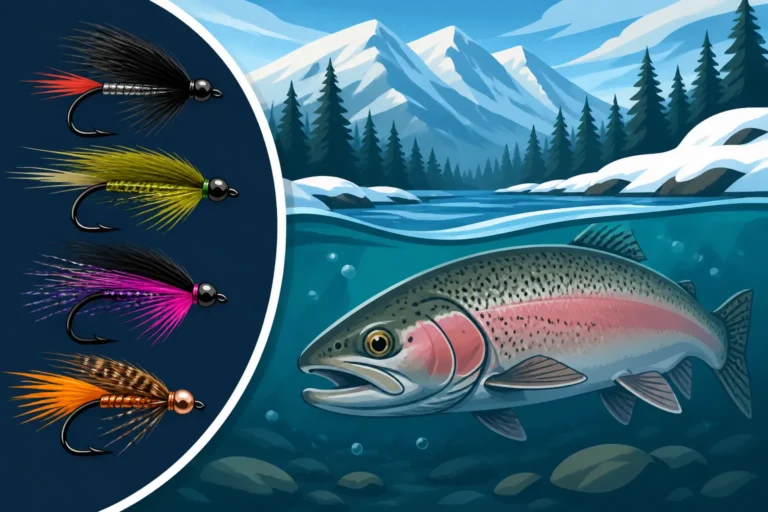
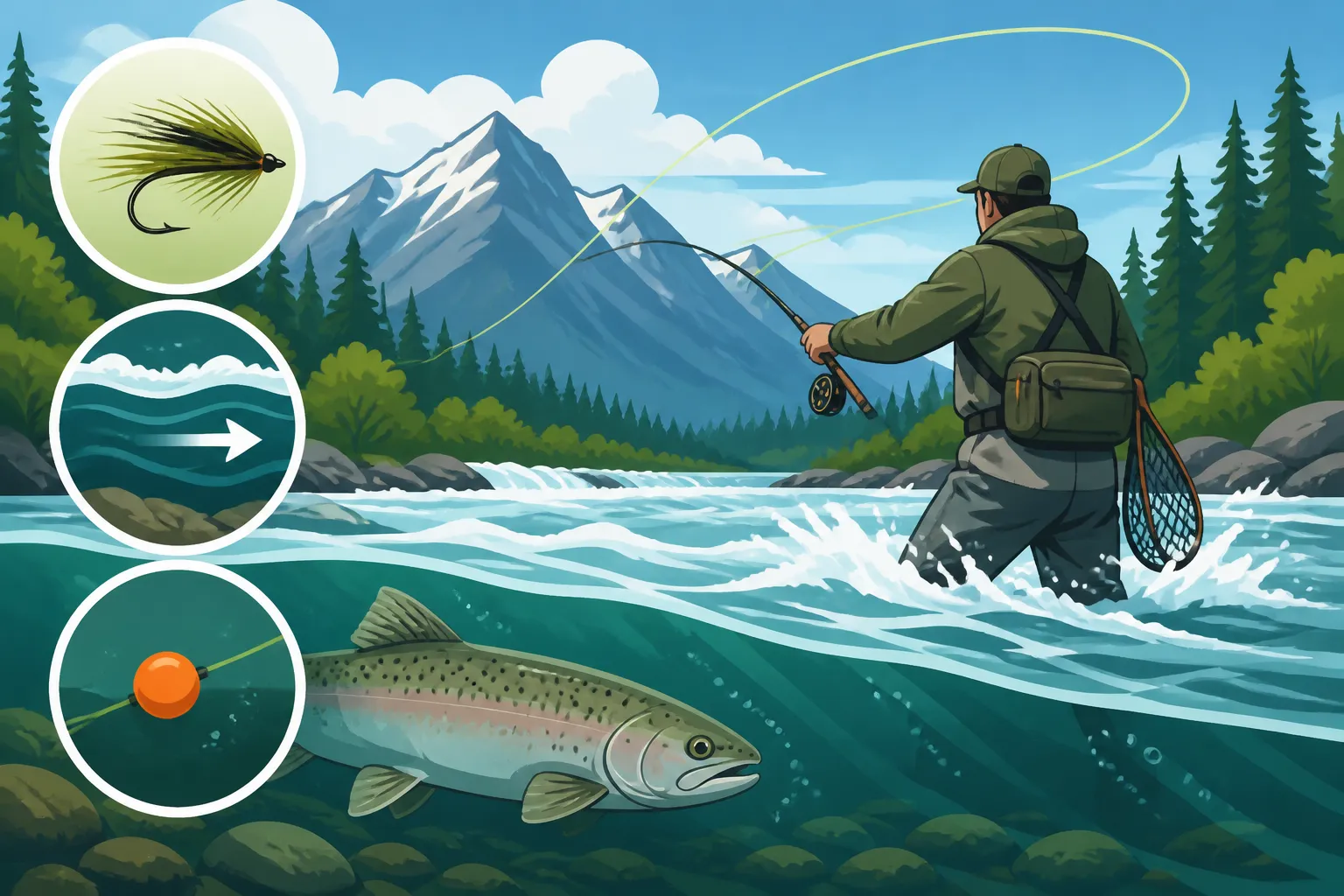
Float fishing with a large float and a substantial amount of weight to get your bait down quickly is a prime method. Use brightly colored, highly scented baits such as roe bags, gooey bobs, or large worms. Pink worms, in particular, are a well-known steelhead magnet. Jigs, tipped with a piece of bait or a scented soft plastic, drifted under a float or swung through seams, can also be very productive. For fly anglers, large, heavily weighted intruders or leech patterns in contrasting colors, stripped slowly or swung through holding water, can entice a bite. Understanding Best Techniques for Early Spring Steelhead is key to success. Rivers like the Bulkley or Skeena tributaries are renowned for their steelhead during these times, and you'll often find anglers discussing specific high-water spots.
Trout Fishing in High Flow Creeks and Lakes
While salmon and steelhead are often the focus of high-water river fishing, trout in smaller creeks and lakes also react to increased flows. In smaller streams that swell dramatically, trout will behave similarly to their larger counterparts, moving out of the main current into quieter pockets, behind boulders, or under cutbanks. Fly anglers might find success with larger nymph patterns or small streamers fished slowly along the edges. Spin fishermen can use small spinners or spoons, again focusing on slower retrieves in sheltered areas.
For lake fishing, high water from tributaries pouring in can actually be a boon. The influx of fresh water often brings in new nutrients and can concentrate baitfish, attracting larger trout. Focus your efforts near the mouths of these inflowing creeks, as trout will often congregate there to intercept food or simply enjoy the fresh, oxygenated water. Trolling through these zones, or casting spoons and spinners into the discolored water where it meets the clearer lake water, can be very effective. Remember, even in lakes, fish might be more scent-oriented during periods of heavy runoff impacting water clarity. Consider incorporating scent into your lake presentations as well.
Post-High Water Fishing Strategies: When Rivers Recede
The period immediately following a high water event, as rivers begin to drop and clear, can offer some of the most phenomenal fishing opportunities. Understanding how fish react to these improving conditions is crucial for capitalizing on the prime bite.
Finding Fish as Water Drops and Clears
As the powerful currents subside and water clarity slowly improves, fish will gradually begin to disperse from their high-water refuges. They'll start to move into more traditional holding lies, but often with a renewed sense of aggression. The dropping water levels can reveal new structure, expose fresh feeding lanes, and concentrate baitfish. This is the time when those edges and seams you were fishing in high water might become prime shallow feeding grounds.
Look for fish in transition zones—areas where they can easily move between deeper holding water and shallower feeding shelves. The edges of pools, the heads of runs, and the deeper sections of riffles can all become productive. As visibility increases, fish will rely less on scent and more on sight, meaning you can start to incorporate smaller, more realistic presentations. Pay attention to the water color; as it changes from "chocolate milk" to a light stain, and then to clear, you'll need to adjust your bait and lure choices accordingly. This period of transition is often when fish are most actively feeding after a period of conserving energy.
Adapting Presentations to Improving Conditions
As the water drops and clears, you can begin to scale back your heavy tackle and switch to more subtle presentations. If you were using large, bright lures, transition to more natural colors and smaller profiles. Spoons and spinners in silver, gold, or natural baitfish patterns will become more effective. For bait fishing, you might be able to use smaller roe bags or single eggs, relying on the fish's improved visibility rather than an overwhelming scent trail.
Fly anglers will also find new opportunities. As the water clears, trout and steelhead will become more receptive to nymphing with smaller patterns, or even dry flies if hatches begin. Swinging smaller wet flies or classic steelhead patterns can also be deadly. The key is to match your presentation to the improving water conditions – clearer water typically calls for more realistic and refined offerings. Remember to keep an eye on the official BC Fishery Notices and In-Season Closures, Explained to ensure you're always fishing within the current regulations, especially as conditions change rapidly in spring.
| Condition | Rod Power | Line Test (Main/Leader) | Typical Weight (Oz) | Lure/Bait Size | Scent Use | Key Technique |
|---|---|---|---|---|---|---|
| High Water | Heavy | 20-30lb Braid / 15-20lb Fluoro | 2-6+ | Large/Bright | Heavy | Bottom Bouncing/Drift |
| Dropping Water | Med-Heavy | 15-20lb Braid / 12-15lb Fluoro | 1-3 | Medium/Natural | Moderate | Drift/Swing |
| Clear Water | Medium | 10-15lb Braid / 8-10lb Fluoro | 0.25-1 | Small/Natural | Light/None | Nymphing/Casting |
Disclaimer
The information provided in this guide is for general informational purposes only and is subject to change. Angling regulations, seasons, and conditions in British Columbia can vary significantly based on location, time of year, and species. Always consult the most current British Columbia Freshwater Fishing Regulations Synopsis, Tidal Waters Sport Fishing Guide, and specific fishery notices before planning any fishing trip. Safety should always be your top priority.