Wading Techniques for BC Steelhead Rivers
Venturing into British Columbia's famed steelhead rivers is an experience like no other, but let's be real – these aren't your calm, backyard fishing ponds. The swift currents, unpredictable depths, and often slick, boulder-strewn bottoms can turn a peaceful day of angling into a dangerous ordeal if you're not prepared. This comprehensive guide is here to help you master the art of wading, ensuring you stay safe, stable, and in the prime position to hook into one of BC's magnificent anadromous rainbows.
Understanding BC Steelhead River Dynamics for Wading
Before you even think about stepping into a BC steelhead river, it's absolutely crucial to understand the environment you're about to enter. These rivers are living, breathing entities, constantly changing and posing unique challenges that demand respect and careful consideration. Ignoring their power is a mistake no angler wants to make.
Current Strength and Bottom Composition
British Columbia's steelhead rivers, like the legendary Skeena or the mighty Thompson, are often characterized by powerful, glacial-fed currents that can easily sweep an unsuspecting wader off their feet. This isn't just about how fast the water is moving; it's about the sheer volume and force behind it. A seemingly manageable current near the bank can quickly intensify in the middle of a run. Beyond the visible flow, what lies beneath your feet is equally, if not more, critical. River bottoms can vary wildly, from stable gravel beds to slippery bedrock shelves, loose cobble, or treacherous bowling-ball-sized boulders that shift underfoot. Many of these rivers are constantly rearranging their beds, especially after high water events, meaning a known safe crossing one year might be a precarious trap the next. Always probe the bottom with your wading staff before committing your full weight.
It’s not uncommon to find a mix of all these conditions within a single run. You might start on firm, sandy gravel, only to step into a section of round, moss-covered rocks that offer no purchase. The current will also play tricks, creating eddies and boils that can push and pull you in unexpected directions, further destabilizing your stance. Recognizing these changes, even subtle ones, is key to maintaining your balance. The bottom composition also affects how fish hold, often seeking refuge behind larger rocks or in troughs where the current is broken, which coincidentally are often the hardest spots for anglers to reach safely.
Water Levels and Clarity
Water levels in BC steelhead rivers are dynamic, influenced by snowmelt, rainfall, and dam operations. A river that’s perfectly wadeable at one level can become an angry, impossible torrent a few feet higher. Always check local river gauges and current conditions before heading out. Websites like Water Survey of Canada provide real-time data that can be a lifesaver. High water not only increases current velocity but also obscures the bottom, making it impossible to see potential hazards like deep holes, submerged logs, or shifting rocks. Low, clear water, while offering better visibility and often easier wading, can make fish exceptionally spooky, requiring more stealth and sometimes longer, more challenging wades to get into position without disturbing them.
Clarity is another major factor. Turbid water, often a result of heavy rains or glacial melt, means zero visibility. You're essentially wading blind, relying entirely on your wading staff and sense of feel. In such conditions, even experienced waders will stick to known, shallow paths or avoid wading altogether, opting for bank fishing or float-fishing from a boat where permissible. Conversely, crystal-clear water, while a joy for sight fishing, can make you feel exposed, prompting you to wade more carefully to avoid spooking fish that can see you coming from a mile away. Understanding the relationship between water level, clarity, and the behavior of both the river and its inhabitants is fundamental to safe and effective wading. Don't forget to review BC Steelhead Season Dates and What water temperature steelhead prefer to match your wading strategy with the conditions.
Identifying Safe Crossing Points
Finding a safe crossing point isn't about brute force; it's about smart observation. Look for sections where the water appears calmer, shallower, and wider. These often indicate a more gradual slope and potentially a firmer, more consistent bottom. Rapids or sections with standing waves are almost always a no-go for wading, as the water's energy is too chaotic. Instead, search for riffles where the current is spread out and less concentrated, or the tail-out of a pool where the water begins to shallow and slow down.
Always take your time to scout. Walk the bank, look upstream and downstream, and observe how the current flows. Pay attention to how the light hits the water, as reflections can sometimes reveal deeper troughs or hidden boulders. Sometimes, the safest crossing isn't a direct line across but a diagonal path that follows a natural bar or shelf, allowing you to gradually enter and exit the main current. If you see experienced local anglers wading a particular section, observe their path; they often know the safest routes. However, remember that conditions change, so always double-check for yourself. Never assume because someone else crossed it, it's safe for you right now.
Essential Wading Gear for BC Conditions
The right gear isn't just about comfort; it's about survival when you're tackling BC's formidable steelhead rivers. Cutting corners here can lead to hypothermia, injury, or worse. Invest in quality, purpose-built equipment that can withstand the rigors of cold, swift water and sharp rocks.
Waders and Wading Boots: The Foundation
Your waders are your primary defense against the frigid waters of BC's rivers. Neoprene waders offer superior warmth, which is crucial for cold-weather steelhead fishing, but they can be bulky and less breathable. Breathable waders, often made from Gore-Tex or similar materials, are lighter and more comfortable for longer hikes or warmer days, but require robust layering underneath for insulation. Many anglers opt for breathable waders with a good layering system for versatility. Whichever you choose, ensure they fit well – too loose and they'll balloon in the current, creating drag; too tight and they'll restrict movement and potentially tear. Quality construction, reinforced knees, and strong seams are paramount.
Wading boots are arguably even more critical than the waders themselves. They provide the grip and stability you need on slippery, uneven river bottoms. Felt soles offer excellent traction on slick rocks but are banned in some areas due to concerns about spreading invasive species. Rubber soles, especially those with aggressive tread patterns and compatible with studs, are a safer and more versatile choice. Brands like Patagonia, Simms, and Orvis offer highly durable options designed for extreme conditions. Always size your wading boots up to accommodate the neoprene booties of your waders and thick wading socks. Don't forget to consider a good pair of gravel guards to prevent small stones and debris from entering your boots, which can cause discomfort and wear. You can find a fantastic selection of both waders and boots on Amazon, often with helpful reviews from other serious anglers.
Wading Staffs: Your Third Leg
A wading staff is not an optional accessory; it's a non-negotiable safety tool for anyone venturing into BC's steelhead rivers. Think of it as your third leg, providing crucial stability and balance, especially in strong currents or over unseen obstacles. A good wading staff should be sturdy, collapsible (for easy carrying when not in use), and feature a comfortable grip with a wrist lanyard to prevent loss. The tip should be durable and provide good purchase on various river bottoms. Many staffs are made from aluminum or carbon fiber for strength and lightness.
Before you take a step, probe the water ahead of you with your staff. This allows you to gauge depth, feel for unstable rocks, detect drop-offs, or identify soft spots in the bottom without committing your weight. When wading, use your staff to form a stable tripod with your two feet, ensuring you always have three points of contact with the riverbed. This significantly reduces your risk of slipping or losing balance. It's a simple tool that can be the difference between a minor stumble and a dangerous fall in fast-moving, cold water. Even when fishing from the bank, a wading staff can be invaluable for navigating slippery trails and steep riverbanks.
Safety Accessories and Layering
Beyond waders and boots, several other items are crucial for safe and comfortable wading. A PFD (Personal Flotation Device), or inflatable wading vest, is an absolute must, especially if you plan to wade deep or in swift currents. Even strong swimmers can be overwhelmed by cold water and heavy gear. Layering your clothing underneath your waders is essential to manage warmth. Start with moisture-wicking base layers (no cotton!), add insulating fleece or synthetic mid-layers, and top it with your waders. This system allows you to adapt to changing temperatures throughout the day.
Other vital safety accessories include a sharp knife, carried in an easily accessible location, in case you need to cut yourself free from tangled lines or brush. A small first-aid kit, a whistle, and a waterproof headlamp are also smart additions. Consider a waterproof dry bag to keep your phone, keys, and any emergency supplies secure and dry. For those really cold days, chemical hand warmers can be a game-changer, especially for keeping your fingers nimble enough to tie knots. Don't underestimate the power of the cold; hypothermia can set in quickly in BC's icy waters. Ensure you are prepared for unexpected dips or extended exposure to cold conditions.
Fundamental Wading Techniques for Stability and Safety
Wading isn't just about walking in water; it's a specific set of movements and observations designed to keep you upright and safe. Master these fundamental techniques, and you'll navigate BC's challenging rivers with confidence.
The Shuffle and The Tripod Method
The most fundamental rule of wading is never to lift both feet off the bottom simultaneously. This is where the "shuffle" and "tripod" methods come into play. When shuffling, you maintain contact with the riverbed by sliding your feet forward in small increments, one at a time, without fully lifting them. This allows you to feel the bottom and adjust your weight before committing to a full step. It's slow, but it's safe. Imagine you're walking on ice – you wouldn't take big, confident strides, would you? The same caution applies here.
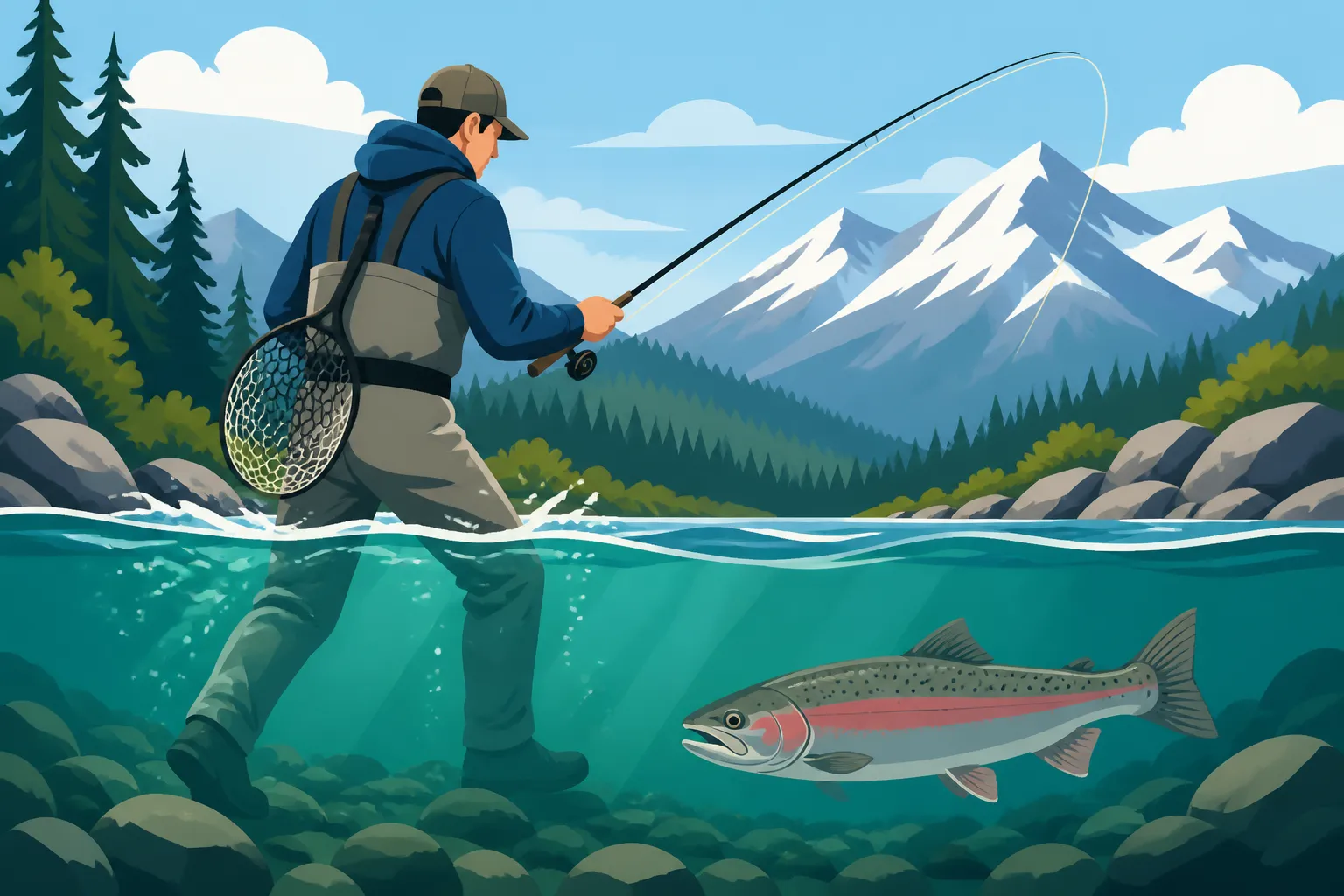
The tripod method incorporates your wading staff, giving you three points of contact. Before moving a foot, plant your staff firmly on the riverbed upstream and slightly to the side of where you intend to step. Once the staff is secure, move one foot, ensuring it finds stable purchase before shifting your weight. Then, move your second foot, again ensuring stability. Only then, once both feet are stable, do you move your wading staff to a new position to prepare for the next movement. This methodical approach ensures constant stability, even in strong currents. Always face slightly upstream and angled across the current; this minimizes the surface area exposed to the flow and allows you to "lean" into the current for stability. When learning How to Catch Steelhead in BC, these basic wading principles are paramount for success and safety.
Reading the Water for Obstacles
Learning to read the water isn't just for finding fish; it's also essential for safe wading. Certain water features indicate potential hazards or safe passage. Smooth, glassy water often means deeper, slower water, which can be deceiving. Riffles or "walking water" where the surface is broken but not violently churning typically indicate shallower, faster-moving water over a relatively consistent bottom – often a good place to cross. However, avoid areas with large standing waves, boils, or strong eddy lines, as these signify powerful, unpredictable currents and potentially hidden obstacles or sudden drop-offs.
Look for changes in water color or texture. Darker patches might indicate deeper pools or submerged rocks. Whitewater around rocks means the current is hitting an obstacle, creating turbulent flow that can be hard to wade through. Pay attention to current breaks caused by large boulders or fallen trees. While these spots often hold fish, they can be extremely challenging and dangerous to wade around. Always try to anticipate where the current will push you and plan your route accordingly. Spotting a distinct current seam often means there's a submerged bar or channel edge, which can be either a safe path or a sudden drop-off. Never hesitate to turn back if you feel unsure about the water ahead.
Wading Upstream vs. Downstream
The direction you wade has a significant impact on safety and stability. Wading upstream, facing into the current, is generally safer. It allows you to brace against the force of the water, and any instability will tend to push you backward into water you've already traversed, rather than sweeping you into unknown territory downstream. This method also pushes displaced sediment behind you, maintaining better visibility ahead and preventing you from inadvertently kicking up debris that could spook fish in front of you.
Wading downstream, on the other hand, can be much more treacherous. The current pushes you from behind, making it easier to lose control, and a stumble can quickly lead to a full-blown fall. If you must wade downstream, do so with extreme caution, taking even smaller steps, maintaining constant tripod contact, and using your staff to probe thoroughly ahead. Angling slightly across the current can help, but generally, it's best to minimize downstream wading, especially in swift or deep sections. If you're targeting specific runs, like those mentioned in Best Steelhead Rivers in BC, consider approaching them from upstream or using a boat if the wading conditions are too difficult.
Advanced Wading Strategies for Challenging Waters
Once you've mastered the basics, you'll inevitably encounter situations that require more nuanced approaches. BC's steelhead rivers are full of these challenges, pushing anglers to refine their skills constantly.
Crossing Deep or Swift Currents
There will come a time when you need to cross a section of water that feels just a little too deep or too fast. This is where a combination of careful planning and precise technique comes into play. First, scout for the shallowest, least turbulent path, even if it's not the most direct. If you're with a partner, consider using the "buddy system." Stand shoulder-to-shoulder, facing slightly upstream, with your arms linked or holding onto each other's wader straps. The combined weight and stability of two anglers can make a significant difference. The upstream person acts as an anchor, breaking the current for the downstream person.
When crossing, lean into the current, allowing the water's pressure to help you brace rather than push you over. Keep your feet spread slightly wider than shoulder-width for a stable base, and take slow, deliberate steps, always probing with your staff. If the water reaches above your waist, or if the current feels strong enough to move your feet, seriously reconsider the crossing. No fish is worth risking your life over. Remember, your waders can fill with water if you fall, adding significant weight and making it harder to regain your footing. In such situations, many anglers opt for alternative access or choose to Float Fishing the Bulkley River or similar waterways.
Navigating Boulders and Log Jams
British Columbia's rivers are wild, and that means lots of natural structure like large boulders and formidable log jams. These features are often prime holding water for steelhead but present significant wading hazards. When approaching large boulders, don't try to climb directly over them in the current. Instead, try to find a path around them, or, if unavoidable, step over rather than onto them, again using your wading staff for support. Boulders can be incredibly slick with moss and algae.
Log jams are particularly dangerous. Submerged logs can be invisible until you're right on them, and they create powerful, unpredictable currents and boil lines. Never attempt to wade over or through a log jam. The risk of getting swept under, entangled, or pinned is extremely high. If you encounter a substantial log jam, the safest course of action is to get out of the water, walk around on the bank, and re-enter downstream. These areas should be treated with the utmost respect and caution. If you are drift fishing, be sure to know how to navigate such obstructions.
Group Wading and Rescue Awareness
If you're fishing with friends, group wading can be a valuable safety tool. Beyond the buddy system for crossings, a group can help identify safe paths, offer assistance in case of a slip, and collectively assess challenging water. Always establish clear communication, especially in noisy river environments.
However, even with a group, individual responsibility is paramount. Everyone should carry their own wading staff and be proficient in its use. It’s also wise for at least one person in the group to carry basic rescue equipment, such as a throw bag, and know how to use it. Be aware of your partners' locations and skill levels. If someone looks like they're struggling, offer assistance immediately. Knowing basic wilderness first aid and having a plan for emergency communication (e.g., satellite messenger in areas without cell service) are also crucial. Safety isn't just about preventing a fall; it's about being prepared for one.
Environmental Awareness and Conservation While Wading
As anglers, we are stewards of the environment. Our presence on the river, even when wading, can have an impact. Practicing responsible wading techniques is not only about personal safety but also about protecting the delicate ecosystems of BC's steelhead rivers.
Protecting Spawning Beds and Riverbanks
One of the most critical aspects of environmentally conscious wading is avoiding spawning beds, also known as "redds." Steelhead, like salmon, create these shallow depressions in the gravel to lay their eggs. Disturbing them, even inadvertently, can destroy a generation of fish. Redds are typically visible as clean, disturbed patches of gravel, usually in shallower, slower-moving water, often in the tail-outs of pools. They are typically an oval shape, lighter in color than the surrounding undisturbed gravel. During spawning seasons, which can vary depending on the run (e.g., spring for winter steelhead), extreme caution is advised. If you suspect an area is a spawning bed, avoid wading on it entirely. Give it a wide berth, even if it means missing a potential fishing spot.
Beyond redds, be mindful of the riverbanks. Erosion caused by anglers repeatedly climbing or descending steep, unstable banks can damage riparian vegetation and contribute to sediment runoff, which negatively impacts water quality and fish habitat. Stick to established trails and access points whenever possible. If you must navigate undeveloped banks, do so carefully, minimizing disturbance to plants and soil. The health of these riverine environments is directly linked to the health of the steelhead populations we cherish.
Minimizing Your Footprint
Every time you step into a river, you leave a "footprint." Your goal should be to make that footprint as light as possible. This means avoiding unnecessary wading, especially in sensitive areas. If you can reach a fishing spot by staying on the bank or by making a short, easy wade, opt for that. The less you disturb the riverbed, the better. When wading, move deliberately and consciously, avoiding kicking up excessive silt or dislodging rocks. While a certain amount of disturbance is unavoidable, being mindful of your movements can make a difference.
Another aspect of minimizing your footprint is preventing the spread of invasive species. This is why felt-soled wading boots are often banned in certain areas. Before moving between different river systems, always clean and thoroughly dry your wading gear – boots, waders, nets, and lines. This "Check, Clean, Dry" protocol helps prevent the transfer of unwanted aquatic hitchhikers like whirling disease, New Zealand mud snails, or invasive algae, which can devastate native fish populations and ecosystems. A simple brush-down and complete air dry can go a long way in protecting BC's precious waterways.
Understanding Fish Habitat
Responsible wading also involves understanding where steelhead live and how your presence might affect them. Steelhead often hold in areas where they can find refuge from strong currents and access to food, such as behind large boulders, in deeper troughs, or along current seams. These are often the same areas that are challenging for anglers to wade. By understanding their preferred habitat, you can plan your wading path to approach these areas stealthily and with minimal disturbance.
For example, when approaching a productive run, try to wade in a way that keeps you out of the fish's primary line of sight and prevents vibrations from traveling through the water. Soft, deliberate steps are better than heavy stomping. Avoid casting long shadows over the water, especially in clear conditions. The goal is to get into position to cast without alerting the fish to your presence. The less stress we put on these incredible creatures and their environment, the better for future generations of steelhead and anglers. Consider reading Drift Fishing for Steelhead in BC Rivers or How to fish a run and pool steelhead river for more context on how fish utilize river features.
Troubleshooting Common Wading Challenges
Even the most experienced anglers encounter issues while wading. Being prepared for common problems can prevent a minor inconvenience from escalating into a serious situation.
Dealing with Wader Leaks and Cold
There are few things as frustrating (or miserable) as discovering a wader leak, especially in the middle of a cold BC river. A small leak might just be uncomfortable, but a significant one can quickly lead to hypothermia. If you feel a sudden cold spot, try to locate the leak. If it's minor, and you're close to finishing your day or can get to shore quickly, you might manage. However, if it's significant, or you're far from warmth, you need to get out of the water immediately. Don't try to tough it out; hypothermia is a real threat.
Always carry a small, portable wader repair kit, which typically includes Aquaseal or similar glue and patches. While not ideal for mid-river repairs, it can save a trip if you can get to a dry spot. To prevent leaks, always inspect your waders before each outing, looking for small punctures or wear spots. Store them properly, away from sharp objects and extreme temperatures. And remember, layering is your best friend. Even if your waders are perfectly sealed, inadequate insulation will still leave you shivering. A quality set of thermals and fleece layers underneath (again, avoid cotton!) can provide crucial warmth and an extra buffer against the cold. You can find excellent layering options, including moisture-wicking base layers and warm fleece, on Amazon to ensure you stay warm even if your waders develop a small leak.
Recovering from a Fall
Falling in a swift, cold river is a terrifying experience, but knowing how to react can significantly improve your chances of a safe recovery. First and foremost, stay calm. Panic will only make things worse. If you're wearing an inflatable PFD, deploy it immediately. If not, try to orient yourself so your feet are downstream, pointing your head upstream. This position allows you to see what's coming and use your feet to fend off rocks and obstacles, protecting your head and upper body.
Work your way to shallower, slower water or the nearest bank. If the current is too strong to stand, roll onto your back and "swim" (kick your feet) towards the bank while still maintaining a feet-first, head-up position. Once you reach shallow water, carefully regain your footing. Check yourself and your gear for any injuries or damage. The shock of cold water can be intense, so if you're feeling disoriented or extremely cold, get to shore, remove any water-filled gear, and warm yourself up as quickly as possible. Don't try to keep fishing if you're shivering uncontrollably. It's better to end the day safely.
Managing Gear in the Water
Wading with fly rods, nets, and other equipment requires careful management. A common mistake is to let your net or rod drag in the current, creating unnecessary drag or risking entanglement. Always secure your net to your back or wading belt with a strong magnet or clip, ensuring it's out of the way but easily accessible. When carrying your rod, either hold it upright or secure it in a rod holder on your pack, especially when making difficult wades. Never let the tip of your rod touch the water if you can avoid it, as it can be easily damaged or interfere with your balance.
When changing flies or rigging up, try to find a stable, shallow spot or even get out of the water if conditions are challenging. Fumbling with small items in a strong current is a recipe for losing gear or losing your balance. Many anglers use chest packs or sling packs to keep essential items like fly boxes, tippet, and tools organized and easily accessible without having to rummage through a larger backpack. Always double-check that all zippers and closures are secure before wading through deeper water. Loose gear can be quickly swept away by the current, adding to your frustrations.
Disclaimer
Fishing in British Columbia's rivers involves inherent risks, including but not limited to adverse weather conditions, treacherous terrain, fast-moving currents, and wildlife encounters. This guide provides general information and recommendations for wading techniques; however, individual conditions and skill levels vary. Always exercise caution, use appropriate safety gear, and assess conditions carefully before entering the water. The author and publisher are not responsible for any accidents, injuries, or losses incurred while following the advice in this article. Always prioritize your safety and adhere to all local regulations and advisories.